Opinion

Never marry one whom you don’t trust 

By Usama Abdullahi 

Lack of trust is a significant factor affecting marriages these days. I know a man who recently got engaged to his girlfriend. Everything was going fine for him and his fiancée until he caught her talking to another guy. When he saw her with the guy, he reported him to Market Management, where they both work. This may seem ridiculous, but I understand the pain of betrayal.

However, I’m unsure if the guy he caught talking to his fiancée is having an affair with her. Up to now, there’s no sufficient evidence to prove such claims. Yet, two things stand out in this story. One is that, as a prospective couple, you should never feel suspicious of each other. Suspicion always sets in when you don’t trust your partner. Before you decide to get engaged to your partner, make sure you trust them because trust significantly improves your relationship. 

Trust is crucial in every relationship, and its absence destroys the foundation upon which the relationship is built. Regarding marriage decisions, things should not be carried out in haste. By rushing things, you disregard every necessary step to make the marriage work. Like patience, trust is highly required in building successful relationships. Even though some people believe that “successful relationships” do not exist. Still, mistrust or suspicion destabilises relationships.

The story of the man I told is one of the apparent reasons that cause marriage failure in our modern society. Many people can agree with me that the people who are often suspicious of their romantic partners aren’t always found innocent of the things they suspect in those partners. They could be the ones who are guilty, while their partners could be free from guilt. Other times, the partners could both be guilty, which might ruin their long-term relationship. So, to avoid destroying your decade-long relationship by a lack of trust, ensure that you marry or fall in love with someone you can trust. 

If you suspect your partner is having an affair with someone other than you, confront them and talk the way out. Sometimes, your suspicions might be wrong. And it takes one to know one. Moreover, if you constantly get suspicious of your partner, you should always question yourself. Maybe you’re the one with such questionable characters. Or perhaps your instinct is misleading you into thinking otherwise. It’s also advisable not to marry the person you usually get suspicious of.

Usama Abdullahi writes from Abuja and can be reached at usamagayyi@gmail.com.

The power of kind words: Taming anger with grace

By Abdurrazak Mukhtar

In a world often rushed by in a whirlwind of emotions and responsibilities, we easily find ourselves swept away by the tide of anger. We’ve all been there, haven’t we? That moment when anger boils up inside us, threatening to overflow. It’s a natural human emotion, but what we choose to do with it truly defines us. In this article, we’ll explore the profound impact of our words when spoken in anger and why choosing kindness or silence can be transformative.

Anger, like a sudden storm, can engulf us in its intensity. It’s a primal emotion, a response to perceived threats or injustices. Our minds can become clouded in moments of anger, and our tongues sharp as swords. We lash out, often without thinking, in an attempt to relieve the emotional pressure building within us.

Yet, we may not realise in those heated moments that while our anger may pass, the words we’ve unleashed can leave lasting scars. Words, once spoken, cannot be unsaid. They have the power to wound deeply, and those wounds can take years to heal if they ever do.

Think back to when someone said something hurtful to you in anger. Perhaps it was a friend, a family member, or a colleague. The memory of those words may still sting, even years later. This is the undeniable impact of words spoken in anger.

So, what can we do when anger rears its head? Here, the age-old wisdom comes into play: “Never say mean words out of anger.” Instead, we can choose the path of kindness. Kind words, even in the face of anger, can diffuse tension and promote understanding.

Choosing kindness doesn’t mean suppressing your feelings or letting others walk over you. It means expressing your emotions in a way that is respectful and constructive. It means taking a step back, breathing deeply, and finding words to lead to resolution rather than conflict.

Sometimes, the kindest words are the ones left unspoken. When anger threatens to consume us, silence can be a powerful ally. In silence, we give ourselves the space to cool down and gain perspective. We prevent ourselves from saying things we might regret later.

Silence, when used wisely, can also send a powerful message. It can convey that we value the relationship and are willing to wait for the right moment to address the issue. It can create an opening for dialogue once emotions have settled.

In a world where anger is often the default response to frustration and conflict, choosing to use kind words or be silent is profound. It’s a choice that can shape our relationships, define our character, and leave a legacy of empathy and understanding.

So, the next time anger knocks at your door, remember the enduring impact of your words. Choose kindness whenever possible, and when words fail you, let the grace of silence be your guide. In doing so, you’ll tame the storm of anger within and foster a world where kindness prevails over cruelty.

Abdurrazak Mukhtar wrote via prof4true1@gmail.com.

How a good network and communication skills enhance career development

By Muhammad Ado Musa

Having a very good network (otherwise known as ‘connection’) and communication skills is a major asset to success, particularly in this modern world. No matter how hard you work, how smart you are, or how talented you are, if you don’t have good and efficient skills in communication and connecting with other people, you’re less likely to become successful.

To stand out against your counterparts, whether it is in leadership, business, or any organisation, you must have an effective way of cooperating with people. It is certainly true that you can’t be smarter than everybody, and even if you are smart enough, you can never be smarter than people who connect themselves, share ideas, and come up with sufficient solutions.

Lack of ability to connect with desired people is among the major barriers to success. Many people have a repressed brainiac capability, but due to the absence of effective connection, they remain stagnant.

According to the definition coined by John C. Maxwell, connection is the ability to identify with people and relate to them in a way that increases your influence with them.

Connection and communication are crucial to having good leadership. For you to be constructive in your leadership role, you must have very good communication with your coworkers. The power of connecting with others cannot be overemphasised.

The starting point for gaining connection skills is to first keep aside your biases, such as religious, cultural, or ethnic differences. Learning how to connect with people is key to success, no matter your goals. It is good to know you can’t do everything by yourself; your smarts and hard work are not enough to lift you to where you want to be; you must engage with society members who share the same ideology to influence each other. “If smart A connects with smart B, they arrive at having double ideas instead of one”.

Several studies have shown that high achievers are those who listen to others, consider other people, and, interestingly, solicit ideas from people who are inferior to them.

In his book titled “Everyone Communicates, Few Connect”, John C. Maxwell classified different ways of connecting at every level, such as: Connecting one-on-one is the most important aspect of connection. At this level, you must know the concerns of other people, listen to them attentively, and share your values with their ideas. In the end, you will both gain valuable information.

The second way is to connect in a group. At this level, recognise every person’s potential, acknowledge it, and be open to new ideas, especially in the area of their potential.

The third is connecting with an audience. In this case, you need to convey your appreciation to the audience, do something exceptional for them, and, at the end, inform them how much you enjoyed engaging with them.The major key to success is the ability to communicate and establish a good connection with people.

Apparently, without connecting and communicating, Mark Zuckerberg would not have built Facebook, and Steve Jobs would not have established Apple. For us to have better socioeconomic growth, we must connect. Our business moguls, especially in northern Nigeria, should come up with an effective way of communication that would lead to immaculate partnerships to build industries and markets that would employ thousands of people, rather than being stagnant with one idea that won’t go anywhere.

Connections are not only about leadership or business but across all aspects of life, whether you are in academia, institutions, or with your coworkers. Once you have any idea, try to identify people who share the same ideology. You can connect with every person, such as professors, doctors, friends, or colleagues. One of the best ways to connect with your mentors is via email, social media, or face-to-face.

Know how to craft an attractive email address because a poorly written email may disqualify you. That will lead you to become successful, you must cooperate with people, no matter how smart you are. As it’s said, two heads are better than one. 

Muhammad Ado Musa writes from Kano, Nigeria.

President Tinubu, please listen to labour demands

By Dr. Ibrahim Siraj

I don’t know whether to pity President Tinubu or not. The man has asked not to be pitied because he asked for the job and got it. But looking at the enormity of the challenges and how he became almost overwhelmed few months into his four-year term, I feel like going against his “don’t pity me” admonition. The President really deserves pity whether he likes it or not.

On the day of his inauguration, barely an hour after taking oath, Mr. President announced his decision to end the fuel subsidy regime to the delight and applause of anti-subsidy elements in the West and their Nigerian cohort. From that point, he started moving around with some chest-beating gusto claiming credit for this massive decision. He did everything to prove wrong many anti-Buhari elements who wanted to wrongly “credit” the former President with the bold move. He owned up to it firmly in words and actions. He told an audience in France that though his speech writers did not include the announcement of subsidy removal in his inaugural speech, that didn’t stop him from making that emphatic yet infamous proclamation: “fuel subsidy is gone!” He was possessed by courage, he boasted.

In July, The Economist penned a beautiful piece hailing the impressive first moves of “Baba Go Fast” which include bringing to an end the age-old fuel subsidy and floating the Naira, among other things, something all past presidents, his predecessors, have failed to do over the years. According to the magazine, the subsidy has “for decades drained the treasury of revenues from the country’s most valuable natural resource”, a line of argument most often regurgitated by all pro-subsidy removal propagandists. What these subsidy removal protagonists have refused to acknowledge, however, was how it helped to keep prices of essential commodities and services relatively low and affordable to the poorly remunerated Nigerians whose purchasing capacity had been seriously weakened following years of unchecked inflation.

Now, the subsidy is gone or so they say. One would expect the President to be as swift in rolling out relief measures aimed at mitigating its negative effect as he was in removing it. The Labour has ever since been engaging the Federal Government on this critical issue considering how the new fuel price has worsened an already bad situation. Nigerian workers and the masses are suffering greatly. In Abuja as well as in many other states, workers could only go to office two or three times a week. There are reports of workers who sleep in their offices or inside their cars in order to save fuel cost. The resultant high transport fares have pushed food prices to the roof thereby rendering many families hungry due to inability to buy food.

The situation is getting worse by the day and NLC and TUC (the two major Labour organizations in the country) are demanding for action which seems not to be forthcoming. The Labour leaders deserve commendation for their doggedness and attachment to peaceful resolution of the problem.Their kind gesture as well as positive disposition towards negotiation have not been graciously reciprocated by the Federal Government team resulting in several deadlocked meetings. The world is witness to how the government has been footdragging and merely making promises. It keeps asking for time to make pronouncement on the new minimum wage and other issues. Neither the series of meetings held nor the warning strike has been able to yield any positive outcome. It’s safe to assume that the government is taking Nigerians for granted and the Labour for a ride by constantly paying lip service to their demands and playing them around.

Things have reached a tipping point and the situation is no longer sustainable. If the Federal Government is carefully analysing current trends and could rightly predict their consequences, it should be able to know that the struggle is not only in Labour’s interest but in the government’s interest too. Nigerians have been pushed to the wall and the time to pull the brakes to stop their further descent into the penury is now. Let them not allow Nigerians push back because no one knows what will happen.

President Tinubu must expedite action on his plans for the citizens post-fuel subsidy removal. As a mark of goodwill, he should be able to match words with actions especially regarding short-term programmes and policies. Let him make known the new minimum wage and its effective date. Let him convince the Labour unions and, by the extension Nigerians, about how he’s going to meet their demands and tackle a cost of living crisis that appears to be the worst in Nigeria’s recent history. He must do everything to avert the upcoming shutdown so as not further hurt the economy or worsen the hardship.

Strike or no strike, the time to act is now!

Dr. Siraj is a Senior Lecturer in the Department of Mass Communication, Bayero University, Kano.

Nigeria at 63: A country of possibilities that is suffering

By Muhammad Umar Shehu & Usman Muhammad Salihu

Nigeria, located in West Africa, is often considered a land of immense possibilities. It is home to over 200 million people, making it the most populous country in Africa and the seventh-most populous country in the world. The country is blessed with vast natural resources, including oil, gas, coal, iron ore, limestone, and many others, which have the potential to power a thriving economy.

Despite these abundant resources, Nigeria faces many challenges that have hampered its growth and development. One of the most significant challenges is poverty. The country has one of the highest poverty rates in the world, with over 40% of the population living below the poverty line. This is mainly due to a lack of job opportunities, inadequate infrastructure, and an uneven distribution of wealth.

Nigeria is grappling with various socio-economic issues, including poverty, unemployment, inadequate infrastructure, and insecurity. These challenges directly impact the well-being of its citizens, hindering their access to basic necessities and opportunities for growth. Acknowledging the gravity of these challenges and the urgent need for solutions is essential.

Another challenge that Nigeria is facing is corruption. Corruption is a pervasive problem in the country, affecting all sectors of society. It has led to a lack of transparency and accountability, which has hindered the country’s growth and development. Corruption has also contributed to the widening gap between the rich and poor, as the wealthy use their influence to gain unfair advantages over others.

In addition to poverty and corruption, Nigeria is also grappling with insecurity. The country has been plagued by various forms of violence, including terrorism, banditry, and ethnic conflicts. This has resulted in the loss of many lives and the displacement of millions of people. The insecurity has also had a significant impact on the country’s economy, as businesses and investors are hesitant to invest in an environment that is not stable.

The educational sector in Nigeria is also facing several challenges. A lack of funding, inadequate infrastructure, and a shortage of qualified teachers characterise the country’s educational system. This has resulted in poor quality education, which has limited the potential of the country’s human resources.

Education plays a vital role in empowering individuals and communities. By supporting initiatives that promote access to quality education, vocational training, and skill development, we can equip Nigerians with the tools they need to thrive. Empowered individuals can contribute to the growth and development of the nation.

Some potent unions have been fighting for quality education in  Nigeria. However, our successive governments have not accorded priority to the sector, resulting in the country’s education system suffering from many deformities and deliberate neglect.

Despite these challenges, Nigeria has enormous potential to become a prosperous nation. The country has a vibrant and resilient population known for its entrepreneurial spirit. With the right policies and investments, Nigeria can harness its vast resources to create a thriving economy that benefits all its citizens.

The Nigerian government must take bold and decisive actions to address these challenges. It must prioritise the fight against corruption, invest in critical infrastructure, create job opportunities, and promote good governance. The government must also prioritise security and ensure all Nigerians feel safe and secure in their communities.

Nigeria deserves a brighter future, and it is up to us to make it a reality. By standing together, raising awareness, supporting organisations, advocating for change, and promoting education and empowerment, we can inspire positive transformations in Nigeria. Let us remember that every successful person was once in a similar position, and through personal growth and collective action,

What is here to celebrate at 63?

To conclude the assertion, Nigeria is a country of immense possibilities that is currently facing significant challenges. However, with the right policies and investments, Nigeria can overcome these challenges and become a prosperous nation. The government, private sector, and civil society must address these challenges and create a bright future for Nigeria and its people.

The above, if considered, Nigeria’s challenges will not only end but will forever be a thing of the past.

Muhammad Umar Shehu and Usman Muhammad Salihu write from Gombe and can be reached via umarshehu887@gmail.com.

Democracy uses the rule of law to violate the same law: Nigeria and Uganda

By Salihi Adamu Takai 

Democracy is the system of government that allows room for participation by all people, and it’s the “government of the people for the people and by the people”. This means a thriving democracy always considers the interest of the masses, not the governors. In a democratic society, the governors become the subjects while the masses become the superior. This is proved in the definition of politics given by the late Aminu Kano ( the former Kano State Governor), Nigeria: “Politics is man management.”

The rule of law is one of the characteristics of a successful democracy. So, does it mean there is no existence of democracy if the rule of law is not fully implemented in applying democracy? Yes, it’s not a successful democracy. Professor A. V. Diecy defines the rule of law as the “absolute supremacy or predominance of the regular law as opposed to the influence of arbitrary power and excludes the existence of arbitrariness or even of wide discretionary”.

Based on the definition given by Professor A. V. Diecy, the rule of law is all about “equality before the law”, and fundamental human rights also ensure this. Therefore, all the characteristics of the democracy are connected. When there is no one, it would be disconnected. 

The rule of law propagates “equality before the law” and makes it mandatory for all the affairs of the democratic government. In Nigeria, the 1999 Constitution of the Federal Republic of Nigeria ensures fundamental human rights under Chapter 4. Section 42 (1) ensures the “right to freedom from discrimination”, and this includes “equality before the law”. In accordance with Nigeria’s question, all the citizens of Nigeria are equal before the law. But, in the same Constitution by section 6, the power of the Judiciary to hear any matter is limited. Section 6 (6)(c)(d) limits Judicial power for hearing or questioning any matters related to Chapter 2 of the Constitution ( Fundamental Objectives). Also, the same Constitution immunise some authorities from legal proceedings (criminal) by section 308 (1) ( 3).

Nigeria and all other democratic States apply almost the same principles. In Uganda, the 1995 Constitution of the Republic of Uganda also ensures “equality before the law” under Chapter 4 by Article 21 (1). Clause (3) defines ” discrimination” as “to give different treatment to different persons attributable only or mainly to their respective descriptions by sex, race, colour, ethnic origin, tribe, birth, creed or religion, social or economic standing, political opinion or disability”. Thus, the above definition of the word used, ” discrimination” applies to all. However, the same Constitution by Article 98 (4) excludes the President of Uganda from legal proceedings in any court.

Therefore, considering the conflicting laws of the Constitutions applied in the democratic governments of all the democratic states, I can still say that with the discrimination, there shouldn’t be a successful democracy today.

Salihi Adamu Takai wrote via salihiadamu5555@gmail.com.

Rising concerns on ‘judicial impartiality’: A closer look at recent verdicts

Mansur Hassan Ph.D

The Nigerian Judiciary system, often regarded as the third arm of government, holds a pivotal position as the last resort for the common citizen seeking for justice.

However, concerns have arisen recently about its impartiality, with allegations of undue influence from the executive branch of government.

A prime illustration of this ambiguity is the recent verdict delivered by the Kaduna state Gubernatorial Elections Tribunal, which appears to contradict what transpired last week in Kano.

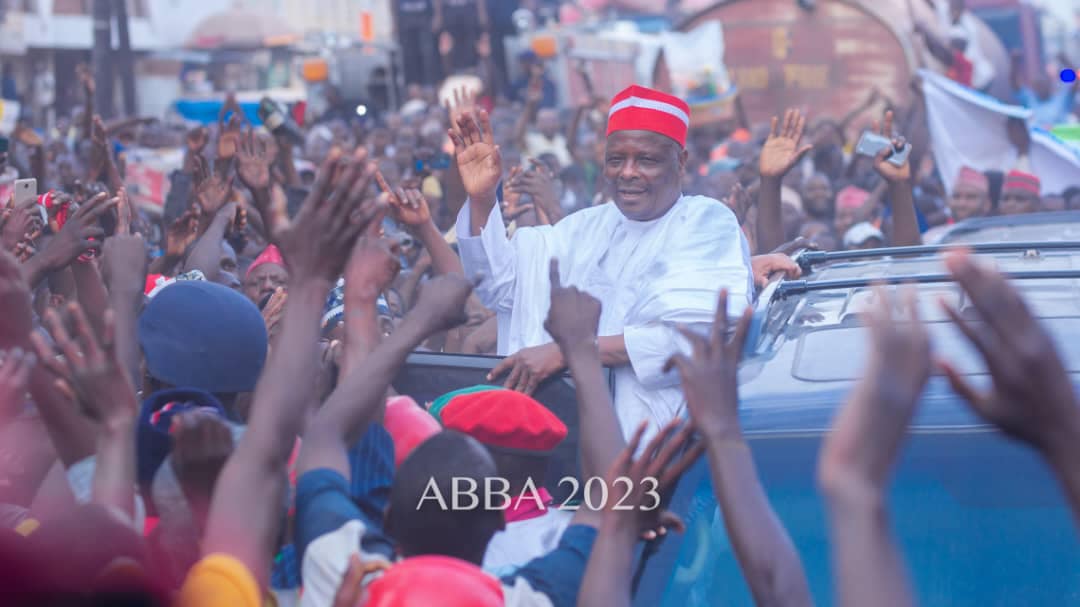
In the aforementioned case, the tribunal declared that it lacked the authority to invalidate votes announced by the Independent National Electoral Commission (INEC). Yet, perplexingly, a similar tribunal, convened in Kano nearly one week ago, asserted the power to cancel over 165,000 votes that had been cast in favor of HE Abba Kabir Yusuf , the duly elected governor and leader of the most populous state in Nigeria.

These inconsistent judgements have left many citizens bewildered and concerned about the integrity of the judicial system. The judiciary, often seen as a beacon of hope for justice, now faces scrutiny for potentially yielding to external pressures, particularly when it comes to cases involving the executive arm of government.

This has raised doubts about the judiciary’s ability to uphold the principles of fairness, transparency, and the rule of law, leaving individuals like yourself understandably perplexed about the state of affairs in Nigeria’s legal landscape.

Dr. Mansur Hassan Is a Senior Lecturer in the Department of Mathematics, Yusuf Maitama Sule University, Kano

Challenging stereotypes and celebrating deaf awareness month: A call for inclusion

By Ibrahim Tukur

As we enter the last week of September, I am compelled to pick up my pen and continue writing as usual.

September marks Deaf Awareness Month, a time when the deaf community comes together to shed light on their unique culture and the challenges they face in their interactions with society.

Although I am unable to organise a learning event this time for personal reasons, I intend to celebrate this month by raising awareness about the various challenges faced by the deaf community.

One of the most significant issues that must be addressed is the pervasive problem of stereotypes that persistently plague the deaf. These stereotypes are prevalent across many societies, especially in Africa, where individuals hold negative misconceptions about the deaf. Some wrongly view the deaf as cursed, insane, mad, aggressive, or even unintelligent.

These harmful stereotypes give rise to discrimination against the deaf. When people harbour negative beliefs about the deaf, they often treat them unfairly. In some families, deaf individuals are treated like slaves due to the unfounded belief that they are mentally unstable. Some parents deny their deaf children access to education, erroneously believing that they have no promising future and won’t contribute positively.

Despite many deaf individuals proving these stereotypes wrong by excelling in higher education, they still face discrimination. Deaf graduates struggle to find good job opportunities, and even deaf schools, where they should be employed, are often staffed primarily by hearing individuals.

Stereotypes also result in stigmatisation. Many people avoid socialising with the deaf, assuming they are prone to madness or aggression and quick to engage in conflict. Personally, when I became deaf, I lost numerous friends who began avoiding me, leading to feelings of loneliness and isolation.

Moreover, stereotypes expose the deaf to mockery solely because of their inability to hear. People often make fun of them, use derogatory terms, and speak negatively about them. I personally experienced ridicule and mockery when I lost my hearing at the age of six, which frequently led to conflicts, ultimately forcing my family to relocate.

Thankfully, there are ways to combat this issue. Eliminating deaf-based stereotypes can begin with increased awareness about the nature of hearing impairment. Workshops and seminars on sign language should be organised, enabling better communication and understanding between the hearing and deaf communities. Additionally, introducing Deaf Studies into school curricula can familiarise students with the experiences and capabilities of the deaf.

It is crucial to recognise that deaf individuals are sane; they are not “mad” or “cursed.” They possess the same potential as anyone else and deserve to be treated with dignity and respect. Let us work together to break down these harmful stereotypes and promote inclusivity for the deaf community. They deserve it, without a doubt.

Spoken on the Moon: English as the leading international language

By Musa Touray

Africans who dwell on the torturous past of slavery and colonialism find it hard to recognise the essence of a language that has long transcended its original shores. Deepening one’s intellectual quest through the continually universalised medium of communication is, to them, an acknowledgement of superiority some users have attached to the language.

This popular warped perception has dampened our commitment to the pursuit of the English language in a world where minimal mastery of it is a marketable accomplishment. Striving to learn and apply the basics of the language is not only weighed down by dissuasive forces of mediocrity but the process is often mischaracterised as a showy obsession with ‘big English.’ It’s time we broke free from this notion and joined the rest of the world to maximise our understanding of a globally sought-after commodity.

English is an epilanguage in most, if not all, spheres of life—scholarship, extraterrestrial research, scientific studies, diplomacy etc. An epilanguage is used as a means of expression for some purpose, such as those highlighted above. Major scientific discoveries and breakthrough publications have been made in English, even by scholars who use it as a second language and do not have the littlest anthropological affiliation with its native speakers.

“(Proficiency in) English is not a measure of intelligence” has become a central assertion in a section of non-native users’ undervaluation campaign against the language. Unless there exists nuanced definitions of the word beyond me, expressing oneself in any language, not just in English, is itself intelligence.

A hostile follower on X, formerly Twitter, challenged a renowned public affairs analyst to use English and buy fuel if his love affair with words was beneficial. “You may not want to hear this, sir,” replied the analyst, “but I make a living by writing proficient English.” This response clarified for a man who fell under the category of those in oblivion about the language’s incomparable marketability in the contemporary world. “I am paid for producing grammatically-decent content,” he added. 

Using a language also means we should not hold the laws that govern it in contempt. As they obtain for man, rules ensure correct usage and fight off linguistic anarchy. This is one aspect most of us have ignored in making a living through the English language. For example, newspapers, a traditional platform for learning English, have become guilty of unforgivable solecisms.

The convenience of social media has given birth to a handful of commentators and self-styled journalists who exhibit a flagrantly terrible command of the language they choose to communicate. The urgent need to learn the basics of their preferred language is overshadowed by a desire to generate reactions and clout. With hundreds of thousands of followers, some pass off bruised grammar to an uncritical readership.

School-going enthusiasts of current affairs are bound to accept as grammatically flawless whatever they read in newspapers or press releases. This is supposed to be the case if the articles are subject to rigorous editorial scrutiny to establish facts and ensure that grammar rules are respected.

The growing popularity of English in non-anglophone domains is telling. While we continue to dismiss it as the colonisers’ tongue, others have recognised it as an indispensable language that serves transactional and communicative needs in ways and styles no other language does.

Musa Touray wrote from Sandu Kuwonku, The Gambia. He can be reached via musatouray970@gmail.com.

Why Kano State deaf graduates deserve foreign scholarship even without First-Class

By Zulkifil Aminu Adam

It has come to our attention that three Kano residents with disabilities have been chosen to be among the recipients of the state’s current scholarship scheme. However, due to failure to match the conditions, i.e. First Class, they will be granted a domestic scholarship rather than a foreign one. This is highly commendable, and we express our heartfelt gratitude on behalf of the disability community. However, I beg permission to bring something critical to the notice of the administration in the hope that it will urge the government to reconsider this arrangement.

First and foremost, people with disabilities (PDWs) require special consideration in every socioeconomic, academic, and political sphere. This is a widely accepted general remark that arose due to the innate proclivities of individuals with disabilities. It is consistent with the above general statement that the University of Ilorin in Kwara state admits PWDs without requiring them to take the post-UTME, not to mention the various benefits PWDs receive at the university.

Several Nigerian universities have declared 160 as the cut-off mark for PWDs; the Joint Admission and Matriculation Board (JAMB) is currently holding a conference with deaf student representatives from various Nigerian tertiary institutions to discuss and ensure compliance with the above statement in dealing with PWDs regarding admission issues.

Second, in the case of Kano and the Nigerian educational system in general. It is critical to consider the educational framework in which persons with disabilities grew up before proceeding with their placement or requiring particular academic standards from them. As deaf students in secondary school, we were taught by teachers who walked away after filling up blackboards because they couldn’t communicate in sign language. We had to study on our own. And the government did nothing to address the situation.

When we finished secondary school and fought for admission to the university, we were compelled to study in Special Education (a department that has never produced a first-class graduate) or change university. We don’t have a choice except to accept.

Then, we enter lecture halls and face a new challenge: exclusion. We sit among hearing students (who enjoy the lecture), feeling lost and neglected. We were not provided with sign language interpreters. Isn’t this depressing? Nonetheless, we persevered through all these difficulties until graduation.

Despite all the challenges we faced from secondary school to university, we were required to finish with first-class honours to be considered for a foreign scholarship. With due respect, the demand is excessive. The government, schools, or whatever institution should not give us less while expecting so much from us.

Of course, we do not justify lower academic performance by disability, but by our unmet needs and the numerous obstacles we face as people with disabilities on the path to academic improvement – thanks to the carefree attitude of the government and the universities. Please allow me to say that a deaf graduate from Bayero University Kano (BUK) with a Second Class is equivalent to a First-Class hearing graduate in the same university.

Dear KNSG, Kano deaf students, whether First Class or not, deserve a foreign scholarship. The difficulties they overcome to graduate are sufficient justifications. Let the scholarship be a restitution for the government’s neglect throughout history.

Zulkifil Aminu Adam is the Assistant Secretary, National Association of Nigerian Deaf Students (NANDS). He can be reached via zulqeepil19@gmail.com.