News

Armed gang seizes medical staff, 5 patients, in Kaduna raid

By Abdullahi Mukhtar Algasgaini

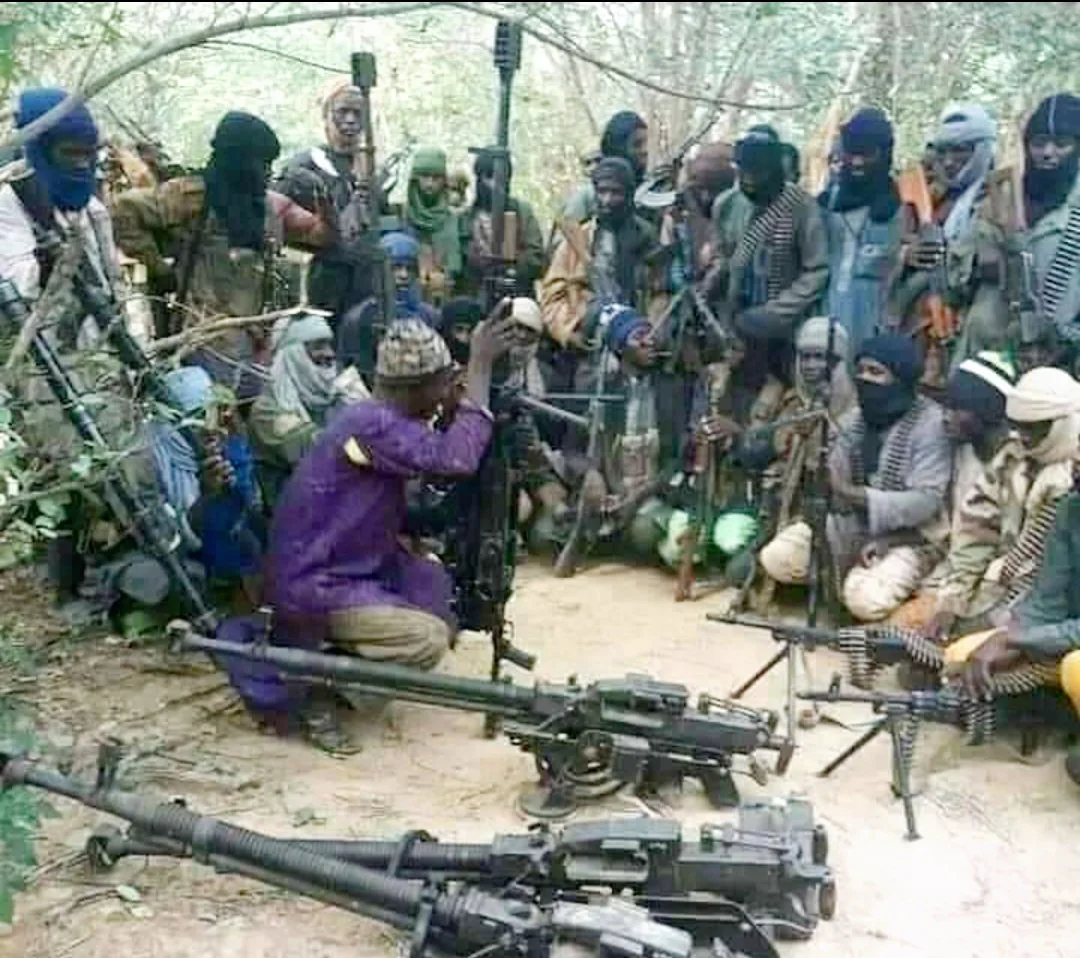
A large group of armed bandits attacked a private hospital in Kujama, Kaduna State, abducting a medical doctor, five patients, and a security guard.

The assailants targeted the Nasara Nursing and Maternity Home in the early hours of Tuesday. According to local sources, the attackers also raided houses in the vicinity during the operation.

One security guard was shot multiple times after attempting to resist the invaders.

He was later transported to a different medical facility for emergency care.

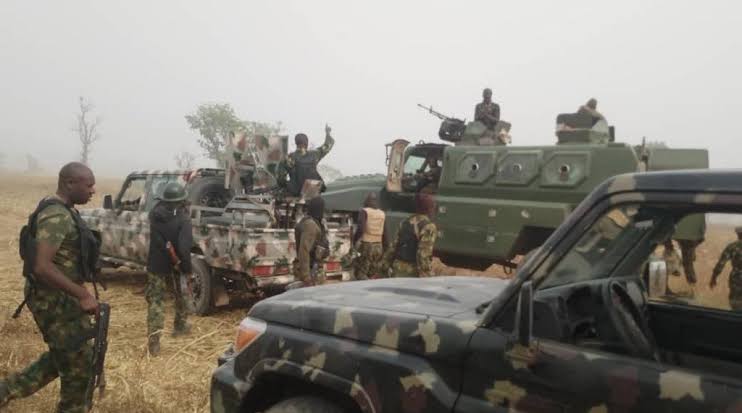
This incident is the latest in a series of violent attacks in the region, coming just days after bandits killed two police officers during an assault on a police headquarters in Zangon Kataf Local Government Area.

BUK commissions ten solar-powered tricycles to promote sustainable transportation

By Anas Abbas

Bayero University, Kano (BUK) has commissioned ten solar-powered tricycles to enhance transportation across its campuses.

The commissioning ceremony, held on Monday, October 20, 2025, marks a significant step in the university’s commitment to green innovation and cleaner energy use within its community.

Speaking at the event, the Vice Chancellor, Professor Haruna Musa, described the initiative as a landmark achievement under the Renewed Hope Agenda of the Federal Government, supported by the Tertiary Education Trust Fund (TETFund).

He said the solar-powered tricycles are part of BUK’s efforts to integrate sustainable technologies into its operations, adding that the project will improve campus mobility while reducing carbon emissions.

“Today, we are delighted to receive ten solar-powered tricycles that will operate within the University to ease transportation challenges for our students and staff. We are also expecting an additional ten soon. With the existing eight petrol-powered tricycles already in operation, a total of twenty-eight tricycles will soon be serving our community,” Professor Haruna stated.

He urged members of the university community to make responsible use of the vehicles and appreciate the innovation as a collective asset that enhances the campus experience.

The event was attended by principal officers of the University, including the Deputy Vice Chancellors, Professor Aliyu Muazu and Professor Amina Mustapha, the Registrar, Malam Haruna Aliyu, the Bursar, Malam Rabi’u Dauda, and the University Librarian, Dr. Kabiru Dahiru Abbas.

The solar tricycles are expected to significantly reduce fuel dependence and operational costs, reinforcing BUK’s reputation as a leading institution in sustainability and technological advancement.

OPINION: Singing for an unsung hero, by Murtala Sani

By Murtala Sani

Muhammadu Gwarzo was one of the first five people that pioneered Hausa novel. He was selected alongside Abubakar Imam, Abubakar Tafawa Balewa, John Tafida and Bello Kagara by Rupert East, a colonial master who contributed a lot in the promotion of Hausa Language and Literature. The five pupils were tasked to write Hausa novels which were published by Literature Bureau. The Bureau was renamed Northern Nigerian Publishing Company(NNPC), Zaria.

Therefore, a competition was organized which led to the emergence of “Ruwan Bagaja” by Abubakar Imam, “Shehu Umar” by Abubakar Tafawa Balewa,”Jiki Magayi” by Rupert East and John Tafida, “Gandoki” by Bello Kagara and “Idon Matambayi” by Muhammadu Gwarzo.

Mallam Muhammadu Gwarzo,OBE, was born in 1911 at Gwarzo, which is now a Local Government in Kano State. He attended Kano Provincial School from 1923 to 1928. He proceeded to Katsina Higher College from 1928 to 1932.

He worked as Water Works Superintendent at Kano N.A. Electricity and Water Supply Undertaking from 1932 to 1936. He served as a Clerical Officer, Kano N.A. Works Department from 1936 to 1939. Mallam Muhammadu Gwarzo became a Teacher at Kano Middle School from 1939 to 1944.

During his stay in the school, he held the position of Assistant Headmaster from 1944 to 1948 and then the school’s Headmaster from 1948 to 1952. He was a Staff Officer, Kano N.A. Staff Office from 1952 to 1954. At Kano Provincial Office, Muhammadu Gwarzo was a Provincial Adult Education Officer from 1954 to 1955 and then a Staff Officer from 1956 to 1963.

He also served as a Chief Scribe, Kano N.A. Central Administration from 1963 to 1969. He was a Councillor for Establishment and Training, Kano N.A. Establishment and Service Matters Department from 1969 to 1975.

Later,Mhammadu Gwarzo became a Permanent Commissioner, Kano State Local Government Service Commission from 1975 to 1980.

Muhammadu Gwarzo performed some honorary assignments; Military Training for Civil Defence during World War II,1940. He was a Member, Peace Committee for Kano Riots,1953. He was a Member, Federal House of Representatives ofr Karaye,from 1959 to 1966. He was a Chairman, Kano State Scholarship Board, from 1970 to 1975,He was a Member Nigerian Citizenship and Naturalisation Committee in1973. He was a Member Governing Council,Universitywe of Benin, from 1975 to 1980.

He was a Member, Governing Council, University of Ibadan,from 1984 to 1988. He visited Great Britain in 1952 and Saudia Arabia for Hajj Pilgrimage in 1961. In the 1980s, he performed Umrah several times. Reading and hockey were his hobbies. While serving as Water Works Superintendent, he persuaded public to embrace the use of pipe-borne water and abandon the use of wells and other open sources of water in order to prevent them from diseases.

At that moment,hospitals were dreaded because of ignorance and lack of sufficient enlightenment. During his stay at Kano Middle School, he indoctrined and instilled displine and sound morals to school boys in order to become responsible and productive adults to the society. This was reflected in the lives of some of his pupils from 1939 to 1952. Few of the pupils were; Late Alhaji Ado Bayero, Sarkin Kano, Late Tijjani Hashim, Galadiman Kano, Late Alhaji Abbas Sunusi, Wamban Kano and later Galadiman Kano,Late Mahe Bashir Wali, Walin Kano,Alhaji Muhammad Koguna, Durbin Kano, Alhaji Sama’ila Gwarzo,former Minister of Police Affairs and National Security Advisor, Late Haliru Gwarzo, former journalist and BBC reporter.

He contributed to the restoration of peace, tranquility and concord between different ethnic groups during the 1953 Kano Riots. Muhammadu Gwarzo’s “Idon Matambayi” revolves around the lives of four thieves whose lives entirely defend on armed robbery and stealing. They deployed different tricks outsmarting innocent people. Although they had a teamwork,there was no trust among them. They were always on constant fear of being cought despite their mastery in the evil act. The central moral of the story is that all the thieves met their waterloo. While the three thieves were arrested, the central character, Idon Matambayi, lost all his ill gotten fortunes despite the fact that he repented from stealing.

Muhammadu Gwarzo died in 1992. He had two wives, initially. He left five children;Sa’idu Gwarzo,former Federal Permanent Secretary,first Secretary Kano State Civil Service,first Director Kano State College of Art,Science and Remedial Studies(CAS),former Chairman Kano Civil Service Commission.

Basiru Muhammad Gwarzo, former Local Government Secretary within various Local Governments in the old Kano State before Jigawa State was carved out,he was also a school mate of late General Muhammadu Buhari and late General Shehu Musa Yar’adua at Katsina Provincial School. Hannafi Muhammadu Gwarzo, former Deputy Director, Kano State Ministry of Works. Hauwa Muhammadu Gwarzo,a housewife. Dalhatu Muhammadu Gwarzo, former General Manager NNDC Kaduna,former Kano State Commissioner for Special Duties, former Kano State Commissioner Ministry of Commerce, former Executive Director Express Petroleum and Gas Company Limited. Dalhatu Gwarzo is the only living son of late Muhammadu Gwarzo.

Re: Masussuka and the mirror of a changing North, by Habibu Bawa

By Habibu Bawa

Abdulrazak Ibrahim’s “Masussuka and the Mirror of a Changing North” is an elegant work of prose — articulate, persuasive and vividly composed. Yet beneath its rhetorical beauty lies a fragility that becomes clear the moment one asks: where does persuasion end and proof begin? Ibrahim writes as a fan attracted by eloquence but not convincing evidence. His essay, probably well-meaning, reveals more of the writer’s admiration than the scholar’s discipline or scriptural sophistication.

Ibrahim’s defense of Sheikh Yahya Ibrahim Masussuka as a courageous reformer is animated by conviction but deprived of verification. It celebrates the Sheikh’s defiance of orthodoxy without subjecting that defiance to the tests of fiqh, tafsir, sirah or any theological rigor. Masussuka is praised not for the soundness of his arguments, but for the smoothness of his speech. His eloquence, like a “polished mirror”, is obviously what dazzles the writer — yet the mirror reflects more light than truth.

This is not the first time eloquence has worn the robe of enlightenment. History recalls Muhammad Yusuf, the founder of Boko Haram, who was initially non-voiolent and probably more articulate, logical, and philosophical. He too questioned clerical authority and captivated Borno and neighbouring youth with the music of reason. But unanchored intellect is a dangerous instrument that not only ruins a generation but even the very text the proponents of logic pretend to defend. Eloquence is a virtue, yes, but when it becomes the measure of theology, chaos often hides behind charm.

Ibrahim dived deeper in philosophical error: believing that deviating from orthodoxy or traditional methods confers authenticity yet failed to tell us the very things that Masussuka intends to establish or how incredible what Masussuka antagonises are. But neither Ibrahim nor Masussuka was there when the Qur’an was revealed to the Prophet Muhammad (peace be upon him). The Qur’an is not a book for speculative artistry; IT IS A DIVINE MESSAGE TO MANKIND THROUGH A CHAIN OF TRANSMITTERS. To disregard the accumulated wisdom of scholars like Tabari, Ibn Kathir, and Qurtubi not even prophetic exegesis in the name of “renewal” is not logic— it is scriptural anemia masquerading as intellectualism.

The writer’s romantic portrayal of Masussuka as a philosopher of faith also rests on a mistaken premise. Islam welcomes reason but never enthrones it above revelation. Philosophy may question, but revelation commands. The Qur’an in several places encourages one to “think”, “reason” and “seek clarification” but discouraged blind assumptions(Q17:36). True intellectual reform, therefore, is not rebellion against tradition but refinement within it — guided by ilm, hilm, adab and hikmah.

The author extols critical thought yet exempts his subject from it. He does not interrogate Masussuka’s methods, his interpretive foundations, or his striking disregard for centuries of Islamic hermeneutical tradition. Instead, he presents dissent as a moral victory and orthodoxy as mere inertia.

What is most disappointing is that Ibrahim never understands the Masussuka he defends. The essay paraphrases his rhetoric but never engages his exegesis. There is not a single serious comparison with earlier Qur’anic commentators, jurists, or theologians.

Masussuka’s avoidance of personal attacks, which Ibrahim glorifies as restraint, is no proof of truthfulness. The devil too is courteous when it suits his purpose. Refinement of language is not equivalent to correctness of doctrine. A graceful heresy remains a heresy.

Like many of Masussuka’s fans, Ibrahim also confuses criticism with persecution. The fact that scholars question Masussuka’s unorthodox views does not mean they fear truth; rather, they guard it. The duty of the learned is to preserve orthodoxy from distortion, not to applaud every rhetorical deviation as enlightenment. To dismiss their caution as insecurity is to misunderstand the sacred function of ijma’, mash-hur or jamhur — the scholarly consensus that safeguard the unity of Muslim belief.

Worse still, Ibrahim’s chosen “sources” — a cluster of Facebook commentators and social media analysts — are not authorities in Islamic jurisprudence, a lot have proven not to understand simple Islamic concepts like the very Masussuka they sought to defend. Their arguments, filtered through a postmodern lens of individualism and linguistic play, betray an orientalist infatuation with iconoclasm. To treat online pundits as epistemic equals to trained fuqaha is to confuse noise with knowledge. The result is a text that celebrates rebellion while ignoring the rigors of scholarship.

If Masussuka is, as Ibrahim suggests, “a mirror of a changing North,” then we must ask what that mirror truly reflects. Is it the light of renewal or the glare of confusion? A mirror does not purify; it only reproduces what stands before it. Without the filter of scholarship, even reflection can become distortion.

The North indeed needs thinkers — but thinkers who build on knowledge, not merely perform it. Intellectual reform is not achieved through viral rhetoric or fashionable dissent. It begins with reverence for learning, continues with critical humility, and ends with total submission to absolute truths.

Abdulrazak Ibrahim writes beautifully, but beauty without balance misleads. The test of thought is not how finely it is expressed, but how firmly it stands before reason and revelation. Masussuka’s brilliance may illuminate for a moment, but without the anchor of scholarship, it risks becoming the kind of light that blinds before it guides.

In defending the mirror, Ibrahim has mistaken reflection for revelation — and in doing so, has turned philosophy into performance. The North deserves better than eloquent confusion; it deserves wisdom.

There’s more to scholarship than eloquence or writing prowess. Anyone who accepts the Quran must accept the exegesis of it’s transmitter, receiver, compilers and custodians.

Habibu Bawa

20/10/25

Vigilante leader issues 24-hour ultimatum over Kanu’s release

By Abdullahi Mukhtar Algasgaini

A vigilante commander known as Asabuja has issued a 24-hour ultimatum to the Federal Government, threatening to attack oil wells and foreign companies in Rivers State if the detained leader of the Indigenous People of Biafra (IPOB), Nnamdi Kanu, is not released.

In a public address delivered on Tuesday, Asabuja, who identified himself and his family as Igbo, demanded President Bola Tinubu secure Kanu’s freedom.

He declared that failure to comply would result in actions to “shut down the economy” of the state.

“If Tinubu does not free Nnamdi Kanu in 24 hours, we will blow up every oil well and make every foreign company leave,” Asabuja told a crowd and his online followers.

The threat has triggered heightened security alerts across Rivers State.

According to security sources, authorities are on high alert, with coastal and oil facilities bolstering their defenses in anticipation of possible attacks.

Residents and businesses throughout the state have been advised to remain vigilant and adhere to all official security advisories as the situation unfolds.

NELFUND opens student loan portal for 2025/2026 session

By Anwar Usman

The Nigerian Education Loan Fund has announced the official opening of its student loan application portal for the 2025/2026 academic session, providing access to financial support for students across tertiary institutions in the country.

The agency said the application will run for three months from Thursday, 23rd October 2025, to Saturday, January 31, 2026.

This was revealed in a statement issued on Tuesday by NELFUND’s Director of Strategic Communications, Oseyemi Oluwatuyi.

NELFUND urged fresh students to apply using their Admission Number or JAMB Registration Number in place of a matriculation number.

It called on tertiary institutions to show understanding regarding registration and fee payment deadlines for applicants awaiting loan disbursement.

Institutions are encouraged to show understanding in enforcing registration and fee Flexibility payment deadlines for students awaiting loan disbursement

“Institutions that have not yet commenced their 2025/2026 academic session should formally write to NELFUND with their approved academic calendar for scheduling flexibility

The statement further revealed that, “NELFUND appeals to all institutions to consider temporary registration measures for students whose loan applications are being processed to ensure that no student loses access to education due to financial constraints.”

Three BUK academics among world’s most cited scientists in 2025 ranking

By Uzair Adam 

Three scholars from Bayero University, Kano (BUK), have been named among the top 2% of the world’s most influential scientists in the 2025 global ranking released by Stanford University in collaboration with Elsevier.

The Daily Reality reports that the list, which draws on data from the Scopus database, recognises researchers whose work is among the most cited worldwide. 

The ranking evaluates research impact using standardised metrics, including total citations, h-index, co-authorship-adjusted index (hm-index), and a composite indicator (c-score), across 22 fields and 174 subfields.

The BUK academics featured in the 2025 ranking are Professor Abdulrazaq Garba Habib of the Department of Internal Medicine, who ranks 82nd globally in Clinical Medicine, subfield Tropical Medicine, with an h-index of 11 and an hm-index of 5.

Dr. Sunusi Marwana Maniadan from the Department of Mechanical Engineering, ranked 4,131st in Enabling and Strategic Technologies, subfield Materials, with an h-index of 14 and an hm-index of 4. 

Dr. Isah Baba Abdullahi of the Department of Mathematical Sciences, ranked 142nd in Physics & Astronomy, subfield Mathematical Physics, holding an h-index of 8 and an hm-index of 4.

The Stanford-Elsevier ranking is widely regarded as one of the most credible indicators of scientific influence, spotlighting researchers whose work is highly cited and influential in their fields.

Commenting on the achievement, BUK Vice Chancellor, Professor Haruna Musa, described the recognition as a reflection of the university’s academic growth and research excellence on the global stage. 

The inclusion of these three scholars’ positions BUK among the select Nigerian universities with multiple entries in the prestigious annual ranking.

Airport officials must stop begging travellers, senator tells aviation minister

By Abdullahi Mukhtar Algasgaini

A Nigerian senator has called on the Minister of Aviation, Festus Keyamo, to stop uniformed personnel at the country’s airports from begging travellers for money.

The appeal was made by Senator Osita Izunaso during an event in Abuja on Monday.

He described the conduct of some officials from agencies like the Nigeria Customs Service and the Nigeria Immigration Service as a “national embarrassment” that tarnishes Nigeria’s image, especially for foreign visitors.

Izunaso specifically pointed out the practice of officials using excessive greetings like “Your boys are here, Sir!” as a subtle but widely understood demand for tips.

However, the President of the Nigerian Institute of Public Relations, Dr. Ike Neliaku, countered the claim, stating that he recently travelled through an international airport and experienced significant improvements with no such demands.

In response, the Minister of Aviation pledged that Nigeria would be ready to warmly welcome all visitors for the upcoming 2026 World Public Relations Forum, which the country is set to host.

Kaduna tertiary institutions call off strike after government concessions

By Abdullahi Mukhtar Algasgaini

The Joint Union of Tertiary Institutions of Kaduna State (JUTIKS) has suspended its indefinite strike, bringing relief to students and staff across the state’s polytechnics and colleges of education.

The industrial action, which began on September 30, 2025, was called off on Monday, October 20, 2025, following a meeting between union leaders and the State Governor.

The strike was initiated to demand the implementation of a new CONPCASS/CONTEDISS salary structure, which had been stagnant for over 16 years, and the extension of the 65-year retirement age to include non-teaching staff.

According to a statement released by JUTIKS Chairman, Comrade Usman Shehu Suleiman, the Governor approved key demands during a meeting on October 17, 2025.

The government agreed to implement 70% of the 2024 CONPCASS/CONTEDISS salary structure, effective from the October 2025 payroll, and to include non-teaching staff in the 65-year retirement age policy.

“In view of the above, the leadership of JUTIKS hereby suspends the indefinite strike action with effect from today,” the statement read, directing all member unions to comply with the directive.

The union also expressed gratitude to its members for their “support and resilience” during the three-week strike.

Academic and non-academic activities are expected to resume immediately across the affected institutions.

I’m committed to ending insecurity in Zamfara—Gov. Lawal

By Uzair Adam

Governor Dauda Lawal has emphasized that addressing insecurity in Zamfara State remains a shared responsibility of his administration and all stakeholders.

He made the remark on Monday while presiding over the 18th Executive Council meeting at the Government House in Gusau.

A statement by the governor’s spokesperson, Suleiman Bala Idris, said the council deliberated on critical matters such as security, education, health, and infrastructural development, among others.In his opening remarks, Governor Lawal said, “I would like to remind us of our collective obligations in this administration concerning the fight against insecurity.

“We have made significant progress and succeeded in restoring relative calm to most areas of the state. The terror of bandits has been crippled, unlike in previous years.”

He urged council members to be proactive, maintain accessibility to their constituents and local government officials, and consistently provide reports to the Commissioner for Security.

“Let us pray for the souls of all our fallen heroes,” the governor added.

Governor Lawal also encouraged members of the council to build strong working relationships and ensure synergy with other political appointees and elected officials for better governance.