News

Sambo turbaned as Sardaunan Zazzau

By Abdullahi Mukhtar Algasgaini

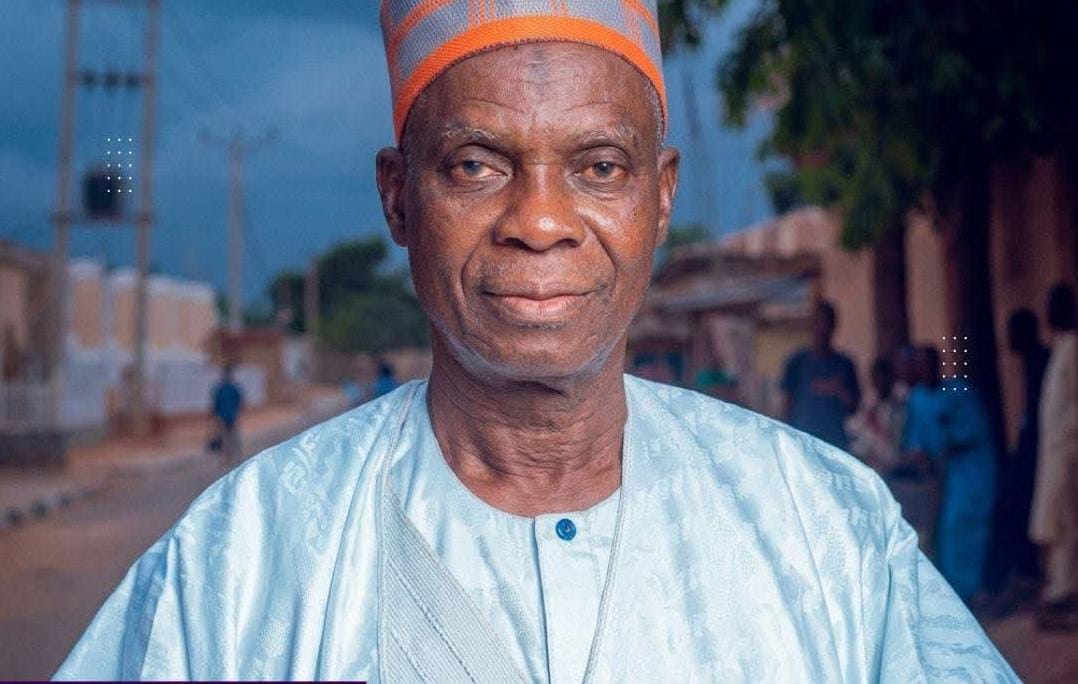
Arc. Mohammed Namadi Sambo, former Vice President of Nigeria, was on Saturday turbaned as the Sardaunan Zazzau.

The historic ceremony was performed by the Emir of Zazzau, His Highness, Amb. Ahmed Nuhu Bamalli, at his palace in Zaria.

Kaduna State Governor, Senator Uba Sani, presided over the event as the Special Guest of Honour and Chief Host, underscoring the significance of the chieftaincy title.

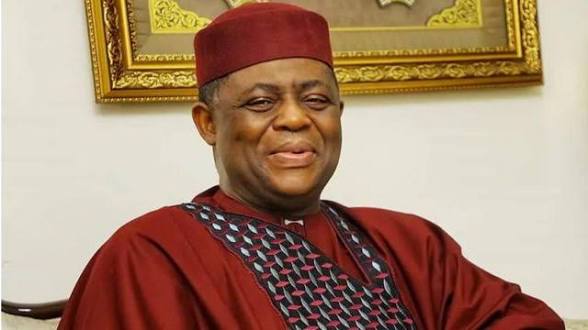
The event attracted a gathering of the nation’s political elite. Former President Goodluck Jonathan was in attendance, alongside the Speaker of the House of Representatives, Rt. Hon. Tajudeen Abbas.

The ceremony also drew the presence of the Deputy Governor of Zamfara State, as well as former Governors from Kaduna, Kano, Sokoto, and Jigawa states.

They joined a host of other dignitaries, traditional rulers, and well-wishers to honour the former Vice President.

The title of Sardaunan Zazzau is a prestigious traditional title within the Zazzau Emirate, and its conferment on Arc. Sambo marks a significant milestone in his post-vice presidency life.

Tinubu grants presidential pardon to Maryam Sanda, other inmates

By Hadiza Abdulkadir

President Bola Ahmed Tinubu has granted a presidential pardon to several inmates across the country, including Maryam Sanda, who was sentenced to death in 2020 for killing her husband, Bilyamin Bello, in 2017. Sanda, aged 37, had spent six years and eight months at the Suleja Medium Security Custodial Centre before her release.

Her family had earlier appealed for clemency, citing her exemplary conduct in prison, genuine remorse, and commitment to a reformed lifestyle. They also argued that her release would serve the best interests of her two young children.

The presidential pardon, announced by the Ministry of Interior, also included other notable inmates such as former lawmaker Farouk Lawan and businessman Herbert Merculay, among others.

Officials stated that the decision was part of President Tinubu’s broader initiative to decongest correctional facilities and promote restorative justice, focusing on rehabilitation and reintegration of reformed inmates into society.

Soldiers neutralise 9 terrorists, rescue 2 people in Borno

By Anwar Usman

Troops of Operation Hadin Kai have killed nine terrorists and rescued two people carrying ransoms to the insurgents in Gagiram and Magumeri areas of Borno state.

In a statement issued on Saturday by the spokesperson of Operation Hadin Kai, Lt Col Uba Sani, said the terrorists were neutralised in separate operations.

Sani noted that aside from the recovery of weapons, many of the insurgents also suffered significant injuries, dispersing in disarray.

The statement in part reads “In continuation of ongoing counter-terrorism operations in the North East, troops of Operation HADIN KAI (OPHK) conducted a successful fighting patrol in response to credible intelligence on the movement of Boko Haram terrorists around Goni Dunari in Magumeri LGA of Borno State on October 10, 2025.”

“The terrorists, reportedly moving on two vehicles and 24-foot fighters, were observed setting houses ablaze and terrorising locals. Acting swiftly, our troops launched an aggressive fighting patrol to intercept the threat.”

He said as the troops advanced towards the objective, the terrorists attempted to flee towards Damjiyakiri village.

The statement further revealed that “a frontal attack was immediately launched, and troops engaged the terrorists with a heavy barrage of fire, resulting in the neutralisation of five terrorists, while the remaining 19 dispersed in disarray.

“Some were wounded as blood trails were observed at the contact scene,” he said.

He listed the recovered items to include 1 x AK-47 rifle (Reg. No. 06798), 5 x Magazines (3 empty, 2 loaded), 31 x 7.62mm rounds, 1 x Itel mobile phone, 1 x dagger.

The spokesperson also stated that, in separate operations, troops mounted on motorcycles engaged Boko Haram fighters along the Gajiram–Bolori–Mile 40–Gajiganna axis near Zundur village of the state.

He said during the firefight, four terrorists were neutralised, while others dispersed into the surrounding bush.

“Troops also successfully rescued Mr Modu Kinnami (55 years old) and Mr Bukar (57 years old), both from Guzamala, along with a sack containing Seven Hundred and Fifty Thousand Naira (N750,000),” he noted.

On Friday, four soldiers were killed and five others injured when Boko Haram fighters attacked a military stand in Ngamdu, along the Damaturu–Maiduguri Road in Kaga Local Government Area of Borno State.

He noted that, operations are ongoing on all fronts to maintain pressure on the terrorists and deny them freedom of movement.

Explosion at Tennessee ammunition plant leaves 19 missing

By Maryam Ahmad

An explosion at an ammunition plant in Tennessee has left at least 19 people unaccounted for, authorities said on Friday. The blast occurred at Accurate Energetic Systems, a company that manufactures test explosives, and completely levelled the facility.

Police confirmed that the death toll remains unclear, but early reports indicate that several employees were killed in the explosion. Emergency crews and investigators have been working at the site since the blast, searching for survivors and assessing the damage.

Officials said the cause of the explosion has not yet been determined. The investigation is ongoing.

Presidency dismisses World Bank poverty report, describes it ‘unrealistic’

By Abdullahi Mukhtar Algasgaini

The Presidency has dismissed the latest World Bank report estimating that 139 million Nigerians are living in poverty, describing the figure as “unrealistic” and disconnected from the nation’s true economic situation.

President Bola Tinubu’s Special Adviser on Media and Public Communication, Sunday Dare, stated in a post on his official X handle on Thursday that the World Bank’s statistics must be “properly contextualised” within the framework of global poverty measurement models.

“While Nigeria values its partnership with the World Bank and appreciates its contributions to policy analysis, the figure quoted must be properly contextualised. It is unrealistic,” Dare said.

According to the Presidency, the figure of 139 million Nigerians was derived from the global poverty line of $2.15 per person per day, set in 2017 using Purchasing Power Parity (PPP).

It stressed that the benchmark should not be taken as a direct count of citizens living in poverty.

The statement explained that when converted to local currency, the $2.15 daily poverty threshold amounts to about ₦100,000 per month—significantly higher than Nigeria’s new minimum wage of ₦70,000.

“There must be caution against interpreting the World Bank’s numbers as a literal, real-time headcount,” it added.

“The measure is an analytical construct, not a direct reflection of local income realities.”

The Presidency also noted that poverty assessments using the PPP methodology rely on outdated consumption data—Nigeria’s last major survey being in 2018/2019—and often fail to capture the informal and subsistence economies that support millions of Nigerians.

It emphasised that the World Bank’s estimate should be viewed as a modelled global projection rather than an empirical representation of present-day conditions.

“What truly matters is the trajectory,” the statement concluded, “and Nigeria’s is now one of recovery and inclusive reform.”

Tinubu grants posthumous pardon to Macaulay, Vatsa, Lawan, 82 inmates

By Abdullahi Mukhtar Algasgaini

President Bola Tinubu has granted posthumous pardons to historical figures including Major General Mamman Vatsa and nationalist Herbert Macaulay, while also approving clemency for 82 current inmates.

The pardons were approved on Thursday following a recommendation from the Presidential Advisory Committee on the Prerogative of Mercy (PACPM), which was endorsed by the National Council of State.

Among the most notable beneficiaries are Major General Mamman Vatsa, executed in 1986 for a treason plot, and Herbert Macaulay, a founding father of Nigerian nationalism who was convicted by British colonial authorities in 1913.

The President also formally pardoned the “Ogoni Nine,” including activist Ken Saro-Wiwa, who were executed in 1995.

For the living, the President commuted the death sentences of seven inmates to life imprisonment and reduced the prison terms of 65 others. A total of 82 inmates were granted clemency.

Notable individuals receiving pardons include former House of Representatives member Farouk Lawan and three others, allowing them to fully reintegrate into society.

The 12-member committee, chaired by the Attorney General, reviewed 294 cases, interviewing 175 inmates and considering 62 applications before making its final recommendations.

New INEC chairman approved, awaits senate confirmation

By Abdullahi Mukhtar Algasgaini

The National Council of State has unanimously approved Professor Joash Ojo Amupitan (SAN) as the new Chairman of the Independent National Electoral Commission (INEC).

The nomination of Prof. Amupitan, a 58-year-old legal scholar from Kogi State, was presented by President Bola Ahmed Tinubu to fill the vacancy left by the departure of Professor Mahmood Yakubu, who served from 2015 until October 2025.

President Tinubu highlighted that Amupitan is the first individual from Kogi State to be nominated for this position and described him as apolitical.

The nomination received strong support from council members, with Governor Ahmed Usman Ododo of Kogi State endorsing the professor as a man of integrity.

In accordance with constitutional requirements, President Tinubu will now forward Amupitan’s name to the Senate for screening and confirmation.

A professor of law at the University of Jos, Amupitan specializes in Company Law, Evidence, and Corporate Governance.

He became a Senior Advocate of Nigeria in 2014 and currently serves as the Deputy Vice-Chancellor (Administration) at the University of Jos. He is married with four children.

Court orders arrest of ex-INEC chairman Mahmood Yakubu for contempt

By Abdullahi Mukhtar Algasgaini

A Federal High Court sitting in Osogbo, Osun State, has ordered the arrest and imprisonment of the former Chairman of the Independent National Electoral Commission (INEC), Professor Mahmood Yakubu, for contempt of court.

Justice Adefunmilola Demi-Ajayi issued the order on Monday, September 29, 2025, after ruling that Yakubu and the electoral body had disobeyed a prior court judgement mandating the relisting of national officers of the Action Alliance political party on INEC’s website.

The court ruled in favour of a suit filed by members of the Hon. Adekunle Rufai Omoaje-led executive of the Action Alliance.

The plaintiffs alleged that INEC unlawfully removed the names of 30 state chairmen aligned with their faction from its official portal.

In suit number FHC/OS/194/2024, the plaintiffs — Action Alliance, Professor Julius Adebowale, Engr. Olowookere Alabi, Barr. Chinwuba Zulyke, Oladele Sunday, Simon Itokwe, and Araoye Oyewole — sought an order compelling INEC and Professor Yakubu to reinstate their names and respect previous court judgments recognising their leadership.

The court granted the request and further ordered the Inspector General of Police to arrest and initiate contempt proceedings against the defendants within seven days.

Justice Demi-Ajayi also imposed a cost of ₦100,000 against INEC and Professor Yakubu, ruling it be paid to the plaintiffs for injuries suffered due to the acts of contempt.

The order was issued just before Professor Yakubu stepped down from his role as INEC Chairman on Tuesday, having completed his tenure.

He has been succeeded in acting capacity by Mrs. May Agbamuche-Mbu.

This latest development marks a legal and reputational setback for Yakubu, who had overseen Nigeria’s electoral body for two full terms.

How Ulama shape Kano’s traditional healthcare system—Expert

By Uzair Adam

A PhD student from Ahmadu Bello University, Zaria (ABU), Hidaya Lawal, has called for greater recognition of the role played by Islamic scholars (ulama) in shaping Kano’s traditional healthcare system, saying their influence remains central to public health and community well-being.

The call was made on Wednesday during the second day of a two-day conference organized by the Faculty of History and Development Studies, Bayero University, Kano (BUK).

The conference, themed “Ulama and Politics in Nigeria: Historical Perspectives,” brought together scholars, clerics, and political leaders from across the country.

Presenting her paper titled “The Influence of the Ulama on the Traditional Healthcare System in Kano Metropolis,” Lawal said her study seeks to rediscover the contributions of Islamic scholars to healthcare in Kano, particularly in the post-colonial period.

She explained that traditional medicine in Kano is often misunderstood, noting that it combines Islamic medicine with refined local Hausa practices aligned with the Qur’an and Hadith.

“When we talk about traditional healthcare, people usually think of pre-jihad practices. But in Kano, traditional medicine is an integration of Islamic and Hausa medical practices that have been tested and confirmed to be in line with Islamic teachings,” she said.

Lawal added that while early scholars such as Uthman Dan Fodio and others influenced the health system in the past, modern-day ulama have not received adequate academic attention.

She said the traditional medical system in Kano is holistic and covers mental, social, and moral well-being, not just physical health.

“Unlike Western medicine, which focuses mainly on curing diseases, our traditional medicine emphasizes total well-being—what we call lafiya,” she explained.

Lawal also noted that preventive health practices found in Islam align with modern medical guidelines.

“During the COVID-19 pandemic, practices like handwashing and avoiding overcrowding were already part of Islamic public health principles,” she said.

According to her, collaboration between the ulama, the government, and research institutions has strengthened public trust in traditional medicine.

“Some herbal medicines have been tested by Bayero University Kano’s Department of Pharmacognosy and found to be up to 80 percent safe,” she said.

She added that the ulama also play a key role in addressing harmful superstitions and beliefs that affect mental health.

“Their sermons have helped reduce anxiety and discrimination, especially against women, by correcting false beliefs rooted in tradition,” she said.

Lawal said her research aims to promote greater understanding of the ulama’s influence on public health and encourage the integration of traditional and modern healthcare systems in Kano.

“AI is neither a friend nor an enemy” – Dr. Maida

By Fatima Badawi

Scholars, educators and policymakers converged at Bayero University, Kano this week for the 5th International Conference of the Nigeria Centre for Reading Research and Development (NCRRD). Held under the theme “Reading Research and Practice: The Implication of Artificial Intelligence,” the conference examined how AI-driven technologies are reshaping reading instruction, literacy assessment, publishing and access to texts across Nigeria and the larger Global South.

The opening session featured a keynote address delivered in absentia by Dr. Aminu Maida, who was represented on the platform by Dr. Isma’il Adegbite. Dr. Maida, who currently serves as a leading figure in Nigeria’s technology and telecommunications space, set the tone by urging researchers and practitioners to treat AI as both an opportunity and a responsibility: a tool that can expand access to reading materials and personalized learning, but one that must be governed by inclusive policy and literacy-centred design.

The conference’s intellectual programme was anchored by lead papers from eminent figures in Nigerian education and development. Professor Sadiya Daura, Director General of the National Teachers’ Institute (NTI), presented her lead paper on teacher preparation for AI-enhanced classrooms, arguing that pre-service and in-service teacher education must integrate digital literacies and critical appraisal of algorithmic tools. Professor Mohammed Laminu Mele, the Vice-Chancellor of the University of Maiduguri, addressed infrastructure and equity, highlighting that without targeted investment in connectivity and localized content, AI risks widening existing literacy gaps in underserved communities.

Furthermore, in her remarks, Professor Amina Adamu, Director of the Nigeria Centre for Reading Research and Development, framed the conference’s aims around actionable outcomes: stronger university–school partnerships, pilot programmes that deploy AI tools for mother-tongue reading instruction, and an ethics working group to develop guidelines for the use of automated assessment and adaptive reading platforms. In her remarks Professor Adamu emphasised the Centre’s commitment to research that is directly useful to classrooms and communities in Northern Nigeria. She also commended and thanked all the partners who are always there for the Centre right from its inception to date. Some of the International and Local partners who participate in the conference include; QEDA, Ubongo, NERDC, UBEC, Plain, USAID among many others.

Some of the panel discussions explored concrete applications: on how AI-assisted text-to-speech and speech-to-text for low-resource languages; automated item generation for formative reading assessments; and data-driven reading interventions that preserve local genres and oral traditions rather than replacing them. Most of the papers presented during the event stressed that technology pilots must be accompanied by teacher coaching, community engagement and open-access content.

Participants included university academics, representatives from teacher education institutions, ministry officials, civil society literacy advocates and publishing professionals. The conference closed with a call for a multi-stakeholder roadmap: investment in localized datasets and annotated corpora for Nigerian languages, professional development pathways for teachers, and research ethics protocols to ensure that AI systems amplify, rather than marginalize, local knowledge and reading practices.

Organisers said the 5th NCRRD conference will feed into pilot projects and policy briefs to be shared with educational authorities and development partners. Delegates left with a clear message: AI’s promise for reading and literacy is real, but realising it will require literate design, purposeful investment and a sustained partnership between researchers, teachers and communities.