National

You can add some category description here.

Prof. Jega rejects Buhari’s national award

By Uzair Adam Imam

The former Chairman of the Independent National Electoral Commission, Prof. Attahiru Jega, has rejected the OON national award by President Muhammadu Bahari.

Professor Attahiru Jega was also the former Vice Chancellor of Bayero University, Kano (BUK).

One of his close associates that preferred anonymity confidentially told the Daily Reality on Wednesday.

He said although many people have carried the news of the Jegas award since it was made public, Jega declined to accept it and did not attend the national event either.

He added, “The professor has informed me that although many people have carried the news of the award since it was made public, he declined to accept it and wasn’t at the ceremony.

“So in principle, Prof Jega did not accept the honor,” the source genuinely broke to the Daily Reality.

However, the reason why Jega declined to accept the national award was unknown and the source did not mention any. Similarly, Prof. Jega was not the first person to reject national award by Nigeria’s presidents. Late Chinua Achebe also rejected the similar award given to him by Dr Goodluck Ebele Jonathan.

Recall that President Buhari, in a letter to the awardees dated October 7th, 2022, by Sen. George Akume, fnim, approved the conferment of the national honour on awardees to the rank of OON (Officer of the Order of the Niger).

The investiture ceremony took place at the International Conference Center (ICC), Abuja on Tuesday, 11th October, 2022, at 9:00 am.

I have never stolen govt money in my life – Al- Mustapha

By Ahmad Deedat Zakari

Former Chief Security Officer to late General Sani Abacha and the Presidential Candidate of Action Alliance, Hamza Mustapha said that he has never stolen any money in his life.

Al- mustapha made the revelation while speaking on Channels Television on Tuesday. He said he has been thoroughly investigated by the police and international investigative agencies and was not culpable of stealing government funds.

“I don’t have money, I have never stolen N10. I challenged two governments; I challenged Abdulsalam Abubakar’s government, and I challenged (Olusegun) Obasanjo’s government. They searched.

I was ransacked by bigger international investigative agencies (and the) police. My eyes and thumbprint were taken all around the whole world and they saw nothing. But rather than tell the whole world my clean record, they kept it aside,” he disclosed

He also said he has forgiven the persons that did a disservice to the country by falsely accusing him of crimes he did not commit.

Al-mustapha was in prison for fifteen years and was acquitted of the murder of Kudirat Abiola by the Court of Appeal in 2013.

Dr Kwankwaso and the moral burden

By M.A Iliasu

Education in Nigeria is not yet indoctrinated because it’s neglected. After all, why dictate what you can deny in the first place? The discord between the intellectual class & the ruling class is a piece of good news that suggests freedom of thought, but not when you realize the latter is intentionally suffocating the former. It’s like the mother who grants an infant freedom despite knowing he’s naturally obligated to her milk; is that called freedom? Yes, but freedom to die a horrible death or to survive and become anything that could have gone wrong in a human being.

Basic Education has never been worse than it is. The universities are on an eight-month-old indefinite strike after coming out of the previous one which lasted for almost a year but isn’t acknowledged because it was overwhelmed by Covid-19. Every tangible and intangible force that’s holding education together is shaking. And such caused me to take a nostalgic look at the good old days with a tearful eye. Back in 2002 when we were first enrolled in Primary School when every pupil gets two sets of school uniforms annually with reading and writing materials every term. When they’ll bring food to our table during the two breakfast hours; firstly at 9 AM and secondly at 11 AM.

We all thought it was a norm that’ll persist forever until two years later everything changed when we were merely in primary three. We enquired why we no longer get school uniforms, reading, and writing materials, and food during breakfast, and the school administration said Rabi’u Kwankwaso is no longer the governor of Kano State. That was the first time I learned about government change at the end of its tenure; and what sad learning that was!

Looking at the reality of political establishment in Nigeria especially as the elections approach will expose any person that’s capable of thinking to one index, which is the length and depth at which education is bastardized. Do they even care? Yes, they do, but in a very bad way! The intellectual output of the emerging bracket of youth in Nigeria is a pity. And the only effort being put in is to further exacerbate it.

When we graduated from secondary school we all failed SSCE. And where we come from usually marks the end of one’s education. But with the little we gained, we were counseled by a group of scholars who got scholarships in Nigerian universities, thus feeling the urge to pay back to their society through mentoring. They told us that we should all apply for CAS Kano, because not only would they allow us to rewrite SSCE before we finish, but we’ll also enjoy the scholarship. Thanks to no one other than the famous Dr. Kwankwaso who won the elections once again. Whose government paid for their scholarships that brought us into contact in the first place? We quickly applied and the rest is history!

I read an interview co-edited by the Nobel Laureate in Economics Sciences Professor Paul Samuelson, and Professor Bannet, elsewhere, that the famous Nobel Laureate in Economics Sciences Professor Franco Modigliani wrote his Magnum Opus at the age of 25. And when Professor Robert Solow, the interviewer and Nobel Laureate himself, asked him how it happened, he said: I hadn’t studied very much in Italy of any use. There was no useful teaching of economics. What was taught there was something about the corporate state. (Thanks to the fascist alliance between Hitler and Mussolini). So all I picked up was at the New School of Social Research in New York with the guidance of Jacob Marschak (with which he wrote the paper).

Prof. Modigliani was pitying himself about how much he would have achieved if there was a functioning education in Italy, which compared to how efficiently he used the little he learned in America, he would have done something far greater at 25. As I’m writing this piece I wonder, would I have had the proficiency to have done so if Dr. Kwankwaso hadn’t served two tenures as the governor of Kano State? What would have happened had all the governments that succeeded his own followed in his footsteps?

Let this be a campaign or promotion or whatever, but as an educated person, someone who can think, who knows the value of education, who loves and knows the use of knowledge; you have got a moral obligation to vote for someone who stands as an outlier in the politics of education in Nigeria. The politician that upgraded the most populous human establishment in Nigeria from informal traders who are content with basic education and undergraduate degrees to an elite intellectual society with numerous postgraduate degree holders and Doctors of Philosophy, with which development occurred the swiftest climbing in the socioeconomic ladder in the history of Kano society. The only politician that satisfied the demands of both the gold-diggers who wish to climb and the patriotic who champions the society; in no way other than giving both the weapon of education.

Dr Rabi’u Musa Kwankwaso is the personification of the only
instance in which individual interest equals collective interest, and perhaps the only time when self-interest is enlightened enough to equal collective interest. He is loved by the working-class comrades because he gives them the weapon to climb and sit at the discussion table through education. He is loved by the liberals because he gives them the intellectual satisfaction through education. He is loved by the conservatives because the class he represents is their class, and he brings new members to it without threatening the establishment or whatever informs their bias.

When voted, he’ll be the president for all and sundry!

Iliasu is an economist, essayist, blogger, public and socioeconomic affairs analyst. He can be reached via Muhada102@gmail.com

Pardoned convict, Dariye, suggests ways to end corruption in Nigeria

By Uzair Adam Imam

A former governor of Plateau State, Joshua Dariye, gives suggestions on ways to end the menacing issue of corruption in Nigeria.

Dariya disclosed this on Monday while he was featured on Channels Television NewsNight programme.

The Daily Reality recalls that the former governor, alonside former Taraba State governor, Jolly Nyame, were convicted of corruption charges sometime ago.

Dariye was convicted of stealing N1.16 billion while serving as Plateau governor from 1999 to 2007 and was granted a pardon by the Council of State led by President Muhammadu Buhari on April 14, 2022.

While, Nyame, the other convict, arrainged for stealing N1.6 billion and the two were released from Kuje Custodial Centre on August 8, 2022.

However, Dariye said the legal action against curruption by jailing would not in any way ended the graft which is everywhere in the country.

He said, “Dariye and Nyame were jailed. Has it ended corruption? Like I told My Lordship, you can jail me for 200 years, if that will end corruption, I will say glory be to God.”

He added that his imprisonment was politically motivated, arguing that some persons did worse but were spared.

He stated, “If we want to end corruption, it will not be a one-day issue; you will take corruption to cure corruption. And if you start delivering policies, let me just tell you for example: If the railway is working, without these people sabotaging, it will reduce a lot of hardship on our people, it will reduce the prices of commodities and farm produce.

“Things are not working, some people are benefitting from it, they are frustrating government measures,” he noted.

Nigerians will have free education, foreign and local scholarship if elected president – Kwankwaso

By Ahmad Deedat Zakari

The Presidential Candidate of the New Nigeria People’s Party (NNPP), Rabiu Musa Kwankwaso, said he will grant scholarships to outstanding students if elected president.

Mr Kwankwaso made the promise while addressing mammoth crowd at the inauguration of the Kano State NNPP office on Sunday.

“Those of you supposed to be in primary school will have access to free education, the university students will be back to school, while outstanding secondary students stand the opportunity for scholarship in both Nigeria and foreign universities,” he said.

Commenting on his chances of winning the presidential election, he told the crowd that he will defeat candidates of the the ruling All Progressives Congress (APC) and the Peoples Democratic Party (PDP).

“This crowd signifies the need and urge for new leadership, not only in the state but the country at large. The biggest surprise will come when our party, the NNPP wins the 2023 presidential election, God willing,” he concluded.

FG intervenes in struggles for ownership of Dangote factory in Kogi

By Uzair Adam Imam

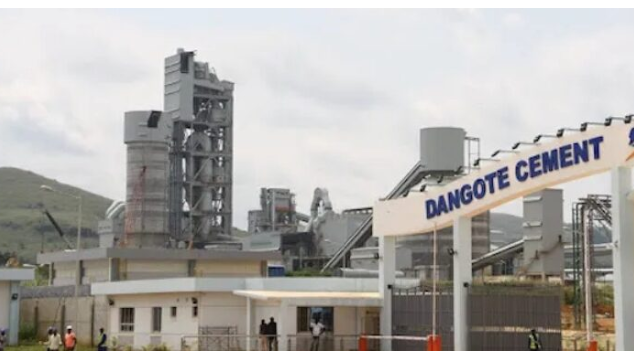
The Federal government intervened in the struggle for ownership of the Dangote cement factory in Obajana, Kogi State, on Monday.

The Federal Government intervened following the shutdown of the factory by the Kogi State government over the issue of ownership and allegation of tax evasion.

A reliable source in the Presidency confirmed the meeting at the Office of Chief of Staff to the President in the Presidential Villa in Abuja.

It was learned that the meeting had in attendance the President of the Dangote Group, Aliko Dangote, Governors Yahaya Bello (Kogi) and Abdullahi Sule (Nasarawa).

It said that the management of Dangote Group has concluded a plan to drag the state government to the court over its legality.

It was alleged that the vigilante members in the state stormed the factory and many of the company’s staff were wounded in the process.

ASUU to call off strike in few days

By Uzair Adam Imam

The Academic Staff Union of Universities (ASUU) promised to end its strike after meeting the Speaker of the House of Representatives, Femi Gbanjabiamila.

The union, which has been on strike since February 14, disclosed this yesterday after meeting with Gbanjabiamila and some ASUU members.

The lecturers down tools to press their demand home which include the Federal Government’s failure to meeting the agreements reached with the union.

The meeting was a last-minute move to persuade the striking union and came after the Court of Appeal, Abuja, on Friday intructed the union to call off its incessant strike.

Gbanjabiamila said, “This is a recap to seal the deal on what has been a long-fought battle; a long hard road for everybody – for ASUU, the students and the government.

“As you would recall, some weeks ago the House got involved in this crisis and we had long, tough, intense meetings with ASUU.

“We had meetings with those on the government side and we are happy to report that as the result of the consultation and intervention of the House, very significant progress has been made and we are more or less at the end of the road save for dotting some “I”s and crossing some “T”s.

“I believe we have covered ground, covered most of the thorny issues and it is basically, what we have agreed with ASUU is basically to put everything on paper and sign off. I believe if we had met yesterday and the papers had been drawn up, ASUU, I am sure, would have called off the strike today.

“But we only just met behind closed doors now and so we have to draw up the agreement as I have stated to you, and hopefully in the next couple of days, of course, ASUU has to get back to its bases as well. Once that is agreed, I am very hopeful and very excited about the possibility or probability the strike would be called off in a matter of days.”

“We did this for the sake of our students and children and I hope it would be a thing of the past. I thank you very much, ASUU. I also thank Nigerians for their patience, and the students, having endured these many months. But I believe that this has hopefully come to an end in a matter of days.”

The ASUU President, Professor Emmanuel Osodeke, commended the House leadership for its intervention.

He said, “If the way the National Assembly has intervened; if you have done that long ago from the beginning, or those who are in charge of labour and education have done exactly this, we will not be where we are today.”

Buhari honours Dr Sani Rijiyar Lemo with OON

By Uzair Adam Imam

President Muhammadu Buhari has approved the conferment of the national honour on Ass. Prof. Sheikh Sani Umar Rijiyar Lemo in the rank of OON (Officer of the Order of the Niger).

However, the conferment of honour was disclosed in a letter to the sheikh dated October 7th, 2022, by Sen. George Akume, fnim.

Rigiyar Lemo is a Senior Lecturer at Bayero University, Kano (BUK), and also a prominent Islamic scholar in Nigeria with expertise in Hadith and Tafsir. His numerous authored books are being read in many mosques and circles of learning in Nigeria and beyond.

Popularly known As Dr Sani Umar R/Lemo, he was born in Saudi Arabia in 1970. He bagged 1st, 2nd and 3rd degree in Hadith in the reknowned Jami’atul Islam of Madina. He established name as the successor of Sheikh Ja’afar’s tafsir in Kano, Maiduguri and Bauchi State respectively. His popular weekly radio program “Fatawowin Rahama” endears him the love of millions of people who see him as peace ambassador.

The honor was in recognition of his tremendous contributions towards developing Nigeria through his teachings and enlightenment to ensure peace in the country.

The letter read in part: “I have the honour to formally inform you that the President of Republic of Nigeria, His Excellency Muhamadu Buhari, GCFR, has approved the conferment of the National Honour on you, in the rank of OON (Officer of the Order of the Niger).

The investiture ceremony is scheduled to take place at the International Conference Center (ICC), Abuna on Tuesday, 11th October, 2022, at 9:00 am.”

Obajana (Dangote) plant invasion: Implications for public-private partnerships in Nigeria (I)

By Tordue Simon Targema

Last week, the Obajana Cement Plant came under siege by armed vigilante groups from the Kogi State Government, acting on the orders of the State House of Assembly who stormed the Company to seal it and ground its operations.

This was followed by war of words between the Kogi State Government and Dangote Industries Ltd. on the establishment, acquisition, ownership and legal rights of operations of the company.

The House of Assembly premised its decision to seal the Company over its management’s refusal to appear before a public hearing on petitions bothering on the acquisition of the Company by Dangote Industries Ltd. This, the House considered arrogant and hence, had to wield its sledge hammer on the Company to serve as deterrent to it, and indeed, other investors in the State.

Reports also indicate that the Company’s management had earlier shunned a Commission of Inquiry set up by the State Government to investigate petitions bothering on its acquisition and operations by Dangote Industries Ltd.

This scenario is unfortunate and regrettable, especially as Nigeria grapples with untold economic hardships and paucity of vibrant private companies that will provide adequate buffers to the nose-diving economy, create job opportunities and mop up the teaming jobless youth that have littered her streets today.

But the fundamental questions lingering on several minds since this crisis erupts, however, are: why did Dangote Industries Ltd. snub the Kogi State Government and House of Assembly, giving rise to this preventable misfortune? If Dangote Industries Ltd. is innocent of the allegations, why evade a Commission of Inquiry and a House of Assembly public hearing that would have provided the best platforms for the Company to exonerate itself?

Again, Why allow the crisis to degenerate to this level, despite the numerous warning signals? Does it mean that the Company operates without a proactive conflict management strategy to arrest this sort of obvious conflict prompters and nib them in the bud?

These questions continue to beg for answers, and have caused many to accuse the operators of Dangote Industries Ltd. of arrogance and blatant disregard to constituted authorities within their operational domains.

Beyond these, however, the behaviour of the Kogi State Government and its operatives suggest that someone somewhere wants to “cash out” from the Company, and has decided to use this brute invasion as the best means of actualising the selfish ambition. Yes, available records have provided sufficient proofs to this effect.

To start with, most of the claims contained in the report of the Commission of Inquiry chaired by the Head of Service to the State Government, Mrs. Folashade Ayoade are utterly mischievous and amusing.

The Committee, for instance, could neither interact with any of the four government representatives that interfaced with Dangote Industries Ltd. to transfer ownership of the Company from the State Government to Dangote in 2002, nor interact with the Company’s management team; yet, concluded its report and made damning recommendations based on selective documentary evidence!

Curiously, the agreement that facilitated transfer of the Company which was duly signed by the then Executive Governor of Kogi State, late Prince Abubakar Audu has been “invalidated” by the Committee on the grounds that it lacks “consideration” 20 years later!

To claim in 2022 that an agreement signed and implemented since 2002 lack consideration is funny, given that the same agreement has been guiding operations of the Company all this while.

Notably, this agreement which the Committee invalidates is explicit in its terms regarding ownership of the Company when it states that: “the State, being the sole owner of the Company hereby offers, and DIL (Dangote Industries Limited), accepts the transfer of 90% of the total shareholding in the Company.”

This transfer was made in the light of the State Government’s apparent inability to adequately exploit the huge mineral deposits.

The agreement notes categorically in this regard that: “in order to actualise the aspiration of the State and its people to exploit and utilize the abundant minerals for establishment in the State of cement manufacturing plant, the State has invited DIL to consider equity participation in the project.”

Clearly, Dangote Industries Ltd. was not an intruder in Kogi State on cement exploration tour ab-initio, but was duly invited by the State Government to help actualize the goal of adequately exploring and mining mineral deposits in the State under a well-articulated equity regime.

So far, the Company has done well on several fronts such as its enormous contribution to the country’s GDP and provision of employment opportunities. The huge financial investment of Dangote Industries Ltd. into the Company gave it life in 2008 when it finally commenced operations after about 20years of its conception in 1992.

At the moment, Obajana Cement Company is the biggest cement plant in Sub-Saharan Africa, with a nameplate production capacity of about 16.5 million metric tonnes per annum across its five production lines.

With sufficient fuel- gas, coal and diesel- the five cement mills are expected to produce 7000, 000kg of cement each per day. When one considers maintenance and circumstantial stoppage of five days per month, the loss of even a day of production is such a huge pain that management of the Company could not afford to risk.

Presently, due to gas and coal shortage that is being experienced across the country occasioned by flooding, only two to three out of the five production lines can run simultaneously. In this circumstances, a shutdown of the Company by the State Government is least envisaged, and is capable of wrecking untold hardships on the Company’s investments.

It is worthy to note that Obajana Cement Plant provides gainful employment to over 3,000 staff. This is apart from casual workers, cleaners and other private individuals who have business dealings with the Company.

With this manpower capacity, the rippling effect that the Company portends to the economies of both Kogi State and Nigeria at large can be best imagined. Yet, even with this production capacity, the cost of cement in Nigeria is excessively high and continues to rise at an alarming rate given the economic uncertainties of the time.

At the moment, a 50kg bag of cement costs around 3,500 to 4,200. One wonders what the implications of shutting down the largest production plant would be on the supply and price of the product within the shortest possible time, not to mention the thousands of people that are most likely to lose their decent means of livelihoods should the unfortunate crisis linger on.

To be continued

Tordue Simon Targema writes from the department of Journalism and Media Studies, Taraba State University, Jalingo. Email: torduesimon@gmail.com

FG to release 30 percent of inmates from Nigerian custodial centres

By Uzair Adam Imam

The Minister of Interior, Mr. Rauf Aregbesola, said he would meet with the state governors to agree on the mass release of inmates in the country’s custodial centres.

The Minister said the meeting would lead to the mass release of about 30 per cent of inmates from custodial centres across the country.

Aregbesola made this known when he appeared on the News Agency of Nigeria (NAN) Forum in Abuja.

The Daily Reality reckons that the reason of the mass release is unconnected with the conjection in most of the country’s costodial centers.

However, the minister said the interface was necessary as more than 90 percent of the inmates were being held for contravening state laws.

He said, “I have written to the Nigerian Governors Forum to allow me to come and address them on how they can support the process of decongestion.

“Because the governors must buy into this system for us to do a massive decongestion, especially of Awaiting Trial Inmates.

“If we get the buy-in of state judicial authorities and the government of the states, we can pull out 30 percent of those who are there,” he said.