National

You can add some category description here.

FG scraps 5% telecom tax on calls, data

By Muhammad Abubakar

The Federal Government has removed the 5% excise duty on telecommunications services in Nigeria.

The tax, introduced under the administration of former President Muhammadu Buhari, was to be applied on both voice and data services. It drew strong opposition from telecom operators and consumer groups.

Executive Vice Chairman of the Nigerian Communications Commission (NCC), Aminu Maida, said President Bola Ahmed Tinubu ordered its removal during discussions on the recently passed Finance Act.

The decision is expected to provide relief to over 171 million active telecom subscribers, who have also faced a 50 per cent tariff increase earlier this year.

Nationwide blackout as national grid suffers fresh collapse

By Uzair Adam 

The national grid has collapsed once again, plunging most parts of the country into darkness.

Power generation, which stood at 2,917.83 megawatts (MW), dropped drastically to 1.5 MW between 11:00 a.m. and 12:00 p.m. on Wednesday.

Confirming the development, the Nigeria National Grid, via its X handle, announced that “System restoration is in progress.”

In another update, the account disclosed that all electricity distribution companies (DisCos) across the country, except Ibadan DisCo, recorded zero allocation of power.

“Disco load” refers to the amount of power (in megawatts) allocated from the national grid to each distribution company.

Meanwhile, the Abuja Electricity Distribution Company (AEDC) in a statement appealed to its customers for patience, assuring them that efforts were ongoing to stabilise the grid.

The statement read, “Dear Valued Customers, please be informed that the power outage currently being experienced is due to a loss of supply from the national grid at 11:23 hrs today, affecting electricity supply across our franchise areas.

“Rest assured, we are working closely with the relevant stakeholders to ensure power is restored once the grid is stabilised. Thank you for your patience and understanding.”

Fuel subsidy gone, but the borrowing floodgates are open

By Nasiru Ibrahim 

Nigeria’s debt situation has become more confusing and concerning in recent years. After removing fuel subsidies, which had always been used to justify heavy borrowing, many expected a change in direction. But surprisingly, debt has continued to rise—and sharply. 

In less than two years, Bola Ahmed Tinubu’s administration has added over ₦62 trillion to our total debt. This comes on top of Muhammadu Buhari’s already heavy debt legacy. Yet if you check the 2025 budget, it still carries a huge deficit. This is despite relatively stable oil prices and a slight improvement in crude oil production. So, something is clearly not adding up.

How can a country that has removed one of its biggest expenditures—fuel subsidies—still be borrowing more than ever? Is it that the revenue reforms aren’t working, or is this a deeper issue with how we manage our economy? These are real questions that need honest answers. The reality is that Nigeria’s current borrowing trend is worrying not just because of the amount, but also because of the manner in which it’s happening and what it reflects.

According to the Debt Management Office, as of March 31, 2025, Nigeria’s public debt stood at ₦149.39 trillion. Tinubu alone has added ₦62.01 trillion to that figure in under two years. Now, let’s compare that with previous administrations: Goodluck Jonathan borrowed ₦5.9 trillion in five years. Buhari borrowed ₦74.78 trillion in eight years—including the controversial “Ways and Means” borrowing from the Central Bank of Nigeria (CBN). That’s how bad things have gotten.

“Ways and Means” are short-term loans from the Central Bank to the Federal Government, intended to cover urgent expenses such as paying salaries or addressing unexpected shortfalls. Think of it like an overdraft facility. But the law is clear—the CBN Act, 2007 (Section 38) states that the Federal Government can only borrow up to 5% of the previous year’s revenue from the CBN, and it must be repaid in the same year. Under Buhari, this law was ignored. His government borrowed ₦22.7 trillion through Ways and Means, without obtaining proper approval from the National Assembly.

This ₦22.7 trillion had not been reflected in official debt figures for a long time. It only became part of Nigeria’s domestic debt record in May 2023, when Buhari’s government securitised it—basically converted it into long-term bonds. That move alone caused the total public debt to jump from ₦44.06 trillion at the end of 2022 to ₦87.38 trillion by June 2023. That’s a massive increase in just six months.

Now, some economists argue that Tinubu’s debt figures appear worse primarily due to the exchange rate. That argument is simple: Nigeria borrows in foreign currencies, such as the dollar, euro, or yuan, but records the debt in naira. So when the naira weakens, the same dollar loan becomes much bigger in naira terms.

Let’s look at the exchange rate across administrations. Under Jonathan, the exchange rate was around ₦ 157 to $1 in 2015. Under Buhari, the exchange rate was ₦770/$ in 2023. And under Tinubu, the exchange rate is now approximately ₦1536/$ as of 2025. So when you convert the same external loan, the naira value explodes as the currency weakens. Just this exchange rate movement has added ₦29.75 trillion to Tinubu’s external debt and ₦5.9 trillion to Buhari’s.

To properly check if the debt spike is mainly due to FX changes, let’s fix the exchange rate at ₦157/$ for all the administrations and see how much was actually borrowed. The formula is simple:


Old Dollar Debt × New Exchange Rate – Old Dollar Debt × Old Exchange Rate.

Using the DMO’s external debt figure of $38.81 billion in 2023:
$38.81bn × ₦770 = ₦29.85 trillion
$38.81bn × ₦1536 = ₦59.63 trillion
₦59.63 trillion – ₦29.85 trillion = ₦29.78 trillion

So, if the exchange rate had remained at ₦157/$, Nigeria’s external debt of $42.46 billion in 2025 would have been approximately ₦6.6 trillion. Under that fixed exchange rate, Jonathan’s total external borrowing would have been approximately ₦1.07 trillion over five years. Buhari’s about ₦4.48 trillion in eight years.

Tinubu’s about ₦1.12 trillion in under two years. This means if Tinubu continues at this pace, he’ll hit Buhari’s figure—₦4.48 trillion—in about eight years. Yes, the exchange rate plays a significant role. But that’s not the whole story.

Others argue that Tinubu’s debt problem is not just about FX. It’s also about spending discipline. Unlike Buhari, Tinubu removed fuel subsidies and slightly increased oil production (1.5–1.6 million barrels per day, compared to Buhari’s average of 1.2–1.3 million barrels), and customs and tax revenue also improved. Buhari faced more challenging conditions—global oil crashes, two recessions in 2016 and 2020, the COVID-19 pandemic, and high subsidy payments—during his early years. So, Tinubu had more room to save, but instead, borrowing has increased.

The 2025 budget projects a deficit of ₦13.08 trillion. It assumes oil at $77.96 per barrel and production of 2.06 million barrels per day. However, in reality, March production was only 1.65 million barrels per day, including condensates. And as of July 8, Brent crude was $70.20 and WTI was $68.42—both below the assumed price. That means revenue projections may fall short, and the government will likely borrow even more.

Tinubu has already requested $21.6 billion in new loans. In May 2025, Reuters reported that he also asked the National Assembly to approve loans of €2.2 billion, ¥15 billion (approximately $104 million), and an additional $2 billion in domestic loans. That’s not all.

The Federal Government also secured a $747 million syndicated external loan to fund Phase 1, Section 1 of the Lagos-Calabar Coastal Highway—from Victoria Island to Eleko Village. At ₦1536/$, this loan adds ₦1.147 trillion to the debt. The lenders include Deutsche Bank, First Abu Dhabi Bank, Afreximbank, and Zenith Bank, among others. The Islamic Corporation for the Insurance of Investment and Export Credit (ICIEC) is providing insurance. That brings Tinubu’s total borrowing to about ₦63.157 trillion in under two years.

This highway is being built under a Public-Private Partnership using an EPC+F model. The road is over 70% complete and is designed using CRCP technology—concrete with a 50-year lifespan and low maintenance requirements. While the loan adds to debt, it shows some confidence from global investors and introduces a financing model that shares risk between the government and private firms.

Now to the bigger picture. As of 2024, Nigeria’s debt-to-GDP ratio is around 25.1%, based on ₦144.67 trillion in debt and a nominal GDP of about $375 billion. That means debt accounts for about one-quarter of the economy—not yet alarming, but becoming risky if borrowing continues at this rate. What’s more worrying is the cost of servicing debt.

In 2024, debt service took up 4.1% of GDP—up from 3.7% in 2023 (AfDB report). That’s a lot. Imagine 4.1% of the entire economy going towards just paying off debt, instead of building schools, roads, or hospitals. Even worse, the debt service-to-revenue ratio rose from 76.86% in 2023 to 77.4% in 2024 (APA News). This means more than three-quarters of government revenue is now used to repay debt. That leaves very little for anything else. That’s not sustainable.

As Economics graduates, the way forward is clear. First, we need to depoliticise how we manage public finances. Countries like Chile, Sweden, and the UK have independent Fiscal Councils that enforce rules like debt limits and balanced budgets. Nigeria needs something like that to restore discipline and rebuild investor trust.

Second, loans must be tied to development goals—not used for consumption. Borrowing should be used for essential services like roads, electricity, and digital infrastructure, rather than paying salaries or covering bloated administrative costs. Rwanda and Ethiopia have shown how debt used for infrastructure can boost exports and growth. A cost-benefit analysis should accompany every loan.

Third, we must cut waste and off-budget liabilities. That includes fuel subsidies, failing state-owned enterprises, and unauthorised bailouts. Ghana passed a Fiscal Responsibility Act in 2018, capped its deficit at 5% of GDP, and ran audits that exposed massive leakages. Nigeria can cut borrowing by 30–40% just by following that path.

Fourth, improve tax collection—not by harassing small traders, but through fairness and the use of technology. Indonesia raised its tax-to-GDP ratio by digitising filing, automating risk detection, and linking tax IDs with national identity numbers. Nigeria can do the same—target high earners and multinationals instead of informal workers.

Fifth, public-private partnerships and syndicated loans, such as the Lagos-Calabar road, shouldn’t be used to conceal debt. They should help us attract private capital, share risks, and deliver real development. Countries like Morocco and Kenya make their PPP contracts public. Nigeria should also strive for greater transparency.

Finally, if things get out of hand, we can consider debt restructuring—but only as a last resort and if tied to fundamental reforms. Ghana restructured its debt in 2023 by extending maturities and cutting interest under IMF guidance. But what made it work was reform—cutting subsidies and improving tax systems. Without reform, restructuring solves nothing.

This is the time for Nigeria to act. If we continue on this path, we are only postponing a more profound crisis. But with the right decisions, we can still change direction.

Ibrahim is a graduate of Economics from Bayero University, Kano. He can be reached via nasirfirji4@gmail.com.

FG seeks fresh $1.75bn World Bank loan

By Muhammad Abubakar

The Federal Government of Nigeria has approached the World Bank for a fresh loan of $1.75 billion to support its economic reform agenda.

Minister of Finance and Coordinating Minister of the Economy, Wale Edun, disclosed that the facility would help cushion the impact of recent policy adjustments, including the removal of fuel subsidy and the unification of the exchange rate, which have placed significant strain on households and businesses.

He explained that the request, if approved, would provide critical budgetary support, strengthen fiscal sustainability, and help address the nation’s infrastructural and developmental challenges.

Nigeria’s President, Bola Ahmed Tinubu, has repeatedly defended his administration’s reforms, insisting they are necessary to revive the economy and attract foreign investment.

World Bank Country Director for Nigeria, Shubham Chaudhuri, confirmed that discussions are ongoing, although no official approval has been given yet.

Nigeria, Africa’s largest economy, has in recent years relied on multilateral loans to bridge financing gaps amid rising debt obligations and dwindling revenues.

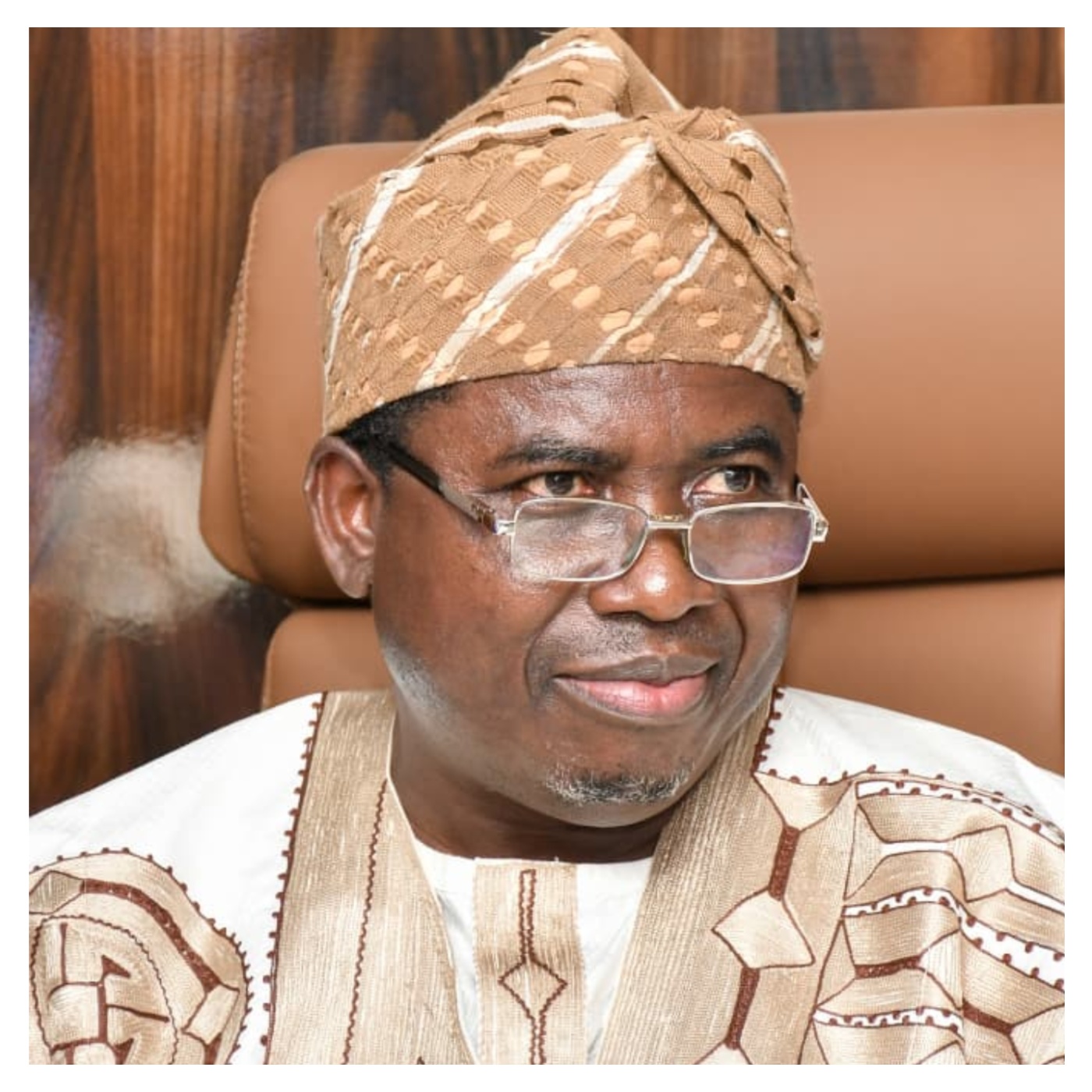
Sahara Reporters charades again against Prof. Bugaje: Setting the records straight

By Ibrahim Mustapha

I read a story entitled “Fraud, Job racketeering scandal rocks Nigeria’s Technical Education Board,” carried out by Sahara Reporters, an online media outlet, on August 14, 2025, with great shock. Ordinarily, one should not have bothered to reply to the tissues of lies, misrepresentation of facts, and poor grasp of public service rules by Sahara Reporters and its co-sponsors. However, considering the weight of allegations and how gullible minds can be negatively influenced, it has become pertinent to set the record straight. 

Though one had expected Sahara Reporters to produce a balanced story by contacting the executive secretary of the board, Professor Idris Bugaje, who remains accessible to share his side, this has never happened. The online media is so desperate to give a dog a bad name in order to hang it. The online media has discarded professional ethics and turned into a willing tool to smear the good image of Professor Bugaje and NBTE through fictitious allegations.

To accuse Professor Idris Bugaje of fraud and so-called jobs racketeering is nothing but lies, vendetta, and a deliberate campaign of calumny aimed at tarnishing his reputation, which he has built over many years. Government organisations carry out recruitment to fill vacancies created by staff death, retirement, and other circumstances.

Those organisations also recruit to meet their workforce demand. NBTE, like any other government organisation, is not exceptional. It carried out its recruitment exercise after vacancies had been identified, a waiver had been granted, and the Head of the Civil Service of the Federation had approved. There has never been any recruitment conducted without due process and the extant laws duly followed. 

Another lie concocted by the Sahara Reporters and their sponsors is that Professor Idris Bugaje is bypassing the Minister of Education in all the recruitment he carried out. There is no iota of truth, as the executive secretary ensures that he consults widely with the Minister of Education for seamless policy implementation and recruitment exercises. Therefore, their allegations are nothing but a figment of their imagination.

The sponsors of the publication have spent considerable energy on “wild goose chase” allegations that Professor Idris Bugaje has made staff redundant and opted for a few to work with them. I think these people are rushing to blackmail Professor Idris Bugaje and cannot even stop to see some of his reforms that have transformed the board. For instance, upon assumption of office, Professor Idris Bugaje unbundled the NBTE by opening regional offices across the country. The “raison d’être” was to simplify work and assign more responsibilities to staff. If Bugaje wanted to make staff redundant, he would not have opened new offices across the country. 

Regarding the allegation of rapid promotion for transferred staff, Sahara Reporters and its co-travellers have also gotten it wrong. Professor Idris Bugaje will never approve of illegality. He ensured the proper placement of staff. You cannot expect a staff member on level 14 to be demoted to level 13 because they have transferred their service to NBTE. That is why those who have been promoted to directors are eminently qualified.

Professor Idris Bugaje has been transforming NBTE in various aspects of human development. He is poised to achieve sound and qualitative technical and vocational education in line with Mr President’s renewed Agenda. Under his watch, NBTE has achieved great success through the monitoring and evaluation of vocational and technical institutions. It is sad to note that some unscrupulous people are bent on tarnishing his hard-earned integrity through spurious and blatant lies. 

No amount of blackmail can distract Professor Idris Bugaje from initiating and implementing policies in line with the NBTE mandate.

 Ibrahim Mustapha Pambegua, Kaduna State, via imustapha650@gmail.com.

Local government autonomy or new states: Which way for Nigeria? 

By Lawal Dahiru Mamman

There are times when the stars seem to be aligning. All trouble appears to be disappearing, awaiting only what happens when those stars fall into line. But then, unexpectedly, things take a different turn, and the trouble assumes a different shape, sometimes with an additional burden. Such is the irony of Nigeria.

Governance was generally out of reach for the common man, especially those at the grassroots level who lacked the basic necessities required to live a decent life. To address this, there has been a clamour for local government autonomy. Successive governments have attempted to do so, but it was only the current administration that secured this victory in July 2024.

Since then, bureaucracies and political “manoeuvring have clogged up full implementation. Enforcement faced a delay in August when the federal and state governments negotiated a three-month moratorium, due to concerns about council workers’ salary payments and the need to conduct LG elections in certain states, alongside other pressing matters.

Just as progress seemed imminent, another hurdle emerged. The Central Bank of Nigeria (CBN) directed LGs to submit at least two years’ worth of audited financial reports as a prerequisite for receiving direct allocation. Key stakeholders, including the Association of Local Governments of Nigeria (ALGON), condemned the directive as perceived delay tactics. 

While we are at it, the long-standing call for the creation of more states has resurfaced. In February, the House of Representatives’ Committee on Constitution Review threw a spanner in the works by proposing the creation of 31 additional states across Nigeria. If this comes to fruition, it would swell the number of states to 67, with some quipping that this would leave Nigeria with more states than “the Almighty United States”.

The proposed distribution of the new states is as follows: six to the North Central, four to the North-East, five to the North-West, five to the South-East, four to the South-South, and seven to the South-West. 

The proposed new states are New Kaduna and Gujarat from Kaduna State, FCT State, Tiga and Ari from Kano, Kainji from Kebbi State, and Etiti, Orashi, Adada, and Orlu from the South-East.

Others are Okun, Okura, and Confluence states from Kogi; Benue Ala and Apa states from Benue; Amana state from Adamawa; Katagum from Bauchi state; Savannah state from Borno; and Muri State from Taraba.

Also included are Lagoon from Lagos, Ogun, Ijebu from Ogun State, as well as Oke Ogun/Ijesha from Oyo/Ogun/Osun States, Ogoja from Cross River State, Warri from Delta, Ori and Obolo from Rivers, Torumbe from Ondo, and Ibadan from Oyo State.

Some proponents interestingly argue that these new states possess abundant mineral and natural resources, which would be harnessed post-creation for the benefit of their people. One is forced to question the logic behind such reasoning and then wonder, are these not already entities within existing states, or would these new states be conjured out of thin air to perform this economic magic?

One would also need to educate Nigerians on a little bit of history and the processes required to achieve state creation in the country. The last time Nigeria created new states was in 1996, under the late General Sani Abacha. The only time a civilian government created a federating unit in the form of a state, rather than a local government area, was in 1963, and it was reportedly done without good faith. 

The Northern People’s Congress (NPC) was the ruling party at the centre, and it was in alliance with the National Council of Nigeria and the Cameroons (NCNC), which was the ruling party in the Eastern Region. The ruling party in the Western Region was the Action Group (AG), while the opposition party was at the centre. There were other smaller parties, but only the NPC, NCNC, and AG were well-known. The alliance at the centre wanted to counter the growing influence of the Action Group, so a region was created from it. 

That region was named the Midwest Region, which later became Bendel state (derived from Benin and Delta). Bendel later became the Edo and Delta states.

Since then, only military regimes have created states in Nigeria. The Gowon administration, on May 27, 1967, abolished the regional system and created 12 states – North-Western, North-Central, North-Eastern, Kano, Benue-Plateau, Kwara, Western, Lagos, Mid-Western, East-Central, South-Eastern, and Rivers States – as part of the strategies to weaken Col. Odumegwu Ojukwu and prevent the civil war. 

Creation of states continued under subsequent military regimes. General Murtala Mohammed created an additional seven states (Bauchi, Benue, Borno, Imo, Niger, Ogun, and Ondo) in 1976, bringing the total to 19. 

General Babangida created Akwa Ibom and Katsina states in 1987, and nine more states (Abia, Delta, Enugu, Jigawa, Kebbi, Kogi, Osun, Taraba, and Yobe) in 1991, bringing the total to 30. General Sani Abacha sealed it in 1996 by creating six more states – Bayelsa, Ebonyi, Ekiti, Gombe, Nasarawa, and Zamfara.

Conditions for state creation in a democratic setting are stringent and cumbersome, making it unlikely to happen. Military governments created states by decree, but in a democracy, it is a different ball game.

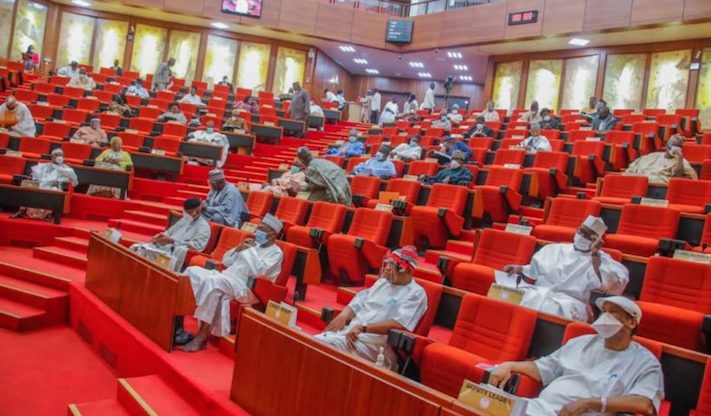
Before anyone advocates for the creation of a new state, they should study the provisions required to do so. Two-thirds of the National Assembly, as well as endorsements from State Houses of Assembly and Local Government Councils,must be achieved. This requirement makes it challenging to create new states in Nigeria. 

In accordance with Section 8 of the Nigerian Constitution, any new state creation must be preceded by the approval of citizens from the area in question through a referendum conducted by the Independent National Electoral Commission (INEC). For the referendum to be successful, a two-thirds majority of the people in question must consent to the creation of the new state.

Then comes resubmission of proposals in line with the prescribed guidelines, which includes submitting hard copies and electronic copies of memoranda to the committee’s secretariat, among other things. 

At a time we all advocate for a cut in governance costs, what would creating new states mean for the economy? What about the scarce resources consumed in holding meetings to contest whether or not to create new states? And what about the cost required to set up additional administrative units, the elections to be conducted, or the SUVs that would need to be purchased for 31 new brand governors and deputies, as well as principal officers in the House of Assembly? 

The stars seem to be aligning in favour of local government autonomy, and hope is on the horizon for meaningful governance at the grassroots level, which will lead to national development. The movement towards state creation,therefore, appears to be an unnecessary and costly distraction.

Lawal Dahiru Mamman writes from Abuja and can be reached via: dahirulawal90@gmail.com.

Atiku slams Tinubu administration on insecurity

By Muhammad Abubakar

Former Vice President Atiku Abubakar has launched a sharp attack on President Bola Tinubu’s administration, accusing it of failing to secure the North-Central region of Nigeria. 

Abubakar’s statement claims that the government has abandoned the area, resulting in a “monumental failure” in protecting its citizens.

Abubakar highlighted a dramatic rise in violence, citing Kwara State’s new status as a hotspot for kidnappings and bandit attacks. He also noted continued bloodshed in Niger, Plateau, and Benue states, where thousands have been killed in just two years.

The former Vice President went on to accuse the ruling APC of using thugs to disrupt opposition meetings, with security forces allegedly failing to act.

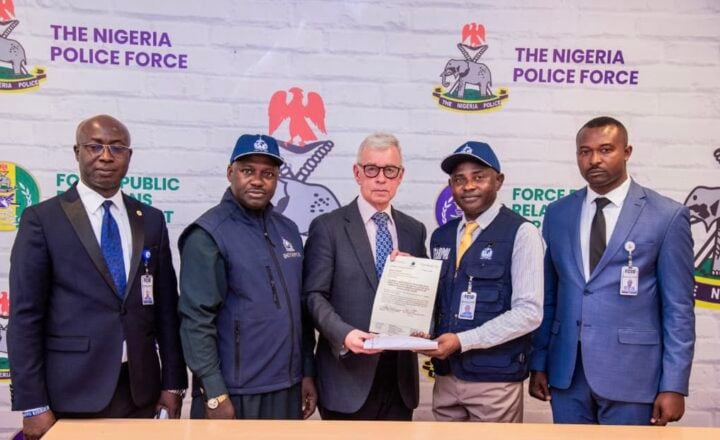
He warned that violence “is a vicious circle” that will harm those who use it, and called on the Nigeria Police Force to remain neutral and fair, reminding them that taxpayers, not the APC, fund them.

Immigration raises passport fees

By Hadiza Abdulkadir

The Federal Government has approved an upward review of passport fees for Nigerians, effective September 1, 2025.

This was announced in a statement issued on Thursday by A.S Akinlabi, the spokesman for the Nigeria Immigration Service.

He said the increment aims to ensure the quality and integrity of the Nigerian Standard Passport, set to take effect from September.

“The review which only affect Passport Application fees made in Nigeria, now set a new fee thresholds for 32-page with 5-year validity at ₦100,000 and 64-page with 10-year validity at ₦200,000.

“Meanwhile, Nigerian Passport Application fees made by Nigerians in diaspora remain unchanged at $150 for 32-page with 5-year validity and $230 for 64-page with 10-year validity”, he said

The Service reaffirms its commitment to balancing high-quality service delivery with the necessity of ensuring Passport services are accessible to all Nigerians.

MAKIA: Route to the Saudi sword

Mohammad Qaddam Sidq Isa (Daddy) 

The recent revelation that three Nigerians, recently detained by Saudi authorities on allegations of drug trafficking, had been framed by an international drug trafficking syndicate operating at Malam Aminu Kano International Airport (MAKIA) further confirms the persistence of such nefarious activities, bringing to mind a similar scandal in 2019 that nearly cost an innocent woman her life in the Kingdom. 

The syndicate’s modus operandi begins by targeting unsuspecting travellers at MAKIA who appear to have little or no experience in international air travel protocols. 

Exploiting the fact that such travellers rarely turn up at the airport check-in counter with enough luggage to take up their full luggage allowance, if they are even aware of it, the syndicate members covertly tag and check in drug-containing luggage under the travellers’ names.

On arrival in Jeddah or Madinah, the syndicate’s Saudi-based Nigerian accomplices monitor the luggage processing. If the bags make it through undetected, they somehow manage to claim them, sometimes with, and other times without, the traveller’s knowledge or involvement.

However, if the bags are flagged, the accomplices vanish, leaving the unsuspecting travellers to be apprehended and subjected to the Kingdom’s strict judicial system, where drug trafficking can carry the ultimate punishment: public beheading.

Despite Nigerian authorities’ assurances since the 2019 scandal that all structural and operational loopholes exploited by the syndicate had been addressed, the latest incident demonstrates that these measures were insufficient. It also underscores the growing notoriety of the otherwise reputable MAKIA as a hub for international drug trafficking syndicates specialising in framing unsuspecting travellers. 

If organised crime of this sophistication can occur at the relatively less corruption-prone MAKIA, one can only imagine what might be happening at Murtala Muhammed International Airport in Lagos or Nnamdi Azikiwe International Airport in Abuja. 

Only Allah knows how many innocent people, framed in this way and too unlucky for their ordeals to be publicised or their innocence to be proven, ended up publicly beheaded in Saudi Arabia. 

Although the Nigerian government has assured that it will leave no stone unturned to secure the exoneration of these innocent Nigerians currently facing drug trafficking charges in Saudi Arabia, it should not take the situation for granted. 

Meanwhile, it should also take decisive action to address this menace at MAKIA and other airports across the country. After all, the few individuals apprehended may represent only a fraction of the culprits, with many others likely still out there.

Mohammad Qaddam Sidq Isa (Daddy) wrote via mohammadsidq@gmail.com.

L-PRES equips Kano extension agents with modern skills

By Uzair Adam

The Kano State Coordinating Office of the Livestock Productivity and Resilience Support Project (L-PRES), a World Bank–supported programme, has commenced a two-day training for 200 livestock extension agents and advisory service providers on modern livestock production strategies.

The training, which began on Tuesday at the Kadawa Mechanisation Institute in Garun Malam Local Government Area, is aimed at equipping extension agents to support the adoption of improved breeds through selection, breeding and artificial insemination techniques, as well as the proper management of forage resources and feed formulation.

In his welcome address, the State Project Coordinator of L-PRES, Dr. Salisu Muhammad Inuwa, described the training as a strategic step towards transforming the livestock sector in Kano.

He said the project aims to increase productivity, strengthen resilience, and promote sustainable practices that would uplift farmers and improve livelihoods.

Dr. Inuwa was quoted as saying,“You, the extension officers, are the bridge between research, policies, innovations, and the farmers in our communities.

The knowledge and skills you gain here will help our livestock keepers adopt improved breeds, better management practices, and modern feeding techniques.”

Speaking on behalf of the state government, Dr. Bashir Sunusi, Permanent Secretary at the Ministry of Agriculture and Natural Resources, who represented the Commissioner, Dr. Danjuma Mahmood, said Kano has invested heavily in agriculture, including the recruitment of over 1,000 extension workers and expansion of irrigation facilities.

He noted that extension agents remain the frontline soldiers of agriculture and urged participants to take the training seriously.

“Extension work is not theory; it is practical. When extension agents are well trained and equipped, they can support farmers to achieve higher yields, improved livestock production, and better access to markets,” Sanusi said.

Also speaking, Gambo Isa Garko, an extension officer with L-PRES, said the project is expected to transform livestock production in the state, particularly in meat, milk, and poultry output.

He added that the initiative would also establish livestock centres where farmers can access feed, veterinary services, and advisory support.

According to him, L-PRES is building a database of livestock farmers through profiling, which will enable targeted interventions.

“We are going to transform Kadawa into a practical school for livestock where farmers will learn from one another through farmer-to-farmer interaction, which makes adoption of new practices easier,” he explained.

Speaking on behalf of the participants, Ibrahim Adamu Aliyu commended the organisers for providing what he described as a timely and practical training.

He said the knowledge gained will enhance their capacity to deliver advisory services to farmers more effectively.

“This training is equipping us with modern techniques that will help us address the challenges faced by farmers, especially in adopting improved breeds, better feeding systems, and disease control measures.

“We are committed to taking this knowledge back to our communities and ensuring that it translates into tangible results for farmers,” Aliyu said.

The training includes lectures on extension strategies and models for reaching farmers, livestock production and breeding, artificial insemination, animal feed formulation, and pest and disease control, among others.