National

You can add some category description here.

Nigeria at 63, what are we celebrating? 

By Usman Zubairu Yakubu

On a day like this in 1960, Nigeria gained independence from Great Britain. But the question today is, is Nigeria an independent nation? I think the first and only Nigerian prime minister, Alhaji Sir Abubakar Tafawa Balewa, during the 1960 independence speech, answered this question. He said, “Political independence is totally inadequate if it’s not accompanied by security and economic stability”.

From the above-quoted speech, I think that Nigeria’s independence is inadequate. For this reason, we must all put hands on deck to ensure we build a prosperous Nation that will fill the missing inadequacies. A safe country for all. This is our responsibility, my responsibility and your responsibility.

The decreasing numbers of celebrants on this day show that things are not working well in the country and that the drivers of the nation are not doing the necessary to bring back hope into the hearts of Nigerians. Many Nigerians have lost hope in the country; this may arise from the ugly condition of almost everything. They feel hopeless not because they don’t love the country but because the leaders made them feel that way. We may tag that as unfortunate, but the truth is always bitter, and that doesn’t make them less Nigerians because they have their reasons to feel so. The optimistic ones who believe that Nigeria will one day get better are only trying to be stronger. Count me among them; I hope the leaders will not kill our little hope for the country and its future.

Many things have happened in less than a year of Tinibus Administration. First, the subsidy removal imposed a lot of hardships on Nigerians. Second, Economic destruction left millions of Nigerians in abject poverty and the bedevilling issues of insecurities affecting the country, especially the Northern region of the country. And by mere looks, things are only getting worse, not better. The current abduction of the Federal University Gusau students is an alarming sign of left dust that needs to be cleaned. This is to talk less of the economic hardship Nigerians are going through.

In a situation like this, independent celebration shouldn’t be the focus of any sensible Nigerian. On every blessed day in the country, Bandits kidnapped people, some killed, and some thrown out of their homes. Many Of the victims were left homeless. Go to the streets of Katsina, Zamfara and Borno to have a glance. Is this what we are celebrating? I believe independence under insecurity, corruption and poverty shouldn’t be celebrated. Until these issues are addressed, we will celebrate Nigeria’s independence with true love and patriotism. But at the moment, we don’t have the energy to celebrate.  

In a country where over 40% are living in abject poverty. And 63% are dimensionally poor as of 2022. This is before subsidy removal; how many per cent will now be in poverty as the economy shakes? Tell me, should we celebrate poverty? Or should we celebrate insecurity at the moment? Unfortunately, the future of Nigeria is gloomy as its youth remains jobless. Should we celebrate unemployment? In a country where justice is abolished, is that one country to celebrate? In a country where tertiary education is on the verge of becoming a privilege and not a right, please tell me, should we celebrate that country? In a country where the leaders don’t care about the educational future of its citizens, is that one country to celebrate? In a country where a man can’t afford healthcare, food, and life necessities, is that a country to celebrate now? Nigeria’s problem is far beyond what one can imagine. At this moment, celebration is not for us but rather a critical way of thinking about building a prosperous nation because it’s possible.

But despite all the challenges, I  believe Nigeria shall prosper, and we will live in a country devoid of insecurity, corruption and abject poverty. We will live in a peaceful nation of economic prosperity educational rights, and a country that will stand on its feet as the Giant of Africa. May God bless Nigeria!

Happy independence.

Usman Zubairu Yakubu writes from Toro, Bauchi state, Nigeria and can be reached via usmanzubairuyakubu@gmail.com.

FG’s delegation meets labour behind closed doors to prevent nationwide strike

By Uzair Adam Imam 

The Federal Government and the leadership of the Organised Labour are currently holding a crucial meeting behind closed doors at the Presidential Villa, Abuja. 

The meeting could be seen as a last-minute effort by the federal government to prevent the planned nationwide strike called by the Nigerian Labour Congress and the Trade Union Congress of Nigeria, slated for Tuesday. 

It was gathered that the labour delegation led by the President of the Nigeria Labour Congress, NLC, Joe Ajaero, arrived at the Conference Hall of the Permanent Secretary, State House, at 3:15 p.m. 

Among the labour delegation are the Secretary of the Trade Union Congress of Nigeria, TUC, Nuhu Toro, and his counterpart from the NLC, Emma Ugbaja. 

The government team, on the other hand, is led by the Chief of Staff to the President, Femi Gbajabiamila. 

Other members of the government team include the Head of Service of the Federation, Dr. Folasade Yemi-Esan; the National Security Adviser, NSA, Mallam Nuhu Ribadu; the Minister of Labour and Employment, Simon Lalong; the Minister of State, Nkeiruka Onyejecha; the Minister of Finance, Wale Edun; the Minister of Budget and Economic Planning, Atiku Bagudu; and the Minister of Humanitarian Affairs and Poverty Alleviation, Beta Edu. 

Also present are some directors from the Ministry of Labour and Employment. 

The Daily Reality will report the result of the emergency meeting to the public.

Nigeria at 63: A country of possibilities that is suffering

By Muhammad Umar Shehu & Usman Muhammad Salihu

Nigeria, located in West Africa, is often considered a land of immense possibilities. It is home to over 200 million people, making it the most populous country in Africa and the seventh-most populous country in the world. The country is blessed with vast natural resources, including oil, gas, coal, iron ore, limestone, and many others, which have the potential to power a thriving economy.

Despite these abundant resources, Nigeria faces many challenges that have hampered its growth and development. One of the most significant challenges is poverty. The country has one of the highest poverty rates in the world, with over 40% of the population living below the poverty line. This is mainly due to a lack of job opportunities, inadequate infrastructure, and an uneven distribution of wealth.

Nigeria is grappling with various socio-economic issues, including poverty, unemployment, inadequate infrastructure, and insecurity. These challenges directly impact the well-being of its citizens, hindering their access to basic necessities and opportunities for growth. Acknowledging the gravity of these challenges and the urgent need for solutions is essential.

Another challenge that Nigeria is facing is corruption. Corruption is a pervasive problem in the country, affecting all sectors of society. It has led to a lack of transparency and accountability, which has hindered the country’s growth and development. Corruption has also contributed to the widening gap between the rich and poor, as the wealthy use their influence to gain unfair advantages over others.

In addition to poverty and corruption, Nigeria is also grappling with insecurity. The country has been plagued by various forms of violence, including terrorism, banditry, and ethnic conflicts. This has resulted in the loss of many lives and the displacement of millions of people. The insecurity has also had a significant impact on the country’s economy, as businesses and investors are hesitant to invest in an environment that is not stable.

The educational sector in Nigeria is also facing several challenges. A lack of funding, inadequate infrastructure, and a shortage of qualified teachers characterise the country’s educational system. This has resulted in poor quality education, which has limited the potential of the country’s human resources.

Education plays a vital role in empowering individuals and communities. By supporting initiatives that promote access to quality education, vocational training, and skill development, we can equip Nigerians with the tools they need to thrive. Empowered individuals can contribute to the growth and development of the nation.

Some potent unions have been fighting for quality education in  Nigeria. However, our successive governments have not accorded priority to the sector, resulting in the country’s education system suffering from many deformities and deliberate neglect.

Despite these challenges, Nigeria has enormous potential to become a prosperous nation. The country has a vibrant and resilient population known for its entrepreneurial spirit. With the right policies and investments, Nigeria can harness its vast resources to create a thriving economy that benefits all its citizens.

The Nigerian government must take bold and decisive actions to address these challenges. It must prioritise the fight against corruption, invest in critical infrastructure, create job opportunities, and promote good governance. The government must also prioritise security and ensure all Nigerians feel safe and secure in their communities.

Nigeria deserves a brighter future, and it is up to us to make it a reality. By standing together, raising awareness, supporting organisations, advocating for change, and promoting education and empowerment, we can inspire positive transformations in Nigeria. Let us remember that every successful person was once in a similar position, and through personal growth and collective action,

What is here to celebrate at 63?

To conclude the assertion, Nigeria is a country of immense possibilities that is currently facing significant challenges. However, with the right policies and investments, Nigeria can overcome these challenges and become a prosperous nation. The government, private sector, and civil society must address these challenges and create a bright future for Nigeria and its people.

The above, if considered, Nigeria’s challenges will not only end but will forever be a thing of the past.

Muhammad Umar Shehu and Usman Muhammad Salihu write from Gombe and can be reached via umarshehu887@gmail.com.

FULL TEXT: President Tinubu’s Independence anniversary speech

ADDRESS BY HIS EXCELLENCY, PRESIDENT BOLA AHMED TINUBU, GCFR, PRESIDENT AND COMMANDER-IN-CHIEF, FEDERAL REPUBLIC OF NIGERIA IN COMMEMORATION OF THE 63RD INDEPENDENCE ANNIVERSARY OF NIGERIA ON SUNDAY, 1ST OCTOBER, 2023

Dear Compatriots,

It is my unique honour to address you on this day, the 63rd anniversary of our nation’s independence, both as the President of our dear country and, simply, as a fellow Nigerian.

On this solemn yet hopeful day, let us commend our founding fathers and mothers. Without them, there would be no modern Nigeria. From the fading embers of colonialism, their activism, dedication and leadership gave life to the belief in Nigeria as a sovereign and independent nation.

Let us, at this very moment, affirm that as Nigerians, we are all endowed with the sacred rights and individual gifts that God has bestowed on us as a nation and as human beings. No one is greater or lesser than the other. The triumphs that Nigeria has achieved shall define us. The travails we have endured shall strengthen us. And no other nation or power on this earth shall keep us from our rightful place and destiny. This nation belongs to you, dear people. Love and cherish it as your very own.

Nigeria is remarkable in its formation and essential character. We are a broad and dynamic blend of ethnic groups, religions, traditions and cultures. Yet, our bonds are intangible yet strong, invisible yet universal. We are joined by a common thirst for peace and progress, by the common dream of prosperity and harmony and by the unifying ideals of tolerance and justice.

Forging a nation based on the fair application of these noble principles to a diverse population has been a task of significant blessing but also a serial challenge. Some people have said an independent Nigeria should never have come into existence. Some have said that our country would be torn apart. They are forever mistaken. Here, our nation stands and here we shall remain.

This year, we passed a significant milestone in our journey to a better Nigeria. By democratically electing a 7th consecutive civilian government, Nigeria has proven that commitment to democracy and the rule of law remains our guiding light.

At my inauguration, I made important promises about how I would govern this great nation. Among those promises, were pledges to reshape and modernize our economy and to secure the lives, liberty and property of the people.

I said that bold reforms were necessary to place our nation on the path of prosperity and growth. On that occasion, I announced the end of the fuel subsidy.

I am attuned to the hardships that have come. I have a heart that feels and eyes that see. I wish to explain to you why we must endure this trying moment. Those who sought to perpetuate the fuel subsidy and broken foreign exchange policies are people who would build their family mansion in the middle of a swamp. I am different. I am not a man to erect our national home on a foundation of mud. To endure, our home must be constructed on safe and pleasant ground.

Reform may be painful, but it is what greatness and the future require, We now carry the costs of reaching a future Nigeria where the abundance and fruits of the nation are fairly shared among all, not hoarded by a select and greedy few. A Nigeria where hunger, poverty and hardship are pushed into the shadows of a never-fading past.

There is no joy in seeing the people of this nation shoulder burdens that should have been shed years ago. I wish today’s difficulties did not exist. But we must endure if we are to reach the good side of our future.

My government is doing all that it can to ease the load. I will now outline the path we are taking to relieve the stress on our families and households.

We have embarked on several public sector reforms to stabilize the economy, direct fiscal and monetary policy to fight inflation, encourage production, ensure the security of lives and property and lend more support to the poor and the vulnerable.

Based on our talks with labour, business and other stakeholders, we are introducing a provisional wage increment to enhance the federal minimum wage without causing undue inflation. For the next six months, the average low-grade worker shall receive an additional Twenty-Five Thousand naira per month.

To ensure better grassroots development, we set up an Infrastructure Support Fund for states to invest in critical areas. States have already received funds to provide relief packages against the impact of rising food and other prices.

Making the economy more robust by lowering transport costs will be key. In this regard, we have opened a new chapter in public transportation through the deployment of cheaper, safer Compressed Natural Gas (CNG) buses across the nation. These buses will operate at a fraction of current fuel prices, positively affecting transport fares.

New CNG conversion kits will start coming in very soon as all hands are on deck to fast-track the usually lengthy procurement process. We are also setting up training facilities and workshops across the nation to train and provide new opportunities for transport operators and entrepreneurs. This is a groundbreaking moment where, as a nation, we embrace more efficient means to power our economy. In making this change, we also make history.

I pledged a thorough housecleaning of the den of malfeasance the CBN had become. That housecleaning is well underway. A new leadership for the Central Bank has been constituted. Also, my special investigator will soon present his findings on past lapses and how to prevent similar reoccurrences. Henceforth, monetary policy shall be for the benefit of all and not the exclusive province of the powerful and wealthy.

Wise tax policy is essential to economic fairness and development. I have inaugurated a Committee on Tax Reforms to improve the efficiency of tax administration in the country and address fiscal policies that are unfair or hinder the business environment and slow our growth.

To boost employment and urban incomes, we are providing investment funding for enterprises with great potential. Similarly, we are increasing investment in micro, small and medium-sized enterprises.

Commencing this month, the social safety net is being extended through the expansion of cash transfer programs to an additional 15 million vulnerable households.

My administration shall always accord the highest priority to the safety of the people. Inter-Service collaboration and intelligence sharing have been enhanced. Our Service Chiefs have been tasked with the vital responsibility of rebuilding the capacities of our security services.

Here, I salute and commend our gallant security forces for keeping us safe and securing our territorial integrity. Many have paid the ultimate sacrifice. We remember them today and their families. We shall equip our forces with the ways and means needed to perform their urgent task on behalf of the people.

We shall continue to make key appointments in line with the provisions of the Constitution and with fairness toward all. Women, Youth and the physically challenged shall continue to be given due regard in these appointments.

May I take this opportunity to congratulate the National Assembly for its role in the quick take-off of this administration through the performance of its constitutional duties of confirmation and oversight.

I similarly congratulate the judiciary as a pillar of democracy and fairness.

I also thank members of our dynamic civil society organizations and labour unions for their dedication to Nigerian democracy. We may not always agree but I value your advice and recommendations. You are my brothers and sisters and you have my due respect.

Fellow compatriots, the journey ahead will not be navigated by fear or hatred. We can only achieve our better Nigeria through courage, compassion and commitment as one indivisible unit.

I promise that I shall remain committed and serve faithfully. I also invite all to join this enterprise to remake our beloved nation into its better self. We can do it, We must do it. We shall do it.!!!

I wish you all a happy 63rd Independence Anniversary.

Thank you for listening.

May God bless the Federal Republic of Nigeria.

Tinubu unveils temporary N25k salary increase amidst economic hardship

By Sabiu Abdullahi 

President Bola Tinubu has announced a crucial step to ease the financial strain on workers following the recent removal of the fuel subsidy. 

In his Independence Day speech on Sunday, President Tinubu revealed a temporary wage increase designed to counterbalance the surge in living costs resulting from the policy change. 

The President stated, “For the next six months, the average low-grade worker shall receive an additional Twenty-Five Thousand naira per month,” emphasising the government’s commitment to supporting vulnerable income groups during this transition. 

As the nation adjusts to these economic shifts, the temporary wage boost is expected to provide immediate relief, enabling workers to manage their finances more effectively amidst the changing economic landscape. 

Ongoing dialogues between the government, labour representatives, and business leaders will continue to shape future policies, ensuring a balanced and sustainable approach to economic reforms.

Blackout for Nigerians as electricity workers join NLC indefinite strike

By Sabiu Abdullahi 

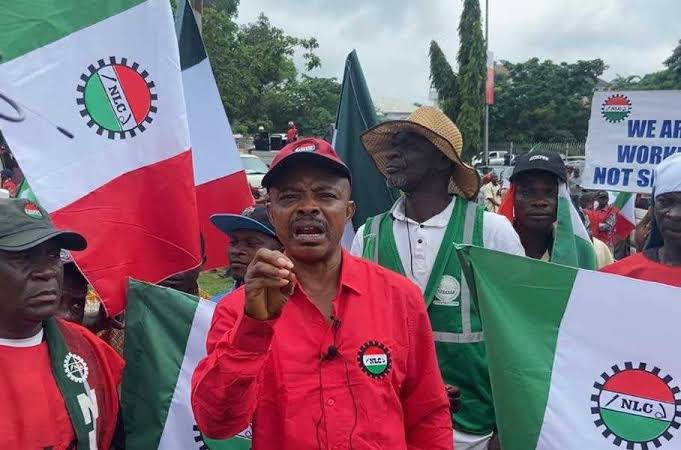
The National Union of Electricity Employees (NUEE) has joined the Nigeria Labour Congress (NLC) indefinite strike that began today, October 1, 2023. 

The NLC is protesting the high price of petroleum resulting from the removal of the fuel subsidy as well as other anti-labour policies by the government. 

NUEE has directed its members to totally withdraw their services and participate in street protests and rallies until the government responds to the union’s demands. 

The union’s demands include the reversal of the removal of the fuel subsidy, an increase in the minimum wage, improved working conditions for electricity workers, and the payment of all outstanding salaries and allowances. 

The NUEE strike is expected to have a significant impact on the power sector, as it will lead to blackouts nationwide.

The union has apologised to the public for the inconvenience the strike will cause, but it has said that it is necessary to protect the interests of its members and the Nigerian people. 

The government has appealed to the NLC and NUEE to call off the strike, but the unions have refused to back down.

The strike is expected to continue until the government meets the unions’ demands.

Democracy uses the rule of law to violate the same law: Nigeria and Uganda

By Salihi Adamu Takai 

Democracy is the system of government that allows room for participation by all people, and it’s the “government of the people for the people and by the people”. This means a thriving democracy always considers the interest of the masses, not the governors. In a democratic society, the governors become the subjects while the masses become the superior. This is proved in the definition of politics given by the late Aminu Kano ( the former Kano State Governor), Nigeria: “Politics is man management.”

The rule of law is one of the characteristics of a successful democracy. So, does it mean there is no existence of democracy if the rule of law is not fully implemented in applying democracy? Yes, it’s not a successful democracy. Professor A. V. Diecy defines the rule of law as the “absolute supremacy or predominance of the regular law as opposed to the influence of arbitrary power and excludes the existence of arbitrariness or even of wide discretionary”.

Based on the definition given by Professor A. V. Diecy, the rule of law is all about “equality before the law”, and fundamental human rights also ensure this. Therefore, all the characteristics of the democracy are connected. When there is no one, it would be disconnected. 

The rule of law propagates “equality before the law” and makes it mandatory for all the affairs of the democratic government. In Nigeria, the 1999 Constitution of the Federal Republic of Nigeria ensures fundamental human rights under Chapter 4. Section 42 (1) ensures the “right to freedom from discrimination”, and this includes “equality before the law”. In accordance with Nigeria’s question, all the citizens of Nigeria are equal before the law. But, in the same Constitution by section 6, the power of the Judiciary to hear any matter is limited. Section 6 (6)(c)(d) limits Judicial power for hearing or questioning any matters related to Chapter 2 of the Constitution ( Fundamental Objectives). Also, the same Constitution immunise some authorities from legal proceedings (criminal) by section 308 (1) ( 3).

Nigeria and all other democratic States apply almost the same principles. In Uganda, the 1995 Constitution of the Republic of Uganda also ensures “equality before the law” under Chapter 4 by Article 21 (1). Clause (3) defines ” discrimination” as “to give different treatment to different persons attributable only or mainly to their respective descriptions by sex, race, colour, ethnic origin, tribe, birth, creed or religion, social or economic standing, political opinion or disability”. Thus, the above definition of the word used, ” discrimination” applies to all. However, the same Constitution by Article 98 (4) excludes the President of Uganda from legal proceedings in any court.

Therefore, considering the conflicting laws of the Constitutions applied in the democratic governments of all the democratic states, I can still say that with the discrimination, there shouldn’t be a successful democracy today.

Salihi Adamu Takai wrote via salihiadamu5555@gmail.com.

Cordoso to clear dollar debts, enhance transparency as CBN governor

By Ahmad Deedat Zakari 

The new Governor of the Central Bank of Nigeria, Olayemi Cardoso, has disclosed some of his plans for the apex bank. 

He disclosed his plans on Tuesday at the Red Chamber of the National Assembly during his confirmation screening. 

Mr. Cordoso promised to prioritise clearing the apex bank’s backlog of unsettled foreign exchange obligations in the near term. 

Cardoso also promised to enhance transparency, fix corporate governance, and ensure confidence in the autonomy and integrity of the bank. 

“We need to promptly find a way to take care of that. It would be naive for us to expect that we’ll be making too much progress if we’re not able to handle that side of the foreign exchange market,” he said. 

The new CBN governor said he would maintain price stability, revert to evidence-based monetary policies, and discontinue his predecessor’s unorthodox monetary policies to bolster the country’s naira currency. 

Cardoso takes over the leadership of the apex bank as the nation battles several economic challenges and falling economic indices, with the naira nearing 1,000/$ at the parallel market.

NLC, TUC declare strike amidst economic hardship 

By Sabiu Abdullahi 

The Nigeria Labour Congress (NLC) and the Trade Union Congress (TUC) jointly declared a nationwide strike scheduled to commence on Tuesday, October 3.

This announcement comes as negotiations continue between the unions and the government, with both parties striving to find common ground. 

In a press conference held in the capital city of Abuja on Tuesday evening, the NLC and TUC called on their state branches to mobilise workers and the public for a series of demonstrations and marches across the nation.

The unions have expressed their concerns regarding the economic hardships faced by Nigerians, particularly workers, following the removal of fuel subsidies. 

It’s worth noting that the NLC had previously initiated a two-day warning strike on September 5th and 6th, seeking to exert pressure on the government to address these pressing issues.

This move sparked ongoing discussions and negotiations aimed at resolving the issues. 

Emmanuel Ugboaja, the Secretary of the NLC, confirmed that the unions are currently conducting their meetings online, demonstrating their commitment to dialogue even as they announce the strike action. 

In response to the strike notice, Mr. Simon Lalong, the Minister of Labour, appealed to the NLC to reconsider their plans.

He reassured the unions that the government is dedicated to addressing their concerns.

Mr. Lalong also highlighted one recent achievement in their negotiations, where the government ordered the release of the head of the Transport Workers Union in the country.

Digital ID and the Nigerian inclusion question

By Muhammad Mikail

“Every person has a right to participate fully in their society and be recognised as a person before the law” (UDHR & ICCPR article 16). Yet, as of 2021, an estimated 850 million globally have no official proof of their identity, which is essential to protecting their rights and enabling access to services and opportunities. Around half are children, and most live in lower-income countries in Africa and South Asia. (2021 World Bank Report on ID Coverage).

The Sustainable Development Goal sixteen-target-nine (16.9) by 2030 seeks to “…, provide legal identity for all, including birth registration.” Interpretatively, the target under this goal of the broader SDGs aims to ensure that every person, no matter their background, babies, women, children, IDPs, refugees and people living with disabilities, have official proof that shows who they are and where they live. The mantra of SDG 16 is to ensure inclusion such that individuals can enrol and be issued IDs, have means of being verified from anywhere, and have a sense of belonging and integration into society, a cardinal point to fighting extreme poverty. 

So many countries like India (Adhaar), Estonia, Philippines, Turkey, Rwanda, and Kenya (Huduma) recognised the significance of having robust digital identity systems in place to help their country secure their pride of place in today’s increasingly digital global economic sphere, and as a sure way of meeting the needs of their citizens and making life easier for them have successfully enrolled all their citizens into a robust digital identity system.

Aside from providing access to the underserved and unbanked population, mostly domiciled in the rural hard-to-reach areas, to loans and credit facilities more conveniently, a robust digital identity system makes the government’s distribution of fertilisers, agricultural inputs, and subsidies to rural farmers effective by eliminating intermediaries thereby strengthening social accountability and transparency. 

In Nigeria, many have some form of identification, from driver’s licenses, passports, National ID numbers and so on, mainly owing to the fragmented nature of the ID ecosystem before now. At various points, Nigerians and legal residents desirous of any of these are subjected to fresh enrolment and biometric captures by these issuing government agencies or agents.  As expressed by a vast majority of Nigerians, this system is cumbersome, essentially insecure, weak, and unsuited for the digital era, and most times fails to safeguard people’s rights and data.  

To address this, the government of former President Muhammadu Buhari, in a show of commitment and a strong desire to harmonise the existing identification ecosystem, prepared a Strategic Roadmap for Developing Digital Identification in Nigeria. The roadmap was endorsed by the Harmonization Committee on January 31, 2018, and by the Federal Executive Council (FEC) in September 2018. The roadmap highlighted the need for a minimalist, foundational, and eco-system-based approach to identification that can be leveraged to improve service delivery in the country.

Part of the recommendation of the strategic roadmap was to create the Nigeria Digital Identification for Development Project, NDID4D, managed by a team to be supervised by a Project Ecosystem Steering Committee (PESC). The Project Development Objective (PDO) is “increasing the number of persons with a national ID number, issued by a robust and inclusive foundational ID system, that facilitates their access to services”. Similarly, the NDID4D project seeks to address the currently fragmented ID system and boost overall ID coverage and use in Nigeria. This is captured under four components: strengthening the legal and institutional framework, including data protection and privacy; establishing a robust and inclusive foundational ID system, including civil registration; enabling access to services through IDs; and project management and stakeholder engagement. 

The Project, whose implementation began in December of 2021, is to, among others, collaborate with all ID-related agencies, ministries, and departments in addressing the challenges millions of Nigerians faced during NIN enrolment, including long processing time, extortions, and administrative errors. It is also mandated to support the FG in the enactment of significant laws, including the Nigeria Data Protection Act, which is the legal framework for the protection of data of citizens in Nigeria, amendment of NIMC, NPC Acts to ensure digitisation and harmonisation of civil registry with the National Identity database, the cybercrimes and cybersecurity Acts, as well laws that protect electronic transactions in collaboration with the Office of the National Security Adviser. In the same vein, the project supports upgrading the National Identity Management Commission, National Population Commission infrastructures, and human capital development and ensures effective engagement of all relevant stakeholders in the ID ecosystem.

These will go a long way in strengthening the National Identification Number and widening the NIN issuance and enrolment net such that every Nigerian and legal resident, including women, PWDs, children, refugees, migrants and IDPs, can enrol, be issued NIN, and can have access to services. Aside from the NIN becoming the single most important form of ID required in Nigeria, the marginalised, underserved, and vulnerable groups, women, children, refugees, migrants, and IDPs will be saved from discrimination and exclusion.

This was echoed by the acting Director General of the National Identity Management Commission NIMC, Engr, Abisoye Coker-Odusote, recently. She said, “In the digital age, integrated identity is the backbone of e-governance initiatives.” According to her, an integrated identity system will strengthen the government’s fiscal management and promote good governance and transparency through inclusivity and social equality. It ensures that marginalised and vulnerable populations are not excluded from government services. 

The significance of a robust, inclusive digital identity system that enables access to services where every Nigerian has a NIN linked to every aspect of life: banking, communications, employment, security, healthcare, education, and social services is too huge to overlook. The issue of digital identity in ensuring inclusion is critical for Nigeria.

Inclusion is a fundamental aspect of a thriving society, and Nigeria’s Digital Identity system plays a crucial role in achieving this. As citizens, we must recognise the importance of having a digital identity and actively participate to ensure no one is left behind.

 The government must also ensure that the new data protection law protects citizens’ data. To achieve all these, the Nigerian government, critical stakeholders, ID ecosystem partners, traditional institutions, including civil society, and the private sector must work with the National Identity Management Commission and the Nigeria Digital Identification for Development Project to ensure no Nigerian and legal resident in the country is excluded from the ID ecosystem. By doing so, we will be on a clear path to a more just, inclusive, equitable, peaceful, and economically prosperous Nigeria for all.

Muhammad Mikail writes from Abuja, Nigeria, and could be reached via email: muhammadnmikail.mm@gmail.com.