National

You can add some category description here.

Court dismisses Kyari’s appeal in drug deal case

By Uzair Adam Imam

The Court of Appeal in Abuja has dismissed an appeal by suspended Deputy Commissioner of Police (DCP) Abba Kyari, seeking to quash the charge against him regarding an alleged unlawful drug deal.

The three-member panel of the appellate court found Kyari’s appeal to be unmeritorious and affirmed the findings and conclusions reached by the Federal High Court.

Kyari had challenged the jurisdiction of the court to try him and four other serving police personnel, arguing that they had not been subjected to internal disciplinary mechanisms of the Nigeria Police Force (NPF).

However, the Federal High Court and the Court of Appeal have held that the Federal High Court has the exclusive right and jurisdiction to hear drug-related cases, as enshrined in the Constitution and the National Drug Law Enforcement Agency (NDLEA) Act.

Kyari and four members of the Intelligence Response Team (IRT) are charged with conspiracy to deal in 17.55kg of cocaine, dealing in cocaine without lawful authority, conspiracy to tamper with cocaine, and unlawfully tampering with the 21.35kg of cocaine seized from two convicted drug dealers. The trial will continue at the Federal High Court.

The Court of Appeal’s decision was unanimous, with Justices Peter Obiora and Okon Abang agreeing with the lead judgment. Kyari’s appeal was against the March 22 ruling by Justice Emeka Nwite, which declined to quash the charge and dismissed an application filed by Kyari.

The Federal High Court has the exclusive right and jurisdiction to hear drug-related cases, and the powers of the Police Service Commission (PSC) do not supersede the powers of the Federal High Court.

Nigerian lawmakers consider single 6-year term for president, governors, chairmen

By Sabiu Abdullahi

A proposed constitutional amendment aimed at introducing a single six-year term for the President, state governors, and Local Government Area chairmen has passed its first reading in the House of Representatives.

The bill, sponsored by Representative Ikenga Ugochinyere and 50 other lawmakers, seeks to reduce election costs and promote stability in government. 

If enacted, the amendment would extend the tenure of these offices from four to six years, commencing from the date of their election.

The bill also provides for the extension of the term in cases of war or election annulments. 

The proposed amendment has sparked debate among political analysts, with some arguing that it could lead to a concentration of power and undermine democratic principles.

However, proponents of the bill argue that it would reduce the financial burden of frequent elections and promote continuity in governance. 

The bill will undergo further debate and scrutiny before a final vote.

President Tinubu appoints Dantsoho, Adebayo as MD, chairman of NPA

By Abdullahi Mukhtar Algasgaini

President Bola Tinubu has approved the appointment of Dr. Abubakar Dantsoho as the Managing Director of the Nigerian Ports Authority (NPA).

The President has also approved the appointment of Senator Adedayo Adeyeye as the Chairman of the Board of the Nigerian Ports Authority (NPA).

Dr. Dantsoho holds a doctorate degree in maritime technology from Liverpool John Moores University, United Kingdom, and a master’s degree in international transport from Cardiff University, Wales, United Kingdom.

Before his appointment, he had served in various roles in the Nigerian Ports Authority as Assistant General Manager; Technical Assistant to the Managing Director; Port Manager, Onne Port; and Principal Manager, Tariff & Billing.

Senator Adeyeye, the Board Chairman, is a seasoned lawyer, journalist, and politician.

He is a former Minister of State for Works and former Senator representing Ekiti South Senatorial District.

The President expects the new leadership of this pivotal agency to demonstrate excellence in the discharge of their duties to facilitate efficient port services and improved industry outcomes.

Insecurity: Zamfara govt announces ban on motorcycles movement

By Abdullahi Mukhtar Algasgaini

Governor Dauda Lawal has approved an Executive Order to restrict the movement of motorcycles in Zamfara State.

The governor signed the Executive Order on Thursday at the Government House in Gusau, the state capital.

A statement by the governor’s spokesperson, Sulaiman Bala Idris, revealed that the Security Council decided to restrict motorcycle movement in Zamfara during an emergency meeting on Wednesday.

According to him, to legally enforce the restriction, the state’s Attorney General, Abdul’aziz Sani SAN, presented Executive Order No. 07, 2024 to the governor which was subsequently assented.

“Today, Governor Dauda Lawal signed an order to restrict and prohibit the movement of motorcycles from 8:00 pm to 6:00 am in Zamfara State.

“This is in an effort to protect the lives and property of the people, as well as to curb security challenges and broaden the scope of government measures to strengthen the fight against banditry and other forms of social vices in the state.

“Effective immediately, all motorcycles are now restricted within the state between 08:00pm and 06:00am.“No motorcycles are allowed to travel on any road in the state during these hours. Security agencies are instructed to arrest anyone who violates this order.

“The Attorney General of Zamfara State is authorized to prosecute those who disobey the restriction order.”

Senate confirms Arugungu, Nnamani as Chairman, Secretary of PSC

By Abdullahi Mukhtar Algasgaini

The Senate has confirmed the appointment of Mr Hashimu Argungu as Chairman, Police Service Commission, PSC.

Also confirmed as Secretary and Member were Chief Onyemuche Nnamani and Frederick Lakanu.

This followed adoption of the report of the Committee on Police Affairs at the Committee of the Whole on Thursday.

Presenting the report Chairman of the committee, Senator Abdulhamid Ahmed (APC-Jigawa) said the professional truck records of the nominees validates the fact that they are persons of proven integrity and ability.

According to him, there is no petition or any adverse security report against their nomination.

He said their qualifications, track record of excellence, professional services and cognate experience confirmed and affirmed their suitability and competence to be appointed for the positions.

He therefore urged the Senate to confirm the nominees.

Contributing, Sen.Seriake Dickson (PDP-Bayelsa) said the committee performed its duties as was requested by the senate.

He said he has a personal knowledge of the nominees in the course of his service at various levels, while urging the Senate to confirm the nominees.

Senator Ahmed Lawan (APC-Yobe) commended the committee for conducting a through secreening on the nominees.

He said the nominees were all qualified for the positions expressing hope that they would perform creditably.

He said there was a disagreement between office of Inspector General of Police and the Police Service Commission on who should recruit new police officers, saying that the matter ended at the Supreme Court.

This, Lawan said was a a bad experience, saying that the Senate must insist that whatever issues between the two organisations should be resolved.

He expressed believe that the nominees are well qualified to do the job, while urging the committee to closely monitor activities in the two organisations.

President of Senate Godswill Akpabio said committee on police affairs should ensure oversight functions to avoid the mistakes of the past particularly the idea of office of the Inspector-General of Police struggling with the police service commission on issues of recruitment.

“In the last two years, we probably would have had additional 20,000 Nigerians into the Nigerian Police Force.

“But unfortunately as a result of personality clashes, the issues went as far as the supreme Court.

“Whelther withdrawn or not withdrawn, this police service commission we have just cleared today.

“And so Office of the Inspector-General of Police should be cautioned to take the interest of Nigerians into consideration and security of this nation uppermost and not their personal interest.

“They should work harmoniously toward the realisation of Mr President’s vision that Nigerians should be allowed to sleep with their eyes closed.”

LGBTQ+ bill and the magic of word choice

By Isma’il Hashim Abubakar 

I was prompted to pen this essay by two writeups of prominent newspaper columnists: Mr Gimba Kakanda and Professor Farouk Kperogi. The latter is one of the people I have been following due to their mastery of using his pen to communicate ideas. Both Kakanda and Kperogi have painstakingly struggled to deodorise the infamous Samoa (perhaps it’s more suitable to call it Tamoa) Agreement and exculpate it of its meticulously wrapped pro-LGBTQ+ substances. 

Maybe the authors of the document containing details of this agreement are so cunningly sagacious to beat the conscience and intelligence of the Atlanta word master who, as far I know him, is so wide-eyed to read things between the line and discern and decode messages from even unarticulated and not well coughed or well-lettered communications. Farouk Kperogi is not at all that simplistic type of a person that one could hoodwink by suggesting to him that a week is different from seven days or a year is anything else but twelve months. 

The 12-page document explicating different stages of agreements entered into by the EU and African, Caribbean and Pacific states is so clear in the very first paragraph that “the multiple negotiation levels, the coronavirus crisis and difficulties in reaching agreement on sensitive issues, such as migration management and sexual and reproductive health and rights, …”. A witty reader would not even wait to be told that sexual rights emphasised in the quote would never mean the existing sexual customs prevailing in the beneficiary states just as no one will argue that sexual rights in this sense refer to what the West conceives of as new normal, acceptable sexual culture.

All the dull, lengthy noise and regular references to vague resolutions and procedures in the document, beating around the bush in most instances, reflect strategies meant just to propagate the incongruous norms the West is relentlessly hellbent on imposing on third-world countries. It may also sound controversial if one claims that the so-called autonomous countries like ours are, in real and practical terms, undergoing another form of colonialism in the modern day, of course, heavily pretentious, more diplomatic, possibly negotiable, and less confrontational.

Daily Trust, the newspaper outlet that took centre stage in unravelling Nigeria’s role in this agreement, should be commended for quickly alerting Nigerians to what our increasingly gluttonous, money-hungry leaders who could not resist a dubious multimillion-dollar loan are up to. 

The document being circulated currently seems not to be the only manual laying guidelines and terms of the negotiations. It refers to a monitoring group under the Committee on Development (DEVE) set up by the European Parliament, whose consent was crucial in the approval of the negotiations. In the report submitted to the  EU through the DEVE committee, several recommendations were adopted, including a particular “chapter on human rights” which “should explicitly list the forms of discrimination that should be combated (such as sexual, ethnic, or religious discriminations) and mention sexual and reproductive rights”.  

It appears that while the available document now within public reach may remain implicit and brief about the nature of rights this bill wants to get protected, there are appendixes which may be at the domains of leaders and top representatives of concerned countries and which explain in greater details and specify perhaps in exact terms the list of kinds of the so-called discriminations that must be stopped once the agreement is entered into. 

Admittance that there are divergences in positions on sexual orientation and gender identity (LGBTI rights) among EU Member States is not a definite declaration or solemn undertaking that this agreement will not pursue that goal. It doesn’t require any mental labour to know where this agreement is heading, even if it does not now literally endorse LGBTQ+. The reference in the agreement document about scepticism and misgivings nurtured by some affected countries is nothing but a deceptive pretence of objectivity and balancing, such that later it will be presented as a mere debate and leaning toward the LGBTQ+ as a mere result of in-house voting among donor institutions, vetoing the concerns of and leaving affected countries like our own with no option but to accept and be committed to the terms based on which we are handsomely paid. 

In fact, without any further denial, disclaimer or clarification, the document observes that “prior to the signing of the agreement in Samoa, several African and Caribbean CSOs called on their governments not to sign the agreement, fearing that it might lead to modifying domestic laws, in particular, to endorse LGBTI rights”. The authors do not attempt to deny the allegation above or make any further comments that will allay existing fears, thereby reminding us tacitly that to be forewarned is to be forearmed.

Both Kakanda and Kperogi capitalise on the lack of literal mention to promote Lesbian, Gay, Bisexual, Transgender, and Queer (LGBTQ+) in the document, thereby accusing the Daily Trust of misguided reporting but also rubbishing the understanding of the majority of Nigerians who interpreted the clauses emphasising the need to protect sexual rights and orientation as another way of reintroducing LGBTQ+ using the power of juicy loans. 

Since Kakanda is in government, we have no difficulty forming the proper framework to read his intervention. As a former activist now enjoying dividends of democracy, one should either keep quiet if one cannot defend the truth or at least not pretend to be ignorant of how Nigeria is run and what are the ulterior motives and hidden goals behind all loans that the third world is lured into accepting.

Kakanda’s points revolve around the absence of explicit devotion and literal commitment to LGBTQ+. Kakanda reiterates the insignificance of the anxiety this new agreement saga is generating by referring to the anti-gay law signed during the Jonathan administration, and he thinks that is absolutely enough to guarantee our safety and to suggest that the money could be collected and consumed without serious implications and disastrous consequences. If Kakanda is sincere, let him advise the government in which he now serves to institute operational frameworks that will deploy the same anti-gay laws enacted about a decade ago to end the LGBTQ+ movement that already practically exists and is being rigorously promoted and advertised via social media platforms.

Meanwhile, Kperogi, who has built a reputation of siding with the masses always against different government antisocial policies, has fallen so low this time around to fail to discern that sexual rights and other terminologies used in the document are not even so vague to think they are different from all those bizarre rights and queer sexual orientation freedoms. We are all not oblivious to how highly sophisticated and cunning heirs of former colonialists are and not as gullible to declare support for the scary LGBTQ+ catchphrase glaringly in their proposal, given that they faced resistance in earlier phases of their project. We ought to be mature enough and vociferously critical to detect proposals to institute LGBTQ+ even by mere mention of key phrases like “gender violence”, “women’s and girl’s empowerment”, “fight against discrimination”, “right of self-determination”, and so on, not to talk of sexual and reproductive health rights.

Kperogi is merely angry that people have been, for operational reasons, refusing to kowtow to his admonition to rise and execute his yet esoteric, misunderstood and almost ‘impracticable’ revolution. Now that people seem to be once again united and appear determined to fight this dubious bill which is at our doorstep, which, to him perhaps, is innocuous or at least less harmful, Kperogi is tactically venting his anger on people and accusing them of misplacing priority. 

In other words, people in Kperogi’s theory should better fight anti-masses policies which institutions like the IMF and World Bank are forcing Nigeria to implement than jawbreaking and investing unnecessary energy on sexual rights issues, which, after all, is what he encounters in the U.S day in day out, unlike the excruciating poverty and bad governance that bedevil Nigeria. 

At any rate, within a decade or something like that, even as LGBTQ+ right was successfully illegalised and the law to fight it constitutionally still exists, there has been a proliferation of growing LGBTQ+ movements, largely operating without any hitch in the virtual world and particularly on the social media cyberspace. Who knows if institutions behind bills and agreements like the Samoa agreement do not sponsor those movements and groups? Why is there little or no evidence at all to show and establish that those breaking anti-gay laws and other unusual customs have been made to face the wrath of the law? 

Sexual rights agents, manifesting in many forms, have now become celebrities and operate freely on the media while clandestinely running ventures that everybody knows are nationally outlawed. Sponsors of these agreements might have been convinced that it is now the right time to secure legal frameworks for protecting their representatives, having taken some years to experiment and implement their projects successfully. 

We should not be deceived by any government defence on this matter—either by a government official or a likely bribed or even gagged scholar. We all know well what some powerful elements in the Western world are after when they set goals they want to achieve at all costs, deploying short—and long-term plans, even if the latter will span a century. As things go this way, let us ponder what will happen in the next 50 years for those who will live to see that period.

 As people are now sinking into excessive materialism, suffering from a lack of focus and shortsightedness,  and unduly obsessed with imitating the Western lifestyle, it is so hard to suggest that posterity could effectively challenge and fight bills like LGBTQ+.  Therefore, there is a need to start thinking of ways and techniques to instil zeal and introduce mechanisms for combatting moves like this in future. If they have not succeeded now, they have patience; they could wait and hope to see their plan triumph within less than a century from now. One better way to start tackling LGBTQ+ is to begin addressing the decline of morality that has been mainstreamed on social media now. Otherwise, once the law succeeds one day, God forbid, it will consume us unimaginably.

Isma’il writes from AERC, Rabat and can be reached via iahashim@fugusau.edu.ng.

NBA dismisses claims on Samoa agreement, LGBTQ rights

By Uzair Adam Imam

The Nigerian Bar Association (NBA) has refuted claims that the Samoa Agreement, signed by the Federal Government, requires Nigeria to endorse or accept LGBTQ rights.

NBA President Yakubu Maikyau, in a statement, said that the agreement does not compromise Nigeria’s sovereignty or existing laws, including the Same Sex Marriage (Prohibition) Act, 2023.

Maikyau emphasized that the NBA would have advised against signing the agreement if it contravened Nigerian laws.

He urged stakeholders to educate the public on the agreement’s true content, countering negative narratives pushed along sensitive lines of faith, culture, and morality.

The agreement recognizes Nigeria’s existing laws and sovereignty, and the NBA calls for continued public enlightenment to counter misconceptions.

Maikyau stated, “There is no provision in the SAMOA agreement that requires Nigeria to accept or recognize LGBTQ or gay rights, either as a pre-condition for a loan of $150 Billion USD or at all.

“Instead, the agreement was expressly made subject to the local laws and the sovereignty of the contracting Nations.

“That is to say, the SAMOA agreement recognizes Nigeria’s Same Sex Marriage (Prohibition) Act, 2023 and the Supremacy of the Constitution of the Federal Republic of Nigeria, 1999 (as amended).

“For the avoidance of any doubt, the SAMOA agreement does not seek to compromise our existing legislations nor undermine the sovereignty of Nigeria,” he added.

Nigerian army kills 11 ISWAP terrorists in Sambisa forest

By Anwar Usman

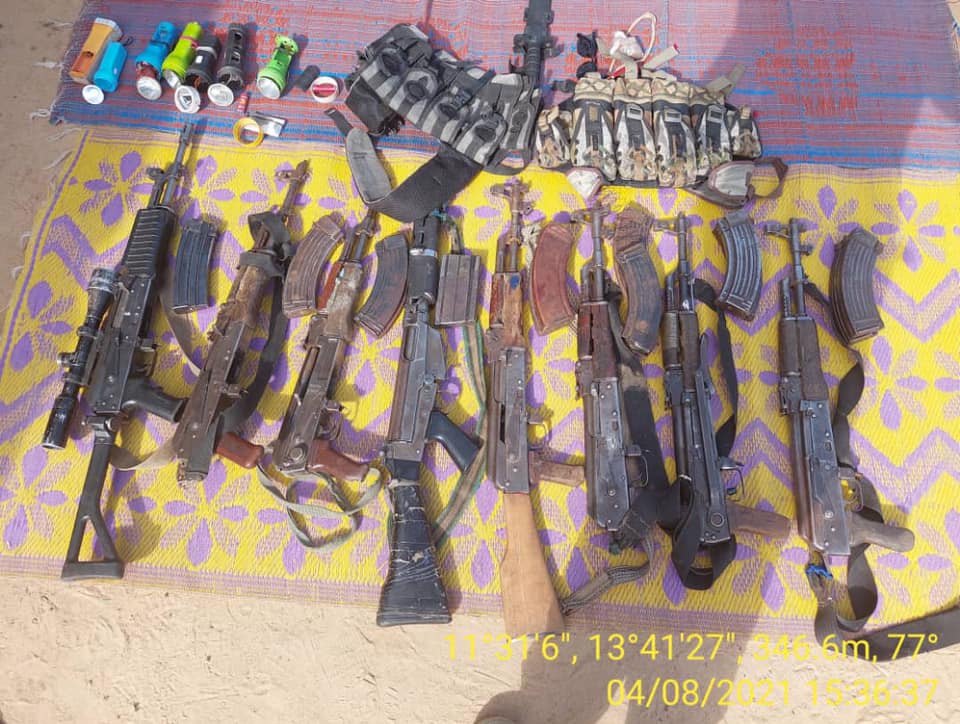
Troops of the Nigerian Army, deployed for a special operation in Sambisa Forest, have eliminated 11 Islamic State of West Africa Province terrorists.

The Nigerian Army, in a statement on its official Twitter handle, disclosed this on Saturday.

It said the feat was achieved in coordinated special clearance operations with a hybrid force against a terrorists’ enclave in Jongo Village within the notorious Sambisa Forest.

It stated that the troops targeted the portion and engaged the terrorists in a fierce gun battle, killing some while others fled in disarray.

The army stated that its troops conducted further exploitation ahead of the enclave, leading to the capture of some weapons.

According to the post, the arms include 99 rounds of 7.62 x 54mm on a metal link, 19 rounds of 7.62 x 39mm, 3 AK-47 rifle magazines, two 36-hand grenades, and two locally made guns.

“This successful operation showcases the operational effectiveness of the Nigerian army in combating terrorism and securing in the region.

“The neutralisation of ISWAP terrorists and the confiscation of their weapons will undoubtedly contribute to enhancing security and stability in the area.

The post added that, “This further demonstrated the commitment of the Nigerian military to eradicating terrorism and protecting the citizens”.

The ripples from the Central Bank of Nigeria 

By Zayyad I. Muhammad 

The Central Bank of Nigeria (CBN) has been in the news for both good and bad reasons since President Bola Ahmed Tinubu’s administration was inaugurated a little more than a year ago.

From Godwin Emefiele’s dismissal and subsequent arrest to the unprecedented devaluation of the Naira, the controversial transfer of staff from Abuja to Lagos, the firing of 26 out of 29 directors, the revelation of the theft of $6.3 million from the CBN vault during Emefiele’s tenure, and the intense pressure on the Olayemi Cardoso-led management to restore normalcy, the CBN has never faced such a tense and tumultuous period in recent memory.

Who is to blame? The CBN Governor, Olayemi Cardoso, and his four deputy governors? President Tinubu’s sudden decision to float the Naira? Emefiele’s evident recklessness and partisan politics? Or the entire political and economic system

Cardoso and his four deputies have résumés and experience comparable to professionals worldwide. However, critics argue that, despite his experience as a commercial banker, Cardoso lacks the expertise of a central banker. They also contend that his previous role as Tinubu’s commissioner for Economic Planning and Budget could influence his performance, suggesting he might view the CBN Governor’s position as merely a form of patronage.

The CBN reached its lowest point during the Emefiele era when its regulatory and stabilizing functions became intertwined with politics and business interests. Court documents revealed that on February 8, 2023, four individuals stole $6,230,000 in cash from the CBN. Additionally, the Federal High Court in Lagos recently ordered the final forfeiture of properties valued at N12.18 billion linked to Godwin Emefiele.

The developments (above) indicate that Emefiele’s successor will encounter significant challenges. Nevertheless, the primary role of a central banker is to ensure stability during crises, focusing not only on critiquing past actions but also on delivering effective results that positively impact the economy and its citizens.

Cardoso and his team are currently grappling with several challenges: the instability of the Naira, public perception of the CBN, and widespread belief that Bureaux De Change operators wield undue influence, while the CBN has struggled to establish a mutually beneficial operating framework with them. The reality is that Cardoso’s ‘by-the-book’ approaches have not yielded [the] desired results. Although the CBN has managed to achieve some consistency in forex supply and clear the backlog of dollars owed to airlines and other foreign investors, the transfer of staff to the Lagos office and the dismissal of 25 out of 29 directors and additional staff must be considered in the context of policies initiated as far back as the reign of Lamido Sanusi.

Regarding dismissing directors and senior staff, how can Cardoso be expected to work effectively with individuals deeply influenced by Emefiele’s actions? Even in the military, police, and paramilitary forces, such restructuring is not uncommon, where hundreds of generals can be retired simultaneously, and the world moves on.

It’s also important to commend Cardoso and his team’s collaboration with the Nigeria Economic Summit Group (NESG) and other stakeholders to enhance the business environment. Such efforts are crucial for the CBN to build trust, ensure price stability, and implement effective monetary policies that prevent economic instability and improve foreign exchange rates and inflation.

On the other hand, why hasn’t the CBN been able to restore the Naira to its actual value against the dollar? The biggest mistake we make in Nigeria is sometimes applying global theories and laws to our unique system, which operates differently from other countries. These theories and laws succeed elsewhere because they strictly adhere to the principles and standards that support their effectiveness. However, CBN’s attempts to elevate the Naira to its expected value have consistently defied conventional economic laws and theories.

Cardoso and his team should consider adopting a strategy that combines established economic laws and theories with innovative approaches. One of their critical assets could be neighbouring countries such as Cameroon, Chad, Republic of Benin, Equatorial Guinea, and Niger Republic, along with other West and Central African nations, as well as Nigeria’s agriculture and manufacturing sectors. These countries import significant quantities of agricultural and manufactured goods from Nigeria, making them prime targets for the CBN’s efforts to strengthen the Naira.

A proactive step would involve the CBN collaborating extensively and effectively with governments of border states to establish well-structured international free-zone markets at border points. These markets would exclusively transact in Naira for all Nigerian products sold there. This approach could incentivize businesses from neighbouring countries to prefer purchasing goods in Naira due to its low-cost advantage, thereby increasing demand for the Naira.

Furthermore, the CBN must address one of its weakest points: inadequate public relations (PR). There is a pressing need to enhance its PR strategy because most of the public perceives the current CBN management as solely on a vendetta mission to discredit anything associated with Emefiele and engage in political maneuvering rather than recognizing its efforts to rectify systemic issues.

The Cardoso team must acknowledge that despite being a strategic institution, the CBN is susceptible to being viewed like any other Nigerian government entity. Therefore, the CBN must establish and maintain a robust PR program that informs the public about its activities and portrays the institution as independent from political influences despite being overseen by politicians.

Part of the CBN’s PR strategy should involve revitalizing and restructuring its commendable agricultural programs, which were previously undermined under Emefiele’s tenure. Cardoso should seize this opportunity to lead the relaunch of these programs and engage with the public to demonstrate his commitment as a genuine central banker, focused on economic stewardship rather than engaging in political vendettas.

Zayyad I. Muhammad writes from Abuja via zaymohd@yahoo.com.

Civil society group reaffirms El-Rufa’i’s indictment, urges EFCC, ICPC for arrest

By Abdullahi Mukhtar Algasgaini

A civil society group, the Kaduna Citizens Watch for Good Governance (KCWGG), announced on Tuesday, July 2, 2024, that it has petitioned the Economic and Financial Crimes Commission (EFCC) and the Independent Corrupt Practices Commission (ICPC) to investigate former Governor of Kaduna State, Nasir El-Rufai, and his cabinet over alleged financial misappropriation of over N400bn during his administration from 2015 to 2023.

Speaking during a press conference held at Arewa House, Kaduna, on Wednesday, the chairman of KCWGG, Comrade Victor Duniya, stated, “Yesterday, the 2nd of July 2024, we officially lodged petitions at the headquarters of the Economic and Financial Crimes Commission (EFCC) and the zonal office of the Independent Corrupt Practices Commission (ICPC) Kaduna against the former governor of Kaduna State, Mal. Nasir Ahmad El-Rufai and many members of his administration.

“Our action was a result of the probe carried out by the Kaduna State House of Assembly Ad-hoc report on sourcing and usage of domestic loans from 29th May 2015 to 29th May 2023, which indicted the former governor and some of his key members.”

The ad-hoc committee report had indicted the former governor and some of his top government officials for the misappropriation of over N400bn.

Though the former governor has rushed to the Federal High Court seeking his fundamental rights, the civil society group (KCWGG) insisted that the anti-graft bodies should arrest the former governor and his appointees who were indicted in the probe.

Duniya maintained further, “Our petitions requested immediate investigations, arrests, and prosecutions of Mal. El-Rufai and his appointees involved in the mismanagement, siphoning, and many illegal financial and administrative activities contained in the report.

“Holding the former governor and those that looted the treasury and shortchanged the people’s interests accountable will deter other elected and appointed public officials from mindless looting of the public treasury with impunity.”

The petitioners told the two anti-graft agencies, “We have absolute confidence in the capacity and determination of the anti-graft agencies in combating corruption in Nigeria.