National

You can add some category description here.

JUST IN: President Tinubu sacks FCCPC, BPE CEOs

By Sabiu Abdullahi

President Bola Tinubu has dismissed Mr Babatunde Irukera, Chief Executive Officer of the Federal Competition and Consumer Protection Commission (FCCPC), and Mr Alexander Ayoola Okoh, Director-General/CEO of the Bureau of Public Enterprises (BPE).

The move is part of a broader plan to restructure and revitalise critical agencies of the federal government. 

In a statement released on Monday by Ajuri Ngelale, the Special Adviser on Media and Publicity to the President, it was announced that the dismissed CEOs are instructed to hand over their duties to the next most senior officers in their respective agencies.

This transitional measure is in effect pending the appointment of new chief executive officers. 

The presidency affirmed that the removal of the chief executives takes immediate effect, signifying the swift implementation of President Tinubu’s directive.

The decision aligns with the government’s commitment to restructuring and repositioning key agencies, with a focus on safeguarding the rights of Nigerian consumers and fortifying the foundation for increased contributions to the nation’s economy by pivotal growth-enabling institutions. 

As the nation anticipates the appointment of new leadership for these agencies, the restructuring efforts shows some signs of the administration’s dedication to fostering efficiency.

JUST IN: Minister Edu suspended amidst allegations of financial irregularities

By Sabiu Abdullahi

President Bola Tinubu has suspended Dr. Betta Edu, the Minister of Humanitarian Affairs and Poverty Alleviation, in response to an ongoing investigation into allegations of financial irregularities. 

Previously announced by the Presidency, the investigation revolves around the transfer of N585.189 million by Minister Edu.

Bayo Onanuga, the President’s Special Adviser on Information and Strategy, assured the public that appropriate action would be taken pending the conclusion of the inquiry. 

The controversy unfolded as reports surfaced indicating that funds designated for vulnerable groups in Akwa Ibom, Cross River, Ogun, and Lagos states were diverted into a private account.

This revelation sparked widespread public outrage and fueled demands for Edu’s dismissal and subsequent prosecution. 

A leaked document bearing Edu’s signature detailed the direct disbursement of N585.189 million into the private account of Bridget Mojisola Oniyelu.

The veracity of this leaked document confirmed that the funds indeed found their way into Oniyelu’s account. 

Addressing the escalating situation, Edu, through her Special Assistant on Media and Publicity, Rasheed Zubair, stood firm, asserting that the payment strictly adhered to due process.

The suspension adds a new layer to the unfolding saga, raising further questions about the financial transactions under scrutiny.

Nigerians call for the sack of Betta Edu

By Ahmad Deedat Zakari

Following the allegations of corruption in the Ministry of Humanitarian Affairs and Poverty Alleviation, Nigerians on the micro blogging platform, X, are calling for the removal of its minister, Dr Betta Edu.

In a document which has now gone viral and purportedly signed by the minister, she wrote to the Office of the Accountant-General of the Federation and directed the disbursement of N585.189 million into one Bridget Mojisola Oniyelu’s private account.

The minister had made clarifications on the allegations, she explained in a statement released on Friday that the controversial payment followed due process.

However, many Nigerians are not convinced by her explanations and are demanding that President Tinubu should relieved her of her job.

According to Farooq Kperogi, the allegation presents an opportunity for the Tinubu government to do the right thing and not tolerate corruption like the previous administration.

“This is a momentous moment for Tinubu. If he does not fire Edu forthwith and bring her to justice, he has already lost the moral high ground to try Buhari’s corrupt honchos.”

A human right lawyer, Inibehe Effiong, said she ought to have resigned immediately.

“Has Betta Edu been interrogated by the EFCC yet? When is she tendering her resignation letter?” He wrote.

“If Betta Edu still has a job by tomorrow morning, then we will know that Bola Ahmed Tinubu is not ready to lead this country. You cannot be swift in suspending Halima Shehu while Edu Betta, who has suspicious academic records and serious allegations against her, still has a job. Suspend her now and allow @officialEFCC to invite her for interrogation” an X user, simply identified as Sarki, posted.

Thousands of Nigerians and civil rights organizations are calling for thorough investigation and her removal.

Beyond the essentials; leveraging personal growth for success

By Muhammad Muzzammil Bashir

While mastering essential skills and knowledge is crucial, true success today often hinges on going beyond the baseline and actively cultivating personal growth. It’s about unlocking your full potential and becoming the best version of yourself.

It’s common that in order to do your job effectively, you need to have the technical know-how, or more so, you need to earn a certificate and license in order to practice for professional careers. These are the essentials. The prerequisite for skill practice. They provided the foundation – the sturdy scaffolding upon which we built our lives. They equipped us with the knowledge and skills to navigate the complexities of the world and secure a foothold in the ever-churning tide of life.

In this constantly ever-changing world, with different definitions of success always emerging, from being prowess with hard work to earning academic accolades, or both, now to low-profile, nuanced skills that are embedded in our personal character, termed soft skills, personal growth skills, or more so abilities beyond the technical, that propel us toward success. The skills, degrees, and certificates we earn alone may not, by themselves, help us build the career path we aim to reach. We found ourselves in an era where the application of artificial intelligence is rampantly proliferating, where distance and space are no longer barriers, and where employers are looking for employees that have skills that show the warmth of empathy, active listening, imagination, time management, efficiency, and the spark of passion to ignite
self-discovery.

In his famous book, Skills Rather Than Just Degrees, Professor Isa Ali Pantami cited that the major unemployment challenges Nigeria faces are not, in part, the unavailability of jobs but rather, unemployability, where “positions cannot be filled because there are graduates and candidates without the requisite skills to take up such positions.” This is where personal growth steps in: having the dexterity to handle complex projects under pressure, to think critically outside the box, to prioritize tasks at hand, and to problem-solve effectively and efficiently. It’s about communication skills—the ability to organize your thoughts and communicate them in a clear, precise, and simple way without ambiguity while putting empathy and compassion into consideration. It’s about your interpersonal skills, how you relate to your peers, and your emotional intelligence—how you react to things that happen around you. Personal growth isn’t a linear path; it’s a winding journey punctuated by triumphs and stumbles, laughter and tears. It’s about embracing the detours—the unexpected turns that lead us to hidden treasures within ourselves. It’s about learning from our mistakes, not as failures but as stepping stones to a higher vantage point. Personal growth is about recognizing that the pursuit of knowledge is not confined to textbooks but blooms in the fertile ground of lived experiences. It’s the volunteer project that pulls us outside our comfort zones, revealing hidden depths of empathy and strength. It’s the heartbreak that cracks open our hearts, teaching us the profound dance of vulnerability and resilience.

In this era, what employers look for in candidates now is, mostly in part, what benefit you can bring to the table, how critical and quick you are in thinking and spotting opportunities, how open-minded you are in adapting to new ideas and environments, how broad-minded you are in project management, and how good you are in thinking about how those projects can be executed in a cheap and better way. So also, how analytical are you at predicting the future? Personal growth is about cultivating the habit of lifelong learning. A lifelong learning habit will give you an edge among your peers, make you important and relevant in your workplace, or give you a competitive edge in your business domain.

Great leaders, either in business or public organizations, tend to excel in their respective domains because they read books, update themselves regularly with the current trends in their domain, and choose to go out of their comfort zone to seek new knowledge and experience. You are better off succeeding at your job or business if you use your time to read books for personal and career growth that will change your thinking and broaden your imagination. You are better off succeeding if you use your time to learn soft skills from online learning platforms like Coursera, Udacity, Udemy, and LinkedIn online courses, among many others, to leverage the gap for the skills you lack that will give you a competitive advantage in your
domain or help you land a job in top-notch corporations. You are better off succeeding if you use your data subscription to watch Youtube videos, TedTalks, documentaries, and listen to postcards that will hone your skills, broaden your knowledge, and open your eyes to global trends in your career. You are better off succeeding if you can give yourself to volunteering and/or internships, especially at the beginning of your career, where you will have ample opportunity to gain lots of experience and mentorship and, at the same time, clinch a job whenever there is a vacancy in the organization or from a different organization through a referral from someone in the organization you are volunteering for.

You are better off succeeding if you seek out mentors that can offer valuable insights, shortcuts, and advice on navigating challenges you might face and share their expertise in your field, helping you develop new skills or refine existing ones and provide unbiased feedback on your work, performance and ideas. This can help you identify areas for improvement and make more informed decisions. Personal growth is a lifelong journey, not a destination. Embrace the process, enjoy the learning and witness how it transforms you into a more successful and fulfilled individual.

Muhammad Muzzammil Bashir can be reached via; mbashir199@yahoo.com

As bandits relocate to Taraba and the Plateau 

By Zayyad I. Muhammad

Recently, the media have been awash by the news of bandits’ attacks in Taraba and Plateau states. On November 24, 2023, it was reported that gunmen in their numbers attacked and killed 20 people in the Yangtu Development Area of the Ussa Local Government Area of Taraba State. In the early hours of Tuesday, December 19th, 2023, other gunmen attacked the Pupule community in Yoro Local Government Area of the same Taraba state, kidnapped Umaru Nyala, the chief of Yorro chiefdom, and also abducted 22 other people.

The Taraba State police command and other security operatives killed over 50 bandits terrorizing villages along the corridor of Bali Local Government Area on Tuesday, November 28th, 2023. On the other hand, on Wednesday, December 27, 2023, a group of bandits stormed the Gondon Maliki weekly market in Taraba State, kidnapped scores of people, and carted away food and wares using motorcycles.

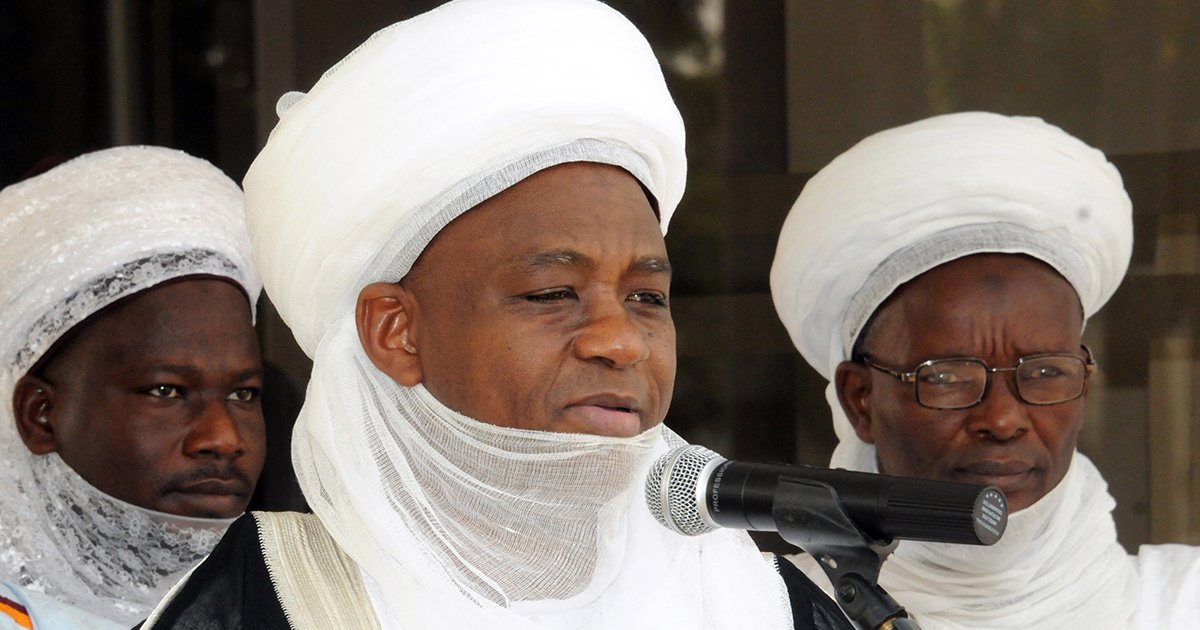
The Sultan of Sokoto, Alhaji Sa’ad Abubakar III, while condemning the gruesome murder of over 100 people in the Plateau, said, “The bandits seem to be ahead of the government.”

To be fair to all the Nigerian security operatives, they’ve done an excellent job in the Northwest states of Zamfara, Kaduna and Katsina, in facing the menace of the bandits. These states have witnessed a visible improvement in security in areas being terrorized by the bandits, and the Abuja-Kaduna highway is secured while the Niger axis is a little bit silent.

It appears that the military onslaughts on the bandits and other terrorists have killed many of their leaders, and they have dispersed to the Northeast axis and some parts of the Plateau. Why did the bandits settle in these areas, especially the Northern parts of Taraba State – Yorro, Lau, Jalingo and Ardo Kola local government areas? Is it due to its topography, location or economy? Taraba State is among the poorest states in Nigeria but rich in agriculture and forestry. Probably the bandits found solace in Taraba due to its uniqueness in geography and agricultural activities. Furthermore, the Cameroonian mountains, which stretch almost to the entire Northern and Southern parts of Taraba, linking the state with the River Niger, will certainly provide a hiding place for criminals, bandits in particular.

The only way of this menace is for the state, federal and local communities to work together; collaboration is key to security management. For example, at its 8th and 9th meetings held in Maiduguri, the Borno State capital, on September 9th, 2023, and in Yola, the Adamawa State capital, on November 24th and 25th, 2023, the Northeast Governors’ Forum expressed its concern about the new dimension of the growing banditry in Bauchi, Gombe and Taraba states, and this may be as a result of the concerted efforts of the military on neutralizing the bandits from other parts of the country. The governors called on the federal government to intervene and promised to work with and support all security agencies.

Managing security in a vast country like Nigeria with inadequate modern technology for security management can be very difficult, and our security operatives cannot be everywhere and anywhere at the same time. So what is the solution?

The re-invigoration of the kinetic and non-kinetic security approaches by the Office of the National Security Adviser (ONSA) has resulted in many successes and breakthroughs; however, more intelligence gathering is needed; community engagement and direct communication with the bandits should be employed. In community engagement, the model being used by the Governor Ahmadu Umaru Fintiri-led Adamawa state government in tackling farmer-herder conflict should be adopted; the community should be made to feel part of the solution in security management, thus providing intelligence and also being a watchdog for security operatives without being endangered.

Secondly, the reported ongoing ‘soft approach’ should be sustained and, indirect communication with the bandits. Most of them now also use social media; thus, a kind of smooth operation should be launched by the ONSA and other relevant bodies to recruit people who speak the languages of bandits to send convincing messages to them on the ills, disadvantages and evils associated with their dangerous ‘trade’ while showing them the beauty and benefits being enjoyed by their ‘kind’ who adopt normal lives, go to school both western and religious, but still maintain their culture, beliefs and inherited legal trade.

Furthermore, radio and TV are also tools to reach the bandits, as satellite TV and solar power technology have now made it possible to watch or listen to the world, wherever one is – bandits, hiding in thick forests, use solar power and satellite technology to charge their phones, watch TV and listen to the radio. Above all, justice and fair play by those in power in providing the basics of life and alleviating poverty and ignorance away from these bandits will surely assist a lot in reforming them back to society.

Zayyad I. Muhammad writes from Abuja via zaymohd@yahoo.com.

UNCTAD E-Week 2023: NCS spearheads discussion on data governance structure

By Sabiu Abdullahi 

The Nigeria Customs Service, represented by CSC DO Anikoh and CSC OF Obieze, has conducted a dialogue aimed at fostering international cooperation on adopting and implementing a Data Governance Framework aligned with global best practices. 

The UNCTAD E-Week 2023 conference, which was held at the Centre International de Conférences de Genève (CICG) from December 4 to 8, shed light on the indispensable need for robust data governance, particularly in developing countries.

The session convened experts from both the public and private sectors to deliberate on key aspects such as accuracy, security, and standardisation in data governance.

Steven Pope from DHL stressed the importance of stringent controls on data sharing to prevent misuse, while Javier Garcia from the Universal Postal Union highlighted the necessity for national data governance frameworks to align with global provisions. 

Crucial facets of the discussion included fair compensation for data analysts, the role of data analysts in specialised agencies, addressing data quality and integrity, challenges faced by startups in accessing real data, and the opportunities and challenges of accessing private company data for policy-making.

A recurring theme was the need for international regulations to prevent data misuse. The consensus echoed the sentiment that data governance is fundamental to digital transformation.

Developing countries were urged to manage data on macro, regional, and international levels. The session stated the vital role of data sharing and usability between the private sector and regulatory institutions, focusing on privacy, security, and sustainable development. 

In the context of e-commerce supply chain businesses, the discussion recognised data governance as essential to reducing risks and ensuring data accuracy.

It called for understanding data structures, protecting accessed data, and implementing standards and technology.

Legal frameworks, such as the USMCA in Latin America and Non-Disclosure Agreements (NDAs), were emphasised to prevent unauthorised disclosure. 

The discussion highlighted that data storage is a global issue for agencies, and effective data governance streamlines management, improving efficiency.

Government and regulatory agencies were urged to adapt to changing data governance, especially in mobile money and e-commerce data systems. 

Facilitating cross-border data flows was discussed, with higher-level standards like the GDPR seen as beneficial, albeit with acknowledged concerns about non-uniform standards.

Does internet help in medical treatment?

By Aliyu Nuhu

I saw a post by a friend advising people not to check their symptoms on internet and should go to hospitals for all their complaints. He was partially correct, but wrong in underestimating the power and importance of internet-based knowledge.

Medicine recognizes home treatment for non emergency medical conditions. But there is a caveat that you should consult a doctor if symptoms persist or get worse.

Always remember that doctors themselves know a lot about their speciality, but they also know little in a vast ocean of knowledge in other fields of medicine. You can know better than them if you choose to read.

My son was given about fifteen medications to take after heart surgery. But because I have knowledge of the disease and drug options,I was able to engage the doctor and at the end the drugs were reduced to four. Take note that I did not reduce the medication on my own. I only used my knowledge of pharmacy to engage the doctor and get him to reduce them himself. Some of the drugs were to be taken for few weeks and to be discontinued. Some were doing the same job and one of them has to go. Some were to alleviate symptoms, and if the child didn’t have the symptoms what was the need for them? Some were for pains from surgery and if the wound was healed there was no need for them. I once educated a doctor for asking a child to take calcium for bone strength, but he obviously didn’t know that the body would need vitamin D to successfully process calcium. Medicine is so vast that doctors must also read the internet to keep abreast.

There are treat-at-home symptoms you can learn from internet. I successfully treated myself for common illnesses through internet and over the counter medications. Why should I for instance go to hospital to treat nail fungus? You are your own best doctor. Arm yourself with knowledge before approaching your doctor.

There are symptoms that you know you need professional help. You know the red flags for potentially life threatening symptoms. When you can’t breathe you don’t need anyone to tell you to rush to get medical help at the hospital. When you have severe headache and other symptoms you never had before you should know that you need an immediate medical emergency.

I know when to see a doctor. The important thing for you is to also know when to see your own doctor. Even when meeting with my doctor, my vast knowledge of medicine prepares me for drug options and procedural choices. Internet makes you even choose the right doctor. If you have blood in your urine check for the possible causes. The regular GP may not detect if your condition is postate cancer. Oncologist knows what other tests to do and confirm if you have the condition. If you have shortness of breath, painful arm, etc, the cardiologist is the person that will know that you need angiogram to know if there is blockage in the circulatory system.

We have good doctors no doubt but always know that we have imposters, some that did not even read medicine in the university. Our hospitals are populated with half-baked professionals that only knowledge could save you from their deadly mistakes.

A whole teaching hospital treated a relative of mine for cerebral malaria when she actually had tuberculosis of the spine. My son was diagnosed with truncus ateriosis when in actual fact he had tetralogy of fallot. Without internet I would have been lost. However, a careful check gave me better understanding of the symptoms and led me to the right laboratory that identified the right disease. Internet led me to the right doctors abroad.

It will be suicidal just to rely on doctors without having elementary knowledge of your symptoms and treatment options. Drugs have side effects and also, interaction issues with other drugs or foods. If you don’t read you won’t know. Your doctor is human and has many patients and will not have time to educate you. Educate yourself. Knowledge is not only power, but in medicine it can be a life-saver.

Aliyu Nuhu writes from Abuja, Nigeria.

A personal tribute to Ghali Umar Na’Abba

By Amir Abdulazeez

Sometime in 2006, I walked into the famous Gidan Akida building, the then-Kano State headquarters of the Advanced Congress of Democrats (ACD), a new party formed by the breakaway PDP faction. I was there to inquire about how lowly-placed people like us can actively participate in the development of the party. The State Public Relations Officer told me that I have the option of choosing to belong to any of the four main houses within the party: Muhammad Abubakar Rimi, Malam Musa Gwadabe, Alhaji Gwadabe Satatima and Ghali Umar Na’Abba.

When the PRO heard that I cherished them all but wanted to work in the Na’Abba camp, he congratulated me for working under a disciplined, courageous and principled politician. Unknown to him, I had already known Ghali Na’Abba some ten years before, maybe earlier. Apart from being too young to know much about the other three political leaders practically, I have taken time to follow the stewardship of Ghali Na’Abba as the Speaker of Nigeria’s House of Representatives for the better part of 1999-2003. 

In that same year, 2006, Na’Abba was declared for the Kano State Governorship. I was genuinely convinced that if elected, he would make Kano one of Nigeria’s most disciplined and organised states. His discipline, confidence and organisation have often been misunderstood as arrogance. On this, he has cleared the air on many occasions. From what I know of him, he was a man of few words expressed only when necessary; he has a gentle and reserved personality, which makes him never delve into affairs that don’t concern him. 

I remember working with like-minds to engage in one of the best intellectual mobilisations any young undergraduates could do to garner support for Na’Abba to become Governor then. Unfortunately, he withdrew from the governorship race some weeks before the Action Congress (AC) primary elections. This new party was the product of a merger between ACD, Bola Tinubu’s Alliance for Democracy (AD) and other groups. Ghali’s withdrawal speech wasn’t detailed, but his arguments were that the process was too manipulated for any honest and disciplined aspirant to withstand. I think that was the last time Ghali contested for any position in his political career.

Ghali Umar Na’Abba was more than a political figure—a beacon of integrity, courage, and unwavering dedication to Nigeria. As a former Speaker of the House of Representatives, his legacy resonates far beyond his political tenure. Na’Abba’s commitment to democratic values and principles shaped the course of Nigeria’s political landscape. His leadership during a critical juncture in Nigeria’s history marked him as a staunch advocate for transparency and accountability.

Beyond politics, Ghali Na’Abba was a symbol of resilience and fearlessness, unafraid to challenge the status quo for the betterment of his nation. His vision for a prosperous, united Nigeria was evident in every action and word he spoke.

Na’Abba’s tenure as the Speaker of the House of Representatives marked a significant chapter in Nigeria’s political history. He was known for his principled stance and his assertive approach to upholding the legislature’s independence and separation of powers, particularly in the face of President Olusegun Obasanjo’s bullish administration.

The Fourth Republic in Nigeria was still in its infancy when Na’Abba assumed the role of Speaker. With the country transitioning from years of military rule to a democratic system, the political landscape was rife with challenges. However, Na’Abba brought to the forefront a blend of experience, political acumen, and a commitment to legislative oversight. He staunchly believed in the autonomy of the legislative arm of government and its pivotal role in checking the excesses of the executive. This belief set the stage for numerous clashes between the National Assembly, under Na’Abba’s leadership, and Obasanjo’s administration.

Obasanjo could not have the audacity to unleash his anti-democratic tendencies until Na’Abba left the Speakership in 2003. Every Nigerian who witnessed the two tenures of Obasanjo (1999-2007) will testify to this. During his tenure, Na’Abba led the House of Representatives with a firm hand, asserting the legislature’s independence and challenging executive actions deemed against the national interest. One of the notable confrontations arose from the legislature’s insistence on its oversight function. Na’Abba’s House of Representatives was resolute in investigating various issues, including allegations of corruption within the government, regardless of pressure from the executive arm.

Sadly, today’s many young political followers did not have the opportunity to witness and be inspired by the era of great and principled leaders like Ghali Na’Abba. They are unlucky and unfortunate to find themselves supporting reckless crooks and shameless greedy people who have turned them into sycophants, social media warriors and other roles that have kept them perpetually stupid. These are some of the reasons that have kept Na’Abba on the sidelines since 2007. 

Since 2007, whenever Ghali has attempted to reactivate his participation in Nigeria’s political landscape, he has immediately realised there is no space for disciplined people like him. Rather than adjust and follow the trend, he simply retreats and faces his private issues. He had always chosen integrity over selfishness. In 2011, his house was burned down in Kano by hooligans because he supported President Jonathan. I have never heard him complain publicly about this treatment meted out to him by his people. As always, he was calm, reserved and simply forged ahead. That was how he permanently minded his business away from the murky, dirty and irresponsible waters of Nigerian partisan politics.

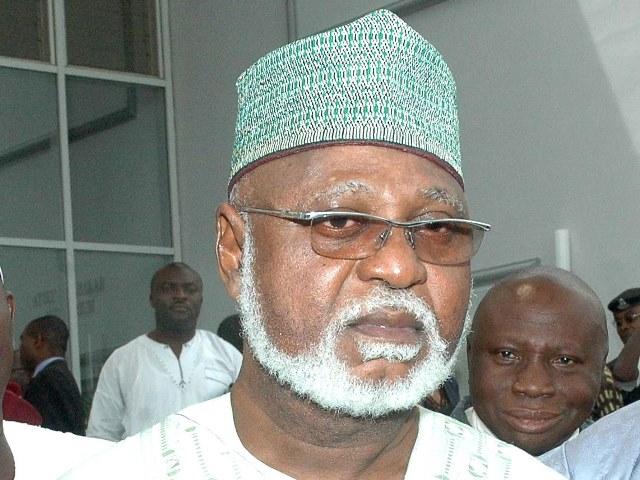
Today, 27th December 2023, we have lost Ghali Na’Abba, a few months after turning 65 and almost exactly one year apart from the death of his mother, another woman of trust, integrity and kindness. May Allah have mercy on them both. His legacy lives on as an inspiration to current and future leaders. Ghali’s contributions to Nigeria’s democratic journey will forever be remembered and cherished, a testament to the enduring power of principle-driven leadership.

At a point when Kano’s reputation soared by the Salisu Buhari Toronto certificate scandal, Ghali Na’Abba, his successor as Speaker, worked diligently to give the state a good name nationally and even globally. His active career was short-lived, but he managed to enter the comity of the political all-time greats in the history of Kano State. It now remains to see how the current custodians of the state will work to have his name honoured and legacies preserved. 

After surviving numerous blackmails, countless threats, and several impeachment attempts as Speaker, President Obasanjo later ganged up with his foot soldiers and garrison commanders in Kano to deny him a return to the National Assembly in 2003. First, they failed to stop him from getting the Kano Municipal PDP ticket, and then they later ganged up to work against him and their own party in the General Elections, and they succeeded. The fall of Ghali Na’Abba marked an abrupt end to the era of Legislative Independence and Political courage in Nigeria.

Twitter: @AmirAbdulazeez 

Ondo State swears in new governor after death of Rotimi Akeredolu

By Uzair Adam Imam

Today, Ondo State acting governor, Lucky Aiyedatiwa, will officially be sworn in as the new governor of Ondo State.

A reliable source at the state House of Assembly said that “it’s true that the acting governor would be sworn in today by 4 p.m.

The swearing-in ceremony for Ondo State’s new governor, Lucky Aiyedatiwa, comes after the recent passing of the previous governor, Rotimi Akeredolu.

He added that, “He is presently out of the state. As soon as he’s back, the Chief Judge of the state, Justice Olusegun Odusola, will swear him in as the governor.”

Recall that the state Information and Orientation Commissioner, Mrs Bamidele Ademola-Olateju, announced the death of the governor via a statement in Akure.

The statement read: “With a heavy heart, the Ondo State Government announces the tragic passing of our beloved Governor, Arakunrin Oluwarotimi Akeredolu (SAN).

“Mr. Governor peacefully departed from this world in the early hours of today, Wednesday, December 27, 2023.

“This tragedy has left behind a profound void in our hearts. Governor Akeredolu answered the eternal call while receiving medical treatment in Germany.

“He succumbed to complications arising from protracted prostate cancer.

“A letter has been sent to President Bola Tinubu to officially inform him of this devastating news.

“The Family and the Ondo State Government appreciate Mr. President for his support for Governor Akeredolu during his illness.

“The family and the state government will release further details regarding the funeral arrangements.

“Governor Akeredolu was an extraordinary leader whose unwavering dedication to the state and its people was both commendable and unparalleled.

“He not only served as the Governor of Ondo State but also emerged as a prominent advocate for the entire Southwest region and the nation.

“Governor Akeredolu was a courageous leader and an exemplar of integrity. The weight of this loss is truly unbearable.

“However, we find solace in the knowledge that Arakunrin Oluwarotimi Akeredolu lived a purposeful life, devoted to the service of God Almighty,” the statement added.

Northern governors outraged by attacks on Plateau communities

By Uzair Adam Imam 

The Northern Governors Forum today strongly denounced the Christmas Eve attacks on communities in Bokkos and Barkin-Ladi Local Government Areas of Plateau State. 

The Chairman of the Forum, Gov. Inuwa Yahaya of Gombe State, described the attacks as reprehensible and heinous. 

Gov. Yahya expressed disgust on behalf of the 19 governors in the northern parts of Nigeria. 

He expressed the forum’s deepest condolences to the affected families and communities, as well as the government and people of Plateau. 

“It is disheartening to hear of the loss of more than 100 lives and the destruction of property that occurred during these attacks, especially when people were preparing to celebrate Christmas. 

“Such acts of violence are not only cowardly but also run counter to the spirit of unity and coexistence that our region upholds. 

“We must all prioritise peace and harmonious living in our communities. Now, more than ever, we must reaffirm our commitment to peaceful coexistence and solidarity regardless of our differences. 

“We must unite in our commitment to peace and security, and stand firm against all forms of violence and divisions,” the chairman said in a statement issued in Gombe by his media aide, Mr Ismaila Uba-Misilli.

Yahaya commended Gov. Caleb Mutfwang of Plateau for his leadership in handling the situation in the aftermath of the attacks. 

The northern governors assured Mutfwang of their solidarity and support in the face of adversity. 

They pledged to work together to ensure lasting peace in Plateau State. They stand united in their commitment to peace and stability.