National

You can add some category description here.

Tilde to Tinubu: INEC chairman should resign or be removed over bias allegation

By Sabiu Abdullahi

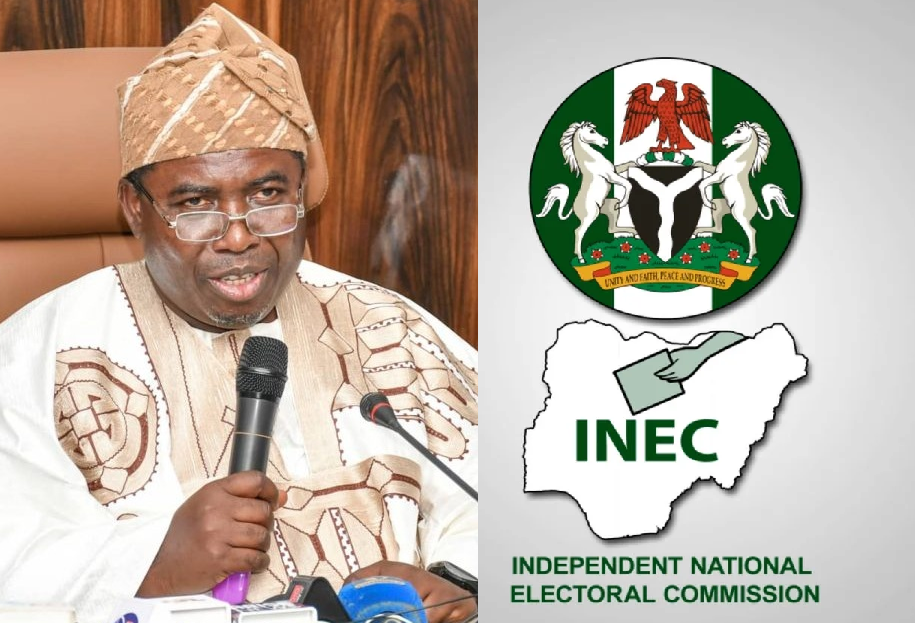
A former Bauchi State Commissioner for Education, Dr. Aliyu Usman Tilde, has called on President Bola Ahmed Tinubu to remove the Chairman of the Independent National Electoral Commission (INEC), Professor Joash Ojo Amupitan, over what he described as a clear display of bias.

Dr. Tilde made the call in a post on his Facebook page where he wrote: “TINUBU: INEC Chairman Should Resign or be Kicked Out. This is too gross and partial for his chair.”

His comment followed the resurfacing of a 2020 publication authored by Professor Amupitan, in which he described the violence against Christians in Nigeria as “genocide.”

The document, titled “Nigeria’s Silent Slaughter: Genocide in Nigeria and the Implications for the International Community,” was part of a legal brief submitted to international organisations.

In the publication, Amupitan stated that crimes such as genocide, war crimes, and crimes against humanity were being committed in Nigeria, adding that the victims were “mainly the Christian population and minority ethnic groups.”

The resurfacing of this document has triggered heated reactions across the country, with critics saying the position taken by Amupitan before his appointment raises serious questions about his neutrality as the nation’s electoral umpire.

Dr. Tilde, in his post, expressed concern that such views could undermine public trust in INEC, insisting that the chairman’s past statements make him unfit to preside over Nigeria’s electoral process.

Neither Professor Amupitan nor INEC has officially responded to the criticism.

However, some of his supporters argue that his earlier legal opinion was written in his capacity as an academic and lawyer, not as an election official.

The controversy has continued to generate debate among political observers, with calls for President Tinubu to address the matter to safeguard the credibility of future elections.

Colonial minds in Nigeria: The case of Igbos and Christians

By Sa’adatu Aliyu

“I was Igbo before the white man came” is a saying by Chimamanda Adichie through her character Odenigbo in her infamous book Half of a Yellow Sun, reinforcing pride in her African heritage before the white man’s incursion, which destabilised the otherwise peaceful coexistence of African communal states.

However, it seems to me that she has been afflicted by the Igbo superiority complex over other tribes in Nigeria, especially the Hausa-Fulani in the North. This pride in being traditionally Igbo and human doesn’t extend to her acknowledgement of the Hausa-Fulani Muslim humanity and identity—held with equal pride—just as the Hausa-Fulani were before the Whiteman.

Ethnic Pride and Selective Humanity

Moreover, the likes of Adichie and her Igbo fanatics would rather make baseless and false claims about the Igbos being suppressed and ethnically cleansed in letters to Washington than sit to resolve their differences internally with their brothers in the North, solely because they are Muslims whom the Igbos do not perceive as human equals.

Generally speaking, the problem with the Igbos is that they believe all the lands in Nigeria belong to them. Their illusion of grandiosity makes them feel entitled to all locations in Nigeria beyond their region as places they have the right to live, seek better economic opportunities, and build a stable, secure life. In contrast, the same right is not extended to other tribes in Nigeria, especially the Hausa man, who, until today, faces all sorts of harassment whenever he is in the Southeast, sometimes stopped and asked by unscrupulous elements to pay “matching ground” money.

This is a form of tax collected from non-indigenous individuals seeking better economic opportunities over there—a thing that doesn’t occur in the North. Unlike the South, even though Muslims predominantly inhabit the North, it has a significant presence of churches, whereas the presence of mosques is not tolerated in the Southeast except in a few exceptional cases. Moreover, if the North was so brutal towards the Christians as they depict, why do Southerners/Eastern Nigerians seek greener pastures in the North more than the North moves towards their region? If it was so unfriendly to the Igbos and Christians, why not the Igbos remain in their regions, and the North remain in theirs?

Power, Entitlement, and the North–East Tension

While all Nigerian citizens have the right to live and build a life devoid of fear in any part of Nigeria, the Igbos particularly think they should be the ones solely steering the affairs of Nigeria and should be the sole tribe entitled to managing the juiciest positions in government, merely for being Igbo, not necessarily based on superior qualification.

Understanding the mentality of the Igbos has led to what I’d like to refer to as a “personality clash” with the Hausa-Fulanis. Despite being perceived as backwards in an educated population, they are like poor men who would never sacrifice their dignity for money, nor bow to any force that may seek to demean them based on possessing more Western education.

This has led to the long-standing tension between the two ethnic groups. The case of the North and the East is akin to a couple in their early years of marriage experiencing a clash of personality—not necessarily due to lack of love or to cause deliberate harm, but because one happens to blow issues out of proportion by arguing that the other insists on hurting them deliberately.

Instead of checking in with their ego, they engage in score keeping, accusing, and incessantly crying out for help, even if it means seeking a third party in the cloak of a certified therapist—who may hiddenly be a psychopath and has no genuine interest in the wellbeing of the couple, but instead has its greedy eyes on the money to be extorted from them, further destroying their home.

The West as “Therapist”: Foreign Meddling and Naivety

This is precisely what the Christians in Nigeria are doing by seeking the intervention of so-called America, peering underneath African countries’ beds looking for genocide, when the very foundation of the U.S. was built on the vile killings of Indigenous Native Americans.

This scenario has been fueling some of the false accusations circulating in the media about genocide against Christians in the North. It is no doubt Nigeria has been plagued by indiscriminate killings and kidnappings in the past few years, but this has involved the loss of lives and livelihoods of citizens across all ethno-religious groups—mainly by Boko Haram militias and banditry—and not killings affecting Christian communities alone, as the naive Christians of Nigeria, who still put the U.S. on a saintly pedestal, have been framing it.

This is mere fabrication born out of a myopic desire to destabilise the fragile peace still holding the nation together, forgetting that foreign powers have never and will never look out genuinely for the Black race, but have repeatedly set their eyes on how to invade and plunder the resources of our dear land.

Be it the U.S., Russia, China, or other subordinate world powers, they couldn’t care less if Africa burned. All they would do is not find a way of quenching the fire but find a means to steal our resources, all the while supplying the weapons we’ll use to maim our brothers with whom we share the same African Black DNA.

It is sad that, in the eyes of Nigerian Christians, America remains a demigod they rush to whenever facing a “problem.” in this manner. But this doesn’t paint the image of a race free from the shackles of colonialism—it looks to me like a remix of the same song to which we can’t dance, should any foreign power invade as is being threatened by the U.S currently. 

Nigerians should never forget Libya, Iraq, Afghanistan, Sudan, and every other country the U.S. has invaded. It was never for goodwill or for the sake of the masses to have a better life; it was never about democracy but about the kleptomaniac instinct of foreign powers to pillage, to use the stolen resources of Africa to build their countries.

Colonial Mind enslavement and the Illusion of Freedom

When Chimamanda Adichie said she’s Igbo before the invention of the white man, I presume she was refuting the attempt of the white colonialist to redefine her ancestral root. She was rejecting the image of the indigenous people of Africa that the white man struggled to create to wipe out her identity.

I also want to believe the white man here is seen as foreign, intrusive, with no right to rewrite the history of the African people, nor to decide our destiny. But how come the same Nigerians, especially Igbos who pride themselves on being a fraction of the Black race, are quick to call for the intervention of the same white man to salvage them—to resolve a conflict with their African brothers on religious division, (the religions) on the basis which they’re stirring foment being a product nothing but a product of colonialism?

Yet they pick up their pens and still write saintly yet furiously about pride in Africa, Pan-Africanism, Negritude, and pride in the Black race they claim to represent. And one wonders with the level of hate projected towards Northern Muslims, whether they are not part of the black Africans. To me, this is nothing short of colonial mind slavery that still bedevils even our so-called intellectuals, blinded by religious fundamentalism and succumbing to it so effortlessly. Hence, one begins to question their education.

As Chuba Okadigbo once said:

 “If you are emotionally attached to your tribe, religion or political leaning to the point that truth and justice become secondary considerations, your education is useless.

If you cannot reason beyond petty sentiments, you are a liability to mankind.”

Mirroring a similar view, if the educated one cannot look beyond ethno-religious sentiment and live objectively, he has no business being called educated. However, this is a hat donned by several of Nigeria’s think tanks, sadly.

Similarly, Nelson Mandela reminds us:

 “It is not our diversity which divides us; it is not our ethnicity, or religion or culture that divides us…”

Can the African mind ever be decolonised? I doubt so. It might all look like we are free, but there’s no freedom without the freedom of the mind.

So, the quest of Ngũgĩ wa Thiong’o for Africans to free themselves from mental colonial slavery—which led to his abandonment of the English language and adoption of Kikuyu—doesn’t extend to this area for many Christian fanatics who happen to be influential writers from the Eastern part of Nigeria. And this is utterly disheartening.

In Conclusion

In the wake of all this commotion, I perceive the naivety of those spreading these lies to draw foreign intervention in Nigeria as an act of somnambolic foolishness—for which I am sure they will regret when they come face to face with the hypocrisy that lies in the heart of world powers, should they get what they are calling for.

I pray for peace, unity, religious understanding, and togetherness in Nigeria and the world at large. Let us always remember: a shred of peace is better than no peace at all.

Saadatu Aliyu is a writer and poet based in Zaria. Email @: saadatualiyu36@gmail.com 

Trump: What should Tinubu do?

By Zayyad I. Muhammad 

1. Immediate Actions: Dispatch a high-level delegation to Washington: President Asiwaju Bola Ahmed Tinubu should immediately send a high-powered delegation composed of respected Nigerian statesmen, business leaders, and senior government officials to engage with U.S. authorities.

The team should include former President Olusegun Obasanjo, former Head of State General Abdulsalami Abubakar, Chief Bola Ajibola, business mogul Aliko Dangote, Rev. Hassan Matthew Kukah, and the President of the Christian Association of Nigeria (CAN), Most Rev. Dr Daniel Okoh, His Eminence Sultan of Sokoto, representatives of Religious groups, NGO, etc.

From the government side, the delegation should include the Minister of State for Foreign Affairs, the Secretary to the Government of the Federation, and the Governors of Benue,  Plateau, Niger, Katsina, Kaduna, Zamfara, Borno, Yobe and Adamawa States, given the security relevance of their regions.

2. Re-engage the U.S. Mission in Nigeria: The Presidency should task the Ministry of Foreign Affairs and other well-placed Nigerians with deepening communication with the U.S. Mission in Abuja and the Consulate in Lagos to strengthen diplomatic rapport, address misperceptions, and align mutual strategic interests.

3. Reach out to U.S. allies and partners: Nigeria should actively engage with other influential U.S. allies across Europe, the Middle East, and Asia to rally broader international support for Nigeria’s security and development agenda.

3. Seek U.S. assistance in defence cooperation: President Tinubu should formally request more support from the Donald J. Trump administration in providing modern weapons, intelligence-sharing technology, and counter-insurgency training to bolster Nigeria’s fight against terrorism and violent extremism.

4. Immediate appointment of ambassadors: Nigeria’s diplomatic missions have remained without substantive ambassadors for too long. Swift appointments of competent, credible, and globally respected diplomats will help restore Nigeria’s voice and visibility on the international stage.

5. The Minister Yusuf Tuggar should be reassigned to another portfolio, and a new Minister of Foreign Affairs, preferably one with strong international connections and more diplomatic weight, should be appointed. This will send a clear signal that Nigeria is repositioning its foreign policy and engagement strategy.

6. Launch a global public relations drive: Nigeria must embark on a robust, well-coordinated international PR campaign to reshape global perception. This should highlight the Tinubu administration’s economic reforms, anti-corruption measures, and counter-terrorism efforts, while showcasing Nigeria as a stable, investment-friendly democracy that protects all faiths and ethnicities

7. On the Security and Communication Front: The office of the National Security Adviser and the high military command are doing well; thus, to further boost the effort, they should further re-align the war against insurgency and banditry. The battle against bandits, terrorists, and other insurgent groups must be comprehensively restructured. This includes better coordination among the armed forces, improved intelligence gathering, community-based security initiatives, and enhanced welfare for frontline troops. A unified national security strategy will yield faster and more sustainable results.

8. Strengthen media visibility of Nigeria’s counter-terrorism efforts: Nigeria’s efforts in the fight against terror are often underreported or misrepresented internationally. There should be massive, transparent media coverage, both traditional and digital, to showcase the government’s ongoing efforts, victories, and human stories of resilience. This will help counter misinformation, boost public morale, and attract global understanding and support.

Zayyad I. Muhammad writes from Abuja via zaymohd@yahoo.com.

On Donald Trump’s decision against Nigeria

By Saidu Ahmad Dukawa 

Introduction

At last, the President of the United States, Donald Trump, has made the decision he had long planned against Nigeria, following complaints by some Nigerian Christians who alleged that they were victims of religious persecution in the country.

Trump had once placed a similar sanction on Nigeria during his first term, but after he lost the election to Joe Biden, Biden reversed that “rash and unfair” decision.

This new ruling, however, requires Nigeria to take certain actions in line with America’s interests — or face a series of sanctions. For example, these “American interests” could include the following:

1. Any Nigerian state practising Sharia Law must abolish it.

2. Any law that prohibits blasphemy against the Prophet Muhammad (peace be upon him) must be repealed.

3. Any location where Christians wish to build a church must grant them permission to do so.

4. Anything that Christians claim makes them “uncomfortable” in the country — such as businesses involving halal trade — must be stopped.

5. All businesses that Christians desire, such as the alcohol trade, must be freely allowed across the nation.

These are just examples of the complaints made by some Christian groups to the United States, which may also include political and economic demands.

This action by Trump mirrors what America once did to Iraq under Saddam Hussein — accusing the country of possessing weapons of mass destruction, just to justify an invasion.

If true justice were the goal, then both sides — the accusers and the Nigerian authorities — should have been listened to, including Muslim organisations that provided counter-evidence.

Even among Christians, many reasonable voices have spoken against these exaggerated claims, yet their words are ignored. Clearly, a plan against Nigeria had already been set in motion.

So, what is left for the Nigerian government and its citizens to do? Here is my opinion:

WHAT THE NIGERIAN GOVERNMENT SHOULD DO

1. Use diplomatic channels to inform the Trump administration that the situation is being misrepresented. Even if America remains adamant, the rest of the sensible world will know that any step America takes against Nigeria on this basis is pure injustice, and that knowledge itself will have benefits.

2. Reduce dependence on the United States in key areas such as trade, education, and healthcare. Nigeria should instead strengthen its ties with other countries, such as Russia, China, and Turkey.

3. Unite Nigerians — both Muslims and Christians who do not share this divisive mindset — to resist and expose any malicious plots against the nation.

WHAT THE NIGERIAN PEOPLE SHOULD DO

1. All Nigerians — Muslims and Christians alike — should begin to reduce their personal and travel ties with the United States, especially visa applications, as it may no longer be easy to obtain them.

2. Those who hold large amounts of US dollars should consider converting their funds into other global currencies.

3. Muslims with good relationships with Christians should not let this tension destroy their friendships — and vice versa. Let unity prevail.

4. Muslims must not lose hope or courage. They should realise that they have no powerful ally. Non-Muslims are the ones with global backing. The Jews can commit atrocities against Muslims, and America will support them. In India, Muslims are being killed — America is silent. In China, Muslims face persecution — America is silent.

In Nigeria, there is no single town where Muslims have chased out Christians, but in Tafawa Balewa, Christians expelled Muslims and took over the town. Terrorists who kill indiscriminately in Nigeria have taken more Muslim lives than Christian ones — yet Trump publicly declared that only Christian lives matter.

Still, Muslims can take comfort in one fact: Islam is spreading fast in both America and Europe. Perhaps, one day, when Islam gains ground there, justice and fairness will finally return to the world — because today’s problem is rooted in the injustice that Western powers built the world upon.

5. Nigerian Christians themselves need to wake up to the truth — that the Western world does not honestly care about Christianity, only about controlling resources and power.

If they really cared about Christian lives, they wouldn’t have ignored what’s happening in Congo — a country with one of the largest Christian populations — where Christians kill one another. The same goes for Haiti, South Sudan, the Central African Republic, and Rwanda.

There are numerous examples of Christian nations facing crises. And when Nigerian Christians think of running to the US for refuge, they will realise that America will not take them in. Therefore, it’s wiser to live peacefully with their Muslim brothers and sisters here in Nigeria.

6. Finally, it is the duty of all believers to constantly pray for Nigeria — that God protects it from every form of harm and evil.

Peace and blessings of Allah be upon you all.

Dr Saidu Ahmad Dukawa wrote from Bayero University, Kano (BUK).

Rethinking the “Christian Genocide” narrative: Reflections from Wilton Park

By Dr Samaila Suleiman Yandaki

Nigeria is once again in the global spotlight in the wake of its redesignation as a Country of Particular Concern and the accompanying threat of U.S. military action by the Trump administration to save Nigerian Christians from “genocide”. This narrative is as dangerous as it is familiar, evoking the old imperial logic that simplifies and distorts our complex realities to justify external intervention. As a student of the politics of history and identity conflict, I find this portrayal beyond perturbing and perilous. 

I witnessed firsthand how such perilous narratives were debated in international policy circles when I joined other Nigerian and British stakeholders at a high-level summit at Wilton Park in February 2020 for a dialogue on “Fostering Social Cohesion in Nigeria”. Situated in the serene estate of Wiston House, Steyning, West Sussex, Wilton Park is an Executive Agency of the UK Foreign, Commonwealth and Development Office, widely recognised as a global space for peace dialogues and post-conflict reflection. The meeting was part of the UK government’s follow-up to the Bishop of Truro’s Independent Review on the persecution of Christians worldwide, in which Nigeria was identified as a major flashpoint of “religious violence.” The Truro Report asserted that Nigerian Christians are facing systematic persecution and called upon Western governments to do more to protect them. 

At Wilton Park, we were offered more than an interfaith forum to dialogue; we were given the opportunity to deconstruct the dangerous oversimplifications that have come to characterise Western discourses on Nigeria. Unlike the imperialist gimmicks and threats emerging from Washington today, the British government, through the Foreign and Commonwealth Office, convened diverse stakeholders from Nigeria and the UK – religious leaders, politicians, diplomats, academics, and civil society representatives – to deliberate on the multifaceted security challenges confronting Nigeria and explore ways of building social cohesion. I am not permitted by the Wilton Park Protocol to name participants or cite their specific interventions, but suffice it to say that, with few exceptions, those present were individuals who matter in Nigerian and British policy circles.

The participants spent three days discussing the farmer-herder crisis, the Boko Haram insurgency, and the persistent communal conflicts in the Middle Belt. What struck me most was the consensus among Nigerian participants — Muslims and Christians alike — that the “Christian persecution” framing was profoundly misleading. We emphasised that the reality was far more complex than the narrative of religious persecution suggests. The problem, as several participants observed, is not that Christians do not suffer violence, but that violence in Nigeria is indiscriminate, affecting all communities. To single out one group as uniquely persecuted is to misread the nature of the crisis. 

The Wilton Park approach reflected a subtle but significant shift– the need to appreciate the broader social, political, and environmental dynamics of violence in Nigeria. While the Truro Report relegated these factors to the background, we strongly highlighted them, showing that Nigeria’s crisis is a shared national tragedy rather than a targeted religious war. The goal was to nurture a more nuanced understanding, one that resists the reductive opposition between Muslim perpetrator and Christian victim. 

The meeting concluded on a high note with consensus around the “sensitivity and diversity of conflict narratives,” recognising that every victim’s voice deserves to be heard. It was agreed that shifting the narrative from “Muslims against Christians” and other binary categories must therefore be a priority if we are to avoid deepening existing divisions. The meeting recommended that the Nigerian government should “commission and fund independent, credible research on climate change, number of attacks, crime victims, cattle routes and patterns; develop strategy on how to use data to proactively educate, myth-bust and shape narratives for both sides of the argument; justice and peace training to be included in schools; Government of Nigeria to appoint a National Reconciliation Adviser; establish a Joint Religious Coalition to ensure accountability of government for insecurity and politicisation of conflict; develop religious engagement strategy; and commence dialogue to facilitate creating ‘Code of Conduct’ for religious leaders,” among other actionable recommendations. This later became the groundwork for further peacebuilding engagements between Nigerian and British stakeholders. The Wilton Park dialogue is a model of thoughtful engagement, the kind of thoughtful diplomacy the world requires in times of conflict, not the militarised moralism coming from Washington. 

The question is, what are the true intentions of Trump? Is he genuinely motivated by a humanitarian desire to protect Nigerian Christians, or is this another exercise in the US geopolitical and imperial crusade? History offers little reason for optimism. We know that humanitarian and messianic pretexts always precede Imperial interventions. In the 19th and 20th centuries, colonial logic was a “civilising mission”; today it is “defence of persecuted Christians”. The language changes, but the logic remains the same —define and rule, borrowing from Mahmood Mamdani. The Palestinian literary critic Edward Said describes this imperial habit of defining how others are perceived and how their suffering is interpreted. Therefore, classifying Nigeria—a complex, plural, and Muslim-majority nation—as a persecutor of Christians is a convenient casus belli for Trump, masquerading as a humanitarian concern. 

Meanwhile, I congratulate the proponents of the “Christian genocide” narrative in Nigeria and beyond. We are now officially a Country of Particular Concern, polarised and divided. As the advocates of the narrative await, with self-righteous anticipation, an American-led “rescue mission”, I want to remind them of the devastation that American invasion has brought to nations in the name of salvation: Libya, Iraq, Afghanistan, Syria, Vietnam, Somalia. Each intervention was couched in the language of freedom, yet each left behind broken societies and deepened resentment.

The “Christian genocide” narrative is doubly dangerous: while deepening domestic divisions, it legitimises foreign intervention. This is not to deny the suffering of Christians in parts of Nigeria. Their pain is real and deserves acknowledgement. But this is equally true of Muslims and others who have suffered the same fate. The question is not who suffers most, but how that suffering is framed. 

Ultimately, the Nigerian state bears the greatest responsibility for its failure to protect all its citizens. Endemic corruption, elite impunity, and the persistent inability to provide security for Nigerians have created fertile ground for such divisive narratives to thrive. Unfortunately, the citizens themselves have collectively failed to hold the government accountable for these failures. Instead, they are busying themselves competing for victimhood, thereby creating the conditions for external powers to intervene discursively and politically. It is this vacuum that the Trump administration is filling.  

The task before Nigerian scholars, faith leaders, and policymakers is to reclaim the narrative, not through denial, but through a more honest, inclusive, diplomatic and historically grounded understanding and framing of its own complex realities. The federal government must strengthen its security institutions and reassert the primacy of equal citizenship. All lives matter in Nigeria—Christian, Muslim, and traditionalist alike.

Dr Samaila Suleiman writes from the Department of History, Bayero University, Kano.

Kano marks 100 years of Nigeria’s first aircraft landing

By Uzair Adam

Malam Aminu Kano International Airport (MAKIA) on Thursday marked a century since the first aircraft landed in Nigeria, highlighting Kano’s pivotal role in the country’s aviation history.

The three-day celebration, organised by the Caliphate Aviation Training Centre, kicked off with exhibitions, panel discussions, and an airshow designed to inspire the next generation of aviators.Okikiri Musa, Regional and Airport Manager of MAKIA, described the centenary as a proud moment for both Kano and the nation.

“This milestone is significant for all of us, especially Kano,” Musa said. “Being the site of Nigeria’s first aircraft landing is something to celebrate. “Aviation has grown immensely, and Kano continues to be a key hub in air transport. We pray that Allah continues to bless Kano and strengthen Nigeria’s aviation sector.”

Hassan Abdulhamid, Director of Administration at Caliphate Air Services, noted that the event not only commemorates history but also encourages young Nigerians to explore careers in aviation.

“Celebrating 100 years since the first aircraft landed in Nigeria, here in Kano, gives students a hands-on experience in aviation — from ticketing and boarding to meeting pilots and engineers. We hope this inspires a lifelong passion and guides them toward aviation careers,” Abdulhamid said.

He explained that the first two days of the event are focused on secondary school students, while university students and lecturers will later present research to address data gaps in the aviation sector.

“There is limited data on aviation in this region. By involving universities in research, we aim to generate insights that will benefit the industry,” he added.

Transport historian Dr. Yusuf Madugu of Bayero University, Kano (BUK), recalled that the first aircraft to land in Nigeria touched down in Kano on November 1, 1925.

“The flight, led by Lieutenant Arthur Cunningham, came from Egypt via Khartoum and N’Djamena. It landed at the Kano Racecourse, now the Polo Club, as there was no airport at the time. Smoke from a fire was used to guide the pilot,” Dr. Madugu explained.

He emphasized that Kano’s status as a commercial and religious hub made it the ideal destination for the historic flight.

“Kano was the commercial nerve centre of Northern Nigeria and Sub-Saharan Africa, which is why the colonial authorities chose it as the first point of air entry into the country,” he said.

The centenary celebration included a historical exhibition on aviation in Nigeria, discussions on the sector’s economic impact, and tributes to pioneers of the industry.

Other highlights featured a static airshow, kiting competitions for children, and live aerial demonstrations.

Organisers said the event aims to renew public interest in aviation and reaffirm Kano’s role as the cradle of Nigeria’s air transport history.

Tinubu withdraws clemency for Maryam Sanda, others convicted of serious crimes

By Muhammad Abubakar

President Bola Ahmed Tinubu has withdrawn clemency earlier granted to Maryam Sanda and other convicts of serious offences following a review of the federal pardon list.

Sanda, sentenced to death in 2020 for killing her husband, was among those removed from the list after consultations with the Council of State and public feedback.

Presidential spokesman Bayo Onanuga said the review was guided by the gravity of certain crimes, public sensitivity, and the need to uphold justice for victims and society.

Offenders convicted of kidnapping, drug trafficking, human trafficking, fraud, and unlawful possession of firearms were also excluded from the clemency list.

President Tinubu further ordered the relocation of the Secretariat of the Presidential Advisory Committee on Prerogative of Mercy to the Federal Ministry of Justice and directed the Attorney-General to issue new guidelines for future exercises.

The President reaffirmed his administration’s commitment to judicial reforms and maintaining public confidence in Nigeria’s justice system.

When students become customers: the business of private education

By Malam Ibrahym El-Caleel

A widely circulated video showed an altercation between a staff of the Maryam Abacha American University of Nigeria (MAAUN) and a father to one of the students of the school.

It is a 33-second-long video that doesn’t allow for proper evaluation of the incident except for the audacious comment the student made at the tail-end of the video, in support of her father, saying, “Ba fa kyauta mu ke zuwa karatu makarantar ba. Kuɗi muke biya”. Meaning, “we aren’t studying in this school free. We pay money”.

The school has rightly issued a press release to say it has set up a committee to investigate what happened, and it demands to have the full video of what happened to ease its investigation since a 33-second video will barely help you take an informed position on this. Best wishes to them in their investigation, but let’s talk about the broader picture.

The girl’s raw comment about the money they pay to the school is a bitter lesson in business. The girl sees herself as a customer of MAAUN, not a student, and this is largely the philosophy of most private institutions of learning and their patronisers. It is an entrepreneurship first, then any other thing, like being a school or a university. And therefore, what we see in businesses would happen there since profit is the overall aim. Please, I am not tearing down private institutions. I am discussing business here.

“The customer is always right”

In the early 1900s, Harry Gordon Selfridge, the founder of Selfridges department store in London, popularized the saying that, “the customer is always right”. To be fair to Selfridge, he popularised this business philosophy to protect the buyer. Prior to this philosophy, what existed was the philosophy of “Caveat emptor”, which protects the seller and which means: “Let the buyer beware.”

“Caveat emptor” is simply saying that the buyer is fully responsible for checking product quality, condition, and suitability before purchase. Therefore, once the buyer pays for the product, they cannot hold the seller accountable even if they discovered the product to be defective. Even if you return the defective product to the seller, he’d simply say “Caveat emptor!”, meaning “you should have checked before paying!”.

This is where Selfridge popularised “the customer is always right” philosophy. The aim is to prioritise customer satisfaction even when the customer may be at fault. It is a philosophy aimed at keeping the customer happy or satisfied so as to have a sustainable business into the future. This builds trust and loyalty in business, and this is why it is widely practiced by businesses today.

Customers and some business leaders decided to abuse this nice philosophy. Customers saw it as an edge to abuse employees of the business they are patronising. Business leaders decided to make customers the “kings” and “queens” who are always right, placing them far below the employees who help them drive the business. This is why it is easy for the girl to make reference to how they are the thin line between that staff and joblessness. It is the reason why you, the reader, equally shouted at the bank staff you met at the customer service desk the other day. The bank as an institution with corporate headquarters somewhere in Lagos didn’t serve you well, but you are here in faraway Numan threatening, harassing and abusing an innocent 24-year-old girl you met at the bank’s help desk.

Customer is always right!

I was hungry in Barnawa some months back when I decided to walk into Market Square to get some food. A man, who should most likely be in his 50s, walked in after me. The attendant was serving the people who came ahead of him as per first come, first serve. Suddenly, this man took offence and began passing harsh comments on this lady. It was a whole lot of psychological abuse, making even s3xist comments. He wasn’t yelling at me, but I felt the pain. That young lady didn’t respond in kind, but coldly prepared his meal and handed it over. The customer is always right.

Only business leaders can reorient the customer on this. While you need customers to maintain your cash flow, you equally need your employees. And this is what the consumer goods giant, P&G, seems to be better at.

The P&G CEO between 1948-1959, Redwood Deupree, remarkably said: “If you leave us our money, our buildings and our brands, but take away our people, the Company will fail. But if you take away our money, our buildings and our brands, but leave us all our people, we can rebuild the whole thing in a decade.” This is a 187-year old company, teaching you the value of people in a business. Your people are your most important assets.

But unfortunately, most businesses today have thirst for short-term gains and barely have any interest in building a corporate culture that will sustain it into the future. When a company is overly thinking about finance, then it ‘worships’ everything that relates to the bottom line. It is ready to throw its most resourceful employees under the bus just to gain today’s profit. No plan for the business of the future.

Obi slams $1B Lagos port spending, calls neglect of eastern ports “economic sabotage”

By Abdullahi Mukhtar Algasgaini

Peter Obi, the 2023 Labour Party presidential candidate, has strongly criticized the Federal Government’s plan to spend $1 billion (approximately ₦1.5 trillion) on modernizing the Apapa and TinCan Island Ports in Lagos, labeling the continued neglect of other major ports as “economic sabotage.”

In a statement posted on his X (formerly Twitter) handle on Friday, Obi accused the government of perpetuating a dangerous “economic imbalance” by excessively concentrating infrastructure investments in one region.

He warned that this policy sidelines critical maritime hubs in other parts of the country, specifically naming the ports in Warri, Port Harcourt, Calabar, and Onne.

The former Anambra State governor argued that equitable development of ports across the nation’s geo-political zones is essential for enhancing productivity, creating jobs, and stimulating regional economic growth that could lift millions out of poverty.

“While any effort to improve efficiency and embrace technology in our maritime sector is commendable, such an initiative must be guided by accountability, transparency, and fairness,” Obi stated.

“The Lagos modernisation project, though laudable, underscores a troubling trend of concentrating major national infrastructure in one region.”

Obi emphasized that for Nigeria to build a truly robust national blue economy, its growth must be inclusive, actively involving every region.

He also used the opportunity to call for broader reforms in the sector, including curbing corruption, streamlining bureaucracy, and implementing a paperless port system to boost global competitiveness.

Concluding his remarks, Obi urged the Tinubu administration to adopt principles of fairness and equity in its infrastructure policies.

“If prudently managed, the Lagos modernization project could serve as a model for national maritime transformation,” he conceded.

“But Nigeria must rebuild with justice, integrity, and a vision that turns us from a consuming nation into one driven by production and shared prosperity.”

House committee pushes factoring, BOFIA amendment bills to strengthen SME financing, bank accountability

By Anas Abbas

The House of Representatives Committee on Banking Regulations has held a public hearing on two significant financial reform bills that are meant to strengthen Nigeria’s banking sector and improve access to finance for small and medium enterprises (SMEs).

The bills are the Factoring Regulation Bill (HB. 516) which seeks to enable small businesses to access quick and reliable cash by selling their unpaid invoices and the Banks and Other Financial Institutions Act (BOFIA) Amendment Bill (HB. 1168), sponsored by Hon. Moses Oluwatoyin Fayinka, representing Mushin II Federal Constituency of Lagos State.

The latter aims to protect bank customers from fraudulent withdrawals and enforce greater accountability within the banking system.

The public hearing, described as “very productive” by the Chairman of the Committee and Member representing Kaduna North Federal Constituency, Hon. Mohammed Bello El-Rufai, drew wide participation from key financial and business institutions including the Central Bank of Nigeria (CBN), NEXIM Bank, Afreximbank, NACCIMA, NASSI, and several development partners and private sector stakeholders.

Hon. El-Rufai also acknowledged the presence of Mr. Fabian Okoye, Special Adviser on Research, Documentation, and Communication to Governor Uba Sani of Kaduna State, who represented the Governor at the event.

Reflecting on his earlier legislative experience, El-Rufai recalled observing the Factoring Bill during his tenure as Senior Legislative Aide and Chief of Staff to Governor Uba Sani, when the latter chaired the Senate Committee on Banking and Other Financial Institutions in the 9th Senate.

According to him, despite the Central Bank’s progress in managing what he called its “policy trilemma” the exchange rate, inflation, and interest rate Nigeria’s economic realities underscore the urgency of passing the bills.

He noted that inflation as of September 2025 stands at 18.02%, interest rate (MPR) at 27%, unemployment at 4.3%, and poverty at 46% affecting over 139 million people.

A bag of rice now costs ₦70,000. These figures, he said, show why reforms like the Factoring Bill cannot wait.Bello explained that factoring would provide a much-needed financial lifeline for everyday Nigerians.

For traders, artisans, and shop owners, factoring means faster access to cash to restock and stay in business. For small manufacturers and exporters, it improves cash flow to expand production and create jobs.

He emphasized that the BOFIA Amendment Bill complements these efforts by ensuring stronger consumer protection and holding banks accountable for fraud and misconduct.

Across Africa, factoring has been recognized as a powerful tool to unlock working capital and sustain small businesses.

Experts estimate that if properly implemented in Nigeria, it could release over ₦2.7 trillion into the economy, directly boosting communities and livelihoods.

Reaffirming the committee’s commitment to financial reforms that protect consumers and empower SMEs, El-Rufai expressed gratitude to all participants and lauded the support of the Speaker of the House, Rt. Hon. Abbas Tajudeen, GCON, for his leadership.

He concluded that the House Committee on Banking Regulations remains steadfast in its mission to drive reforms that protect consumers, empower SMEs, and grow the economy for everyone.