Literature

Some takeaways from my reading journey

By Abdullahi Khairalla

I am not a huge fan of reviewing books that come my way because of personal reasons, but this time around, I felt compelled to share some major lessons and takeaway from a book I personally found rich in ideas for building and shaping leadership journey of any aspiring leader across different sectors.

“Lead Disruption” is a book written by Dr. Akin Oke with thrust and focus on providing a guide for exceptional leadership performance in this era of turbulence and uncertainty.

To begin with, the author began by establishing the fact that, the world today is faced with all kinds of disruptions, chaos occasioned by the accelerating rate of change and uncertainty in our hyperkinetic environments caused fundamentally by three seismic events:

  • Global Health Pandemic(Covid-19)
    *Global reorganisation of work due to the adoption of new technologies and
  • The ongoing geopolitical transformations across the globe (east/west tension).This according to him, summarises our world into VUCA meaning– Volatile, Uncertain, Complex and Ambiguous.

Additionally, recent predictions about the advance of the fourth industrial revolution indicate that the speed of change, uncertainty and disruption to businesses will continue to increase. The world will have to brace up for potential global economic recession and the effects of climate change due to the continued depletion of ozone layer. This rapid change taking place, will invariably displace the old order and that will require leaders who are well-packed and positioned with requisite skills to transit their businesses and societies into prosperity in line with the new realities.

It is not a matter of conjecture that the Covid-19 has taken the world by surprise and has shifted and dismantled many old conventions, practices and ways of doing things that had previously existed during the pre-Covid era in our business space, industries, government halls and social realm. One thing that stood out is the complete migration of human race into a technological world, work from home, a situation he terms as the “new normal”

To effectively provide effective leadership in light of the current precarious reality of our fast-paced world, the book outlines among other themes and concepts such as self-awareness, resilience, innovation quotient, empathy and effective communication as critical elements for leaders to navigate through the tough and murky waters of the VUCA world.

I will touch briefly on each of the concepts for the sake of time. Self-awareness is the bedrock of effective leadership. This is because effective leadership, begins with good self-leadership. For a leader, knowing yourself and staying true and authentic to oneself is one of the salient assets you need, to be able to lead others in times of uncertainty. Asking yourself how well do you know your personal traits, your strengths, weaknesses, values and preferences? are very critical for a leader that aspires to lead his people even in times of turbulence. Dr. Akin Oke gave an analogy of a dangerous turbulence called “clear-air” by aviators that airplanes face which occurs when the plane has stabilised and in the cruising altitude and is always difficult to predict as radars cannot signal it in advance.

At this point, pilots are not too concerned about it, because the body of the plane itself has the ability to come back to its original planned position based on the inherent strengths of the plane itself. “Aeronautical engineers call this ability positive stability and pilots will tell you that the secret lies within the complex technical configurations at work in-between the wings of the plane and the in the belly of fuselage. This is the same way ‘self-awareness works for a leader. Leaders should have this capacity within them-they must build that resilience within them, that positive stability. And you cannot do that without having a good configuration of yourself (you morality, integrity, honesty, etc)”

Again,self-awareness is very important as there is a strong nexus between private morality and public morality of a leader because his personality is molded by these two realities. Though, this assertion has met stiff criticism by some leaders who try to separate public morality from their private morality. Unfortunately, these two intertwined. While it’s true a leader is human like everyone else and is entitled to private life outside the public role, the reality is that the leader’s private life can have serious consequences on the larger society especially in terms of public perception or behaviour. A bigoted leader, for example, is unfit to lead a company or plural society made up of people of diverse inclinations, backgrounds and idiosyncrasies. This is because his professional sense of judgement will be affected. A bad father , would not be the ideal person to lead or speak to other about fatherhood or parenting,especially if his private life as a failed father is a matter of public knowledge.

Another key element highlighted in the book is of course ‘resilience ‘ which is about the ability of a leader to respond in a positive and constructive way to uncertainty. It is about adapting to a prompt change and capacity to bounce back after a setback. A leader is required to be resilient even in the face of towering threat and dilemma and do everything to emerge out of it. This of course led the author to introduce me to a concept previously unfamiliar to me ‘antifragility’ which is a notch higher than resilience. While resilience rests on the capacity to bounce back after a setback, antifragility has to do with not only bouncing back but how to learn to thrive in the face of adversity and uncertainty. Simply put ‘a resilient leader resists shocks and stays the same, the antifragile leader gets better”.

Equally, the author looks at the central role of innovation in propelling one to be an effective leader in times of disruptions such as the covid era. Innovative leadership lies in the ability of a leader to provide solutions that lead to improvement in the life of an organisation or society, using new ideas. Covid era is a referral case in point, with Zoom coming to the rescue of mankind at its most critical point of need. As a leader, your ability to generate breakthrough ideas that help and transform society at a time of needs and despair, speaks volume of you. Voltaire was right to say “no problem can withstand the assault of sustained thinking”

The last but not the least, among the tips reeled out by the author is “empathy”. This is about a leader putting himself in workers’ or subjects’ shoes to understand their emotions and feelings while ultimately providing solutions to them. He interestingly demonstrated how a leader with no empathy may receive vitriolic backlash by his subjects or workers. The case of Adams Osiomole in 2013 was cited when he was begged by a widow illegally selling wares by the roadside, where he told her to, “Go and die”.

Although Oshiomole’s outburst stemmed from his frustration as a leader trying to enforce street trading laws in a bid to make the city better, his unguarded utterance was met with widespread condemnation. He had to organise a highly publicised reunion with the widow barely a month later to apologise.

The book reached its climax on stressing the invaluable role of ‘communication’ in engendering effective leadership. Effective leadership communication is about transferring message in such a way that it can be understood by all the parties involved. The leader should take into the audience’s level of understanding and ability, especially by enhancing the clarity and unambiguousness of the every message transmitted to them.

Without effective communication, nothing gets done in a society especially in hours of uncertainty. An example of former governor of New Yoke Mr. Andrew Cuomo was drawn especially his daily Covid-19 briefings viewed globally via CNN which were source of information, direction and vision casting without leaving his subjects second-guessing on every next move. It enabled New Yorkers to have clear vision of the impact of the Covid Pandemic on the state of New York and probably America at large.

As far as I am concerned, Borno state governor Prof. Babagana Umara Zulum is also a shining example of effective leader even in moments of fear and despair. This could be seen during his frequent state-wide broadcast during the pandemic in English, Kanuri and Hausa respectively which provided hopes, empathy, details of infection rates, estimated death toll, that way, the people of Borno were able to make informed decisions towards slowing down the spread of the virus by complying the with Covid protocols and appreciate the need to endure tough lockdown restrictions. This is the essence of leadership communication.

Finally, providing tips for building effective communication in leadership by the author is just “an icing on the cake” these are; Affirming words or communication with action(behaviour of the leader), Demonstrate and Provide stories, anecdotes that inspire and motivate action, Communicate relentlessly, Active Listening and encouragement of inputs, Clarity, and simplicity in communication.

Abdullahi Khairalla writes from Maiduguri

BOOK REVIEW: India in the Persianate Age 1000-1765

Author: Richard Eaton

Number of Pages: 489

Date of Publication: 2019

Publisher: University of California Press

In case you’re too lazy to read the book: it is all about the time when Islam was the dominant ruling religion in the Indian subcontinent from the sociopolitical, economic and military perspectives.

This is a very interesting book that, according to the author, challenges some preconceived narratives and stereotypes on the complex interactions between India and the Persian-speaking world during the medieval period.

The book takes a long course into the political dynamics of the Persianate age, discussing the emergence of the Mughal empire, its spread and culmination as well as interplay with other contemporary gunpowder empires: Ottoman and the Safavid.

Naturally, any discussion on the emergence of the Mughal Empire must include a historical look at Timur, a controversial figure whom I believe many Western authors, unfairly criticize. Of course, there was an entire chapter dedicated to Abu al-Muzaffar Muhi-ad-Din Muhammad Bahadur Alamgir Aurangzeb Badshah al-Ghazi, under whose 49-year reign the Mughal empire reached its peak in terms of glory and geographical extent.

The author builds the bulk of his arguments upon a very deep historical background, and he closely examines the role of Persianate age in shaping religious and intellectual developments in India.

He also discusses the impact of Sufism on Indian society and explores how Persian texts played a crucial role in the spread of Islamic mysticism across the subcontinent. This way, the book provides insights into the assimilation of Persianate cultural practices into Indian religious traditions, such as the development of Persian-influenced styles of devotional poetry in languages like Urdu.

The author, Richard Eaton is an American historian at the University of Arizona.

Shamsuddeen Sani wrote from Kano, Nigeria.

Forum calls for applications for training from budding writers in Northern Nigeria

By Sabiu Abdullahi 

The Flame Tree Writers’ Project, in partnership with the Heinrich Böll Foundation, has announced a call for applications for a writers’ workshop targeting emerging writers from Northern Nigeria.

The initiative aims to support young writers in honing their craft and envisioning a more democratic and peaceful Nigeria.

According to Abubakar Adam Ibrahim, founder of the Flame Tree Writers’ Project, “This has been a passion project of mine for so long, and I am excited that, with the support of the Heinrich Böll Foundation, it is coming to fruition.”

The workshop, scheduled for June 24–28, 2024, in Abuja, will be co-facilitated by NLNG Nigeria Prize–winning authors Abubakar Adam Ibrahim and Chika Unigwe.

Participants will receive guidance in writing a short story suitable for publication in an anthology. 

Ere Amachree, Program Manager at the Heinrich Böll Foundation, noted, “The foundation is excited about the Flame Tree Writers’ Project, as it advances our vision of promoting writing as a means of political expression, just like Heinrich Böll, the German writer after whom our foundation is named.” 

The call for applications is exclusively for writers from the 19 Northern States of Nigeria, aged between 18 and 35. Female emerging writers are strongly encouraged to apply. 

Interested participants must meet the eligibility criteria and submit their applications to flametreewritersproject@gmail.com by June 1, 2024. 

Encouraging writers to apply, Mr. Abubakar said, “It’s not just a workshop but a project that will publish the stories from the workshop in an anthology of new writing and get them into institutions of learning, where they will be taught as part of the growing and exciting corpus of literature from this part of the country.”

Pantami is a poor writer – IBK replies Pantami

By Halima Ibrahim

Sheikh Ali Isa Ibrahim, also known as Pantami, a former Nigerian minister, called for a debate over his books. In response, Ibrahim Bello-Kano, a Professor of English from Bayero University Kano, called Pantami a “poor writer”. The rejoinder, as obtained by The Daily Reality, reads:

Now, I have a few points to make about Mr Pantami wishing or asking to debate his critics. But before my first point, let me say this. If the forwarded message on this platform is really from, or written by, Pantami, then it’s clear that he’s a poor writer and a shoddy thinker to boot.

Look at the poorly written prose and the ample indicators of the writer’s low critical thinking acumen.

So, back to my first point: millions of books and papers by living authors are reviewed across the writing and publishing world daily, but I’ve never heard of any serious writer or author asking to debate his or her reviewers or commentators on his or her book. Pantami’s demand to debate his critics is pretty odd for any sound academic or scholar.

Second, Reviews have a world of their own and are not personal or personalised pieces or responses.

Third, Pantami can respond to his critics in writing. This is quite acceptable. His quip that his critics should rather write their own books is powerful evidence of his being an alien to academic culture.

Fourth, the debate on skills versus degree qualification is an old one, since the 1950s. It was an old credo of American Pragmatism from William James to John Dewey (see, on this, Richard Rorty’s “Consequences of Pragmatism”, 1989). So, Pantami isn’t saying anything new. He’s, again, not conversant with the topic in Education, Pedagogy, or Teacher Training.

Fifth, Pantami is the typical semi-educated person who’s pained by ASUU’s rejection of his illegal Professorship and is desperate to soothe his badly bruised ego.

Sixth, his or the claim that his book is being translated into many other languages is either a lie or just an attempt to pass off his questioned erudition. Let him or his defenders mention or give evidence as to the languages that his book has been translated into. Just how many? It’s rare to see an author literally begging to debate his critics or reviewers in the immediate moment.

Finally, Pantami can have his dubious “bragging rights”, but that’s where his case properly belongs — bragging rights for a man whose ego and scholarly claims have been badly and justifiably bruised.

Indeed, the whole debate on skills and not just degrees was misconceived. Richard Rory in his book, “Consequences of Pragmatism” shows how skills as such and theoretical understanding or epistemic capacity cannot ever be separated. Pantami’s book was a cowardly critique of University academics in general. As a person, Pantami has had deep inferiority complexes relative to his more intellectual colleagues. That became worse after his illegal Professorship debacle, which was heavily criticized by many groups. The Latinate word TECHNE says it all. You learn to root knowledge in the very act of doing.

Conceptual thinking is always present, even in the so-called skills. Take a mechanic who has had long years of learning by doing. Yet that mechanic cannot now know about changes in technology in which one has to follow diagrams, instructions, and manuals to install an electric circuit or new nozzle equipment in a new model car. The best doctors or mechanics are those who keep abreast of theoretical or conceptual developments in their field. Skills are not enough. Theoretical understanding prepares one to adapt to a situation. Pantami is just flogging a dead worse.

Again, he’s not well versed in the very philosophy of action that he wrongly thinks comes before the episteme. Finally, what would Pantami say about a cutting-edge science called THEORETICAL PHYSICS?

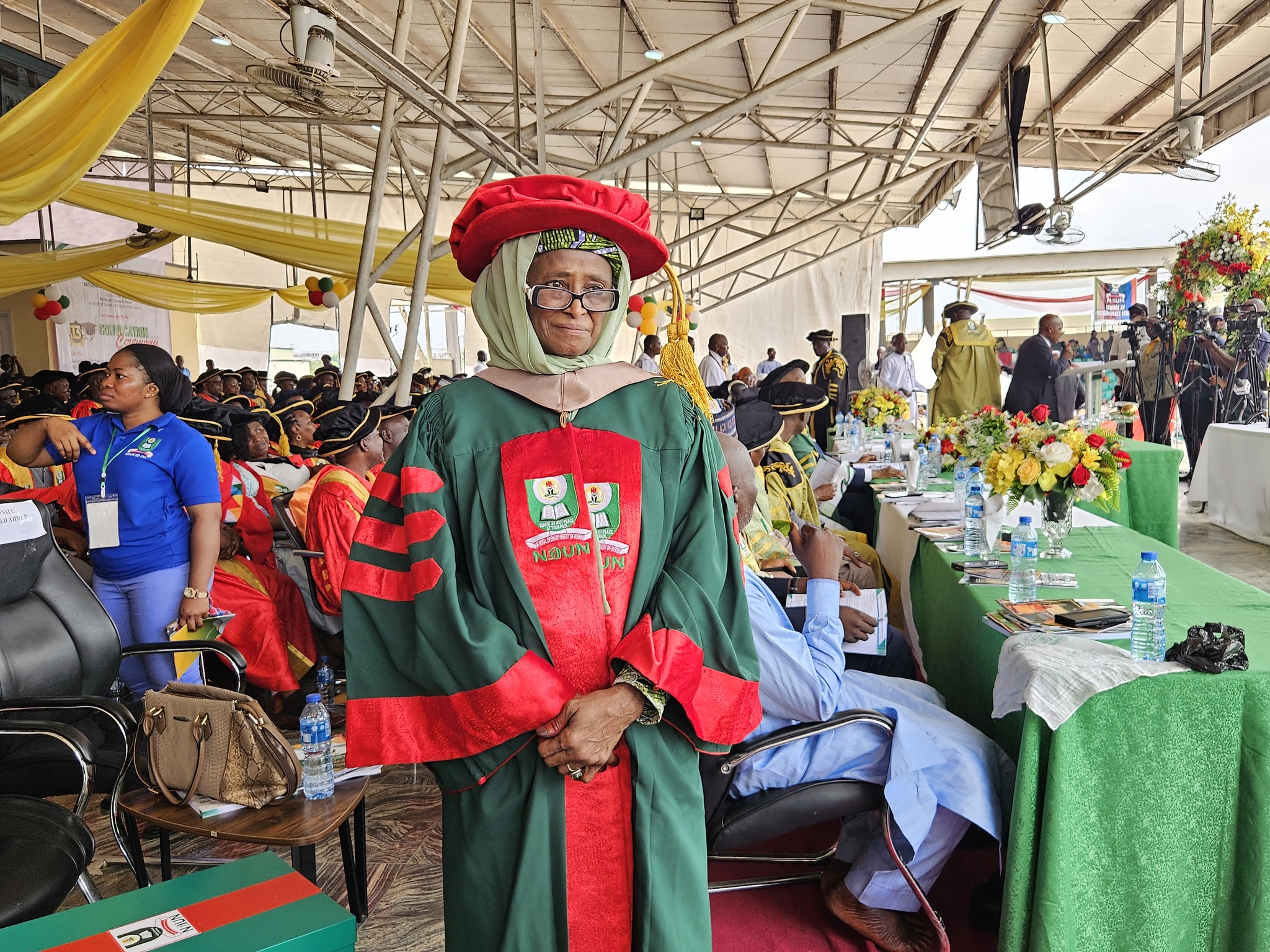
Salute to a Woman of Substance: Hajiya (Dr) Hafsatu AbdulWaheed, D.Litt., Honoris causa

By Prof. Abdalla Uba Adamu

She has done it again. She first did it in 1974/80. In 2024, she repeated it. The feat that no female northern Nigerian has ever performed. Hajiya Hafsatu Abdul Waheed (b. 1952, Kano, northern Nigeria) was the first woman creative fiction writer from northern Nigeria to be published in any language, although hers was in Hausa.

On 13th April 2024, she became the first female Muslim northern Nigerian to be honoured with D.Litt. (Honoris Causa “for the sake of the honour”) doctorate degree from a no less institution than the biggest online university in Africa, the National Open University of Nigeria (NOUN). This was at the 13th Convocation Ceremony of the university held on 13th April 2024 in Abuja, the main headquarters of the university.

In a way, Ms. AbdulWaheed represents a paradox. She is not Hausa or Hausa-Fulani. She is Fulani, pure and simple. She learnt Hausa only outside her family home, in school, but at home, it was Fulfulde all the way. Yet her creative writing has always been in Hausa, with the exception of one book of poetry in English and the recently published collection of short stories titled Sharo. Nothing in Fulfulde, though.

The common historical narrative on literary development in northern Nigeria was that a literary competition to encourage the reading culture among Hausa youth was organized by the Northern Nigerian Publishing Corporation (NNPC) in 1978. One of the entries, which was also one of the winners, was “So Aljannar Duniya” by Hafsatu Abdul Waheed. It was in the Hausa language. However, it would appear, according to Hafsatu herself, that she wrote the novel in 1972, and it was published in 1974.

It was, quite simply, the most radical novel in Hausa literary history. Even “Ƙarshen Alewa Ƙasa” by Bature Gagare (who died in 2002), an unconventional novel, , published in 1982 (as a result of a literary competition organized by the then Federal Department of Culture, Ministry of Social Welfare and Culture) did not come close. Curiously, they contrasted each other. Gagare’s novel is about the lost glory of the ‘original’ Hausa people—the Maguzawa. Hafsatu’s novel is about breaking the Pulaaku—the Fulani code of behaviour. Both Hafsatu and Gagare became spokespersons of their ethnicities.

So Aljannar Duniya is brash, bold, audacious, trenchant, and unapologetic. It is a declaration of war against Pulaaku. It was unarguably the first Fulani feminist tract written in Hausa. Hafsatu’s style and critique of tradition might be compared with those of Bilkisu Salisu Ahmed Funtuwa and Balaraba Ramat Yakubu. However, there are quite a few differences.

Despite its pioneering boldness, So Aljannar Duniya is difficult to read. Perhaps that was because the author started writing it while still in secondary school! Its narrative is often jumbled and non-linear. Understandable. It was written in anger, so words tend to wobble, but the message is clear. This is more so because it is ethnographic. Hafsatu wove a story around her sister, of course, a Fulani, who had every intention of marrying an ‘alien’—an Arab from Libya. So Aljannar Duniya is, therefore, a true story, spiced up by fictional elements to convey a message. As I said before, it is a feminist tract.

Balaraba Rama Yakubu, however, writes in a deeply engaging mature and absorptive style with plenty of hooks. For instance, “Wa Zai Auri Jahila?”, which I consider her best novel, is dark and deeply disturbing narrative of what in contemporary feminist Woke world would be considered an injustice to women, especially young girls in a traditional African society.

Although Novian Whitsitt, who did his PhD on Balaraba’s novels, referred to it as ‘feminist’ I disagreed with him. I labelled her works ‘womanist’, after Alice Walker’s short story, ‘Coming Apart’ (1979). As explained elsewhere, “a womanist is committed to the survival of both males and females and desires a world where men and women can coexist while maintaining their cultural distinctiveness.” This inclusion of men provides women with an opportunity to address gender oppression without directly attacking men (Adamu 2003). Balaraba reflects this in her novels, especially “Alhaki Kwikuyo” (translated by Aliyu Kamal and published by Blaft Books in India). Can’t say much about Bilkisu Funtuwa’s books, though, as I have never read any.

But Hafsatu AbdulWaheed is a feminist—at least as portrayed in So Aljannar Duniya. The plot revolves around a young Fulani lady who wants to marry an ‘alien’ (Arab) from Libya. In real life, Hafsatu’s elder sister. Their parents rejected the idea. The plot of the novel does away with the Fulani Pulaaku and introduces a brash, assertive, loud and anti-establishment heroine, Boɗaɗo, who, armed with a degree in Pharmaceutical Sciences, comes back to her village to set up a drug store (called Chemists in Nigeria, a bit like Walgreens) and introduces her fiancé—all un-lady like behaviours in the Fulani mindset.

Thus, she discards the Fulani munyal (self-control), semteende (modesty) and hakkillo (wisdom)—central components of Pulaaku—and declares, openly, her love for an “alien” in her auntie’s presence! The opening dialogue from the novel sets the pace in which Boɗaɗo, speaking, informs her aunt:

(Hau) Aure! Inna ni fa na gaya muku ba zan auri kowa ba sai wanda nake so. Kun san zamani ya sake.

(trans) Marriage! Aunty, I have told you that I will only marry the man I love. You know times have changed.

Such direct confrontation in a Fulani village was uncommon and reflects the author’s autobiographical rebellion against tradition. Her aunt—delegated to mediate in these matters on behalf of the protagonist’s mother—is shocked. As she lamented:

(Hau) Mhm! Wannan zamani, Allah Ya saukaka. Yarinya ki zauna kina zancen auren ki, sai ka ce hirar nono da mai. Don haka fa ba ma son sa ɗiyar mu makarantar boko. In kun yi karatu sai ku ce kun fi kowa. Me kuka ɗauke mu ne?

(trans) Mhm. These are difficult times. May Allah save us. Listen to you talk about your marriage as if you are talking about milk and butter. That is why we don’t want to send our daughters to school. After you finish, you feel superior to everyone. What do you take us for?

A battleground and the rules of engagement have been established—female empowerment through education—and Hafsatu chose the most conservative arena: a Fulani settlement, considered generally more trenchant about Pulaaku than urban Fulani. Additionally, the novel’s subtext of rebellion against arranged and forced marriage underscores Hafsatu’s acerbic demand for personal choice in marital affairs by women. It was a template for rebellion.

Another contrast between Hafsatu’s So Aljannar Duniya and Balaraba’s Wai Zai Auri Jahila? is in the choice of careers. Hafsatu chose Pharmacy for her protagonist, while Balaraba made her own a nurse. Pharmacy was a profession in the period, and by making her character a pharmacist, she thrusts Boɗaɗo into a man’s world to compete equally with men. Balaraba, on the other hand, by making her character a nurse instead of a doctor, maintains the womanist ethos of an achieving woman in a male-dominated society, fitting in with career stereotypes of women in caring professions.

The success of So Aljannar Duniya sent a message to the budding Hausa literati to pick up their pens and set to work—thus spawning a genre which t revolutionized the Hausa literary landscape in contemporary times.. Furthermore, the combined effects of the harsh economic realities of the 1980s (the decade of military coups and counter-coups in Nigeria) ensured reduced parental responsibility in the martial affairs of their children. Therefore, fantasy, media parenting, especially Hindi films, anti-authority and a loud, persistent message from bursting testosterones in a conservative society that sees strict gender separation combined to present Hausa youth with soyayya (romance) as the central template for creative fiction. It was a safety valve to repressed sexuality.

Hafsatu’s radicalism, however, did not end at rebellion against arranged or forced marriage for women. At one stage she declared to run for the office of the Governor of Zamfara State. This was provoked by a statement by the sitting governor that there were no educated women in the state. To prove him wrong, she decided to campaign for his chair! She even made posters, but was asked by her father to stop. At least, she had made a statement. Furthermore, her real-life echoes Boɗaɗo’s—she was also married to an ‘alien’ from the Middle East (a Syrian). Incidentally, it was a marriage that took her to Gusau, the Zamfara State capital, and I had the pleasure of meeting her late husband, Malam Ahmad Abdul Waheed, during a British Council “Intensities in Ten Cities” Islamophobia tour on 9th July 2003. Both Hafsatu and her husband were born and raised in Kano. It was his career that took them to Gusau.

In literary circles, she also has a voice. For one, she used to assiduously attend every single literary convention anywhere it was held. As part of ANA Kano activities, we were together in Niamey and Maraɗi in Niger Republic at various times to attend international conventions of Hausa writers. She never tired of attending and actively participating. Wonderful enough, she often went with her children and grandchildren, showing them the way. It is little wonder that some of these children became well-celebrated in their chosen professions—for they had a strong role model at home. A good example is her eldest daughter, Kadaria Ahmad, the award-winning journalist who owns and runs the NOW FM radio station in Lagos.

Thus, the recognition of the pioneering efforts of Hafsatu AbdulWaheed by the National Open University of Nigeria (NOUN) on 13th April 2024 during the university’s 13th Convocation was a salute not only to the resilience of feminist women but also to all Hausa language writers of both genders. As far as I know, she was the first female Muslim Fulani (or Hausa) writer to be so honoured by any university in Nigeria. She has, therefore, entered the history books. She is truly a woman of substance.

References.

Adamu, Abdalla Uba. “Parallel Worlds: Reflective Womanism in Balaraba Ramat Yakubu’s Ina Son Sa Haka.” JENDA: A Journal of Culture and African Women Studies, no. 4 (2003). https://bit.ly/3Q2gNlY.

Whitsitt, Novian. Kano Market Literature and the Construction of Hausa-Islamic Feminism A Contrast in Feminist Perspectives of Balaraba Ramat Yakubu and Bilkisu Ahmed Funtuwa. PhD dissertation, University of Wisconsin, 2000.
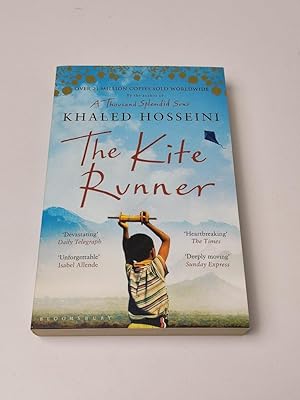
Beyond fiction: A short review of Khaled Hosseini’s The Kite Runner

By Muhammad Sani Usman

If you are an introvert and, worst of all, you don’t want to go out and meet strangers, or you are not financially stable enough to explore the world you romanticise in your head, then you should read fictional books.

Consider The Kite Runner by Khaled Hosseini for a unique perspective on Afghanistan. Unlike the war-torn image often portrayed in American movies, Hossien’s narrative paints a different picture. He depicts a flowing country, with small boys flying kites in the streets of Kabul and the vibrant Afghan holidays like Nowruz. 

You will learn about friends and kinship. There is Amir, the privileged son of a wealthy businessman, and Hassan, the son of their family servant, who grew up together in Kabul. Despite their different social statuses, they are inseparable as children. They spend their days flying kites, with Hassan being the best kite runner, always ready to retrieve the kite Amir cuts down. 

If you don’t know what betrayal is by a friend, then you should look at how Amir witnesses Hassan being sexually assaulted but chooses to do nothing out of fear and selfishness. This event haunts Amir, leading to guilt and a sense of betrayal that defines much of his life.

If you are still wondering about the lengths people go to with the ones they love, you will see how Amir chooses to marry Soraya (his girlfriend), accepting her past and the societal judgment that comes with it. In essence, you will see matured and refined love between Hassan and Soraya.

You will only get all this information from creative writers pushing the world close to you. 

Muhammad Sani Usman wrote muhdusman1999@gmail.com

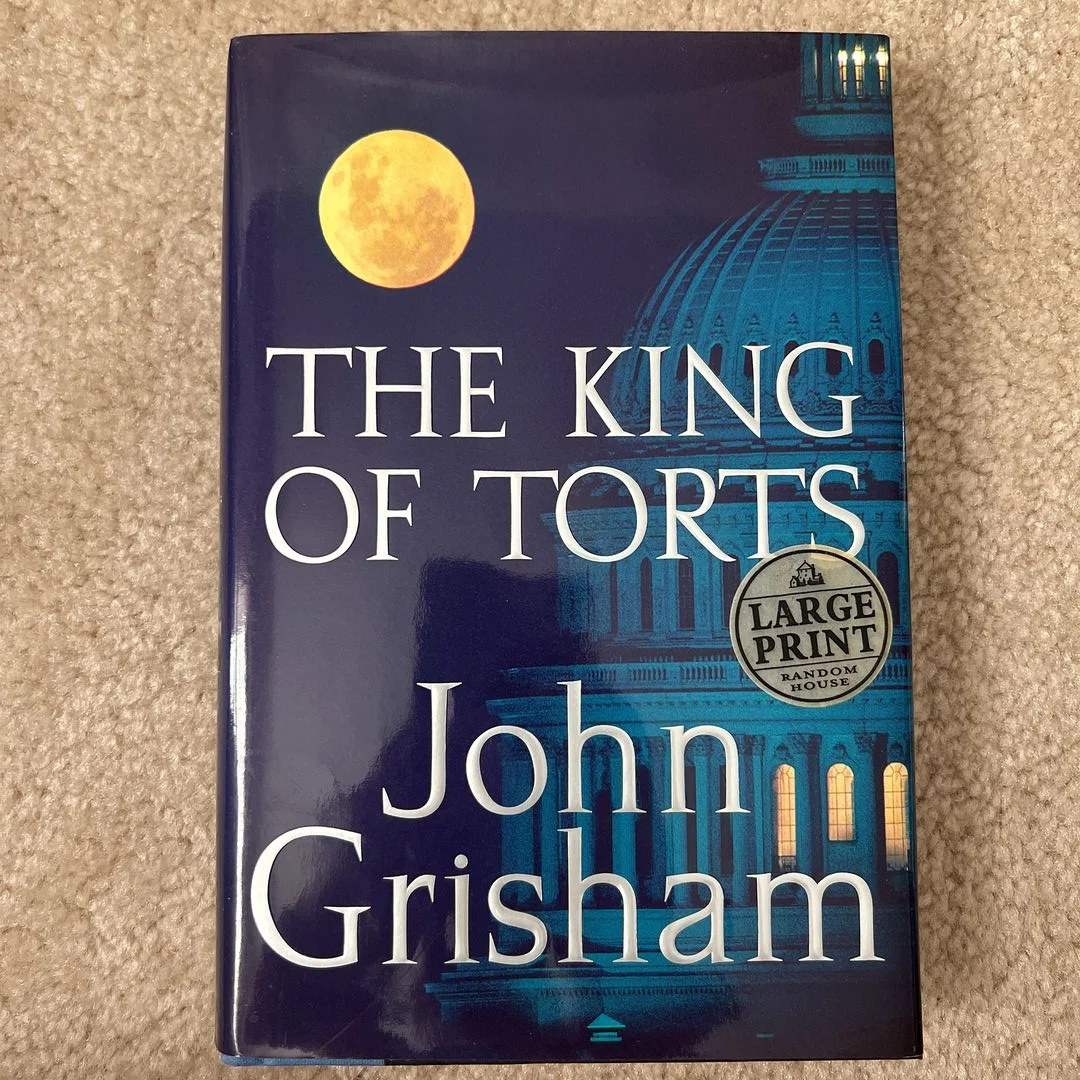
The King of Torts: The problem with overnight riches

By Saifullahi Attahir Wurno.

John Grisham’s The King of Torts tells the story of Clay Carter. He is a Washington city-based, poorly paid lawyer who works as a public defender on the city’s outskirts. Like most employees, he was unsatisfied with his job as it hardly paid his monthly expenses. Another problem with Clay was that he had been dating Rebecca for a long time, and her parents were unhappy with their relationship. These issues kept Mr Clay’s poor mind busy, always thinking of nothing but how he would become rich.

One afternoon at the office, a man named Max Pace appeared before Mr Clay, claiming to be an insider of one pharmaceutical company that secretly carried out a clinical trial on some prisoners without their consent. The story goes that a drug called Tarvan had a side effect that forced its victim to carry out senseless killings without any remorse. Mr Clay became interested in the case and went to investigate up to the prison and interviewed the victims. 

Mr Clay gathered enough evidence to sue the pharmaceutical company involved. Before that, he went into an agreement not to disclose or involve Max Pace in the dealing. After lengthy litigation, the company pleaded guilty and made a massive settlement for the victims through Mr Clay’s hands. This made Mr Clay a hot cake within a month. 

Surprisingly, Max Pace appeared again while trying to adjust to his new life, promising Mr Clay that more litigation cases needed another lawyer for the investigation, so he advised Mr Clay to try his luck. Ever greedy with money, without question, Clay accepted the challenge and plunged into action.

 This one involved another giant pharmaceutical company called Ackerman Laboratories that developed a drug called Dyloft, which was found to be carcinogenic (potential to cause cancer). This time, Mr Clay raised a campaign in TV and magazines until, eventually, the Ackerman laboratories pleaded guilty and agreed to pay a 100 million Dollar settlement. Barrister Clay became an overnight Millionaire and the talk of the city, with magazines featuring and making stories about him; they even nicknamed him ‘The King of Torts’.

Typical of a man longing for cool Dollars, Mr Clay bought a new black and latest Mercedes Benz for a couple of millions, purchased a house in a neighbouring suburb, leased a building and founded a private law firm just for handling litigation cases. He hired more smart rookies ( young lawyers) and decorated his office building to appear prominent and affluent. 

The problem with soft Dollars is that they often affect our thinking negatively. This time, Mr Clay’s relationship with Rebecca becomes sour, and he begins to distance himself from her, although they genuinely love each other. The fact that her parents are not happy with their relationship and would not allow them to live together forced Mr Clay to date other young girls secretly. He was always roaming from one five-star hotel to another, paying huge bills to satisfy his desire.

 He entered the big league of Great lawyers in town, spending lavishly, travelling around the country attending conferences in a state-of-the-art private Jet he leased! and travelling to the Caribbean Islands during holidays to enjoy his wealth. 

 He eventually met a lady named Ridley, who was a beauty Model. Ridley (modern-day prostitute). That is where Mr Clay was losing his soft Dollars quickly and without noticing. He bought many properties in her name, fearing to lose them to the FBI, thinking he trusted her enough and their relationship would be permanent.

As for his work, he was luckily getting more dollars, litigating more pharmaceutical companies, the latest involving a company called Goffman that produced a drug called Maxatil. Thinking it’s always a win, he invested heavily in this case by orchestrating expensive adverts, hiring expensive lawyers, and even recruiting fake victims just to get the soft Dollars. Unfortunately, Goffman was not ready to back down; they hired more expert lawyers and conducted a deeper investigation. Eventually, Mr Clay lost the case.

Losing for the first time, Mr Clay lost his balance, and more trouble awaited as the Goffman company sued him for blackmailing their products; this forced Mr Clay to lose a large proportion of his fortune.

 Mr Clay was sued again before the court by the clients on whose behalf he collected a massive settlement for not paying them enough to cover their hospital bills after leaked news by one of his close allies. Without saying, Mr Clay becomes more deeply in trouble.

He was eventually investigated by the FBI, risking a jail term or a settlement that would cost him almost all of his fortune. He has the option for the latter.  He lost all his assets and new ‘friends’, including Ridley, who fled without a trace. He fled the country, and surprisingly, all this while, his original lover Rebecca was married to another man but got divorced later. Finding out Mr Clay’s story, she travelled to meet him, console him and offer her genuine care and love. They continued to live afterwards, and Mr Clay learned his lessons.

History has continually shown that overnight riches or those who stumble upon a vast fortune suddenly and effortlessly are similarly more susceptible to losing it. The problem with overnight riches is that they impede our positive thinking, allowing us to dive deep into fantasies, opening unrealistic doors, and drawing us toward deceptive paths.

This story can reference some of our lives today; this insatiable search for soft money by all and sundry, hook or crook, could remind the old maxim that happiness, contentment, genuine wealth, and loving family matter more. 

Sharing ideas with a rising star and his brainy sister

By Kamal Alkasim

Last year, I hung out with my good friend Umar, a hotshot writer and all-around awesome guy. He proudly introduced me to his younger siblings, calling me a writer and poet. My heart did a flip-flop – being called that in front of his sisters made me a little nervous! But I took a deep breath and chatted with them, especially the super smart Maryam. 

Maryam showed me a cool book she had. I wanted to read it badly, but I didn’t want to seem rude by ignoring everyone else. You see, I’m all about cheering on women and helping them reach for the stars.

Not everyone likes the idea of strong women, which stinks. Girls should write their own stories, not have others write them for them. So, we decided to write a fun story together in our language. Maryam, her eyes shining, told me how writing was her passion and how she wished she could be like me. 

I shared my writing journey, the good and the bad, and told her, “The only way you fail is if you avoid making mistakes. Sometimes messing up is what gets you ahead.” Maryam seemed impressed, which was fantastic!

Here’s the thing: sometimes it’s better just to listen than to try and give advice. Words are powerful. They can build you up or tear you down. Think of yourself as a special gift to everyone you meet. And you never know where you might find success.

Maryam shared how her teacher had slammed her dreams. “They said I’m wasting my time on something nobody cares about. They even said girls shouldn’t be writers, especially if their boyfriend doesn’t like it!” she sighed. I told her to keep reading, even more than she wrote, like planting seeds of hope to water her dreams.

It’s crazy how often we forget to talk about dreams with our sisters like their voices don’t matter. Too many girls deal with this kind of drama at home. Our chat got a little sad when Maryam talked about her late sister, but it just made me even more determined to keep lifting women, no matter what.

So there you have it: a story about sharing ideas, encouraging dreams, and the power of friendship. Remember, everyone has a story to tell; sometimes, they need a little push to start writing it.

Kamal Alkasim is a Freelance Writer based in Kano, Nigeria. He wrote via kamalalkasim17@gmail.com.

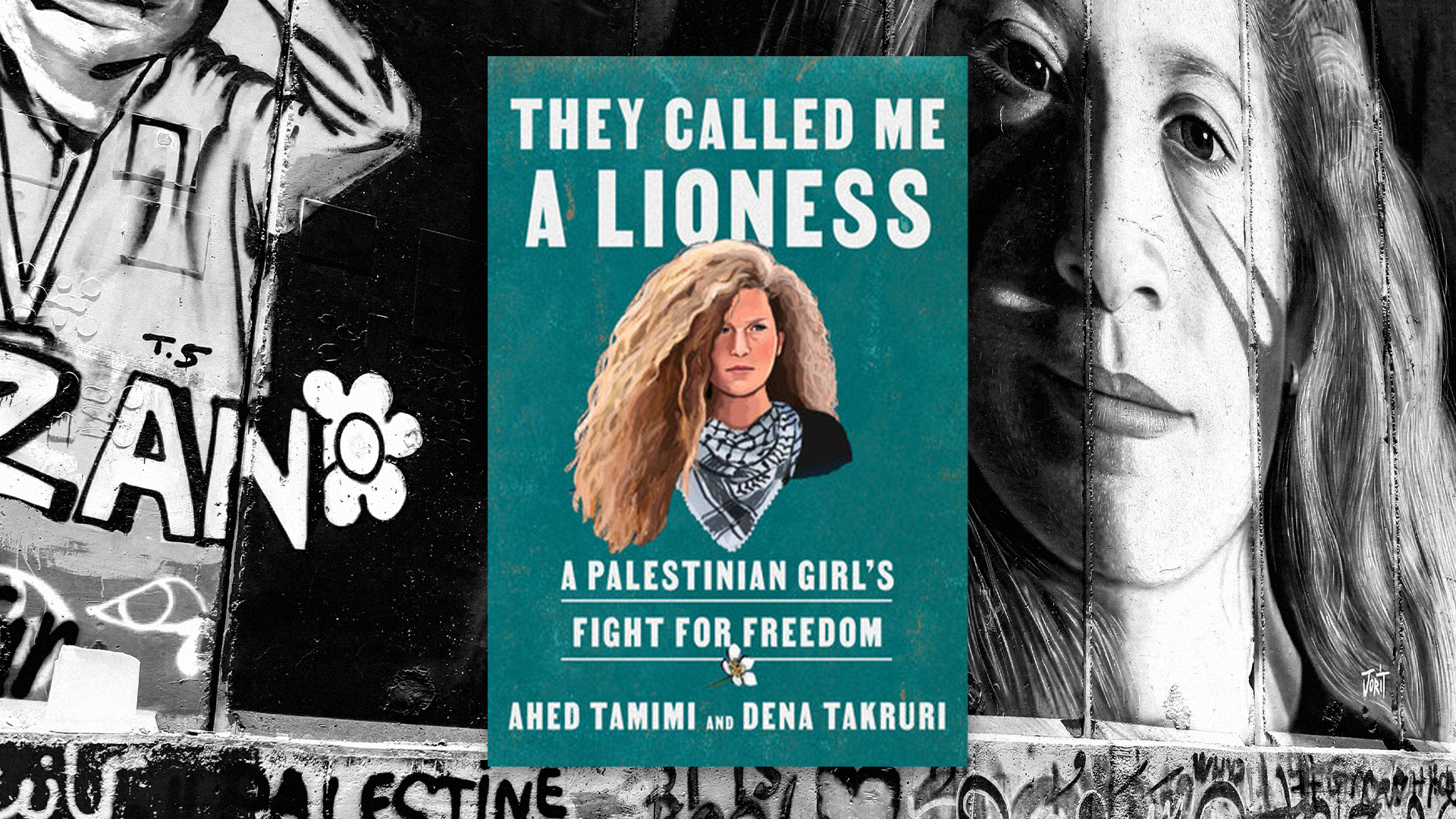
They Called Me A Lioness: Tamimi’s rise and fame

By Bilyaminu Abdulmumini

One of the four books I read in 2023 was They Called Me A Lioness, which I read courtesy of Dr Muhsin Ibrahim, who shared the soft copy. The book’s true-life storytelling and the author’s command of the English language captivated me, keeping me glued to its pages.

Ahed Tamimi, the book’s narrator (written by Dena Takruri), was born and raised in the village of Nabi Saleh, northwest of Ramallah, a city known for its flashes in the Israel-Palestine conflict in the West Bank. Nabi Saleh gained notoriety for its resistance system, characterised by coordinated processions that garnered local and international attention every Friday. Journalists, sympathisers, and NGOs witness these Friday processions. Nabi Saleh vehemently opposed the Israeli occupation (I reserved the history and Israeli occupation saga to another article).

While the protests in Nabi Saleh were generally considered peaceful, occasional outbreaks of violence were not unheard of, though they were one-sided. While Palestinians employed stones, the Israeli soldiers were armed with superior weapons such as water cannons, tear gas, rubber-coated steel bullets, and sometimes even live ammunition.

Amid these sporadic instances of violence, Ahed would witness her mother being shot in the leg by a soldier, her younger brother pinned to the ground by another soldier, her favourite uncle bleeding to death, night raids, and the repeated arrest and imprisonment of her father.

To say that this series of events paved the way for Ahed’s transformation into a brave individual, as her nickname implies, would be an understatement. Ahed’s courageous resistance and fearless confrontations with Israeli soldiers earned her both local and international acclaim.

Tamimi first gained international recognition when she was just a child, under the age of 10, for confronting Israeli soldiers who had abducted her brother. This confrontation, captured on film, went viral, captivating people worldwide. She was seen as a symbol of the bravery of Palestinian children and the spirit of their resistance against the Israeli occupation. Early during the Ukraine-Russia war, the video resurfaced, and the usual social media misinformation circulated it to be a Ukraine child protesting against Russian inversion.

Tamimi’s next international spotlight was intriguing. She engaged in a confrontation with soldiers to prevent them from arresting an Israeli, Miko Peled. Few expected this turn of events. Miko is the son of the famous Israeli general Mattityahu Peled, a celebrated hero who fought in the 1967 war on the side of Israel. However, he later retired from the army and became a tireless peace activist, advocating for Israel’s withdrawal from the occupied territories. 

The last straw that broke the camel’s back was when Tamimi lost her temper and slapped a uniformed, armed Israeli soldier. As expected, this action went viral, leading the Israeli authorities to imprison her for eight months. A prison, even run by one’s country of citizens, might be full of provocations, rights abuses, and infringement, let alone a prison run by an arch-rival. Tamimi and many Palestinians who got under the net of Israel had to endure a series of incarcerations. 

Ironically, imprisonment is one of the most successful ways to achieve fame and knowledge. While someone may be imprisoned as a deterrent, it can inadvertently lead to greater recognition and public sympathy, drawing attention to their cause. The same happened to Tamimi; her imprisonment further elevated her fame and the cause she advocated for. In Nigeria, imprisonment got sympathy from both former presidents Muhammadu Buhari and Olusegun Obasanjo; the former Ghanaian president, Jerry Rawlings, would change the course of history from a death sentence to being a president; and in this regard, no one remained fresh in the memory like Nelson Mandela.

Beyond fame, Tamimi, alongside her mother, who was also incarcerated, completed her high school education. This accomplishment was particularly telling in the mother’s case because she had been unable to complete her education since her marriage. This fact resonates well with Nigerian correctional service centres where many inmates complete online degrees, which, of course, like Tamimi’s Mother, might not achieve the feat without imprisonment. 

Last month, a Turkey legislator slumped in a chamber (and died later in hospital), challenging the president’s seeming “accomplices”. Excerpt from the opposition legislator to Tayyip Erdogan: “You allow ships to go to Israel, and you shamelessly call it trade. … You are Israel’s accomplice”. This reminded me of the Tamimi encounter with Erdogan. 

While Tamimi was visiting Turkey to receive the Handala Courage Award, Erdogan sought an audience with her. In their meeting, he would express how much he loved Palestine, indicating that Turkey would always support the Palestinian people. In response, the iron lady, who never minced words, threw a hammer directly in the face, “How can you say you love us when we have to enter your country with a visa, but Israelis can travel here with no visa?” Erdogan became speechless.

Bilyamin Abdulmumin is a doctoral researcher in chemical engineering at ABU Zaria.

The conscious reawakening of Northern storytelling: HIBAF and its long way to liberation

By Sa’id Sa’ad

In 2021, I sat at Arewa House. I listened to Late Ummaru Danjuma (Kasagi) thunder – in his old throaty yet commanding voice – bitterly about how Hausa culture and stories have diluted over the years. His face, though saddened, lit by fluorescence – old, yet much alive – spread goosebumps throughout the room, reawakening all the murdered tales back to life. No one would think that that command births the reawakening of not just Hausa culture, stories, and language but northern Nigeria’s stories.

That was the maiden edition of the Hausa International Book and Arts Festival (HIBAF)—a time when literary festivals have suffered lashes of COVID-19. Literary enthusiasts, writers and journalists were once again full of life to reconnect. While some see it as a promising beginning for a new Jaipur Literature Festival of Northern Nigeria, a lot thought it was just a naming ceremony of yet another Nigerian literary festival that will soon wither due to shrinking funds.

Hausa or northern Nigeria literature – before now – couldn’t afford itself a “consistent” arts festival that solely promotes and celebrates its artistry, culture, and stories until the advent of HIBAF. However, there were several one-off attempts previously, but mostly political. One might argue that festivals like Kaduna Book and Arts Festival (KABAFEST) have blanketed the same purpose. Still, I would differ because KABAFEST is an international festival bringing international guests with national stories to a northern city. KABAFEST is – or now probably was – an arts festival “in” northern Nigeria, while HIBAF is an arts festival “for” northern Nigeria. This is not a dismissal of the influence KABAFEST had on northern Nigeria. It would be stupid to dismiss that.

However, as the region continues to suffer stereotypes about its literary prowess, HIBAF could stand on the edge of liberating northern Nigeria from such an ugly view. Perhaps the birth of what can be predicted today is the conscious reawakening of northern stories.

For a young festival with such an ambitious name, the question is: Is HIBAF only representative of the Hausa people or northern Nigeria?

It is easy to assume that HIBAF solely represents Hausas and their stories, especially for those who view them from the outside. This is mainly because, unlike other art festivals in Nigeria and around the world founded to represent a geographical entity, such as Lagos Book and Arts Festival, HIBAF is one of few whose nomenclature represents a tribe. In previous seasons, the festival granted conversations in the English Language; therefore, that says a lot about HIBAF going beyond Hausa “alone” in its programming, which I find healthy.

It would be great if HIBAF were only for Nigerian Hausas. It is okay if it is for Hausas globally. But it will be graciously honourary if HIBAF is for northern Nigeria in general. The value of this ambitious festival is in its capacity to reconnect Hausas and Hausa cultures with cultures around it through diversifying into introducing tribes that have existed with Hausas, such as Fulani, Nupe, Tiv, Igala and other northern tribes to its programming. This will mean Hausas and communities of non-Hausas in Hausa communities could re-share a space in arts and shape a positive narrative of the region in terms of collective literary and artistic prowess. This will create a unified northern story(ies).

Another issue that can’t be dismissed is the problem of northern consciousness – this time, refusal – to appreciate northern initiatives. It is a similar case for HIBAF. It is seldom difficult to see a representation of famous northern personalities – especially from Kannywood and music sub-sectors, aside from a few interested in literature such as Aminu Ala or Ado Gidan Dabino. Most hardly care. This does not mean that such personalities – who don’t care – will decline invitations from similar festivals in other parts of Nigeria. They certainly will accept. Now, the question of the “potentiality” of the festival in creating “value” and “shaping northern stories” has everything to do with bringing people of value, not just in literature but from other art sub-sectors such as Kannywood and Hausa music space into its fold.

Knowingly or unknowingly, the Kannywood industry needs more fora this time than ever. Imagine Ali Nuhu, Rahama Sadau, Fauziya D. Sulaiman and Salisu Balarabe on a panel to discuss how northern creative writers could get their – more well-written stories – to Kannywood screens. This panel can pave the way for collaboration that could place both the creative writing and Kannywood film industries decades ahead—a potential both industries share.

With its ambiguous programming nature of inculcating cultural programmes, the festival could give life to northern cultural heritages on the verge of fading with the recent digital revolution. It will be fascinating to see HIBAF Durba, HIBAF Tashe, HIBAF Dambe, Dandalin HIBAF, HIBAF Mawakan Gargajiya and other numerous HIBAF’s all-year-round that could bring back the northern cultural heritages while also Including non-Hausa cultural programme. Again, this creates unified northern cultural narratives.

This year’s HIBAF, in its third year of awesomeness and vibrancy – though still wounded by honest negative feedback from the second season – is bringing diasporic faces back home. Simply put, ‘going international with locals, and for locals.’ Such a breed can give life to a new dimension of cross-geographical collaboration between northern storytellers in the diaspora and Nigeria—a remarkable feat to a tremendous progressive bond.

While the festival, through its host organization, is becoming a spot for learning and sharpening creative and artistic mastery through workshops and seminars, it depicts how it can create a birthplace of yet new sets of Abubakar Imams and Zaynab Alkalis who would live to tell the stories. But this can also be limited if the focus is Hausa and literature alone as, thus, expansion both in language and sub-sector is where the growing inclusive value lies.

From pages of novelists to the rhymes of poets, from scenes of playwrights to screens of filmmakers, from the vocals of singers to the lyrics of songwriters, from the colours of culture to the lens of photographers, from northeast to northwest and northcentral, HIBAF could cook a recipe of blended stories – of all that have been around Hausa – to a valuable northern unified story.

Though all these are a long walk to a new revolution for northern Nigeria’s stories, it can place HIBAF at a point of liberating the region and demolishing its stereotypes.

Sa’id Sa’ad is a Nigerian writer, playwright and journalist from Maiduguri. He won the Peace Panel Short Story Prize 2018 and the NFC Essay Prize 2018. He writes from Bonn, Germany. He can be reached directly at saidsaadabubakar@gmail.com