International

What set the Taliban agenda apart from India’s Bharatiya Janata Party (BJP)?

By Aliyu Sa’adatu

Disturbing images and news keep coming out of India where Muslim men and women continue to be harassed and prosecuted by Hindu zealots, but little has been done or said about it. There has not been the intervention of International Human Rights Watch or the United Nations, much less an outcry from the United States. The US has, over the years, designated and paraded itself as the human rights violation police, overseeing and monitoring cases of abuse across the world.

Could the lens of the US be partial?

Lately, there has been a surge in Islamophobia across the US, Europe and other countries like India. Hindu elements beat Muslims, rip apart their homes and businesses and rape their women day in day out. These thugs are emboldened by the nationalist campaign to create an exclusive Hindustan by some of its prominent leaders of the BJP party and even the so-called prime minister Narendra Modi. Yet, the United Nations and the US have been silent over the years as more crimes against humanity are being perpetrated against Indian Muslims.

What set the Taliban apart from the BJP?

The Taliban in Afghanistan wishes to formulate a Muslim State where Sharia, in its strictest form, is used as the basis of governance. It has, over the years, fought foreign government out of the country, establishing the kind of state it wanted even though the system of governance put in place and proposed by the Taliban is considered to be inclined towards extremism as women’s rights to things like education and work continue to be denied.

Over the start of its rule in the late 1990s, records of violations and abuses have been filed of men and women subjected to public beating, amputation in case of theft. In addition, girls are forcefully taken out of schools as young as the age of ten and condemned to a life of early marriage, to mention a few.

The US and its allies have seen these as offensive and unacceptable, but it has repeatedly perceived these acts practised by the Taliban as highly condemnable and unprogressive. Whereas in 2002, Narendra Modi is said to have fuelled the brutal crackdown on Muslims in Gujarati when he was governor of the state and is doing the same as we speak, as he seeks to rid off the nation of Muslims to establish an exclusive Hindu state. Yet I do not see the prying lens of the United States shifting to cover the crimes committed against Muslims. I do not see it calling out the prime minister of India asking him to end every violence perpetrated against its minority religious population as Modi seeks to obliterate Muslims off the face of India.

To this day, his actions continue to fuel and encourage the Hindu majority population as they continue to terrorize the lives of their minorities like Muslims and Christians alike. Now I ask: what set aside the Taliban’s mandate from that of Narendra Modi? What even sets Modi’s nationalist agenda apart from that of ISIL, who brutally prosecuted minorities, like the Hazaris’ and Kurds’ in Syria and Iraq subjected to beheadings and widespread rape of women and girls in a bid to establish an Islamic State? We all have criticized their approach and activities. Why then is the West and its allies turning blind eyes to this crisis as Muslims continue to suffer in the hands of extremist Hindus’ and Narendra Modi as he rakes the path to establishing the so-called Hindustan?!.

The hypocrisy of the West and the Muslim witchhunt

The West is quick to find a faulting de facto Muslim leader of a country and have him investigated, slammed his government with sanctions and in some cases invade his country and eventually have him removed if ever found wanting on crimes committed against humanity. Still, when the leader in question is a non-muslim, they turn blind.

Some months ago, some Hindustani populace went online publicly calling for genocide against Muslims of India. The case went viral. We saw and read across media platforms in the world. The United States probably caught wind of the news, but strange is the way they never respond. When the Burmese military crackdown on Rohingya Muslims in Myanmar six years ago, nobody did anything. Again, I ask why the United States and the rest of the international community are selective in their punishment in response to human rights violations against Muslims worldwide.

A boycott of Bollywood

We Muslims will not sit back and continue to watch the people’s faces who continue to kill our Muslim brothers and sisters in India. So, therefore, my suggestion is we call on the Muslims across the world for a boycott of Bollywood. We will patronize them again only and solely when the ban on Muslims right to worship peacefully without intimidation in India is restored. Their right to live in peace and use public spaces like other Hindu citizens should also be re-issued and guaranteed.

Sa’adatu Aliyu comes from Kogi state. She is a graduate of English Language from Ahmadu Bello University, Zaria and a Masters student in Literature at the same institution. Her email is saadatualiyu36@gmail.com.
Police caution religious leaders against making false prophecies for 2022

By Muhammad Sabiu

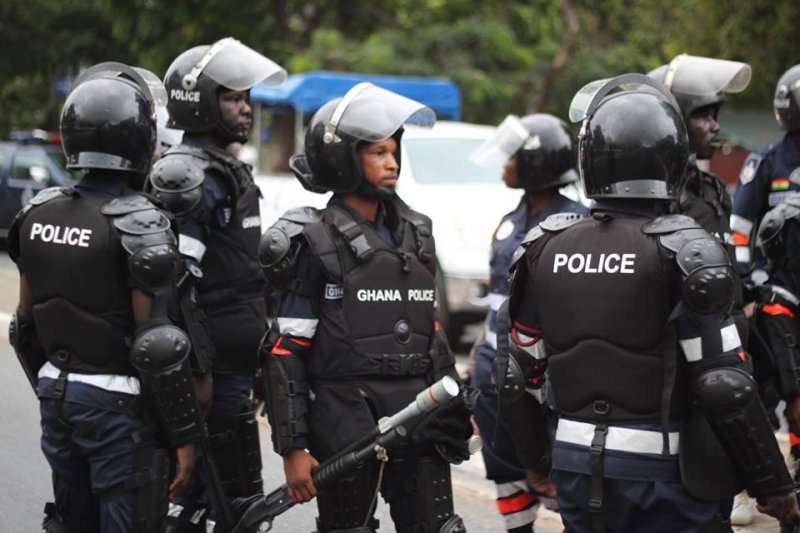
Police in Ghana have on Monday issued a warning to religious leaders against giving false prophecies for the year 2022.


The security service warned clerics against inciting dread in people’s minds in a statement titled “Communication of Prophecies and Their Legal Implications.”


The police say, “We, therefore, wish to caution all Ghanaians, especially religious groups and leaders, to treasures in their utterance, especially how they communicate prophecies, which may injure the right of other and the public interest.”


According to the police, false prophecies have caused public tensions, anxiety, and terror among citizens.


Religious organizations have the freedom to worship and communicate, but they must also respect others’ rights and freedoms.


The cops reflected on how forecasts of harm and death have put many people’s lives at peril throughout the years.


According to the press release, it is prohibited in Ghana to publish or repeat a statement, rumour, or report that is likely to cause fear and anxiety.


It’s also illegal to disseminate incorrect or misleading information that could jeopardize the effectiveness of life-saving services or jeopardize the safety of anyone.


The Ghana Police Service wishes to unequivocally state that it is not opposed to predictions. “We understand that we Ghanaians are religious people who recognize and believe in the centrality of God in our lives,” the police added.

US-based northern Nigerian group, Dangi, condemns bandits’ atrocities

By Uzair Adam Imam


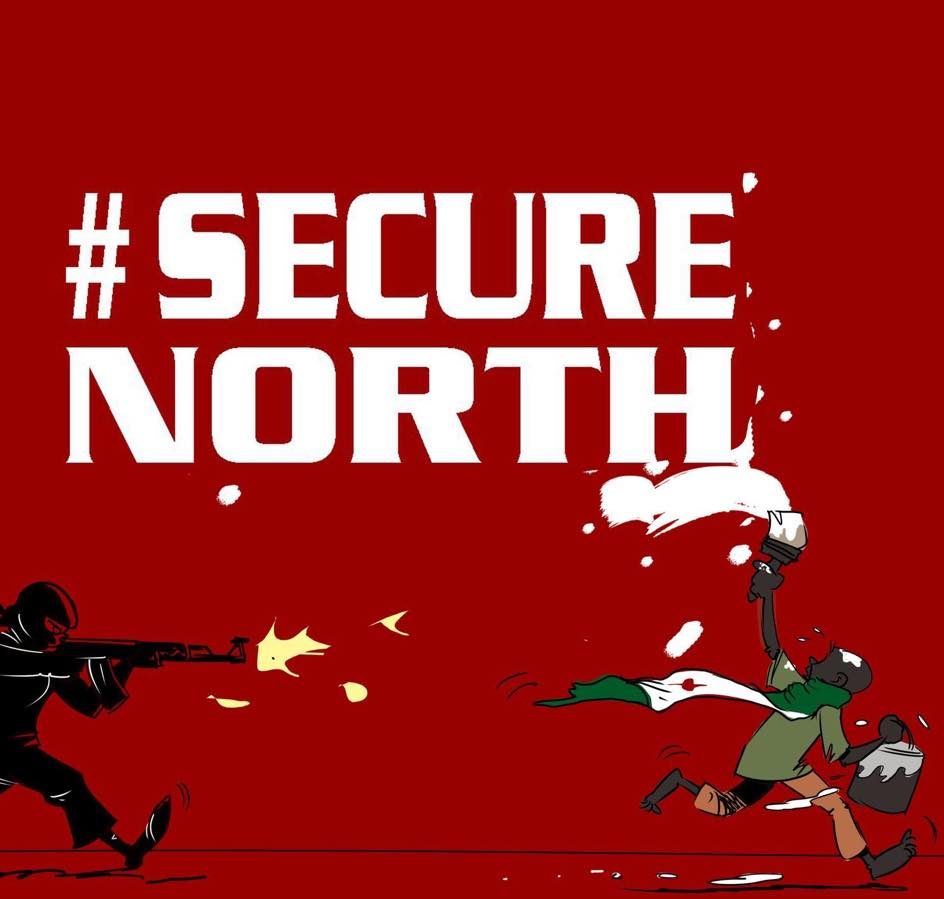
The Dangi USA Association of Northern Nigerians has lambasted the atrocities of bandits in Nigeria, voicing a clarion call on the government to remember its cardinal responsibility of protecting lives and properties.


The association reiterated that since bandits had transgressed all common senses, they should therefore be treated as an existential threat that must be eliminated.


The call which was in a release signed Sunday by the Director Public Relations of the association, Kabir lsa Jikamshi, disclosed the grievance over the incessant killings of innocent souls.


They said that it is disheartening to witness the ongoing despicable acts of kidnapping, ransom collection and gruesome killing of innocent men, women and children especially in the North-Western part of the country.


The statement reads: “This banditry, presently constitutes a transgression that does not allow room for any negotiation. No previous grievances can justify the wanton destruction of lives and property. 


“Therefore, no one, neither the government nor private parties should negotiate in any form with the bandits.


“We call on the government to remember its cardinal responsibility of protecting life and property. Insecurity is persistent only in an ungovernable situation; Please do not abdicate your responsibilities. 


“The government should do more by taking the war to the bandits and enact the necessary legislation that will allow individuals to defend themselves without any reservation.


“This is a collective responsibility and all hands should be on deck. Thus, the general public must also remember that they have a very important role to play by supporting the efforts of the security agencies. “if you see something suspicious, say something”.


“Informants and any other individual or group enabling the activities of the bandits should be treated as one them.


“The catch and release of some of these criminals without trial is totally wrong and must stop,” the statement added.
Dangi Association also commiserated with the families of the victims of these atrocities.


“We pray the Almighty Allah will offer solace to the victims and their families. We feel the frustrations and anger of the Nigerian citizens.”


“We empathize with you for enduring these harsh conditions of insecurity and constrictions in the liberty of movement and performance of other daily activities,” they added.

Please, let there be peace in Ethiopia

By Muhsin Ibrahim

A former Ethiopian minister, a Humboldt scholar at our institute, delivered a lecture a couple of weeks ago. The topic was on Ometo, a minority language and culture in Ethiopia. However, her talk covered other cultures (and languages) such as Amhara, Tigray and Oromo. There I learned that the famous Maitama Sule Dan Masanin Kano-led Hausa school of thought that links the origin of Hausa people and Ethiopians had more plausible points than I knew.
 
The Professor explained that their women avoid mentioning their husbands’ names. Instead, they use euphemisms such as “master of the house”, “so-so’s father”, etc. Further, the Ometo language doesn’t have gender distinction in the plural, etc. These are the same cases in Hausa.
 
Christians or Muslims, the traditional Ethiopian apparels resemble that of the Hausa people. Moreover, some Amharic words and that of Hausa sound similar and mean virtually the same. These include “demena” & “damina“, “ābiduga” & “auduga“, among others.
 
For years, before the above discovery, I liked and read about Ethiopia. I fly their airliner more than any international flight for my love of the country, my convenience as it operates in Kano State, among other reasons. It’s, indeed, the pride of Africa.
 
When Prime Minister Abiy Ahmed won the Peace Nobel Prize in 2019, I heartily celebrated it. Like many people globally, I was optimistic that the country would progress further and become an example for other African countries to emulate. But, unfortunately, Ethiopia is heading to an all-our-war with itself. When will we ever make it in Africa, please?
 
Dear Ethiopians, don’t ruin the rich history, culture and beauty your country is known for. Your resilience used to be against foreign invaders and intruders since centuries ago. Even the fascist Mussolini had to give up. Rethink and let go of all these ethno-regional and political differences and put down your arms.
 
May peace reign in Nigeria, Ethiopia and other crisis-ridden places, amin.

Muhsin Ibrahim is a Nigerian. He works and studies at the Institute of African Studies and Egyptology, University of Cologne.

Just in: Facebook just announces the change of its name to Meta

According to the Verge Media “the company announced the rebranding during Facebook Connect. Mark Zuckerberg announced that Facebook’s new name will be “Meta.”

Facebook CEO Mark Zuckerberg announced Thursday at his company’s Connect event that its new name will be Meta. “We are a company that builds technology to connect,” Zuckerberg said. “Together, we can finally put people at the center of our technology. And together, we can unlock a massively bigger creator economy.”

“To reflect who we are and what we hope to build,” he added. He said the name Facebook doesn’t fully encompass everything the company does now, and is still closely linked to one product. “But over time, I hope we are seen as a metaverse company.”

Zuckerberg owns the Twitter handle @meta (whose tweets are protected as of this writing) and meta.com, which now redirects to a welcome page on Facebook outlining the changes. The site previously redirected to meta.org, a biomedical research discovery tool that was a project of the Chan Zuckerberg Science Initiative. That’s part of the philanthropic arm Zuckerberg co-founded with his physician wife, Priscilla Chan, in 2015. In a Medium post on Thursday, the group says it’s sunsetting Meta.org on March 31st, 2022.

As The Verge first reported on October 19th, the rebrand is part of the company’s efforts to shift gears away from being known as just a social media company and focus on Zuckerberg’s plans for building the metaverse. In July, he told The Verge that over the next several years, Facebook would “effectively transition from people seeing us as primarily being a social media company to being a metaverse company.”

Zuckerberg wrote in a blog post Thursday that the company’s corporate structure would not be changing, but how it reports financial results will. “Starting with our results for the fourth quarter of 2021, we plan to report on two operating segments: Family of Apps and Reality Labs” he explained. “We also intend to start trading under the new stock ticker we have reserved, MVRS, on December 1. Today’s announcement does not affect how we use or share data.”


Breaking News: Military coup in Sudan

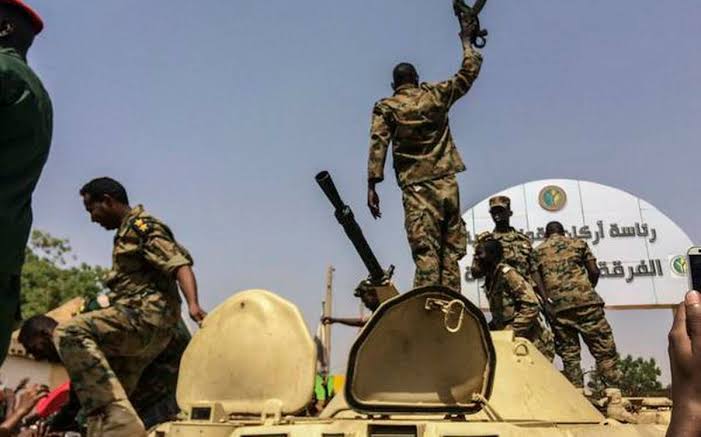
Through out last week, there were rising fears among the Sudanese as the military were about to intrude into the civilian spaces. Tension was so high, a situation that led to the closure of businesses, offices and many people remained indoors in the Capital city of Khartoum. However, earlier in the morning, there was a reported military coup.

According to CAIRO (AP) — Military forces arrested Sudan’s acting prime minister and senior government officials Monday, disrupted internet access and blocked bridges in the capital Khartoum, the country’s information ministry said, describing the actions as a coup.

In response, thousands flooded the streets of Khartoum and its twin city of Omdurman to protest the apparent military takeover. Footage shared online appeared to show protesters blocking streets and setting fire to tires as security forces used tear gas to disperse them.

Protesters could be heard chanting, “The people are stronger, stronger” and “Retreat is not an option!” as plumes of smoke from burning tires filled the air.

A takeover by the military would be a major setback for Sudan, which has grappled with a stop-and-go transition to democracy since long-time ruler Omar al-Bashir was toppled by mass protests two years ago.

The United States and the European Union expressed concern over Monday’s developments.

Jeffrey Feltman, the U.S. special envoy to the Horn of Africa, said Washington was “deeply alarmed” by reports. Feltman had met with Sudanese officials over the weekend in an effort to resolve a growing dispute between the country’s civilian and military leaders. EU foreign affairs chief Joseph Borrell tweeted that he’s following events with the “utmost concern.”

The first reports about a possible military takeover began trickling out of Sudan before dawn Monday. By mid-morning, the information ministry confirmed that the prime minister, Abdalla Hamdok, had been arrested and taken to an undisclosed location. Several senior government figures were also detained, the ministry said in a Facebook post. It said their whereabouts were unknown.

In other hallmarks of a takeover, internet access was widely disrupted and the country’s state news channel played patriotic traditional music. At one point, military forces stormed the offices of Sudan’s state-run television in Omdurman and detained a number of workers, the information ministry said.

Monday’s apparent takeover came after weeks of rising tensions between Sudan’s civilian and military leaders. A failed coup attempt in September fractured the country along old lines, pitting more-conservative Islamists who want a military government against those who toppled al-Bashir in protests. In recent days, both camps have taken to the street in demonstrations.

Under Hamdok and the transitional council, Sudan had slowly emerged from years of international pariah status in which it existed under al-Bashir. The country was removed from the United States’ state supporter of terror list in 2020, opening the door for badly needed international loans and investment. But the country’s economy has struggled with the shock of a number economic reforms called for by international lending institutions.

There have been previous military coups in Sudan since it gained its independence from Britain and Egypt in 1956. Al-Bashir came to power in a 1989 military coup that removed the country’s last elected government.

Among those detained Monday, in addition to Hamdok, were five senior government figures, according to two officials who spoke on condition of anonymity because they were not authorized to share information with the media.

Those detained included Industry Minister Ibrahim al-Sheikh, Information Minister Hamza Baloul, and Mohammed al-Fiky Suliman, member of the country’s ruling transitional body, known as the Sovereign Council, as well as Faisal Mohammed Saleh, a media adviser to Hamdok. Ayman Khalid, governor of the state containing the capital, Khartoum, was also arrested, according to the official Facebook page of his office.

After news of the arrests spread, the country’s main pro-democracy group and the Sudanese Communist Party issued separate appeals for Sudanese to take to the streets.

Separately, the Communist Party called on workers to go on strike in an act of mass civil disobedience after what it described as a “full military coup” orchestrated by the Sovereign Council’s head Gen. Abdel-Fattah Burhan.

US to help Nigeria fight banditry

By Uzair Adam Imam

The United States Principal Deputy National Security Advisor, Jon Finer, said US government will help Nigeria fight against banditry.

He made this known on Monday during a press round table discussion held in Abuja, assuring Nigeria their full support to carry on the mission.

It is obvious that insecurity in Nigeria is one of the major problems that lingers for a very long time, more especially in some Northwest states.

Mr. Finer added that: “We’ll provide technical assistance for justice programming, much of which is dedicated to help Nigeria get a turnaround at this time of banditry challenges, and we will continue to provide programmes like that to help the country.


“I think we’ve made clear our expectations on how the firefighters are going to be use in a right way,” he said. Read More

Bomb blast hits Afghan Friday mosque again

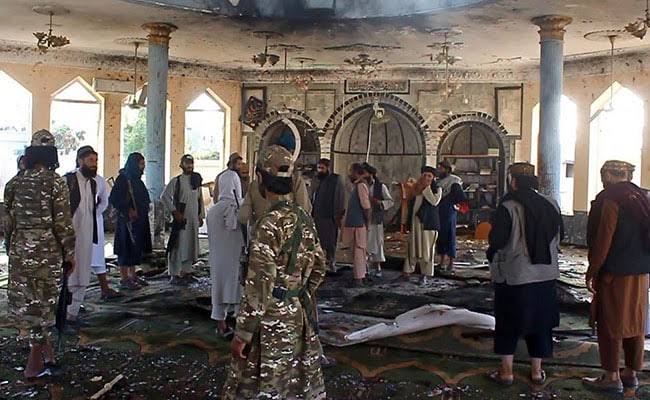
According to a BBC report, “at least 16 people are dead and 32 injured after an explosion hit a Shia mosque during Friday prayers in the Afghan city of Kandahar.”

This act of terrorism has continued to pester among the Muslim communities in Afghanistan and elsewhere in various Muslim nations, with no clear cause and motive behind it. Such killings are perpetrated in order to tarnish the image of Islam and continue to ridicule the religion in the sight of others.

The recent “blast occurred at the Iman Bargah mosque. Pictures from the scene show shattered windows and bodies lying on the ground while others try to help.

The explosion’s cause is not yet clear but a suicide bombing is suspected.

A local doctor told our source that the injured worshippers were being taken to the Mirwais hospital.

BBC Afghanistan correspondent Secunder Kermani says that IS-K, a local branch of the Islamic State Group, was expected to say it was behind the attack.

Last Friday, a suicide attack on a Shia mosque during Friday prayers in the northern city of Kunduz killed at least 50 people. IS-K said it carried out the attack, which was the deadliest since US forces left at the end of August.

IS-K is violently opposed to the governing Taliban, has carried out several bombings recently.

The Taliban took control of Afghanistan after foreign forces withdrew from the country at the end of August following a deal agreed with the US.

It came two decades after US forces had removed the militants from power in 2001.

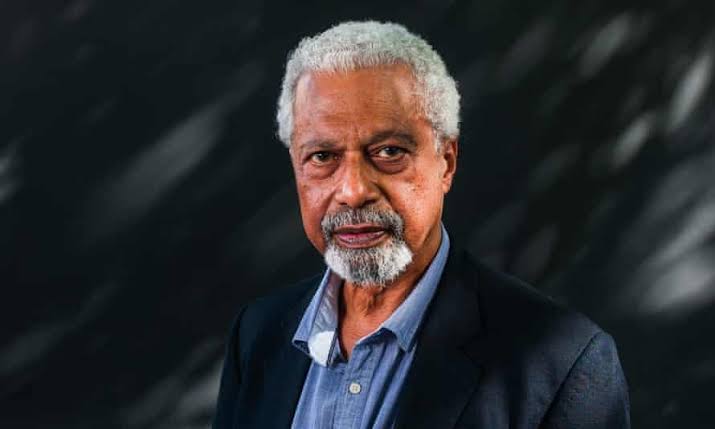
Former colleagues, students from Bayero University, Kano congratulate Abdulrazak Gurnah for wining the 2021 Nobel prize in Literature

Colleagues and former students of Abdulrazak Gurnah, from the Department of English and Literary Studies, Bayero University, Kano, congratulate him, as he emerged this year’s winner of the prestigious Nobel prize in Literature.

According to one of his former students, Ibrahim Garba, “we already foresaw than in him, since the 1980s when he taught us in the department, here in Bayero University, Kano, Nigeria. He deserves it. Gurnah has always been enthusiastic about Literature and today he attained the highest and most popular status. Congratulation sir”, he said. He added that “Bayero University, Kano would be equally happy and part of this achievement, as a place where Gurnah worked and served diligently.

According to the Guardian Newspaper, UK, the “Tanzanian novelist is named laureate for ‘uncompromising and compassionate penetration of the effects of colonialism’

The Nobel prize in literature has been awarded to the novelist Abdulrazak Gurnah, for his “uncompromising and compassionate penetration of the effects of colonialism and the fate of the refugee in the gulf between cultures and continents”.

Gurnah, who grew up on one of the islands of Zanzibar and arrived in England as a refugee in the 1960s, has published 10 novels as well as a number of short stories. Anders Olsson, chair of the Nobel committee, said that the Tanzanian writer’s novels, from his debut Memory of Departure, about a failed uprising, to his most recent, the “magnificent”, Afterlives, “recoil from stereotypical descriptions and open our gaze to a culturally diversified East Africa unfamiliar to many in other parts of the world”.

No black African writer has won the prize since Wole Soyinka in 1986. Gurnah is the first Tanzanian writer to win.

Gurnah’s fourth novel, Paradise, was shortlisted for the Booker Prize in 1994. Olsson said that it “has obvious reference to Joseph Conrad in its portrayal of the innocent young hero Yusuf’s journey to the heart of darkness”, but is also a coming of age tale, and a sad love story.

As a writer, Gurnah “has consistently and with great compassion penetrated the effects of colonialism in East Africa, and its effects on the lives of uprooted and migrating individuals”, Olsson told gathered journalists in Stockholm.

Gurnah was in the kitchen when he was informed of his win, said Olsson, and the committee had “a long and very positive” conversation with him.

Gurnah’s most recent novel Afterlives tells of Ilyas, who was stolen from his parents by German colonial troops as a boy and returns to his village after years fighting in a war against his own people. It was described in the Guardian as “a compelling novel, one that gathers close all those who were meant to be forgotten, and refuses their erasure”.

“In Gurnah’s literary universe, everything is shifting – memories, names, identities. This is probably because his project cannot reach completion in any definitive sense,” said Olsson. “An unending exploration driven by intellectual passion is present in all his books, and equally prominent now, in Afterlives, as when he began writing as a 21-year-old refugee.”

Afterlives by Abdulrazak Gurnah review – living through colonialism

Worth 10m Swedish krona (£840,000), the Nobel prize for literature goes to the writer deemed to be, in the words of Alfred Nobel’s will, “the person who shall have produced in the field of literature the most outstanding work in an ideal direction”. Winners have ranged from Bob Dylan, cited for “having created new poetic expressions within the great American song tradition”, to Kazuo Ishiguro “who, in novels of great emotional force, has uncovered the abyss beneath our illusory sense of connection with the world”.According to Ellen Mattson, who sits on the Swedish Academy and the Nobel committee: “Literary merit. That’s the only thing that counts.”

The Nobel winner is chosen by the 18 members of the Swedish Academy – an august and mysterious organisation that has made efforts to become more transparent after it was hit by a sexual abuse and financial misconduct scandal in 2017. Last year’s prize went to the American poet Louise Glück – an uncontroversial choice after the uproar provoked by the Austrian writer Peter Handke’s win in 2019. Handke had denied the Srebrenica genocide and attended the funeral of war criminal Slobodan Milošević.

The Nobel prize for literature has been awarded 118 times. Just 16 of the awards have gone to women, seven of those in the 21st century. In 2019, the Swedish academy promised the award would become less “male-oriented” and “Eurocentric”, but proceeded to give its next two prizes to two Europeans, Handke and Polish writer Olga Tokarczuk.”

Facebook, WhatsApp outage: Nigerians react

Facebook and its family of different applications which are massively used by Nigerians and billions of people worldwide have encountered a very big technical trouble that led to general outages worldwide. According to The Newyork Times, Facebook and its family of apps, including Instagram and WhatsApp, were inaccessible for hours on Monday, taking out a vital communications platform used by billions and showcasing just how dependent the world has become on a company that is under intense scrutiny.

Facebook’s apps — which include Facebook, Instagram, WhatsApp, Messenger and Oculus — began displaying error messages around 11:40 a.m. Eastern time, users reported. Within minutes, Facebook had disappeared from the internet. The outage lasted over five hours, before some apps slowly flickered back to life, though the company cautioned the services would take time to stabilize.

Even so, the impact was far-reaching and severe. Facebook has built itself into a linchpin platform with messaging, live-streaming, virtual reality and many other digital services. In some countries, like Myanmar and India, Facebook is synonymous with the internet. More than 3.5 billion people around the world use Facebook, Instagram, Messenger and WhatsApp to communicate with friends and family, distribute political messaging, and expand their businesses through advertising and outreach.

Facebook is used to sign in to many other apps and services, leading to unexpected domino effects such as people not being able to log into shopping websites or sign in to their smart TVs, thermostats and other internet-connected devices.

Technology outages are not uncommon, but to have so many apps go dark from the world’s largest social media company at the same time was highly unusual. Facebook’s last significant outage was in 2019, when a technical error affected its sites for 24 hours, in a reminder that a snafu can cripple even the most powerful internet companies.

This time, the cause of the outage remained unclear. It was unlikely that a cyberattack was the culprit because a hack generally does not affect so many apps at once, said two members of Facebook’s security team, who spoke on the condition of anonymity. Security experts said the problem most likely stemmed instead from a problem with Facebook’s server computers, which were not letting people connect to its sites like Instagram and WhatsApp.

Facebook apologized for the outage. “We’re sorry,” the company said on Twitter after its apps started becoming accessible again. “Thank you for bearing with us.”

The outage added to Facebook’s mounting difficulties. For weeks, the company has been under fire related to a whistle-blower, Frances Haugen, a former Facebook product manager who amassed thousands of pages of internal research. She has since distributed the cache to the news media, lawmakers and regulators, revealing that Facebook knew of many harms that its services were causing, including that Instagram made teenage girls feel worse about themselves.

The revelations have prompted an outcry among regulators, lawmakers and the public. Ms Haugen, who revealed her identity on Sunday online and on “60 Minutes,” is scheduled to testify on Tuesday in Congress about Facebook’s impact on young users.

“Today’s outage brought our reliance on Facebook — and its properties like WhatsApp and Instagram — into sharp relief,” said Brooke Erin Duffy, a professor of communications at Cornell University. “The abruptness of today’s outage highlights the staggering level of precarity that structures our increasingly digitally-mediated work economy.”

When the outage began on Monday morning, Facebook and Instagram users quickly used Twitter to lament and poke fun at their inability to use the apps. The hashtag #facebookdown also started trending. Memes about the incident proliferated.”

Even here in Nigeria, many Facebook, WhatsApp and Instagram users start exchanging pleasantries and teasing one another that those apps are not to be trusted as the ultimate way of communication. A Facebook user, called Abdullahi, posted that: “I am happy we are old, we came all the way from the time when there were no social media and I feel we were not taken by surprise as we are not like the boys of today, whose life is largely dependent on Facebook, as that’s the only thing they know”. Abdul’aziz, another user said “I didn’t even know that it happened. While another Facebook user was shocked and he said, “I thought it is the end of time”. Another user opined that “what do you think if it is Oxygen that is stopped for certain hours”! Users continue to say their minds as Facebook and its family apps are resuscitated back to life.