International

Tinubu heads to United States Tuesday for talks as Trump threatens military action over alleged Christian killings

By Sabiu Abdullahi

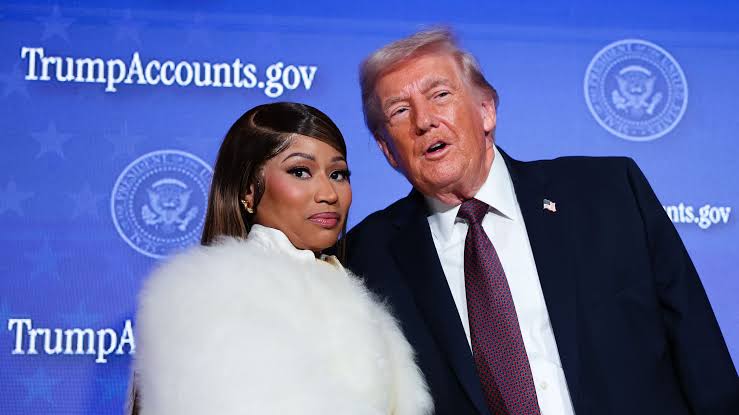
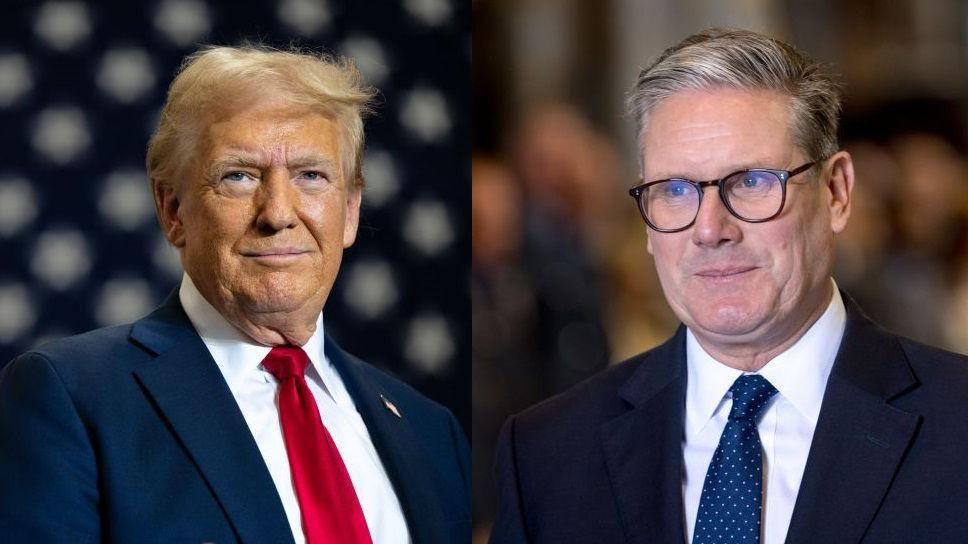
President Bola Tinubu is expected to travel to the United States on Tuesday for diplomatic discussions with top American officials amid escalating tensions following U.S. President Donald Trump’s threat to deploy military force in Nigeria over alleged attacks on Christians.

Presidential sources told newsmen that Tinubu’s trip would focus on strengthening bilateral relations and addressing recent concerns raised by the U.S. government.

The source added that Trump has “delegated his Vice, James David Vance, to meet with Tinubu during the visit,” unless there are last-minute changes.

The planned meeting comes days after Trump claimed that Christians in Nigeria were facing “genocide” and warned that the U.S. might intervene militarily if the killings did not stop.

Trump stated, “If the Nigerian Government continues to allow the killing of Christians, the U.S.A. will immediately stop all aid and assistance to Nigeria, and may very well go into that now disgraced country, ‘guns-a-blazing,’ to completely wipe out the Islamic terrorists who are committing these horrible atrocities.”

“I am hereby instructing our Department of War to prepare for possible action. If we attack, it will be fast, vicious, and sweet, just like the terrorist thugs attack our cherished Christians,” he added.

In response, President Tinubu denied the allegations of religious persecution, insisting that Nigeria remains committed to protecting the rights of all faiths.

“Nigeria stands firmly as a democracy governed by constitutional guarantees of religious liberty,” Tinubu said in a statement released on Saturday.

He added that since assuming office in 2023, his administration “has maintained an open and active engagement with Christian and Muslim leaders alike and continues to address security challenges which affect citizens across faiths and regions.”

The President dismissed claims of religious intolerance as false and misleading.

“The characterisation of Nigeria as religiously intolerant does not reflect our national reality, nor does it take into consideration the consistent and sincere efforts of the government to safeguard freedom of religion and beliefs for all Nigerians,” he declared.

He reiterated that “religious freedom and tolerance have been a core tenet of our collective identity and shall always remain so. Nigeria opposes religious persecution and does not encourage it.”

Meanwhile, presidential aide Daniel Bwala said the forthcoming visit aims to strengthen cooperation between both nations on counterterrorism and regional stability.

“Both President @officialABAT and President @realDonaldTrump have shared interest in the fight against insurgency and all forms of terrorism against humanity,” Bwala said.

He noted that the Trump administration had “assisted Nigeria a lot by authorising the sale of arms,” adding that Tinubu’s government has “adequately utilised the opportunity in the fight against terrorism for which we have massive results to show for it.”

Bwala also disclosed that any differences in perception regarding the nature of terrorist activities in Nigeria “would be discussed and resolved by the two leaders when they meet in the coming days, either in State House or White House.”

Tinubu further emphasized that his administration remains committed to working with the U.S. and other international partners “to deepen understanding and cooperation on protection of communities of all faiths.”

“Nigeria is a country with constitutional guarantees to protect citizens of all faiths,” he said.

“Our administration is committed to working with the United States government and the international community to deepen understanding and cooperation on protection of communities of all faiths,” Tinubu added.

Rethinking the “Christian Genocide” narrative: Reflections from Wilton Park

By Dr Samaila Suleiman Yandaki

Nigeria is once again in the global spotlight in the wake of its redesignation as a Country of Particular Concern and the accompanying threat of U.S. military action by the Trump administration to save Nigerian Christians from “genocide”. This narrative is as dangerous as it is familiar, evoking the old imperial logic that simplifies and distorts our complex realities to justify external intervention. As a student of the politics of history and identity conflict, I find this portrayal beyond perturbing and perilous. 

I witnessed firsthand how such perilous narratives were debated in international policy circles when I joined other Nigerian and British stakeholders at a high-level summit at Wilton Park in February 2020 for a dialogue on “Fostering Social Cohesion in Nigeria”. Situated in the serene estate of Wiston House, Steyning, West Sussex, Wilton Park is an Executive Agency of the UK Foreign, Commonwealth and Development Office, widely recognised as a global space for peace dialogues and post-conflict reflection. The meeting was part of the UK government’s follow-up to the Bishop of Truro’s Independent Review on the persecution of Christians worldwide, in which Nigeria was identified as a major flashpoint of “religious violence.” The Truro Report asserted that Nigerian Christians are facing systematic persecution and called upon Western governments to do more to protect them. 

At Wilton Park, we were offered more than an interfaith forum to dialogue; we were given the opportunity to deconstruct the dangerous oversimplifications that have come to characterise Western discourses on Nigeria. Unlike the imperialist gimmicks and threats emerging from Washington today, the British government, through the Foreign and Commonwealth Office, convened diverse stakeholders from Nigeria and the UK – religious leaders, politicians, diplomats, academics, and civil society representatives – to deliberate on the multifaceted security challenges confronting Nigeria and explore ways of building social cohesion. I am not permitted by the Wilton Park Protocol to name participants or cite their specific interventions, but suffice it to say that, with few exceptions, those present were individuals who matter in Nigerian and British policy circles.

The participants spent three days discussing the farmer-herder crisis, the Boko Haram insurgency, and the persistent communal conflicts in the Middle Belt. What struck me most was the consensus among Nigerian participants — Muslims and Christians alike — that the “Christian persecution” framing was profoundly misleading. We emphasised that the reality was far more complex than the narrative of religious persecution suggests. The problem, as several participants observed, is not that Christians do not suffer violence, but that violence in Nigeria is indiscriminate, affecting all communities. To single out one group as uniquely persecuted is to misread the nature of the crisis. 

The Wilton Park approach reflected a subtle but significant shift– the need to appreciate the broader social, political, and environmental dynamics of violence in Nigeria. While the Truro Report relegated these factors to the background, we strongly highlighted them, showing that Nigeria’s crisis is a shared national tragedy rather than a targeted religious war. The goal was to nurture a more nuanced understanding, one that resists the reductive opposition between Muslim perpetrator and Christian victim. 

The meeting concluded on a high note with consensus around the “sensitivity and diversity of conflict narratives,” recognising that every victim’s voice deserves to be heard. It was agreed that shifting the narrative from “Muslims against Christians” and other binary categories must therefore be a priority if we are to avoid deepening existing divisions. The meeting recommended that the Nigerian government should “commission and fund independent, credible research on climate change, number of attacks, crime victims, cattle routes and patterns; develop strategy on how to use data to proactively educate, myth-bust and shape narratives for both sides of the argument; justice and peace training to be included in schools; Government of Nigeria to appoint a National Reconciliation Adviser; establish a Joint Religious Coalition to ensure accountability of government for insecurity and politicisation of conflict; develop religious engagement strategy; and commence dialogue to facilitate creating ‘Code of Conduct’ for religious leaders,” among other actionable recommendations. This later became the groundwork for further peacebuilding engagements between Nigerian and British stakeholders. The Wilton Park dialogue is a model of thoughtful engagement, the kind of thoughtful diplomacy the world requires in times of conflict, not the militarised moralism coming from Washington. 

The question is, what are the true intentions of Trump? Is he genuinely motivated by a humanitarian desire to protect Nigerian Christians, or is this another exercise in the US geopolitical and imperial crusade? History offers little reason for optimism. We know that humanitarian and messianic pretexts always precede Imperial interventions. In the 19th and 20th centuries, colonial logic was a “civilising mission”; today it is “defence of persecuted Christians”. The language changes, but the logic remains the same —define and rule, borrowing from Mahmood Mamdani. The Palestinian literary critic Edward Said describes this imperial habit of defining how others are perceived and how their suffering is interpreted. Therefore, classifying Nigeria—a complex, plural, and Muslim-majority nation—as a persecutor of Christians is a convenient casus belli for Trump, masquerading as a humanitarian concern. 

Meanwhile, I congratulate the proponents of the “Christian genocide” narrative in Nigeria and beyond. We are now officially a Country of Particular Concern, polarised and divided. As the advocates of the narrative await, with self-righteous anticipation, an American-led “rescue mission”, I want to remind them of the devastation that American invasion has brought to nations in the name of salvation: Libya, Iraq, Afghanistan, Syria, Vietnam, Somalia. Each intervention was couched in the language of freedom, yet each left behind broken societies and deepened resentment.

The “Christian genocide” narrative is doubly dangerous: while deepening domestic divisions, it legitimises foreign intervention. This is not to deny the suffering of Christians in parts of Nigeria. Their pain is real and deserves acknowledgement. But this is equally true of Muslims and others who have suffered the same fate. The question is not who suffers most, but how that suffering is framed. 

Ultimately, the Nigerian state bears the greatest responsibility for its failure to protect all its citizens. Endemic corruption, elite impunity, and the persistent inability to provide security for Nigerians have created fertile ground for such divisive narratives to thrive. Unfortunately, the citizens themselves have collectively failed to hold the government accountable for these failures. Instead, they are busying themselves competing for victimhood, thereby creating the conditions for external powers to intervene discursively and politically. It is this vacuum that the Trump administration is filling.  

The task before Nigerian scholars, faith leaders, and policymakers is to reclaim the narrative, not through denial, but through a more honest, inclusive, diplomatic and historically grounded understanding and framing of its own complex realities. The federal government must strengthen its security institutions and reassert the primacy of equal citizenship. All lives matter in Nigeria—Christian, Muslim, and traditionalist alike.

Dr Samaila Suleiman writes from the Department of History, Bayero University, Kano.

Guinea-Bissau honours Kano governor with highest medal

By Maryam Ahmad

President Umaro Sissoco Embaló of Guinea-Bissau has honoured Kano State Governor, Alhaji Abba Kabir Yusuf, with the Gold Medal of the Republic, his country’s highest national award, for promoting education and African unity.

The medal was presented on behalf of President Embaló by Guinea-Bissau’s Minister of Defence, Mr. Donisio Cabi, at a ceremony held at the Kano Government House.

Mr. Cabi praised Governor Yusuf for offering fifty scholarships to students from Guinea-Bissau, describing the gesture as visionary and consistent with the Kwankwasiyya ideals of empowerment and justice.

Governor Yusuf thanked President Embaló and reaffirmed his commitment to fostering education and African solidarity for peace and progress.

Nigerian academic dismisses Trump’s claim of Christian persecution in Nigeria

By Sabiu Abdullahi

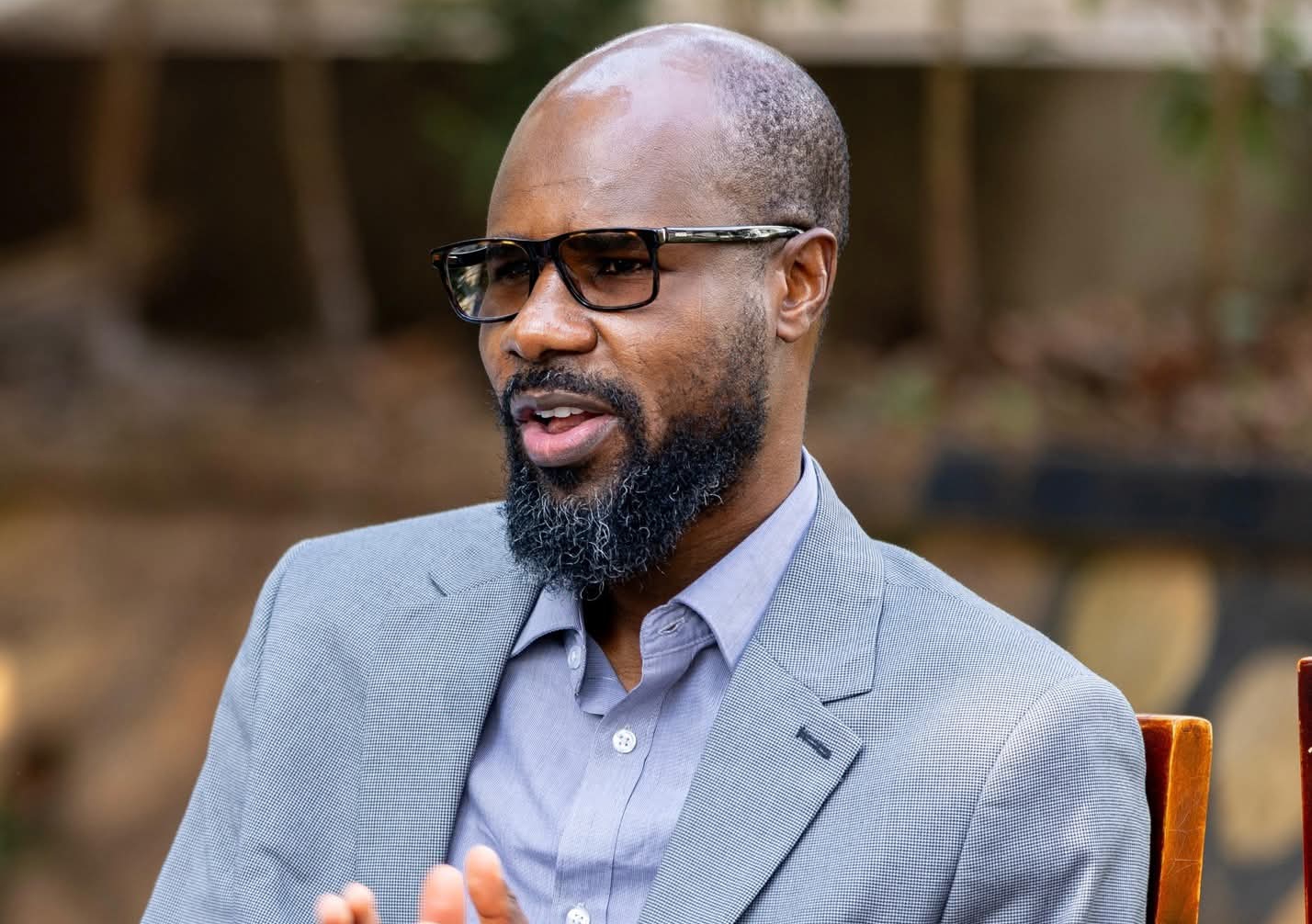
A Nigerian academic, Dr Muhsin Ibrahim, a lecturer at the University of Cologne, Germany, has refuted claims made by United States President Donald Trump that Christians are being persecuted in Nigeria.

In an article published recently on his Facebook handle, Dr Ibrahim said that framing Nigeria’s insecurity as a case of religious persecution is “a very simplistic narrative” that ignores the complex realities behind the country’s crises.

He expressed satisfaction that several Christian leaders, associations, and public figures had publicly rejected Trump’s claim.

He also commended Nigerian activist Omoyele Sowore for putting aside his opposition to the current administration and “saying the truth” about the issue.

According to Dr Ibrahim, terrorist groups such as Boko Haram and violent bandits do not discriminate between Muslims and Christians in their attacks.

“Boko Haram’s bullets do not differentiate between Muslims and Christians,” he wrote, noting that the extremist group has “killed more Muslims than non-Muslims,” including during their deadly assault on the Kano Central Mosque.

He further pointed out that victims of banditry in states such as Zamfara, Katsina, and Niger are mostly Muslims and that many mosques and worshippers have been attacked without anyone framing it as religious persecution.

Regarding the recurring clashes between farmers and herders in parts of the Middle Belt, Dr Ibrahim argued that the conflicts are primarily driven by territorial, ethnic, and resource-based disputes, rather than religion.

Dr Ibrahim also warned that any sanctions the U.S. might impose on Nigeria over Trump’s claims would likely worsen the country’s situation.

“The sanctions, or some aid withdrawal, will eventually impact everyone, just as the violence does not spare anyone,” he said.

He urged Nigerians not to celebrate Trump’s statements, describing them as politically motivated rather than a genuine concern for human rights.

“It’s about politics, not genuine concern for humanity,” he wrote, questioning Trump’s silence on humanitarian crises in Gaza, South Sudan, Congo, and Haiti.

The academic concluded by expressing hope for peace in Nigeria and across the world, writing: “May there be more peace in our fatherland, Nigeria, and everywhere else, amin.”

Despite widespread Muslim casualties, Trump designates Nigeria as ‘country of particular concern’ over alleged Christian killings

By Sabiu Abdullahi

The President of the United States, Donald Trump, has designated Nigeria as a “country of particular concern” following allegations of widespread killings of Christians across the nation.

Trump made the announcement in a post shared on his Truth Social platform on Friday, which was later reposted on the White House’s X account.

This is coming at a time when the larger percentage of the victims the killings in Nigeria are Muslims.

According to the Family Research Council, such a designation is usually made by the US government—particularly by the Secretary of State—under American laws that identify countries violating human rights or engaging in actions that contradict US interests.

In his post, Trump wrote, “Christianity is facing an existential threat in Nigeria. Thousands of Christians are being killed. Radical Islamists are responsible for this mass slaughter. I am hereby making Nigeria a ‘country of particular concern.’

”He added, “But that is the least of it. When Christians, or any such group, are slaughtered like is happening in Nigeria (3,100 versus 4,476 Worldwide), something must be done! “I am asking Congressman Riley Moore, together with Chairman Tom Cole and the House Appropriations Committee, to immediately look into this matter and report back to me.”

Trump further declared that the United States would not remain passive in the face of such violence, saying, “The United States cannot stand by while such atrocities are happening in Nigeria and numerous other countries. We stand ready, willing, and able to save our Great Christian population around the World!”

FG Reacts

Reacting to the allegations, the Minister of Information and National Orientation, Mohammed Idris, dismissed the claims as “misleading and unreflective” of Nigeria’s complex security situation.

Speaking on CNN, Idris said some US lawmakers were relying on inaccurate and misleading data to accuse Nigeria of Christian genocide.

His media aide, Rabiu Ibrahim, released a statement reaffirming that the Nigerian government remained committed to religious freedom, human rights, and the rule of law.

Idris said, “Some of the claims made by officials of the United States are based on faulty data and the assumption that victims of violence are largely Christians. Yes, there are Christians being attacked, but these criminals do not target one religion; they attack both Christians and Muslims, especially in the northern part of the country.”

The minister also cautioned that spreading such narratives could embolden criminal groups that seek to ignite religious tension and animosity among Nigerians.

Trump admin cuts refugee admissions to 7,500, prioritises white South Africans

By Hassana Abdullahi

The Trump administration has announced a sharp reduction in the number of refugees allowed into the United States over the next year, slashing the annual cap to 7,500. Officials described the move as being “in the national interest,” marking a dramatic shift from the previous limit of 125,000 set under the Biden administration.

In a statement, government representatives said the new policy would prioritise white South Africans, commonly known as Afrikaners, citing what they described as “ongoing discrimination” against the group in their home country.

The decision has sparked criticism from human rights advocates, who argue that it politicises refugee admissions and undermines America’s long-standing commitment to offering protection based on humanitarian need rather than ethnicity or nationality.

Administration officials, however, defended the move, saying it reflects a “targeted and merit-based” approach to refugee resettlement aimed at protecting those “most aligned with American values.”

The new refugee ceiling marks one of the lowest in U.S. history and signals a broader reorientation of the country’s immigration and humanitarian policies.

Over 100 killed in Israeli strikes on Gaza amid ceasefire dispute

By Maryam Ahmad

More than 100 people were killed in a series of Israeli airstrikes across Gaza on Tuesday, according to health officials in the enclave. The strikes came shortly after Israel accused Hamas of violating a fragile ceasefire agreement — an allegation Hamas has denied.

Palestinian health authorities said the attacks targeted several densely populated areas, leaving scores of civilians among the dead and many others injured. Rescue teams continued to search through the rubble for survivors late into the night.

In a statement, Hamas rejected Israel’s claims of ceasefire breaches and accused Israel of deliberately escalating the conflict. The group also said Israeli authorities had prevented the return of the bodies of Israeli hostages who were killed during earlier clashes.

The renewed violence has raised fears of a broader breakdown in the ceasefire, which had offered a brief respite after months of devastating fighting. International calls for restraint have grown as humanitarian conditions in Gaza continue to worsen.

Chinese influencers now required to hold degrees to discuss serious topics

By Hadiza Abdulkadir

Influencers in China will now need to hold a university degree or relevant professional qualifications before discussing serious topics such as medicine, law, education, or finance online, according to new regulations aimed at curbing misinformation.

The policy, announced by Chinese authorities this week, requires prominent online personalities — particularly those with over one million followers — to provide proof of their expertise. Those who fail to comply risk fines of up to ¥100,000 (about $14,000).

Officials say the move is designed to tackle the growing problem of false information and deceptive advertising, especially in areas such as fake medical treatments and supplements that have proliferated on social media.

While supporters argue the measure will help protect the public from misleading content, critics warn it could tighten state control over online speech and limit discussions on critical social issues.

The new rules mark another step in China’s ongoing campaign to regulate its vast and influential online ecosystem, emphasising “professional responsibility” and “accuracy” in digital communication.

Ghana adopts local languages as medium of instruction in schools

By Muhammad Sulaiman

The Government of Ghana has introduced a new education policy mandating the use of local languages as the primary medium of instruction in all schools across the country.

Announcing the policy, Minister of Education, Haruna Iddrisu, said the decision marks a major step toward resetting Ghana’s education system to better reflect the nation’s linguistic and cultural realities. He emphasised that children learn best in their mother tongue, which enhances understanding and cognitive development.

“The use of our local languages in classrooms will not only improve learning outcomes but also help preserve Ghana’s rich linguistic heritage,” Iddrisu stated.

The Ghana Education Service (GES) has been directed to oversee the nationwide implementation of the policy. The move is expected to significantly reduce the dominance of English in the country’s early education system and promote inclusivity through indigenous languages.

Swiss government rejects nationwide Hijab ban for schoolgirls

By Hadiza Abdulkadir

The Swiss Federal Council has ruled out introducing a nationwide ban on schoolgirls wearing the hijab in public schools, stating that existing laws sufficiently regulate issues of participation and equality in education.

In a statement issued this week, the Council emphasized that current legal frameworks already ensure that all students, regardless of religion or cultural background, take part fully in lessons, sports, and swimming classes. It added that individual cantons retain authority over education policies, including dress codes in schools.

The decision follows ongoing debates in several European countries over the wearing of religious symbols in public institutions. Swiss authorities reaffirmed their commitment to freedom of religion and expression while maintaining that integration and participation remain key priorities in the education system.