Opinion

Do spouses complete or complement each other?

By Aisha Musa Auyo

There’s this widespread belief that going into marriage makes one complete. It’s one area that most couples have gotten wrong. We can probably blame our movies and fairytales for most of it. But, perhaps, it’s a mere misappropriation of the word ‘complete’ in relation to marriage.

It makes a great storyline that someone can come into your life and complete you. The problem is that you are already a complete person, created by Allaah with or without someone else in your life.

If you have perceived lacks and weaknesses, you need to seek Allaah, your Creator alone, to help you fill those spaces, not another person. As long as you feel you must have another human to complete you, you are a danger to them and yourself.

No one within themselves can fill you with everything you need. You will drain your spouse with unrealistic expectations, and when you finally discover that they cannot provide all that you need, you will become dissatisfied and frustrated. You will begin to think that you may have made a mistake picking your spouse, which could tear you two apart.

Now, suppose you begin to put your spouse in proper perspective, realizing that Allaah allowed you two to come together and complement one another with each other’s unique characteristics and strengths. In that case, you can then learn to appreciate your spouse without draining them.

Learning how to lighten the relationship with each other’s talents and abilities enhances and improves your lives together. This is not always the most straightforward key to understand and embrace, but as you figure it out, it will allow much of the tension in your home to drain away.

Aisha Musa Auyo is a Doctorate researcher in Educational Psychology, a mother of three, a Home Maker, caterer and parenting/ relationship coach.

Don’t forget your date of birth 

By Nasiru Tijjani

The role of guidance, counselling, and mentoring in our interaction remains strategic and fundamental for achieving one’s goals and objectives. Doubtless, none of us is perfect enough not to be mentored, guided, counselled or nurtured at one point or another. Therefore, mentors, parents, counsellors, teachers and the likes are vested with the power of educating the teeming youth on the implication of age in one’s life.

Honestly, age is one of the problematic issues that need to be treated with extreme caution. But unfortunately, the problem appears to be common even among the students of tertiary institutions, civil servants, corp members and business people. Initially, the issue cannot be divorced entirely from ignorance, carelessness, poor mentorship, parental attitude toward learning, policy review and implementation, selfishness and what have you. Therefore, age is needed in every situation to meet a particular requirement for admission, job or anything.

In Nigeria, as we grow older, our services are no longer needed in some institutions. Accordingly, National Identity Management Commission (NIMC) has classified ‘date of birth’ as one of the fields in the data of a person to be non-updatable and non-modified unless an approved fee of ₦15,000 is paid. Meanwhile, the country’s birth certificate is issued to the citizens by the Nigeria National Population Commission. However, until recently, ‘date of birth’ has not received proper attention from the youth, parents, teachers, mentors, etc. UNICEF (2016) has reported that only 30 per cent of  Nigerian children under the age of five (5) have their births registered. Meanwhile, the country had one of the highest average birth rates in the world between 2010 and 2015.

In the academic arena, date of birth has denied many people access to secure admission into higher learning institutions at national and international levels. For instance, a friend of mine was recently denied admission to an undergraduate programme in Sudan. The university management told him that was due to his age.

In addition, the National Examination Council (NECO) has reviewed its policy in 2020 and mandated that ‘date of birth’ be written on the candidates’ results. Furthermore, the National Youth Service Corps has introduced a new policy in the year 2020, which states that the date of birth must be written on the national certificate to guard against age falsification. Before this, the NYSC  policy had mandated that graduates should not be or exceed 30 years of age to be enrolled on the scheme. Therefore, with this mandate, many graduates end up collecting exemption letters.

Returning to civil service, ‘date of birth’ has sent many civil servants to early retirement. I discussed with someone who lamented that he had unceremoniously and unduly retired from service due to the age written on his documents. In contrast, his colleagues are still in the system, for they have no problem with age. I trust you have a lot to say on this case. In Nigeria, for example, the retirement age of civil servants is 60 years by birth and 35 years in service. However, on January 20, 2021, the Federal Executive Council (FEC) approved a bill to increase teachers’ retirement age and service years. With the bill in effect, teachers are now to retire at 65 years by birth and 40 by service.

Furthermore, no one can deny that banks attach value to the topic of discussion, and due to this, many people, including the writer of this piece, have suffered the pain of having dual dates of birth. Without hesitation, I can attest that many accounts have been restricted and closed due to irregularities in age. Equally, many transactions have been denied, cancelled or withheld by the banks’ managements. I trust you can give an example of the victim of the problem.

In sum, the issue of ‘date of birth’ should not be treated slightly…Therefore, one will be at an advantage if one pays attention to the date of birth. Because of this, the following recommendations will be helpful:

  • One should ensure they have a unique and standard date of birth.
  • Parents should be cautious by avoiding anything that will jeopardise their children’s future, such as negligence to NIN enrollment.
  • Parents should endeavour to register the birth certificates of their children in time or right at a tender age.
  • Birth certificates or date of birth should be committed to memory so that forgetfulness and what have you will not strike between what is and what ought to be.
  • No reason, or whatsoever, will warrant you to allow your friends to use your dates of birth.

Nasiru Tijjani writes from Gwaram Tsohuwa, Jigawa State. He can be contacted through tijjaninasiru@gmail.com.

Tinubu-Shettima joint ticket and politics of religion in Nigeria

By Babatunde Qodri

The heated arguments for and against Bola Tinubu and Kashim Shettima’s joint ticket started when the presidential candidate of the ruling All Progressives Congress (APC) paid a courtesy visit to President Muhammadu Buhari in his hometown, Daura, Katsina State. The party’s flag bearer hinged his decision on the expedient need to perpetuate the stay of the ruling party in power. But, laudable as it may seem to APC lovers, Nigerians outside the ruling camp have faulted the decision citing likely consequences.

However, this short piece was inspired by a passionate conversation between one of my mentors and me. He frustratingly shared his view on the joint ticket, stressing that it is at variance with the country’s mood, especially regarding religion. According to him, the ticket became inevitable for the ruling party bent on winning elections without minding the implications for the people. He added it’s unarguably a design for electoral victory and will be tested at the polls. I agree with him.

Nigeria is a religiously polarized entity managed by politicians who deploy religion as a tool for political advantage. In a glaringly fragile country like ours, one would expect that every political decision should be underscored by the religious sensibilities of the people, at least for peace. But instead of politicians to consider this, they go about politics that stands detrimental to the country. This is what the APC Muslim-Muslim ticket suggests.

This is not to pander to the sentiments of some religious bigots whose outcry is rooted in what they stand to benefit from the calculation. Instead, it’s instructive to note that every political calculation that disregards the need for balance must be challenged. Of course, nations of the world develop without recourse to some silly religious sentiments. However, we need to be reminded that Nigeria, giving its very foundations, has been tied to religion, a consideration that political players must pay attention to.

Some might want to remind me of the June 12 1993, presidential election. Others might also talk about the 1979 election involving Azikwe-Audu and Awolowo-Umeadi combinations. Even in Nigeria of those innocent years, this presidential election ended in favour of Shehu Shagari, who used Alex Ekweme as his running mate. Nigeria is dreadfully divided along religious lines, thanks to our putrid politics. What about those who have justified the Tinubu-Shettima ticket based on competence? I have this answer for them.

Nigeria is a generously blessed country. We have Muslim technocrats who can do well in politics, so there are intelligent Christian politicians. The late President Musa Yar’adua, during his brief time in the office, used Goodluck Jonathan while Jonathan partnered with Namadi Sambo. These running mates did all they could in the course of serving their principals. If not for a decision made in response to the threat posed by influential candidates such as Atiku Abubakar (PDP), Peter Obi (LP) and Rabiu Kwankwanso (NNDP), what else explains the hypocrisy of the APC Muslim-Muslim ticket? Whatever it means to you, this decision would negatively affect the country in the following ways.

There would be an ethnoreligious tension in the country. There is no denying that ethnicity is inevitably bound to religion here. Our politics is deeply situated in religion and ethnic affiliations. Hence, people vote for a party based on how much such attunes to their religious and ethnic sentiments. And any political decision that trivializes these fundamentals might be thrashed away, and the country journeyed into needless rancour.

Plus, the ticket will hamper the chances of the ruling party in 2023. Some have argued that it’s not a threat since most votes come from the North, a region that overwhelming installed Buhari’s regime. Those people need to be told that such a point is stale in the context of reality today. Is this nice for the country in the long run? 2023 isn’t far.

Finally, a Muslim-Muslim ticket in a country beset by systemic killings and other vices inspired by religious sentiments isn’t an excellent idea. If our politics continue to disregard the fundamental polarity of Nigeria in terms of region and religion, then I am afraid the result won’t be friendly at all. However, all this is a reflection of Nigeria’s political retrogression. We need a new order where people will be convinced by neither region nor religion as the basis to choose who should lead them. I hope we get there soonest.

Babatunde qodri wrote via babatundelaitan@gmail.com.

Narrating our pain as Law School’s new session begins

By Abdul Mutallib Muktar

It is with excruciating pain that one starts writing something of this nature. It is akin to the pain that hits an inmate upon the renewal of his terms of years in prison. Studying in a Nigerian public university comes with a series of frustrating issues. But for necessity, I seriously doubt if any student would wish to spend more than a year in these problems-wracked public universities.

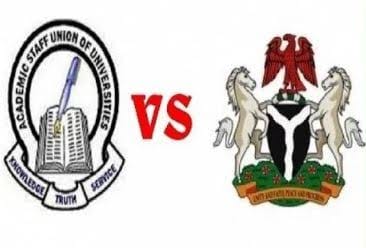
ASUU has been on strike for about 200 days, and nothing seemed to be wrong until this week when loud voices started roaring in protest of the lingering strike. When ASUU embarked on strike in 2020, Nigerian students spent eight months at home, which sadly prolonged their stay in the university by one year. As ASUU called off the strike that year, students thought things had once again become normal because of the temporary stability of academic activities. On 14 February 2022, the strike news hit our ears while we were receiving lectures in our respective classes. The shock of that news is still in us!

The hope of the final year Law student in public university to make it to the Nigerian Law School this year reached its crescendo before the ASUU strike began. Some of us had already started writing our final year project, while others had even finished. One can imagine the pain of staying for additional two years in the university with no certainty of even rounding up in 2023. It is even more painful when we look at our school ID cards and realise they bear “2021”, our graduation year—seven years for a five-year programme.

As the new session of the Nigerian Law School begins in October this year, Law students in public universities have nothing to do except look at the graduates of private universities and foreign institutions marching into the Nigerian school, most of whom are the children of our leaders. Whether ASUU calls off the strike this month or even backdates it to June, public university students cannot make it to the Nigerian Law School. The year is a waste for us!

What if a miracle would make the public university students make it to the Nigerian Law School this year? And how can this miracle occur? The answer is multifaceted.

Firstly, the Federal Government must be unprecedentedly serious in negotiating with ASUU, showcasing strong sympathy for the condition of service of lecturers and utmost concern for the future of education in Nigeria.

Secondly, the Nigerian Law School’s management should extend its calendar to accommodate candidates from public universities.

Thirdly, after the strike is called off, the management of public universities should rushingly round up the session with some level of leniency to the students.

Lastly, the students must be relentlessly prayerful for the occurrence of this miracle. May these challenges become some form of blessing in disguise.

Abdul Mutallib Muktar is a law student at ABU, Zaria, and can be reached via abdulmutallib.muktar@gmail.com.

The “Umar Model”: A solution to the recurrent failure of leadership

By Ubaidullah Alhassan

In this modern era, we mostly complain about the failure and inefficiency of our leaders. This is true as most of them have failed to measure up to our standards and expectations. It has become worse to a point that our ideologies and perception of leadership have been influenced; we feel that all things are the same and the recurrent pattern of failure will remain forever. It is sad enough that little or nothing has been done to make us feel better. Whenever I reflect on the present state of our leadership system, I compare everything to a great man who lived many centuries ago. He is the Muslim hero, Umar ‘Al-Faruq’ the son of Al-Khattab, and also the second successor (Caliph) of the holy prophet Muhammad (peace be upon him). I always say to myself: “If only our leaders possess one percent of the character of Umar, we would all feel safe and happy.” Our focus should not be on the religion, class, race or tribe of our leaders, but we need to make sure they are able to follow a praiseworthy example which is clearly evident in the beautiful model of the renowned great Caliph Umar.

Before embracing Islam, Umar was a typical figure during the age of ignorance, with a ruthless and savage character. After being blessed with faith, he became altruistic, self-controlled, and meticulous about the law. His harsh and brutal nature metamorphosed  into a merciful and tender one. This even increased when he was appointed as the leader of the Muslims. He became more God-fearing, conscious and affectionate towards his affairs, people and jurisdiction.

As caliph, he was a highly responsible person who always maintained the peace of his community. He would say, “I fear that Allah may ask me about if a sheep is lost by the Euphrates river.” This is such a wonderful statement that shows how much a compassionate leader he was. It is interesting to note that the distance between the river and the Muslim headquarters in Madinah is over 1600 kilometers.

In the evenings, he used to go around the neighborhoods of the city carrying supplies on his shoulders to help the orphans and the needy. He was never satisfied in spirit until he consoles broken hearts, wipes tears from eyes, and makes the downcast to smile. He was much aware of what he had been entrusted with that he worked hard, day and night, to fulfill his task. Yet he was never contented with the services he rendered. He was never at ease. He followed the noble footsteps of his predecessors and he forever remains renowned as a just and praiseworthy leader, for he was in awe of his responsibility.

The basic goal of this venerable man was to ensure the wellbeing of his community. He forgot his own problems and he took on the community’s problems, turning them into his constant concern. He strictly followed the examples set by the Prophet who led before him. He never forgot how much the Prophet suffered and struggled to succeed, and he followed in the Prophet’s sacred track and managed to find the right way.

The most notable of Umar’s caliphate was the vast expansion of Islam. Along with the Arabian Peninsula to Egypt, Iraq, Palestine, and what is today Iran also came under the protection of his government. The wealth of the Byzantine and Persian empires began to flow into Madinah, and the standard of living of the Muslim community began to improve. Yet Umar maintained the same lifestyle that he had followed before. Though his state grew in splendor and its treasuries were overflowing, he kept on giving the Friday sermon in patched clothes. He lived a humble life to protect himself from the seduction of his lower self.

In a famous incident, when Umar traveled to Damascus to put the new Islamic government on a firm footing after the conquest of Syria, he was accompanied by only a single attendant, and rode only a single camel. He suggested to his attendant that the two of them ride the camel by turns. The attendant rejected the offer, saying that the people would be confused. Yet Umar insisted, and made the man get on the camel. As the turns fell out, when the two of them entered Damascus, the servant was riding and the ruler was walking.

He was also known as “Al-Faruq” which means the distinguisher between truth and falsehood. He served as a staunch advocate for justice. He kept all measures in place to avoid any form of corruption, nepotism or mismanagement.

Though he governed an empire, he kept its public funds separate from his private funds. He personally fall into debts and faced difficulties in life. He accepted only a small allowance from the treasury, and living on that amount, led a hand-to-mouth existence. He lived so humble a life that many visitors did not grasp that he was, indeed, the great Caliph Umar. When the people insisted that he increased his allowances, Umar beautifully said: “My two friends and I are like three travelers. The first (the Prophet) reached his place. The second (Abu Bakr, the immediate leader after the Prophet) reunited with the first by following the same path. And I, as the third, wants to join them. If I go over-laden, I won’t be able to catch them! Don’t you want me to be the third traveler on this path?”

The following are beautiful statements made by the great Caliph Umar:

“The one I love most is the one who tells me my faults.”

“Among people whom I do not know, the most beloved to me is the one who has a good name. Among people whom I do know, the most beloved to me is the one who has a good manner. Among people who I am examining, the most beloved to me is the one who speaks the truth.”

“Once a task is postponed, it is difficult to move it forward again.”

“If you do not live what you believe, you will begin to believe what you live.”

“The hidden witness of an evil act is our conscience.”

Indeed there are countless lessons left for us to derive from the exemplary leadership and character of the great Caliph Umar. He is not only an example for all Muslims but also for every leader in the world. If only our leaders could follow the “Umar Model,” we would move from a society filled with selfish, incompetent, irresponsible and inefficient leaders to a one mainly characterised with overall growth and development in every sector.

Ubaidullah Alhassan is from Kogi State, Nigeria. He is a student of Ahmadu Bello University, Zaria.

The dilemma of being a hostage in the kidnappers’ den (II)

By Alkasim Harisu Alkasim

The abductors got bewitched by Hajiya’s daughter and wanted to hold her for marriage. Had they ever had sex with her? This remains an unanswered question, although such an act is their capital source of chillaxing. During their stay, the abductees could not be in the arms of Morpheus. I told you earlier that the kidnappers do different assignments, such as denying the victims a chance to sleep. There are others assigned to supply food and water and those to provide bullets, etc. 

Naturally, women suffer from menstruation period. How do they look after themselves during their monthly friend? It is devastating that the kidnappers eject from the den any victim suffering continuing ill health by gunning him. The kidnappers love talkaholism. They talk their ears off after drinking alcohol and dragging marijuana until an uproar overwhelms the place. Nobody is to tax the patience of these bestiality-stricken people unless they want to die.  

The bitterest part of this tragic story was where Hajiya came the selfish with the driver. Given the opportunity to call a blood brother residing in Saudi Arabia, she said something that made my blood boil. When the Saudi-Arabia-based brother asked how many of them got abducted, she shamelessly said they were two, deliberately forgetting to mention the driver. This unprintable selfish behaviour of Hajiya redounded back on her as the kidnappers held her daughter all the more and threw away the key. What a world! The driver got sorrow-ridden as problems slammed him. 

The superior kidnappers exploit the inferior by capitalising on their weaknesses and expertise. The inferiors bust their asses to gather money for the superiors, yet they can’t get the money that is worth their effort. The toil of the junior kidnappers is worth hundreds of thousands of naira. Things continued to pick up steam. As a result, they got pretty fed up with how the senior kidnappers capitalised on their expertise to gain money. This dilemmatic situation they got entrapped in emerged as a genuine concern. 

As raging parties, the senior and junior kidnappers failed to ensure a common mind among themselves. As the high frequency of their getting exploited steamed more, the juniors cut corners with some of the hostages despite their being under the magnifying glass of the kidnapping honchos. The new abductors collocated their new abductees in a new hidey-hole. Hmm! There is betrayal and sabotage even among the abductors.

One of them said to the driver, “Between you and me and these four walls, do you have relations who can ransom you?” The kidnapper did this to gain money to recompense the exploitation he had stomached when under the employment of their former superiors. But will they ever mend fences with their bossyboots? Nobody knows. The seceded kidnappers considered releasing whoever paid a ransom. They ordered the driver to pay some handsome amount to compensate himself. He told the kidnappers that his whole family could not gather such an amount. 

The driver bequeathed his wife and children through Hajiya, who was released on that very day following her ransom payment. So that the driver could not afford the amount they requested, they told him to pay any amount he could, no matter how smattering. Upon payment, he finally got relieved of being a hostage.

At this juncture, society and the government must do their utmost to see the youth walk a straight line in their respective communities.  Otherwise, they will always be putting a foot wrong. We all need to stop this problem, for failing to do so means we are putting a gun to our heads. It is also good to know that gaoling the criminals is not the only solution. Because at times, gaoling does not end social ills such as this.  Rather, the criminals should be rehabilitated, educated, enlightened and offered jobs. If you give them jobs, they can put butter on their bread.

Parents, too, should stop spoiling their children rotten to avoid paving the way for them to stubbornness. They should be more thorough with their children and reprimand them if they go wrong. They should be taken to market to learn the basics of trading. Maybe, some of them have got a Midas touch. Some boys are brilliant for they can work like clockwork. They can perform like a duck takes to water at anything they start. Let’s help them mend their lifestyle to begin to feel like a million bucks. It is disgusting that some parents contribute to spoiling their children by refusing to admit to handling even simple misbehaviour their children start to embody. This makes me lose the run of myself. This fact can’t admit to two interpretations. First, it is your faux pas. Period! 

I feel like a chicken with its head cut off to see our children engaging in the misbehaviour of flirting, misspending, playing truant, etc. Like it or lump it, our youth are rampantly becoming wayward. They abuse drugs like it is going out of style. They don’t only like it, but rather like it like mad. They busy themselves smoking and drinking like nobody’s business as if their lives depended on it. But indeed, if we make it our business, stopping this behaviour is just like taking candy from a baby. 

In conclusion, the government should redouble efforts, tighten security and reconnoitre suspicious places. The more disturbing thing the government should know is that the Chadians, Cameroonians, and other Fulani tribespeople form most of the kidnappers, while Nigerian kidnappers form a minority of those abductors. The government should also wake up to this, work hard to gain a wonder drug for the situation and record a great success. Let us strike while the iron is hot.

Alkasim Harisu Alkasim wrote from Kano via alkasabba10@gmail.com.

Musa Abubakar Daura: The talented blind man who defies odds

By Salisu Yusuf

Musa Abubakar, 29, was born a full-sighted child in Daura, Katsina State. He came from a low-income family, though his mother teaches at a primary school. Her job helps her support a family that lost their breadwinner 18 years ago.

At 9, Musa started feeling some discomfort and strain in his eyes. When his mother took him to a hospital, he was diagnosed with “retinitis pigmentosa,” a rare inherited degenerative eye disease. Initially, he witnessed vision decrease and impairment, especially at night or in low light. While Musa went through this predicament, his father was bedridden with a terminal illness. So, he was loaded with the dice at a tender age.

At 11, he lost his father and, later, his sight. Life had taken its toll on him as he grappled with going to school, looking for a guide and contending with walking with a blind cane. Musa felt lonely, isolated and disillusioned; he needed a company that proved elusive. Sometimes he would want somebody beside him with a gentle nudge, but nobody was around to whom he could unburden and escape from his loneliness. So he started meditating on an escape route.

Later, Musa discovered that education was the only antidote against loneliness, boredom and disillusionment. So he went back to school. In the beginning, his classmates served as his guides. However, social stigma forced him to opt for a blind cane as his guides were insulted or maligned daily. Whenever he reached class, his classmates would take notes and dictate to him. His mother had attested to his precocious talent; he demonstrated extra guile and quick-wittedness during his childhood.

After his primary education, he also joined another conventional junior school, obtaining a junior school certificate with flying colours. His potential was realised when in 2015, he joined Katsina School for the Blind. He learned how to use his “embosser typewriter” to take braille (a form of written language for the blinds, in which the characters are represented by raised dots that are felt with the fingertips). He also learned to use his emboser printer to convert conventional texts into braille for easy manual reading. He artfully mastered the skill of manual reading. Whenever I visit him, I am bewitched by the power, beauty and manual dexterity of his tactile reading. 

Musa Abubakar completed his ABU diploma in English Education at the College of Arabic and Islamic Studies, Daura, with a merit pass in 2020. 

His academic activities were wonderfully exceptional; he didn’t only surpass many full-sighted coursemates, but he mastered a good command of English during class presentations.

While studying for his diploma, Musa proved exceptional and combined conventional and unique learning methods. He used the braille writer to take notes, a recorder to record the lecturer’s voice,  and would later use the braille printer to write his notes and unorthodoxly use the braille writer to convert longer texts into braille for easy manual decoding. 

Musa is currently a 200-level undergraduate of English at an NTI degree satellite centre in Daura. He weaves baskets and local chairs to earn his daily bread and support his education. He can teach and perfectly write on the board. He can also assess his students by converting their works into his embosser and grading them. He’s also computer literate. 

Katsina State Government should not leave this talented blind man to waste. Instead, he should be employed so that his intellectual treasures are explored. His likes shouldn’t be left to beg. They should, like his braille, be converted to help the human cause. 

Salisu Yusuf wrote from Katsina via salisuyusuf111@gmail.com.

Why do people hate this regime?

By Lawi Auwal Yusuf

The unfortunate attack on the advance team ahead of President Buhari’s visit to his hometown, Dura, Katsina State, made the day of so many people. Indeed, it’s unarguable that, initially, the administration commanded deep respect. It was the most liked, revered and popular in this country’s history. But, of course, today, it’s the most loathed, and people solemnly disown it with an excessive feeling of hate. What stimulated such offensive aversion and malice? Why did this esteem veneration turn a disgust overnight? What made such immense support go swiftly on the wane? These are questions we need to ask ourselves.

For over a decade, people gave their lives, wealth and resources for the success of the assumed emancipator to wipe out the woes and salvage the country that came within the whisker of a failed nation come rain, come shine. People expected the saviour to be whiter than white, demonstrate ingenuity and were very optimistic that he would make life far better off than in the previous regimes. Instead, failure to create a framework for his success led to an embarrassing fallacy change, contrarily making life worst off. Moreover, forging policies behind the times really ravaged people’s lives, making the poor poorer.

Unfortunately, things went downhill after taking over the big office; life became an epic struggle for the masses to earn a living at a push. The economy is flat on its back, while markets are dead. We also witness a significant rise in unemployment, inflation, heinous crimes and terrorism. The security forces were overwhelmed and couldn’t check the horrific security threats, lest dancing to the tune of politicians and remain only specialised in molesting those that come out against the status quo or political opponents.

Moreover, to add insult to injury, tertiary institutions were closed for almost a year, whereas no society can develop unless its citizens are well educated. Regrettably, the country descends deeper into crisis. Hence, no one enjoys life at the moment, and hopes of a better life have faded.

As a result, the administration fell flat on its face, fell from favour due to corruption and mismanagement, disappointing even the most loyalist cohorts. They should have taken the great expectations, faithful confidence, and trust reposed on them seriously, not an indifferent attitude.

However, taking a leaf from the books of other dynamic leaders who made history was a good idea. They should have picked the brains of successful personalities like Lincoln, Mandela, Lee or Mao. But instead, they show a great zest for life, spend public funds like water, engage in swanky trips that break the bank and award lavish contracts for self-enrichment and kinsmen. Indeed, the damage done in those few years will surely take decades to repair. Today, people are not out of the woods yet and have realised that the wolf in sheep’s clothing and the past malignant regimes are but six of one and half a dozen of the other.

Not realising the long-lost potential of this nation and forging a global superpower blew their best chances of becoming great leaders without equality. This consequently irritates people and turns their back on them for achieving nothing important. It is so vexing that they cannot be courteous enough to return such favour, going down in history as the worst actors.

This abnegation has shown that people are in hot water. They are on the wrong side of the people and have pushed them too far. They are in their bad books for stabbing them in the back and no longer run the country’s affairs with their consent. However, it manifested the frustration, anxieties and disparagement that depict the lives of the citizens of this dystopian country. Thus, they are worn out of the cruelty and no longer anticipate any help. They are only anxious to survive to the end of this hardship.

As they are still blind to their faults, they will soon realise the error of their ways when given the push come 2023. The future of the party hangs in the balance, while history will always show them in an unfavourable light. However, we will never despair because we honestly believe that where there is life, there is hope.

Lawi Auwal Yusuf wrote from Kano, Nigeria. He can be reached via laymaikanawa@gmail.com.

On the JAMB cut-off Mark: A case for the board and call to us all

Usama Abdullah

Following the Joint Admission and Matriculation Board’s (JAMB) announcement of this year’s cut-off mark for joining Nigerian public universities, many people have taken to various media to poke fun at the board as well as disparage the entire country for the continued decay in its education sector.

Obviously, what informed the board to reduce the cut-off mark to a minimum of 140 is the terrible performance of the students in the University and Tertiary Education Matriculation Examination this year.

Even though the reduction calls for sympathy for the nation, those commentators have gotten it wrong by deriding the board and gloating over the students’ poor performance. 

We cannot get it right when we only decide to laugh off this dysfunctional system. We are clearly, experiencing the outcome of an embarrassing failure in our education sector, and this will take us a long time before recovering.

Some people believe that students nowadays don’t read hard. And that they usually “cheat” their way to tertiary institutions. This could be true to a certain extent, and I agree with them. However, I also agree that the teachers are also quite blameworthy. 

It would be a grave injustice to attribute the failures of the students to their teachers. But there’s a point we all must consider before leaping to conclude that the blame lies with the students alone.

Like I have said earlier, students may have been faring below the expectations of their parents and teachers today, thanks to the advent of TikTok, Snapchat, and Facebook Reel, among other online and offline distractions.

Yet the parents and teachers are partly the causes of such poor performances. The reason is that some teachers don’t deserve to teach because they are either not properly trained or unfit for the teaching profession.

Many of them lack teaching methods. While some of them just got themselves into the profession accidentally. You often hear of accidental teachers; we happen to be in large number at our public and some private schools.

No thanks to our politicians who have fouled up the recruitment system. This kind of teachers don’t teach to transform the students, but to get the chicken feed they usually take home as salaries.

When you go to those schools in which those unqualified teachers work, you will find them wearing fancy clothes and flaunting expensive phones in front of their students, and that nonchalance promotes unlawful student-teacher relationships.

Unknowingly, such a prodigal and nasty attitude help compromise the young impressionable students. The problem associated with this is that the students would be seen emulating what they saw those teachers doing. Within the blink of an eye, the students would be wild and tough to tame. 

On the other hand, many parents seem to exhibit a kind of devil-may-care attitude toward the upbringing of their children.

They mollycoddle their children to the extent that they begin to forgive and forget all that the children do, be it good or bad.

Well, this type of parental neglect is another major cause of the backwardness of the children at school and in society. Because when they get home, the parents won’t care to ask them about their studies, nor find out how they’re really performing.

When some parents are invited to PTA meetings to discuss important things and chart the way out to help improve their children’s educational standards, they barely attend or give out frivolous excuses for their irresponsibility.

These are the things parents need to correct in order to prevent their children from descending so low or getting petty scores in their results. 

In the same vein, the government too contribute hugely to the retrogradation of our education sector. It’s sad and painful that we’re cruelly ruled by people who are apparently unconcerned about what has become of the nation.

The leaders are only good at forcing half-baked policies on the regular citizens, which will only favour them and their families. 

Looking at the precarious state of our public educational institutions and the prolonged but unresolved ASUU-FG debacle, you will understand that the government is doing nothing to refine our rotten education sector.

Instead of making noise or taunting the students for their low performances, we should assist in our own little ways and hope for the best.

Usama Abdullahi writes from Abuja. He can be reached at usamagayyi@gmail.com.

Shettima: The facts and fallacies of Boko Haram linkage

By Lawan Bukar Maigana

The emergence of Senator Kashim Shettima as the running mate to the All Progressives Congress  (APC) presidential aspirant, Ahmed Bola Tinubu, has continued to generate reactions from all corners of Nigeria.  

Most worrisome is the puerile attempt by some ill-intentioned social media influencers to link the former governor of Borno State to Boko Haram terrorism.

What could have influenced the attempt to link Shettima with Boko Haram?

While the paid and unpaid agents behind this vile propaganda have not provided any evidence to link the Senator to terrorism, it is necessary to examine some facts from the apparent fallacies of the opposition and separate the wheat from the chaff.

For instance, while travelling to Gamboru Ngala for a rally ahead of the 2019 presidential and National Assembly elections, Shettima’s convoy was attacked by Islamic State West Africa Province (ISWAP) members and three of his loyalists were killed. Many others sustained various degrees of injuries.

Characteristically, ISWAP claimed responsibility for the attack the following day. However, the then Special Adviser on Communications and Strategy, Malam Isa Gusau, confirmed the identities of the deceased, including a brave soldier and two staunch politicians.

According to Gusau, the attack aimed to attract global media attention to sustain the terrorists’ agenda of instilling fear in citizens and reducing the morale of the gallant troops.

The leader of the Boko Haram terrorists, Abubakar Shekau, who was later killed in an alleged suicide bombing, had threatened Shettima and top government officials in a 56-minute video where he ordered his members and foot-soldiers to kill them wherever and whenever they found them. Could Shettima have a link with Boko Haram, yet he would be the number one on their hit list?

In the video, Shekau boasted as follows: “You, former governor Kashim [Shettima], you present governor [Babagana] Zulum, listen – do not be deceived by your walking without shoes – be careful! If you sing these things we mentioned [Nigeria’s national anthem, national pledge, and the NYSC anthem], you are a disbeliever even if you recite them jokingly.”

It was not surprising that Shettima and Zulum were mentioned in the video because both personalities have consistently spoken against the evil of Boko Haram and worked assiduously with security agents and other stakeholders to decimate them. They have also been supporting Internally  Displaced Persons (IDPs) to recover from the damage the terrorists had done in their lives and relocate them to their respective, original communities.

It should also be noted that Shettima didn’t just stop at appealing to the Federal Government to intensify efforts aimed at eradicating terrorism. He committed enormous resources to support the military with security equipment and dozens of vehicles to ease mobility during operations. Is that a governor that has a link with Boko Haram terrorists?

Born and brought up in Maiduguri, I can authoritatively confirm that Shettima adequately funded the Volunteer Vigilante Youth Groups, popularly known as Civilian Joint Task Force (CJTF) in 2013, who were later trained in counter-terrorism operations, to strengthen the fight against Boko Haram terrorists.

He also provided adequate welfare and logistic support to over 20,000 CJTFs to strengthen the fight against Boko Haram elements. The motivation enhanced the crucial role of CJTF in intelligence gathering, easy identification, and arrest of suspected insurgents, among others. Could Shettima have a link with Boko Haram fighters and yet fund their tormentors?

Before the expiration of Shettima’s tenure as governor of Borno State, he was relentlessly calling for the deployment of military personnel and equipment to curb the threat of the terrorist group in the Northeast.  Considering the cost of the war on terror, Shettima was among the few personalities who persuaded state governors of the necessity of approving the sum of $1 billion from the Excess Crude Account for the counter-insurgency campaigns. He also defended the Federal Government’s plan to ensure the judicious utilization of the fund for the intended purpose.

Could Shettima have a connection with terrorists yet support counter-terrorism financing?

When Boko Haram terrorists destroyed churches in Borno, Shettima provided funds to reconstruct the places of worship and ensured adequate security protection of the areas.

In his testimony to this, the Chairman of the Christian Association of Nigeria (CAN), Borno Chapter, Bishop Mohammed Naga, said: “During Shettima’s visit to these areas, he released N100 million for the rebuilding of some of these churches. A committee was set up for that purpose. I was a member of the committee headed by a permanent secretary, Mr Justus Zare, as Chairman, and I am happy to inform you that presently we have used that money to rebuild 11 key churches which our people are now using. I am surprised to hear some people saying why don’t we rebuild all the churches. We cannot do that because there are many places that are still unsafe.”

Would church leaders praise Shettima if he had a link with Boko Haram fighters!?

In a nutshell, Shettima is neither an ethnocentric leader nor a religious bigot. On the contrary, he is a charismatic personality who believes in equity, justice, and fairness. Moreover, from his engagements and pronouncements, he has consistently advocated peaceful and harmonious relationships among different tribes and religions.

Therefore, it is unfair and unreasonable to link him with Boko Haram terrorism when he, in reality, has been their number one enemy and a prime target for years.

Lawan Bukar Maigana writes from Wuye District, Abuja. He can be reached via Lawanbukarmaigana@gmail.com.