Opinion

How Naira redesign, cashless policy, affect prices of farm produce in Katsina

By Aliyu Ya’u Baraje

I have consistently written against the greediness of Nigerian agricultural produce suppliers since the implementation of the cashless policy. I am now fully convinced that a typical Nigerian is potentially greedy and corrupt, especially when presented with the opportunity.

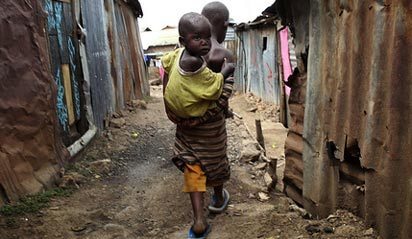
There is no doubt about the scarcity of Naira, which economics has taught is a characteristic of money. This scarcity has created hardships for Nigerians, particularly for rural dwellers whose voices are hardly heard. This is partly due to a lack of modern education, IT literacy, and little or complete absence of media coverage. When visited, rural areas now seem like mourning grounds, faces barely smile, just silence, and black faces.

As a farmer and rural dweller, I feel it’s my duty to bring to light the ongoing exploitation of local farmers by produce suppliers. These suppliers are taking advantage of the cashless policy to profit at the expense of farmers whose main source of income is selling produce or livestock.

The prices of produce and livestock have plummeted dramatically. For example, the price of maize per 100kg has fallen from 22,000 to 13,000, rice from 26,000 to 15,000, beans from 42,000 to 25,000, and soybeans from 32,000 to 18,000. This trend is also seen in other produce such as millet, groundnuts, sesame, sugarcane, yams and cassava.

Farmers are offered two prices, one for a cash-and-carry deal and another for bank transfers. Those who need cash are given the lowest price, while those who require a transfer receive an increase of about 3,000 to 4,000.

This exploitation is unacceptable, especially since prices of other commodities have skyrocketed. I stand against this mistreatment of farmers and the erosion of their livelihoods.

I am from the southern part of Katsina State, which includes the local government areas of Sabuwa, Dandume, Funtua, Faskari, Danja, Qafur, and Malumfashi. This region is renowned as an agricultural hub not only in Katsina State but throughout northern Nigeria. This is due to the fertile land and extensive use of industrial

fertilizers and manure. The local government areas are rivaled only by the Saminaka, and neighboring local government areas.

Those who are familiar with this region will attest to the fact that its inhabitants are engaged in farming activities, not just subsistence farming but also what could be described as mechanized farming. In this region, farmers producing hundreds of tons or thousands of bags of the listed produce can easily be found. If one is a resident of this region, he is either a farmer or from a farming family. Even those who have switched to other businesses or occupations, most of their extended families are still farmers.

Given this, it should not be surprising that the exploitation of farmers by suppliers is a source of concern for those in the region.

2) In today’s Nigeria, the prices of processed and refined commodities have risen dramatically, with some even doubling, tripling, or quadrupling. The price increase for some commodities is so significant that it’s difficult to describe. So, why are farmers the only target for this exploitation?

3) In southern Katsina State, farming is done on a large scale, making it more of a business. This leads to the excessive use of agricultural chemicals, the prices of which have skyrocketed multiple times. For example, NPK fertilizer is sold for 32,000 Naira, Urea is sold for 22,000 to 23,000 Naira, Moroccan OCP (mixed fertilizer) is sold for 15,000 to 17,000 Naira, and the locally made Dan-Buhari fertilizer made from Kankara Local Government is sold for 10,000 to 15,000 Naira. Given these high prices, it’s understandable why a farmer would not be happy with selling their produce for less than 15,000 Naira.

Moreover, the use of tractors and other heavy engines for farming activities such as harrowing, tilling, harvesting, and transportation requires diesel, which now costs over 900 Naira per liter. The use of small equipment for dry-season farming, mobilization, pesticides, and herbicide spraying also requires petroleum, which now costs between 350 and 400 Naira. The prices of other chemicals such as pesticides, herbicides, and preservatives have not only doubled but have tripled or even worse.

This means that when a farmer who needs cash takes their produce or livestock to local markets, they feel like they are being shortchanged or receiving only a fraction of what they spent months or years nurturing. As a result, many farmers go home feeling like they have been robbed and have nowhere to turn for help

4) I seek to draw public attention to the exploitation of farmers in Southern Katsina state. The rise in prices of agricultural chemicals and equipment, along with the exploitation of farmers by produce suppliers, have led to a situation where farmers are not able to make a fair profit from their hard work. I categorizes those who are happy with the situation into two groups: those who are exploiting the farmers for their own gain (like suppliers) and those who are not involved in farming and only care about purchasing cheaper produce for domestic consumption (the consumers).

5) It is unfortunate that the farmers who work hard to produce the commodities are being exploited by the suppliers, hoarders, and processing industries. The lack of government price control mechanisms, excessive taxes and restrictions on foreign goods, and competitors. The selling of finished products at high prices, even higher than those imported from other countries has shown that farmers are intentionally targeted. This creates a situation where the farmers receive low prices for their produce while the final products are sold at high prices, leaving the farmers with little profit and often feeling exploited. It is important to address this issue and find ways to support and protect the livelihoods of local farmers

6) The exploitation of farmers in Nigeria has become a major concern as they are being targeted by suppliers, hoarders, and companies. The prices of agricultural chemicals and equipment used in farming have skyrocketed, making it difficult for farmers to make a profit from their produce. The lack of government price control and foreign competition, as well as excessive tax charges, have added to the farmers’ burden. Despite the high prices of commodities, the owners of processing, refining and packaging factories have not reduced their prices (per kg from suppliers), and instead sell the finished products at exorbitant prices. This has made life in rural areas even tougher, as the local farmers are unable to compete with foreign imports and are being forced to sell their produce at low prices. The suppliers have also adopted a cashless policy, which has made it difficult for farmers in rural areas to receive payment for their produce. The lack of recognition of wired transfers and poor network and electricity coverage in rural areas has further complicated the situation.

It’s important for the government to consider all factors and individuals, including rural settlers, when making decisions on the cashless policy. The government should strive to ensure that all citizens have equal access to financial services, regardless of their location.

Aliyu Yau Baraje, Dandume Local government area Katsina. He can be reached via: aliyuyau900@gmail.com fb: Aliyu Baraje

The Harvard University Professor who worked as a bus ‘conductor’ in Lagos

By Muhammad Jameel Yusha’u, PhD

At 2:45 am every day, the first email at HKS comes to your inbox. HKS Daily is a catalogue of information about activities at Harvard Kennedy School. If you miss it for a day, you could miss countless opportunities about conferences, breakfast with guests, working groups, and lectures by presidents, governors, mayors and other leading policymakers from different parts of the world.

When I checked this morning, I saw an event posted by the Building State Capability Project. It was a book talk entitled “They eat our sweat: Transport labour, corruption and survival in urban Nigeria.” The theme was from the title of a book by Daniel Agbiboa, an Assistant Professor of African and African American Studies at Harvard University Center for African Studies. I registered immediately.

I love original research. Daniel’s work is an excellent example of that. The book, which I look forward to reading, was based on his research work at the University of Oxford, where he worked with the late pan-African scholar, Professor Abdulra’uf Mustapha. It was a research project that used participant observation to study the informal transport sector in #Lagos. As a student of public policy, this attracted my attention even more. Many policies are designed without an in-depth understanding of the social, cultural and even political implications of such policies.

A governor or minister might see the informal transport sector as a nuisance to a modern city. He might bring consultants to hurriedly analyse the problem and come up with a solution. Every person would like to see his city looking like San Francisco, Paris or Dubai. What we tend to forget is that there are thousands of lives that could suffer in our attempt to look modern. Where do we put those people who work as drivers and ‘conductors’ if we don’t have an alternative industry that will absorb them?

To understand this, Professor Daniel went to the field. He became a bus ‘conductor’ for two months, working with a driver, starting early in the morning and absorbing the difficulty that comes with such endeavour. He used his research to understand the difficulty of survival within the informal transportation sector.

He provided a critique to those who use CPI to evaluate countries as corrupt when ordinary people in those countries have completely different realities. “Informal transport not only provides a sector for examining corruption, but also a prism through which to interrogate the binary framing of formality/informality and understandings of the borders (or lack thereof) between the two.” Says Daniela Schofield in a review of the book published on the blog of The London School of Economics and Political Science (LSE).

Takeaway: Developing public policy needs in-depth thinking and proper planning. Building infrastructure is only one part of the story. Managing the effect of policies on people is a much harder task.

Muhammad Jameel Yusha’u, PhD, is a candidate for a Mid-Career Master’s in Public Administration at Harvard University, John F Kennedy School of Government. He can be reached via mjyushau@yahoo.com.

Language and the specific gravity of identity

By Prof. Abdalla Uba Adamu

Muhsin Ibrahim had started a very interesting thread on his Facebook wall about language usage in northern Nigeria. Basically, the argument is about whether predominantly Hausa (his publics) should intensify their use of English in public discourse, especially now that things are getting more virtual. There has been a lot of resistance in using English among the Hausa because of the belief that using English (or other languages, except Arabic) leads to the erosion of identity. Muhsin urges the Hausa to embrace or at least immerse themselves as much as they can in the English language to gain a competitive advantage. I agree with him.

The arguments against the use of English are predicated upon language and identity. Generally, language symbolizes our identity and conveys identities to those who speak them. But how true is this in an interconnected world? I have a friend whose children were born in Hong Kong. They are adults now. They hardly speak Hausa. Does that make them Chinese? Imagine an Urdu-speaking Pakistani immigrant whose children were born in Wales and do not speak Urdu. Does that make the children Welsh?

In South Africa, the apartheid regime used language as one of the yardsticks, besides skin colour, to develop its divide-and-rule ideology against the black population. If a Black South African somehow was able to speak fluent Afrikaans, does that shifts his identity and make him White? I have encountered Hausa merchants in the Deira section of Dubai’s textile market speaking fluent Hindi – are they then Indians?

I once encountered a Yoruba mechanic in Gusau – born and bred there, but could only speak the Sokoto dialect of Hausa, not my absolutely wonderful Kano dialect, and informed me that although his parents were Yoruba, he does not speak the language. So, what was he? Bayarabe or Bazamfare? The Kano Hausa even created sociolinguistic categories for his situation: ‘Ɗan Kasa’ (‘son of the soil’), ‘Muna Kano’ (immigrant non-Hausa, Hausa-speaking), ‘Muna Hausa’ (immigrant, non-Hausa, retaining immigrant language identity). The two ‘outsider’ categories are easily recognized by Kanawa, who describe their Hausa as ‘wata iri’/strange. Oh, they will interact freely with you – until you come to marry one of their daughters!

So, does merely speaking a particular language confer on the speaker the identity of the originators of the language? We learn English and Arabic. Become fluent in them. Does that make us English or Arabs? Thus, if we speak other languages besides our mother tongue, does that shift the specific gravity of our identity? I have three adult children (an oxymoron, I know, but there you are!). We always address each other in Hausa, but we always write to each other in English! Does that alter our identity?

Then the big one. Any DNA test on me will reveal that I am genetically Fulbe (Silsilɓe/Torodbe mix). I don’t speak Pulaar. I tried to convince myself that I should speak Pulaar as a form of anchor to an identity. When I asked Aliyu U. Tilde about the easiest way to learn the language of my genetic ancestors, he suggested marrying a Fulɓe woman! Not on the cards – I am a single-wife person for life.

So, I moved into the anthropology of cultural preservation. At one stage, I was even the Grand Patron of the Fulani Development Association of Nigeria (FULDAN) Kano Branch. During one or two erratic meetings, I was the only one who could not speak Pulaar – and I was the Chairman! We set up an evening class school at Gidan Makama school in Kano to teach Pulaar. Not many people came – despite the usual posturing of many Kanawa that they are Fulɓe.

Next, with some funding from Maison des Cultures du Monde in Paris, I produced two CDs of Pulaar children’s songs (Surbajo, Short Round Crew), and with the help of the British Council in Kano, held a Pulaar music festival, Voices from the Desert, and included a Pulaar rap song (Wazobia Waru). I have no clue what the artists were singing! I next personally sponsored a series of video lessons on how to speak the language and paid lots to make the finished product sleek and professional. I planned to upload the lot on YouTube. That was four years ago. I never got around to it. If I could, somehow, learn Pulaar, what, exactly, would I do with it – none of my publics speaks it; so, with whom will I converse this new form of lost-and-found language identity?

I stopped all that and quit deceiving myself on the issue. Not even my great-grandparents from both sides of the genetic pool spoke it. At all. Only lovely, glorious, wonderful Hausa. In this, I stand with The Nigerian Bahaushe, where I belong. Gregor Mendel, the father of the modern study of Genetics, rest in peace.

So where do I find the intersection of my identity – at the junction of Hausa and Pulaar languages? And please, don’t say ‘Hausa Fulani’. There is absolutely nothing like that. The fact that the ‘Hausa’ was written before the ‘Fulani’ suggests a linguistic dominance, at the very least, not a genetic chiasma.

Yes, there is often a particularly strong link between language and a sense of belonging to a national group, a sense of national identity. Further, although fears are voiced in some countries about the loss of national identity caused by learning foreign languages, especially English, there is little, if any, research evidence to justify this fear. Studies of language and identity have traditionally focused on how individuals or groups maintain, construct, project or negotiate their social identities in and through linguistic practices. Speaking English, however, does not make you English (not to talk of being Welsh, Irish, or Scottish), even if you are British.

It is believed that languages become endangered when they are not passed on to children or when a metropolitan language dominates over others. The tenacity of the Hausa language and its speakers will only endanger those who come in contact with Hausa, not the other way around. No matter how much immersion in English the Hausa have, I doubt if they are in danger of losing their language and identity. After all, what is identity?

Broken down to the interpersonal level, identity is a person’s sense of self, established by their unique characteristics, affiliations, and social roles. We must therefore see identity as a shifting focus on multiple planes – cultural identity, professional identity, ethnic and national identity, religious identity, gender identity, etc. Language can bind but not suppress them.

Thus, acquiring the English language gives the Hausa a competitive advantage in any international communication while, at the same time, tenaciously retaining their identity. I know. I am one of them!

Prof. Adamu can be contacted via auadamu@yahoo.com.

Why men flirt with waitresses in hotels?

By Hamid Al-hassan Hamid

I read a post this morning by one of our sisters, where she was asking if it is a “written rule” that men would flirt with waitresses at hotels and restaurants.

Well… the main reason why hotels and restaurants employ females as waitresses is for the undeniable fact that we all know, which is to attract and hook men’s attention. PERIOD!!!

And if you are a woman, with such kind of job, put it at the back of your mind that your qualification is likely the last thing that was considered. Your ability to attract men to the business and enchant them to spend more money is top on the list. The only exception where your qualification will be put into consideration is in the educational and health sector. Other than that, almost all banks, hotels, restaurants, law firms, offices, and businesses employ women to attract men.

It is a wise business strategy too, because men are the top earners in societies, and women hate women. Only men love women. This is one of the reasons why female patients prefer male gynaecologists to female gynaecologists. The female patients in various literatures made it clear that female gynaecologists are usually rude and roughly handle their boxes during examinations, unlike the men who are more caring. And why wouldn’t a man be so, there!

I always tell women to never get comfortable with any man, including myself. I had to protect myself, I do not even chat with women unless it is totally necessary because if I chat with you for at least two days in a row, I am going to start preaching the gospel before I even know it and speaking in tongues. This is what we are built for and why we exist.

I also don’t attend functions, or even so-called tech and business meetups, I do not show up in public unless it is totally necessary. Ask anyone in Sudan if they know my girlfriend. Even the Nigerian community in Sudan have approached and begged me to at least date one girl.

Anyways, at functions, or so-called tech meetups, even when I attend, I try to mind my business, ignore women and just do my things. But the thing is that ignoring women attracts women. Yes. I have had women in Niqaab approaching me and asking why I am not talking and moving around like the rest of the people around me. Let alone women wearing jeans and skirts, those ones will straight up come over, close my laptop and ask why I am being too serious.

Women are very funny. Stay at home, they will not stay at home, they go out and they complain that men are looking at them. Before nko, who or wetin you wan make dem look?

Lowering your gaze will only work for a few seconds in public, especially if you meetup frequently, she will eventually approach you and ask if you have a pencil that needs sharpening.

Some of us go to school, but we find it difficult to research basic human behaviour. I mention research at least to those of us stupid to not understand reality but would at least respect scientific research.

Body shaming, self-loathing and the quest for validation

By Maimuna Abubakar

People’s opinions of others have always psychologically impacted their social relationships and behaviours without considering an individual’s mental state and capacities. Many people say things to each other that are more painful than some physical injuries. Often that has detrimental effects on the psychological well-being of the parties involved. The issue of body shaming often results in self-loathing and even compels people to yearn for people’s validation.

Body Shaming is the act of humiliating a person by mocking, making jest, or making critical comments about their physical appearance in the form of the person’s body size, shape or weight.

Often, those who body-shame others claim to be just joking. However, the negative impacts of body shaming are numerous; it makes victims self-conscious, brings about issues of low self-esteem and poor self-confidence, and makes victims question their self-worth. Mentally, it creates the feeling of self-disgust or shame in the victims, while some feel like they have some biological defects like something is wrong with their biological makeup.

The media, especially social media and some product marketers, have succeeded in projecting what an “ideal body type” should look like, which is where most body type critics derive their inspiration. They believe that one has to be at least close to those “ideal body types” or that such a person is lacking in their physical structure.

Although fat shaming is the most common form of body shaming, people must understand that ‘skinny shaming’ is just as hurtful as fat shaming. Because some people are naturally thin or fat, it is in their genetics. Therefore, they can’t just gain weight or lose it simply because people say they should.

Body shaming has led many people to develop eating disorders that can be fatal to their general health, such as Bulimia Nervosa and Anorexia Nervosa.

Bulimia or Bulimia Nervosa is a serious disorder that occurs chiefly in females, characterised by compulsive overeating usually followed by self-induced vomiting and is often accompanied by guilt and depression.

Anorexia or Anorexia Nervosa, on the other hand, is another serious disorder in eating behaviour characterised by a pathological fear of weight gain leading to faulty eating patterns such as prolonged starvation.

Eating disorders are currently the mental conditions with the highest mortality rates, as research statistics show in Japan, the USA and other cities worldwide (BMC Psychiatry: 2020).

Body shaming has led to so many attempted suicide. Victims of body shaming, over time, begin to hate themselves as they view themselves through the lenses their critics see them. So many potentials are not discovered because victims of body shaming dread people’s criticism about their physique and, as a result, prefer to keep themselves hidden.

When I opened up a discussion about body shaming with some of my friends and classmates, it surprised me how many of us have, at one point in life, suffered at the hands of body type critics, and some are still suffering.

One of such friends, who is chubby, told me that when she was in her second year at the university, her roommate pleaded with her not to conceal her beauty by putting on the hijab over her well-tailored dress. When she refused to oblige, her roommate accused her of being insecure about her body weight and diagnosed her with an inferiority complex. She said that comment made her see herself differently and that throughout that academic session, she questioned her every action, constantly assessing herself until she deliberately learned to love herself for who she is.

Another close friend recounted how her close friends, immediate and extended relatives, would say things like: “Ina zaki kai wannan jiki haka?”, “Da dai kin rage cin abinci ya fi ye maki saboda maza bã sã son mace mai qiba“, “Wacce ko kyau ba ki yi ba. Wannan qiba haka wazai kwasa?” Her friends will joke about her body size, “me kike ci ne haka, muma a san ma na mu ci mu yi qiba“.

They possibly may not intend to hurt her feelings, but little did they know that such comments shatter their friends’ and families’ self-esteem.

Another said that her professor kept addressing her as a married woman, always asking her about her husband and children in class. Her classmates would laugh about it, and she would laugh too. Still, it hurt her every time he made such comments because she believed he assumed she was married simply due to her plus size.

A very close friend said that when she was a teenager, she hated herself so much that she always had suicidal thoughts because people kept telling her that she was too thin, too skinny, too bonny, shapeless etc. “Don’t put on tight-fitting jeans; it’ll expose your thinness”, “Put on baggy dresses to conceal your shapelessness”, “You look more like a boy than a girl”, “You’re ugly and unattractive, please eat some fatty foods to help you gain weight so that you’ll look presentable”, etc.

Although females get more body shamed, men, too, are victims on several occasions. A cousin has refused meals several times because anytime he sits to eat, his parents remind him how fat he is growing and how he needs to watch his weight. They will always compare his size to his friends and other cousins. These are his very own parents!

Another 20-year-old I met recently told me she wished God hadn’t created her because when she was in secondary school, some of her classmates and neighbours always complained about how thin and unattractive she was. It made making friends difficult for her because she couldn’t discern who liked her for real and who was just tolerating her. She, therefore, grew up in solitude, always alone. But now she finds herself in the university and realises she can’t continue her solitary life, yet she doesn’t know how to approach people. She was literally scared of even talking to me.

So, to the parents who see fault in their children’s biologically inherited physical structure, I hope you remember your role in bringing such a child to life. If you find their body size, shape or weight repulsive, remember that your genetics created them.

To friends ( or so-called), relatives ( immediate and extended ) and other members of society, please DO NOT verbally abuse people with your judgemental, unsolicited opinions of them. There’s no nice way of body shaming; “I was just joking” is only an excuse to humiliate people whose daily struggles your feeble mind may not be able to contain.

Finally and most importantly, to the victims of people’s insensitive, inhumane criticism about how you look and why you look that way, know that YOU DO NOT need anyone’s validation to be whom you want to be. Work on yourself, eat healthy, exercise to avoid illness, and keep a healthy head space.

Maimuna Abubakar is a Sociology student at Ahmadu Bello University, Zaria. She sent this article via maimunaabubakar200@gmail.com.

On political indoctrination of the Nigerian masses

By Zaharaddeen Muhammad Azare

Being that political leadership share some characteristics with business partnerships where many shareholders come together to own and run a business, politicians, especially in developing worlds like Nigeria, connive with the prominent and respected members of societies for the maximum profitability of their business of maintaining themselves in power for their personal benefits.

In Nigeria, politicians use poverty and ignorance as instruments of achieving; loyalty, support and even votes during elections from the masses, this is regardless of how they treated these masses while in power or before the declaration of interest in political leadership. It’s a belief that “The strong is never strong enough to maintain himself in power unless he utilises trusted and well-respected members of the lower class.”

It’s apparent in Nigeria that whenever elections draw nearer, politicians recruit trusted members of societies to manipulate people’s beliefs and perceptions about politics, and sadly, this time around, the recruited personalities include; journalists, religious scholars, traditional rulers and even the hungry educated class who teach in higher institutions of learning.

Mass quality education being a core instrument of achieving progressive Democratic leadership as it gives citizens insight as regards whom to vote for or not and also empowers citizens to say no to anti-people policies of the government, is neglected and often considered valueless.

Everyone is aware of how politicians these days inject nonpartisan and impartial journalists who are known for doing justice to their profession of finding out facts and communicating them to the public and as well as holding politicians accountable into politics by appointing them as; Media aids, members of campaign committees or their social media forums’ handlers.

Religious scholars also, instead of guiding people on how to strengthen their relationship with the Almighty God, engage in advertising some politicians while criticising others in their public gatherings, which is an embezzlement of trust people bestowed to them.

The worse part of it is when these politicians get into power; they develop authoritarian and oppressive tactics to subjugate and antagonise all and sundry irrespective of whether one supported them during an election or not, and even advice, their arrogance will not allow them even to seek not to think of utilising them from the categories of people that worked for their success.

To conclude, I suggest that we have knowledge and experience about how these politicians ruled before and their capacities, let’s use it as a barometer for choosing whom to vote for, not on the basis of other people’s opinions.

Zaharaddeen Muhammad Azare writes from Bauchi state and can be reached at zahmuhaza@gmail.com.

StarLink and Nigeria’s telcos competition

By Ibrahym El-Caleel

StarLink is a distant competitor to our telcos. The product price edges it out of immediate competition with MTN, Airtel and co. However, it is good that it is already here. In fact it will definitely gain a fair share from some businesses who have been looking for an alternative to the existing telcos.

Setting up StarLink costs more than N400,000. Personally I think it will be a better buy for businesses who spend about 60-75% of this amount for internet access. They will be bidding farewell to the periodic disappointments we experience from the contemporary telcos.

Market is dynamic. As StarLink takes some time in Nigeria, it will be ambitious about increasing its market share. It will be innovative about coming up with something that will be relatively affordable for the teeming internet subscribers. This is when the true competition will begin. For now, the penetration will be low because at the moment a lot of Nigerians are quite very rich. The consumer conversion will be minimal.

MTN began in Nigeria with N1,500 airtime card only. And it expires in 7 days. If you don’t use the airtime after 7 days, you have to buy another one. This was the case c.2001. Fast forward to 2021, you can have a N100 airtime and keep it for one year if you so wish. StarLink might have to develop something cheaper to get more subscribers onboard. If your things are expensive, you can sell it and make money in Nigeria. If they are affordable to many, you make quicker turnover, bigger sales, (arguably) more profit. This is Nigerian market.

Dreams from 2015 and the change

By Musa Kalim Gambo

Around this time in 2015, the most populous black nation on earth was on the eve of casting her protest votes in favour of a highly populist politician. A politician who has by then taken blows from three different rounds of defeats at the polls. The very politician who has promised to end our perennial problems of corruption, insecurity, and economic instability once he emerged as the Grand Commander of our beloved nation. This promise was well accepted with the only collateral of a previous track record and a much-touted reputation of integrity. A dim lamp of hope was hoisted so high that the septuagenarian holding would sweep away all our troubles. He would lead us to prosperity and make life so easily affordable to even the almajiri on the streets.

When this Messianic politician finally defeated a sitting president with the free votes of the talakawa, it was a precedence that many of us have never imagined would ever occur in our part of the world or lifetime – in an atmosphere so chaotic and toxic, where powerful politicians could easily use instruments of the state and streets to hijack the God-given democratic will of the people.

When this occurred, there was celebration all over the nation – many patriots either slaughtered animals or lost their lives at the climax of the celebration of this ‘change’, the infamous slogan of the political party of the Messiah. So life was supposed to change for the better. Now we have one of us at the Rock, one who deeply cares about our woes. Almost eight years later, life continues to get bitter at an exponential rate.

The very people who would throw heavy rocks at anyone who dares criticise the Messiah now despise his name. Some of them were reported to have thrown rocks in the air last week as a form of protest against the new developments that have emerged out of his determination to leave a ‘legacy’ of a better nation. A state governor almost withdrew an invitation extended to the Messiah to commission some of the good works that have been done for the benefit talakawa of his state. With this turn of events, one wonders, are we living a mass national nightmare? Life could only have so changed in a nightmare – someone has to wake us up – the dream of buying a liter of PMS at the rate of ₦50 must not metamorphose into ₦185, or is it ₦350? Please wake me up. No one should remember that ASUU has been on strike for cumulatively over two years in the past eight years. This was not part of our dreams when we set out to vote for a Messiah in 2015. Let us only remember that events at the international scenes shaped our local reality, even if our dream is obviously a nightmare now.

It is certainly true that it is now safe to travel on the highways of the Northeast, even at night, unlike before and in the early days of 2015. But how safe is it to travel in the North-west even at midday today? How safe is it for the talaka in Birnin Gwari to go to his farm? Anyway, the road was safe for the presidential candidate of the ruling party to have travelled for several hours recently.

So much has been anticipated about the coming this year. At some point, I thought of boarding the Abuja – Kaduna train to escape from the uncertainties leading to this year of hikes in fuel price and scary increases in the price of basic food items that keep the talaka alive, like the maize.

As this much-awaited year began, I have so much concern, especially over this maize. There are contending issues surrounding the new elite status that our maize has acquired – the cost of fertiliser, which would still not have prevented farmers from producing this food item, and the devils who have now taken control of the farmlands. These devils, the kidnappers, I hear, are gradually being neutralised by the gallant men of the Nigerian armed forces.

Being an election year, we will now be out in search of a new Messiah – one who will save us from the turbulent realities that we have endured. We forget that politicians would not save us. If they would, by now, we would have been across the Red Sea like the people of Moses on our march towards the Promised Land.

In the end, we must now learn to be weary of those politicians who stand at the centre of the market square to lay claim that they have a silver bullet to all our troubles. Of course, we cannot stop them from making promises of turning the hell we are facing into an earthly paradise, but we must not forget to subject them to serious interrogation. We must not forget to seek a clear understanding of the nature of the policies they intend to implement.

If Nigeria has proven so difficult, so challenging, so complex, for even the finest leader of the millennium, the Messiah who has presumably done all the best he could, who do you think would have the stamina to step into this giant pair of shoes now stuck in the thick mud of economic instability, uncertainty on major highways, the prohibitive cost of living, and the rise of non-state actors preventing the talaka from going to his farm in the bush? February 25th would be the day to cast our answers down into the ballot box.

Gambo writes from Zaria and can be reached at gmkalim@hotmail.com

Hali Abokin Tafiya: A Tribute to Late Sarkin Dutse

By Ahmad Muhammad Ahmad

I was thinking of a befitting title for this short tribute when I stumbled upon the adage above. It loosely translates to ‘character is a life companion’ and aptly summarises the thoughts running through my mind seeing the pool of praises resulting from the death of His Highness Sarkin Dutse, Alhaji Nuhu Muhammad Sanusi.

The life and times of great men teach subsequent generations about the true essence of life. Eulogies and tributes from equally great people are a testament of honour and moral eminence. The late Sarkin Dutse is a quintessence of nobility and magnanimity, a monarch with so much panache yet full of humility.

If the most beautiful ones amongst us would stay longer or forever, death would never have approached this epitome of scholarship and royalty. But immortality remains a characteristic of our Creator, the Lord of the worlds and to whom we shall all return.

I recently learnt that purpose and passion mean different things. Purpose revolves around using your passion for impacting the lives of others. The life of the late Sarkin Dutse exemplifies this to a great extent. He used his passion for philanthropy to create a rather better world far and wide. His life and leadership are true symbols of purpose, benevolence and contentment.

Late last year, I received a generous gift of his book (autographed by himself), which captures his experience growing up and memoirs from his several travels and encounters. I could not contain the joy of seeing my name handwritten by the Emir himself. I was meant to meet him after finishing the book, but as God would have it, it was never destined to be.

The second page of this book carries the following, which is also a summary of how he lived his life: “When you were born, you cried, and the whole world rejoiced. Live your life so that when you die, the world cries and you rejoice”. Sarkin Dutse truly lived up to these words. We can hear cries from beyond Dutse. The world has yet again lost one of its finest.

The praises and prayers we hear give us hope that the reward of the beauty he created in this world is awaiting him in his afterlife. Navigating through the pain of the lost, we can only hope and pray that God almighty will count him among those He has bestowed His favours upon from amongst the prophets, the steadfast affirmers of truth, the martyrs and the righteous. May all the good he has done forebear him from every torment of the afterlife.

Allah Ya jikan Sarki!

Ahmad Muhammad Ahmad wrote from Kano, Nigeria.

Aso Villa cabals sabotage APC

By Aliyu Nuhu

From what governor Nasiru El-Rufai said, the currency redesigning and fuel scarcity are the handiwork of the cabal in Aso Villa to ruin the electoral chances of the APC candidate, Asiwaju Bola Ahmad Tinubu. The president’s wife validated the claims by endorsing El-Rufai’s views.

Now it makes a lot of sense to me. No sitting government with victory in mind will introduce such harsh policies that shut down the economy few days to election. Northerners will go into the polls with anger and no one will vote for APC. I don’t think there is anywhere, except Borno and Yobe the president can go without being pelted with stones. Let him try it.

I have reviewed the policy again and again and could not see the economic sense in it. Withdrawing cash from circulation in a cash economy is a recipe for disaster. CBN has effectively shut down the informal sector of the economy. The North is 95% cash economy. Everything is at a standstill.

I wholly agree with El-Rufai. Emiefele is acting a script to undermine Tinubu. His policies are for political reasons after all he has never hidden his partisanship by attempting to contest in the election. The cabal surrounding the president wanted the vice president to succeed his principal and it didn’t work because no one could defeat Tinubu in the primaries. I was wondering why Osinbajo contested when it was obvious that Tinubu could not be beaten. Now I understand. It was the cabal that gave him the false hope of winning. Today, due to apathy, Osibanjo is not even attending Tinubu’s campaigns.

Unfortunately the opposition politicians are not cashing on the crisis to make political fortunes out of it. Only Kwankwaso knows how to exploit such situation. This is the time to push Nigerians against APC. But they appear docile as if they don’t know the art of political brinkmanship.

As for Tinubu he is not doing the right thing. This is the time for damage control for his electoral benefits. He should distance himself from the new currency policy and promise to reverse it. He should be beyond any fear by now. Buhari can’t do him anything. The president is now a political nonentity. Without Kano and other parts of the North, Buhari is nothing. As long as the governors are with Tinubu he has nothing to fear.

As for Buhari, just forget about him. He has never been in charge of the government. He is just a figure head. If he were the candidate in this election will he allow this kind of crisis?