Opinion

Who is watering the Nigerian grass?

By Bello Hussein Adoto

A few days after someone glibly told me that the grass was greener in Nigeria, a young medical doctor Dr Diaso Vwaere was crushed to death in an elevator accident at the General Hospital in Odan, Lagos State.

Netizens and other persons who have worked at the hospital said they complained about the malfunctioning elevator for years, but the management did nothing tangible to address it. So the young female doctor, with two weeks to complete her housemanship, took the elevator to retrieve a dispatch—a food package—on the ground floor. She never made it.

I imagine her in the elevator anticipating the food she ordered, salivating, getting ready to devour her food, and returning to her busy schedule as a house officer. I imagine her standing on the elevator, weightless, as it moves.

Then it snapped. Suddenly, the metal box is crashing down from the 10th floor all the way to the ground. Imagine her now in the elevator, weightless, as it falls freely. Imagine her grasp at everything and anything, something to break her fall. Then, bam, it crashed. Imagine her now.

What do you think she would have felt? She was trapped in the rubble. The package she was going to retrieve was less of a worry. Her call can wait. The world can wait. Now, she needed freedom, a way out of the rubble. She needed air. The wreckage is choking.

While in the rubble, time trickled. Seconds must have felt like a decade, minutes like forever. Time trickled. One, two, three… 40 minutes. She was there for 40 minutes before help came. She was out, finally. Ahhh, some relief.

Anyone could have been in that elevator. It could have been a patient, doctor, nurse, relative, or even you, my reader. It could have been a visitor, like the state governor or the CMD. Would this incident have made any difference? I wonder.

A consultant once said it’s better to have a heart attack on the streets of London than in the corridors of a teaching hospital in Nigeria, and I thought that was ridiculous. From what I have seen in recent times, he was not wrong. It is not impossible. We are all at our own’s risk.

Those who should provide the basic oversight at the hospital, from government officials to the hospital management and staff, seem to have other businesses than their jobs. That’s why the elevator could be so bad as to take a life before they consider fixing it. Do we need the president, governor, or minister of health to come and fix it too? What happened to the hospital management?

The elevator accident happened at a hospital big enough to have house officers, ten floors, and elevators. It is a big hospital, indeed, by every standard. Yet there was no blood to rescue Dr Diaso. Some said there was no morphine, emergency supplies, or cotton wool. The last part could have been a stretch, but I have seen resident doctors protest that there was no normal saline, which should be as common as sachet water. Yet…

When patients come to hospitals, and these supplies are not available, and they cannot afford them, they turn on the doctors and nurses that are equally helpless. A soldier beat my friend’s wife, a nurse at Sobi Specialist Hospital, some time ago because she asked him to get delivery packs for his wife’s delivery. Last December, patient relatives at the University of Ilorin Teaching Hospital pinned a doctor to the wall. They beat him because they thought their father was dying and he wasn’t helping. Meanwhile, they were asked to do a test they had yet to do.

These incidents happened in tertiary hospitals where we should expect—sorry, hope—that things are better, where supplies were available for patients to use and pay later. But they aren’t. What is the hope of someone in a rural area?

I wonder what would happen if someone fell off a storey building in Obehira, where I grew up, or Ikuehi, my hometown. What would be their fates? They may have to be referred to the recently built Reference Hospital in Okene. Will they fare any better there?

Back to Dr Diaso, the doctor in the elevator accident. She survived the crash but not the injuries she sustained. She was severely injured and needed blood. “There was no blood available for resuscitation,” wrote the Lagos branch of the Nigerian Medical Association. There she was in the hospital. She had spent 11 months and two weeks on calls, attending to patients, saving lives, unable to be resuscitated because there was no blood. She died. She died in the institution where she served.

They say the grass is greener here. Who is watering the grass?

Bello Hussein sent this piece via bellohussein210@gmail.com.

Can Tinubu do like Abacha?

By Malam MB

On May 25th, 1997, the democratically elected of Sierra Leon, President Ahmad Tejan Kabbah, was toppled by Major Johnny Paul Koroma. The development in Sierra Leone disrupted the plans of the Economic Community of West African States (ECOWAS) under the leadership of Nigerian Head of State, General Sani Abacha.

ECOWAS pleaded with the Koroma junta to step down but it didn’t budge. General Abacha didn’t shilly-shally, he directed the Nigerian troops under the Economic Community of West African States’ Ceasefire Monitoring Group (ECOMOG) to station themselves in and around Freetown (the Sierra Leone’s capital).

Major Johnny Koroma instantly became scared and sought dialogue which gave birth to Conakry Peace Accord on October 23rd, 1997. This Accord called for reinstatement of the legitimate government of President Tejan Kabbah within a period of 6 months.

Major Koroma who expressed his commitment to the Conakry Peace Accord dilly-dallied and that prompted General Abacha to oust him on February 6th, 1998 and reinstate President Tejan Kabbah.

When General Sani Abacha ousted Major Koroma, Nigeria didn’t experience collateral damage or negative implication because it doesn’t share any border with Sierra Leone and it didn’t have Boko Haram and Banditry then.

Today, Nigeria shares border with Niger Republic and our Nigeria that grapples with Boko Haram, Banditry and so much corruption, wants to militarily oust the Nigerien Dictator Abdurramane Omar Tchiani and reinstate the democratically elected President Mohammed Bazoum. Yes! Nigeria has the military strength to defeat Niger, Mali and Burkina Faso but how can President Tinubu contend with collateral damages and proliferation of Boko Haram and Bandits’ activities? I advise that Niger Republic should be sanctioned until the Nigerien people ask Dictator Tchiani to step down. Ah! I ought to ask again, can Tinubu do it like Abacha did?

Malam MB is a Senior Advocate of the Commoners (SAC) and can be reached via: malammb16@gmail.com

Letter to the Kano State Governor, Alhaji Abba Kabir Yusuf

Your Excellency, Abba Kabir Yusuf

I hope this message reaches you in good condition. I write this letter to advise you on the teachers whose salaries have been withheld pending their verification and screening of their recruiting processes. We all believe this is for sustaining education quality within the state boundaries. 

It is heartbreaking and adds pain to the people in mourning. The suspended teachers can now be seen as unemployed, leading to a high rate of criminality, a threat to the state’s peace and stability, and creating economic hardship for the state. 

With due respect, Your Excellency Governor, not all suspended teachers are unqualified and incompetent. Most of them obtained National Certificate In Education (NCE), which is requisite for teaching, and we believe in putting everything in place.

I kindly call on the Excellency Governor of Kano State, Abba Kabir Yusuf, and his cabinets for urgent consideration to reinstate the suspended teachers to take a breath of liberty. I hope this message reaches you on time and that you will consider my request.

Thank you for your attention to this matter, and I extend my best wishes to you as you continue leading Kano toward a brighter future.

Yakubu Nasir Khalid

yakubunasirukhalid@gmail.com

Fuel Subsidy: Thoughts and Reflections

By Bilyamin Abdulmumin

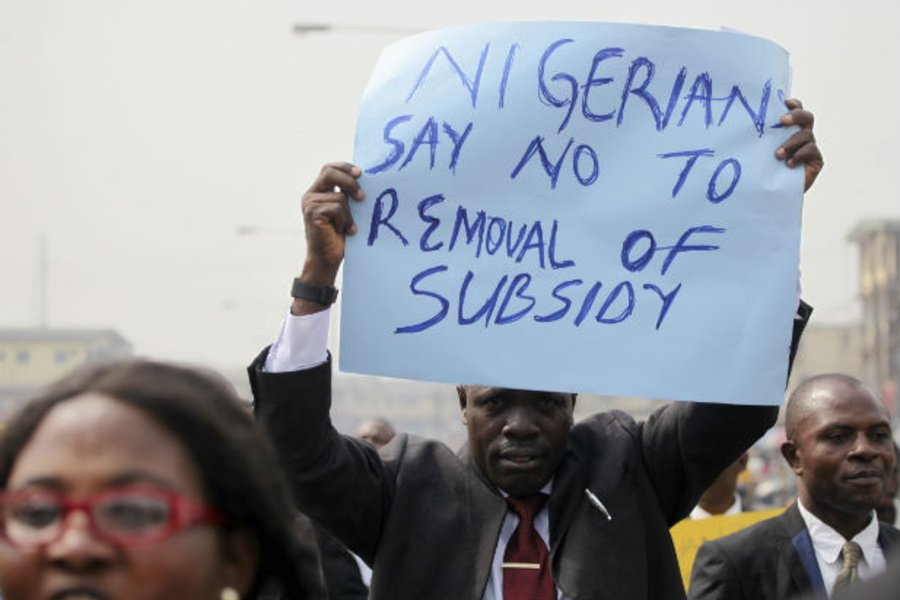
Since the return of democracy in Nigeria, successive governments have contemplated removing fuel subsidies. The then government of President Olusegun Obasanjo (OBJ) saw multiple fuel price hikes, from N20 per litre it inherited from the transitional military government to the last unforgettable fuel hike. In 2007, two days before the expiration of his tenure, OBJ jacked up the pump price from 65 to 75 naira per litre.  However, the incoming president Umar Musa Yar’adua returned the honest nest to order.

The subsequent struggle to remove fuel subsidies, perhaps the biggest standoff, came in 2012 during the government of Goodluck Ebele Jonathan (GEJ). Vibrant labour, trade, civil and student unions, and agglomeration of opposition descended on the government for the decision, forcing GEJ to lower the price from the initial N141 to N97 and later in 2015 to 87 naira per litre. The struggle would continue. As soon as President Muhammadu Buhari (PMB) ascended to power, he greeted the public with partial subsidy removal.

PMB took the pump price from the official N87 to N145 before hitting N187 at the end of his tenure. But all out on fuel subsidy removal came during the run-down to the 2023 general election, where all the major presidential candidates dismissed any doubt left on fuel subsidy. They all warned the point black electorates that they would remove fuel subsidies so that President Tinubu would walk the talk even from the inaugural stage. 

The government and subsidy removal activists argue that an unbelievable amount of funds are being poured into the scheme while the national infrastructure languishes in bad condition. The large amount spent on the subsidy has been said to reach this height dubiously, no thanks to inflated numbers by some unscrupulous officials and the diversion of subsidised fuel to neighbouring countries by rogue marketers. To add insult to injury, Nigeria borrows to sustain this counterproductivity. Although this argument is plausible, instead of throwing a baby with the bath water, why not the government sanitise the scheme so that it brings the amount to within its capacity?

Another pro-subsidy removal argument was that only a few rich Nigerians benefit from the subsidy, the poor masses who were the target of the scheme are not benefiting the way it is supposed to. This slogan is challenging to explain to people; which ‘The poor masses are not benefiting the way it is supposed to’? When people can visibly see the effects of the subsidy when they buy fuel. No answer is as crunching as for a Nigerian to enter a filling station, and after purchasing an expensive fuel, he declares, they said we don’t benefit from subsidy!

 GMB and APC supporters have an additional puzzling dilemma to unravel because GMB had outrightly opposed the plan in 2012 when President Goodluck Jonathan mulled the idea of its removal. GMB and other APC chieftains famously proclaimed ‘over their dead bodies’ would they allow it. Meanwhile, by the side of the TV screen, we threw roses at them.

So, one of the top Buharist El-Rufai’s tried to rescue the situation in the aftermath of the then PMB’s backpedal. According to an accidental civil servant: ‘When fact changes, decision changes.’ This was to defend the then PMB decision even though he opposed it earlier. This philosophy convinced me; I said that Elrufai rightly arranged the pieces together. But one of my friends would make my life miserable; he said the same philosophy could also be applied to Jonathan as his reason behind fuel subsidy removal. I became speechless.

The speed with which the marketers change fuel prices immediately after price changes from NNPC (Nigerian National Petroleum Corporation), regardless of what’s in their stock, whether old or new, is perhaps the biggest showdown between the public and marketers. As soon as NNPC announces a new price, marketers countrywide change the price in the blink of an eye. The public argues that since the new price is for the new product, the marketers with the old product should stick to the old price. One Sheik brought this public sentiment to the fore when he calculated the difference between the old and new prices and multiplied that by a presumably large number of litres for one marketer. The profit he got was staggering, about 300 million naira.

I share this public sentiment, and I, too, initially thought the marketers were doing it illegally until Mele Kyari explained it on BBC Hausa Ra’ayi Riga program. According to the NNPC MD, marketers must sell their old products at a new price. This approach enables them to recoup their old investment. For instance, if a marketer had 100 litres, he had to sell them at a new price so that he could buy the same amount, but if he sold them at the old price of N250, he would not be able to buy the same 100 litres of new product at a higher price.

This is a plausible reason from a market viewpoint; what of the masses? Because while the market provides safety measures for marketers, it does not offer the same to the general public, especially the poor. Economics and the related professionals’ expertise are needed here; they should help us balance these conflicting but appealing arguments.

Although it could be too late to cry when the head is chopped off, Nigerian policymakers may need to learn from thermal shock phenomena when it comes to subsidy removal or any government policy implementation.  Thermal shock is a situation a material experiences when exposed to sudden changes in temperature conditions; it can lead to the material cracking or even breaking down. 

Take a glass cup of tea, for instance. If the tea glass cup is scorching and you suddenly put it in cold water to cool the tea inside, the glass may crack or even break depending on the level of the thermal shock, but to cool the tea inside the got glass cup successfully without harming the glass, you apply gradual cooling. First, you put the glass cup in warm water, then gradually reduce the water temperature until it becomes cold; in this way, the tea inside the glass cup can cool without causing any injury to the glass.

Bilyamin Abdulmumin is a doctoral candidate in Chemical Engineering at ABU Zaria, a public affair commentator, and a science writer.

Education: Empowering divorcées to pursue their dreams

By Kamal Alkasim

For many divorcées, the decision to return to school and pursue their dreams after parting ways with their husbands presents a significant challenge. In this article, we will explore the undeniable transformative power of education and its role in empowering divorcées to build a brighter future for themselves. Through the voices of these resilient women, we will understand the importance of providing them with the opportunity to pursue higher education and break free from the false theories that have hindered their path.

The Transformative Power of Education

Education is a powerful tool that can turn any individual into a star; women are no exception. By prioritising their studies over remarriage, divorcées can equip themselves with knowledge, skills, and confidence to overcome obstacles and shape their destiny. Education serves as the foundation for the development of any society and holds the key to personal and societal growth.

Challenging False Theories

Unfortunately, outdated and false theories surrounding women’s education in tertiary institutions have deterred many from pursuing their dreams. These misconceptions have created barriers for divorcées seeking to return to school. By challenging these beliefs, society can open new opportunities for these women to thrive.

Voices of Empowerment

Through conversations with divorcées who have chosen to pursue their dreams through education, we gain valuable insights into their determination and resilience. One woman shared her regret for not pursuing her studies earlier but expressed optimism about the positive changes education would bring to her future. Another divorcée spoke of her unwavering ambition to gain an education and fulfil her goals despite her challenges.

“If I had known earlier, I would have pursued my studies long ago. But now, this opportunity will bring positive changes to my future. I may have faced some challenges, but with education, I can overcome any obstacle.” – Divorcée.

“My greatest ambition is to gain an education, and after my divorce, I promised myself that I would come back to achieve this goal.” – Divorcée.

“People may judge me based on appearances and talk rubbish, but that won’t deter me. I will mind my own business and study human behaviour. This knowledge will help me solve matrimonial cases and more.” – Divorcée.

Overcoming Judgment and Criticism

Divorcées often encounter judgment and criticism from others, but their determination to succeed remains unshaken. One brave woman acknowledged the judgment she faced but declared her commitment to minding her own business and studying human behaviour to help others in similar situations. These voices exemplify the strength and resolve of divorcées in their pursuit of education.

Empowerment Through Education

Let us join hands in defeating these nonsensical theories and supporting divorcées in their educational journey. By empowering these women with education, we provide them with the tools to overcome obstacles and create a brighter future. Education holds the potential to transform lives and enable divorcées to achieve their dreams without fear or judgment.

Education is a beacon of hope for divorcées seeking to rebuild their lives and pursue their aspirations. By allowing them to learn and grow, society can break down barriers and empower these women to become agents of positive change. Let us recognise the transformative power of education and support divorcées in their quest for knowledge and self-fulfilment. With education as their ally, the future holds boundless opportunities for these strong and determined women.

Kamal Alkasm is writing from Kano.

Students loan and fees: easing the difficulties

By Dr. Aliyu U. Tilde

FOR STUDENTS, two days ago I learned about the tragic death of a mother who developed sudden BP after failing to gather enough funds for the last minute registration of her orphan daughter at a federal university in the northwest.

Within a day of illness, the mother died. This got me thinking of means to reduce difficulties for hundreds of thousands of students facing similar challenges on all our campuses. They are well into their courses when the fees were tripled. The students’ loan promised has not taken off and institutions have set deadlines for online registration. Do we sit back as a nation to see the students abandon their studies? No. We must do something. Here are my humble suggestions:

  1. Installment payments. Higher institutions should allow old students to spread payments over the remaining sessions of their courses, with the caveat that no student shall sit for a semester exams or be issued his certificate without completing his payment. However, an initial deposit, say 30% of the fee, can be required at the beginning of the session or semester.
  2. Students loan: The Special Committee under the CBN which is statutorily empowered to administer the loan should double its effort to enable a quick take off. Remember that the President once said he would like to meet the first set of beneficiaries of the loan in September.
  3. Remove Family Earning Cap: The Committee can remove the family earning cap to allow any student to access the loan as the President has ordered.
  4. Guarantors: State governments can serve as guarantors for their indigenes instead of individuals.
  5. Online application: The Committee can explore digitizing all or part of the application process to reduce stampede at banks and check corrupt practices like extortion of students by officials of institutions and banks.
  6. Legislation: To effect these changes, some sections of the Student Loans Act, 2023, need to be amended. This can be expressly done with the cooperation of the National Assembly and the Presidency.

Dr. Aliyu U. Tilde can be reached on Twitter: @Dr_AliyuTilde

Unmasking the N1.5bn cancer fund people don’t know about

By Lawal Dahiru Mamman,

In a newspaper interview, she narrated how the excruciating pain and cost of cancer treatment drove her to sell her valuables. Rosemary Nnamdi said it’s a miracle that she is still alive today. Nnamdi, 33, was diagnosed with the most common form of cancer, breast cancer, in 2019.

The young lady somehow and eventually took a leap of faith and, according to the report, had a single mastectomy – a surgical procedure that involves removing the entire breast. The process was supposed to be complemented by radiotherapy and chemotherapy, which involved killing cells with radiation from elements like uranium and anti-cancer drugs. This she could not afford.

“I started soliciting funds to cover chemotherapy and radiotherapy sessions, but it was never enough. I sold every single property, but it could not cover the sessions recommended by the doctor,” she said.

A revelation in an interview by Dr Adamu Umar, President of the Nigerian Cancer Society (NCS), came to mind after reading the heart-rending report on Rosemary Nnamdi.

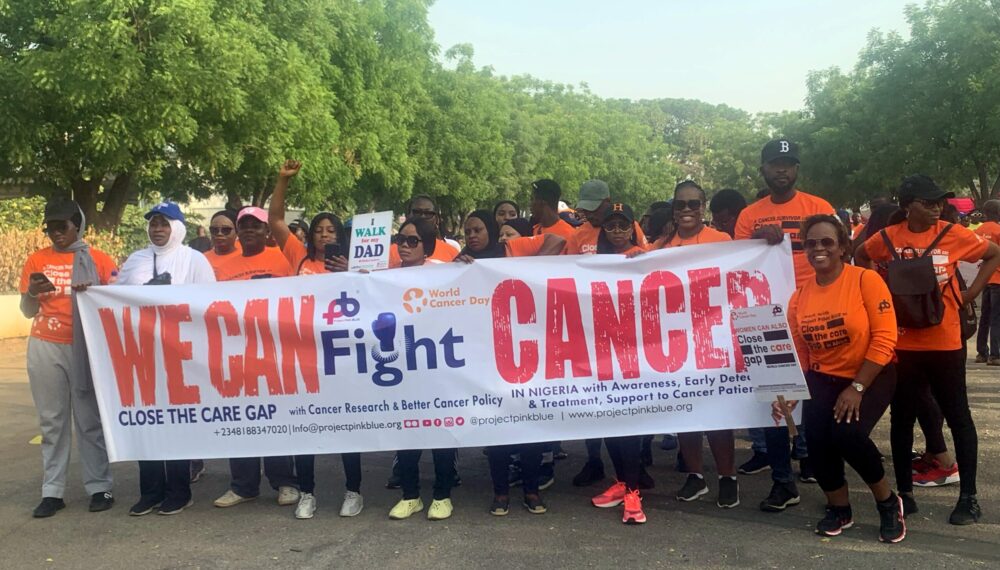
During the interview, Dr Umar lamented that over N1.5bn earmarked for cancer treatment in Nigeria has not been accessed by people with the disease. He disclosed that many cancer patients are unaware of the intervention fund known as Cancer Health Fund (CHF), resulting in the inaccessibility of a larger part of the money.

He identified the lack of data to ascertain the actual number of cancer patients in the country as one of the reasons for frustrating the intervention programme.

His revelation was stunning because the World Health Organisation (WHO) estimates that 10 million people die of cancer (a disease in which cells of the body grow uncontrollably at a spot and spread to other parts) annually worldwide and that 70 per cent of these deaths occur in low-to-middle income countries including Nigeria.

In Africa, Mr Walter Mulombo, WHO country representative to Nigeria, said, “Every year, Africa records around 1.1 million new cases of cancer resulting in up to 700,00 deaths.” According to Globocan statistics, in 2020 alone, a staggering 78 899 cancer deaths were recorded in Nigeria.

Since it costs an arm and leg to treat cancer, the ‘Cancer Health Fund’ was separated from the budget to tackle different types of cancer in the country. Should cancer patients in Nigeria not know about this?

Regrettably, lack of awareness and inaccessible location has contributed to the low participation of cancer patients in accessing the fund set aside to manage their affliction.

The Nigerian CHF is a social service that provides funding and health care services to indigent cancer patients. Before this, the National Cancer Control Programme (NCCP) was established in 2006 as a fallout from the 58th World Health Assembly Resolution on cancer prevention and control adopted in May 2005. The programme was established to address the escalating cancer incidence in Nigeria.

But the CHF programme is an initiative of the Federal Ministry of Health that commenced in 2021 with six pilot hospitals. Ahmadu Bello University teaching hospital (ABUTH), National Hospital Abuja (NHA), University of Benin Teaching Hospital, Benin (UBTH), Federal Teaching Hospital Gombe (FTH), University of Nigeria Teaching Hospital (UNTH), University College Hospital (UCH).

It involves partners such as the American Cancer Society, ROCHE, Pfizer, MYLAN, Clinton Health Access Initiative, World Wide Commercial Ventures (WWCV), BICON and EMGE resources, which is mandated to implement the CHF initiative on behalf of the Federation Government.

Since many cancer patients seem to be oblivious to this vital function, there is a need for the National Orientation Agency (NOA) to carry out sensitisation programmes across many towns and villages in the country. The knowledge will then be a driving force for patients to seek treatment.

In addition, the media and non-governmental organisations can also be involved in such campaigns while the government strives to expand beyond the six pilot hospitals. 

By empowering people with the Cancer Health Fund information, we can help save thousands of lives from a killer disease, as we do not all have to be doctors to guarantee the most fundamental human right – the right to live.

Lawal Dahiru Mamman writes from Abuja and can be reached via dahirulawal90@gmail.com.

The graduate skills that you ignored

By Prof. Abdelghaffar Amoka

When I was an undergraduate student, one of my lecturers during a physics class told us that physics makes you think better than others. We were wondering how. He said we don’t have to pick up a physics job after graduation but that whatever we decide, the skills acquired while studying physics will lead us through. That I later found to be true when I look at my classmates and their different endeavours.

In another class, the lecturer told us we should learn not to compartmentalise our brains. Let all that we have in our heads work together. During my undergraduate days, we were constantly reminded that as we pass through the university, we must allow the university to pass through us.

I was passing by the Department of Mathematics this morning, and my eyes captured their sign oars. On the signboard was the motto: “Critical thought for a critical mind”. The department claimed to be a place to develop critical minds. I have seen critical minds from there that are bankers, entrepreneurs, etc.

We were discussing this morning, and a friend narrated to us how he got a job as a marketing officer, a position he never applied for. He applied for the position of Admin Officer, and to end the interview after responding to all the questions from the panel members, the DG asked him why he didn’t apply for the position of Marketing Officer. He answered that he did not study marketing and he felt that from his degree, he was only qualified to be Admin Officer. The DG then responded that with his communication skill and confidence, he would do well as a Marketing Officer and was hired as a Marketing Officer.

One of the top skills required from a graduate is communication skills, and your training in the university includes that. Graduates need to be able to effectively get the message across, including in verbal and written formats. It’s also about listening and understanding other views. Good command of languages for projecting a confident, professional image and for good communication with clients and colleagues. If you don’t have it, you should blame yourself, not your university.

Aside from your hard technical skills, the other skills expected from a graduate are Time management, flexibility or adaptability to respond to unexpected changes in circumstances or workload effectively. Ability to work in a team to take on the responsibility to ensure your team achieves its goals. Critical thinking and problem-solving skill to approach problems and resolve issues from different angles is also highly valued.

Interpersonal skills to build positive working relationships, good communication, persuasion, and negotiation. Being flexible in your thinking and being open-minded and curious, and creative thinking that will help in problem-solving and innovation. The ability to understand others towards finding solutions that allow both parties to achieve their goals or come out of a situation. Leadership, the ability to bring something extra to a team, is essential. You are required to have a basic knowledge of the field. And guess what? You should have learned all these skills in school.

These are embedded in some of the activities we ignored in school. Some of them look routing, but there are important lessons in them. Time management is ensuring you hand in your assignment or report at the due date and time. That lecturer who locks you out of the lecture room, because you are 10 minutes late to his class, has nothing to benefit from you missing the class. He is training you to respect the time and be punctual. They say time is money, and punctuality is the soul of business. Flexibility to handle unexpected workloads is managing your time to take extra lectures and extracurricular activities. The ability to work in a team ensures that your practical or presentation group achieves its goal within the specified time.

Giving a class assignment or exam questions that require a little thinking is building your critical thinking to deal with challenging situations. You have classmates with diverse beliefs and ideologies to develop interpersonal relationships with and get to understand them. You are made to have seminar presentations to develop your ability to present an idea to the public and defend it. You are meant to lead a practical or study group for a reason. You are learning to be a team leader. Campus associations and societies are not there just for fun. Some of the union leaders grow to become political leaders.

So, don’t let anyone discourages you from pursuing a degree program, except it’s your choice not to go for a degree. Pursue your degree and pay attention to the requisite skills for the degree.

If you didn’t get these skills as you are graduating, stop arguing over skills vs “just” degree and blaming your university and lecturers for failing to acquire the skills during your study. You just passed through the university and did not allow the university to pass through you. Go and develop it; it is not late. Maybe you are the one that the book is referring to.

However, let me remind you that if you have these skills in Nigeria, it will be easier to use them to get a job outside than in the country. To get a job here, you may need the extra skill of knowing someone that knows somebody that knows another person to get a job. I learn some jobs are on sale. If you have the cash to buy one, I wonder if you need these skills.

An ex-aide to the Chairperson of the Federal Character Commission was reported to have confessed before a House of Representatives ad hoc committee investigating job racketeering at ministries, departments and agencies (MDAs). He said he had sold federal employment slots to job seekers at the directives of his former boss. According to him, some paid N1 million, others N1.5 million.

Finally, our problem is not skills or degrees; we have these in abundance and even export them abroad (the Japa phenomenon). Our problem is creating a system where the son of nobody can become somebody without knowing anybody. Our present system is not sustainable. It’s a disaster waiting to happen.

Abdelghaffar Amoka Abdelmalik, PhD, wrote from Ahmadu Bello University, Zaria. He can be reached via aaabdelmalik@gmail.com.

Working women in Islamic perspective: Prohibitory or permissibility

By Omar Muaz

As commonly understood by many people that a working woman only means one that goes outside her matrimonial home or her parents’ house to earn a living [in most cases a salary or an income] isn’t but, as rightly put in different ways by Amina Adamu, in her paper “Balancing the Home and Work: Tales of Working Women” one who has attained a certain level of education and use it as an opportunity to secure jobs. Or the one who earns a living inside her home by engaging in in-door businesses such as fish farming, tailoring, poultry, and even selling clothes and kitchen equipment, or lastly, one who earns a living within the confinement of her house by using their children to hawk and sell for them. Whichever one takes as a definition of a working woman, it’s fine and okay.

I have read many articles claiming modernism to be the root of working women. However, history has it that in traditional African society, women work as much as men [or even more] to sustain the family. They do house chores and look after children and even the man himself — besides cooking for the family, the women wash the man’s clothes and keep his room and the whole house tidy. In addition to all, as affirmed in The Journal of the Islamization of Knowledge and Contemporary Issues, Vol. 1, they go to the farm and cultivate crops to supplement the feeding and economic sustenance of the family. 

By the coming of Islam — a religion that propagates women’s seclusion based on the Quranic provision in Suratul Al-ahzāb, verse 33 “And abide in your houses and do not display yourselves as [was] the display of the times of ignorance.” and some authentic traditions of Rasūl, prophet Muhammad (PBUH) — to Nigeria in the eleventh century (Clerke and Lindern, 1984), women, more especially in the Northern part of the country, were restricted from going out unnecessarily which includes going to farm. They then concentrated on their roles as mothers while the men accepted and carried out their religious responsibilities of providing the basic needs for their family until the introduction of Western education [read: conventional education] to Nigeria in the 19th century.

The early 70s witnessed a large enrolment of girls into conventional schools, which started affecting the status quo of the family system, with women starting to work as civil and public workers in various organisations and parastatals at the attainment of conventional schools. Moreso, the spread of globalisation through the Western media led to the very foundation of the family, which includes respect, love, and trust for each other to start playing the second fiddle. 

From the 90s up to the end of the last century, 20th, many Islamic families subscribed to the global village by connecting the satellite dish to their homes and, of course, the internet. Probably, due to the impact of the Structural Adjustment Programme (SAP) — an ambitious structural adjustment program which was adopted in June 1986 as a result of initial reforms including substantial increases in domestic petroleum prices that were announced in the 1986 budget — in the 80s, the man no longer care and provide the basic facilities needed in their homes. Thus, the man lost his pride and respect as the breadwinner both from the wife and the children. Hence, women were left with the only alternative, which was finding means of supplementing the family income, even outside their homes (Emeagwali in El-Sohli & Mabro, 1994).

It’s worth noting from the above paragraphs women were traditionally working before the advent of Islam, more especially in Northern Nigeria, which abolished the practice with the world turning into a conventional one. Women work to supplement the family income with reasons, of course, varying. There are many women that work, despite their husbands or parents being rich, because they feel bored sitting at home. This category consists of almost 10% of the working Northern Nigerian women. Others go out to work to earn a living, while others, at the death of their husbands, provide shelter for their children. In addition to the mentioned categories, some work to serve humanity in governmental and Non-governmental organisations (NGOs).

Some Muslim husbands and parents, based on one of these cases, allow their wives and daughters to work while others, basing their argument on the Islamic concept of seclusion, keep their women at home. Now, the question is on the concept of women’s seclusion from in Islamic perspective. What is it? Women seclusion is a term referring to various practices designed to protect women from men in traditional Muslim societies, including confining women to the company of other women and close male relatives in their home or in separate female living quarters, veiling, self-effacing mannerisms, and the separation of men and women in public places.

According to the International Institute of Islamic Thought Nigeria Office’s journal, Al-Ijtihād, the issue of women’s seclusion in the Nigerian context, as has been identified, includes (1) complete seclusion — an opinion championed by traditionalists and fundamentalists who strongly believe that women’s role is exclusively restricted to her home only and therefore any other role outside her matrimonial home is forbidden. (2) partial seclusion — that women are allowed to go out when there’s need to go, such as hospital and visiting sick relatives and even attending Islamiyya schools, and (3) voluntary seclusion is seen as a more symbolic seclusion rather than physical.

The third, unlike the complete seclusion which was built on the widely circulated “myth” in some years back, at least in the Hausaland, that a woman has only three outings in her lifetime — that of her being delivered from her mother’s womb, going out to her husband house [being married], and then lastly taken to her grave —, is propagated by those in favour of women going out to work outside her matrimonial homes or parents’ houses and encouraged women who have attained conventional education to work in the civil service and other parastatals.

The existence of these divergent views, even during the lifetime of Usman Ɗan Fodio, triggered him to write a book “Kitabul Irshadul Ikhwān” in which he stated twelve instances where women are allowed to go out in Shari’a: going out in search of knowledge, participating in religious war [Jihād] where there’s need for their assistance, attending congregational prayers in mosques, attending Juma’at prayer, attending Eid prayer, attending prayer for rain [Salatul Istisqa], attending prayer for the dead [Salatul Janaza], going to pilgrimage, going to the court of law to sue or to be sued, visiting their parents and relatives, attending wedding ceremony [especially escorting the bride to her house because Aisha (RA) was reported to have done that] and buying and selling things especially when they don’t have someone to do it on their behalf.

In addition to the above-mentioned twelve occasions where women are allowed to go out, going out to teach isn’t in exclusion. There are instances — according to the prophetic ahādith, which were reported by Abu Dāwud, Ahmad and Imam Hakim — where women went out to teach even the wives of the prophet Muhammad (PBUH). The case of Shafa’a Bint Abda is a glaring example when the prophet (PBUH) not only recommended her for teaching His wife, Hafsa (RA), how to write but advised her to teach the wife how to cure rashes and bugs [Rukhyatul Namla]. Thus, Imam Ghazali, among many other Islamic scholars, emphasised the importance of women’s education, especially in the field of Medicine and Mathematics, with the essence of them specialising in these areas to cure sick Muslims and to teach Muslim children.

It can be concluded that women — even though they are fragile and weak because of them being created from a “crooked rib” of a man — among them are those who are blessed with the strength and energy to participate in even manual labour and, thus, they are not completely restricted, Islamically, to work as related above.

However, in order to have equilibrium in terms of matrimonial stability of the home on one hand and the woman’s pursuit for economic stability on the other, there should be an understanding between the two spouses [which is the man who is the head of the family and the woman under the umbrella and control of the man]. It’s recommendable that a working woman should fear Allah (SWT) in her mind wherever she goes and, when going out, should dress properly according to the dictates of the Shariah.

Allahu A’alam [ Allah knows the best].

Omar Muaz wrote via muazuumar45@gmail.com.

Industrialisation of the North: The future

By Muhammad Sani Usman

Somebody was shocked that the revenue of Zenith Bank as of 2022, which is N945 billion, is greater than the internally generated revenue of northern states combined. Literally, Zenith Bank alone is more financially buoyant than northern Nigeria. And he was lamenting about the poor inclusion of northerners in such investments in their states.

Kaduna is taking the lead in investments in the North, but her (Kaduna) IGR is not up to one hundred billion Naira; it is half of that. Even the profit after tax of Zenith is bigger than the economic cities of Kano and Kaduna. These two states are not up to N100 billion altogether.

I told him, “Investing in banking is highly industrious. But our northern billionaires have no business with anything “Knowledge-based economy”. What they know is to hoard dollars, buy shares, and run over a baby company/factory, as in acquisition.

Prof Murtala Sagagi of the Economics Department of Bayero University, Kano, told us, “While conducting a survey about the percentage of non-inclusion of Kano people to most of the fine-investments in food and beverages, logistics, and Banking Industries, one manager of one famous company told him, “When they try to recruit graduates for trainee positions; they expect them to be meticulous in training before they think of absorbing them fully as staff.

But you’ll employ someone as an assistant quality control officer or sales personnel, but his/her performance index will shock you unless you change your mindset seriously. Industries require expertise to run; you can’t employ someone you can’t fire or are lazy.”

There was another testimony last week. I was discussing with an auditor of one of the best companies in Northern Nigeria. The guy told me they had recruited a new customer care representative, and he was deployed to that branch, but all the time, the guy was not working; even the invoice that he was supposed to do, he couldn’t.

Unknown to the guy, a letter was sent from the headquarter for monitoring and evaluation of his performance by the senior staff of that organisation. My guy is among the people to vouch for him, i.e., whether he would be retained as permanent staff.

However, this is not limited to banking or the mentioned industries; this is about the lackadaisical attitude of our politicians about not creating factors that will favour industrialisation in the North. The A-K-K gas project is among the hope we have for the future of the North. Let’s wait and see!

Muhammad Sani Usman an industrial chemist who advocates good governance and Sustainable development goals. He writes from Zaria via Muhdusman1999@gmail.com.