Opinion

Electoral victory: Whose Addu’a does Allah accept?

By Mohammad Qaddam Sidq Isa (Daddy)

There is a general but simplistic assumption that electoral victory necessarily implies Allah’s endorsement of the winner and His disapproval of the loser. 

Politicians, potential beneficiaries of the electoral victory of politicians, and overzealous followers engage in supposedly wholehearted Addu’a for their and their benefactors’ electoral victory.

The practice of Addu’a for electoral victory has grown into a phenomenon and has indeed become an integral part of politicking in Nigeria. It has, in fact, turned into an industry of a sort where huge amounts of resources are invested in engaging amateur, part-time and professional Addu’a service-providing malamai who provide their services to the highest bidders or whom they expect higher gain from them of whatever kind.

Besides, with the growing phenomenon of holding the so-called special prayer sessions in public places for the success of one politician or another, the ‘political Addu’a industry’ has been growing further, attracting more investments from politicians. This is even though such so-called special prayer sessions bear the hallmarks of Bid’a.

On their part, winners in elections and their followers brag that their electoral victory necessarily implies Allah’s acceptance of their Addu’a hence His endorsement of them. They equally mock their opponents and attribute their loss to Allah’s disapproval of them. Whereas, in reality, nobody knows for sure whether or not a particular electoral victory implies Allah’s endorsement, or whether or not a particular loss implies His disapproval.

Because the fact that politicking under democracy is inherently characterized by gross dishonesty, hypocrisy, cunning, deceitfulness, bribery and other serious vices, which arguably all politicians perpetrate in their struggle to outmanoeuvre one another, makes the whole system too filthy for Allah to have anything to do with it, in the first place,  let alone endorse any politician against another.

The winner, therefore, only wins thanks to his ability to somehow outdo his opponents in that regard, and the losers only lose due to their failure to outplay the winner, while none enjoys Allah’s endorsement, for all are equally guilty of the same grave sins, regardless of the extents of their involvements, respectively. After all, they actually never take Addu’a seriously in the first place; they only feign commitment to it in the context of their manipulation of religion for political interests.

Electoral victory under democracy is just like winning in gambling, which obviously never implies Allah’s endorsement.

Though craving for power and the temptations of what comes with it are irresistibly tempting, they aren’t worth the price of politicking under democracy, with all that it entails, which those involved pay in the hereafter. 

Mohammed Qaddam wrote via mohammadsidq@gmail.com.

Body shaming: Understanding, overcoming, and promoting body positivity

By Aisha Musa Auyo

In simple terms, body shaming is defined as the action or practice of mocking or stigmatising someone by making critical comments about the shape, size, or appearance of their body.

Body shaming involves humiliating someone by making inappropriate or negative comments about their body size or shape. As well as “fat shaming,” you may also hear negative comments if you’re underweight or about a specific body part.

This type of criticism can be made to others or yourself. You may feel unhappy with your weight or body’s appearance and judge yourself harshly. You may even engage in negative self-talk, such as “I feel so fat today” or “I need to stop stuffing my face with food.”

The act of body shaming can be carried out in person or remotely via the internet and social media and can be done by your parents, siblings, friends, or people you’re not even close to.

Even in a joking manner, remarks about what you eat or how much food you consume constitute body shaming. Giving someone advice about dieting or praising weight loss is also considered body shaming, whether intentional or not. 

Your friends and family often don’t want to hurt your feelings, but their comments can still be critical. They may not realise the negative effect that questions like “Have you lost weight?” or “Do you need to eat all of that?” can have.

Why Do People Body Shame?

You know how hurtful these behaviours can be if you’ve received those judgments—or even within earshot of words, looks, and gestures that judge others. So why do people do it?

Before I discuss why people choose to body shame others, I would say right up front: reasons don’t equal excuses! Ever. There’s no appropriate reason to make another person feel bad about the skin they’re in.

At the same time, it can be helpful to understand the motivation behind a person’s hurtful words. Doing this gives us perspective. Perspective helps us decide on the best path forward. Depending on the situation, we might:

* Shake off what another person says about us

* Remain confident as we see the lack of confidence in others

* Understand the heart behind hurtful words

* Call out misbehaviour in a calm, respectful manner

* Shut down rude talk without room for more to be said

With this in mind, let’s gain some perspective on why people do it.

We could talk about many interesting things—and have many good reasons to laugh. So why talk about how a person looks, right? Unfortunately, plenty of people do. Let’s look at some of the reasons why

1. Insecurity: When a person feels self-conscious about their body, they may talk badly about another person’s body to make themselves feel better. 

2. Societal norms: For so long, joking about how people look has been something that many people were brought up thinking is okay. This is learned bias.

3. Societal norms: For so long, joking about how people look has been something that many people were brought up thinking is okay. This is learned bias.

4. Best of intentions: Friends, family members, and even medical professionals can think they’re helpful by pointing out perceived areas for improvement in another person.

5. Lack of awareness: A person may refer to a friend’s stature or frame and not realise that they’ve crossed a line or that the person on the receiving end doesn’t like it.

5. Immaturity and lack of empathy: Some people don’t take the time or care to consider their words or how they might affect another person.

Please, allow me to be blunt. Beyond gaining perspective, it doesn’t matter why a person chooses to body shame. After all, the results are the same. Body shaming is known to cause mental health problems, eating disorders, low self-esteem, etc.

Most of us know firsthand about the adverse effects of body shaming because we’ve been on the receiving end of it at one time or another—especially when we were growing up. Research shows that 94% of teen girls and 64% of teen boys have been body-shamed.

The effects of body shaming and how to overcome it

Hearing negative comments about your appearance can impact your body image and leave you feeling anxious and self-conscious. However, there are ways to manage body shaming or other critical remarks and achieve body acceptance.

Supermodels and prima ballerinas have insecurities and imperfections, but we still perceive them as the ultimate representations of beauty. You may feel inadequate and unworthy if you don’t meet these standards.

And if you experience body shaming by others and take their negative comments to heart, it can lead to unhealthy behaviours and mental health problems, such as:

Eating Disorders: Having a negative body image is one of the main factors for developing disordered eating or an eating disorder, such as anorexia, bulimia, or binge eating.

You may start a diet that involves restrictive eating to change your body shape or size. However, such dieting can spiral into harmful behaviours like skipping meals, fasting, vomiting after eating, excessive exercising, or overusing laxatives. Over time, you deprive your body and brain of essential nutrients necessary for optimal health.

Body shaming comments such as “Did you lose weight? You look so much better” can be triggering and create more disordered eating habits in an attempt to maintain or lose even more weight.

Body Dysmorphic Disorder (BDD): Experiencing body shaming can interfere with your self-image and make you feel highly self-conscious. This can escalate into body dysmorphic disorder, where you become obsessed with a perceived appearance flaw that can create repeated avoidance behaviours.

Daily life can become consumed with concerns about a minor flaw or one not apparent to others. You may constantly look at yourself in the mirror or avoid mirrors altogether, conceal body parts you don’t like, pick at your skin, or frequently ask others if you look okay.

Being constantly ashamed of your body can also impair your performance at school and interfere with your relationships with peers, teachers, and family members. Fears about being judged by others may cause you to limit or avoid social activities.

Anxiety and depression: Body shaming can trigger or worsen existing symptoms of anxiety and depression. If you are body-shamed in public or on social media, you may try to avoid going to school or other situations where this shaming might occur. You may withdraw from others and feel isolated and alone.

Hearing critical comments about your appearance can also be humiliating, heighten your insecurities, and damage your self-esteem. Consequently, you may engage in negative self-talk as you internalise these feelings of worthlessness. You may tell yourself things like “I am a bad person” or “I am completely worthless.” This can escalate into extreme loneliness, depression, anxiety, and poor body image.

Physical Health Issues: Fat shaming, in particular, is rampant in our society as obesity is associated with being lazy, unattractive, and lacking the willpower to lose weight. In one study, over 70% of adolescents reported being bullied about their weight in the past few years. This can be harmful to your physical as well as psychological health.

Rather than being a motivating factor for losing weight, fat shaming has the opposite effect. The stress has been linked to a reduction in physical activity and the consumption of more calories.

Don’t body shame others

Research shows that when you promote body positivity to others, you also feel more positively about your body. Surround yourself with people who are courteous and treat others with respect. Avoid bullies who engage in body shaming and talk about the flaws of others.

Establish boundaries with your friends and clarify that you will not tolerate comments about your body or weight. You can also set an example by standing up for others who are the targets of body shaming.

So, let’s work together to stop body shaming and talk about more interesting things. The truth is, we all body shame one another. We are sometimes the villains and sometimes the victims. And the society has made it very normal. If we genuinely believe that every one of us is created by our Lord, none of us chooses how we look in most cases, and none of us knows how we will look tomorrow (life happens… story for another day), then we should stop body shaming. It starts with you and I. 

Were you ever body-shamed? Please share with us how you felt, how it affected you, and what you did to overcome it.

Aisha Musa Auyo is a Doctorate researcher in Educational Psychology. A wife, a mother, a homemaker, caterer, parenting, and relationship coach. She can be reached via aishamuauyo@live.co.uk.
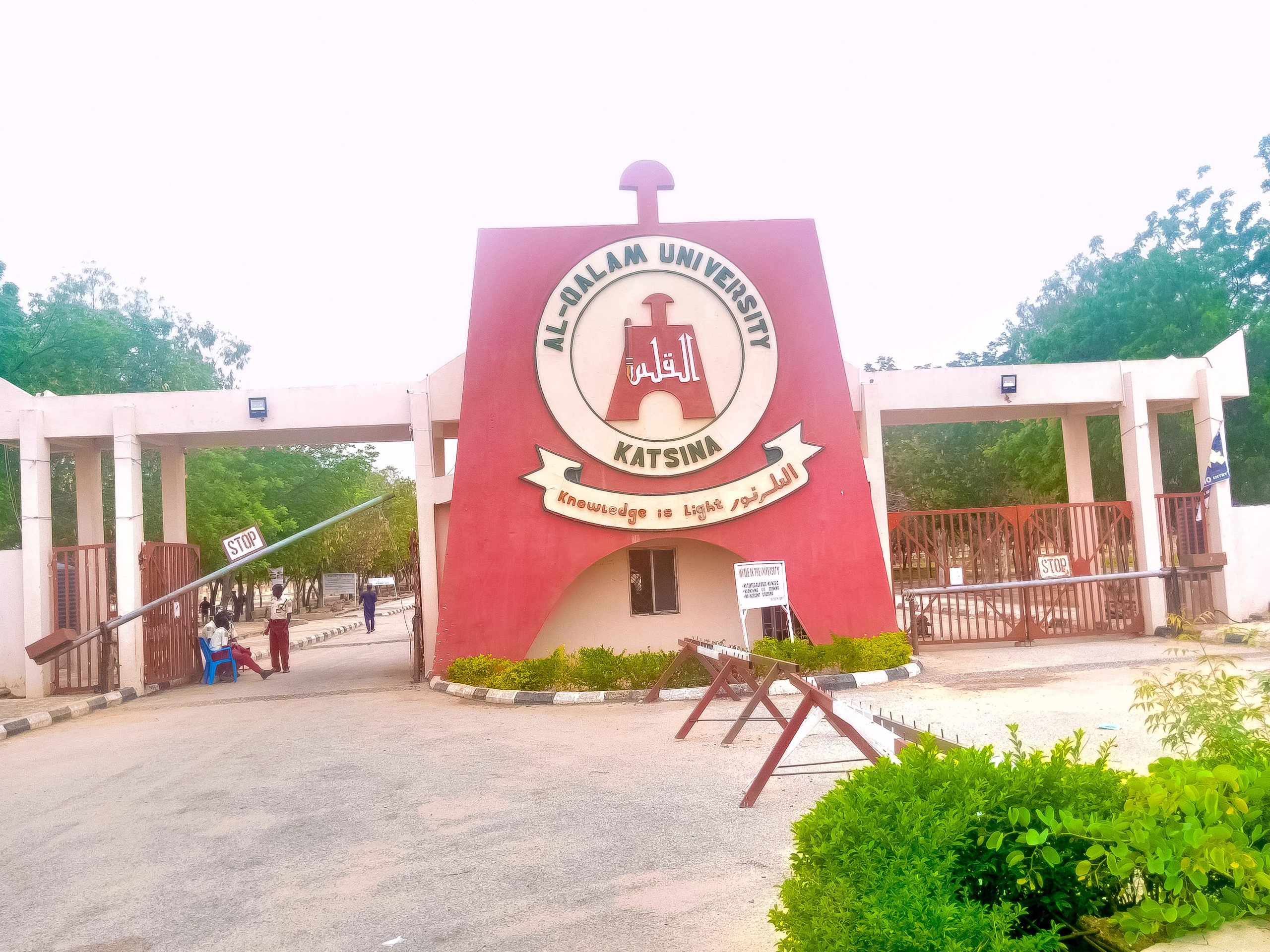
Al-Qalam University holds its 2nd combined convocation

By Abdulrazak Iliyasu Sansani

Barring any last-minute changes, Al-Qalam University will hold its 2nd Combined Convocation on Nov. 25, 2023. The day is what everyone associated with the university eagerly looks forward to seeing. 

Al-Qalam University, Katsina (AUK), hitherto known as Katsina University, Katsina (KUK), is located in Dutsinma Road, Katsina State, and known for the academic aspiration of those who seek knowledge deeply rooted in sound morals. Al-Qalam University was established in 2005 as Nigeria’s first private Islamic university.

The university has gone from strength to strength since its establishment 18 years ago. It presently runs six schools/colleges, which offer assortments of options for the students: The College of Social and Management Sciences, College of Natural and Applied Sciences, College of Education, College of Humanities, College of Post Graduate Studies, and School of Basic and Remedial Studies. It awards 22 undergraduate degrees (among which five courses offer both full-time and part-time programs), 11 master’s programs, and nine PhD programmes, all accredited by the National Universities Commission (NUC) in line with the laws governing university education in Nigeria. 

Recently, some new courses were accredited by the NUC, which brings the total number of programmes to 36 for the 2023/2024 academic session. Despite being a non-profit institution and the difficult economic situation in Nigeria today, the university continues to flourish. However, this is not far-fetched as it is run by an exemplary governing council and administratively headed by an astute academic, economic luminary, and open-minded scholar, Professor Nasiru Musa Yauri, who has not only built on what his predecessors had achieved but also devised different means to take the university forward. He is equally supported by the hard-working team across the various faculties and colleges to actualise the founders’ dreams of the first Islamic University in Nigeria. 

The Programme of the 2nd Combined Convocation is quite extensive. Therefore, I will highlight some of the events for want of space.  The Vice  Chancellor of Al-Qalam University, Professor Nasiru Musa Yauri, disclosed some of the events scheduled for the imminent second combined convocation while briefing journalists in Katsina on Nov. 19, 2023.  

According to the information, 139 postgraduates will be conferred with different honours during the convocation ceremony, including seven Doctor of Philosophy (Ph. D), 125 Masters, and seven postgraduate diplomas (PGD). 

“We are going to honour and celebrate graduates from the 2016 to 2023 sessions, which means on Nov. 25, we are going to confer degrees on graduates for eight sessions. 

“This is to say specifically that we are preparing to ensure that graduates of this 2022/2023 session are also going to be celebrated at the convocation ceremony,” the VC said. 

Apart from this, there is also a Qur’an recitation contest for all interested university students to participate.  This is one of the major events scheduled for the convocation. Winners of the Qur’anic recitation competition, both the female and the male categories, will receive N1 million each. 

A pre-vocation lecture will be delivered on Nov. 24, 2023, by a distinguished scholar, Dr Usman Muhammad Bugaje, on the topic: “The out-of-school-children and the  Conscience of the Nation: A Discourse on the Genesis, Prognosis and Solutions of the Almajirci Phenomenon.” 

A novelty football match between Al-University students (AUK All stars) and its alumni (AUK Legends) is part of the programme, emphasising that all domains of learning: cognitive, affective, and psychomotor are given priority. 

To cap it all, four eminent personalities who have made a tremendous difference in various fields of human endeavour will be conferred with honorary doctorate degrees: including the Emir of Katsina, Alhaji Abdulmumin Kabir Usman; Emir of Kazaure, Alhaji Najib Hussaini Adamu; Alhaji Sani Zangon Daura, and Alhaji Abdulsamad Isiyaka Rabiu. 

Al-Qalam University Katsina is where it is today because of the leadership, who have remained steadfast to the ideals of the founding fathers and have employed transparent methods. The Vice-Chancellor, for example, is accessible, and every Thursday has been set aside for any student with a suggestion or problem to meet the Vice-Chancellor and iron out the issue amicably. This is good leadership and highly remarkable.

I am not writing this piece to pretend we have a flawless system. There is no system without flaws. All systems have their shortcomings in one way or the other. This may not be apparent without meticulous observation. But this we understand as we explore the system or rather utilise the services of the system. Hence, I do not claim a perfect system exists here or advance anything error-free for the public. 

To buttress my points, I was personally affected by one of such fallibilities when I was wrongly accused of committing an offence I didn’t and have always stood against. Herein, Al-Qalam University, especially its College of Education, exercised due diligence by using all the legal instruments to get to the root of the matter and ensure justice was done. In my opinion, the greatness of any system or institution should be measured not by the duration it exists but by how effectively its services are rendered to those in need. This proves where the institution belongs. 

Prof. Nasiru Musa Yauri’s giant strides are evident, from academics and sports to other equally important sectors of this citadel of learning. With time, Insha Allah, this institution can reach the heights its illustrious founding fathers envisioned when they established this university in 2005. May Allah (SWT) help Al-Qalam University to reach its rightful destination for the benefit of Nigeria. 

Abdulrazak Iliyasu Sansani is a student of Al-Qalam University Katsina.

Kano State Governorship Election Petition Appeal Judgement: A Slip of the Pencil or A Freudian Slip?  

By Rabi’u Gama

I almost spent a sleepless night reading the Court of Appeal’s judgement on the Kano State Governorship Election Petition. The 72-page document has raised many questions and generated mixed and confusing reactions among millions of people, particularly in Kano, immediately after its release to the public.

After a calm reading of the judgement, it is evident that there is a significant error in the conclusion of the lead judgement. The conclusion of the lead judgement, which “…resolve all the issues in favour of the Appellant (AKY) against the 1st Respondent” and “…set aside the judgement of the Tribunal” and finally “awarded the sum of one million Naira in favour of the Appellant against the 1st Respondent” is just a mistake; a grave mistake, though, in my opinion, not fatal or unpardonable.

If you read the judgement carefully, you will see that the reasoning of the court on the merit of the case was decisively against the Appellant (AKY) in favor of the 1st Respondent (Gawuna). The only error – a very grievous error – is with regard to the conclusion of the lead judgment. This becomes more obvious when you look at the fact that all the two concurring judgements found the appeal to be “bereft of merit” and also (just like the lead judgement) “…dismissed it and upheld the judgement of the Trial Tribunal”.

From the reasoning of the Court, that conclusion is just what it is: a slip of the pencil or a clerical error – so to speak – which can be, in fact, should be, waived aside with a single nod of the head. That mistake alone cannot reasonably change the preceding reasonings and findings of the court. The error is grave. Or was it a Freudian Slip? By the way, a Freudian Slip is an unintentional mistake that reveals a person’s subconscious thoughts, wishes, or desires.

Therefore, in my humble opinion, AKY lost this appeal. The mistake in the lead judgement’s conclusion (a slip of the pencil) will not change a thing. AKY should head to the Supreme Court, as he has already expressed his intention to do so. A clerical error like this should not deter a further appeal to the Apex Court of the land. Otherwise, there will be stories that will surely break and destroy many hearts.

However, there are many questions: how could such a serious mistake go unnoticed? Didn’t my Lord re-read the judgement after drafting it for grammatical corrections and possible typographical errors? In their concurring judgements, the two other Justices on the panel said: “They have read the lead judgement in draft (as it is customary for fellow judges to do) and adopted all the reasonings and the conclusion therein as theirs?”. Does that mean they, too, did not see that serious mistake while “reading the judgement in [the] draft”? What about the Registrar of the Court? Didn’t he also see the mistake before releasing the Certified Copy of the judgment to the world? So many questions to ask.

Rabiu Gama is a student from the Faculty of Law at Bayero University, Kano. He can be reached via rabiuminuwa327@gmail.com.

NSA Nuhu Ribadu style: A critique 

By Zayyad I. Muhammad 

For 24 years, most Nigerians were only familiar with one style of operation by their National Security Advisers (NSA)—a regimental style—because of the complete military background of the previous NSAs. Having NSAs with military experience is an excellent idea, but some critical situations require looking at things from different angles, including outside-the-book approaches.

The coming of Nuhu Ribadu as Nigeria’s National Security Adviser is a paradigm shift and a systemic and systematic approach by President Bola Ahmed Tinubu. Tinubu brought not only a person that he understood but also a person who understood his steps. It’s a kind of quality assurance.

Because for two decades, Nigerians have been used to one style, they need to be educated from a layman’s perspective. NSA Nuhu’s style will and must always be soft and hard, silent and loud, publicly and secretly, unique and ordinary because of his background, training, and experience—an excellent police officer and an anti-corruption czar who has gone through the mills of his fields.

Before his appointment and signs that he would be President Tinubu’s NSA, some people thought de-marketing and painting him black would deny him the position. They forgot that security matters; it goes beyond politics when dealing with goal-getters like Tinubu. It’s a matter of the quality of Nuhu Ribadu and Tinubu’s philosophy on exceptional human resources.

The National Security Adviser manages Nigeria’s security on behalf of the President, and he is the chief advisor on all matters vital to Nigeria’s very survival.

The big questions are: has Nuhu Ribadu brought on board something new, being a new face with different backgrounds from the previous NSAs in 24 years? Has Nuhu Ribadu been able to separate politics from policy? He has actively participated in politics before now. Has Nigerian security improved under Nuhu Ribadu?

Analysing security issues and their managers is often difficult, or rather futile because the gains achieved in a decade can be wiped away within a few minutes by one senseless act by terrorists, bandits, or common criminals. Nuhu has brought something unique: Nigerians are being informed of happenings in the fight against criminality, the NSA is now visible when required, confidence has been built, and resources are appropriately distributed while separating needs from wants. Under NSA Nuhu Ribadu, kinetic and non-kinetic approaches are being applied to tackle the security challenges in Nigeria. Inter-agency synergies are now a key in the security architecture.

Furthermore, all security agencies are being reformed and reinvigorated to play their role in internal security effectively. At the same time, the military is being freed from the burden of performing both its constitutional role and that of the police, thus allowing it to concentrate on external security fully.

Politics and man are like love and humankind—they co-exist. Human beings must always love something; the same is true of politics: once one knits tight with politics, they live together. Even his adversaries must admit that Mallam Nuhu was able to separate his office from politics, knowing fully the enormous responsibilities on his head, and Nigeria and the world are keenly watching him. Furthermore, Mallam Nuhu has been able to drive the ONSA back to its original status as a National Security Vehicle, not the sad belief that it is a kind of  ‘big pot ‘for politicians to scoop from.

Silently and interestingly, NSA Nuhu is building a strong interface among all the security agencies. Roles are being defined to allow seamless work to achieve one goal: the peace of the country and its people. Mallam Nuhu is piloting and overseeing security through the eyes of a well-trained security czar who understands both the hard and soft approaches.

Inter-agency collaboration has improved; ordinary Nigerians now view the NSA as just for security only; NSA words now not only matter but work. An example is the recent off-cycle governorship election in Bayelsa, Imo, and Kogi states. Mallam Nuhu assured Nigerians that the governorship elections would be conducted without interference. And it was. This is how NSAs work—their worlds translate into actions and results.

Zayyad I. Muhammad writes from Abuja via zaymohd@yahoo.com.

Unleashing boundless horizons through reading and learning

By Abdurrazak Mukhtar

In a world filled with opportunities and challenges, one guiding principle has always resonated with me: “The more that you read, the more things you will know. The more that you learn, the more places you’ll go.” These wise words from Dr. Seuss have been my constant companion throughout my journey of personal and intellectual growth.

Reading, for me, is not just an activity; it’s a passport to uncharted territories. The more I dive into books, articles, and various forms of literature, the more I am rewarded with knowledge. Each page I turn, each sentence I absorb, opens up a new world of information and insight. It’s like embarking on a new adventure with every book, where I can explore different cultures, understand complex concepts, and experience emotions I might not encounter daily.

However, reading is only half of the equation. Learning is the other key ingredient that fuels the engine of personal development. It’s not enough to absorb facts; we must actively engage with the material, question it, and apply it to our lives. Learning is about making connections, fostering critical thinking, and using the knowledge gained to solve problems and positively impact the world.

As I journeyed through life with the guidance of Dr. Seuss’s words, I realised that knowledge and learning are like a ladder. With each step, we climb closer to the summits of our ambitions. The wisdom we accumulate is a treasure for ourselves and a beacon for others. Sharing knowledge and experiences is a way to pay it forward, to light the way for those who follow in our footsteps.

The beauty of this philosophy is that it’s a never-ending voyage. There’s always something new, more to learn, and countless places to explore. It’s a reminder that the quest for knowledge doesn’t have a final destination. Instead, it’s a lifelong adventure, an expedition into the limitless realms of human understanding.

In conclusion, the words of Dr. Seuss have been a guiding star in my life, reminding me of the profound link between reading, learning, and personal growth. They inspire me to continue on this exciting journey and embrace the endless possibilities of expanding my horizons. The more we read, the more we know; the more we learn, the more places we’ll go. And in this journey, I’ve found a world filled with wonder, wisdom, and the potential to make a difference.

Arewa24 and the globalisation train

By Zailani Bappa

The satellite television, Arewa24, with headquarters in Kano, will continue to be a pain for northerners who cherish their heritage. It is a necessary evil and a bad influence on the teeming youth in a predominantly conservative society. But, it is established to achieve a purpose and do that efficiently and quickly.

I learned the medium was established by the US government through one of its established NGOs some nine years ago. Amidst the devastating experience of Boko Haram in this part of the country, several studies have indicated to the West that the passion for Islamic values in the North and the teeming followership of a springing set of radical Salafists in the region is the major cause of such developing activism….or should I say…terrorism.

Hence, the decision to spend the hard-earned tax-payers money of the American people to build an entertainment television station in the heart of conservative Kano (after rejecting Kaduna and Abuja as a base for the new medium). I am sure you know that when these guys give you a dime worth of something with the right hand, they are sure enough to take back something worth a dollar from you with the left hand.

So, the Arewa 24 came into light with a bang…..good hands employed mostly popular actors from the entertainment industry as pioneer staff, with good pay for them to work optimally and to stay, very enticing and entertaining programmes with fresh breath of air and of course, all programmes beamed to us with the best of technology one can find around here. Significantly, most programmes target women and the young.

Free of charge, we were entertained until the station became a menu that came to every table in the house. Then came the next stage of the plan (as I see it). It was sold out to a very rich and powerful Nigerian who has the capacity and the passion to run it according to both the quality of content and the pursuit of the target.

Gradually, the programmes started becoming more daring in their approach to change. There is mild and uncoordinated resistance here and there, but the medium has a strong advisory consultant. They evade or outrightly neutralise every challenge from angry quarters at times. And they will continue to do so.

I firmly believe that the Arewa 24 debut, acceptability, prowess, and popularity (often challenged with visionless resistance) are only the tip of the iceberg. This is an era of globalisation. It is a moving train we cannot stop. It will reach its destination, ultimately. Our resistance to it will continue to be a massage to its global ego.

So, for those who understand this phenomenon, just pray, stay calm and do your own thing according to your conscience. Teach your young ones to value your values the way you can, very hard and consistently; then, leave the rest to God. This fight is just too big for us……..for every one of us.

Zailani Bappa wrote from Bauchi State via zailanbappa@gmail.com.

The “Boko Haramisation” of University Education in Nigeria

By Kabiru Danladi Lawanti, Ph.D.

Since 2018, when Nigeria’s public universities started announcing hikes in school charges or what is popularly known as service charges, the survival of indigent students in these universities has become threatened. Public universities are the last hope for children from poor backgrounds. According to Emmanuel Onwubiko, the National Coordinator of the Human Rights Writers Association of Nigeria, over 70% of youths from poor backgrounds attend these universities. Therefore, denying these institutions funding is a direct declaration of war on Nigerian youths.

While it becomes necessary for public universities to increase the shortfall in government funding, the increase in school fees means millions of youths will be denied the opportunity to acquire a university education. To say that Nigerian public universities are underfunded is an understatement. That our public universities are in serious crisis is a fact. That universities are unable to achieve the goals of contributing to national development is sadly true.

Two schools of thought exist on this issue. On one hand is the Academic Staff Union of Universities (ASUU), which opposed increasing school fees. Their argument is quite simple: increased school fees automatically mean denying the children of the poor the opportunity to acquire a university education. They argue that there is a need for more citizens to have a university education. The logic is simple: more people with university education in the population automatically translate to positive economic growth, social development, and political cohesion.

To show their seriousness in what they believe in, ASUU had to go on strike several times for several years, starving their members to push forward with this idea. However, there are people who believe education should be removed from social services. They argue that since students are the direct beneficiaries, then the funding of universities should be shifted “from society to the students who are the beneficiaries of the higher incomes their degrees will provide.” These are the advocates of “commodification of university education.”

There are broadly three sources of funding for public universities in Nigeria, as identified by Professor Olanrewaju Fagbohun, the former Vice Chancellor of Lagos State University. These are government grants or subsidies, student/parent contributions (charges fees or allied non-instructional fees) and the income derived by the institution from commercial or quasi-commercial ventures or services, investments, donations, and endowments.

With overpopulation, teeming unemployed graduates, falling standard of university education, corruption in the management of university education and the shift from a mixed economy to a neoliberal economic system since 1986, Nigerian universities are left struggling to survive. Also, the attitude of the people’s government towards education since democracy’s return in 1999 has combined to suffocate the system already in the ICU.

However, in 2017, the universities came to grapple with a very hostile regime under President Buhari. The regime not only cut funding to public universities but imposed an embargo on the recruitment of academic staff in the universities. For over six years now, universities have not employed any fresh staff. Where they are employed, they are imposed on Vice Chancellors from Abuja. Departments no longer have the power to recommend to the VC to retain the best-graduating students in the departments. IPPIS was the last straw that broke the camel’s back. Departments are short-staffed, and IPPIS stopped universities from engaging contract staff, visiting and adjunct lectures and sabbatical staff.

These are the issues that Nigerians need to look at holistically. As it is now, most people have realised the mistake of not supporting ASUU to force the government to investigate the crises of the public universities. The reality clearly shows that indigent students or children from poor backgrounds cannot afford university education. While many analysts gave ASUU strikes the Boko Haram Logic interpretation, no one sees the onslaught on public universities by government agents as “bokoharamisation” of the university education. It is a disservice to Nigeria to remain silent about the current crises confronting the Nigerian public universities and find our voices when ASUU declares strike. This is succumbing to Boko Haram’s wishes. Already, our public primary and secondary schools are in ruins, and it will take the grace of God to resuscitate them. We are now confronted with the collapse of the public university system.

What is the way forward?

Addressing the current crises requires all stakeholders in the Nigerian Educational System. This is a matter of saving Nigeria from collapse. Already, parents have taken 60% of the burden of educating their children in the university. Parents now pay from N50,000 to 250,000 a year for service charges for their children. They provide for their upkeep – accommodation, feeding, laundry, clothing and, of course, purchase of textbooks. Added to that, they take the burden of transporting their children to and from the schools every now and then when the need arises, which can be weekly, monthly, or quarterly. Already, they are involved in funding their children’s education at the university.

The government is supporting universities with infrastructure payments of staff salaries (both academic and non-academic). The government also pays a fraction of the running cost to the universities. TETFUND will not be counted as government funding because it comes from 2% education tax contributions. People in government are leveraging on this and using funding as a weapon of control, as we saw in 2022 when ASUU members were starved for eight months for declaring an industrial dispute with their employer.

Industrial disputes should not be seen as confrontations or a narrow material interest of “greedy lecturers” or “Boko haram logic” of denying Nigerians the opportunity to acquire a university education. It should be seen as a patriotic intervention to salvage a collapsed system.

The commodification of university education in developing nations like ours is never a solution to the lingering crises in the public university system. Commodification destroys “the value of intellectual challenge and exploration by reducing knowledge to quantifiable, job-oriented results”. In fact, commodification is what derives the idea of a “skills rather than degree” gang promoted by a former minister.

I deliberately ignored the push by the present regime of education banks that will serve as lending institutions for university students because it is deceptive, unrealistic, and impracticable in a country like ours. What we need is an acceptable cost-sharing formula that is realistic and acceptable to all stakeholders. And this can come only through negotiation and mutual agreements between university unions, parents, and the government. We need to start this conversation to save our public universities.

On Abba Kabir Yusuf and human capital devt

By Anas Abbas

In recent years, there has been a growing emphasis on infrastructure development as a key indicator of progress and development in many countries. Governments often prioritize the construction of bridges, roads, and other physical structures as a means of showcasing their commitment to progress.

However, it is important to recognize that true development goes beyond just the physical infrastructure and involves the development of human capital.

While infrastructure development is undoubtedly important, it is equally crucial to invest in the development of human resources. This includes providing access to quality education, training, and opportunities for personal and professional growth. Human capital development is essential for creating a skilled and knowledgeable workforce that can contribute to the overall development of a nation.

A recent example of the emphasis on human capital development can be seen in the actions of the current Kano state government. Instead of solely focusing on infrastructure development, it also recognized the importance of investing in human capital develop. The administration sponsored numerous students who had graduated with first-class honors to pursue their Master’s degrees in India. This intervention is set to enable the beneficiaries to advance their education and acquire valuable knowledge that can be applied in the development of the state and the nation.

This programme us not new in the state. During Rabiu Kwankwaso second tenure as governor of the state, he sponsored over one thousand students abroad to pursue their Master’s degrees in different countries of the world.Infrastructure is doubtlessly important for the development of a nation, but it is crucial to recognize that human capital development should be the top priority If you critically observe the society today, you will find out that infrastructure can deteriorate over time and require continuous maintenance and investment, human capital development is enduring and can be needed for such maintainance need.

The knowledge and skills acquired by individuals remain with them and can be passed on to future generations, creating a lasting impact on the nation’s development. This initiative highlights the significance of human capital development in driving sustainable development.

By investing in the education and training of individuals, governments can empower their citizens to become active participants in the development process. These individuals can then use their expertise to address local challenges, drive innovation, and contribute to economic growth.

Furthermore, human capital development has a ripple effect on society. When individuals are equipped with knowledge and skills, they are better positioned to create positive change within their communities. They can become leaders, entrepreneurs, and advocates for social and economic progress. This, in turn, can lead to a more inclusive and sustainable development that benefits all members of society.

I found it laughable when in the trending Kaduna vs Kano online banter sparked by one Hafsat Paki video in which she talked Kano people down, many commenters paid undue attention to buildings as a way to show that Kaduna is more developed than Kano (Kano has fair share of beautiful buildings if you ask me). For me the ongoing effort in place by the government to better the human capital of the state deserves more attention than anything thing else.

In conclusion, while infrastructure development is important, it is equally crucial to prioritize human capital development as a key component of overall development. The recent initiative by Governor Abba Kabiru Yusuf to send students abroad for further education serves as a powerful example of the value of investing in human capital.

By focusing on human capital development, governments can create a foundation for long-term sustainable development that empowers their citizens and drives progress from within.

Anas Abbas is communication student at Bayero University, Kano . And can be reached via anasabbas2099@gmail.com

Can AI surpass human intelligence?

By Muhammad Ubale Kiru

Whether Artificial Intelligence (AI) can surpass human intelligence is a complex and debated topic. Many scientists, AI users, and observers have argued whether what we see in movies regarding AI surpassing human intelligence will come true. I have asked this question several times, and colleagues at work and friends on social media have asked me whether this myth can be true. Since then, I have been gaining momentum, strength, and proof to be able to answer this question.

However, something triggered my urge to share my thoughts on this question today after I received a notification from OpenAI. This company developed the famous ChatGPT, informing users about their new “Terms of Use and Privacy Policy.” One of their newly updated clauses says, “We have clarified that we may collect information you provide us, such as when you participate in our events or surveys.”

The above statement has directly or indirectly revealed that if you agree to use ChatGPT, you must surrender to the fact that OpenAI will collect personal user information for research and training purposes. A non-specialist will not understand the implications or consequences of that. One may think it is an ongoing activity because social media companies like Facebook, X (formerly Twitter), etc.) collect users’ personal information for business and quality assurance purposes.

So, what is the real implication here?

It is simple. AI and machine learning algorithms are like weeds on a plant. They rely heavily on data to learn. The more data they consume, the more intelligent they become. Most of us are already using AI to solve our day-to-day activities and problems. For instance, tasks that used to take me seven days to complete can now be done in 10 minutes. I am handing over my tasks to AI to handle them for me.

Each time I ask AI to handle my task, AI is learning the task more and more. Humans perfect their skills through constant and regular learning. Now, I’m handing over most of my tasks to AI; AI learns while I lose because previously, I learned from my work experiences, and now AI does the work for me. AI is becoming more intelligent and capable, while I am becoming less intelligent and less capable. By the way, I’m not the only one in this mess. Nowadays, even programmers who rely on constant practice to improve their coding skills are also using AI to generate codes or programs that used to take months to complete.

ChatGPT, for example, is used by millions of users daily. When it was first developed, they used random internet data to train its learning models. Now, they are using real-time human input (data) to train the AI. If you look at the core foundation of any AI in the world, it is designed to capitalise on learning from its environment. Our phones are AI-enabled, laptops are AI-enabled, web apps, games, calendars—everything is now AI-enabled. The more we use AI, the more AI learns about us.

Today, your phone keypad knows more about your words and thoughts than you know yourself. As you begin typing, it completes the rest for you. So, with time, your AI-enabled devices would learn more about you than you could ever learn about yourself. Thus, what is left of us if AI has learned everything about us? In Sun Tzu’s book, The Art of War, he says, “Knowing your enemy is akin to winning half the battle. Understanding their strengths and weaknesses provides a strategic advantage that can pave the way to victory.”

The question of whether AI can start a revolution or take over the world, as we have seen in movies, is another debate for another day. The Tesla CEO Elon Musk and AI guru Lex Fridman are among the few people in the world who are always concerned about the potential danger of AI and have continued to call for regulations before AI gets out of hand. The technology has very speedy and staggering growth potential. It is growing at a breakneck pace right now.

To this end, I urge policymakers and regulatory bodies to take necessary precautions before AI gets out of control. AI is undoubtedly powerful, and if unleashed without caution, it can create devastating chaos.

Let me hear your thoughts in the comment box.

(c) Muhammad Ubale Kiru