Kannywood

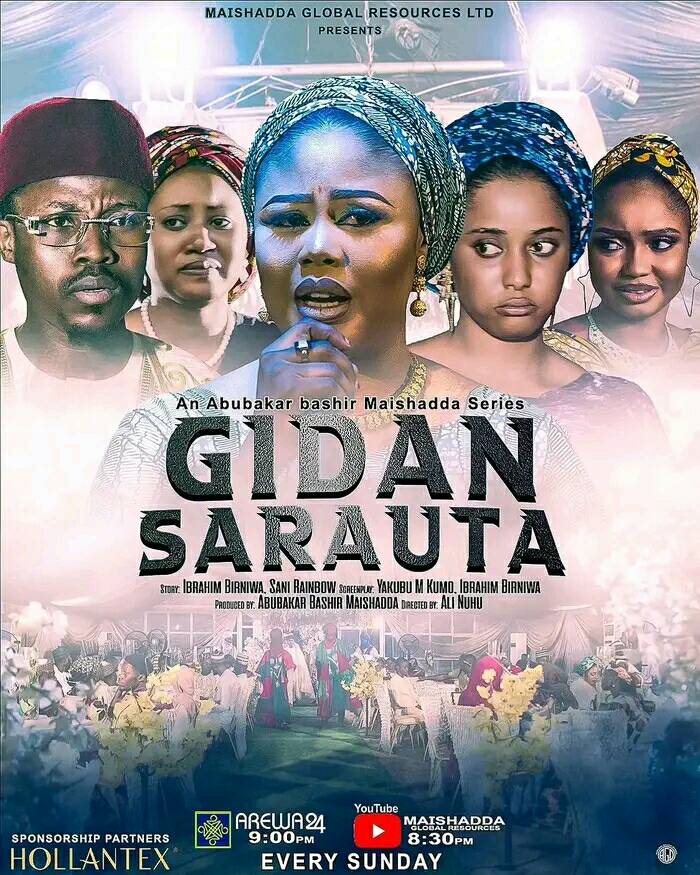
A critique of Ali Nuhu’s Gidan Sarauta

By Idris Ishaq Danwanka

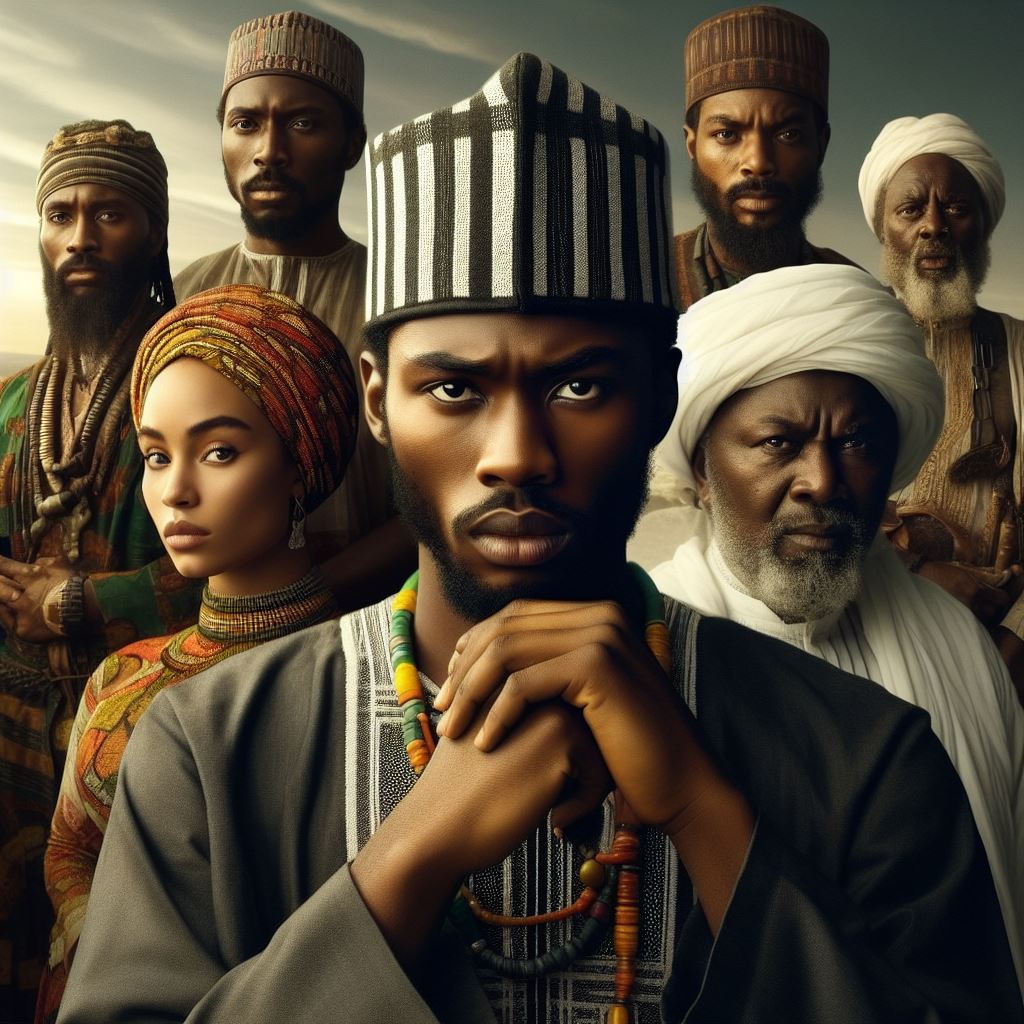
The series Gidan Sarauta (“Royal House”), directed by Ali Nuhu, does not fully align with its title. The events portrayed in the series differ from what one would expect from a real Gidan Sarauta.

Let’s start with the characters: Ali Nuhu introduced Adam Abdullahi Adam (Abale), who played the role of a disrespectful son to a wealthy man named Rabiu Rikadawa, also known as Baba Dan Audu in Labarina. The character lacks a proper upbringing from his father and harbours a disdain for the less fortunate. While such behaviour may exist in certain places, it raises the question of why thuggery is associated with Gidan Sarauta. What message is Ali Nuhu trying to convey? 

Furthermore, would it be plausible for a devout Muslim on their deathbed to instruct their son not to show compassion towards the poor? Such teachings contradict the principles of Islam, where one is expected to seek forgiveness from Allah and reflect on their wrongdoings before passing away.

Additionally, I am not particularly pleased with the casting choices in the series. Umar M Sharif, who sometimes speaks femininely, is selected to portray a prince. While this may not bother me as much, it is concerning to see Garzali Miko, who lacks the necessary qualities for such a character, also playing the role of a prince.

Moreover, the series seems repetitive, with certain events unnecessarily repeated within the same scene. Additionally, Mommy Gombe, who is assigned a significant role, appears to be somewhat inadequate for the part.

In summary, I have several reservations regarding the direction, character choices, and portrayal of events in the Gidan Sarauta series directed by Ali Nuhu.

Idris Ishaq Danwanka studies English Language and Literature at Federal University Dutse.

KSCB: Stop the release of Naburaska’s Igiyar Zato

By Ibrahim Uba Yusuf, PhD

Trends in the Hausa Film Industry often divide the industry sharply across socio-political lines. Interactions and production have also not been exclusive to the political dynamics of Northern Nigeria or Kano in particular. However, the recent development requires caution to avoid a relapse into conflict and violence.

On January 28th, 2024, I saw a short video clip of a popular actor-cum-politician, Mustapha Badamasi Naburaska. In the video of about two minutes, the actor announced his intention to release a film that would depict the aftermath of the 2023 Kano State Governorship Petition from the Tribunal to the Supreme Court. In the video, the actor further announced his intention to portray an ‘old man and a musician’ in a negative light.

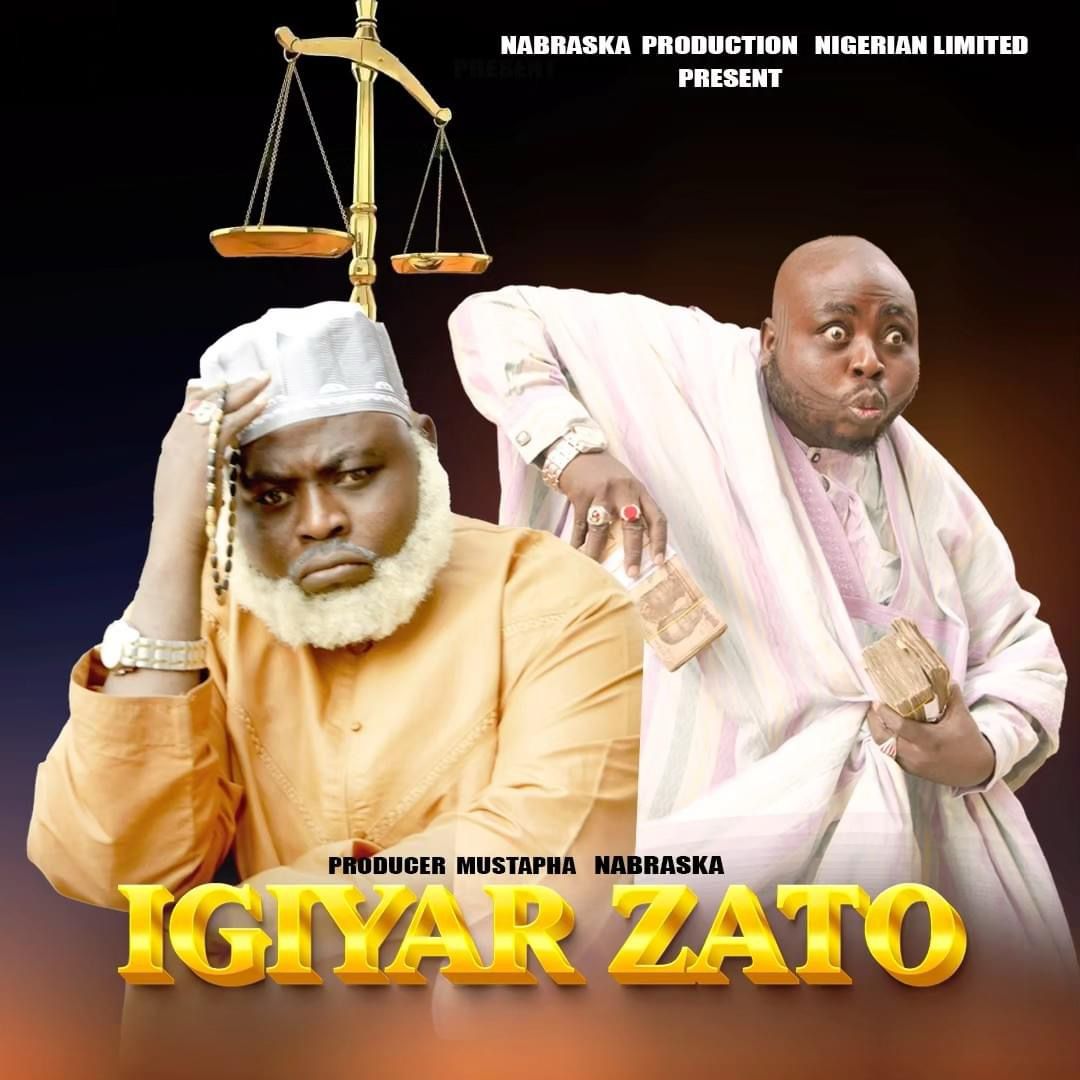
To complement his pledge, the actor released a poster of the intended film called Igiyar Zato on his Facebook page and other social media platforms. The poster contains the name of the producer and the photograph of the lead fictional character adorned with artificial grey beards just to reinforce the political figure he intends to mock. Mocking a politician is not my problem. It is purely a political affair.

I am not a card-carrying member of any political party but rather a researcher and public affairs analyst interested in teaching and conducting research relating to the Hausa Home Video Industry. In fact, my PhD thesis focused on ‘Hausa Home Videos and Peacebuilding in Northern Parts of Nigeria’. These, I believe, provided me with an opportunity to understand some nitty-gritty and make informed remarks about trends in the industry. It is useful to point out that this write-up is not intended to support or discredit any political group. The essence is to draw the attention of regulatory bodies to a danger that needs their urgent attention.

Firstly, my concern is the use of grey beards in the name of mocking an individual. While the announcement and content of the film may sound pleasing to some of his comrades and supporters, it will hoist a red flag if such content could pass the rigorous screening at the Kano State Censorship Board.

The Beard Issue

The beard issue has been a subject of ridicule during the build-up to the 2023 Guber Election in Kano State. A section of the campaigners used the beard impression to ridicule a particular contestant during their public campaigns. After the pronouncement by the apex court affirming the victory of Engineer Abba Kabir Yusuf as the duly elected governor, members of his political party have been engaged in making skit performances in communities using the beard as a subject of emphasis. The skits were done in the name of celebration, to mimic the governorship candidate of the APC.

Igiyar Zato

Although the trailer of the film has not been released, if – at all – it is going to be produced and distributed, viewers and followers of Kano politics can easily predict scenes and the likely narrative it contains. From the different posters, viewers can deduce the direction, rationale and target group of the producer, Mustapha Nabraska. Of concern is the picture of Nabraska with a fictional grey beard. This depiction is a caricature of a recommended tradition of Prophet Muhammad (SAW). Muslims may find this satire offensive, an act of irresponsibility and tantamount to rupturing the peace beingenjoyed in Kano State. Making jest at the Prophetic tradition, consciously or unconsciously, is forbidden. Sufficient is verse 65 of Suratul Tauba. While other scenes of the film might be valuable sources of analysis in the field of political communication, indeed, this depiction can likely provoke and create preventable chaos.

What does the Kano State Censorship Board Law say?

The law establishing the Kano State Censorship Board (KSCB) as a statutory regulatory body is not silent on what should be portrayed in films and home videos. The intended production contravenes the religious beliefs of the people of Kano. The film glaringly incorporates a form of amusement and deliberately alters the creation of Almighty Allah to mock an individual, which is not approved in Islam. In fact, these are yardsticks that some religious scholars used to engender their position on the illegality of popular culture.

The law, as it is, frowns at depictions in films that are not in tandem with the culture and tradition of the Kano people. Even though the law mandates all producers to submit their films to the Board for censoring after the completion of production, there is a need to amend that clause and mandate producers to share their ideas at the level of conceptualisation with the Board to be appropriately guided. It is left for the Board to decide what to do with the film if the producer decides to submit a copy before release.

Abba Al-Mustapha should Act!!!

In the interest of peace, the KSCB, under the leadership of Abba Al-Mustapha, should discontinue the promotion and production of the film at all costs. This is given the potential damages it could cause to the volatile situation in Kano. The Muslim community in Kano and beyond are saddened by this irrational depiction and public display, which directly affects a cherished symbol of the Prophet of Islam Muhammad (SAW). In the same way, you thwarted the distribution and sales of Queen Primer in Kano. Please act fast now.

The KSCB remains the beacon of hope in preserving the culture and religion of the people of Kano, and we hope that it will continue to do so without fear or favour. The Board should avoid politicisation and preferential treatment of members loyal to the government and deliberately make Kano a difficult terrain for actors and musicians who align with the opposition.

I urge the Board to assess the film on the scale of cultural and religious values and their attendant consequences to Kano State’s peace. Already, people are aggrieved and have been registering their displeasure, specifically on the fictional beard, as a subject of ridicule in the post’s comment section on Facebook and other social media platforms. Some comments are inflammatory and may likely throw the State into chaos.

This is the time of political healing and concentration on fulfilling the myriad of campaign promises. Any distraction is uncalled for. As such, there is a need for the Board to provide policy direction to actors and musicians who have become stakeholders in political campaigns on how to produce content devoid of promoting hatred, public ridicule and rupture.

Ibrahim Uba Yusuf, PhD, lectures at the Department of Mass Communication, University of Maiduguri, and is the Director of Communications, Advocacy, and Outreach at the Centre for Media, Policy, and Accountability (CMPA). He can be reached at ibrahim.mcm@unimaid.edu.ng.

Why our movie series don’t accommodate songs and dance – Kannywood directors 

By Uzair Adam Imam

The Kannywood movies are widely loved by Hausa-speaking communities across Nigeria and beyond. They are known for depicting Hausa culture and life.

The plots of Kannywood movies often feature drama, romance, and comedy, which many viewers find an escape from the harsh reality of everyday life. 

The songs and dances featured in the movies have become a signature of Kannywood cinema and are popular with audiences.

However, the songs and dances have ceased to be featured in the present Kannywood movies due to the new dimensions that the movies have taken.

In an interview with The Daily Reality, some Kannywood producers explained their reasons for taking the new direction.

Songs are incompatible with present movies – Lawan Ahmad

Lawan Ahmad, the producer of and a leading actor in the popular Hausa TV series Izzar So, said the songs have been removed to accommodate the kinds of films produced nowadays.

Ahmad said the songs still possess their enormously powerful impact in conveying messages but added that the nature of the movies nowadays does not accommodate songs. 

He said, “The songs were removed to suit the kinds of most produced movies in the Kannywood industry today. However, they are still useful in those movies.

“The songs were not removed because they are insignificant – their immense impact is still relevant.”

Hausa movies re-create folktales, history 

Another director and actor in the industry, Ali Rabi`u Ali, popularly known as Daddy, said Hausa films in those days were primarily traditional and required songs and dances. 

He stated, “Most of the Hausa films in those days were a replica of tales (tatsuniyoyi) and history that needed to be accompanied with songs and dances of dandali (a stage).” 

“These songs contribute(d) to the advertising and selling of the films. That is why the songs used to be released even before the production of the movies.

“This was to let people know about the film, just like the way Indian movies did,” Daddy explained.

He added that film series now do not require songs and dances because people are after the theme of the film, not songs.

“Besides, song and dance scenes are very costly and time-consuming, forcing us to cease using them in our films,” he stated.

Removal of songs: An opportunity for singers

Asked whether this was a threat to the Hausa singers, Ahmad said this was a wonderfully exciting opportunity for singers to be known for their intellectual production.

He stated, “This has helped the Hausa musicians to be known by the people for their talented works, as they make and act videos of their songs – and there is a lot of creativity in their businesses nowadays as singers resort to dramatic songs, with sole independent themes. 

“Now, instead of saying Ali Nuhu or Adam A. Zango should be featured in the video of their songs, the singers have seized the opportunity to sell their faces while taking a new dimension,” he added.

He added that the dramatic songs have now taken a new dimension, a development which attracts many people in Hausa communities.

Songs, dances mere imitations of Bollywood – don 

A Department of Mass Communication lecturer at Bayero University, Kano, Malama Ummi Hassan, opined that songs and dances in Hausa movies are simulacrums of Bollywood movies. 

The lecturer, who has taught film over the years, stated that “Songs and dances in Kannywood movies are mere facsimiles of Bollywood movies. And now that Bollywood has stopped using them in their movies, particularly series, Kannywood also stops.

“Bollywood now uses only some musical interludes as background sounds in their series movies to establish settings or set moods, to mention a few. Sometimes, they use the songs of the already-produced films, say Kalhonaho.” 

She added that a movie can achieve a desired theme without songs and dances.

She stated, “You must not show an actor or actress dancing before your film sells.” 

Some songs out of context

The university lecturer argued that the songs and dances in most Kannywood movies are sometimes out of context but were used to meet the tradition of Kannywood movies.

She said, “It is like the Kannywood has made it a tradition to put songs in their movies. The songs, however, are sometimes out of context.”

Ummi, who sees films and songs as two different things, advocates that the duo remain independent, with each conveying different meanings.

She added that although songs and dances have ceased to be used, the Hausa movies have witnessed a steep increment in their viewership. 

“I personally see this as a new development. Films and music are two different things. Songs can be used in the background to set the mood,” she added.

Our business at risk – singer

A singer, Hafeez Umar Maikano, who spoke to the Daily Reality, said their business is at risk following the removal of songs in the Kannywood movies.

According to Maikano, although songs have preceded films, singers now rely on filmmakers to survive.

He added, “I see this as challenging for the Hausa singers. The removal of songs from movies has discouraged not only professional but also upcoming singers.

“Before, filmmakers contracted singers to sing for a particular movie, giving them all the required information, including the theme of the movie.

“However, there is no denying that the removal has become a stepping stone to many of the singers,” Maikano added.

I don’t care what people say about me—Mommy Gombe 

By Uzair Adam Imam 

The graduate role played by a well-known Kannywood actress, Momy Gombe, has raised serious social media concerns.

This is coming as Momy Gombe was cast in a full NYSC khaki in a new movie, Darasi

As soon as the pictures went viral, the actress came under attack, with some university graduates condemning the role. 

The graduates and other critics say they are disappointed in the actress since she cannot speak English. 

Others claimed that Momy Gombe did not complete her secondary school education, saying she has no moral right to wear NYSC khaki. 

One of those who condemned her for wearing the khaki, Aliyu Danladi, said, “The issue is that Momy Gombe wore this NYSC khaki at the wrong time when corp members had just passed out, and the struggles were fresh in their minds. 

“I sincerely feel sad, especially when I remember waking up early for morning meditations, SAED lectures, and the evening parade,” he added. 

Another one by the name of Bello Ahmad Rufa’i said, “I am pleading with the Nigerian government to introduce a law that will ban people from wearing this khaki anyhow because nowadays people just wear it and act (as graduates) in movies.” 

According to Sulaiman Rabi’u Ishaq, “This is terribly pathetic! We suffered a lot, and this woman just came from nowhere and wore the khaki. 

Musa Miraj Rumah said, “Whoever says or thinks that she is right (to wear the khaki) mustn’t have worn it before.” 

Expressing his worry, Manir Sani Wakil stated, “What worries me the most was the fact that she has not even completed her secondary school, let alone going to any tertiary institution.” 

However, film experts have posited that the arguments were unnecessary and baseless, as films are imitations of reality. 

They also said that even if Gombe was wrong, the blame should go to the crew, not the actress, who simply followed instructions. 

Films are meant to mimic reality—experts 

Dr Ashir T. Inuwa, a senior lecturer at the Department of Mass Communication, Bayero University, Kano, said films are mere imitations of reality and, therefore, must not be real. 

Inuwa stated that Gombe must not be a graduate before she was cast as a university graduate, let alone any other role. 

He said, “Film is a replication of reality, real events, vividly through characterisation, sceneries and actors or actresses.” 

“It is a film so she can act as a graduate, professor, police or any other role, just as we see in the Bollywood movies and the rest.  

“You may find someone who has never become a local government chairman acting as a president in a movie, and it is cool because it is not real.”   

A film critic, Dr Muhsin Ibrahim, who is also a university lecturer at the University of Cologne, Germany, said that casting the actress as a graduate was not wrong.

“When did casting become an issue for us? How many times do non-Muslim actors act as Muslims and vice-versa? Or Hausa as non-Hausa, etc.? Please, we don’t have to criticise everything related to Kannywood,” he stated. 

Crew to blame for Gombe’s blunder  

Dr Ibrahim opined, “If the scriptwriter, script supervisor, and director do their job well, she should be able to deliver her lines flawlessly.” 

He added that the crew should be held responsible for any grammatical errors Gombe made while acting in the movie.  

He was quoted as saying, “In other words, if she commits grammatical errors or mispronounces words, the crew are more to blame. For instance, I once acted as an Indian sage and spoke some Hindi on the stage in India! I believe I did well.  

“Yes, I want to see Kannywood actors correctly delivering their lines (in Hausa, English, or any language).” 

Dr Inuwa also associated the flaw with the director’s inability to do his job well, reiterating that the actress must not be blamed. 

He stated, “The director of the film should be held responsible for Gombe’s grammatical errors and failure to pronounce words correctly.  

“Because it is his duty to take care of all that, giving her good training to be able to deliver her lines flawlessly.” 

I don’t care what people say about me—Mommy Gombe 

In an interview with The Daily Reality, the well-loved actress, who has recently suffered torrents of criticism, said she was not bothered by the criticism. 

Gombe says she just does her work and always tries to do everything she is instructed to the best of her ability. 

She was quoted as saying, “I don’t care what people are saying about me because I am just doing my job. Besides, I try to ensure that I do everything related to my work to the best of my ability. 

“Also, I try to ensure that I do anything I am instructed to do. That is why I don’t bother myself about this at all.”

She further called on her fans not to be distracted but to continue to support her for more interesting scenes.  

Bitter truth: A reality Gombe’s critics must know 

Despite the fact that English is the official language in Nigeria, many graduates in the country cannot speak the language fluently, a bitter reality that Gomber’s critics must know. 

Dr Ibrahim associated the menace with the emphasis students place on written exams rather than trying to demystify the mystery of the language through practice before their graduation. 

He said, “Truth be told, countless graduates (in Nigeria) cannot speak English fluently. My wife was shocked when I told her some of them studied English.  

“How is this possible? Simple: one can graduate without speaking for a minute before the class. Our emphasis is mainly on the written exams. For that, one can memorise pages and write them during exams, and that is it.”

Ali Nuhu’s appointment as MD of Nigerian Film Corporation is well-deserved 

By Habibu Ma’aruf Abdu

An interesting incident at the Awgu NYSC orientation camp, Enugu State, revealed to me the far-reaching popularity of Ali Nuhu in 2018. 

It was the early evening glow at the camp. As we strolled back from the training ground, a young Ijaw lady approached me with a cool smile on her face;

“Brother, may I ask you a few questions, please?” she inquired. 

“Why not?” I responded politely.

“Your platoon member, Oluwaseun, told me you are a Hausa from the North…”

I nodded my head in agreement: “Yes.”

“So, do you know Ali Nuhu?” she asked, her curiosity evident.

“Yes, I know him very well,” I affirmed.

Her face lit up with joy upon hearing my answer, and she muttered to herself: “No wonder!”

Curious, she continued, “Is he a brother to you…?”

Surprised, I responded, “Why this question? I know him as a famous actor. Nothing more. After all, who doesn’t know Ali Nuhu in the North? “

“Please don’t take offence; it’s just that I noticed a resemblance in your looks and actions…

“He is my favourite star. I love watching his films,” she added with enthusiasm.

From there, our conversation delved into a discussion about Nigerian cinema. I then discovered that the young lady knew no actor from Northern Nigeria besides him!

Ali Nuhu is probably the only Nigerian actor whose popularity transcends regional boundaries. His exceptional achievements in both Northern Nigeria’s Kannywood and mainstream Nollywood firmly established him as a pan-Nigerian superstar. 

I once encountered a young man in a faraway village in Igbo land wearing a T-shirt adorned with Ali Nuhu’s image. Again, when I visited Kebbi state in 2013, their most frequent question was, “Have you ever met Ali Nuhu?”

I, therefore, deemed his recent appointment as the Managing Director of the Nigerian Film Corporation by President Bola Ahmad Tinubu to be well-deserved. It is a testament to his dedication and significant contributions to the Nigerian film industry. Wishing the King of Kannywood continued success in this new position!

Habibu Maaruf Abdu wrote from Kano via habibumaaruf11@gmail.com

Tinubu appoints Ali Nuhu MD Nigerian Film Corporation

By Uzair Adam Imam

The appointment was disclosed in a statement Friday by the Special Adviser to the President ( Media & Publicity), Chief Ajuri Ngelale.

President Bola Tinubu has given his nod to the appointment of Ali Nuhu, aka the King of Kannywood, and ten other distinguished individuals to spearhead various agencies under the Federal Ministry of Art, Culture, and Creative Economy.

The appointments could be seen as a strategic move to foster growth and innovation in the arts, culture, and creative economy sector.

The recently appointed Chief Executive Officers are set to bring a fresh wave of leadership and expertise to their respective roles:

1. Tola Akerele: Takes the helm as the Director-General of the National Theatre.

2. Dr. Shaibu Husseini: Assumes the role of Director-General at the National Films and Censors Board.

3. Mr. Obi Asika: Appointed Director-General of the National Council for Arts and Culture.

4. Aisha Adamu Augie: Steps into the position of Director-General at the Centre for Black and African Arts and Culture.

5. Ekpolador-Ebi Koinyan: Appointed Chief Conservator of the National War Museum.

6. Ahmed Sodangi: Assumes the responsibility of Director-General at the National Gallery of Art.

7. Chaliya Shagaya: Takes on the role of Director-General at the National Institute of Archeology and Museums Studies.

8. Hajiya Khaltume Bulama Gana: Appointed Artistic Director of the National Troupe of Nigeria.

9. Otunba Biodun Ajiboye: Assumes the position of Director-General at the National Institute for Cultural Orientation.

10. Ali Nuhu: Takes charge as the Managing Director of the Nigerian Film Corporation.

11. Ramatu Abonbo Mohammed: Assumes the pivotal role of Director-General at the National Commission for Museums and Monuments.

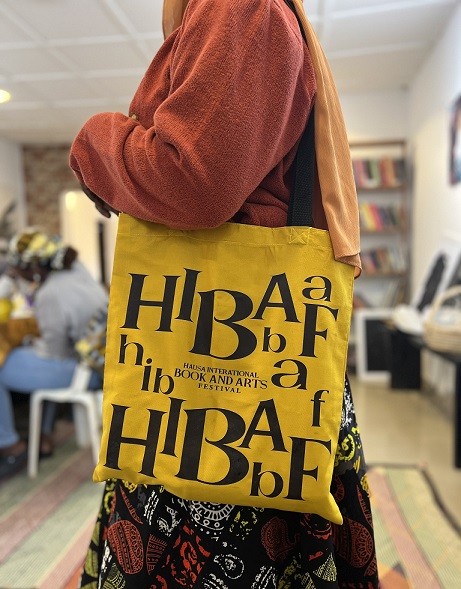
The conscious reawakening of Northern storytelling: HIBAF and its long way to liberation

By Sa’id Sa’ad

In 2021, I sat at Arewa House. I listened to Late Ummaru Danjuma (Kasagi) thunder – in his old throaty yet commanding voice – bitterly about how Hausa culture and stories have diluted over the years. His face, though saddened, lit by fluorescence – old, yet much alive – spread goosebumps throughout the room, reawakening all the murdered tales back to life. No one would think that that command births the reawakening of not just Hausa culture, stories, and language but northern Nigeria’s stories.

That was the maiden edition of the Hausa International Book and Arts Festival (HIBAF)—a time when literary festivals have suffered lashes of COVID-19. Literary enthusiasts, writers and journalists were once again full of life to reconnect. While some see it as a promising beginning for a new Jaipur Literature Festival of Northern Nigeria, a lot thought it was just a naming ceremony of yet another Nigerian literary festival that will soon wither due to shrinking funds.

Hausa or northern Nigeria literature – before now – couldn’t afford itself a “consistent” arts festival that solely promotes and celebrates its artistry, culture, and stories until the advent of HIBAF. However, there were several one-off attempts previously, but mostly political. One might argue that festivals like Kaduna Book and Arts Festival (KABAFEST) have blanketed the same purpose. Still, I would differ because KABAFEST is an international festival bringing international guests with national stories to a northern city. KABAFEST is – or now probably was – an arts festival “in” northern Nigeria, while HIBAF is an arts festival “for” northern Nigeria. This is not a dismissal of the influence KABAFEST had on northern Nigeria. It would be stupid to dismiss that.

However, as the region continues to suffer stereotypes about its literary prowess, HIBAF could stand on the edge of liberating northern Nigeria from such an ugly view. Perhaps the birth of what can be predicted today is the conscious reawakening of northern stories.

For a young festival with such an ambitious name, the question is: Is HIBAF only representative of the Hausa people or northern Nigeria?

It is easy to assume that HIBAF solely represents Hausas and their stories, especially for those who view them from the outside. This is mainly because, unlike other art festivals in Nigeria and around the world founded to represent a geographical entity, such as Lagos Book and Arts Festival, HIBAF is one of few whose nomenclature represents a tribe. In previous seasons, the festival granted conversations in the English Language; therefore, that says a lot about HIBAF going beyond Hausa “alone” in its programming, which I find healthy.

It would be great if HIBAF were only for Nigerian Hausas. It is okay if it is for Hausas globally. But it will be graciously honourary if HIBAF is for northern Nigeria in general. The value of this ambitious festival is in its capacity to reconnect Hausas and Hausa cultures with cultures around it through diversifying into introducing tribes that have existed with Hausas, such as Fulani, Nupe, Tiv, Igala and other northern tribes to its programming. This will mean Hausas and communities of non-Hausas in Hausa communities could re-share a space in arts and shape a positive narrative of the region in terms of collective literary and artistic prowess. This will create a unified northern story(ies).

Another issue that can’t be dismissed is the problem of northern consciousness – this time, refusal – to appreciate northern initiatives. It is a similar case for HIBAF. It is seldom difficult to see a representation of famous northern personalities – especially from Kannywood and music sub-sectors, aside from a few interested in literature such as Aminu Ala or Ado Gidan Dabino. Most hardly care. This does not mean that such personalities – who don’t care – will decline invitations from similar festivals in other parts of Nigeria. They certainly will accept. Now, the question of the “potentiality” of the festival in creating “value” and “shaping northern stories” has everything to do with bringing people of value, not just in literature but from other art sub-sectors such as Kannywood and Hausa music space into its fold.

Knowingly or unknowingly, the Kannywood industry needs more fora this time than ever. Imagine Ali Nuhu, Rahama Sadau, Fauziya D. Sulaiman and Salisu Balarabe on a panel to discuss how northern creative writers could get their – more well-written stories – to Kannywood screens. This panel can pave the way for collaboration that could place both the creative writing and Kannywood film industries decades ahead—a potential both industries share.

With its ambiguous programming nature of inculcating cultural programmes, the festival could give life to northern cultural heritages on the verge of fading with the recent digital revolution. It will be fascinating to see HIBAF Durba, HIBAF Tashe, HIBAF Dambe, Dandalin HIBAF, HIBAF Mawakan Gargajiya and other numerous HIBAF’s all-year-round that could bring back the northern cultural heritages while also Including non-Hausa cultural programme. Again, this creates unified northern cultural narratives.

This year’s HIBAF, in its third year of awesomeness and vibrancy – though still wounded by honest negative feedback from the second season – is bringing diasporic faces back home. Simply put, ‘going international with locals, and for locals.’ Such a breed can give life to a new dimension of cross-geographical collaboration between northern storytellers in the diaspora and Nigeria—a remarkable feat to a tremendous progressive bond.

While the festival, through its host organization, is becoming a spot for learning and sharpening creative and artistic mastery through workshops and seminars, it depicts how it can create a birthplace of yet new sets of Abubakar Imams and Zaynab Alkalis who would live to tell the stories. But this can also be limited if the focus is Hausa and literature alone as, thus, expansion both in language and sub-sector is where the growing inclusive value lies.

From pages of novelists to the rhymes of poets, from scenes of playwrights to screens of filmmakers, from the vocals of singers to the lyrics of songwriters, from the colours of culture to the lens of photographers, from northeast to northwest and northcentral, HIBAF could cook a recipe of blended stories – of all that have been around Hausa – to a valuable northern unified story.

Though all these are a long walk to a new revolution for northern Nigeria’s stories, it can place HIBAF at a point of liberating the region and demolishing its stereotypes.

Sa’id Sa’ad is a Nigerian writer, playwright and journalist from Maiduguri. He won the Peace Panel Short Story Prize 2018 and the NFC Essay Prize 2018. He writes from Bonn, Germany. He can be reached directly at saidsaadabubakar@gmail.com

How Kannywood can change the northern narrative

By Aminu Mohammed

This article was inspired by a Facebook post by Dr Maryam T. Hamza, who urged northerners to stop casting aspersions on actors and practitioners of the Hausa language film industry, popularly known as Kannywood. The post got me thinking about my recent trip to Nigeria last year. I still recall how enthusiastic people at home were about the movie series Dadin Kowa shown on Arewa 24. I wondered what kept them glued to the TV while watching the Dadin Kowa drama.

It is a well-known fact that many families spend ample time at home watching movies from India, Korea, Turkey, the Philippines, and other countries. While in secondary school in the 1990s, I discovered that most of my friends were conversant with the names of famous Indian actors such as Amitabh Bachchan, Dharmendra, Jeetendra, Rajesh Khan, etc. We also became conversant with Indian culture, food and cities through the movies.

This reminds me of Funke Akindele’s recent movie A Tribe Called Judah, which has become the first Nollywood movie to hit one billion Naira from the cinemas in just three weeks of its release, marking a historic moment in the Nigerian movie industry. The film portrays the challenges bedevilling low-income families in their struggle for livelihood and survival. President Bola Tinubu congratulated Funke for the feat, and eulogies from former Vice President Atiku Abubakar and Peter Obi also followed this.

We Need to Tell Our Story

I have watched the movie Amina, which tells the story of Queen Amina of Zazzau, a 16th-century Hausa kingdom in what is now known as Zaria. Although the film was interesting and well-made, I was surprised to learn that the producers, Okechukwu Ogunjiofor and Izu Ojukwu, were not from Kannywood, despite casting Ali Nuhu, among other mainstream Hausa actors, in the film. I wondered why this was the case.

While I enjoyed the movie and praised the producers for their work, I couldn’t help but feel that something was missing. I felt uneasy that outsiders were telling the story of our traditional system while our people had overlooked or neglected to do so. It bothered me that we tend to criticise and demonise artists and icons in our society rather than promote them. Are we comfortable with outsiders telling stories about our culture and traditions? Are we okay with letting outsiders define who we are?

It’s concerning that people who watch American, Chinese, Korean, Indian, and Turkish movies are quick to condemn Kannywood actors and actresses, accusing them of spreading immorality. Why do we celebrate foreign celebrities and movie stars while looking down on our own simply because they speak the same Hausa language as us? How can we expect to progress as a society when we tear down our talents and icons?

During my undergraduate days at the Ahmadu Bello University, Zaria, American pop music and gangster rap were popular among students. However, things have changed over time, and many Nigerians now listen to our local music. Nigerian artists like Burna Boy, Davido, Wizkid, Tiwa Savage, Kizz Daniel, and others are now popular across the globe. Even former U.S. President Barack Obama listens to Nigerian music. Afrobeats singers like Burna Boy and Ayra Starr were on his 2023 summer playlist.

Kannywood Has Great Potential

Nollywood has become one of Nigeria’s biggest exports in the last decade, highlighting the immense talent of Nigerians. The creative and entertainment industry has seen tremendous growth over the years, improving the livelihoods of many practitioners. Similarly, Kannywood has created numerous job opportunities for people in the North, such as actors, producers, directors, costumiers, makeup artists, fashion designers, singers, dancers, scriptwriters, and bloggers.

We must support Kannywood and promote our own talents rather than criticise them. We must stop seeing the movie industry as a place for fostering immorality and social vices. Instead, we should harness Kannywood’s potential to generate foreign exchange and enhance economic growth and development in Kano state and the entire Northern region.

Film as Instrument of Positive Change

The movie industry has the potential to inspire diligence, hard work, honesty, and productivity among our youth. It can serve as a valuable tool to promote girl-child education, literacy, and women empowerment, generate employment opportunities for talented youths, as well as change the negative perception of the North as a place plagued by religious intolerance, banditry, and insurgency.

I enjoy watching Dadin Kowa and Kwana Casa’in on Arewa24 occasionally. I also listen to Hausa songs, especially those by Naziru Sarkin Waka, to stay connected to my culture and traditions as I live outside Nigeria. It is worth noting that Kannywood movies do not depict scenes of sex, kissing, hugging, or any other inappropriate content that could tarnish the industry’s reputation.

Promoting our culture and language through movies and home-grown creative efforts is essential. We can use movies to tell heroic stories about our forefathers and instil good values, family ethics, productivity, and religious morals in our youth. I firmly believe that harnessing Kannywood’s potential can bring about the desired change in our society and encourage us to hold our political leaders accountable for their stewardship. 

Aminu Mohammed wrote this article from Ingolstadt, Germany. He can be reached at gravity23n@gmail.com.

#2: Kannywood Chronicles – Aminu Hassan Yakasai and Turmin Danya

By Prof. Abdalla Uba Adamu

An industry is a system made up of interconnecting parts that synchronise together to create a perfect dynamic and functional entity. However, there is a central creative focus. Thus, while no one can claim to have been the actual originator of commercial Kannywood since many people – and processes contributed to its development – nevertheless, the creative spark that lit the fire of Kannywood was the late novelist Aminu Hassan Yakasai. If one person can be credited with creating the industry, it was him and only him. 

In the late 1970s, the Nigerian film director Ola Balogun directed two successful Yoruba films. The first, “Ajani Ogun”, was co-produced with the actor Ade Love. The second, “Ija Ominira”, starred Ade Love. Hubert Ogunde, a famous Yoruba travelling theatre showman, decided to join the trend. He invited Ola Balogun to direct Aiye, which was hugely successful and led to a follow-up, Jaiyesinmi. 

These Yoruba films found their way to Kano’s bustling “stranger” (or, more appropriately, “guest settlers”) communities of Sabon Gari in the 1980s, where they were shown in cinemas and hotel bars. This attracted the attention of Hausa amateur TV soap opera stars and crew, such as Bashir Mudi Yakasai (cinematographer), Aminu Hassan Yakasai (scriptwriter) and Tijjani Ibrahim (director). Surprisingly, despite the massive popularity of Hausa drama in television houses and government financial muscle, the idea of full-scale commercial production of Hausa drama episodes by the television houses was never considered. Individuals wishing to own certain episodes simply go to the television station and pay the cost of the tape and a duplication fee, and that was it. There was no attempt to commercialise the process on a full scale. 

In the same period, the northern cities of Kano, Kaduna, and Jos benefitted immensely from the massive transfusion of modern media influences caused by not only a liberal society but also the tolerant interaction of diverse cultures and religions in the same public spaces. They were, undoubtedly, the creative hubs of northern Nigerian popular culture. Jos was famous for its vibrant nightclub and music scene. Kaduna also had a rich musical heritage, coupled with a TV culture. Kano was more muted and relied on music and club life inflows to Sabon Gari from other regions. 

However, one aspect of popular culture Kano had that was absent in Kaduna and Jos was prose fiction. While other cities were grooving the night away, residents of Kano were burning the midnight oil. The first published modern Hausa fiction was “So Aljannar Duniya” by Hafsat AbdulWaheed from Kano in 1980`. It opened the floodgates and led to hundreds of novelists creating a whole genre of African indigenous fiction referred to informally as Kano Market Literature. 

Also, at the same time, Kano had many drama groups that enjoyed stage plays that were often improvisational and not based on any script but with a general focus on social responsibility. These drama groups became spawning grounds for those who established the Kannywood film industry. These included Tumbin Giwa Drama Group (Auwalu Isma’ila Marshall, Shu’aibu Yawale, Ibrahim Mandawari, Adamu Muhammad, Ado Abubakar, Jamila Adamu. (Gimbiya Fatima), Hajara Usman, Ɗanlami Alhassan, etc.), Jigon Hausa Drama Club (Khalid Musa, Kamilu Muhammad, Fati Suleiman, Bala Anas Babinlata), Tauraruwa Drama & Modern Film Production (Abdullahi Zakari Fagge, Shehu Hassan Kano, Iliyasu Muhammad, Hajiya Rabi Sufi, Auwalu Ɗangata, Ado Ahmad G/Dabino, Asama’u Jama’are), and Hamdala Drama Wudil ( Its members include Rabilu Musa Ɗanlasan (lbro), Mallam Auwalu Dare, Ishaq Sidi Ishaq, Bappah Yautai, Bappah Ahmad Cinnaka, Haj. Hussaina Gombe (Tsigai), Shua’ibu Ɗanwamzam, Umar Katakore etc.) There were many more, of course, but these were foundational to Kannywood. 

The TV shows from then Radio Television Kaduna were gripping and inspiring to these drama groups. TV show stars that became role models to these Kano drama groups included Ƙasimu Yero, Usman Baba Pategi Samanja, Haruna Ɗanjuma, Harira Kachia, Hajara Ibrahim, Ashiru Bazanga (Sawun Keke) and others. 

Thus, it was that at the time of producing Bakan Gizo in Bagauda Lake Hotel 1983 to 1984 Aminu Hassan Yakasai, Ali “Kallamu” Muhammad Yakasai, Bashir Mudi Yakasai started strategising creating a drama for cinema settings (thus Kannywood was often seen as the creation of a ‘Yakasai Mafia’ as those from Yakasai dominated its creative direction!).

The tentative title of the film they were thinking of shooting was to be called Shigifa. It was a story of four unemployed graduates thinking about setting up a company – a departure from the romantic or comedic focus of then-then-popular TV shows. A script idea was floated, and Aminu Hassan Yakasai was to be the scriptwriter. However, before the idea matured, the group started getting contracts for video coverage of social events, etc. Actually, part of the coverage was also stored as footage, although the film was not eventually made. 

The precise decision to commercialise the Hausa video film, and thus create an industry, was made by Aminu Hassan Yakasai in 1986, with technical support of Bashir Mudi Yakasai, the leading cinematographer in Kano, and Tijjani Ibrahim, a producer with CTV 67. 

Aminu Hassan Yakasai was a member of the Tumbin Giwa Drama Group. He was also a writer and a member of the Raina Kama Writers Association, which spearheaded the development of what became known as Kano Market Literature in the 1980s. Thus, the idea of putting Hausa drama—and extending the concept later—on video films and selling it was a revolutionary insight, simply because no one had thought of it in the northern part of Nigeria. The project was initiated in 1986, and by 1989, a film, Turmin Danya, had been completed. It was released to the market in March 1990—giving birth to the Hausa video film industry. Salisu Galadanci was the producer, director, and cinematographer, while Bashir Mudi Yakasai provided technical advice. 

The moderate acceptance of Turmin Danya in Kano encouraged the Tumbin Giwa drama group to produce another video, Rikicin Duniya in 1991 and Gimbiya Fatima in 1992 — all with resounding success. By now, it was becoming clear to the pioneers that there seemed to be a viable Hausa video film market, and this viability laid the foundation of the fragmented nature of the Hausa video film industry. While organised groups formed to create the drama and film production units, individual members decided to stake out their territories and chart their future. Thus, Adamu Muhammad, the star of Gimbiya Fatima, decided to produce his own video film, independent of the Tumbin Giwa group in 1994. The video film was Kwabon Masoyi, based on his novel of the same name, and outlined the roadmap for the future of the Hausa video film. At the same time, it sounded the death knell of the drama groups. This was because Aminu Hassan Yakasai, who created the very concept of marketing Hausa video films—and thus created an industry—broke away from Tumbin Giwa and formed Nagarta Motion Pictures. Others followed suit.

Other organised drama groups in Kano did not fare too well either. For instance, Jigon Hausa, which released a genre-forming Munkar in 1995, broke up with the star of the video film, Bala Anas Babinlata, forming an independent Mazari Film Mirage production company (Salma Salma Duduf). Similarly, Ado Ahmad Gidan Dabino broke away from Tauraruwa Drama and Modern Films Production (which produced In Da So Da Ƙauna) and formed Gidan Dabino Video Production (Cinnaka, Mukhtar, Kowa Da Ranarsa). While Garun Malam Video Club produced Bakandamiyar Rikicin Duniya, written by Ɗan Azumi Baba, after the video film was released, Baba left the group and established RK Studios (Badaƙala). 

From field studies and interviews with the producers in Kano, most of these break-ups were not based on creative differences but on financial disagreements or personality clashes within the groups. The number of officially registered “film production” companies in Kano alone between 1995 and 2000 was more than 120. There were many others whose “studio heads” did not submit themselves to any form of registration and simply sprang into action whenever a contract to make a film was made available. 

Interestingly, Adamu Muhammad of Kwabon Masoyi Productions produced the first Hausa video film entirely in English. It was “House Boy”. Although it was an innovative experiment by a Hausa video filmmaker to enter into the English language video genre, it was a commercial disaster. Hausa audience refused to buy it because it seemed too much like a “Nigerian film”, associating it with southern Nigerian video films. When the producer took it to Onitsha—the main marketing centre for Nigerian films in the south-east part of the country—to sell to the Igbo marketers, they rebuffed him, indicating their surprise that a Hausa video producer could command enough English even to produce a video film in the language. Further, the video had no known “Nigerian film” actors and, therefore, was unacceptable to them. Thus, the Hausa audience rejected it because it looked too much like a “Nigerian film”, while non-Hausa left it because it used “unknown” Hausa actors, so it must be a Hausa film, even though the dialogue was in English!

Tragically, Aminu Hassan Yakasai died in an automobile accident on Saturday, June 16, 2001, on his way to Katsina to participate in a film, “Arziki da Tashin Hankali”.

Kannywood movie review: The Princess of Galma

  • Director: Muhammad Galadima
  • Producer: Ali Saidu Worthme
  • Company: Jammaje Productions
  • Language: English
  • Release Date: 26th December, 2023
  • Cast: Hajara Yusuf, Magaji Mijinyawa, Abba Zaki, Billy O, Tijjani Faraga, Mustapha Musty, and others.

The Princess of Galma is another ‘Kannywood film in English’ from the promoter of the genre, Malam Kabiru Musa Jammaje, who has produced a few others before. The film was screened during an annual event, ‘Jammaje Day’, attended by hundreds of English language enthusiasts. Jammaje seems to have made the event a new way for showing his English movies as the attendees clearly make the audience he targets.

Despite its glorious title, The Princess of Galma is neither a historical drama nor an epic adventure. It’s a regal fiction set in a contemporary, fictitious kingdom, Galma, where King Ahmadu (Magaji Mijinyawa) suffers from a serious illness. The film begins with King Ahmadu’s illness, which caused widespread concern in the kingdom. His only daughter, Princess Nafisa (Hajara Yusuf), is deeply worried about her father’s deteriorating health condition. 

Meanwhile, the kingdom’s cabinet deliberates on the succession dilemma, as tradition dictates that the one who marries the princess inherits the throne. This makes Waziri (Tijjani Faraga), a cabinet member, send his son Sahabi to propose to the Princess. But she promptly rejects him despite his being a royal son and the most handsome young man in the Kingdom. The ensuing drama unveils Waziri’s struggle, the princess’s personal choice, and more…

Although the plot has its share of clichés, it maintains a reasonable flow, ensuring no dull moments throughout the story. But the screenplay runs too fast to a hasty finish. It would have been better if it had more scope, especially for Waziri’s secret schemes and the Princess, who suffers magic afflictions.

Beyond its regal and romantic themes, the film emphasises the healing power of prayers. We see how the prayers heal the king after everyone has begun to despair. It also highlights the prevailing theme of good triumphing over evil, as depicted in Sahabi’s loss of the princess despite his father’s magical attempt to acquire her. Besides, it also subtly addresses big security challenges in northern Nigeria.

The film also tries to be brim-full of cultural showcase but falls short of capturing the intrinsic value it truly deserves. It lacks the seriousness and dramatic intensity expected in a movie of its genre. The technical aspects are also average. A film like this should be carefully produced with a considerable budget to get the required impact. 

However, the English usage is generally flawless. The dialogue is captivating, and the actors deliver their lines remarkably. A few scenes were rendered entirely in the Hausa language, with others having lots of code-switching and mixing to accentuate comical effects and cultural representation.

On the other hand, all the actors try to pull off a good performance, especially Hajara Yusuf, who perfectly fits the role of Princess Nafisa and delivers her lines effectively. Abba Zaki leaves an impression in a brief role as the man of Nafisa’s dream. The scenes where he expresses his love for her captivate the most. Also, Billy O. gives a very real performance, similar to Malam Abdulhadi. The comic gestures he portrays get the audience laughing throughout.

Finally, The Princess of Galma qualifies as a worthy addition to Kannywood’s archive of English movies. It has little novelty but offers much to keep you glued to the screen. I commend the efforts of the director (Muhammad Galadima) and all the cast and crew members. Rating: 3/5.

Reviewed by Habibu Maaruf Abdu

habibumaaruf11@gmail.com