Engausa

DSS arrests university professor for alleged sexual harassment

By Sabiu Abdullahi 

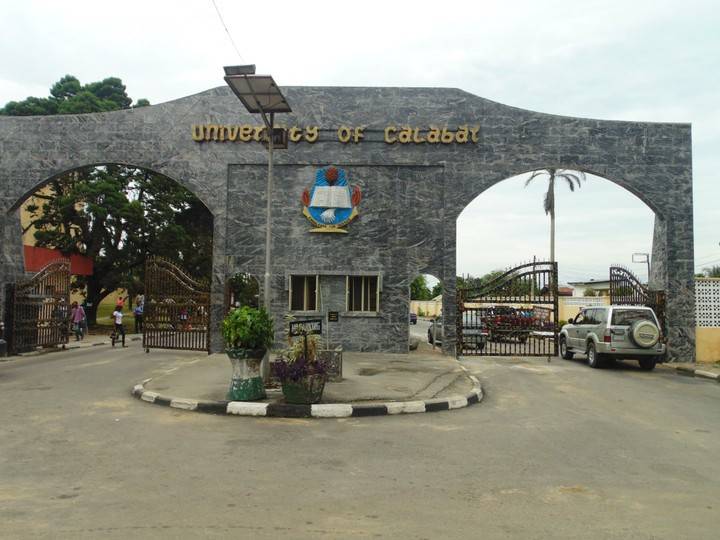
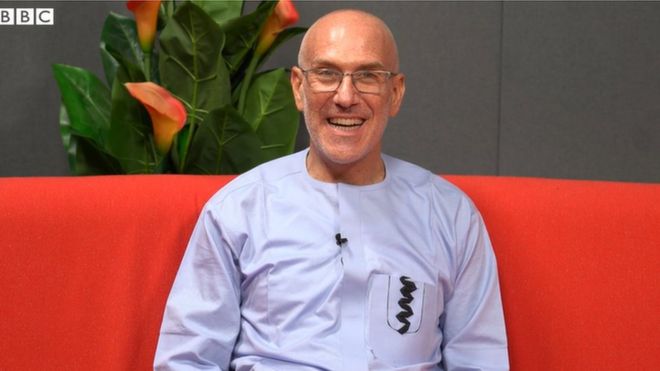
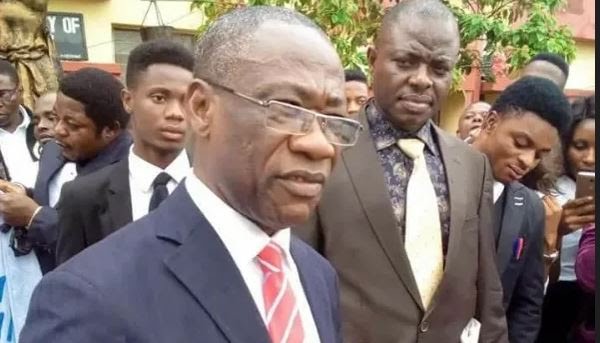
Operatives from the Department of State Services (DSS) have apprehended and detained Prof. Cyril Ndifon, the former Dean of the Faculty of Law at the University of Calabar, over alleged sexual harassment of female law students.

This development comes after a series of protests erupted within the institution, leading to the suspension of Ndifon by the university management pending investigations into the allegations. 

Prof. Ndifon vehemently denied the accusations, asserting that the protests orchestrated against him were the result of a conspiracy by certain individuals within the faculty who aimed to destroy his reputation.

He labelled the claims against him as baseless lies aimed at tarnishing his image. Confirming the arrest, DSS spokesman Peter Afunanya revealed that Ndifon was taken into custody in Abuja after he repeatedly refused to comply with several invitations extended to him for questioning.

Afunanya clarified that the DSS’s intervention was initiated following a request from the Independent Corrupt Practices and Other Related Offences Commission (ICPC).

This joint effort between the agencies was conducted within the framework of inter-agency collaboration and was executed in accordance with a court order granting permission for Ndifon’s arrest. 

Despite efforts to obtain comments from the ICPC spokesperson, Azuka Ogugua, she could not be reached for a statement as calls to her phone remained unanswered at the time of filing this report.

ENGAUSA launches new programme at Ringim digital skills centre

By Sabiu Abdullahi

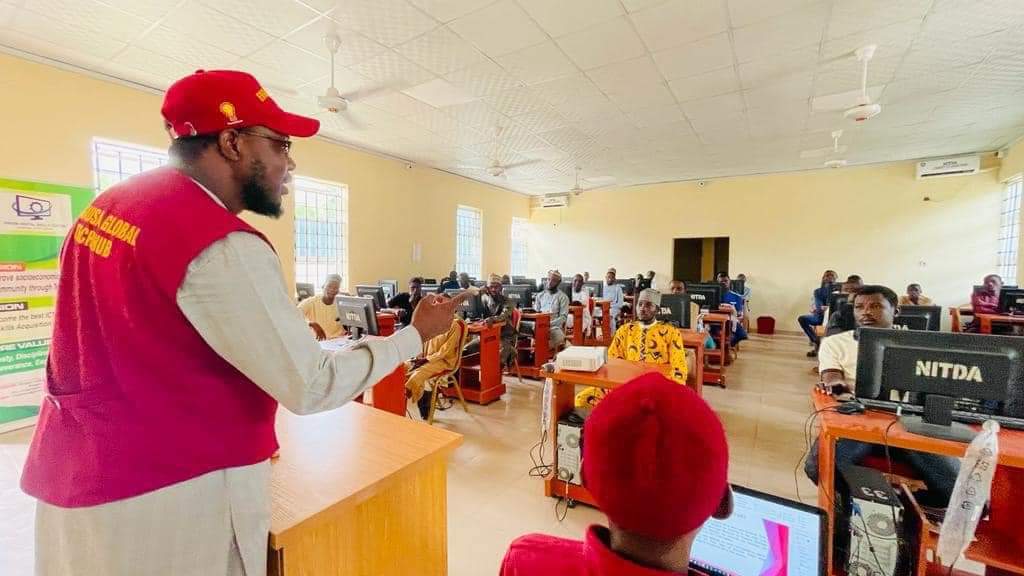
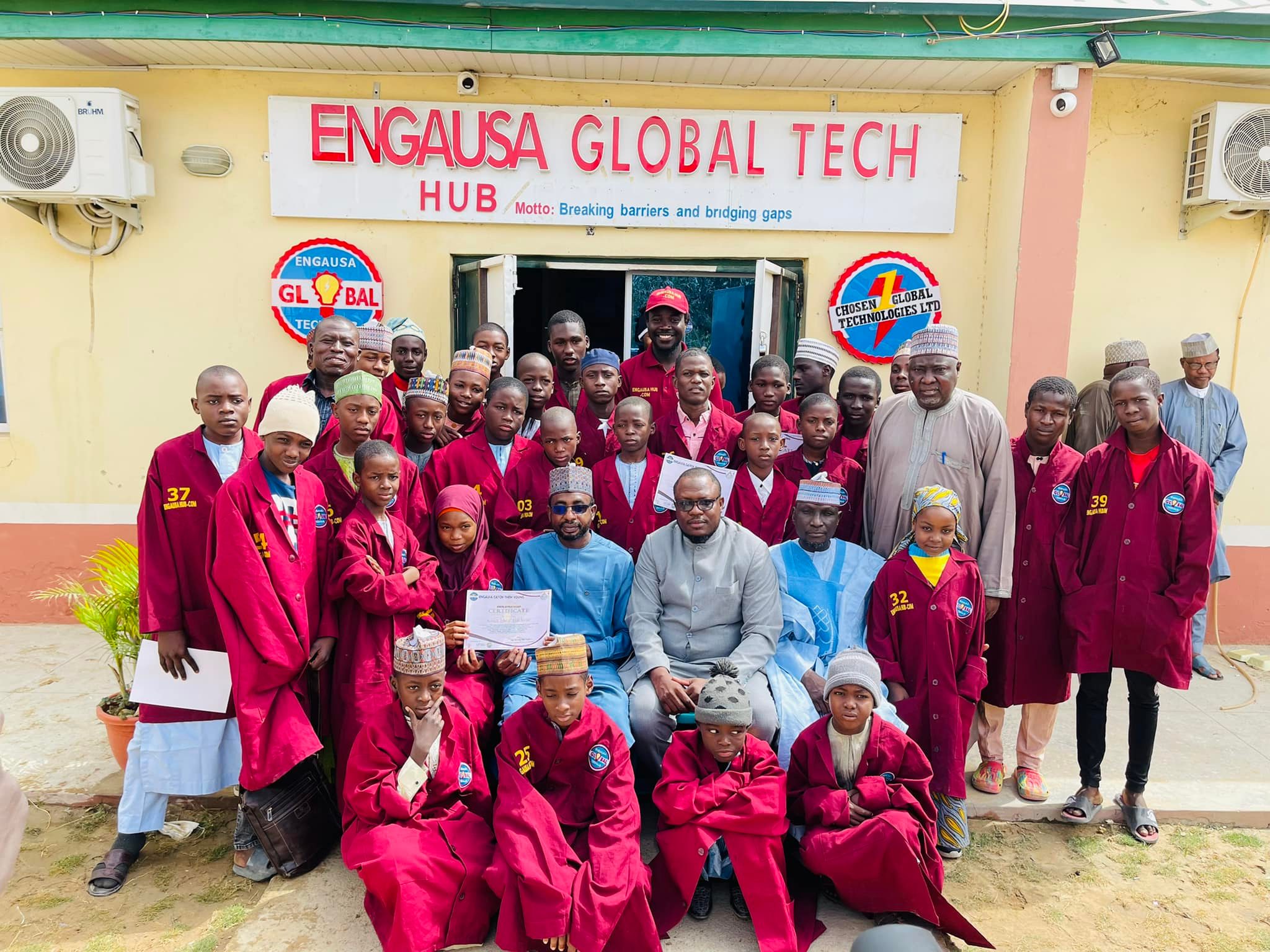
The NITDA-built Ringim Digital Skills Centre inaugurated a new ENGAUSA Skills Acquisition Programme, an initiative that aims to equip young individuals with essential skills. 

It is generously sponsored by IG (rtd) Hafiz Abubakar Ringim and an anonymous philanthropist, channeled through the MAFITAR RINGIM GROUP. 

Headed by Engineer Mustapha Habu Ringim, ENGAUSA stands out as a modern skills acquisition centre with a unique approach. 

Unlike traditional centres, ENGAUSA delivers its programmes in the Hausa language, ensuring that a wider audience can benefit from their initiatives. 

This language-focused strategy not only fosters inclusivity but also addresses the linguistic barriers that often hinder educational accessibility. 

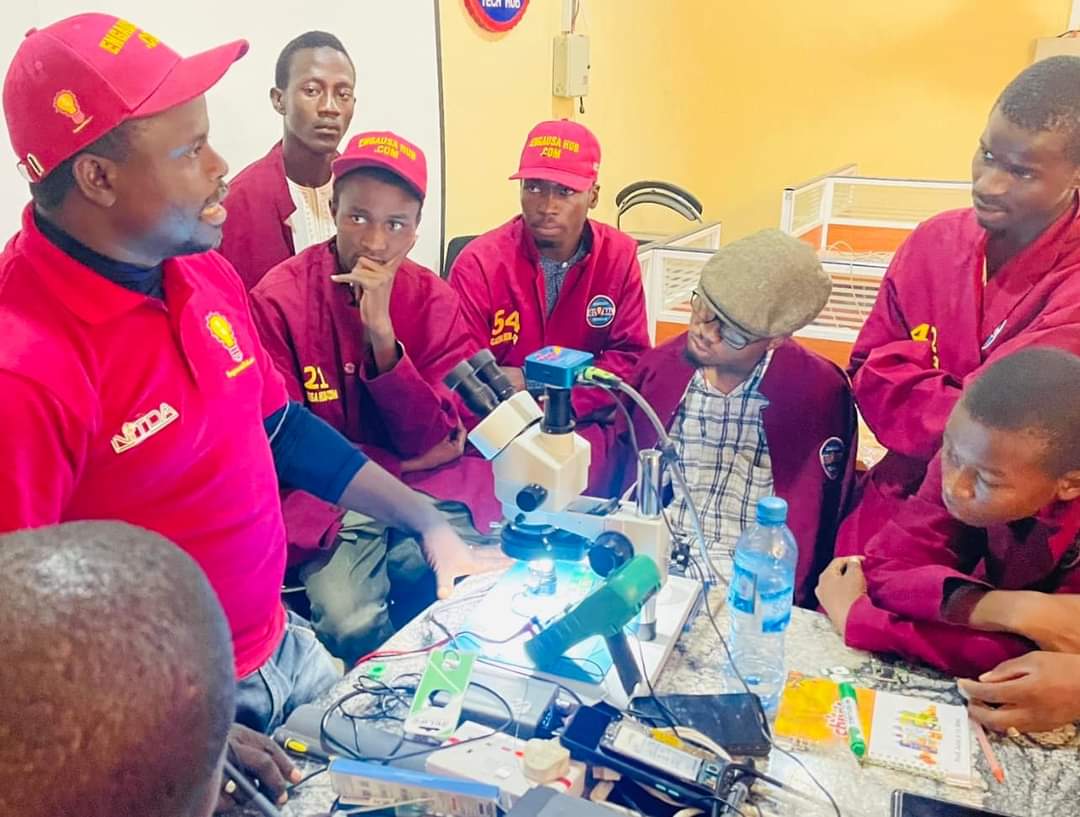
The ENGAUSA Skills Acquisition Programme offers a diverse range of courses catering to various fields of interest.

Participants can expect to receive high-quality training in areas such as technology, entrepreneurship, and vocational skills.

By providing education in the native language, ENGAUSA aims to enhance comprehension and encourage active participation, making the learning experience more engaging and effective.

Engausa Global Tech Hub opens fresh applications for digital skills classes 

By Muhammadu Sabiu 

Engausa Global Tech Hub, a prominent centre specialising in digital skills education conducted in the Hausa language, is excited to announce the commencement of enrollment for new students. 

The centre, in a statement via its Facebook handle, says it is gearing up to kick off fresh classes on Monday, September 11, 2023. 

Engausa Global Tech Hub is dedicated to empowering individuals with the knowledge and skills required to thrive in the digital age.

This opportunity is open to all, and the centre is committed to fostering inclusivity and providing access to quality education. 

For those interested in joining the upcoming classes or seeking more information, the process is made convenient through the EngausaHub.com website.   

Whether you prefer to register in person at the centre, located at Farmcentre, or through the Rijiyar Zaki centre, the institution ensures a hassle-free registration process. 

In addition to the online registration option, prospective students can contact the centre directly via phone at 07038224643 for any inquiries or assistance. 

Engausa Global Tech Hub acknowledges the importance of digital literacy and its role in youth empowerment, gender inclusion, and achieving Sustainable Development Goal 4 (SDG4) as outlined by UNESCO. 

By offering these digital skills classes, the centre aims to contribute to the advancement of these crucial objectives. 

UNICAL suspends Prof. Ndifon over alleged sexual harassment

By Muhammadu Sabiu 

The management of the University of Calabar (UNICAL) has suspended one of its lecturers, Prof. Cyril Ndifon, for alleged sexual harassment against female students. 

The Daily Reality (TDR) understands that Prof. Cyril Ndifon has been placed on administrative leave twice in the past nine years due to allegations of sexual harassment. 

Ndifon was recently suspended for breaking the terms of the institution’s current rules and regulations in a letter dated August 17, 2023, and signed by Gabriel Egbe, the registrar of the school. 

He was suspended by the same university in 2015 following allegations of sexual assault against female students. 

A few days ago, female law students demonstrated on campus with signs demanding that Ndifon be fired. 

According to a report seen by TDR, some of the placards had inscriptions like, “Ndifon must go!” “We’re tired of sucking dicks for marks”, “Law girls are not bonanza,” and “Prof Ndifon must stop grabbing our bum bums.” 

The suspension, according to the letter, followed Ndifon’s response to a question that had previously been posed to him by the university’s management. 

According to reports, the Vice Chancellor was not pleased with Prof. Ndifon’s response to the question posed to him. 

The VC then gave the order to suspend Ndifon and remove him from his role as Dean.

Hausa: Hantsi leƙa gidan kowa

By Muhammad Muhammad Salisu

Meet Professor Rudolf Gaudio (he has adopted a Hausa name, Sani), a professor of anthropology at the State University of New York, who started learning Hausa in the US in 1986. He had never visited any African country, not to mention any Hausaland, when he started speaking Hausa. His first contact with the Hausa people was in 1991 in Sudan before coming to Nigeria. He started learning Hausa alongside Swahili.

This reminds me of an Igbo girl at Nigerian Law School, Yenagoa campus. She was awestruck when she saw me speaking Hausa with another Igbo girl. She retorted, “So you can speak that ‘thing’?” From her tune, I could see that she thought it an abomination for the person I was speaking to speak the ‘Aboki language’. The person I was talking to speaks the Hausa language fluently, though was born and raised in Bauchi.

Another incident was when I took a tricycle in Yenagoa. The driver told me the fare, which I bargained for. He told me, “Ka cika son banza.” I was surprised at how an Igbo man (he later told me he was Igbo) could speak Hausa, though with a heavy accent.

One day, I was at a restaurant alone at the Yenagoa campus. Another co-student was sitting by himself and three other female students from the northern part of Nigeria were at another corner gossiping. They, along the line, turned their gossip on the other lad. They were making jest of him, believing he couldn’t speak Hausa. When it was time for him to leave, he bade farewell to them in Hausa, saying, “Na gode [probably for making jest of him], sai an jima.” (Meaning, “Thank you, goodbye.”)

Muhammad Muhammad Salisu wrote via muhdibnmuhd@gmail.com.

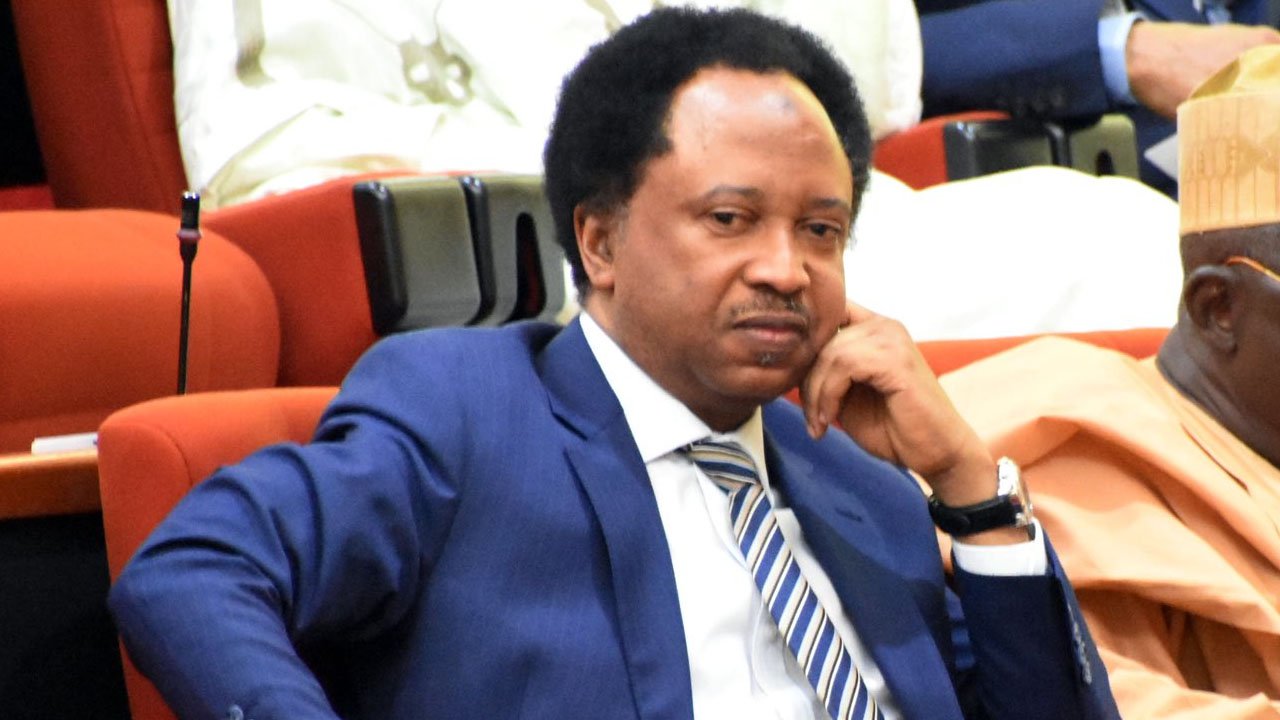
People are now acquiring higher degrees because of unemployment—Shehu Sani

By Muhammadu Sabiu 
 
Shehu Sani, a former senator, has bemoaned the high rate of unemployment in Nigeria and lamented that many young people in have turned to seeking higher degrees as a result of the joblessness.
 
The former senator shared his concern in a tweet on Monday.
 
Recall that, according to a report in 2022, the joblessness rate in Nigeria rose to 37.7 percent.
 
During the “Workers’ Day” celebration, Sani noted that many young people were forced to pursue graduate studies due to unemployment.
 
He wrote, “Unemployment has forced so many youths to pursue masters and Doctorate degrees.

Hausa names as ethnographic identifiers

By Prof. Abdalla Uba Adamu

It happened 40 years ago. A friend’s wife in Kano had delivered a bouncing baby boy. My friend chose Maikuɗi as the name for the baby. The families on both sides were having none of this. Maikuɗi was not a name, they argued. But he saw nothing wrong with it – a nice traditional Hausa name. He was adamant. They were adamant. Cue in A Mexican Standoff.

Three days before the naming ceremony, he blinked first and apparently gave up. With a glint in his eyes, he decided to name the child Ibrahim. A beautiful Hebrew name but cognately shared by both Muslims and Christians (from Abraham, the father of all). Everyone was happy – until it dawned on everyone that Ibrahim was the name of my friend’s father-in-law. Tricky. In Hausa societies, the names of parents are never uttered. In the end, everyone ended up calling the boy Maikuɗi! Right now, the boy is a successful international businessman living in the Middle East. Earning serious cash and living up to his name – which means one born on a lucky day. Or Tuesday.

A few years later, the same friend’s wife gave birth to a beautiful baby girl. He decided to name her Tabawa. Objections reloaded. Cue in Dog Day Afternoon. As previously, my friend blinked first. He decided to name her Hajara, another cognate of Hagar, the wife of Abraham. It also happened to be the name of his eldest sister. His mother could not utter it – both the Hausa and Fulani system of cultural relations prohibit mothers from calling the names of their first series of children. In the end, everyone ended up calling the child Tabawa. She is currently a university lecturer and a doctoral student in Nigeria. Living up to her name – which means Mother luck, or the name given to one born on Wednesday (in Kano; in Katsina, it is Tuesday) is considered a lucky day. Two children, both lucky in their lives. Their traditional Hausa names became their mascots as they glided successfully through life.

So, why the aversion to Hausa ‘traditional’ names? You can’t name your child Maikuɗi, but everyone will applaud Yasar (wealthy – mai kuɗi?). Or Kamal (perfection). Or Fahad (panther). Or Anwar (bright). Or Fawaz (winner). You can’t name your daughter Tabawa, but it is more acceptable to call her Mahjuba (covered). Or Samira (night conversationist –TikToker?). Name your daughter ‘Dare’, and you are in trouble. Change it to Leila, and you out of it, even though this is an Arabic for ‘dare’ (night).

A lot of the names the Muslim Hausa currently use have nothing to do with Islam. Bearers of such names rarely know their actual meaning or context. They were Arabic and forced on us by the Cancel Culture that attaches a derogatory ‘Haɓe’ coefficient to anything traditional to the Hausa.

Therefore, my friend, whose family story I just related, another friend and I decided to get together and be Wokish about traditional Hausa names. Paradoxically, none of us is genetically Hausa (whatever that might mean) – one had roots in north Africa, another had Kanuri heritage, and one had Agadesian and Torodbe roots – but all of us self-identified, with absolute honour and tenacity, as Hausa. None of this ‘Hausa-Fulani’ aberrational nonsense.

‘Hausa-Fulani’ appellation, in my view, is a Nigerian Cancel Culture device to suppress the Fulani culture. The Fulani may have conquered the ruling of the Hausa (except in one or two places) and imposed their rule. The Hausa, on the other hand, have linguistically conquered the Fulani. In Kano, claiming Fulani heritage is considered anthropological purity – without knowing a single word of Fulfulde (the Fulani language). Substituting rulers does not get rid of the general populace who remain what they are.

The third friend then took the task with gusto. He spent over ten years compiling authentic traditional Hausa names that have absolutely nothing to do with ‘Maguzanci’ (the label gleefully and contemptuously attached to any Hausa who is not a Muslim by the Hausa themselves) before Islam in about 1349, at least in Kano). He also collected names that had only a tinge connection to Islam. The end product was a hitherto unpublished list of 1001 authentic, genuine, traditional Hausa names that reflect the cosmology of the Hausa.

Hausa’s anthropological cosmology reflects the worldview and belief system of the Hausa community based upon their understanding of order in the universe. It is reflected in their naming system – just like any other culture. The Yoruba Muslims, for the most part, have retained this attachment to their traditional cosmology. Farooq Kperogi has done wonderful work on Yoruba naming, although with a focus on their adaptation of Muslim names. The failure of the Hausa to do so was, of course, due to the suffocating blanket of Cancel Culture that the Hausa had been suffering for almost 229 years.

Now, let’s look at the names and their categories. The first category I created from the 1001 Names, which I edited, revolved around Being, Sickness and Death. As noted earlier, the traditional Hausa centre their naming conventions on ecological and cosmological observations—using time, space and seasons to mark their births. Based on this, the first naming convention uses circumstances of birth. This category of names refers to the arrival of a child after another child’s death, the death of a parent, the sickness of the child immediately after being born or a simple structure of the child that seems out of the ordinary. Examples include:

Abarshi. This is derived from the expression, ‘Allah Ya bar shi’[May Allah make him survive]. A male child was born after a series of miscarriages. A female child is named Abarta. A protectionist naming strategy is where the child is not given full loving attention after birth until even evil spirits note this and ignore it and thus let him be. Variants include Mantau, Ajefas, Barmani, Ajuji, and Barau. Now you know the meaning of Hajiya Sa’adatu ‘Barmani’ Choge’s name – the late famous Hausa griotte from Katsina (1948-2013).

Then there is Shekarau, derived from ‘shekara’, a year. A male child is born after an unusually long period of gestation in the mother’s womb. A variant of this name is Ɓoyi [hide/hidden]. A female child is named Shekara. Now you know the meaning of the surname of Distinguished Senator Malam Ibrahim Shekarau from Kano.

A third example is Tanko. This is a child born after three female children. Variants include Gudaji, Tankari, Yuguda/Iguda/Guda. I am sure you know the famous Muhammed Gudaji Kazaure, a Member of the House of Representatives of Nigeria and his media presence in late 2022.

Each of these sampled names reflects a philosophical worldview, reflecting spiritual resignation or slight humour. They, therefore, encode the traditional Hausa perspective of living and dying as inscribed in the way they name their children.

Names that even the contemporary Hausa avoid because of bad collective memory are those linked to wealth and being owned or slavery.

Slaves have prominently featured in the political and social structure of the traditional Hausa societies, especially in the old commercial emirates of Kano, Zaria, Daura and Katsina. Their roles are clearly defined along socially accepted norms, and they are expected to perform given assignments demanded by their masters.

Slaves in Kano are divided into two: domestic and farm-collective. Trusted and, therefore, domesticated slaves are mainly found in ruling houses and are prized because of their loyalty to the title holder. Farmyard slaves were often captured during raids or wars and were not trusted because of the possibility of escape. They were usually owned by wealthy merchants or farmers and were put to work mainly on farms

Although the institution of slavery as then practised has been eliminated in traditional Hausa societies, the main emirate ruling houses still retain vestiges of inherited slave ownership, reflected even in the categorisation of the slaves. For instance, in Kano, royal slaves were distinguished between first-generation slaves (bayi) and those born into slavery (cucanawa).

At the height of slave raids and ownership, particularly when owning a slave was an indication of wealth, the names of the slaves often reflected the status of the owner. Examples of these names include Nasamu (given to the first slave owned by a young man determined to become a wealthy man), Arziki (first female slave owned by a man), Nagode (female slave given away to a person as a gift), Baba da Rai (first gift of a male slave to a son by his father), Dangana (male slave of a latter-day successful farmer or trader, although later given also to a child whose elder siblings all died in infancy. The female slave variant is Nadogara), and Baubawa (slaves with a different faith from the owner), amongst others.

The changing political economy of Hausa societies since the coming of colonialism has created new social dynamics, which included the outward banning of slavery. Thus, many of the names associated with slaves and ‘being-owned’ in traditional Hausa societies became disused, unfashionable, or, which is more probable, to be used without any idea of their original meaning. It is thought that some records of them may be of value. An example is ‘Anini’, usually a slave name but later used to refer to a child born with tiny limbs. The ‘smallness’ is also reflected in the fact that ‘anini’ was a coin in the Nigerian economy, usually 1/10th of a penny—a bit like the small Indian copper coin, ‘dam’ (from which the English language got ‘damn’, as in ‘I don’t give a damn’).

Further, with the coming of Islam, slave names were eased out and replaced by conventional Muslim names as dictated by Islam, Retained, however, are slave names that also served as descriptors of the functions of the slave, even in contemporary ruling houses. Examples of these slave titles, which are rarely used outside of the places, include:

Shamaki (looks after the king’s horses and serves as an overseer of the slaves), Ɗan Rimi (King’s top slave official and looks after all weapons), Sallama (King’s bosom friend [usually a eunuch], same role as Abin Faɗa), Kasheka shares the household supplies to king’s wives [usually a eunuch], Babban Zagi (a runner in front of the king), Jarmai (the head of an army), Kilishi (prepares sitting place for the king), amongst others. These names are almost exclusively restricted to the palace and rarely used outside its confines. Cases of nicknames of individuals bearing these names remain just that but had no official connotation outside of the palace.

The coming of Islam to Hausaland in about the 13th century altered the way traditional Hausa named their children and created the second category of Hausa beside the first ‘traditional’ ones. This second category became the Muslim Hausa, which abandoned all cultural activities associated with the traditional Hausa beliefs. This was not an overnight process. However, taking it as it does, centuries. Even then, a significant portion of Muslim Hausa material culture remains the same as for traditional Hausa. The point of departure is in religious or community practices, which for the Muslim Hausa, are guided by tenets of Islam.

Affected at this point of departure is naming conventions. This is more so because Islam encourages adherents to give their children good meaningful names. These names must, therefore, not reflect anything that counters the fundamental faith of the bearer or reflect a revert to a pre-Islamic period in the lives of the individuals.

However, while predominantly accepting Muslim names, traditional Hausa parents have domesticated some of the names to the contours of their language. For instance, Guruza (Ahmad), Da’u (Dawud), Gagare (Abubakar), Auwa (Hauwa), Daso (Maryam), Babuga (Umar), Ilu (Isma’il), amongst others.

So, here you are. If you are looking for an authentic, ‘clean’ traditional Hausa name or trying to understand your friend’s traditional Hausa name (or even yours), you are welcome to 1001 Traditional Hausa names.

The list is divided into two. The first contains 869 authentic traditional Hausa names. The second contains 132 Arabic/Islamic that the Hausa have somehow domesticated to their linguistic anthropology.

The file is available at https://bit.ly/42HJl97.
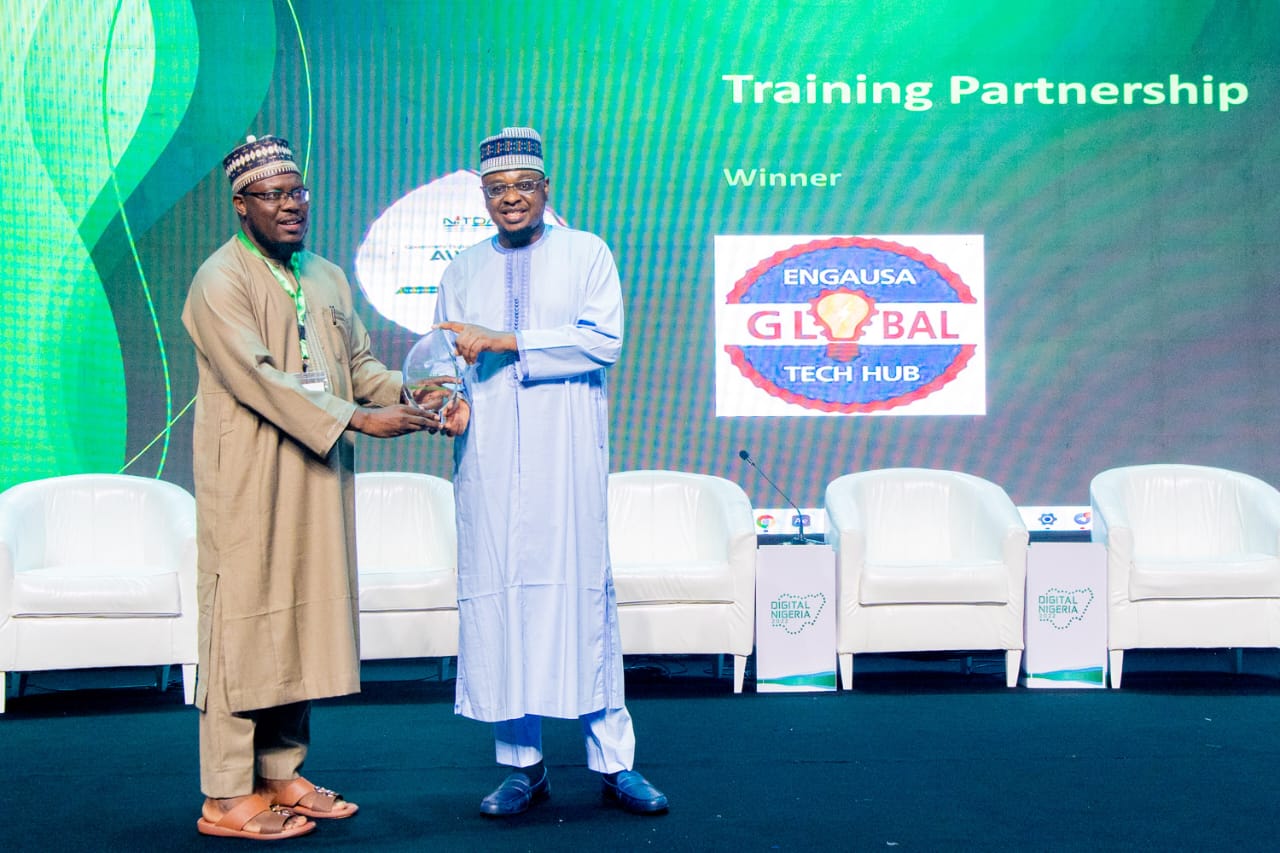
Ministry of Communications honours ENGAUSA Tech Hub with award of excellence 

By Muhammad Sabi’u and Uzair Adam Imam

The Nigerian Ministry of Communications and Digital Economy honoured the famous Nigerian technology training firm Engausa Tech Hub with an award of excellence as the “best trainer” among partners of the National Information Technology Development Agency in the country.  

The ministry disclosed this on Wednesday in a post shared on its official Facebook handle, adding that the award was pronounced at the Digital Nigeria conference of 2022.

The firm has established a name in the area of training youths in modern digital skills, primarily in Hausa and English and continues to record remarkable successes. 

The founder and chairman of the tech hub, Engineer Mustapha Habu Ringim, said the firm recently trained over 2000 young people in different skills, including digital skills, entrepreneurship, guidance and many more.

Ringim added that the graduates trained in various science and technology skills included the university lecturers, students, and Almajiri, who never attended any formal school. 

‘We teach in Hausa to break barriers English brings about in our education system’ – CEO 

The Engausa Global Technology Hub believes that knowledge can best be taught in a mother tongue (Hausa) to break the barriers impeded by the English language. 

In a statement he made available to journalists some weeks ago, Engineer Ringim said the technology hub had also launched a library to enhance reading among youths.

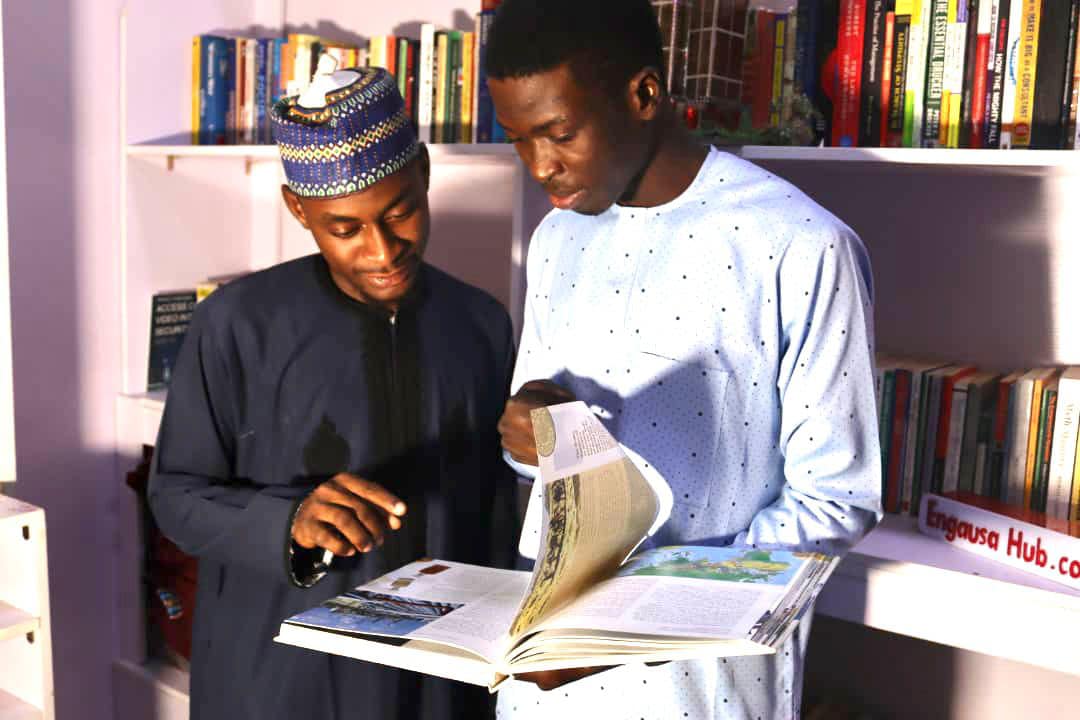
He said the effort was to enhance lifetime reading culture among youths, adding that the Maisuga Ringim Library has provided both hard and soft copies of reading materials for the apprentice of the technology hub. 

With its motto, ‘breaking barriers and bridging gaps’, the firm aims to entrench inclusive technical skills acquisition and entrepreneurial skills among the teaming youths against all language barriers and technical gaps bedevilling human capital development at the grassroots.

Engausa was founded in 2019 and registered in 2022 by Engineer Mustapha Habu Ringim. 

Engausa Global Technology Hub launches library to enhance reading culture

By Uzair Adam Imam

Engausa Global Tech Hub (EGTH) has launched a library to enhance lifetime reading culture among youths at its school premises in Kano State, Nigeria.

The founder and chairman of the technology hub, Engineer Habu Ringim, disclosed this in a statement he made available to journalists on Saturday. 

Ringim said the library is named Maisuga Ringim Library and has both hard and soft copies of reading materials for the apprentice of the technology hub. 

He also stated that the Maisuga Ringim Library project aimed at bridging the wide gap between academic and vocational education in society.

He further explained that the effort was to break the barriers of language impeding the cognitive aspect of learning in almost all African education systems. 

The statement read, “Launching Maisuga Ringim Library is a big step towards cultivating a rational lifetime reading habit among our youths by making the scarce library resources available to our apprentices at both entry and professional levels of learning hard and soft skills.

“The main objectives of EngausaHub.com, as our motto reads, ‘breaking barriers and bridging gaps’, is to entrench an inclusive technical skills acquisition and entrepreneurial skills among our teaming youths, against all language barriers and technical gaps bedevilling the human capital development at the grassroots.

Engausa was founded in 2019 and has recorded numerous successes in teaching people various scientific and technological skills to depend on themselves and become employers of labour.

The Daily Reality recalls that over two thousand people, including university lecturers and students who have never had formal education, such as Almajirai, graduated from the Engausa Global Technology Hub just recently. 

The graduates were trained in various skills to become self-reliant and job providers.

Arewa digital literacy centre, Engausa, commences classes next week

By Muhammadu Sabiu

A Northern Nigerian digital skills learning centre, Engausa Global Tech Hub, will admit students and commence its September classes next week Monday.

This is contained in a short announcement posted on its official Facebook page Sunday.

“New Engausa Global Tech Hub classes will begin on Monday 12th November 2022 Insha Allah,” the post reads.

The classes, largely delivered in the Hausa language, focus on teaching skills like video editing, blogging, graphics design, web design and Android dev., social media literacy, and digital marketing.

Others are installations (CCTV, solar panels, electric fencing, and Intercom) and smartphone repair skills.

The training costs twenty-five thousand naira (N25,000) and lasts for a period of five weeks.

In order to register, interested applicants are advised to click www.EngausaHub.com or call any their phone numbers.