Education

The other side of Almajirai

By Sulaiman Maijama’a

Almajiri System, over the last few years, has come under intense pressure, greeted with mixed reactions by stakeholders, especially in northern Nigeria. Many people have written many pieces on the negative consequences of the system, ascribing it to be one of the underlying causes of poverty, hunger, and insecurity, among other social vices in northern Nigeria. For this reason, it has been a topic of debate. Some call for repositioning the system, and some agitate for its total abolishment. In contrast, others argue that it should remain as it is today.

Undoubtedly, the present-day Almajiri system is, to a greater extent, different from what was obtainable in the pre-colonial era, hence the need for a review. Before British colonisation, the system, aside from the authorities’  high recognition and promotion, had enjoyed the support of other major stakeholders, such as the community, the parents and the pupils. So also, the whole financial burden of the system was being taken by the authorities with public funds. These indicate that the Almajiri system in those days was somewhat formal and, therefore, more organised.

However, the magnitude of the attack the system has now come under has given it a distorted image. It has developed a stereotype in some people, so much so that on the mention of the word “Almajiri”, the first connotation that comes to mind is negativity – illiteracy, poverty, hunger, dishonesty, insecurity and all sorts of social vices.

The word “Almajiri” is a derivative of an Arabic word, “Al muhajirun”, which could be traced right from the migration of Prophet Muhammad (peace be upon him) from Makka to Madina. Those who migrated with the prophet to Madina were called ‘Al-Muhajirrun’, meaning migrants. In Nigeria, the word “Almajiri” refers to those, usually teenagers, who are sent by their parents from respective villages and settlements to urban centres in the quest for Qur’an knowledge.

2014 UNICEF report estimated the number of Almajiri conservatively to be 9.5 million in Nigeria, predominantly in the northern part. If all of them were a nuisance, as widely believed by some people, the situation of our region would be worse than we could imagine. 

There is no doubt that there are bad eggs among them, which applies to every category of people. But, as much as bad eggs, there are equally good ones among the Almajiris who have passed through the system and become successful in different facets of life.

Almajiris excelled

Adamu Garba, a former Nigerian presidential aspirant, in an interview with the Punch Newspaper, says the Almajiri system in northern Nigeria produced some of the wealthiest men, including Africa’s pride, Aliko Dangote and the founder of BUA Group, Abdul Samad Rabiu, amongst others. Garba said he was once an Almajiri before he acquired Western education.

When asked whether the Almajiri system promotes terrorism, Garba said Boko Haram has no connection with the Almajiri system because of the dichotomy between Islamic denominations in northern Nigeria. “So, it is very unlikely that you have an Almajiri man becoming a Boko Haram,” he told The Punch.

Garba also mentioned that many business giants are products of the Almajiri system. “Again, if you go to [the] Kano market, most of the rich people in the market are Almajiri. They came through Almajiri, they were able to get [the] necessary training in the Almajiri institutions, and they were able to get to where they are.”

Similarly, several renowned Islamic scholars were once Almajiris. A typical example is Sheik Muhammad Bin-Uthman.

Testimonies from people

Some people interviewed narrated how their encounters with some Almajiri lefts them with a memorable impression.

Abdullahi Muhammad, a resident of Kobi, an Almajiri-dominated area in Bauchi, narrated how an Almajiri once returned his valuable lost items.

“I once forgot my valuable properties around my house. I gave up finding them, but to my surprise, an Almajiri found and returned them to a nearby mosque. It was announced after a couple of days. I claimed ownership and recovered my items intact. I was surprised [at] how honest the boy was.”

In an interview, Aisha Abubakar, a housewife in the Kobi area in Bauchi, revealed that she had two little Almajis coming to help her with housework.

“Two little Almajis come daily to help me with some housework — they fetch me water, wash clothes, and sometimes I send them on an errand. I give them food and sew them clothing when they go home during holidays. For the past two years, they have been coming. They are honest”, she said.

Maryam Abdullahi, another housewife in the Gwallaga area, Bauchi, said she retained an Almajiri who, apart from helping her with housework, teaches her little children Arabic alphabets.

“I have an Almajiri that comes on Thursdays and Fridays to give Qur’an lessons to my children. I’m happy now that my children are good in the Arabic alphabet and Qur’an recitation, courtesy of the lesson they receive from this boy ( the Almajiri). I cannot thank him enough.”

When asked how honest and disciplined she finds the Almajiri, she said, “I send him uncountable times with money to buy foodstuff and other items, and I always find him unblemished.”

Murtala Aminu (Ɗankasuwa), a trader in an Almajiri-dominated area, when asked how he finds the Almajiris around him, he asserted that their stay in the area is a blessing.

“They recite the Qur’an every blessed day and night. This gives us tranquillity and peace of mind. In addition, we cite them as an example for our children to emulate their hard work searching for knowledge. Many of them memorised the Qur’an by heart. What could be more delightful?”.

We take good care of Almajiris under our watch — Almajiri teachers

When interviewed, some Almajiri teachers revealed to us how they strictly manage the Almajiris under their tutelage to be well brought up and face the realities of life early.

Mallam Muhammad Shafi’u Inuwa, an Almajiri teacher in Sabon Gida Tsangaya school, said, “under our school, we have about a  hundred Almajiris. We raise them early in the morning to take classes between 5:00 am and 10:00 pm. In the afternoon, we allow them to work to earn a living. At night, between 8:00 pm and 10:00 pm, is also time for classes. We ensure that all the Almajiris return to their apartments when it is time for sleeping.”

On his part, Mallam Khamisu Ali (Gwani), another Almajiri teacher, said, “we try in this Tsangaya (Almajiri school) to imbue in them (the Almajiris) the spirit of hard work. Moreover, we encourage them to be self-reliant because to work and earn a living is better than to beg; that is why we allow them on school-free days (Thursdays and Fridays) to acquire skills.”

When asked whether the parents of the Almajiris come to check on their wards, Mallam Gwani said, “we are in contact with their parents. We face some challenges regarding this, but plans are underway to make it necessary for every parent to come in person and check on their wards at certain intervals.”

Regarding learning efficiency, Mallam Gwani stated that they had produced brilliant reciters, some of whom memorised the Qur’an by heart as teenagers.

Some Almajiris do not beg nor chant for food

In their efforts to face the realities of life and actualise self-reliance, some Almajiris interviewed claimed to have never begged nor gone to houses chanting for food

In this interview, a teen Almajiri, Zaharadden  Manu, explained how he sustains his life by harnessing and utilising the skill he learned back home before he was taken to Almajiranci.

“Every day after school hours, I go around nearby communities to do shoe shining, and it earns me a living. Then, on Thursdays and Fridays, I fetch water to housewives for food or money”, he said.

Musa Aliyu is an ambitious Almajiri who reconciles Qur’an learning and hand work. When asked where he sees himself in the decade, he said, “I see myself in the future as an educated person and a business owner with employees under me. I pursue this dream to the best of my ability.”

It was observed that on school-free days, markets and commercial centres get populated with Almajiris who do different works to earn some money to live on.

Give Almajiris the atmosphere to harness their full potential – Educationist

Comrade Abdullahi Yalwa, an educationist lecturer with the Department of Crimes Management and Control, Abubakar Tatari Ali Polytechnic, Bauchi, opined, “I think that abolishing the system may not be realistic or so easily achieved. What should be done is to review and revise to align with realities. There is a correlation between nature and nurture, and the two must synchronise to give an effective and responsible person. If one is bound to succeed if given a better condition, he would be double or triple or would be in the book of record for the exceptional display of talent.”

Comrade Yalwa further said, “to maximise the benefits and reduce or eliminate the negative effects of the system. Parents need to be responsible by sponsoring their children when searching for knowledge. They should give them enough resources to manage themselves, visit them periodically, give them what they need in terms of their basic need and also appreciate the person taking care of them in order not for him to use them as slaves.”

On what the government and relevant authorities should do, Comrade Yalwa recommended that “the Almajiri teachers ought to be registered by the government, and a maximum number of students should be allotted to each, and they should have the basic necessities, especially accommodation facilities, where people have a responsible and decent life.”

Maijama’a is a student at the Faculty of Communication, Bayero University, Kano and wrote via  sulaimanmaija@gmail.com.

Why persons with disabilities need education

By Ibrahim Tukur

Persons with disability, otherwise known as differently-abled individuals, encounter immense challenges that leave them at the mercy of socioeconomic underdevelopment. Due to their disabilities, they often struggle to survive. Those with profound physical challenges, especially blindness, spinal cord, leprosy, and cerebral palsy, cannot but resort to financial dependency to survive.

Consequently, street begging, considered taboo in some societies, is rampant among persons with a disability thanks to the lack of governmental and societal support towards the welfare of persons with disability.

Apart from persons with hearing impairment, most persons with a disability depend on begging to survive as they are not physically fit to do some work. What is more worrisome, to say the least, is the fact that many persons with disability family men struggle to ensure end meets. Some would have to go to big cities where people are more charitable to do begging and return home as soon as they are financially well-off.

In some cities like Lagos and Abuja, where many persons with disability make substantial income, the ban on street begging has been imposed. Thus, the sources of livelihood of these people are adversely affected.

Although street begging is a condemnable offence, the imposition of such a ban without proffering any practical solution to the problem is seriously unfair, and almost cruel. 

Even though this lingering problem can be resolved by establishing Social Security Disability Benefits, the needs of persons with disability can not be totally satisfied, thanks to Nigeria’s economic feeble.

All persons with disabilities need education and skills to become financially, economically and intellectually independent. Disability is no longer a barrier to education since the inception of special education in Nigeria in the middle of the nineteenth century.

The government of all levels should do everything possible to make education accessible for all persons with disability. Many special schools should be constructed and well-equipped with special instruments and materials.

Parents with children with disabilty should do the needful by sending them to school where they will acquire sound knowledge that will enable them to turn their disabilities into abilities.

Education is compulsory for all persons with disability. When all persons with disability are educated, life will become easy for them. They won’t have to roam on the street begging. Even if they are unemployed, they can start their own business and get as much money as they like.

Ibrahim Tukur is a 400-level deaf student at Bayero University, Kano. He is a disability rights advocate and proponent of deaf childrens education. He wrote via inventorngw@gmail.com.

Insecurity weakens Nigerian education, increases number of school drop-out – Minister

By Uzair Adam Imam

The Minister of Education, Adamu Adamu, said the lingering security challenge in Nigeria had weakened the country’s education system.

The minister said the insecurity in the country also contributed to the rising number of out-of-school children today.

He disclosed this on Thursday in Abuja during the ministerial session of the 66th National Council on Education (NCE).

In the event themed ‘Strengthening of Security and Safety in Nigerian Schools for the Achievement of Education 2030 Agenda, Adamu said the issue would soon be addressed.

He added that President Buhari’s administration was working tirelessly to reduce the number of out-of-school children and the illiteracy level in the country.

He said, “I’d like to call on all states to rise up to their responsibilities and provide a safe and secure learning environment for both students and teachers.”

Furthermore, the education minister also said that all schools must be safe and secure at all costs.

The negative impact of the Covid-19 pandemic on education in Nigeria

By Maryam Mohammed Bawa

The outbreak of Covid-19 in late December 2019 has wreaked havoc worldwide, especially in critical sectors like education. Students, schools, colleges, and universities have been deeply affected. According to the United Nations Educational, Scientific and Cultural Organization (UNESCO), over 800 million learners from around the world have been affected, 1 in 5 learners cannot attend school, 1 in 4 cannot attend higher education classes, and over 102 countries have ordered nationwide school closures while 11 have implemented localized school closure.

The sudden outbreak of coronavirus disease 2019, which originated in the city of Wuhan, China, has become a major public health challenge for China and countries worldwide. The pandemic has led to the total lockdown of most human activities in various parts of the world. Infection control measures were necessary to prevent the virus from spreading further and to help control the epidemic. One of the control measures is the total lockdown of schools at various levels worldwide on March 19, 2020. Through the Federal Ministry of Education, the Nigerian government ordered the closure of all schools at various levels.

There is no doubt that the interference of the coronavirus pandemic has caused so many challenges in the Nigerian education system. Covid-19 has had an enormous negative impact on education at every level worldwide. Education is among the sectors with the devastating effects of the Covid-19 pandemic. Before the pandemic, the Nigerian education system adopted a face-to-face approach to teaching and learning in primary and secondary schools.

Primary and secondary school learners were not allowed to own any digital gadgets such as phones or computers. With the emergence of the lockdown condition and school closure, teachers and learners were helpless about how to continue learning in the face of the pandemic following the pandemic. In many African countries, the pandemic experience has been traumatic but not perhaps as catastrophic as some observers and experts had predicted. Mistakes were made, but there were notable successes too. Some African governments and institutions took steps that showed the sort of foresight, imagination, and innovation that was often lacking in other parts of the world.

It is on record that education challenges during the Covid-19 pandemic include school closures. So as not to spread the virus, the students and everyone else were advised to stay at home and have classes online instead for those who are able. The lack of face-to-face interaction and poor facilities sometimes led to poor learning. There was also unequal access to education opportunities and poor skills. As I stated earlier, not every pupil had access to gadgets, so there would be unequal knowledge gain or inequality in education.         

Furthermore, the pandemic negatively affects education, causing poor school enrollment and poor achievement because proper attention was not given to schools at that time. Poor school health and challenges in school assessment and transition. This was a challenge because some students were not a part of it, which led to chaos and confusion after the resumption. Also, schools weren’t going at the same pace because some were in their first term while others were already getting promoted. In this direction, Nigeria should put in place measures that will help to tackle such situations in the future, considering the negative impact of Covid-19 on education in Nigeria.

Maryam Mohammed Bawa wrote from the Department of Mass Communication, Skyline University, Nigeria. She sent this article via magicwriter009@gmail.com.

Gombe State: The best time to pay students’ scholarships

By Abdullahi Nayaya

Education, especially at the tertiary level, remains the bedrock for national progress and prosperity. It provides society with skilled manpower and eases the process of governance and technological progress. Governments, the world over, invest hugely in education in their quest for human capital development. In this regard, I write this piece to appeal and send a friendly reminder to Gombe state Government to fulfil its promise of settling students’ scholarship arrears.

Many students have lost their valuable property for a long time, so they waste staying at home. In addition, students left their valuables in the hostels or their rented houses off campus due to the recent eight-month-old strike by the Academic Staff Union of Universities, otherwise known as ASUU.

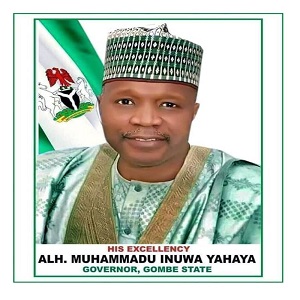
Given the plights of the students, therefore, I would like to appeal to the Gombe State Government under the leadership of His excellency Alh. Muhammad Inuwa Yahaya, as a matter of urgency, to come to the university students’ aid, particularly those studying outside the state. This category of students deserves to get scholarship arrears so they can go back to their various institutions/campuses smoothly. Undoubtedly, this would greatly help the poorest among them and even those who have and put a smile on their faces. There is no better time to help students than now!

To my recollection, Gombe State students have not been paid their stipends for the past three years. Also, it has been reported in the news that the State Government has promised to pay the scholarship when the universities re-open. It made this promise when the State Governor invited the Gombe State Students Association (GOSSA) president and his entourage for Iftar during the holy month of Ramadan in the government house.

Now that the universities have re-opened, we pray that Gombe State Government will fulfil its promise as it has been known. Despite the economic uncertainty, the State Government is doing its best in terms of education, infrastructural development, healthcare, security, etc.

I hope our governor, the ministry of education and all concerned will expedite actions to help and pay the Gombe students their scholarship entitlements. The students have suffered a lot at the hands of the cruel repercussions of the strike, and now all students dearly need help. I am happy because I know our great governor of Gombe State has listening ears, and he has already promised to pay. I am sure he will pay. This is just a reminder, Sir.

Long live Gombe State Government.

Long live Gombe state students.

Best regards to the daily reality.

Abdullahi Nayaya writes from Gombe State, Nigeria.

BUK revises calendar, gives students 3 weeks for revision

By Uzair Adam Imam

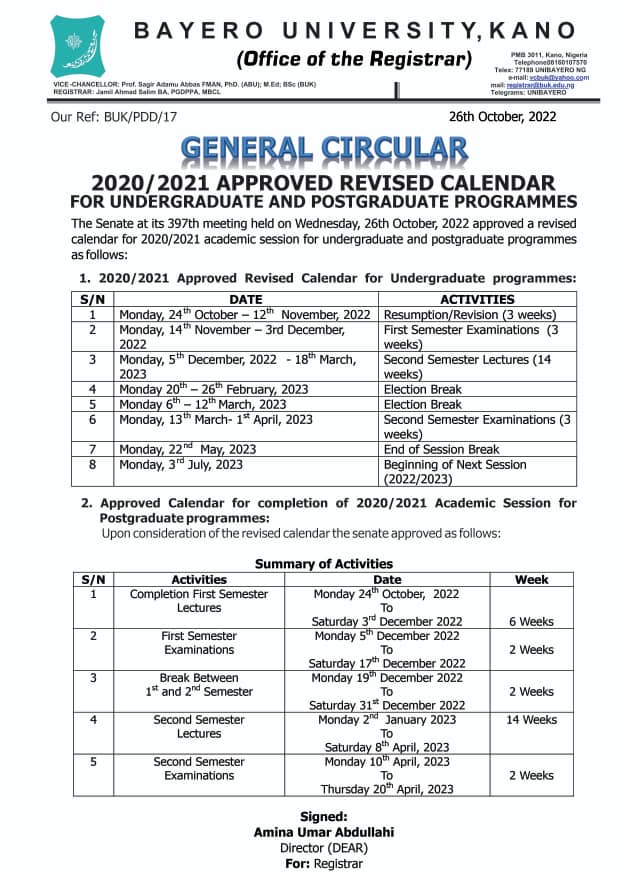
Following its resumption on Monday, the Management of Bayero University, Kano (BUK), revised its academic calendar, giving the students three weeks to revisit their previous lectures before exams.

The decision by the management was a result of a Senate Meeting held today, Monday, October 26, 2022, at the university’s Convocation Arena.

The university was about to start its first-semester examination on February 16 when the Academic Staff Union of Universities (ASUU) embarked on a strike.

The industrial action by the union, which lasted for eight consecutive months, started on February 14, 2022.

The university lecturers embarked on the total shutdown of the universities to press their demands home, which they said the Federal Government failed to fulfil.

However, after several disputes between the Federal Government and the ASUU, the union ended its strike just recently. Still, many students, parents and even most lecturers are not enthusiastic about the resumption. This is simply because the lecturers are still left stranded by the FG without payment of their salaries. If the salaries are paid, it will surely and greatly serve as a motivating factor for a vibrant return of the lecturers to their classes.

Dubai opens 9-in-1 hybrid library

By Muhammad Aminu

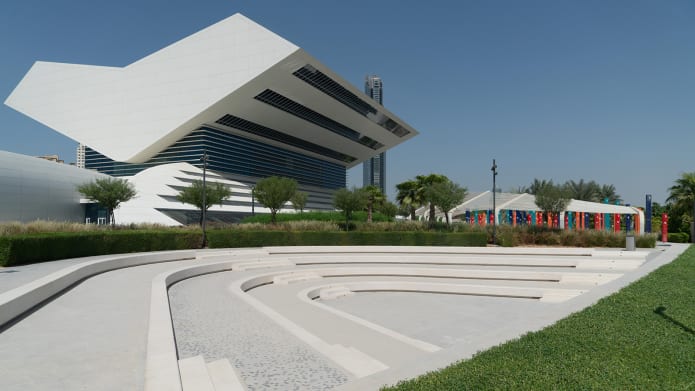
Dubai authorities have opened a unique modern nine-in-one library that gulped over $272 million to establish.

The library named after Dubai’s ruler ‘Mohammed Bin Rashid AlMaktoum Library’ is at par with the pantheon of world-class book repositories such as London’s British Library and Egypt’s Bibliotheca Alexandrina.

Al Maktoum announced the construction of the new library in 2016, which now houses more than 1.1 million print and digital books in its 54,000 square-meter facility.

CNN reports that the library has a beautiful oasis of calm contemplation, where visitors can curl up with a good book, plug in laptops for study or work, or marvel at the rare manuscripts and first-edition books displayed in the exhibition space.

The library reportedly houses nine separate libraries containing almost all areas of expertise, from sciences to arts and entertainment.

“The facility is home to nine separate libraries, dedicated to everything from media and the arts to business titles, international periodicals, maps and atlases, books for children and young adults, and a collection of precious archival treasures,” it said.

“The collection of works is still being built, but it already boasts some impressive numbers. Alongside its multilingual print and digital books, visitors can access more than six million dissertations, 73,000 musical scores, 75,000 videos, 35,000 printed and digital international journals, and over 5,000 historical periodicals spanning 325 years.

The library, which has a cafe for a break, also contains a database of thousands of digital titles that can be downloaded from machines in each of the nine libraries.

There are books in braille for visually impaired readers and a quiet space with reading pods for visitors with special needs.

It also has an Auto Book Store, a subterranean storeroom for the 400,000 titles that don’t appear on the library’s shelves, but members can request a book via the library’s app.

Engausa Global Technology Hub launches library to enhance reading culture

By Uzair Adam Imam

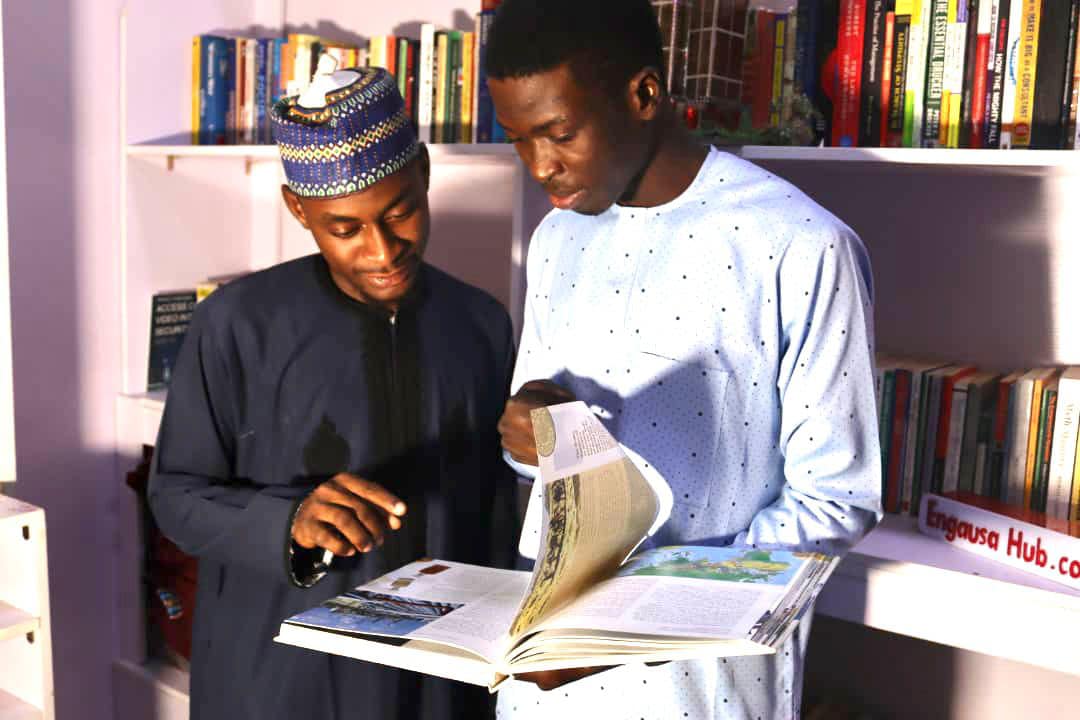
Engausa Global Tech Hub (EGTH) has launched a library to enhance lifetime reading culture among youths at its school premises in Kano State, Nigeria.

The founder and chairman of the technology hub, Engineer Habu Ringim, disclosed this in a statement he made available to journalists on Saturday. 

Ringim said the library is named Maisuga Ringim Library and has both hard and soft copies of reading materials for the apprentice of the technology hub. 

He also stated that the Maisuga Ringim Library project aimed at bridging the wide gap between academic and vocational education in society.

He further explained that the effort was to break the barriers of language impeding the cognitive aspect of learning in almost all African education systems. 

The statement read, “Launching Maisuga Ringim Library is a big step towards cultivating a rational lifetime reading habit among our youths by making the scarce library resources available to our apprentices at both entry and professional levels of learning hard and soft skills.

“The main objectives of EngausaHub.com, as our motto reads, ‘breaking barriers and bridging gaps’, is to entrench an inclusive technical skills acquisition and entrepreneurial skills among our teaming youths, against all language barriers and technical gaps bedevilling the human capital development at the grassroots.

Engausa was founded in 2019 and has recorded numerous successes in teaching people various scientific and technological skills to depend on themselves and become employers of labour.

The Daily Reality recalls that over two thousand people, including university lecturers and students who have never had formal education, such as Almajirai, graduated from the Engausa Global Technology Hub just recently. 

The graduates were trained in various skills to become self-reliant and job providers.

Just In: KASU gets new vice-chancellor

By Sumayyah Auwal Ishaq

The Governor of Kaduna State, Malam Nasir Ahmad El-Rufa’i, has appointed Prof. Abdullahi I. Musa as the substantive Vice-Chancellor of the Kaduna State University (KASU).

A statement made available to journalists in Kaduna shows that Prof. Musa is the current University’s librarian.

He holds a PhD in Library Science from Emporia University, Kansas, and an MBA from Bayero University, Kano (BUK).

The new vice-chancellor also obtained his bachelor’s degree in Library Science from BUK and a master’s in Library Science from Ahmadu Bello University (ABU), Zaria.

Kano-based academic’s name appears on global 2% top scientists

By Muhammadu Sabiu

Dr Sani Isah Abba, a specialist in optimization algorithms and artificial intelligence from Kano, had made it to the global list of the top 2% of scientists in their field by a joint research evaluation metric developed by Stanford University’s Elsevier and the Meta-Research Innovation Center.

Abba is a certified engineer and a lecturer at Base University Abuja, Nigeria.

According to a document obtained by The Daily Reality (TDR), Abba has published more than one hundred research articles and book chapters.

He also presented at numerous regional, national, and worldwide conferences.

The academic did his BSc, MSc and PhD at Bayero University Kano, Sharda University India and Near East University Cyprus, respectively.

TDR understands that his works can be accessed on Google Scholar, Research Gate and ORCID, among other academic platforms.