Education

U.S. to require student visa applicants to share public social media profiles

By Muhammad Abubakar

The United States government has announced a new policy requiring student visa applicants to make their social media profiles publicly accessible as part of the application process.

According to the Department of State, the move is intended to enhance security screening and allow immigration officials to better assess the backgrounds of applicants. The policy will apply to most non-immigrant visa categories, including the F-1 visa commonly used by international students.

Critics have raised concerns about privacy and potential bias, warning that the rule could discourage free expression online. Supporters, however, argue that it strengthens national security and helps identify potential threats.

The new requirement is expected to take effect later this year, with applicants needing to provide their social media handles and ensure that posts are visible for review.

SLUK staff becomes first African to win King Abdullah Bin Abdulaziz International Award for Translation

By Muhammad Sulaiman

In a historic academic achievement, Dr. Zaidu Jibril Muhammad, a lecturer at Sule Lamido University (SLUK), Kafin Hausa, has become the first African recipient of the prestigious King Abdullah Bin Abdulaziz International Award for Translation.

Dr. Zaidu, who lectures in the Department of Arabic, Faculty of Humanities, clinched the 2025 award for his Hausa translation of the Arabic literary masterpiece Maqāmāt al-Ḥarīrī, published under the title Dandalin Hikimomi. The Prize’s Board of Trustees praised the translation for its scholarly depth and cultural resonance, calling it a significant contribution to African scholarship and global cross-cultural understanding.

Born on May 15, 1985, in Shungurum village, Birnin Kudu Local Government Area of Jigawa State, Dr. Zaidu holds a Ph.D. in Arabic Language among other qualifications.

Dr. Zaidu is also a prolific author, with four major Hausa translations of classical Arabic works. In addition to Dandalin Hikimomi, his works include Dandalin Dabaru (from Maqāmāt Badī‘ al-Zamān al-Hamadhānī), Bakandamai Bakwai(from Al-Mu‘allaqāt al-Sab‘a), and a Hausa version of a widely used Arabic academic guide for university students. He has also published fifteen academic articles in national and international journals.

Currently serving as a Lecturer I and a member of the International Union of Arabic Language, Dr. Zaidu’s groundbreaking achievement has been described as a landmark not just for Nigeria but for the entire African continent.

Northwest university students battle new fee hike amid economic hardship

By Anas Abbas, Anwar Usman and Uzair Adam

There is growing outrage among the students of Northwest University, Kano, following a significant increase in school fees for the 2025/2026 academic session.

The Daily Reality gathered that the increase is nearly 100 percent, causing many students to question whether they will be able to continue their studies given the worsening economic situation in the country.

In an exclusive interview with our reporters, the students, many of whom pay their own fees, have made passionate pleas to the school authorities to reconsider the hike.

They warn that if the situation remains unchanged, higher education will be accessible only to the children of the elites in the country.

The Daily Reality recalls that the previous reduction in fees by 50 percent, initiated by Governor Abba Kabir Yusuf, had made the university one of the most accessible institutions in the state.

According to the National Bureau of Statistics (NBS), Nigeria’s inflation rate as of January 2025 is 24.48 percent. Though it has dropped from the December 2024 figure of 34.80 percent, Nigerians continue to struggle with the high cost of everyday necessities.

The fee hike is untimely

Most of the students who spoke to The Daily Reality expressed deep concern, describing the increase as ill-timed, especially in light of the economic hardship in Nigeria.

They lamented that they were not prepared for the hike and had no plans to cope with it, leading to troubling thoughts about their future and the possibility of continuing their studies.

One student, Ibrahim Muhammad (not his real name), shared his worries with The Daily Reality, stating, “The registration fee is beyond imagination.”

He added that the school authorities did not inform them in advance, and they were shocked to see the Remita platform reflecting the sudden increase—an amount they find unbearable.

Muhammad, who came to Kano from a neighbouring state, highlighted the importance of the earlier fee reduction, saying, “I chose this university because of the 50% reduction. We urge Governor Abba to consider our plight and take action.”

The burden is too heavy

Another student, Isma’il Shu’aibu (also not his real name), voiced his frustration: “Last session, I paid 18,000 naira, but now I’m being asked to pay 57,000 naira.”

Shu’aibu further added that, “This is far too much, and many students will struggle to afford it.”

A Growing Crisis

The students noted that the increase would only worsen an already challenging situation, urging the school authorities to reconsider their decision.

Shu’aibu added that even the previous fee of 18,000 naira was a struggle for many students, pushing some to consider dropping out.

“Many students are appealing through the media for help to pay their registration fees,” he lamented.

“As I speak to you, I am paying for my own education. I don’t have 57,000 naira, and I don’t know where to find it,” Shu’aibu concluded.

Many students who feared to speak with journalists expressed dissatisfaction about the hike. They shared a common concern about how the new fees might force them to abandon their studies.

They expressed, “We have no idea how we will manage to pay this new fee. It’s simply too much for us, especially with how hard it is to survive these days.”

Increase a blessing in disguise – Authority

Despite bitter complaints from students, the school authorities argue that the increase is, in fact, a blessing in disguise for them.

Speaking to The Daily Reality, the university registrar, Malam Isyaku Adamu, confirmed the hike and explained that it would help students participate in the National Education Loan Fund (Nelfund), noting that many of their students had not been taking advantage of the programme.

He stated, “The Nelfund is the national cake. If Musa and Isa refuse to eat, Jon and Jack will eat. So this is to also encourage our students to participate and benefit from the Federal Government’s programme.”

He added that the increase was also meant to help the university meet certain critical needs. Adamu emphasized that Northwest University is still among the most affordable institutions in Nigeria, based on the university’s own research.

“If you look at what the students pay in a year, even after maintaining laboratories, the library, health services, electricity, water, and environmental sanitation, the money is still very cheap,” he said.

He concluded that the fees are not even sufficient to cover all expenses, reiterating that even primary and secondary school pupils pay more than what Northwest University students pay per year.

Despite injecting billions into education, Kwakwaci, other Kano schools remain in ruins

By Anwar Usman

Government Secondary School Kwakwaci, Kano, has a rich history of academic excellence spanning decades. Over the years, the school has produced thousands of graduates who have gone on to achieve greater things.

The Daily Reality reliably gathered that despite these notable achievements, the school is now facing significant challenges.

Many fear that Kwakwaci will be among the schools in Kano State that may cease to exist due to severe environmental and managerial problems that have plagued the institution.

These unresolved issues threaten to ultimately force the school to close its doors.

Part of the problems bedevilling the school include dilapidated classrooms, abandoned laboratories, and other infrastructural decay, further exacerbated by rampant theft of school facilities by hooligans living in the vicinity.

Neglect despite huge education allocations

The Daily Reality also gathered that this menace persists despite the state’s declaration of an emergency in the education sector and the allocation of massive funds to improve education in the state.

This persistent neglect raises uncomfortable questions about the priorities of the Kano State Government, which allocated a staggering ₦95 billion to the education sector in its 2024 budget and an additional ₦168,350,802,346.19 (representing 31.00% of the budget) in 2025, making education one of the most heavily funded sectors in the state.

Current state of the school

The once-proud institution has no gate to protect its infrastructure, giving people of all kinds unrestricted access to the premises.

A staffer of the school, who spoke under the condition of anonymity during an interview with our reporter, lamented how the school has been grappling with issues that threaten its very existence.

“At night or after school hours, people enter the school and steal whatever they want due to the absence of security personnel at the gate,” he said.

He added that, “That’s what makes it easy for people to engage in criminal activities like smoking, drug abuse, and other illegal acts.”

He further noted, “The school is located very close to a market, and people have taken advantage of that proximity to carry out illegal activities.”

Other schools suffering a similar fate

Kwakwaci is not the only school in this dire situation. Several other schools are either on the verge of collapse or desperately need renovation to continue operating.

Schools like Mai Kwatashi, GSS Tudun Bojuwa and many others in the rural communities have suffered from over a decade of neglect.

In the case of GSS Tudun Bojuwa, the school has no gate, students sit on the floor, and the classrooms lack doors and windows, among other distressing conditions.

It is evident that while the state government’s declaration of an emergency in education is a vital step, these persistent problems continue to undermine teaching and learning.

Response from the principal

When contacted, the principal of Government Secondary School Kwakwaci said he was not fully aware of the situation.

“The only thing I know is that the school has no junior secondary students because they are under the supervision of the State Universal Basic Education Board (SUBEB), and they don’t send junior secondary students here anymore,” he said.

He attributed the lack of students to the high cost of living. “Most of the students come from areas like Kurna, Rijiyar Lemo, and Bachirawa.

“Many parents cannot afford the transport fare for their children, and that’s why the school has no junior classes.”

He added, “We only have SS2 and SS3 classes, and we have already appealed to stakeholders to reconsider the situation and send fresh students for junior secondary education.”

Government response

TDR also contacted the Kano State Ministry of Education through its Public Relations Officer, Usman Abdullahi, who referred us to the Executive Secretary of the Kano State Secondary Schools Management Board (KSSMB) for a comprehensive report on the condition of the school.

However, the Executive Secretary’s phone could not be reached.

Efforts to contact the PRO of the KSSMB also proved futile as there was no response to the calls and messages we sent to him at the time of compiling this report.

Many people believe that it is high time the government took decisive action to address the plight of these schools, especially Kwakwaci.

They also believe that that would help not only in revitalising education but also in curbing illegal activities by individuals who exploit the school’s deteriorating facilities.

Professor Roko’s healing hand: Governor Yusuf’s generosity

By Lamara Garba

In a world where leadership often wears the heavy cloak of command, Governor Abba Kabir Yusuf of Kano State walks a different path—one marked not by spectacle, but by quiet grace. His recent donation of N5 million to support the health of Professor Abubakar Roko, a senior lecturer at Usmanu Danfodiyo University Sokoto, shines like a candle in a stormy night—a gesture simple in form, yet profound in meaning.

This act of compassion stirred a ripple through the academic community, reaching hearts far beyond Sokoto. The family of Professor Roko, alongside the Academic Staff Union of Universities (ASUU) UDUS branch, offered their deep thanks. For them, the governor’s support was not just financial—it was a lifeline, a moment of humanity in an often indifferent world.

Professor Roko’s struggle for access to medical care echoes a troubling truth: that even those who nurture the minds of generations can find themselves abandoned in times of need. When society allows a scholar—one who has dedicated his life to the service of knowledge—to fall through the cracks, it begs the question: who among us is truly safe?

Indeed, Governor Yusuf’s gesture is more than an act of charity; it is a quiet protest against this injustice. It is a reminder that governance, at its best, is an extension of empathy. That leadership is not just about steering the ship, but about seeing those who have fallen overboard—and reaching out a hand.

Beyond the naira and kobo, what Governor Yusuf has given is dignity. His kindness says, “You matter.” It is a message sorely needed in times where those who build the foundations of our future—our teachers, our thinkers, our guides—are too often overlooked.

The ASUU Zonal Coordinator Professor Abubakar Sabo in terse verbal message of appreciation who, himself a staff of UDUS described Governor Abba as a “Messiah.” Saying, forever we shall not forget you, in our hearts. While titles are fleeting, the sentiment behind the praise is enduring. Governor Yusuf’s empathy has breathed life into the belief that leadership can still be rooted in service, not self.

In a letter penned by Professor Aminu Muhammad Bui, Head of the Department of Computer Science at UDUS, heartfelt gratitude poured forth: “This act of kindness and compassion from your esteemed office has brought immense joy and relief to Professor Roko and his loved ones.” These are not just words of thanks—they are testaments to the healing power of compassion.

Meanwhile, Professor Ibrahim Tajo Siraj, Chairman of ASUU BUK, illuminated the grim landscape of public education: dwindling morale, poor working conditions, and an exodus of talent—each one a symptom of a system that has long been neglected. His call for reform is a plea to rescue the very soul of the nation’s development engine.

Indeed, a society that does not cherish its educators weakens the roots from which all progress grows. The conditions endured by those in the education sector are not just unfortunate—they are unacceptable. Their resolution demands more than words; it requires will, vision, and urgent action.

Therefore, Governor Yusuf’s act is a glimmer in this long night, a sign that compassion can still guide power, and that true leadership is not found in titles, but in the quiet decisions that uplift lives.

It calls us to imagine a new dawn—where educators are honored, not merely with words, but with systems that support them; where acts of kindness are not rare exceptions, but a culture of care. Governor Yusuf’s compassion is a seed—may it find fertile ground in the hearts of other leaders.

And so, as the dust of this singular act settles, may it not fade into memory, but grow into a movement—a call to conscience. For in Governor Yusuf’s gesture, we find a lesson not just in leadership, but in humanity. And may that lesson echo far beyond Kano, beyond Sokoto—into every corner where hope waits to be awakened.

Perhaps, Governor Abba Kabir Yusuf’s donation to Professor Abubakar Roko is more than just a gesture of kindness; it is a reflection of his character as a leader. It shows that he is a man of compassion, empathy, and enduring humanity—one who listens not just with his ears, but with his heart.

It is worthy to note that in a time when many cry out for leaders who truly understand the burdens of everyday people, Governor Yusuf’s act stands as a quiet yet powerful answer.

It reminds us that leadership is not measured by grand speeches or lofty titles, but by the courage to care and the grace to act. His benevolence has not only lifted a man in need, but also rekindled faith in the idea that public service can still serve the public. May this gesture inspire others in power to lead not from above, but from among—and to remember that the true strength of leadership lies in the strength it gives to others.

Lamara Garba writes from Bayero University, Kano

17,025 candidates score above 300 in resit UTME

By Anas Abbas

In the recently released results of the 2025 Unified Tertiary Matriculation Examination (UTME), 17,025 candidates, representing 0.88% of the total 1,931,467 participants, scored 300 and above. 

This information was disclosed by the Joint Admissions and Matriculation Board (JAMB) on Sunday, coinciding with the announcement of results from the resit examination.

This year’s performance marks a notable improvement compared to previous years since the introduction of the Computer-Based Testing (CBT) format in 2013. The latest figures surpass the 1,842,364 results released in 2024, reflecting a consistent increase in UTME participation over time.

For context, only 8,401 candidates (0.46%) achieved similar scores in 2024, while just 5,318 candidates (0.35%) reached this benchmark in 2023.

Governor Yusuf orders automatic employment for 84 foreign-trained graduates

By Muhammad Abubakar

Governor Abba Kabir Yusuf has directed the automatic employment of 84 foreign-trained graduates into the Kano State Civil Service, following his administration’s full settlement of their outstanding fees at Near East University, Northern Cyprus.

The graduates, who had been abandoned mid-study after the previous government withdrew scholarship funding, were recently issued their certificates after the state paid N2.24 billion in arrears to the university.

Addressing the students at the certificate presentation ceremony in Kano, Governor Yusuf said the graduates would be immediately absorbed into public service. “These students have suffered enough. Now, they will be given the opportunity to contribute to the growth of our state,” he said.

Among the beneficiaries are medical doctors, nurses, dentists, pharmacists, computer scientists, and biomedical experts — all of whom earned degrees under immense hardship.

The governor’s action is seen as both a humanitarian and developmental gesture, aimed at harnessing the skills of foreign-trained professionals while restoring faith in government-backed education programs.

Education experts have praised the move, describing it as a practical step toward addressing youth unemployment and reversing the brain drain trend.

Governor Yusuf settles N2.24bn debt, rescues 84 stranded students in Cyprus

By Muhammad Abubakar

Governor Abba Kabir Yusuf of Kano State has brought relief to 84 students abandoned in Northern Cyprus after settling a massive N2.24 billion debt owed to Near East University, paving the way for the release of their academic certificates.

The students were part of a foreign scholarship scheme initiated by former Governor Rabiu Musa Kwankwaso but were left in limbo when the succeeding administration halted funding. The withdrawal left them unable to pay tuition and accommodation fees, effectively trapping them in a foreign country without support.

Governor Yusuf, during a ceremony in Kano, described the situation as a national embarrassment and expressed satisfaction at resolving the crisis. “This marks the end of years of hardship, uncertainty, and humiliation for our children abroad,” he said.

The affected students, including 28 medical graduates and others in health and engineering disciplines, faced legal threats, eviction, and exclusion from classes during the years of neglect. Their ordeal sparked widespread concern both locally and internationally.

Stakeholders have commended the governor for the intervention, calling it a timely and compassionate move to restore dignity and hope to the affected families.

20 arrested for hacking JAMB results

By Hadiza Abdulkadir

The Department of State Services (DSS) and the Nigerian Police have arrested 20 suspects in Abuja for allegedly hacking into the servers of the Joint Admissions and Matriculation Board (JAMB) and the National Examination Council (NECO) to manipulate UTME scores.

The suspects, part of a larger syndicate of over 100 members, reportedly charged candidates between ₦700,000 and ₦2 million to obtain inflated results. Many are said to operate private schools and special centres used for the fraud.

Sources indicate that the group aimed to discredit JAMB’s Computer-Based Testing (CBT) system and discourage its future use by other examination bodies, such as WAEC and NECO.

The arrests follow JAMB’s release of the 2025 UTME results, in which over 78% of candidates scored below 200 out of 400. 

Registrar Ishaq Oloyede earlier cited server faults affecting nearly 380,000 candidates, prompting a resit exam from May 16.

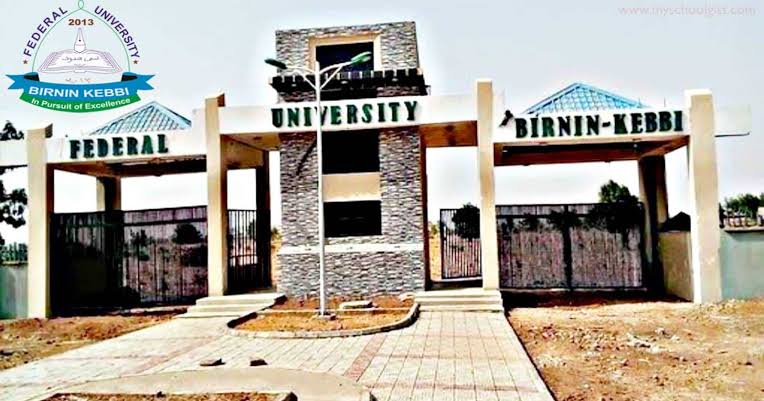
Federal University Birnin Kebbi gets new registrar, four professors

By Muhammad Abubakar

The Governing Council of Federal University Birnin Kebbi (FUBK) has approved the appointment of Barrister Abdulkadir Abubakar as the new Registrar of the University for a five-year term.

The decision was made at the Council’s 29th meeting held on Thursday, May 22, 2025, under the leadership of the Pro-Chancellor and Chairman of Council, Col. Abdulmumini Aminu (Rtd.). The appointment follows the recommendation of the Joint Senate and Council Selection Board.

Barr. Abdulkadir brings to the position 18 years of experience in university administration. He joined FUBK in 2015 as a Senior Assistant Registrar and became Deputy Registrar in 2022. Before this, he served at Kebbi State University of Science and Technology, Aliero, and at the College of Basic and Advanced Studies, Yelwa-Yauri.

A legal practitioner with a Master’s degree in Petroleum Law and Policy from the University of Dundee, UK, Abdulkadir also holds a Bachelor of Law in Common and Islamic Laws from Usmanu Danfodiyo University, Sokoto. He was called to the Nigerian Bar in 2009.

Until his recent appointment, he headed the Legal Unit of FUBK and served in various administrative capacities, including TETFund Desk Officer and Assistant Secretary to the Council.

In a related development, the Council also approved the promotion of four academic staff to the rank of Professor and three others to Associate Professor. The newly promoted Professors include Dr. Bello Bala Diggi (Intellectual History), Dr. Mohammed Bashar Danlami (Virology), Dr. Muhammad Muazu Yusuf (Development Economics), and Dr. Yahaya Tajudeen Olarenwaju (Cell Biology and Genetics).

The new Associate Professors are Dr. Halima Muhammad Bande (Business Administration), Dr. Abdullahi Umar (Geography), and Dr. Ali Sherrif Kabara (Accounting).

The appointments of Professors Diggi and Danlami are effective from January 1, 2024, while those of Professors Yusuf and Olarenwaju take effect from January 1, 2025.