Business

You can add some category description here.

“No one ever makes rich with salary”

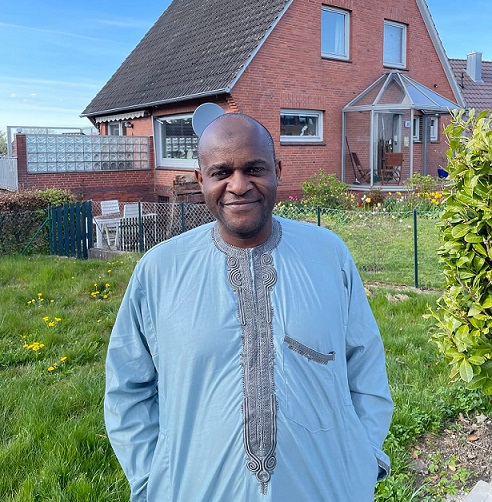
By Mohammed Usman (Noble-pen)

I often see people confidently saying the above statement, especially to sway someone’s mind and make him subscribe to their opinion. And most of them don’t care to take the time to think about it thoroughly. 

On the surface, the statement is true and leaves susceptible minds with no option but to agree. But suppose we subject it to close examination, broaden our lens of thinking horizon, and look at it from a different angle. In that case, we realise that the statement is not as accurate as it is often considered. 

Most people quickly make this statement; they merely take the case study of low-level salary earners working for a government or at a government ministry and then confidently make this sweeping statement: “No one ever makes rich with salary.” 

Suppose we hover our thinking over those low-level salary earners at government ministries and those holding miniature academic certificates. In that case, we cannot deny that no one among them, or hardly one among them, becomes rich with salary because the amount most of them receive as salary can only keep them breath and save them from dying of absolute starvation. They are mere slaves. 

Worst still, some people have very little or no savings and investment power. The rate of their disposal out of the salary outweighs that of their savings by a large percentage. They are living hand to mouth. 

However, no one can tell me that those holding advanced academic certificates and working in top levels of government, national and multinational corporations, and organisations (nongovernmental) that they are not making rich with their salary. Even the low-level workers in such organisations and corporations are getting rich! 

Therefore, the above statement is false whenever we look at it from this angle. And so we advise those people making the statement to reframe it accordingly because they are not right. 

In any case, the word “Richness” is subjective. Different people perceive and interpret it differently depending on their different life orientations. Some perceive and interpret being rich as only when you garner, in large profusion, materialistic things. Some interpret being rich as being able to manage scarce resources to attain satisfaction. Therefore, in this class, a poor person is greedy, always looking for more and more, and never gets satisfied with what he has. I belong to this class of people. 

If a person wants to work to earn a salary and sustain a living, let him do it. And that makes him no less reasonable than someone aspiring to enter a business venture. It is called “Individual and personal opinion”. By the way, it would not be brilliant to expect everyone to become a business owner or own a business venture or enterprise for a living.

But of course, business is worth it, especially in this current global economy. It offers numerous benefits to individuals, society, and the economy, such as : (1) Job Creation: Businesses create jobs which help people earn a living and improve their standard of living. They provide employment opportunities for workers of all levels of education and experience ; (2) Economic Growth: Businesses contribute to economic growth by generating revenue, investing in research and development, and creating new markets and industries. This, in turn, stimulates economic activity and raises the standard of living for everyone…. You can mention the others! 

So whether business or salary earning, the end is the same: “to earn a living”, and being rich, as I said above, is a subjective case. 

Thank you 

Mohammed Usman (Noble-pen) wrote via mohammedusman5706@gmail.com.

CBN instructs banks to disregard initial ban on cryptocurrency

By Abdurrahman Muhammad

The Central Bank of Nigeria’s financial policy and regulation director, Haruna Mustapha, announced in a circular on Friday.

The central bank has issued guidelines and regulations for banks on managing cryptocurrency in accordance with global standards to prevent misuse. They also urge banks to comply with these guidelines and regulations.

See the full statement below: 

FPR/DIR/PUB/CIR/002/003

CIRCULAR TO ALL BANKS AND OTHER FINANCIAL INSTITUTIONS

GUIDELINES ON OPERATIONS OF BANK ACCOUNTS FOR VIRTUAL ASSETS SERVICE PROVIDERS (VASPs)

The CBN in February 2021 issued a circular restricting banks and other financial institutions from operating accounts for cryptocurrency service providers in view of the money laundering and terrorism financing (ML/TF) risks and vulnerabilities inherent in their operations as well as the absence of regulations and consumer protection measures.

However, current trends globally have shown that there is need to regulate the activities of virtual assets service providers (VASPs) which include cryptocurrencies and crypto assets. Following this development, the Financial Action Task Force (FATF) in 2018 also updated its Recommendation 15 to require VASPS to be regulated to prevent misuse of virtual assets for ML/TF/PF.

Furthermore, Section 30 of the Money Laundering (Prevention and Prohibition) Act, 2022 recognizes VASPs as part of the definition of a financial institution. In addition, the Securities and Exchange Commission (SEC) in May 2022 issued Rules on Issuance, Offering and Custody of Digital Assets and VASPS to provide a regulatory framework for their operations in Nigeria.

In view of the foregoing, the CBN hereby issues these Guidelines to provide guidance to financial institutions under its regulatory purview in respect of their banking relationship with VASPs in Nigeria.

The Guidelines supersedes the CBN’s circulars referenced FPR/DIR/GEN/CIR/06/010 of January 12, 2017 and BSD/DIR/PUB/LAB/014/001 of February 5, 2021 on the subject. However, banks and other financial institutions are still prohibited from holding, trading and/or transacting in virtual currencies on their own account.

Accordingly, all banks and other financial institutions are hereby required to immediately comply with the provisions of the Guidelines.

HARUNA B. MUSTAFA

DIRECTOR, FINANCIAL POLICY AND REGULATION DEPARTMENT

Growth vs. Profitability: Lessons for Startups

By Salisu Uba, PhD FCIPS

I have read some devastating news over the last couple of weeks in relation to the ecosystem in Africa, some promising startups are shutting down operations. I am sure the recent events will affect any potential investments in our startups.

I want to address some concerns around two contrasting paths that often emerge: the allure of rapid growth without immediate profitability versus the steadier route of slower growth with assured profits. Let’s explore these models and the lessons they hold for startups in attracting investment.

High Growth, No Profit: the temptation of business sprinting towards expansion, capturing attention with its rapid growth but yet to turn a profit (wework case study). These ventures entice investors seeking significant returns. They prioritize scaling up, seizing market shares, and envisioning a lucrative future, often emphasizing customer acquisition over immediate profitability.

Slow Growth, Steady Profits: the assurance one perhaps, on the other side, is progressing at a more measured pace prioritising sustainable growth and consistent profitability. While not racing ahead in growth, they maintain stability, focusing on operational efficiency, nurturing loyal customers, and ensuring profitability from the outset.

Investment Magnet: the high growth appeals to investors as it favours the high-growth model due to its potential for explosive returns. African startups are promising and bustling markets, venture capitalists are scouting for opportunities everywhere, and the allure of substantial growth can overshadow concerns about immediate profits, maybe! However, sustainable profitability forms the backbone of long-term success, offering stability even in market downturns (don’t aim for what’s not realistic).

Learning from Both Models: from experience, the winning formula for our startup founders is to glean invaluable lessons from both models. By embracing the innovation of high-growth ventures and adopting prudent financial practices from profitable businesses, a potent combination can emerge. Striving for growth with an eye on achieving profitability can attract investors while ensuring long-term viability.

Striking the balance between growth and profitability is to find the equilibrium between high growth and profitability. It involves building a robust foundation for scalability while ensuring financial viability in the long run. This hybrid approach could be the linchpin to captivate venture capitalists eyeing the burgeoning African startup landscape, offering excitement and stability in equal measure.

Perhaps as we always aim to make a positive impact and make economic progress, investment is key to a successful venture. Therefore in the quest for investment opportunities, startup founders and entrepreneurs should combine the dynamism of high growth with the solidity of profitability.

Salisu is a fellow of the Chartered Institute of Procurement and Supply (CIPS) and a member of the CIPS Education Committee in the UK. He is the founder and CEO of NarQuest Limited – a supply chain technology company based in Glasgow, UK. 

Max Air: Why always you?

By Fatima Ibrahim

I humbly write to draw the attention of Max Air Nigeria Limited to the plight of their clients regarding the delay and disappointment of their service. For a very long time, people have been lamenting the Max Air company flight delays.

To advise you, you have to always dance to the tone of your customers and make their interests your top priority. Scott D. Cook once stated, “Be dramatically willing to focus on the customer at all costs, even at the cost of obsoleting your own stuff.” Judging by this statement, you have to pay much attention to the satisfaction of your customers to wipe away the tears provoked by your unsatisfactory services.

People’s—your customers in question—lamentation over your disappointing services will make you lose them. This is because customer satisfaction is the foundation of any successful business. Therefore, by addressing this primary concern and improving service quality, you can retain your existing clients and attract new ones. By so doing, you would uphold your reputation for reliability and customer satisfaction in the competitive aviation industry.

Notwithstanding, taking prompt action to rectify issues such as flight delays will not only enhance customer loyalty but also contribute to the positive perception of Max Air. Bill Gates once said, “Your most unhappy customers are your greatest source of learning.” Embracing feedback and actively working towards improving service efficiency will undoubtedly lead to a more content and loyal customer base.

Therefore, I urge you to prioritise your customers’ satisfaction, for it is not just a business strategy but a commitment to building enduring relationships.

Fati Ibrahim wrote from the Department of Mass Communication, University of Maiduguri.

FCCPC issues warning on surge of fake online stores ahead of Black Friday

By Sabiu Abdullahi

As Black Friday approaches, the Federal Competition and Consumer Protection Commission (FCCPC) has issued a cautionary alert regarding a potential surge in fake online stores, with intelligence suggesting a possible increase of up to 135%.

The day after Thanksgiving has historically seen an uptick in fraudulent activities targeting holiday shoppers, prompting the FCCPC to advise consumers to exercise heightened vigilance during this period. 

Babatunde Irukera, Executive Vice Chairman of the FCCPC, emphasized the need for caution, stating, “There are unscrupulous individuals taking advantage of the Black Friday shopping spree to prey on unsuspecting consumers.”

Irukera urged consumers to exclusively patronize trusted and credible online platforms to mitigate the risk of falling victim to scams. 

To safeguard against fake online stores, the FCCPC recommends the following

  1. precautions: Shop on Trusted Websites: Only make purchases from websites with a known and reliable reputation. Conduct research to verify the legitimacy of unfamiliar sites. 
  2. Beware of Unrealistic Prices: Exercise caution when encountering online stores offering products at prices that seem too good to be true. Fraudulent websites often use enticing discounts to lure unsuspecting customers. 
  3. Verify the Security Certificate: Check for a security certificate, indicated by a lock icon in the address bar, to ensure the authenticity and security of the website. 
  4. Read Terms and Conditions: Thoroughly review a website’s terms and conditions, specifically focusing on the return and refund policies, to understand the platform’s commitment to consumer protection. 

Naira-Dollar crisis: Some takeaways

By Baffa Kabiru Gwadabe

Over the past few months, Nigeria has been suffering from continuous depreciation of its currency, the naira. The naira has depreciated from barely ₦600/$ in the last three months to ₦1,300/$ today, the 27th of October 2023. This is enormous, considering the loss of value by more than 120%. Many are worried, including my little self, about this development. But the recent propositions of solutions by many provoke such a write-up.

It is good to start with some questions concerning the crisis. What is happening? What went wrong? Who is to blame? What are the ways out? What will be the lasting solutions?

The above questions may not be provided with answers, as many out there know the answers already. The focus should remain on some best practices or exchange rate regimes to hinge on. Let me start with some highlights on the developments in Nigeria’s foreign exchange market.

In 1971, when the Gold Standard was abolished under the Bretton Woods System, several foreign exchange rate management regimes were pursued in Nigeria and other parts of the world. These include the independently adjustable peg, crawling peg, independent peg, collective exchange arrangement, dual exchange and floating regimes. IMF member countries practice six (6) other exchange rate regimes, which were later compressed into three (3) regimes to include pegs, limited flexibility, and great flexibility. These were later decomposed into fifteen (15) regimes, mainly from 1975 to 1998 (see Mishkin, 2007).

All those regimes were adopted unevenly by the IMF countries. This means they practice one or more of the regimes based on their choices and persuasions. By 1999, the IMF proposed eight (8) different exchange rate regimes. They include separate legal tender, currency boards, conventional fixed (pegged against a single currency or basket of currencies or other commodities like gold), pegged within horizontal bands, crawling pegs, crawling bands, managed floating and independent floating (see Mishkin, 2007).

Still, these interchanging regimes continued in Nigeria depending on the available foreign reserves, capital inflows and current account balances. Nigeria’s forex crisis worsened in the 1980s when the US economy pursued Nigeria to devalue its currency by 10% and other scenarios. However, some attention will be given to the last ten years or so, particularly the administration of President Muhammadu Buhari or the reign of Godwin Emefiele as the CBN Governor (2014 – 2023). Some reflections would also be made on earlier antecedents before the Buhari’s and current administrations.

Nigeria has pursued two dominant exchange rate regimes: the Retail Dutch Auction System (RDAS) and the Wholesale Dutch Auction System (WDAS). The RDAS is an exchange rate regime introduced in Nigeria in 1987. It focuses on buyers (end-users or customers) of Forex (USD) to bid for the prices, and the marginal bidder is supplied with the quantities by the CBN through authorized dealers. Under the RDAS, the inept dealers are supplied less, while the highest bidders are penalized for rent-seeking and invitation for depreciation. 

The WDAS, on the other hand, is an exchange rate regime targeted at maintaining the gains of the RDAS and the continued liberalization of the forex market. The WDAS came into operation in Nigeria in February 2006 and allows authorized dealers to buy forex on their accounts rather than on behalf of end-users. Also, the authorized dealers are carefully watched by the CBN, and the dealers are also allowed to trade in the interbank forex market. During that time, the CBN pursued other special interventions of forex sales to Deposit Money Banks (DMBs) and direct sales to licensed Bureau de Change (BDCs). The CBN further mandated that DMBs increase Business Travel Allowance (BTA) and Personal Travel Allowance (PTA) from $2,500 and $2,000 to $5,000 and $4,000 per quarter, respectively. All these policies were sustained in positive directions as the naira continued to appreciate by 2.6%, 8.7% and 5.8% for 2006, 2007 and 2008, respectively.

However, at the beginning of 2009, there was an observed forex policy reversal and the reintroduction of RDAS to reduce capital outflows and depletion of foreign reserves. The interbank trading segment was suspended. This was followed by sales restriction of forex to oil companies and government agencies and sales of forex to BDCs. But towards the end of 2009, the CBN called for recapitalization of BDCs in what they call ‘Class A’, while those that did not recapitalize are called ‘Class B’ BDCs. Both ‘Class A’ and ‘Class B’ BDCs can bid a maximum of $1 million and $250,000 respectively.

Similarly, by 2016, Nigeria’s forex market was further liberalized. During the period, the average naira-dollar exchange rate was N197/$ at the interbank window, representing a depreciation of 18.7% (as the exchange rate was N160/$ before 2016). However, one worrying thing remains: the premium between the interbank and BDC sections was about 41.5%. After this, some other forex regimes were still embraced under the administration of President Buhari and Godwin Emefiele. For instance, forex primary dealers (FXPDS) and non-FXPDS were introduced into the forex market in 2017.

In addition, longer-term derivatives like forwards trading from 1 to 3 months tenor and up to 2 years were introduced. The exchange rate was relatively stabilized at averages of N231.76/$ and N351.82/$ at interbank and BDCs, respectively. This has created many arbitrage opportunities for those with access to the interbank rates to continue to worsen the forex market. Such a trend continued for 2020, 2021, 2022 and until 2023. For instance, as of March 2023, the official rate was N462/$, while in the black market, it was an average of N750/$. 

The sacking of Emefiele as the CBN Governor and the appointment of the acting CBN Governor, Mr Shunobi, in June 2023, where the latter tried to close the gap and arbitrage opportunities, moved the official rate from N474/$ to N664/$. With the appointment of substantive CBN Governor in September 2023, Mr Cardoso, the apex Bank, moved on with complete deregulation of the forex market, and this has led to incessant depreciation of the naira to a historic level of N1,300/$. However, it now appreciates an average rate of N1,000/$ and other rates depending on information and locations.

The next thing to talk about is the proposed solutions to the lingering naira-dollar crisis. However, it is important to note that the CBN’s recent and previous exchange rate policies are floating in nature or simply deregulating the forex market, and this is counterproductive as it has not provided the desired results, especially recently. This is because floating regimes are usually for export-dominant countries such as China, the United States, Japan, Germany, India, Russia and Saudi Arabia, among others, as argued by the Mundell-Fleming model. Nigeria is a predominantly import-dependent economy. As such, depreciations affect inflationary levels in the first round (exchange rate pass-through to inflation) and at the ‘second-round’, popularly known in the current literature as the ‘second-round effect’.

To end this submission, the CBN needs to do one or two things to exit from the naira-dollar crisis, and these include:

(1) Invite a small but huge ‘Conference of the Parties’ (COP) to deliberate and take appropriate decisions for implementation immediately;

(2) Under the COP, dollarization with its components; official dollarization, unofficial dollarization, partial dollarization, etc should be reviewed;

(3) Hard-peg exchange rate regime should be deliberated;

(4) Managed-floating regime should be discussed;   

(5) Most importantly, sources of the forex demand pressures must be exposed.

Baffa Kabiru Gwadabe wrote from Bayero University, Kano, via bkabirugwadabe@gmail.com.

Lost Heritage Series: Furakenstein Monster and the Rufaidahization of Tradition

By Prof. Abdalla Uba Adamu

Birnin Kudu. The 1960s. An incredibly wonderful town. Still a wonderful town! Even more, wonderful, friendly people. So far away from Kano that a whole limerick was composed to warn of its distance ‘Birnin Kudu da nisa take / ɗa ya ɓata bare jika /.

For me, the town evokes memories of wonderful summer months spent there in my auntie’s house in ‘Gangare’ quarters, literally, a sloppy part of the town located in a depression. Years later, they filled the depression on the main road, making it easier for motorists to travel through the town easily. The mountain range has a wonderful greenback during the rainy season. The range stretches as far as the eyes can see, providing a wonderful wallpaper for the students in the secondary school (BKSS) at the foot of the mountain.

Memories of her earthen water storage pot (randa) with jema-scented grass floating in to give the water a cool, pleasant scented taste. The mere presence of the jema grass also scented the room. Then there is the river, about two kilometres away from her house. More like a brook than a river, the clear water flowing over the underlying rock bed was a wonderful sight for a city boy. I used to spend hours just watching the water bubbling gently under the bridge towards an unknown destination and trying to read my African Film (Lance Spearman) pictorial novels

And the rocks that littered the town – dark, broody, holding centuries of secrets. Massive rocks – you can see them from the atrium of her house. It became a pleasure to sleep in the open atrium, the night sky framed with those slabs. The rock paintings enhanced the appeal of the town discovered a decade earlier, in the 1950s. Conferring on the town an ancient status – and they had evidence of a 2,000-year human artistic activity.

However, the best memory was the kindirmo (yoghourt) market, right by the roadside near the entrance to the market. Sold by the stereotypical Fulani milkmaids. Kindirmo is so thick that it breaks up like ice floes on a frozen river when you hit the skin film on top of the large calabash holding it. Kindirmo is so sweet that it harks back at an ancestral memory of existence. Pure. Natural.

My old aunt was an artist and adept at churning up the thick kindirmo with equally massive balls of fura. Using a ludayi (ladle) carved from a gourd plant, she was adept at blending the fura right into the kindirmo floes in a calabash. The end product was a supremely nourishing, rich, tasty meal of classic fura – containing all the ingredients needed to nourish the body. Absolutely no sugar is needed or even desired. As you slurp it, you are often lucky to come across an unblended fura – gaya. Taken in a calabash container with ludayi. The ecstasy can only be imagined.

Sold with the kindirmo was fresh butter. Aunt used to fry the butter into a ghee. Pour a spoonful into any meal – ecstasy reloaded! Evoked Hassan Wayam’s verse:

Ga fura ta mai nono /

Tuwo na mai nama /

Years passed by, and my childhood memories of Birnin Kudu were kept in storage in my mind. Whenever I passed by the town – my aunt had left the place in mid-1980s when her husband passed on – and crossed the bridge, the memories came flashing by. Of the only friend I made, a Yusha’u, whom I cannot trace.

The daily grind made it difficult to re-create the culinary pleasures of my aunt’s fura. Further, I was too occupied with other things. One day, the urge came back after my return from studies. The question was, where would one get a fura meal? I was told it has now become a franchised business, and right opposite the block of flats I was staying in, Zoo Road, was what I called ‘Fura Café’ run in a kiosk. I dashed up there for a treat.

I was shocked. First, the fura balls were tiny. Like a baby’s fist. And white – not enough millet, obviously. Then, horror of horrors, he dropped three of them into a BLENDER! Would you believe it? A BLENDER! That’s the machine I saw my wife using to grind those ingredients used in making a soup! The worst was yet to come.

Next, he poured WATER into the blender. I could not stand it any longer, and I stopped him, asking for the kindirmo. ‘That was it. I just poured it into the blender,’ he saucily replied. Nothing like kindirmo – more like ‘tsala’ – watered down milk. He pressed buttons. Everything churned and chugged in the blender cup. He stopped, removed the cup, and then poured the lot into a PLASTIC cup – more like moɗa! I was speechless throughout this charade. I decided to see it through.

I asked for the ludayi. He gave me a look that clearly indicated he had never heard the word and passed on a PLASTIC spoon – y’know, the kind that comes with a cheap rice takeaway. I paid, took the cup, and had a sip. It was horrible. Sour. No pleasant flavour (garɗi) of a true kindirmo. Seeing the expression on my face, he offered cubes of sugar. I passed. I handed the entire sludge to him and left. That was the end of my first attempt at rekindling a memory.

Years later, after a five-year absence from Kano, I came back to see modernised Fura Cafes all over – Habib, Yusrah and the new kid on the block – Rufaidah. I was told some, e.g., Habib, had been around for a long time. Knowing I might regret it, decided to relive Birnin Kudu again. So, I popped into Rufaidah for a treat. Better than the horrid kiosk I had been to before. I was attracted by the post-modernist décor. Like the airport in Dubai.

Ahaf! The same Furakenstein monster was there. A blender, watery milk, lots of sugar, tiny chunks of unblended greyish fura, and a ‘dambu’ – moistly powdered fura as a spare. All are neatly packaged in a pretty container. It’s not as bad as what I had before, but it’s still a Furakenstein monster. Seems the Rufaidah Fura Café is the ultimate in the fura business. I am happy for them and impressed by their franchise. But for old codgers like me, even at our Fresh Young Dattijo (FYD) phase? Thanks, but no thanks. I can’t stand the monster – Furakenstein – that is the modern blender-churned fura, no matter how ‘ultra-modern’ their café is. Young people who throng the place, happily taking selfies, have no idea what they have missed in the generational journey.

Fura, as a meal, should be churned in massive chunks of kindirmo floes, the likes of which I am pretty sure can only be found in Birnin Kudu, Bulkachuwa and Danbatta. With huge dark grey fura balls providing high millet content. Spicy fura. Thick floes of yoghurt. No sugar. Not because you are on a health kick, but because it is almost a sacrilege to put sugar in such yoghourt.

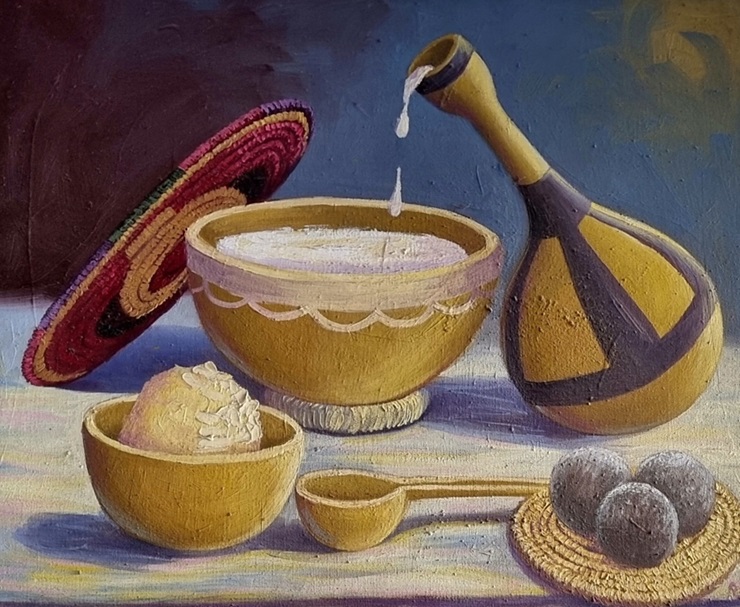
So, to celebrate this culinary purity, I am sharing the third painting in my office of classic Fura da Nono and fresh butter lost heritage scene painted on a medium canvas by the brilliant Bashir Abbas of Kano Polytechnic. It reminds me of the idyllic, peaceful and wonderful Birnin Kudu, with its rolling hills, tema grass (still available?), and the now drying river.

Dangote Cement surges with 15.2% Pan-African sales growth, record profits, unstoppable expansion

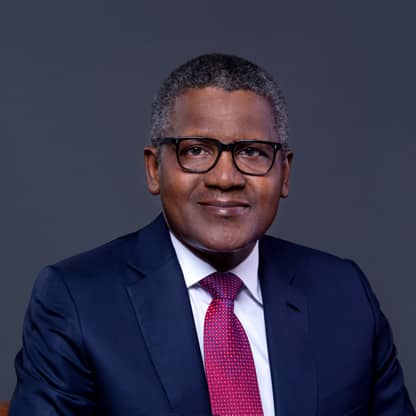
By Uzair Adam Imam

In the nine months leading up to September 30, 2023, Dangote Cement has reported a remarkable 15.2 percent increase in its pan-African sales volumes, reaching 8.5 million metric tons (Mt) compared to the 7.4 million Mt in the same period in 2022.

Pan-African volumes represent the sales volume from Dangote Cement plants located outside Nigeria.

These figures were revealed in the company’s unaudited results on the Nigerian Exchange (NGX) portal. The surge in volumes was primarily driven by exceptional sales performances in key locations.

The Dangote Cement Plant in Senegal saw a substantial 66.9 percent increase in sales, while the Dangote Cement Plant in Congo reported a 60.5 percent surge in volumes.

Dangote Cement Zambia experienced an 18 percent increase, with Ghana and South Africa following closely at 15.5 percent and 18.5 percent growth, respectively. Ethiopia and Tanzania also contributed to the positive trend with 6.5 percent sales volume increases.

Furthermore, Dangote Cement noted a 20.5 percent increase in profit before tax, rising from N335.9 billion to N404.89 billion, while the profit after tax increased by 30.2 percent, from N213.10 billion to N277.55 billion.

Arvind Pathak, the Chief Executive Officer of Dangote Cement, commented on the results, stating, “This positive nine-month result reflects our strong value proposition, enhanced operational efficiency, and our commitment to cost containment in the face of rising inflation. Group revenue reached ₦1,514.6 billion, with EBITDA reaching an all-time high of ₦662.8 billion, marking a
28.5 percent increase.”

He also highlighted the impressive growth of the company’s pan-African operations, which contributed 41.9 percent to Group volumes, with a record revenue growth of 103.9 percent and EBITDA growth of 255.4 percent.

Pathak emphasized that the growth was a result of sustained demand across the regions in which Dangote Cement operates.

Looking ahead, Pathak expressed optimism about the company’s future, particularly with
the final stages of a new grinding plant in Cote d’Ivoire nearing completion.

He reaffirmed the company’s commitment to delivering quality cement products to
its customers and expressed confidence in a strong finish to the year.

Dangote Cement is Africa’s leading cement producer with a capacity of 52.0 million metric tons across the continent. Through strategic investments, the company has not only eliminated Nigeria’s dependence on imported cement but has also transformed the nation into an exporter, serving neighboring countries as well.

Dangote Cement’s extensive operations include plants in Cameroon, Congo, Ghana, Ethiopia, Senegal, Sierra Leone, South Africa, Tanzania, and Zambia, in addition to its prominent presence in Nigeria.

Zulum reopens Monday Market

By Rukayya Abubakar Othman

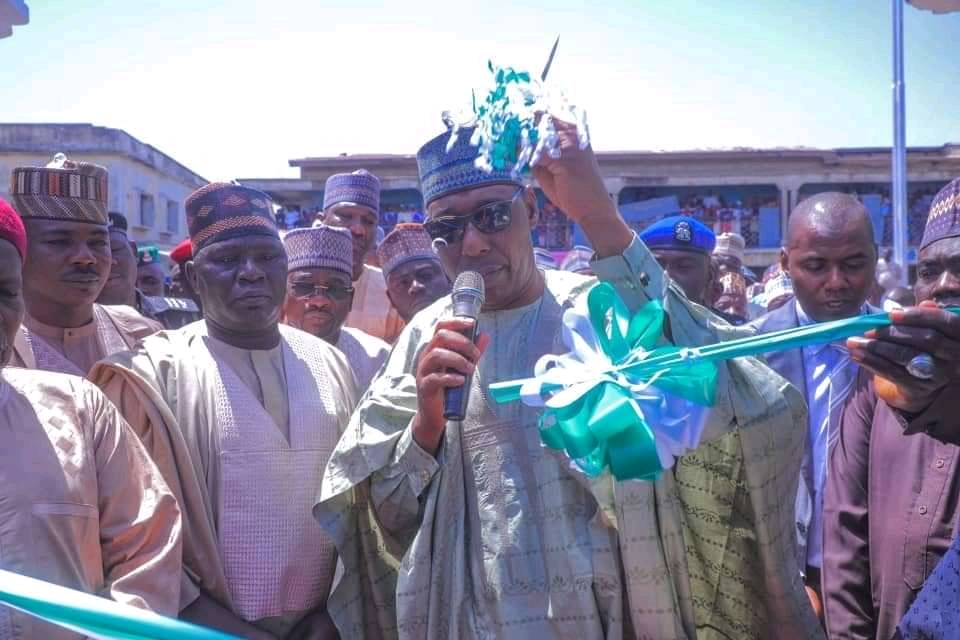
Governor Babagana Umara Zulum yesterday commissioned the famous Maiduguri Monday market and relieved two years’ rent for about 8,000 traders:

Borno state governor commissioned Maiduguri Monday Market on Monday, which was rebuilt after a fire inferno that gutted the market in February this year. 

Governor Babagana Umara Zulum announced that over 8000 traders who hitherto rented shops and paid rent would no longer pay for the next two years because of the losses incurred by them as a result of the mishap.

This, of course, is the untiring commitment of the state governor to the cause of serving humanity.

Upon the February incident, the governor hurriedly set up a committee to reconstruct the market, which has been completely rehabilitated and remodelled, with over 8,000 traders to benefit from the reconstruction. 

The market is well structured, which involves a comprehensive design and more vacancies for other traders to thrive in their business activities.

 The governor in February donated about N2b to the committee constituted to immediately swing into action and release N1b to the disaster victims. 

During the commission, Governor Babagana Umara Zulum announced about 2,825 traders who could not allocate their previous shop after the fire disaster. 

“As a result of remodelling, over 2,000 traders who either operated at a temporary site or built shops illegally on waterways could not own shops in the market. Moreover, the government will support over 185 of them with N1m “. Zulum said. 

He also promised that the people doing business there would get shops at a newly constructed Monday Market in Maiduguri. 

Who will rescue the Naira?

By Aliyu Nuhu

No easy way for a country with bizarre economic behaviour. The economic laws are there for easy implementation in a normal society. But Nigeria is not normal. Everyone, from the leases to the ordinary citizens, is looking for ways to damage the country for personal gain. NIGERIA operates its economy with laws made from hell.

We all know our huge appetite for the dollar is driven by our need for foreign goods which we are unable to produce. If we don’t need foreign goods, there will be no demand for dollars since we only need the currency for imports. But who is not guilty among us here?

Naira supply affects inflation since too much money is chasing a few goods but is not the direct cause of the fall of the Naira in the forex market. Laws of demand and supply drive the forex market. More Dollars available will lower its value and vice versa with Naira. But these laws don’t work in Nigeria because of distortion in all economic policies created by the government, mostly by greedy Nigerians and the officials themselves.

The forex window allows funding of critical sectors with dollars by the Central Bank of Nigeria (CBN). But the distortion here is that those given dollars to import goods will take the money to the money market for round-tripping. The CBN officials will also take the dollar and exchange it for quick gain. Each governor that gets FACC allocation in Naira will take it to market chasing the dollar.

With such behaviour, the Naira can never get a breather. It is this distortion that makes it difficult to explain the reasons why Naira is not only weak but unstable. Currency instability is the worst thing that can happen to a country. At any point in time, investors can never know their profits and losses. It is the reason why companies like Emirates, ShopRite and Game are closing shop.

After looking at some of our promising macro trends, Nigeria is still unable to keep Naira strong because of the depletion of the country’s foreign exchange reserves. The major function of foreign reserves is to keep the Naira strong. But regime after regime keeps spending the reserve account to a point that no one can precisely say the balance of NIGERIA’s foreign reserve.

World Bank said irrespective of all other macroeconomic shortcomings, the Naira can still be exchanged for a dollar one-on-one if we can have $900bn in our foreign reserve. But what do we have today? Less than $30bn!

Kuwait is a consumer country like Nigeria, but because it has a foreign reserve of $137bn and a gold reserve of 78.97 tonnes, it has the strongest currency in the world. But Nigeria has 21.37 tonnes of gold in its reserve and a $34bn reserve for an economy with a GDP of $489bn. Kuwait is able to save with a GDP of $106bn! There is evidence that shows that GDP growth and employment growth increase in response to positive shocks to foreign currency reserves (forex reserves) accumulation, whereas unemployment declines.

Read the reports on the new government report on CBN, and you will understand that the Naira is only competitive by sheer luck, if not a miracle. Everyone, including people in charge of Naira’s health, is out to destroy the Naira.