Business

You can add some category description here.

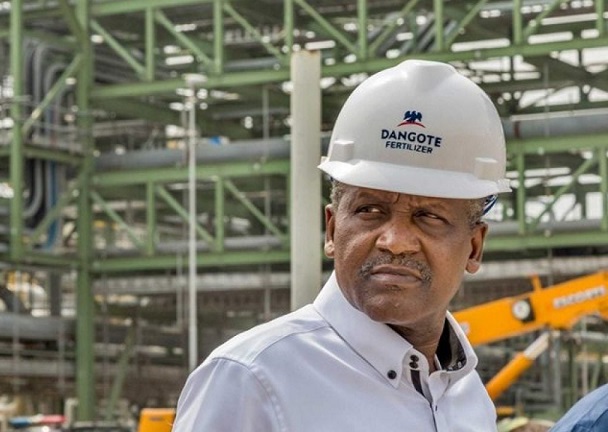
JUST IN: Dangote refinery begins petrol production

By Uzair Adam

The Dangote Refinery, with a capacity of 650,000 barrels per day, has begun producing petrol.

The announcement was made on Tuesday by Alhaji Aliko Dangote, the refinery’s Chief Executive Officer, while addressing journalists about this significant milestone.

The $20 billion refinery, built by billionaire businessman Aliko Dangote, commenced operations in January, initially focusing on the production of diesel and aviation fuel.

Further details are expected shortly.

BUA Cement chairman blames dealers for frustrating ₦3,500-per-bag-price policy

By Sabiu Abdullahi 

AbdulSamad Rabiu, the Chairman of BUA Cement, has revealed that his company’s intention to sell cement at N3,500 per bag last year was thwarted by the actions of cement dealers. 

During the 8th Annual General Meeting held in Abuja, Rabiu stated that BUA Cement had sold over a million tons of cement to dealers at a price of N3,500 per bag, with the intention of passing the savings on to end-users.

However, he noted that dealers were selling each bag of cement to consumers for prices ranging from N7,000 to N8,000. 

Rabiu expressed frustration that the company’s policy was not being implemented as intended, saying, “So, a lot of the dealers took advantage of that policy. Rather than pass the low prices to the customers, they were selling at even double the price we sold to them.” 

He attributed the discontinuation of the policy to the company’s inability to regulate dealers, who were earning substantial profits due to high margins.

Rabiu also cited the challenges posed by the devaluation of the Naira and the removal of fuel subsidies last year, which made it difficult for the company to sustain the price policy. 

“We wanted that price to stay at that level, but dealers refused. So, we could not sustain that simply because we did not want to be in a situation where we are subsidizing dealers,” he said.

Hunger Protest backfires as food prices soar in Kano

By Uzair Adam

As poor Nigerians protest against hunger and biting economic hardship, another hardship has emerged, with foodstuff prices skyrocketing in markets following the relaxation of curfew by some state governments.

In Kano, Governor Abba Kabir Yusuf, through an announcement by the Kano Police Commissioner, Dogo Salman, relaxed the curfew from 6:00 a.m. to 6:00 p.m., contrary to the previous 24-hour directive and the subsequent 6:00 a.m. to 2:00 p.m. order.

The Daily Reality learned that some local shops had begun to run out of foodstuffs due to the market closures during the hunger protests, fearing attacks from the aggrieved demonstrators who often targeted anything in their path.

As jubilation turns to grief

People were ecstatic following the return to normalcy in the state and the relaxation of the curfew. This led the leadership of the Singa market to reopen for business.

However, the initial joy quickly turned to disappointment as buyers encountered increased foodstuff prices, sparking outrage and accusations of profiteering.

A householder, Malam Ibrahim Umar, condemned the price hikes as unreasonable and merciless.

Not only government is our problem

Umar stated that it is high time that people understand that the trouble with Nigeria is not always from the government side but also us as individuals.

He said, “We must understand that we must change ourselves first. Looking at how the government is treating people, how protesters steal and vandalize properties worth millions of naira, and how our businessmen increase prices so unreasonably, it is enough for us to understand that we are the problem of our country.”

Another household member, Abubakar Umar, also shared Umar’s belief, “We need to change first as these people we are always complaining about are from among us.”

A mother of ten, Hafsat S. Shu’aibu, decried the price increase, calling on market leaders to address the root of the problem, saying, “This is too much for the poor to bear.”

As hope dies

Shu’aibu added that she has begun to lose hope that Nigeria will improve, as the problems stem from multiple sources.

She added, “People should repent to Allah and strive to change themselves because marketers and the government are not from a different world – they come from within us.”

Another household, Nuhu Adamu, lamented that despite the youth protests, he thought things would improve and the government would take steps to alleviate the suffering of the masses, but to no avail.

He stated, “After the protest against hardship, now comes another hardship that only God can save us from, as prices rise and rarely decrease in Nigeria.”

Snacks, bakery business at risk

Another person, Abdulmajid Abubakar, said bakery and snacks businesses are at risk as the price of flour, sold at 63,000 before, increased to 80,000.

He said that with the increase in the price of flour and other ingredients, they have no option but to either decrease the size of the snacks or increase the cost.

He said, “I was so disappointed to know about the increment. It is so ridiculous and unreasonable. We are pleading for government intervention.”

Game of blame

When contacted, the Chairman of the Singa market, Alhaji Junaidu Zakari, denied the increase in foodstuff prices, claiming the problem originated with dealers.

He said, “We have received numerous complaints from people and are working hard to address the issue. However, the increase is not from us but from the dealers.”

“As of now, we have started collecting remittances from our traders and dealers to determine the source of the problem,” he added.

However, a local trader who visited the market yesterday to purchase goods refuted the Chairman’s claims.

The person who wished to remain anonymous said, “They have been doing this to us and ultimately make us quarrel with people. They increase the prices first, which justifies our price increases, as business is about profit.”

We can’t fold our hands over artificial inflation

The increment in the price of foodstuffs and the recent alleged artificial inflation have prompted people to register complaints with the Kano State Public Complaints and Anti-corruption Commission to intervene.

The Daily Reality recalled that just a few days before the nationwide protest, the commission’s Chairman, Barrister Muhyi Magaji Rimin Gado, said the commission would not stand idly by over the alleged artificial inflation in the state.

Rimin Gado spoke when people bitterly complained about the hike in the price of bread and alleged artificial inflation in the price of foodstuffs in the state, vowing not to remain idle in the face of the alleged inflation by some traders in the market.

Rimin Gado said the commission was working tirelessly to understand the root cause of the inflation and would take even “extraordinary measures to combat the menace if necessary.”

The Daily Reality learned that Rimin Gado’s assertion gave people hope at that time, and they are now looking forward to the commission’s interventions.

NNNPCL Boss: I will expose the truth when time comes

By Abdullahi Mukhtar Algasgaini

The Chief Executive Officer of the Nigerian National Petroleum Company Limited (NNPCL), Mele Kyari, has declared that he will reveal the truth about the company’s operations when the time is right.

Kyari made this assertion on Wednesday while testifying before a Senate ad-hoc committee investigating alleged economic sabotage in the petroleum industry.

Led by Senator Opeyemi Bamidele, the committee is probing the oil firm’s activities amidst controversy and public scrutiny.

Kyari denied any involvement in the importation of sub-standard products, stating that NNPCL is committed to transparency and honesty.

The CEO expressed frustration over unfair media attacks, which he believes are aimed at tarnishing the company’s reputation and creating the impression of economic sabotage.

“We are not criminals, we are not thieves,” Kyari said. “We will protect our dignity so we can serve this country.”

Kyari also revealed that the oil and gas industry is bleeding, hinting at undisclosed issues which “they” knew that cannot be made public “until the time comes.”

Investments in key sectors assessed based on impact on citizens—Tinubu

By Abdullahi Mukhtar Algasgaini 

President Bola Tinubu said on Friday in Abuja that the federal government would ensure that investments in key sectors of the economy follow clear timelines and are impactful on the lives of citizens.  

President Tinubu, who received the management of the Aluminium Smelter Company of Nigeria (ALSCON) led by the Chairman, Alexey Arnautov, at the State House, said the government was keen on reviving the smelter company in Ikot Abasi, Akwa Ibom State.  

“It is good to have you at this meeting. Smelter is necessary for the development of the country,’’ the President stated.  

President Tinubu reiterated the need for clear vision and detailed plans in the steel and energy sector, adding that “there must be timelines’’. 

In his remarks, the Chairman of ALSCON assured the President of the preparedness of the management to turn around the fortunes of the company within a given period by injecting $500 million.  

Arnautov said the management was aware of the centrality of aluminium in modern development, particularly for Nigeria, and would continue to support the growth of the country.  

President Tinubu directed the Minister of Steel Development, Prince Shuaibu Audu, and the Special Adviser to the President on Energy, Ms. Olu Verheijen, to review and provide an update on the status of ALSCON.

InvestJigawa and matters arising

By Saifullahi Attahir Wurno

” …. In the next 25 years, Jigawa state should be the preferred investment destination in Nigeria”.  – Sule Lamido

On June 4, 2024, the Jigawa State Investment Agency, with the collaboration of other key economic sectors, convened a summit to raise awareness on how to facilitate easy access to small credits and attract foreign investment.

Many dignitaries across the state gracefully attended the summit, including various agencies concerned with investment in the state and the private sectors involved in providing job opportunities for our army of unemployed youths.

Summits like these were crucial to highlight key areas that urgently need investment in Jigawa state. These investments would serve as catalysts for job creation, improve economic indices, and attract more internally generated revenue (IGR) for the state.

I was delighted by a speech by Mal Audu Ahmadu from CBN, who highlighted the role played by commercial banks in hindering small enterprises’ access to loans because of their high interest rates, which amount to over 30 per cent instead of the more tolerable 25 per cent or less.

Commercial banks created other bureaucratic formalities that prevented local investors from getting easy loans. They required collateral assets to be presented, sometimes demanding that they be in the nation’s capital, Abuja, or other unreachable locations.

Although many banks were invited, the commercial bank Zenith Limited required special mention not only for being the only bank honouring the invitation but also for analysing its activities over the years in Jigawa state aimed at improving the standard of living of ordinary people in the state. The bank formulated a specially designed program called Z-Women to give medium-term credit to women interested in domestic marketing.

Other key dignitaries in the summit who were among the frontiers as local investors include Dr Sambo of Sambo Hospital Limited, Dr Yamuna Kani of Albarka Hospital Limited, Mallam Umar Babayaro of Limawa Table Waters, and Mallam Hassan Hashim from Hasina Confectionery Limited.

Another key guest was Mallam Aminu Bizi, CEO of the renowned Bizi Mobile Cashless Consultancy Limited. He was instrumental in providing millions of jobs in the technology sector across many States in Northern Nigeria through mobilisation, marketing, and public awareness of POS services during the early CBN introduction of the cashless policy.

Aminu Bizi other ventures include; Bizipay Fintech Account, NASIA health insurance, Jigawa JICHMA health insurance, and Jigawa Palliative shops. All these were his endeavours to provide jobs for unemployed youths in the state through partnerships with the state government.

Jigawa state was in dire need of investment, and the unfortunate low profile caused the poor turnout of foreign investors. However, with the appointment of the current Director General of the Agency, Hajiya Fureira Jumare, many positive strides were made to attract potential investors to the state.

For the benefit of outsiders, Jigawa state is one of the most peaceful states in the country, with political stability that would protect capital venture investments. The state has a population of over 6.5 million people, which is a readily available market for any investment and cheap labour for manufacturing.

In 2018, the World Bank ranked Jigawa state second among states with ease of doing business. The state has a rainfed land of over 1.9 million hectares, of which 400,000 is Fadama readily for rice farming. The state is mainly Agrarian, with vast land that fruitfully yields Sesame, grains, Hibiscus, tomatoes, and Onions. Jigawa is blessed with about four major markets that have an extensive network linking the state to others and international markets like Niger and Cameroon. The market include; Sara, Gujungu, Maigatari, and Hadejia.

Jigawa state has over 22,000 square kilometres of land, over 3000 km of road network, and a state-of-the-art International Airport. The current and previous administrations have led the way in bolstering the state’s economic indices and attracting foreign investors.

InvestJigawa was founded in 2013 after the first economic investment summit under Governor Sule Lamido (the father of modern Jigawa). Seven years later, with the appointment of the current DG, she strives to create a commendable five-year strategic plan (2021-2026) for the InvestJigawa journey. 

The roadmap would constitute a public-private partnership (PPP) and comprehensive development framework (CDF) to revive key employment avenues like MSMEs, tourism, solid minerals mining, renewable solar energies, and the already established Agriculture.

Jigawa state aims to attract at least 1 billion USD and create 2500 jobs by the end of 2030. This is thanks to other investments made during previous administrations, such as the Kila Cassava processing plant, Hadejia rice mills, Gagarawa Sugarcane plants, Gagarawa Industrial Park, and Dutse Ceramic Processing Company.

Saifullahi Attahir Wurno wrote from Dutse. He can be reached via saifullahiattahir93@gmail.com.

Effect of electricity tariff increment on Nigerian business environment

By Abdulrahman salihu

Electricity is one of the most crucial factors in the development of every industrial country, which factories, financial hubs, and technological companies rely heavily upon for their operations.

In Nigeria, on 1st April 2024, the Nigerian Electricity Regulatory Commission (NERC) increased the price of Kilowatt per hour by 300% from N68 Naira to N225 Naira to urban Customers popularly known as “Band A” customers, who are 15% of the total number of Electricity Consumers in the country.

The electricity tariff increment comes after President Bola Ahmed Tinubu removed the fuel subsidy in his inauguration speech on 29 May 2023, which triggered massive hyperinflation in Nigeria that resulted in hikes on almost every commodity and inflicted severe suffering among Nigerians.

The Nigerian Electricity Regulatory Commission (NERC) has claimed that the hike in the electricity tariff will only affect the “Band A” customers. Therefore, the remaining 75% of customers (Band B-C-D-E) who get less than 20 hours daily will not be affected.

However, the multiplier effect of the tariff increment dramatically influences the cost of production of foodstuff processing companies, manufacturers and other producers of goods that the masses use, thereby affecting the price of commodities.

Moreover, some artisans and small business owners have been put out of business because the financial institutions will increase the interest rate to meet the electricity tariff hike, making it unaffordable to businesses that take loans from them, rendering the artisans jobless. Businesses will collapse in the long run.

On the other hand, the government may not be able to generate revenue from the businesses that shut down, so also the artisans and craftsmen will not get customers as a result of lack of adequate electricity in their “Band”, which will make them unable to pay taxes to the government. 

Therefore, as a matter of urgency, the federal government and the stakeholders in the power sector should suspend the electricity tariff increment and invest in modern solar power plants. This will generate more power for the country and will go a long way in mitigating global warming and climate change.

The federal government should also find ways to improve the electricity supply, as the current supply is insufficient to make things work effectively. 

The governors of hydroelectric power-producing states should initiate policies and partner with international investors to boost power generation for their states and the country. At the same time, the other states should also render support where necessary.

This will encourage foreign investors to troop to Nigeria for investment, bringing job opportunities and facilitating unprecedented revenue flow into the accounts of both the federal and state governments.

Abdulrahman Salihu wrote via abutalatu72@gmail.com.

Umar Bush – unbelievable rise of a new celebrity

By Lawan Bukar Maigana

The rise of Umar Bush, a popular Hausa skitmaker notorious for insulting people, to stardom is unbelievably incomprehensible, justifying Allah’s incredible ability to enrich whom He wishes regardless of their decency or otherwise.

It is Allah alone who knows how he got there. Many people thought his popularity was going to be short-lived, like that of Alhaji Rufai, but that is not the case. He’s now targeted by skitmakers in the Southern part of Nigeria. God is great! New deals are underway.

His unimaginable progress reminds me of the time when an elderly man looked at me in our area during Ramadan and said that I would become a governor. However, a few of my closest friends, whom I thought would be the first to say ‘Insha Allah’, were the ones who contested against me. Indeed, life is greater than our sentiments, and it shall happen if He wills.

When he first came to the limelight comedically, many people thought he was a madman who needed intervention from a psychiatric hospital because of the way he speaks and relates to people. Some netizens even donated thousands of Naira, amounting to over a million Naira, which was later transparently given to his relatives after he had a misunderstanding with his manager, who is also from Kano, labelling it as ‘his end.’

A day later, his manager posted on his personal Facebook page announcing their resettlement with Umar Bush, assuring their audience of their continued efforts to reach stardom.

Ahmed Musa, a renowned Nigerian footballer who plays both in and outside Nigeria, saw Umar Bush’s comical clips trending on Instagram and Facebook and decided to host him at his residence in Kano. Inviting him was a big drama, as he had many misunderstandings and disagreements with all of them, insulting his managers and tagging one of them as his ‘enemy of progress.’

When given lots of Maltina and asked to extend it to one of the team members whom he perceived as an antagonist, he started a fresh drama, insulting him unstoppably until Ahmed Musa intervened and gave him one million naira.

A few days ago, he allegedly signed a ₦100m deal with Ziptol, a company that produces powder detergent, among other detergents. He’s now a millionaire, and I foresee bigger deals coming his way.

Perhaps it is my turn to be insulted comically when he sees this article, especially if he is told that I demanded he pay me for writing about his uncommon sagacious rise to stardom amidst all odds. If you know him or know anyone close to him, tell him that he should pay for this article; else, I will join Sadiq to disturb his life.

Lawan Bukar Maigana writes from Maiduguri and can be reached via email: lawanbukarmaigana@gmail.com.

EFCC cracks down on embassies demanding dollars for services

By Uzair Adam Imam

Amidst the devaluation of the Nigerian currency, the Economic and Financial Crimes Commission (EFCC) has issued a stern warning to embassies, instructing them not to demand foreign currency for goods and services within the country.

In a memo addressed to the Minister of Foreign Affairs, EFCC Chairman Ola Olukoyede emphasized the illegality of collecting any currency other than the Naira in Nigeria.

The memo, dated May 5, 2024, highlighted the violation of Nigerian laws and financial regulations by embassies invoicing consular services in United States Dollars.

Olukoyede underscored the significance of adhering to Section 20(1) of the Central Bank of Nigeria Act, 2007, which designates currencies issued by the apex bank as the sole legal tender in the country.

The EFCC boss condemned the refusal of some embassies to accept the Naira for consular services, describing it as an affront to Nigeria’s sovereignty and undermining its monetary policy and economic development objectives.

Expressing zero tolerance for this trend, Olukoyede urged the Minister to convey the Commission’s displeasure to all embassies in Nigeria, reiterating Nigeria’s expectation for their operations to comply with existing laws and regulations.

This move by the EFCC comes as embassies in Nigeria persist in demanding and collecting Dollars for goods and services, a practice detrimental to the local currency.

Your funds are secured amid CBN’s new account suspension – Opay

By Uzair Adam Imam

Opay, a prominent financial services provider in Nigeria, has moved to reassure its customers about the safety of their funds amidst the recent directive from the Central Bank of Nigeria (CBN) to suspend the creation of new accounts.

It was reported that Kuda Bank, Moniepoint, Palmpay, and Opay were halting new account openings in response to the CBN’s directive.

This suspension follows closely on the heels of the Economic and Financial Crimes Commission (EFCC) taking action against 1,146 bank accounts involved in unauthorized forex dealings.

In a statement released on its X account on Tuesday, Opay affirmed its commitment to combatting illegal financial activities in the country.

The statement reads, “Opay remains committed to collaborating closely with the Central Bank of Nigeria (CBN) and other regulatory bodies in the fight against money laundering, fraud, terrorism financing, and other illicit financial activities.”

“As a regulatory-compliant institution, Opay adheres to the rules set by the CBN and other regulators to uphold the integrity of the financial system.

“In line with this commitment, we have closed non-compliant accounts, implemented stringent security measures, and educated customers to help combat fraud.

“To support government efforts in cleansing the financial industry, Opay and other fintech companies have temporarily paused onboarding new customers and creating new wallets. This action underscores our dedication to fostering a secure financial environment and combating illicit activities.

“It’s important to note that existing accounts and wallets remain unaffected by the CBN’s directive. We want to assure our customers that their funds are secure, their data is protected, and this measure is temporary.

“Customer satisfaction remains our top priority, and we are committed to promoting financial inclusion and contributing to economic growth as key players in Nigeria’s financial ecosystem.”