Art and Culture

How possible is DanBello’s classroom standard?

By Abdurrazak Muktar

The DanBello’s standard of classrooms is not a far-fetched goal, but one that can be achieved with commitment and gradual effort. Improvement in educational infrastructure, like any meaningful change, requires time and sustained focus. Often, people expect change to happen overnight, but real progress takes time. Just as one cannot earn a degree in a day, transforming a nation’s educational facilities must be seen as a long-term goal. What is needed is dedication and a clear plan to move towards this vision step by step.

One essential way to initiate this transformation is for governments to commit resources towards upgrading school facilities. Imagine if a government will dedicate an entire year’s income specifically for renovating schools, bringing them up to the DanBello standard. If each subsequent administration followed the same path, in 30 years or even less, the educational landscape of the country would be entirely different. Each government would leave behind a legacy of improvement, contributing to a better future for generations of students.

While the government plays a crucial role, it is equally important that they avoid falling back on excuses. Too often, we hear claims of limited resources or competing priorities. However, the reality is that every journey, no matter how long, begins with a single step.

The excuse of limited resources should not hinder the progress that could be made by taking that first step. Even modest improvements made consistently will accumulate into significant advancements over time.

In addition to the government’s efforts, other sectors of the society should also play a role in transforming education. Commercial banks, companies, and philanthropists have the capacity to contribute meaningfully to this cause. These institutions and individuals can partner with the government to provide funding, materials and expertise. Such collaboration would not only expedite the renovation of schools but also ensure the maintenance of high standards.

Corporate social responsibility (CSR) can be an excellent platform through which companies support education. By investing in schools and improving infrastructure, companies not only contribute to the public good but also create a more educated workforce for the future.

Many global corporations have long understood that investing in education is investing in their future workforce, and local businesses should embrace the same perspective.

Philanthropists can also have a powerful impact. Individuals with the means to give can sponsor entire schools or contribute to educational projects that raise the standard of learning environments. Their contributions may come in the form of scholarships, infrastructure improvements, or the provision of resources like books and technology. Such generosity can help bridge the gap where government funding falls short.

In conclusion, achieving the DanBello standard of classrooms is within reach, but it requires the concerted effort of all stakeholders. Governments, businesses, and philanthropists all have important roles to play in transforming the educational system. Change may not happen overnight, but with a gradual, focused approach and the commitment of diverse sectors of society, the vision of a high-standard education for all can be realized. The journey has begun, and every step taken brings us closer to a brighter future.

Abdurrazak Muktar Makarfi
08038219091

From love to labor: how relatives become oppressors

By Fatima Musa Yakubu

Family is often called the best gift of life, a place of love and care. Living with family should feel like a blessing, even when some members are so strict.

Parents, even when they are tough, love their children and want the best for their future. As the 12th child in a family of eighteen, I was surrounded by my brothers and sisters. We laughed, played, argued and shared meals together. It was very cheerful and happy moments which I didn’t fully value and appreciate—until I when lost it.

Everything changed when my aunt’s husband died. In Islam, a widow must stay inside her home for 4 months and 10 days, only leaving for exceptionally important excuses. Since my aunt had no children, my grandmother decided I should stay with her to keep her company. I was excited at first, imagining that I would be treated with kindness and have meals all to myself. I couldn’t have been more wrong.

One Saturday morning, after prayers, I wasn’t feeling well and decided to rest. Suddenly, a sharp slap landed on my face. My aunt, angry for reasons I didn’t know or understand, dragged me out of the bed and beat me badly. Then, she told me my new daily tasks: fetching water from a faraway well, washing dishes, clothes and her car, and sweeping the compound—all before 10am. I was only ten years old then.

According to a report by the International Labour Organization (ILO), more than 15 million children in Nigeria are forced into child labor. Many of these children, like me, are treated unfairly in their own homes by relatives. Instead of going to school, we do heavy chores and endure painful experiences. I was taken out of school for years and suffered in silence.

I wanted to tell my parents about my aunt’s behavior, but I was too afraid. She threatened me, and I feared what she would do if I spoke up. When I made her angry, she beat me with a copper wire, hit my head against the wall or dragged me across the floor. Sadly, this kind of abuses happen to many children living with relatives.

A UNICEF report says that nearly 60% of children in Nigeria who live with extended family face some kind of abuse, often hidden as “discipline.”

Life with my aunt wasn’t just about hard work—it was lonely. I felt isolated and scared all the time. Meanwhile, I watched other children in my neighborhood, also living with relatives, being treated like with kindness of a family. One girl, who I thought was living with her parents, was actually staying with her guardians. They treated her like a queen, sending her to the best school and giving her everything she needed. It was painful to see such a difference.

My suffering ended when I turned fifteen. My aunt, who had treated me like a servant, passed away after falling sick with typhoid. Even7though she hurt me, I felt sad when she died. Over time, I learned to forgive her. As Maya Angelou once said, “We often forgive those who have wronged us, not for their sake, but for our own peace.” This has been true for me.

Today, I am grateful to be alive and well. I am happily married, with two children, and I have returned to school to continue my studies. Looking back, I realize that after every hardship, relief eventually comes. My story is just one example of many.

In Nigeria, more than 7 million children live with extended family due to poverty, loss of parents, or other reasons. Many of them suffer, just like I did. Unfortunately, their stories often remain unheard. According to Human Rights Watch, abuse of children living with relatives is a big problem that needs more attention.

I am sharing my story to let others know that this issue is real and must be addressed. Children who live with relatives deserve the same love and care that their own parents would give them. The Nigerian government and organizations fighting for children’s rights must do more to protect these vulnerable children. Laws against child abuse need to be enforced, so no child has to suffer in silence like me.

To my readers, remember this: after every storm, there is calm. If you are going through a tough time, hold on, relief will come. And for those who can help, we must speak up for children who cannot defend themselves. Every child deserves a life without fear.

Fatima Musa Yakubu writes from the Department of Mass communication,
Bayero University, Kano, Nigeria.

Bauchi state government appoints 17th Emir of Ningi

By Abdullahi Mukhtar Algasgaini

The executive Governor of Bauchi state, Senator Bala Abdulkadir Muhammed (Kaura) has approved the appointment of Alhaji Haruna Yunusa Danyaya, the eldest son of the late Emir as the 17th Emir of Ningi with 1st class status.

This decision is in exercise of the powers conferred on him by cap.24 Item 3 (1) of the laws of Bauchi state of Nigeria ( Appointment of Emirs/ Chiefs and Deposition 1991) and the recommendations of the kingmakers.

The appointment was conveyed in a letter signed by the secretary to the Bauchi state government, Barrister Ibrahim Muhammad Kashim.

Bauchi state government expresses its confidence in the new Emir’s ability to continue the legacy of his late father in fostering unity, peace and development in the Ningi Emirate and Bauchi state as a whole.

Bauchi state government under the leadership of Governor Bala Muhammed remains committed to supporting the traditional institution in the state as they play a crucial role in maintaining peace and progress in our communities.

Governor Bala Muhammed prayed for the peaceful repose of the late Emir’s soul, also extend his warm felicitations and prayers for good health, long life and successful reign of the new Emir.

The new Emir of Ningi, Alhaji Haruna Yunusa Danyaya was born in Ningi in 1956 and he was the immediate past Chiroman Ningi. He is happly married with children.

Usmanu Danfodiyo University announces virtual symposium on Hausa culture, religion

By Sabiu Abdullahi 

The Vice Chancellor of Usmanu Danfodiyo University, Sokoto, Prof. L.S. Bilbis, has invited the general public to a virtual symposium titled “FINAFINAN HAUSA DA ZAMANTAKEWAR MAGIDANTA: INA AKA DOSA?”

The symposium, scheduled for July 10, 2024, at 10:00 AM West Central Africa time, will explore the intersection of Hausa culture and religion. 

Featuring in the event are Prof. A.M. Bunza, Prof. I.A. Malumfashi, Sheikh Aminu Ibrahim Daurawa, Ado Ahmad Gidan Dabino, and Dr. Hadiza Salihu Koko.

Prof. Abdallah Uba Adamu will chair the cultural event. 

The virtual symposium can be accessed via Zoom using the meeting ID: 619 7601 3625 and passcode: 632535. 

The university invites all interested individuals to join the virtual symposium and engage in the discussion on Hausa culture and religion. 

However, no further details on the specific topics or themes to be discussed have been provided.

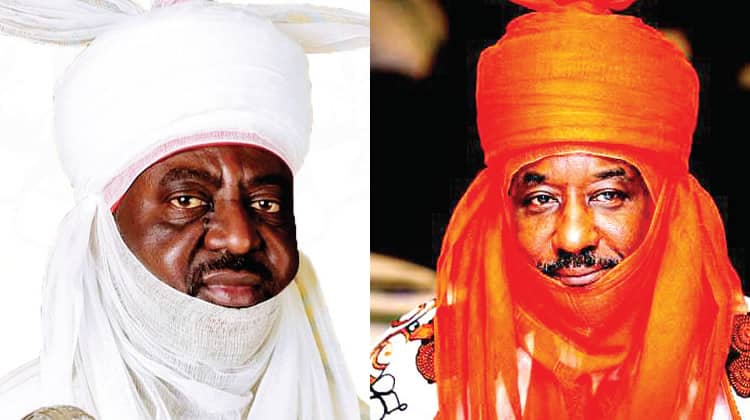
Kano Emirate Standoff: Sanusi, Bayero await verdict today

By Uzair Adam Imam

The Federal High Court in Kano will deliver a judgment today on the legality of the Kano Emirates Council Repeal Law 2024.

The law, enacted by Governor Abba Kabir Yusuf, led to the removal of Aminu Ado Bayero as the 15th Emir of Kano and the reversal of the creation of four emirates – Bichi, Rano, Karaye, and Gaya – by his predecessor, Abdullahi Umar Ganduje.

The law also led to the re-appointment of Muhammadu Sanusi II, who was dethroned in 2020, as the 16th Emir of Kano.

Aminu Babba Danagundi, a kingmaker in the former Kano emirate, challenged the law in court, seeking a declaration of its nullity.

The judge, Justice Abdullahi Muhammad Liman, will also rule on a motion to stay the proceedings filed by the State Attorney General and Kano State Government.

The ruling will determine the fate of Sanusi and Bayero in the protracted emirate tussle.

Umar Bush – unbelievable rise of a new celebrity

By Lawan Bukar Maigana

The rise of Umar Bush, a popular Hausa skitmaker notorious for insulting people, to stardom is unbelievably incomprehensible, justifying Allah’s incredible ability to enrich whom He wishes regardless of their decency or otherwise.

It is Allah alone who knows how he got there. Many people thought his popularity was going to be short-lived, like that of Alhaji Rufai, but that is not the case. He’s now targeted by skitmakers in the Southern part of Nigeria. God is great! New deals are underway.

His unimaginable progress reminds me of the time when an elderly man looked at me in our area during Ramadan and said that I would become a governor. However, a few of my closest friends, whom I thought would be the first to say ‘Insha Allah’, were the ones who contested against me. Indeed, life is greater than our sentiments, and it shall happen if He wills.

When he first came to the limelight comedically, many people thought he was a madman who needed intervention from a psychiatric hospital because of the way he speaks and relates to people. Some netizens even donated thousands of Naira, amounting to over a million Naira, which was later transparently given to his relatives after he had a misunderstanding with his manager, who is also from Kano, labelling it as ‘his end.’

A day later, his manager posted on his personal Facebook page announcing their resettlement with Umar Bush, assuring their audience of their continued efforts to reach stardom.

Ahmed Musa, a renowned Nigerian footballer who plays both in and outside Nigeria, saw Umar Bush’s comical clips trending on Instagram and Facebook and decided to host him at his residence in Kano. Inviting him was a big drama, as he had many misunderstandings and disagreements with all of them, insulting his managers and tagging one of them as his ‘enemy of progress.’

When given lots of Maltina and asked to extend it to one of the team members whom he perceived as an antagonist, he started a fresh drama, insulting him unstoppably until Ahmed Musa intervened and gave him one million naira.

A few days ago, he allegedly signed a ₦100m deal with Ziptol, a company that produces powder detergent, among other detergents. He’s now a millionaire, and I foresee bigger deals coming his way.

Perhaps it is my turn to be insulted comically when he sees this article, especially if he is told that I demanded he pay me for writing about his uncommon sagacious rise to stardom amidst all odds. If you know him or know anyone close to him, tell him that he should pay for this article; else, I will join Sadiq to disturb his life.

Lawan Bukar Maigana writes from Maiduguri and can be reached via email: lawanbukarmaigana@gmail.com.

The alliance of history and the “Good Old Days” phrase

By Sharif Ishaq Abubakar

Introduction

Man envisages hope and secures confidence. In the course towards thriving to make a better positive arrival to the future, emanating from a past and rolling to a thoughtful destination, though I’m not quite sure, I set goals to beat what has to spell the past. There is a joint alliance with history as a discipline and what a layman could call the “Good old days”. 

The good old days, as the essay subscribes to them, are precision in explaining what is commonly attested to when there is a flashback in a human being’s life, portraying the rosy and more easygoing way of life or the simple life of the past. This is usually not welcome in the language of academic historians, as what is more vividly visible is the past in response to the doctrine of history. 

The good old days in question are what I find and regard as a commonly digested utterance by those who find their past life more pleasing. They are not necessarily shouldered with success in a weighted rate, but a sense of appeasing and touching unforgettable times that the present has swallowed but left tangible emotions for the utterer to describe. It is not elusive. It happened, occurred, took place, and was quite eventful. 

With this periodic relevance, I sensed a spectacular alliance between the history known as a Study and the phrase candid by mostly good explainers of events and happenings, adhering and recalling their past days as the good old days. I see the two working relatedly, but I saw them separating as the latter could not get a fixed spot as shallow as a topic.  This essay, therefore, will highlight the alliance of History and the phrase” Good old days”.

The Past and the Emotion of the Old Days

This piece does not set itself in the medicinal or health advocative stance, guided by medication or clinical hypothesis. In this context, the past and the emotion of the old days patronise a common fact that should be well acknowledged by every human being, which posits that the past was not that less patchy or lacked bruises in the lane that gave birth to the present. There were struggles, but the man still thrived like the men of the stone age. The measures and methods might not constitute similar skills and advancement, but what ascertained the inbuilt tradition of man is to uncover the path for survival, which further comes with attached conditions and risk-taking that also spells more of man’s ways. 

If this is how the generational pattern of man’s life was and will continue to be, how did man develop emotion for the past and even refer to the past with an emotional remembrance phrase, the Good old days?

I found the worthiness of my response to these questions in stages of human being growth. 

In the study of history, those before us paved the way for the advancement we enjoy today, and we are responsible for what will become of future advancement. It is a stage, and it is periodical. Man, stages of growth come with several definitive developments and mistakes, which transform into lessons. Historically, our forefathers have been down to us, and we shall be forefathers to another set. 

Man grows up leaning on his parents, forming a bond and several events transpiring in his life; in several clicks of time, one can no longer go back to those days, but the days stay in the heart, brain and the whole body system, despite the natural heritage from the parents which of course speaks clearly of who you took after, one still look back at the gone days and smile, blushing out some event that occurred not because there were meant to make a joke of, but because there are several notable notations attached to that scenarios. The past is lovely because it makes you remember who you are and what you are supposed to strive for. The mind works in a mysterious way that flashes back in a second to events that take you out of your present, honouring the past and handing over the juridical capability to make your choice forward. It is emotional, but the phrase “good old days” weighs a lot.

The Alliance of History and the Phrase the “Good Old Days”.

Standing from within, inspecting the past, observing the turning points of events, and profoundly judging the historical stages that led to the current development, one would apparently love the past because it is historical; it takes you back to the meaning of the present. This sets a distinct correlation between the term history as a study and the above phrase.

What will become of the understanding of democracy or the modern pattern of international relations when one thinks of imperialism and how it transpired, where it became economically and practically legal to show nation strength and capability by annexing and conquering more land, these territories and lands have settlers and indigents inhabited in them. Still, the wake-up of the clamour of securing your land by defending and raising quite a courageous military to secure land proves the days to be readymade for wars. 

Territories prepare and anticipate war. Some nation-states have made a fortune and are where they are today because conquest was practicable before today, and there is no favour history can bring about their success without pointing at those days. Today, national flags speak volumes of reasons why they appear with specific colours, not because the past covers the unscratched step to their current capability, but because it was worth passing through the past and having the present as a representative of the past.

Aside from the above example, why would a layman refer to the past as the good days, and how is it related to history?

Indeed, they have been developed, but glaring at the present harbours inflation and population growth as resources tend to be fewer than in the past. Looking back to the past and scoring those days as good days defines the long way the past determines the future and how related they are. It breaks an alarming projection when the hope of the future is always cherished to be better. It hence gives birth to a predicament when the future of the past becomes less provident than it was judged to be. 

Man is hence left with a single option: turn to the better days, which is why history deals with everything. History is used to judge the progress of a certain goal; it tracks the impact and provides facts that place the past and the present on a scale for one to choose between whether the past had a more promising trajectory, or the present thwarted those policies initiated to befit the future (Now Present). Either way, I will cite Nigeria as a critical reference.

Nigeria gained independence in the year 1960. The individuals who worked through the path of success in attaining Nigeria’s freedom from colonialism were highly respected and celebrated with greater hope for the country’s future. All reflection points to leadership, health care, education, youths, democracy, infrastructure, and other aspects that require reliable leaders’ consent. That was hope, and it started on a good platter, but the future led to crises and other predicaments, resulting in a civil war within six years of attaining a positive foot in the country’s history. 

The future rolled on, leading to several phases of military leadership, and the country bounced back to democracy in 1999. Why, then, will one refer to the days of the leaders of the first republic as the good old days? There is a response to the question when one depicts the days of the previous leaders who died not owning or amassing the wealth of the public or citizens of the country despite being labelled as corrupt. 

One of the reasons the First Republic’s political settings crumbled was corruption. Still, till today, the pattern of corruption has only taken a glorifying approach that seems more degrading than that of the leaders of the First Republic. That is to assert that in a situation where the past seemed to be more politically sound than the future (now present), the past must be seen as the good days, not because it was hoped for to be that way, but because it proves better than the worsening present/ future.

 Conclusion 

 This essay captured the relevance of the past, thereby mirroring the fact that not all events that happened in the past historically can be beaten by the future or present. Some might indeed wish the past should fade, but growth seems to make one attached to his past so much that the yearning for past memories leads to a label known as the “Good Old Days.”

Sharif Ishaq Abubakar wrote via Sharifishaq55@gmail.com. He is a PhD Student at the University of Abuja, Department of History and Diplomatic Studies.

Deciphering the complexity of “Ass” in American English

By Abdurrazak Muktar Makarfi

For non-native English speakers, grasping the subtleties and complexities of the English language can be a challenging endeavour. From its extensive vocabulary to its subtle nuances, English often presents itself as a maze of words and meanings. One such term that encapsulates the intricacies of English is “ass.”

On the surface, “ass” may seem straightforward, merely referring to the buttocks. However, a deeper examination reveals a plethora of meanings and subtleties that make it one of the most intriguing words in the English lexicon.

At its core, “ass” serves as a versatile modifier, adding emphasis or altering the meaning of a word or phrase. For example, “lazy ass” intensifies the descriptor “lazy,” emphasizing the extent of laziness. Similarly, “long ass” emphasizes the prolonged nature of something.

Yet, the true complexity of “ass” lies in its ability to completely change the connotation of a word when used as a suffix. Consider the term “badass.” While “bad” typically carries a negative connotation, suffixing it with “ass” transforms it into a term of admiration or respect, describing someone bold, daring, or impressive. Conversely, “dumb ass” retains its negative connotation, highlighting someone’s foolishness or lack of intelligence.

Moreover, “ass” can function as a pronoun, symbolizing oneself or one’s possessions. Phrases like “move your ass” convey urgency or impatience, urging swift action. However, expressions like “fast my ass” and “my ass” serves as a dismissive retort, rejecting the validity of a statement or claim.

The complexity of “ass” extends further as it can be subdivided into smaller components, each carrying its unique significance. Being “an ass” implies exhibiting foolish or irrational behaviour, while being “half-ass” suggests a lack of thoroughness or attention to detail. Additionally, being described as “a piece of ass” is colloquially lauding someone’s physical attractiveness.

In essence, “ass” is a linguistic chameleon, adeptly adapting to diverse contexts and conveying a myriad of meanings. Its versatility and complexity mirror the richness and depth of the English language, showcasing the infinite possibilities for expression and interpretation.

Thus, when encountering the word “ass” in conversation or media, acknowledge its multifaceted nature and the layers of meaning it embodies. Understanding and appreciating the complexity of “ass” not only underscores the richness of the English language but also provides insight into the cultural nuances and subtleties of American English.

Abdurrazak Muktar Makarfi can be contacted via prof4true@gmail.com.

Gandu’s “Sakona” is a definition of humility and morality in the Kwankwasiyya movement

By Salihi Adamu Takai

Contemporary political singers are known for the satirical content of most of their songs. Political songs are very descriptive of invective barbs, innuendos, and allusions. They are primarily meant to satirise opponents. Rarara’s invective style in his music can be the worst political song depicting invective barbs nowadays.

Tijjani Gandu is an exceptional political singer who uses minimal invective barbs. His songs are mostly for a one-sided party or his godfathers. Gandu is known for the centralised theme of his songs. He mostly only focuses on the party and the esteemed quality of his beloved and favourite politician.

“Abba Gida Gida” was the first song in 2019 to elevate Gandu’s reputation as a talented political singer. The song was accepted and spread to every nook and cranny. It was very stylish with its theme of mobilising for the then PDP gubernatorial flag bearer in Kano State (Engr. Abba Kabir Yusuf). The candidate was challenged for not being famous. So, Gandu released the song “Abba Gida Gida”, which made the candidate very well-known.

Gandu is always ready to challenge any chaos in Kano politics to protect the governor’s dignity. It has been known for the whole week that Kano State Governor Abba was criticised for his open statement against the inappropriate action of the Kano Hisba. The statement was misconstrued. The people’s opinions were very different. Some supported the Governor’s statement, and some opposed it.

Amid the chaos, Tijjani Gandu released a song recently titled “Saƙona,” my message. In the song, the singer, Gandu, sends sympathetic messages that make thousands of people weep while listening to the music. The song has some words of mercy and humility. The saying “Abba ya san girman malamai, shi ya sa ya ɗau Hisbah ya ba ta kullalle” means Abba respects Islamic clerics, so he appointed the most deserving person to head the Hisbah.

The singer tried to maintain his dignity of not being an abuser – he doesn’t abuse anyone in the song – he only calls the attention of the entire public to discard any misconceptions from any political opponents of the Hisba saga.

Muhabbat to represent Nigeria in international language festival in Germany

By Sabiu Abdullahi 

Muhabbat Yakubu, a student in SS2 at Nigerian Tulip International Colleges (NTIC), has received the prestigious honour of representing Nigeria at the upcoming International Festival of Language and Culture (IFLC) in Germany on May 31st, 2024. 

IFLC, an annual celebration of linguistic diversity and cultural exchange, serves as a beacon of unity, fostering understanding and inclusivity through the universal languages of art, dance, and music.

Originating in Turkey in 2003, the event has since blossomed into a global phenomenon, with participation from 160 countries and over 2000 talented individuals in 2015.

Its mission of promoting peace, love, and friendship resonates deeply in today’s interconnected world. Muhabbat’s selection displays her exceptional cultural awareness, linguistic talents, and dedication to promoting harmony through language and culture.

Under the guidance of NTIC, she will showcase Nigeria’s rich heritage on the international stage, embodying the spirit of unity and cooperation that defines IFLC. 

Mr. Fayzullah Bilgin, the Managing Director of NTIC, expressed pride in Muhabbat’s achievement, noting the school’s commitment to nurturing global citizens who embrace diversity and champion inclusivity.

As Muhabbat prepares to represent Nigeria with distinction, she carries the hopes and aspirations of her nation, symbolising the power of youth to build bridges of peace and understanding. 

According to a report by the National Television Authority (NTA), the NTIC community extends its heartfelt congratulations to Muhabbat Yakubu and wishes her every success as she prepares to shine on the global stage at the International Festival of Language and Culture in Germany.