Admin

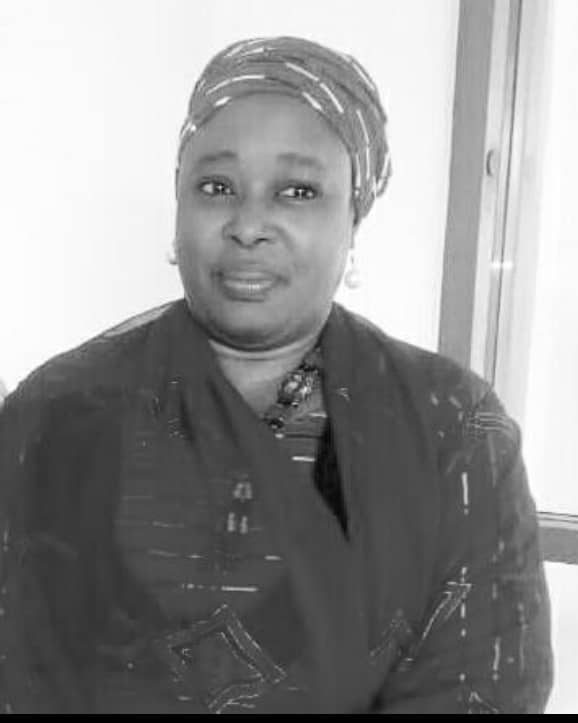
On the Abduljabbar debate – Binta Spikin

I have never seen the devil. In fact, my assumption is mortals do not get a chance to have a one-on-one chat with him. However, sometimes, I wish I could see him – even if it is only to call in a conversation. See, he’s misguided from the old and young, men and women, rich and poor, from all strata of life and social circles. Hence I wish it were possible to call him to order – you can imagine us sitting him down and telling him point-blank something like: “hey dude, you’ve caused enough havoc in this world, so leave us be, or some similar stuff”. But that is just on a lighter mode.


On a serious note, sometimes, we are quick to heap every blame for our wrongdoings on the devil. However, there are those of us who are headstrong, those who, if given a chance, could beat the devil at his turf when it comes to misleading people. We all witnessed a similar scenario this weekend when a united group of Kano Islamic Scholars took on M. Abduljabbar Nasiru Kabara in a debate organised by the Kano State Government to put to bed some spurious claims Abduljabbar made against the Person of the Prophet (SAW) while making reference to some Hadith.


For the non-Muslims who could be reading this, I would like to explain that Islamic Jurisprudence is premised on four sources, and it is from there, the Shari’a (Islamic law) takes its root. They are:1- The Qur’an, which is the Holy Book revealed to Prophet Muhammad (S.A.W); 2- Hadith, which are the sayings and deeds of the Holy Prophet, and that which met his silent approval; 3 – The Ijma’, which is the consensus of opinions of Islamic scholars on issues; 4 – The Qiyas, which encapsulates all that which sits right on the conscience.

 
From goings-on, what Abduljabbar is (was?) challenging borders on the authenticity of some Hadith. However, in the process, he ends up violating every right-thinking Muslim by making some unsavoury and disrespectful statements regarding the person of the Prophet and his companions. I have never taken out time to really listen to him outside the “gaba-gadi” rant he was famous for. So when the audio clips were played during the debate, like most Muslims, I was hurt and disgusted by his utterances, the sheer abundance with which he makes the claims, with mirth and confidence is belittling. Those utterances were abusive to all Muslims with a conscience. 

On this note, we must commend Dr Abdullahi Umar Ganduje, OFR, Khadimul Islam, the Governor of Kano State, who made the debate possible, and through it, made the Muslim Ummah a united family. Those young gentlemen and scholars who participated in the discussion, despite specific ideological differences, united in protecting the sanctity of the religion and the honour of the Prophet. May Allah reward you for your service to Islam. Every right-thinking Muslim, globally, should be proud of what you have done. 


As for the Government of Kano State, I’d say this is a significant breakthrough. Our Governor, the Khadimul Islam, stood in for us using wisdom and skill; the debate was organised down to every detail, security was more than adequate, especially for the participants, etc. But the most significant victory for the Governor is that the people appreciate this act of service to religion and humanity.  

To M. Abduljabbar Nasiru Kabara, who is in fact the son of the late leader of the Kadiriyya movement, I hope this is a turning point for him. I hope this puts a stop to his skewed, misleading, contentious sermons. May Allah forgive him and us. May all our ailments heal. May our society be more prosperous. May Allah enrich our leaders with foresight. 
Masha Allahu la quwwata illa billah. 

Hajiya Binta Spikin is a Senior Special Assistant on Research and Documentation, Kano State. She can be contacted via bintaspikin@gmail.com.

The Abduljabbar Saga: Where he got it wrong – Prof. Yakubu Azare

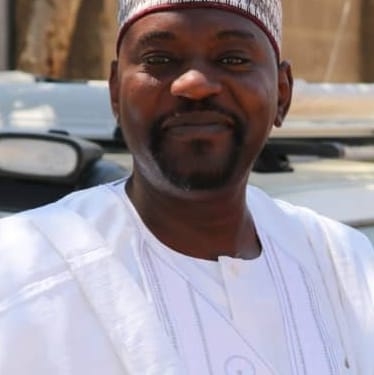
By Prof. Yakuri Azare

I followed the entire debacle that lasted slightly over five hours with the attendant result from the moderator, Professor Salisu Shehu. It was thorough and the laid down procedural regulations were apt and full. I don’t intend to review what happened there; I intend to explain a phenomenon I viewed to have made Abduljabbar slipped. The entire dispute revolves around the concept of translation, which is seen as a primary machine that allows us to decipher messages encoded in another language. The whole concept of understanding religious principles is encapsulated in its translation into the language we fully understand. For any text to be wholly deciphered, there has to be suitable communicative translation and faithful in some instances—failure of translation results in catastrophe. As we often tell our students, a slight mistake in translation could trigger unrest. The case of Abduljabbar is one pointer.

Sacred texts should be translated with the uttermost caution to avoid pitfalls and possible uproar. Therefore, aspects of semantic addition and omission are not so much at the liberty of the translator. Of course, the translation author can be – and is – allowed to make additions or omissions, where necessary, to press meaning to the audience; however, in the case of sacred texts (mostly religious documents), such liberties are highly restricted. 

Overall, the whole saga was about Abduljabbar making unsubstantiated claims about certain prophetic traditions, which he claimed were mistakes by some of the finest scholars that history can never forget. He attributed certain heavy libellous statements to these scholars. Abduljabbar often reads the Arabic rendition with subsequent translation and exegesis of the tradition. This is a usual trend by all Ulamas intending to communicate across people of diverse linguistic backgrounds. What is worthy of noting here is how the original message is rendered and transmitted into the receptor language, in this case, Hausa.

Almost throughout the debate, there was a conspicuous absence of direct utterances of Abduljabbar in the original Hadith. This narrows down the accusing finger to Abduljabbar. No amount of denial or persistent argument would absolve him from the shackles of law and accusations. The exegesis cum translations here are, therefore, the root cause. Cultural nuances are essential to issues worthy of consideration when translating, as diverse cultures have varying ways of apportioning meaning to certain utterances. Abduljabbar was, quite evidently, never considerate of such slippery edges. Instead, he translated, explained and attributed conclusions to statements entirely out of context in the bid to attain heroism, demonstrate a more profound or better understanding of the scriptures.

Adding so much into translation in most instances has the tendency of making meaning obscure and or vague. Sacred texts are not only carefully knitted but are sometimes seen as dogmatic. In other words, religious texts express what they appear to have said. Making unnecessary additions may result in meaning change. Abduljabbar was attacked based on his utterances throughout, and in all the challenges posed to him, the central question is, where did you see this or that. Wrong translation understandably played a key role. In one such case, the moderator drew his attention to the contextual meaning and differences between “Haajaa and Shahawaa“. He explained that the former could not be given the contextual meaning of the latter. Each has its way of being expressed to denote what is intended.

Thus, between Hausa and Arabic, some cultural differences arise in how they attach meanings to ideas, subjects and so on; nonetheless, Abduljabbar was not so keen on that. Instead, he occupies the Arabic messages with haphazard translations that devour our cultural and religious context and, often, sensibilities. Both in our religion and culture, the place of the Prophet (SAW) is sacred, secure and untouchable. Therefore, making and creating controversial statements to his person is not only wrong but blasphemous. All the traditions cited by Abduljabbar and the other clerics, there was no one place, and I mean one place, that equates the heavy words of Abduljabbar in his Hausa explanation.

The central point here is, wrong and mismanaged translation played a significant role in this saga. It suffices to say, “Translation is a serious business and is not haphazardly done.” Understand, and master its art before engaging in it. Be vast in the cultural nuances of both languages, and understand that pragmatics is key to assigning meaning to words in certain situations. Also, know that sacred texts do not go with our whimsical preferences. Additions or omissions are made with caution to avoid slippery edges.

May Allah guide us always. May peace and blessings be on our most revered Prophet.

Prof. Yakubu Magaji Azare wrote from Bayero University, Kano. He can be reached via ymazare@yahoo.com.

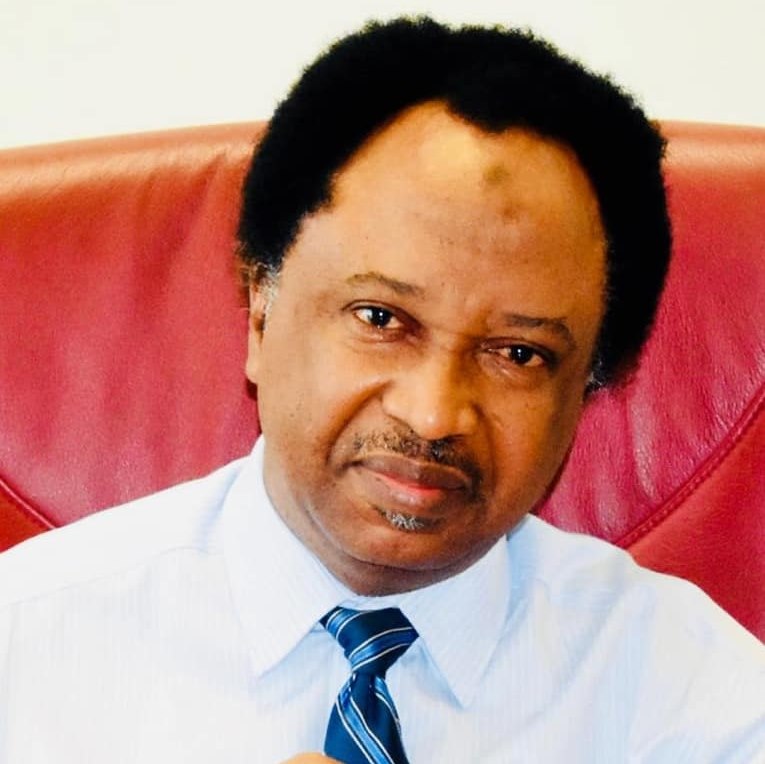
JUST IN: Shehu Sani resigns from PRP

The erstwhile senator representing Kaduna Central Senatorial District, Comrade Shehu Sani, has renounced his People’s Redemption Party (PRP) membership today in Kaduna.

The Daily Reality has seen Comrade Sani’s resignation letter from the party. He wishes them all the best, adding that he and the party “shall continue to relate in the spirit of our struggle, our shared history and common ideological principles.”

However, he did not mention any reason for his resignation. [Below is a copy of the letter.]

Abduljabbar Saga: Another fresh perspective

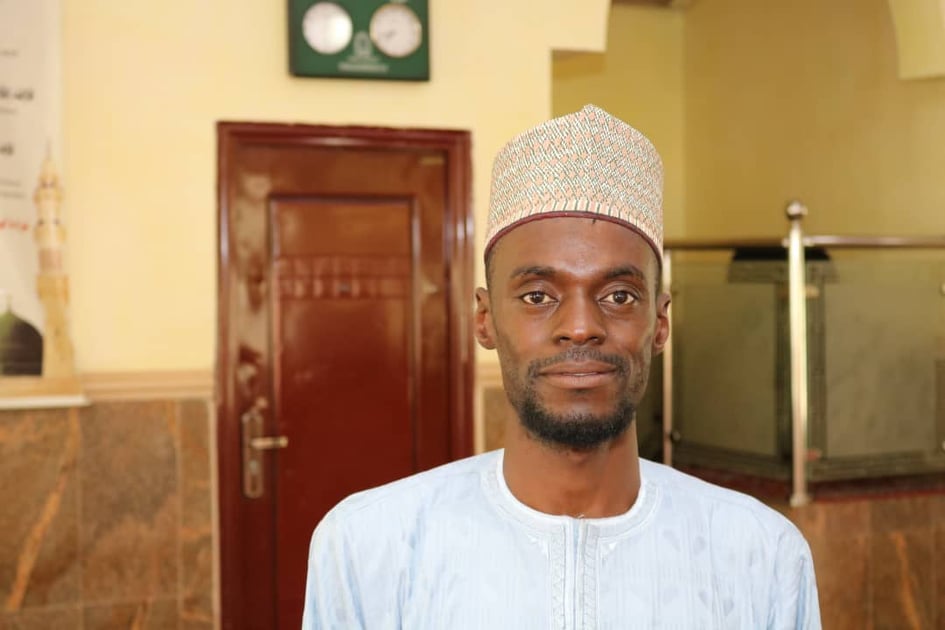
By Dr Muhammad Sulaiman Abdullahi


Abduljabbar wanted to hide behind some distorted and concocted sayings. Even if there are sources, he will not dare reveal their sources to discredit Bukhari, Muslim, and most prominent Muslim scholars and even the Prophet’s companions. He concocted naked lies against the Holy Prophet directly, but claiming that he was defending the Holy Prophet! What a twisted-childish mentality.


In reality, what he was trying to do was not a direct attack on the personality of the Noble Prophet; it was indirect. This is because he accused others of saying what he said. He was asked to SHOW just a SINGLE line, where such lies were reported, but he woefully failed to do that. This is the reason why some of his sympathisers feel like he holds some valid arguments.


The problem is that most Muslims have forsaken Islamic Studies for a long time. They resort to google-google is inadequate for in-depth learning – it is a teach yourself style. This cannot take a real Islamic student anywhere. Someone needs to go to a real school.


Abduljabbar has eventually met his Waterloo. He asked for it and got it. He said he was prepared to meet all the scholars in the world to defend whatever people find heretic in his sermons. Therefore, those who try to defend him are now telling us that he wasn’t prepared. He said he was ready at first lie; he later realised his fall and said he wasn’t. These blanket followers accept whatever rubbish he spat. I pitied him, but I pitied those who felt and hoped he would win. It is a clarion call to all of us not to delve into Islamic affairs anyhow. We try very hard to know our areas of specialisation but take Islamic teachings for granted, thinking that we can manipulate them the way we manipulate our followers.


Another point that shows the super-amazing-human-position of the Holy Prophet (S.A.W) was that yesterday’s sitting was more of vindication to the most revered Islamic Muhaddithin – Bukhari and Muslim – who Abduljabbar sought to malign. He has been insulting them, the way I never heard anyone insulting his respected father, despite the sectarian differences. We still have respect for his father, whom even Sheikh Gumi admitted was a great scholar. May Allah have mercy on both of them. Abduljabbar thought he could go scot-free by insulting Bukhari and Muslim and even Anas bn Malik, not knowing that Allah will vindicate, protect and defend them. Allah says, “Inna lanansuru rusulana wallaziyna aamanu”, we will surely help our messengers and those who believe […]. Bukhari, Muslim and all those who Abduljabbar ignorantly and mercilessly abused were clearly assisted, defended and vindicated by Allah the almighty through his servants.


It was not only Abduljabbar who hate Islam/some Ahadith which stop them from doing bad. I am amazed by how these poor victims of Nigerian corruption think. With or without Bukhari and Muslim, they are already doomed. With or without Bukhari and Muslim, they are not enjoying life. Such people should focus on their insecurity and kidnappings, lack of good electricity, and then return to tarnish Islam’s image ignorantly.

It is now up to those who rant and insist on mischief even after seeing clear and undeniable proofs beyond any reasonable and even unreasonable doubts. Some accepted the truth wholeheartedly, while others insist on their mischief and being “strong-headed”. This shows the diversity of human understanding and the sincerity/insincerity of individual mortals. Some agree quickly, while others will never agree. Allah says: innal laziyna haqqat alaihim kalimatu rabbika layu’minuwn. Walau jaa’at’hum kullu aayatin hatta yarawul azabal aliym. Some will never agree until when they see real punishment and disastrous ending. 


To those who keep beating about the bush on the chairman of the occasion, the timing, lack of live broadcast, Abduljabbar wiping buckets of sweat, not allowing Abduljabbar to go and pee while he practically show the signs of that need and many other baseless and silly excuses should go and complain to Baba Ganduje. Such and some will never understand.


I am happy that many people accept this with transparent and open minds. Some hoped that Abduljabbar won. But, alhamdulillah, he didn’t, and he woefully failed. I am happy because I see the shameful end of two – most recent – people with blasphemous dispositions. One is in faraway France. He received a heavy and dirty slap which was equal to his position, while the other received a super intellectual blow which shattered his many years of madness.


The holy Prophet (S.A.W) is a human being like no other. Allah promised to protect his mention anywhere. Abduljabbar manipulated things beyond what can be accepted. And in this case, there is no “moderate” or “neutral” stand. It is like what Bush said, “it is either you belong to us, or you belong to the terrorists”.

May the Almighty Allah continue to help the truth even when everyone is against it, amen. Abduljabbar – the cave owner – dug his grave, and I hope he alone would fall into it. But, unfortunately, he failed, and wallahi, we are happy, alhamdulillah.

Italy Conquers Europe

By Muhammad Muzdaleefa


The Euro 2020 Cup ended in Italian hands after the Azzurri defeated England at Wembley Stadium. What a journey it has been. The winning team has shown us that it is not what happens to you but rather how you react to it that matters. Some fall and stay down there; others fall and dust themselves off and rebuild. 


No doubt, it was a hotly contested final. Southgate’s team had got off to an impressive start with Luke Shaw’s goal after just two minutes. But the Italians equalised in the 67th minute through Leonardo Bonucci. After much anticipation, England’s dream was shattered as Italy won the match in penalty kicks. One thing is for sure; this loss will be seared into the national consciousness of English people for generations to come. It was simply nothing like it as a nation that treasures soccer fell in one of the most crucial matches in its football history.


The performance of both sides from the beginning of the tournament to the end was quite impressive. However, the defeat will remain a footnote. Few will remember that England played well, but many will recall that Italy won the final at the Wembley Stadium. The final was a great feat for Italian team manager Roberto Mancini. A man who attracted a lot of scepticism when he took over the reins of a team in a state of utter disrepair is the one who has masterminded its return to the top of European football and possibly world football. He did it silently and always with the smile and assured confidence of a stoic.


The coaching philosophy of both Mancini and Southgate must be saluted. The philosophy is that excellence can be achieved through hard work, which explains why they gave chances to their players as long as they are willing to put in the work and the stamina—everybody in their squad matters. As a result, many great players will surely emerge from both sides.


For now, Italy has conquered Europe and a big congratulations to the Azzurris for this important milestone.

Muhammad Muzdaleefa wrote from Kaduna. He can be reached via mohammedadamu736@gmail.com.

Congrats, Lionel Messi and the long-suffering Argentina fans

By Aliyu Yakubu Yusuf

Ask any casual football fans what the biggest mystery in recent football history is. One of the possible answers would surely be Argentina not winning a senior international trophy for 28 years. Not since Gabriel Batistuta led the Albiceleste to the 1993 Copa America triumph has the country tested victory in any men’s senior football tournament. For the record, I began supporting Argentina in 1998 courtesy of my support for Serie A side, SS Lazio. During those years when the Italian league was at the apex of the European football ladder, Lazio had an Argentine contingent of Juan Sebastian Veron, Diego Simeone, Matias Almeyda, Jose Chamot and Nestor Sensini. Over the subsequent seasons, Hernan Crespo, Claudio Lopez and Lucas Castroman soon joined their compatriots at Lazio.

For 25 long, agonising years, I have witnessed all the inexplicable near-misses, heartbreaks and sheer bad luck of being a fan of Albiceleste. We have played no fewer than six consecutive major finals and lost all, often by the slimmest of margins: Copa America finals (2004, 2007, 2015, 2016), Confederations Cup final (2005) and World Cup final (2014). Of course, there many intermittent triumphs in the youth football tournaments such as the FIFA U21 World Cup (2001, 2005, 2007) and the Olympics (2004, 2008), but those serve to add to the frustration as to why a country with so much footballing history and so much footballing talent can’t get over the finish line in a major tournament.

It’s scarcely believable that Argentina failed to win a single trophy despite boosting elite players such as Veron, Riquelme, Saviola, Ayala, Heinze, Aimar, Pocchettino, Sorin, Zanetti, Samuel, Cambiasso, Crespo, Tevez, Zabaleta, Banega and Higuain. But, beyond all these players, I believe that if anybody deserves to win a senior trophy with the Albiceleste, it is Javier Mascherano. In my more than two decades of watching the team, no player epitomises the essence of the team better. His last-ditch tackle to deny Arjen Robben in the semifinal of the 2014 World Cup is a stuff of footballing legend.

Literally speaking, I have waited my entire life as an Argentine fan for this moment. And now that the agonising wait is over, I would like to congratulate the long-suffering fans of Argentina football team and the captain fantastic, Lionel Messi. In a way, Messi appears to transcend football boundaries of rivalries. It was reported that many Brazilians rooted for him to win the trophy against their own country, in their own country. For his detractors, the criterion for being the GOAT is nothing but an international trophy. And now that he’s laid his hands on one, we are waiting for them to bring another criterion.

Aliyu is a lecturer at the Department of English and Literary Studies, Bayero University, Kano. He can be reached via aliyuyy@gmail.com.

Epistle: Letter to Arewa bandits and kidnappers

By Ibrahiym A. El-Caleel

Ideally, I should begin this letter with the epistolary salutation. “Dear brothers” would have been a good salutation, to begin with, but it would be deceptive. I am neither a bandit nor a kidnapper; neither do I have a rifle, nor do I live in the woods. I feel emotional when people die natural deaths. I feel depressed when people are killed. Even in my wild dreams at night, I have never seen a mirror image of myself with a gun. Thus, if I salute you as “Dear brothers”, it will be ungodly deceitful to both you and I.

The enigma in writing you this letter doesn’t end with my failure to find a befitting salutation. It furthers my lack of faith that this letter will reach you. Despite all its mighty capacity, the Nigerian government does not have your full address. Certainly, as a poor Nigerian, I also do not have your address to deliver this letter. In case this letter comes to you by accident, I appeal to you, kindly spare some minutes out of your busy schedule to read it.

Earlier today (9th July), residents of Maradun Local Government in Zamfara lowered 35 bodies into graves. These are the 35 people you killed yesterday. On Monday (5th July), you also ‘worked’ in Tsauwa village in Batsari LGA of Katsina State. You dispersed the villagers, running after them on your motorbikes and shooting them as they flee. You also burnt their houses and farm harvests. Anyway, on Wednesday, they also had to lower 19 bodies into their graves. About a month ago, precisely on Thursday 10th June 2021, you struck Kadawa village of Zurmi LGA in Zamfara State. There in Kadawa, after your bloodbath, they did the burial of the 93 people you successfully butchered. In this case, survivors narrated that you spoke French during the operation. This means you are also now operating as a Multinational organization.

I could go on to narrate your operations, from Zamfara to Kaduna, from Katsina to Niger States. You have become one of the most active and busiest workers in Nigeria today. Hardly does a day or two passes without your career activity making headlines in the national dailies. I am not being satirical. I am being euphemistic so that you become aware that we are feeling the pains. The agony! You have pierced a fat needle into our skins, aggressively drawing our blood. We are eager to know when will your syringe be full? How much volume of our blood can satiate your blood thirst? Does it have to be this cruel?

We have always wondered what is it you want with this ruthless bloodletting. It was only recently that people like Shaikh Dr Ahmad Gumi and journo Abdulaziz Abdulaziz took the courage of walking into the bushes to converse with you, to hear the reasons. Their reports centred around your bitterness with the Nigerian government’s neglect of you; also about how Nigerian security outfits have persecuted you, and how they couldn’t secure your cows from being rustled; also about how common Nigerians have abandoned you in the bushes without care. I honestly do find any cogent reason among all these claims.

Your dwelling in the bushes was by your own choice. Common Nigerians shouldn’t be your enemies on this. If the Nigerian government has maltreated you, what stops you from following a legal process via MACBAN to address this? How does killing innocent people and driving them out of their homes help you?

These innocent people you are killing on a daily basis are also victims of Nigerian state neglect. Had the Nigerian state not neglected term in terms of securing their lives, you won’t even have the chance to kill them in scores as you do. They are your partners in suffering from this bad leadership culture that has stayed for long in Nigeria. Killing them and destroying their properties is the height of your own injustice. Unlike you, these victims suffer a two-way transgression: one from the Nigerian government, then the second from bandits and kidnappers.

Even if you must transfer your aggression to these innocent people, what stops you from seizing their material wealth alone and leaving them with their lives? Your predecessors in this criminality (armed robbers and thieves) mostly kill only when they ask for money, and it’s not given. In your own case, you do not even ask for money or anything. You just ride your motorcycles into a random community and make bullets fly.

What specifically do you want to achieve?

What point do you want to prove?

What is it you all want, please?

How can we go back to a time when we could sleep with both eyes closed, please?

Yours dreadfully,
Ibrahiym.

Hon. Adamu Adamu, please do something on BEA scholarship for Nigerian students in Morocco

By Ismail Hashim Abubakar

In discussion with some Nigerians here in Rabat, I learnt of a few brilliant Nigerian students who came through the Bilateral Education Agreement (BEA) scheme and have reportedly excelled in their various disciplines. Perhaps it is not worth a surprise if Nigerian students excel in any field of study abroad. But, the inspiration of awe lies chiefly in the fact that those successful students who came to Morocco did not have any prior background in French, which is the language of instruction for BEA based programs at institutions in Morocco.

One of the students had studied medicine and is now doing well in his housemanship at one of the Moroccan teaching hospitals. A few months ago, when I visited the Nigerian Embassy in Rabat, I met another student who came through BEA for an undergraduate course in Engineering. When she finished, she, on personal endeavour and self-sponsorship, registered for a master’s degree and completed it successfully, thanks to sustained gradual savings and a moderate lifestyle. She is now planning to continue with a PhD, which means French as the language of instruction has never occluded her academic performance, besides being personally enthusiastic and attentive towards her studies.

The above are just examples from the hundreds of cases of Nigeria’s best brains that are usually retained by their host counties to work and earn a living at the end of the day. But, at the same time, they invest their intelligence to contribute to the development of their host countries.

However, it is imperative to note that many BEA students, of course, don’t find it easy to grapple with French as the language of instruction. The policy is that fresh students drawn from non-francophone countries are first registered at Centre International de Languages in Rabat to undergo a French language acquisition course within the maximum duration of 6 months. Then, after passing examinations, they are free to choose universities within any city in Morocco to pursue undergraduate programs.

The available courses for study cut across and permeate disciplines related to medical and health sciences, engineering, and other pure sciences, not necessarily excluding the least patronised areas such as social and management sciences. I have interacted with quite many Nigerian students and heard their study preferences, which they hope to determine their future careers. Most of the students expressed great interest in specialising in health and medical courses and engineering and other science courses. Meanwhile, the chief impediment that would retard their effort to attain their desired feat entirely is the language factor, due to which they are initially engaged in preparatory French courses.

Besides personal testimonies from affected students who underwent and passed such language courses, I have witnessed an occasion whereby some Nigerians who also passed through the same process failed to make simple communication with francophone colleagues and had to resort to English to avoid the premature abortion of interaction among acquaintances.  Perhaps this embarrassment would not be as damning if the communication was through French writing symbols. But what is baffling is that these students had accordingly sat for the exams and have, without exception, performed to a satisfactory level that could qualify them for regular undergraduate courses at Moroccan Universities. An in-depth investigation seems necessary before one unearths the secret behind this reality vis-a-vis the actuality of their alleged mastery of the French language.

Nonetheless, it is yet helpful to mull over a personal confession of one student who claimed that she saw many of her colleagues resorting to the culture of mutual “copy and paste” among themselves during one of their French course tests. While Moroccan schools have strict monitoring mechanisms to detect examination malpractice, lethargic students always devise new ways to perpetrate their malice during exams. Hence, this lays bare the situation the students find themselves in as they pursue their higher studies and get exposed to much more complex and complicated stages in their learning career using the language they had never known throughout their basic and post-basic levels of education.

Besides the fact that Morocco is one of the most peaceful countries blessed with a serene atmosphere, magnificent and eye-catching tourist sites and conducive learning environment, its educational system is highly advanced and incomparable to many African countries in terms of both quality and infrastructural development, thanks to the allocation of more than the UNESCO benchmark from its annual budget to the education sector.

Hence, it is not expected that parents whose children are nominated to study there through BEA will decline the much-coveted opportunity. As such, many students would instead prefer to do all they could to pass through the required study duration even if they are not fully equipped with the language medium that would guarantee their mastery of their various areas of specialisation. Understandably, most of them will have neither learned enough French nor fully grasped the actual content of their disciplines and finally be less productive to their mother country. 

Nigerian authorities need to be reminded that students who ‘graduate’ from these Francophone institutions will soon join the civil service and occupy various professional positions. Likewise, those who study sensitive health and medical courses will join the health sector and begin their career, which entails having direct access to patients and intervening in matters related to life and death.

To avert erecting houses on ashes or putting one’s eggs in a basket, by securing a more realistic future for its students, Nigeria can negotiate with Moroccan authorities to craft a solution, whereas English will be introduced as an optional medium of instruction. Needless to say, one can vouch that Morocco has highly skilled and highly qualified teachers who have adequate mastery of the English language. But, interestingly, there is now an epistemological/linguistic divarication whereby English accepted as a language in which postgraduate projects are carried out at some Moroccan institutions.

Importantly, through further inquiry on the constituencies from which Nigerian BEA students are drawn annually, it is clear that most of them come from Federal Government Colleges situated in various states of the federation. For Nigeria to fully benefit from this bilateral educational agreement, it has to expand the scope of schools from which it nominates candidates coming to Morocco for study. Students who want to read other fields such as Law, Economics, English and other human, social and management sciences need to be included in the scheme. But if the truth must be told and the spade be called by its name, the most potent window of opportunity, as long as Nigeria aspires to exploit from this diplomatic arrangement with Morocco, is to incorporate various Arabic and Islamic secondary schools as constituencies from which to source candidates for its BEA scholarship award in Morocco. With the recent upgrade and standardisation of the National Board for Arabic and Islamic Studies (NBAIS), students who complete their O levels from schools under NBAIS will perform well when they are part of the beneficiaries of BEA. Understandably, they already have a considerable Arabic to hitchlessly pair up at Moroccan universities, without any need to undergo a preparatory language course. Furthermore, the same window should be opened for those who read these courses at Nigerian universities and aspire to pursue postgraduate studies at Moroccan universities.

The years of marginalisation of this class of students as candidates of BEA have rendered them sort of semi Nigerians and evinced the usual inequality that characterises Nigeria’s treatment of its citizens.

In the same vein, hundreds of Nigerians have striven to sponsor themselves or secure some assistance from families or philanthropists to study in Morocco. Most of them do not return to Nigeria after completing undergraduate programs but go on to PhD levels. Given the shaky economic situations of their sponsors, some of them at times wallow in despair as they find it hard to make ends meet, and it is evident that grand national intervention will be helpful. In this context, BEA is hereby called to consider extending some form of aid even if not integrating them into the graciously packaged BEA scheme.

Ismail wrote from Rabat (ismailiiit18@gmail.com).
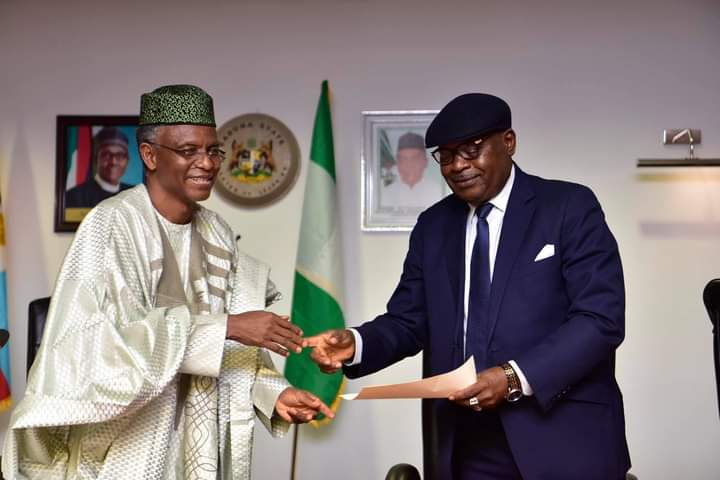
Pfizer says third COVID-19 vaccine dose could provide greater immunity

Pfizer and BioNTech have said that initial data show a third booster shot of their COVID-19 vaccine could boost immunity.

The companies said in a press release that vaccine efficacy in preventing “infection and symptomatic disease” declined six months after inoculation, according to data from the Israeli Ministry of Health.

Initial data from a booster trial, the companies said, showed that a third shot given six months after the second dose provided more immunity to variants.

They plan to seek authorisation for the third dose.

For instance, research from France’s Pasteur Institute suggests that people are mostly protected from the Delta variant after two doses of Pfizer’s COVID-19 vaccine.

But Pfizer and BioNTech are working to create an updated version of the vaccine to combat the highly contagious Delta variant first identified in India.

“The first batch of the mRNA for the trial has already been manufactured. The Companies anticipate the clinical studies to begin in August, subject to regulatory approvals,” the release said.

Euronews