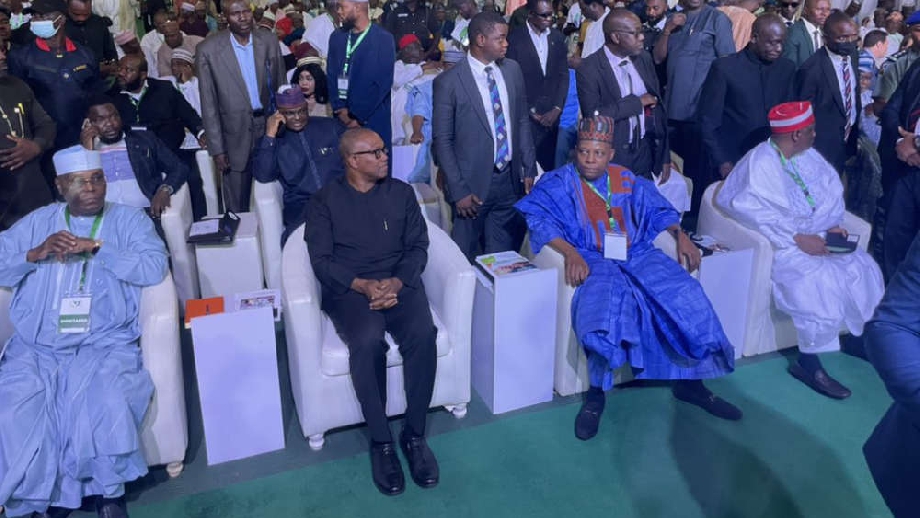
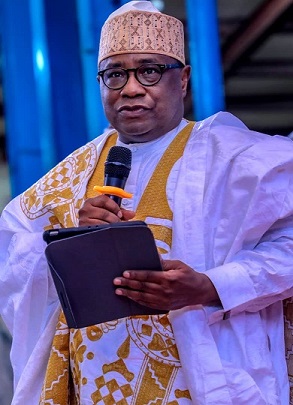
The National Peace Committee, headed by the former Head of State, General Abdulsalam Abubakar (retd.) and other elder statesmen would have been more respected and crucial had they played the committee with the grandeur it deserves. Established in 2014, the committee has not achieved anything following its record. As such, its function is nothing but a jamboree, where aspirants meet and share some private moments, thereby deceiving the gullible who trusted them by their words.
The vulnerability of the committee was so evident in 2019 when one of its members was seen dancing with another aspirant and denouncing the other candidate rather than playing neutral by preaching the peace he claimed to be advocating. Such an immodest attitude alone can create chaos, put doubt in the minds of other aspirants, and ridicule the entire process. Again, no need to mention names but a committee like this ought to have credible individuals that are all respected, who are also mindful of their utterances, actions and even public image – by extension, be less controversial.
To revisit the past, in 2015, President Goodluck Jonathan accepted defeat on his own without any influence from any quarter, as he stated in his book Transitional Hours. In 2019, electorates massively voted for President Buhari, yet no crisis was recorded. Still, the committee’s capacity has not been proven, although they claimed to have calmed Atiku Abubakar, who insistently went to court on his own but failed there.
The 2023 election that brought religion into politics is perhaps dosed with fear of violence, and this is the moment that the peace committee may save the country, but will they? The National Peace Committee is the initiation of some individuals that called themselves ‘Elder Statement’, and members were selected without merit. The peace committee is concerned with only the aftermath of election violence and not other forms of insecurity, let alone proffer solutions to lingering critical issues that the country is bedevilled with now and then. Like the present ASUU strike, agitations, persistent farmer/herder clashes, communal clashes, religious intolerance, and other vital issues that threaten national peace and security that may even not allow any election to hold.
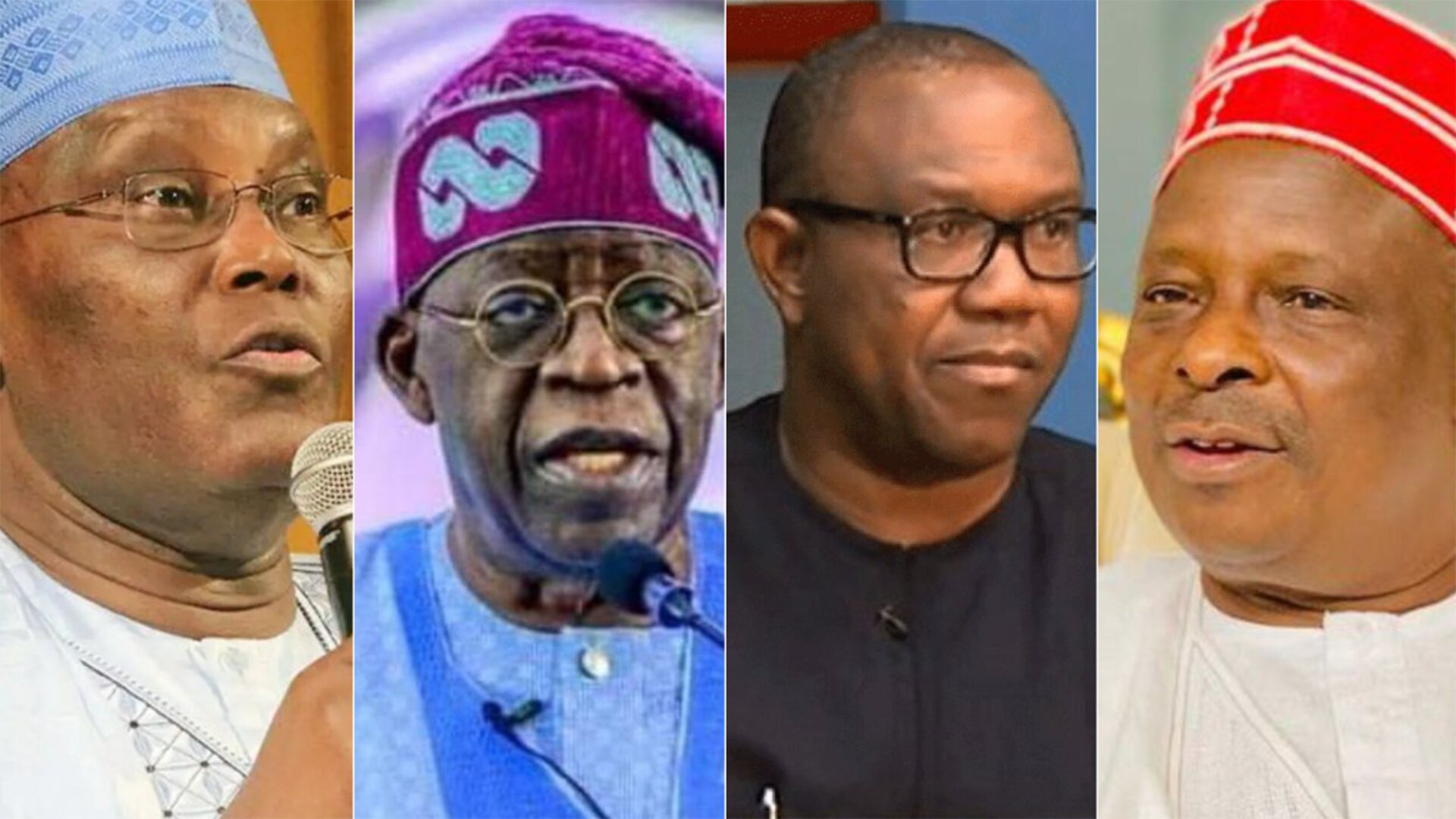
To send a message that the peace committee is not credible, in 2019, PDP presidential aspirant Atiku Abubakar failed to attend the accord signing for reasons known to him. Instead, he went after the public ceremony. Bola Tinubu, another aspirant of APC, again failed to attend the September 2022 Peace Accord. Instead, he sent his running mate, Kashim Shettima. All this weakens the credibility and popularity of the committee. The priority given to candidates rather than parties is a clear sign that the peace agreement has lapses that must be corrected if they want to be relevant in the future. Electorates choose a party, not a candidate, even though they are by extension. Candidates are identified by their parties because, without the platform, they are idle. The peace committee must look inward and prioritise party chairpersons during such occasions. That way, they are dealing with an organisation, not an individual.
In my opinion, the National Peace Committee should be changed to the National Council of Elders, and their mandate should be transformed so that it will have a national look and have representatives from all sections of the country. The members should be credible people who are respected. They should advise the government on solutions to bring lasting peace before, during and after the election circle.
However, the interest of the National Peace Committee is not for peace to reign, nor for good governance but for the personal interest of what they may get in the new government. As such, expect nothing but flaws in their shoddy policies. While they are signing the accord in Abuja, I wish my fellow compatriots would do the same locally since we are the anticipated thugs that will cause violence.
The Independent National Electoral Commission (INEC) has warned Nigerians against circulating fake recruitment links on social media and some online platforms.
The commission on Wednesday said the link, ‘inecnigeria.govservice.site’, is fake and aimed to defraud unsuspecting citizens.
It stated that its ad hoc recruitment exercise is free of charge, and no payment of any kind is required throughout the process.
“Our attention has been drawn to a fake ad hoc recruitment link being circulated on various social media platforms, frequently visited sites and blogs with the intention to defraud unsuspecting citizens.
“We implore Nigerians to disregard the fake link and avoid falling victims of swindlers,” the notice said.
The major newspapers published the speech delivered by the president at the “Fourth National Summit on Diminishing Corruption in the Public Sector” on the 4th of October 2022. In the speech, the president said, “corruption in the education system from basic level to the tertiary level has been undermining our investment in the sector, and those who go on prolonged strikes on flimsy reasons are no less complicit.” The Academic Staff Union of Universities, ASUU, is the union on strike, so the newspapers reported it with headlines that “Buhari accuses ASUU of corruption”.
The president definitely does not have a thorough understanding of the issues that led to the strike else he won’t call the struggle for the proper funding of the universities, better conditions of service for lecturers, the release of the white paper on the visitation panel reports, among other important demands as “flimsy reasons”. It is sad and most unpardonable that the president has got no proper information on the structure and workings of the university. Otherwise, he would have queried that ridiculous and false statement when the speechwriter presented the speech to him for presentation. So unbelievable that our president is not aware that ASUU is not the same as the university management.
To correct this unfortunate misinformation from the president, in the university, there are heads of departments who are academics who receive N50,000 every 3 months for operational expenses. We have the Deans and Directors who are also academics which is the next level of leadership in the university. The Directorates receive N60,000 every 3 months for operational expenses. Is the misappropriation of these N20,000 per month, which comes irregularly that is corruption by ASUU members?
Then, we have the principal officers, which include the Vice-Chancellor (an academic), the Registrar (a non-academic), and the Bursar (a non-academic). There is also the Council chaired by an appointee of the government. You can’t appoint politicians looking for jobs as University Council chairs and blame ASUU for corruption. ASUU is just a union and does not manage the affairs of the university. Then, there is the Presidential visitation panel that is meant to visit the university every 5 years to check the management of the resources of the university.
It’s true that the management of the university could be corrupt. There is no doubt about it. But since the administration of President Buhari took over in 2015, the “corruption fighting” president seems to have found accommodation with corruption in the university that it failed to send a visitation panel to any federal university. ASUU was worried about that, and part of the demands of the 2020 ASUU strike was the constitution of the visitation panel to all federal universities. Paradoxically, it took the strike by the union of supposed “corrupt lecturers” for the anti-corruption FG to send visitation panels to the federal universities in 2021 to check “corruption”.
However, a year after the panels submitted their reports, the same FG that is accusing ASUU of corruption has refused to release the White Paper on the panels’ reports for implementation. Part of the demands of this strike is for FG to release the White Papers. The “corrupt ASUU” is pushing the anti-corrupt government to fight corruption in the university. Isn’t that amazing? It goes without saying by its inaction, indifference, and condemnable refusal to set up visitation panels and release the White Papers after ASUU forced it to set up visitation panels to all federal universities, the FG under President Buhari is aiding corruption in our universities.
Meanwhile, you can’t be complaining of corruption but rewarding alleged corrupt people. The former VC of the Michael Okpara University of Agriculture, that was accused of academic fraud, financial embezzlement, and administrative impunity by the ASUU branch of the university, made the list of the people to be awarded a national honour by the president. Same with the former Council Chairman of the Lagos State University, who, with the VC, deployed the pension of Staff for the purchase of luxurious cars.
Does it make sense to accuse the university managers of corruption and then nominate university managers that were accused of corruption for national honours without taking steps to investigate these allegations? That’s a joke. By the way, what is the correlation between the poverty wages of Nigerian academics with corruption in the universities? Does that explain why Nigerian lecturers are one of the poorest paid in the world?
The president further said that he task our academics to attract endowments, research, and other grants to universities, polytechnics, and colleges of education similar to what obtains in other countries. It has been rightly said that “if wishes are horses, beggars too will ride”. It does not take rocket science to know how those universities referenced achieved that. An endowment is not attracted by academics but by the university council and management. President Buhari should stop his trademark and uninspiring blame game and should be talking to the people he appointed as Council chairmen for our public universities.
The truth is, research grants are not attractive using an empty room as a lab. No international donor will fund empty space. Only the existence of avalanches and modern facilities are used to attract grants. When I got a PhD grant in 2008, I took the grant to a university in the UK because they have the required facilities for the research. For the 3 years, the UK university got thousands of pounds through me. That’s a return on investment. What have we put in place to attract such? That’s what we should be worried about. That’s why ASUU is asking for the required funds to be injected into the system to make our universities attractive for grants, as it’s obtained in other countries.
Despite the horrible condition of service of academics in the country, Nigerian academics are winning research grants. An Associate professor at Bayero University Kano recently received a research grant of £969,680 from Wellcome. A senior lecturer at Ahmadu Bello University Zaria recently won a research grant of about 48,000 USD from Geophysics Without Borders. Other researchers from the Federal University Dutse won a grant of $59,930 from The World Academy of Science (TWAS) and €220,801 from the African Academy of Science on renewable energy. These are just a few of the grants won by academics within the strike period.
The president’s speech was focused on ASUU, and the speechwriter chose his words with the utmost malice and mischief. There are sex scandals in every sector of the country. The rehash and blackmail of sex stories in the universities have become much like an expired drug with no potency. The stories of sex for jobs and contracts and sorting jobs and contracts in Abuja are in public space. Every sector has got the good, the bad, and the ugly. So, academia can’t be immune to the ills in our society.
But then, universities are still much better. They have rules and regulations that guide their operations, and they are enforced. Several lecturers have lost their jobs due to sex scandals or other similar offences. But we have a minister in this government that was accused of sexual harassment in 2020. If a student is a victim of such an act on campus and he or she refuses to report for appropriate actions to be taken, then you can’t blame ASUU for it.
Our Union frowns on sexual harassment in all its ramifications in our universities and is up in arms combating this evil. Hence, this speech which is similar to the words of their filthy-mouthed attack dog and other government agents at the presidency at this time, is an indication that it is either the people around the president are not telling him the truth about the strike or the depth of the poverty of sincerity is underestimated.
It is equally indicative that the administration has run out of ideas and initiatives to resolve a simple issue like the ongoing strike action. The Speaker of the House of Representatives, in an effort to bring an end to the 7-month-old crisis, has met with the president. Let’s hope that those agents of destruction around the president will allow him to think.
What baffled me is the fact that the Visitor to the university is publicly lamenting when he has not taken any action for 7 years to address all his allegations against the University. You are the president, sir. Please use your executive powers to solve problems, not passing bucks. Dear sir, you lament everything from the economy to insecurity to education, but lamentations won’t solve our problems. You need to be proactive, sir. You are the president; time is almost running out. Better late than never.
Finally, despite the way that academics in Nigerian public universities are handled, our research outputs are visible in the global research database. If political office holders should make one-tenth of the efforts and sacrifices made by academics in our public universities, they will be celebrated as heroes in office.
Professor Abdelghaffar Amoka Abdelmalik wrote from Ahmadu Bello University, Zaria.
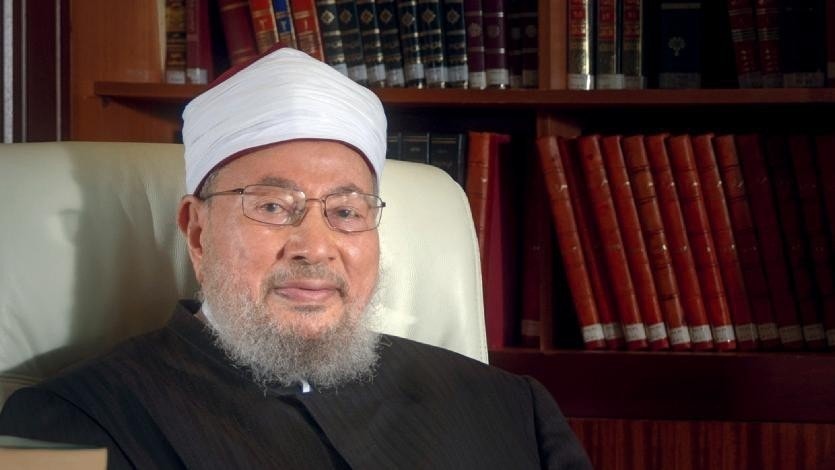
We woke up to the maddening, stunning macabre and grim sorrow of the demise of Sheikh Dr Youssef Al-Qardawi, renowned scholar and jihadist of international repute. As we weep profusely, both internally and outwardly, over this irreparable loss, his death indicates that the sun has set down for yet another era of Islam, as yet another chapter is closed.
Late Al-Qardawi can go down in history as a titanic whale in the fathomless ocean of Islamic knowledge and jurisprudence. He authored many valuable compendia and an estimated 120 to 200 books, famous among which is Al-Halal Wal Haram, that addressed and gave solutions to vital lawful and unlawful issues in Islam.
He was a contemporary of scholars and jihadists of like minds such as Sheikh Hasanul Bannah, Sayyid Qutub, Sa’eed Hawaah, Kishk and the rest. The personalities mentioned above formed the nucleus of the Islamic Brotherhood movement’ ‘Ikhwanul Muslimuuna’ in Egypt around the 1950s to 1960s.
Ikhwan’s formidable movement under the late Hassan Al-Banna’s leadership served as an alternative political group that brokered power in Egypt by participating in the democratic process and contesting political posts. Former president Muhammad Morsi was a testimony to Ikhwan’s influence in the mainstream politics of Egypt.
More so, the hitherto Islamic movement in Egypt, administered by vibrant and agile youths, had impacted and triggered similar gestures in many countries and Muslim communities worldwide.
While some Ikhwan eggheads, such as Hassan Al-Bannah, were martyred amidst the struggle, others, like the late Youssef Al-Qardawi, survived, lived longer and contributed to humanity on many fronts.
May The Almighty Allah accept the late Sheikh Qardawi and uplift his status in the highest and exalted Jannah, amen!
Dr Isa Muhammad Inuwa writes from Bayero University, Kano, Nigeria, via ismi2000ng@yahoo.com.
The Presidential Candidate of the Labour Party, Peter Obi, has been conferred with honorary citizenship of the county of Dallas in Texas, United States of America.
Peter Obi disclosed this in a tweet on Wednesday, October 5, 2022.
“Today in Dallas Texas United States, I met with the Mayor of Dallas and his team. I had the privilege of being conferred with the honorary citizenship of Dallas. I also met with a select group of Texas Judges.” He tweeted
Speaking at the ceremony of the conferment, the Mayor of Dallas, Eric Johnson said that the Labour Party presidential candidate shall uphold a place of high esteem in the minds of the people of Dallas city.
“Without a piece of doubt, with this conferment, you shall uphold a place of high esteem in the minds and hearts of the people of this great city (Dallas). Congratulations!,” he said.
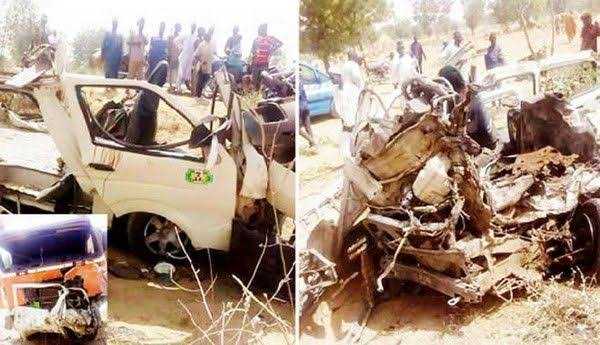
Two persons narrowly escaped death after a truck crashed into a submerged road in the Buji Local Government Area of Jigawa State on Monday, 3rd October, 2022.
This was contained in a statement obtained by journalists from CSC Adamu Shehu, the NSCDC’s spokesperson for the Nigerian Security and Civil Defense Corps.
According to him, the incident occurred when a truck with the license plate XP361EPE lost direction while crossing the section of the Sara-Gantsa road that was underwater and was filled with metal pieces.
He noted that, as soon as the NSCDC authorities received the report, they sped to the spot and were successful in saving the victims.
According to reports, the NSCDC had issued a warning to truck and long vehicle drivers asking them not to travel on the state’s waterlogged roadways.
A Senior Advocate of Nigeria, Prof. Mamman Lawan, has described government’s interference in court’s decisions as one of the major challenges facing judges in Nigeria.
Prof. Mamman Lawan stated this Tuesday, 4th October, 2022 during a one-day seminar organized by Faculty of Law, Bayero University, Kano, in collaboration with Bn Baaz, Kariya and Naseeha Foundations.
The seminar held at Islamic Forum of Nigeria Hall, Farm Center, Kano, was themed: “Justice as a Panacea to Insecurity in Northern Nigeria.”
He decried how big office holders and politicians stick their noses into the courts’ decisions, thereby making it difficult for judges to do justice in their decisions.
Lawan stated: “Politicians used to interfere with the courts decisions and spend millions of naira in the cases they have interest in.
“Therefore, judges and lawyers need to know that it is ethically wrong to collect bribe and do injustice. Without justice, there would be no society and there would be chaos and insecurity.”
Govt needs to increase allowance for judges, lawyers to tackle corruption
Corruption roams our courts today and affect their decisions. The reason was believed to be unconnected with poor salary and allowances by the government.
One of the Judges confidentially told the TDR reporter after the event that the monthly salary of judges is between N100,000 and 180,000 and N125,000 as furniture allowance after every four years.
Lawan said that there is a need for government to increase allowance for the Nigerian judges and lawyers to tackle corruption in the courts.
He added, “Government does not provide our judges and lawyers with enough allowances to halt corruption in our courts.
“This will help stop the judges from taking bribe from any politician,” he suggested.
Lawyers contribute to injustice in Nigeria
Also speaking, the Kano State High Court Judge, Justice Saminu Nasiru, blamed Nigerian lawyers for contributing to injustice in court decisions.
He said, “For this reason, it has become necessary for lawyers and judges to fear God and to remember meeting with their lord in the day of judgment.”
Ahead of the 2023 elections, the Independent National Electoral Commission, INEC, has set 28th September 2022 as the date of the kick-off of the campaign for Presidential and National Assembly elections, while that of Governorship and State Assembly is on 12th October 2022.
You may be confused about one thing or two, especially when I said the political campaign’s dos and don’ts. Some people may not have understood it. This is highly likely. But, of course, there are limits, and there is a red line that shouldn’t be crossed. There are things that politicians shouldn’t do in the name of electioneering.
Now that you know, there are things politicians should not do to sell their candidature to the electorate. You will like to know what those things are. Relax. In the course of this piece, I will attempt to treat it. As Nigerians, we are fully aware of what an average political campaign season looks like. It goes with so many things that some of us might have thought are normal everywhere. But it isn’t. Once again, what are they? Political thuggery, mudslinging, killings, hate speech, etc.
While electioneering isn’t a tea party, it doesn’t have to be as nasty as it is in this part of the world. It takes all of us to reduce the toxic messages: from our places of worship, markets, schools, offices, parks, halls, farms, etc. This is everyone’s business. We must be involved. We have to work collectively to help our dear states and the nation. We can only build this country under this dispensation by encouraging democratic conventions and not unacceptable practices to win or rig the election.
Rig the election? I think this horrible phenomenon continues to rear its ugly head because many of our institutions are so weak, especially the critical ones that can put a stop to it. Unfortunately, in so many instances, they abet it, leading to many terrible results over the years.
You will be increasingly sought-after during the electoral campaign to hatch out different plans. This is the time when there will be a multitude of recruitment. No, not in the civil service. But the thriving political industries need the strength and pep of youth to propel them. It is saddening to note that many youths will be required not on the dignified and visionary side but at the disdainable and thuggish position, where their youthful energy will be wrongly channelled to the despicable social oddity of thuggery. This trend has led to the horrible end of countless youth over the years.
It is discernible that politics is much maligned and detested owing to the celebration of thuggery, cultism, and immorality in many quarters. All these have discouraged many Nigerians from joining politics or exercising their franchise without necessarily being card-carrying party members. This has, over the years, aided in robbing Nigeria of some of its best brains in politics, a large swathe of its patriotic citizens, and a considerable number of Nigerians who believe in this country. My compatriots, we must change the narrative. We have to stand up and fight against any negative energy that permeates the polity: for the sake of our country.
Am I advocating against joining politics? Definitely, no. But join politics as a decent, respectable, and patriotic participator, no matter how ‘insignificant’ your position is. In this way, your wit and vigour will be put into effect. Draw a line once your only place is a thug or any role that diminishes you or any other person.
Value yourself and do only what is legal and aids your personal growth and collective development of society. Do not allow yourself to be used as a tool to destroy your future for a meal ticket. Be wise. You are as good as anyone else when you work hard sufficiently.
The campaign season has been known to be a tense moment worldwide. This is not peculiar to Taraba or even Nigeria. However, political campaigns are usually anxious for the right reasons in saner climes, with each candidate coming up with competing ideas and plans forming the fulcrum of their manifesto. Therefore, it is anticipated that heated discussion will be a standard feature. But in most instances, the issues take centre stage. Therefore, there will be no need to recruit an array of youth to be engaged in thuggery to win elections.
Over the years, we have seen how the tone of the candidates’ political campaigns has played a significant role in the level of violence witnessed before or after elections. Therefore, we must be deliberate in deciding our fate by categorically saying no to election violence, whether as candidates or electorate.
We need to suffocate the polity from getting the stimulus of violence from the youth that has kept it going. We are sure of sanitizing the system. As more people are interested in politics, much more good and patriotic Nigerians will line up. It is a win-win situation for Nigeria. This will give us a better opportunity to choose good leaders to build the Nigeria of our dreams.
Abdulrazak Iliyasu Sansani wrote from Turaki B, Jalingo, Taraba State. He can be reached via abdulrazaksansani93@gmail.com.
Being a keynote at the Kannywood Foundation film training workshop, on 2nd October 2022, Kano
Opportunities of Digital Technology
By 2012 the Hausa film industry has entered into the doldrums I have just described. There was a lot of head-scratching about the next moves. In the meantime, many individuals had formed YouTube channels and were uploading Hausa films with or without the knowledge and consent of the producers. Most of the films were old and were subscribed by internet newbies who had just acquired Smartphones and taking advantage of the cut-throat competition among Nigeria’s main service provers (MTN, 9Mobile, Airtel, Glo) were buying data and watching films on their phones. The DVD and CD players faded away, and although kids were still selling what were clearly outdated CDs at traffic junctions in the city of Kano, the process of watching free films on YouTube made the CD market non-viable. Then Arewa24 came along.
An initiative of the US Government, Arewa24 was part of the anti-terror and anti-radicalization program of the US State Department’s Bureau of Counterterrorism. The task was contracted to Equal Access International (EAI), which eventually established Arewa24, the first Hausa language satellite station rooted in peacebuilding and entertainment, in 2013. One of the ways the station revolutionized Hausa cinema – and thus succeeded beyond its expectations was the introduction of TV shows, hitherto a neglected entertainment segment in Hausa cinema. Broken into seasons and episodes, the first TV show on Arewa24 was Daɗin Kowa, a weekly drama about a melting pot city somewhere in the north of Nigeria containing a diversity of ethnicities, religions, languages and social classes. Of course, there are actual Daɗin Kowa settlements in Gombe and Kaduna State, but that did not deter the Series filmmakers. It was massively successful on multiple fronts.
First, it deconstructed the then-current Hausa cinema based on Hindi cinema with a lot of choreographed singing and dancing as well as romantic storylines, which was tiring to Hausa audiences. Second, it reconstructs Hausa TV shows of the 1970s, so beloved by cultural purists of Hausa storytelling. Third, as VOD (video on demand), Arewa24’s Daɗin Kowa blazed a new digital trail in film marketing for Hausa filmmakers. Being heavily subsidized, the producers can afford to load the entire series on an easily available platform of YouTube.
Yet, the second TV show on Arewa24, interestingly, was by an independent studio, Saira Movies, and the series was Labarina, made a year before Arewa24 took off in 2015. The novelty of Labarina as a series had a massive impact on online viewing of Hausa communities. Armed with Smartphones and cheap data from competing ISPs, millions tuned to Arewa24 to watch the series and later download it when it shifted to YouTube. It was the success of Labarina as a TV show that provided a backstory to the audience receptivity of Daɗin Kowa.
YouTube is an American online video sharing and social media platform headquartered in San Bruno, California. It was launched in 2005 and has become the main avenue for African cinema distribution. It is important to emphasize its American roots and origins to draw attention to the fact that the censorship regulations in any country do not apply to it. The Google-owned video service is also a major tool for self-distribution, as illustrated by the proliferation of web series in local languages in countries such as Ethiopia, Kenya, Rwanda, Senegal and Nigeria.
Kano filmmakers were quick to jump on the TV show bandwagon by cloning the success of Daɗin Kowa as a series broken up into episodes. Not only are the story arcs captivating, but they also provide a deeper script philosophy that is often critical analysis of the anthropology of contemporary Hausa societies. Although coming earlier than Labarina, Daɗin Kowa was more successful than Labarina, which was based on basically Bollywood soap operas. Daɗin Kowa was an authentic reflection of the contemporary realities of Hausa communities.
Other YouTube channels quickly followed. Table 1 shows a few of the channels and their overall viewership.
S/N
Series
Channel
Subscribers
Date
Channel Views
Izzar So
Bakori TV
969,000
2014
119,764,682
Kwana Casa’in
Arewa24
469,000
2014
84,222,468
Labarina
Saira Movies
468,000
2013
48,726,390
Aduniya
Zinariya TV
413,000
2018
38,632,116
Bakori TV, which hosts Izzar So, has the highest number of channel views followed by Arewa24, then Saira Movies and Zinariya. These metrics, as indicated, reflect the overall channel views rather than the series – but provide an idea of the popularity of the series hosted by the channels.
Izzar So is a very popular TV show, judging by the audience metrics of each episode. Yet it was hard to determine its overall playlist metrics on YouTube. This was because the channel is so poorly organized that it does not even shift its individual episodes into an effective Playlist grouping. The channel has only two Izzar So playlists; Season 1 with 13 videos and Season 2 with 3. This, of course, is inaccurate since in the main listing of videos, the Channel listed episode 100 in the series at the end of September 2022, although it is unclear which season it was. The average views for the latter episodes are slightly over one million. Even their Facebook page does not promote the series in the light of providing information about the series, the stars or the stories.
Similarly, while Aduniya has a playlist, it only listed 33 videos in the list, whereas the list of videos with the episodes has the latest episode being number 73 with over half-million views. Labarina did not fare much better, with three playlists listing less than 30 episodes, when Season 5 EP1 was released in late September 2022.
While most of the TV shows streaming on either Hausa VOD or YouTube are romantic soap operas, Aduniya stood out because of its focus on the gritty urban life of a Kano city – exposing what I call ‘corruption from below’. It competes only with Daɗin Kowa but surpasses it in its presentation of the harsh, tough and ruthless social culture that operates below the radar of public spaces.
It is clear, therefore, that Hausa filmmakers are gradually favouring the TV show format, but their lack of digital skills to effectively present the contents limits their appeal. Further, with millions of views, the TV show filmmakers have not been able to provide adequate information on either the series or the synopsis of the episodes anywhere on a dedicated website (for which there is none, except Arewa24) or even Wikipedia entry.
Besides the challenges of poor digital marketing skills of the TV shows, filmmakers in Kano also faced the problems of censorship from the Kano State Censorship Board. In a bizarre revenue-driven focus, the Kano State Censorship Board demands that TV show series must be submitted to it for censoring before being uploaded to YouTube. Yet the servers are not based in Kano nor under Nigerian government control, so it is difficult to see how the Board will have authority over the contents on a server located in California.
Towards a Cultural Film Policy
The key objectives of film policy are to promote new artists, create new jobs, increase investments in film production, attract foreign producers and enhance the outward-looking character of Hausa cinema. So far, the only film policy available in the country is the policy of regulation from both the National Film and Video Censors Board (NFVCB) for the nation and the Kano State Censorship Board for Kano State.
The regulatory focus of these bodies was to ensure cultural specificity in film production in whatever language it is produced. The usual focus was on avoidance of foul language, nudity, and reproducible behaviour, especially for impressionable viewers and religious sensitivity. It would appear, therefore, that any policy would have to revolve around the cultural and religious frameworks of the audiences.
This issue had been a sore point with Hausa filmmakers right from the halcyon days of the industry from 1998 till its eclipse in 2007. Market-driven Hausa filmmakers are focused on commercial rather than an artistic success. Arthouse films like Kazar Sayan Baki, and Ibtila’i, did not sell because they had no commercial motifs of singing and dancing. And once the studio feels it is not selling enough to remain afloat, it simply closes shop and moves to selling essential commodities.
This is where the Kannywood Foundation comes in. A training program such as this will pave the way to the future after emerging from a cloudy and rocky past. I will not presume to give a policy here because it is a group effort. However, while thinking about the policy directions of Hausa cinema, the following might be points to ponder:
Move away from commercialization to professionalization. Other professions include specific, targeted and focused entry points and exits. You don’t wake up one day and claim to be a doctor. One has to go through a rigorous process of certification. This should be the same with the film industry. It is not to say, ‘I am creative, and I have money’. You have to demonstrate competency since what you do is representation.
Seeking storylines in community arcs. A policy should demote the idea of transnational copying of films that focus on blindly copying Indian or Western films. It should focus on the anthropology of our experiences – of which there are myriad ways of getting story arcs. A policy can, therefore, effectively reward those ethnographically based films, through additional funding, rather than ineffective ‘film awards’, most of which were bought by the filmmakers
Any training program that would be part of a policy should include cultural studies. Scriptwriters, directors, actors and production designers must know what constitutes public culture – beyond what they experience. They need to be aware of it from the structural perspective of a research process. Production designs, therefore, must be not only accurate enough to the period being recorded but also aesthetic enough to convey a sense of elegance and pride in cultural tradition
A greater focus of the policy and training should be on digital marketing. It is not enough to simply open a YouTube channel and upload films. Practitioners need to be aware of how to drive traffic to their channels and organize their content in a structured and easily accessible form.
Reaching out to the larger world. While it is pleasing that many Hausa TV shows are now flooding YouTube, most have no subtitles in an international language that will communicate to international audiences. This is clearly a misuse of the social media platform – where although open to the world, Hausa TV shows are restricted to Hausa audiences. If there is anything to copy from Hindi cinema, it should be its marketing strategy. With their subtitles, their films are seen and accepted as cultural products worldwide – for language is the best representation of culture.
Careful attention must be given to Hausa VOD services, particularly Northflix and Kallo. While still in their early stages, these VOD streaming services effectively show the way to the future.
Cultural commodities – whether tourism-related or popular culture – are marketed with the assumptions of their impact on the daily lives of their consumers. Marketing determines the success of especially media industries, often with a disregard for the content. The commodification of the Hausa popular cultural industries was premised on profitability motives, not art or aesthetics. Financiers are ready to continue investing in the industries as long as they can make effective profits. It is this profit motive that commoditizes art and elegance to common supermarket products with a short shelf life.
Prof. Abdalla Uba Adamu wrote from the Department of Information and Media Studies, Bayero University Kano, Nigeria. He is, among many other things, the former Vice-Chancellor of the National Open University of Nigeria (NOUN). He can be reached via auadamu@yahoo.com.