Admin

Insecurity and the guilt of the masses

By Ishaka Mohammed

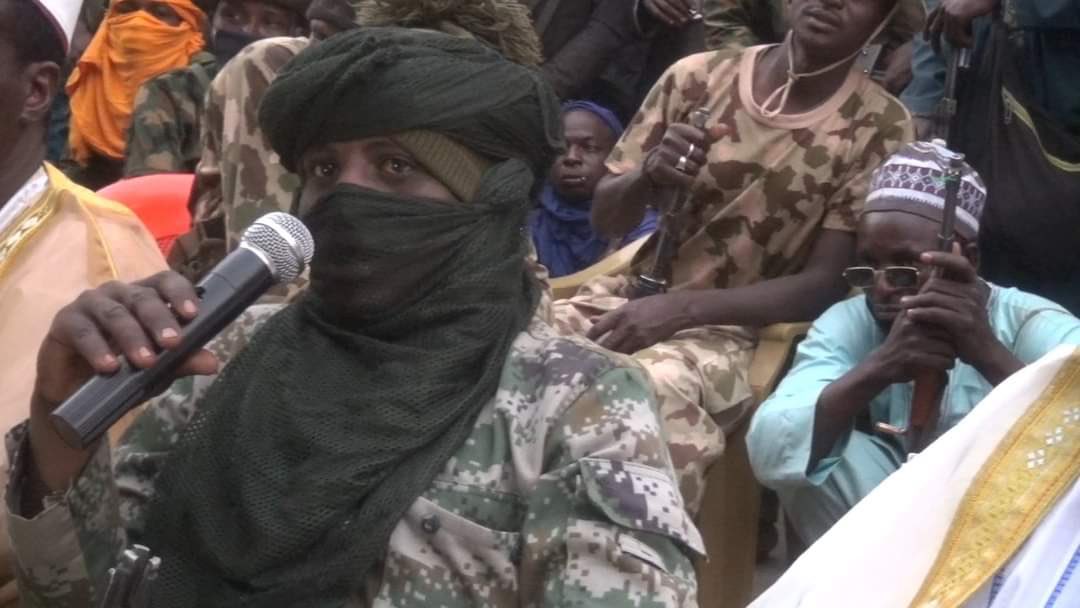
From temporarily closing schools and markets to imposing curfews and postponing elections, from paying ransom to shutting down telecommunications, name it — Nigerian authorities have been governing based on the dictates of terrorists.

Observing their supposed protectors dance to the tune of their tormentors, many innocent Nigerians live in fear and hunger. It’s unfortunate that despite submitting their powers to the state, poor Nigerians can’t boast of adequate security. Undeniably, our leaders have failed us.

Nonetheless, can we continue to blame only the authorities? No. In fact, sometimes, I feel it’s more suitable to refer to our plights as self-harm. There are times I can’t help but agree with those who call us potential criminals. Lack of opportunities is the reason why some of us can claim to be innocent of some vices. We clamour for the rule of law, but we allow petty sentiments to set our society ablaze daily. 

Most of those who are terrorising our country have family members and friends who are law-abiding. A good citizen is expected to stand by the truth, regardless of who benefits or gets hurt. This is scarcely the case with our “law-abiding fellows”, who help their criminal children or relatives escape justice. When two men protect their respective criminal children today, each of the fathers might become a victim of the other’s child tomorrow. What goes around comes around.

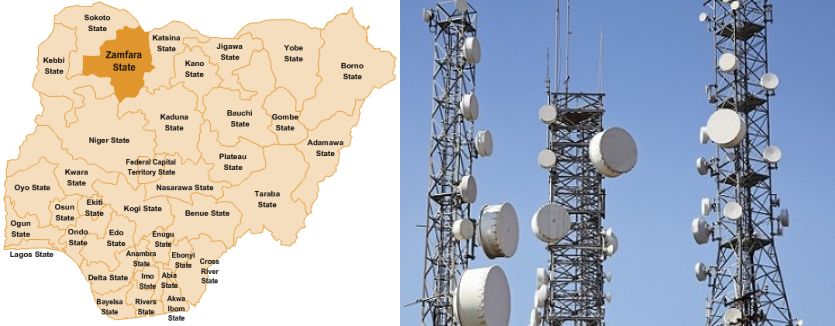
Imagine what the residents of Zamfara State are going through today! In 2013, habitants of Borno, Yobe, and Adamawa had the same bitter taste. We’re social beings; we must communicate to survive. However, we choose whom to communicate with. Since some (or most) of our target audience are physically far from us, we have developed various means to communicate with them, and one of these is telecommunications.

Our ways of life are influenced by the technologies of the moment or those at our disposal. Mobile phones have changed the way we communicate. Even if our livelihoods are entirely outside the telecoms industry, it is almost impossible for a chain of distribution to be successful without telecoms services. From the manufacturer to the middlemen to the consumer, one way or another, a phone call or text message or the Internet will be utilised. Our lives are intertwined with the telecoms sector, especially the mobile network. Despite the necessity of telecoms, residents of Zamfara will be deprived of their services for two weeks.

The above picture is just one of the countless ramifications of insecurity, yet we’re keen on maintaining these ugly consequences because of our selfishness and narrow-minded emotions. We stand with criminals based on religious affinities, regional linkages, ethnic identities or family ties. This is why Governor Simon Lalong recently ordered the arrest of those who rush to police stations to bail murder suspects. Let’s allow family members and friends to answer police questions before we discuss bail. Aside from bail, let’s refrain from blindly defending or accusing people. For instance, in the case of DCP Abba Kyari, a staggering number of northern Muslims keep praying that he be vindicated (without adding “if he’s innocent”). As for many people from the South, the suspended officer is already guilty. Aw, bigotry is undoubtedly our arch enemy.

Our craving for peace should be backed up with sincere actions, no matter how painful such could be. Our sense of optimism should never make us dwell in unrealistic expectations. Nor can we solve our problems without our involvement. Faith doesn’t mean leaving one’s door open and expecting God to close it; one has to initiate the process by using the body parts granted by God.

Sooner or later, the fire we refuse to quench in a neighbour’s compound will gut our houses, and others will look the other way. This isn’t pessimism; it’s reality. Our tribulations can only begin to ease the day we (at least the majority of us) become ready to treat everyone based on the contents of their character. Let’s report close criminals to the authorities if indeed we’re lovers of peace.

By the way, concerning the shutdown of telecoms sites in Zamfara, I think it’s better to narrow the geographic scope. Although the terrorists (euphemistically called bandits) might be everywhere, limiting the shutdown to selected areas like forests might produce the desired effects while minimising the suffering of the innocent residents at the same time.

Ishaka Mohammed writes from Kaduna. He can be contacted via ishakamohammed39@gmail.com.

Prof. Maqari formally withdraws lawsuit against Dr Abdalla Gadon-Kaya

By Muhammad Abdurrahman

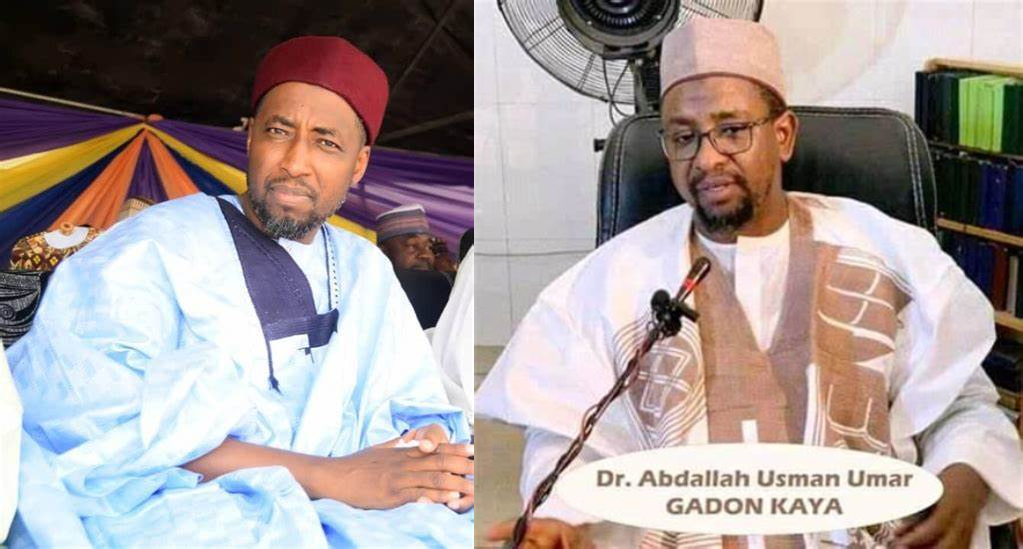
Today, the Abuja Central Mosque Imam, Prof. Ibrahim Maqari, formally withdrew his lawsuit against Dr Abdallah Usman Gadon-Kaya, seeking N20 million in damages for defamation.

The Daily Reality reported on September 1, 2021, that Dr Gadon Kaya’s lawyers had yet to receive any formal request to withdraw the lawsuit as of then. Instead, according to Barrister Ibrahim Umar Abere, all they saw was Prof. Maqari’s viral video alleging that he was compelled to withdraw it.

However, after appearing at the court today (6/9/2021) to defend their client, they got an official request from Prof. Maqari’s lawyers wherein the plaintiff withdrew the lawsuit in pursuit of peace.

Reacting to the reports that the defendant and his lawyers were preparing to file a counterclaim, Barrister Abdulrazak Kabiru Kofa said they had also shelved that plan. He cited a Quranic verse that says, “Peace is best” (4:128).

Recall that on July 23, 2021, Dr Abdallah Uthman Gadon-Kaya delivered a Friday sermon in a mosque in Kano State. That sermon did not go down well with Prof. Ibrahim Maqari. Thus, he appeared in a video warning Dr Abdallah to withdraw parts of the statement or meet him in court, which he eventually did.

The court order showed the case was due for hearing on September 6, 2021. Maqari demanded that Gadon Kaya retract the said statements, publish an apology in national dailies or pay the N20 million in damages.

Can Sheikh Pantami be a professor now?

By Idris Hamza Yana

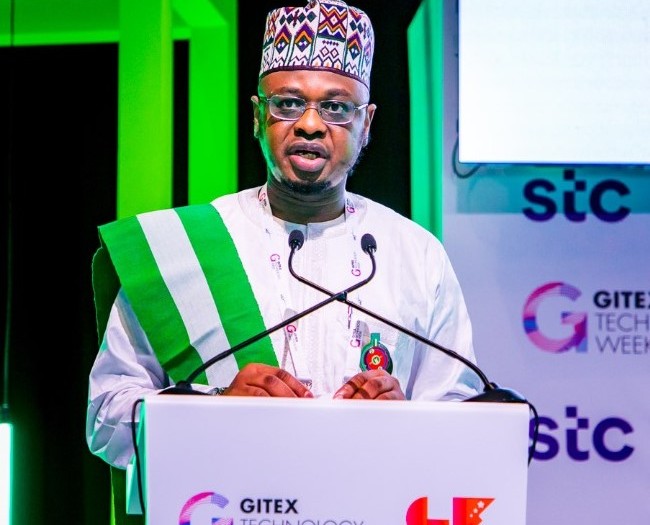
Allah knows I love and revere Shiekh Isa Ali Ibrahim Pantami – I prefer addressing him as Sheikh than Dr. I am not sure if the Sheikh can remember me or the encounter that brought our paths together. That encounter, however, left a lasting impression on me about him. Most of my friends, online and offline, know that I support and defend him in many issues, especially since he became a minister. This does not, in any way, mean I am looking for validation, acceptance or favour, from the learned Sheikh. I am also not a blind supporter.

Besides, I want to say a few words regarding the news of his promotion to the rank of professor, which has generated a lot of controversies. However, before dwelling on that, I want to unequivocally state that Sheikh Pantami’s academic excellence is beyond a reasonable doubt. He is an academic par excellence, just as he is an Islamic scholar. There is no doubt about that. Being promoted to the rank of professor, however, goes a bit beyond academic excellence. Some things (have to) complement one’s academic excellence to guarantee one’s chances of becoming a professor. I will mention the crucial ones.

Specific criteria qualify one to be a professor in Nigeria. They include obtaining a certain level of education, engagement in teaching, research and community service, and scholarship assessment. A doctorate is mostly a requirement, except for medical sciences who recognise a professional fellowship. According to each university’s Condition of Service, teaching for some years, including engagement in other academic activities such as supervision, are part of the process.

Community services refer to both academic and non-academic positions held (such as Head of Department, Dean, Director, etc.). A professorial candidate must also present his scholarly works, which relevant scholars in the field will assess. Candidate’s works are usually submitted to three people, and they can only be promoted to the professor rank if at least two out of the three recommend that.

Active service is another crucial component for promotion to the rank of professor. One must be actively teaching in a university at the time of their promotion. Another option is at the point of appointment from one university to another. If a person presents proof indicating he meets the requirement for a professorial chair in a university they are applying for a job, the committee responsible for his appointment has the prerogative to appoint him with a rank of professor even if he was not a professor in the previous institution he was working.

Therefore, looking at the above criteria, it is improbable for Sheikh Pantami to become a professor in his current circumstances. He is currently a minister of the Federal Republic of Nigeria. Part of the conditions of his appointment as the minister is that he had to take an unpaid leave from the university he was working for in KSA. This shows that he is not in “active service” with an institution of learning.

The purported reports about his promotion to the rank of professor say that it is a university in Nigeria (Owerri to be specific) that promoted him. This is very unlikely because the university cannot promote someone that is not its staff. Obviously, Sheikh Pantami is not a staff of that university. Since there is no “honourary professorship,” like a doctorate, we can conclude that the university has no power to do that. Though in Nigeria, anything is possible.

This, however, does mean Sheikh Pantami will not be a professor in the future. There are countless examples of academics who joined public service at some point in their lives and later went back to academia to become professors.

For now, we can only wish Sheikh Pantami more enviable successes as a minister, a safe landing and a prosperous academic future.

Idris Hamza Yana is a Doctoral Researcher at the University of Exeter, United Kingdom. His social media handles are:

Facebook: https://www.facebook.com/idris.yana/

Twitter: https://twitter.com/Idrisyana

Dear Nigeria: Don’t fall prey to the false promises of war

Like the mid-1960s, the early 2020s has been heated and filled with war rhetoric. This rhetoric has been well oiled by claims of nepotism, corruption and everything that has been proverbial fertilisers for conflict in post-independence Africa. From Freetown to Kinshasa, the story has always been the same. And intriguingly, the results have also been similar. Deaths and more deaths, reconciliation, then business as usual. Hardly any lessons learnt!

Let’s retake this: the science of war in Africa is essentially a story of frustration, then misinformation, then delusion, then deception, then destruction, then reconciliation and finally rehabilitation. But, except maybe for places like Rwanda, the root causes never get addressed, the warlords never die, the corrupt politicians/soldiers mostly come back wealthier and more confident to assume the mantle of leadership. And the masses who fought and killed one another are further plunged into disillusion and poverty.  

Why then does this story keep repeating itself if data tells us that the investment always ends in red and that the returns are always intertwined with regrets? Here are a few observations, supported by both learning and experience:

Violence is a Political Statement

The old saying that where gentility fails, brutality prevails holds true today as it did in Nigeria’s 1960s, Liberia and Sierra Leone’s 1980s, and Rwanda’s 1990s. Politicians have basically two tools: debate and violence. In climes where one ceases to be effective, the other is automatically activated. And because both do not really take much from politicians by way of casualties, both have been greatly valued assets in their political estates. To change this, the citizens must be enlightened enough to see beyond the rhetoric. And usually, this mass education has to be ultimately championed by concerned and more enlightened citizens outside the political class.

The War Mongers Mostly Have a Contingency Plan

Suppose the chances of death for both leaders and masses in a civil conflict are equal. In that case, the apparent possibility is that wars will hardly be fought, and misinformation will get as little funding as possible. Unfortunately, the truth is that leaders usually have collaborators outside the borders of their countries and these collaborators typically stop at nothing to rescue their friends when things get worse. So, with this in mind, leaders at both ends of the divide beguile their cannon fodders to get the job done while they await the desired if ominous outcomes.

War Promises Freedom and other “Sweet” Things

History is replete with people taking the path of violence and war to regain their freedom. And beyond freedom, war promises access to places, bodies, resources and positions that were otherwise inaccessible. In a strange turn of things, Foday Sankoh of Sierra Leone rose to a position almost as powerful as the President after his rebellion that led to the loss of reportedly 50,000 lives, including hundreds of Nigerian and other ECOMOG/UN Peacekeeping forces.  He committed the crimes, then, for the sake of peace, got rewarded with laurels! Who is going to bring back all those lives, especially those of his loyal foot soldiers? Most of these people willingly took arms because they dreamt of enjoying what only Sankoh could enjoy, while their ultimate lot was destruction. War promises a lot of prosperity, ironically, but delivers a lot of destruction in reality.

The Crux of the Matter: it’s Difficult to Find a Suitable Alternative to War

Not that people want to lose routine or the calm of home. Not that they like to see the hacked body parts of loved ones or wade through the blood of a beheaded or gunned down neighbour in search of safety, not that they like to be refugees and be treated as slaves in strange lands, just that in the heat of the burning issues, with the accusations and counter-accusations and the mutual acrimony that ensues, it’s “difficult” to find a suitable alternative. Or better put, the other options have been abused and exhausted. Elections and coup d’état are the usual alternatives to war in our postcolonial political dispensation, but the two have hardly ever provided the desired outcomes. Therefore, it is safe to say the fault is not in our enemies; the fault, rather, lies in us. People are willing to change evil until they become beneficiaries of such evils. And how quickly do their fans often forget this fact!

In the final analysis, people plan for wars, heat the polity, sponsor misinformation, make promises of victory, but then war is so creative that it hardly subjects itself to anybody’s plans. And when the gruesome scenes of death and destruction start being plastered all over the media, and mercenaries and warlords start gaining unfettered access to national resources and the treasury, when hunger subdues the strongest amongst us and ruins the future that is so dear to us, when ammunitions are in short supply, and the enemy forces are about to be in total control, that’s usually when it becomes clear that it is not really the war we wanted, but the promises it offered from a distance. Too late!

AF Sesay is a writer based in Lagos. He can be reached via amarasesay.amir@gmail.com.

Soldiers ‘reportedly’ oust President Conde of Guinea

By Muhammad Sabiu

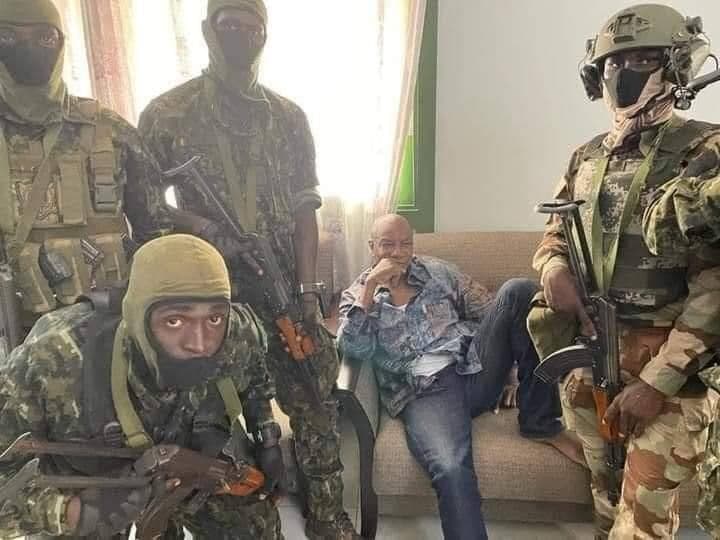
Guinea Conakry’s octogenarian president, Alpha Conde, has reportedly been overthrown by the country’s military.

The BBC has reported that an unverified video, which had gone viral, shows the president in the hands of soldiers.

Subsequent reports coming from Conakry, Guinea’s capital, have indicated that there was heavy gunfire in the city.

President Conde won a third term in a controversial election last year, which had ignited mass protest in the country.

There are still no details as to how the coup was staged.

Details follow…

Kaduna LG Polls: Why Gov. El-Rufai lost own polling unit, ward

By Mohammed Zayyad

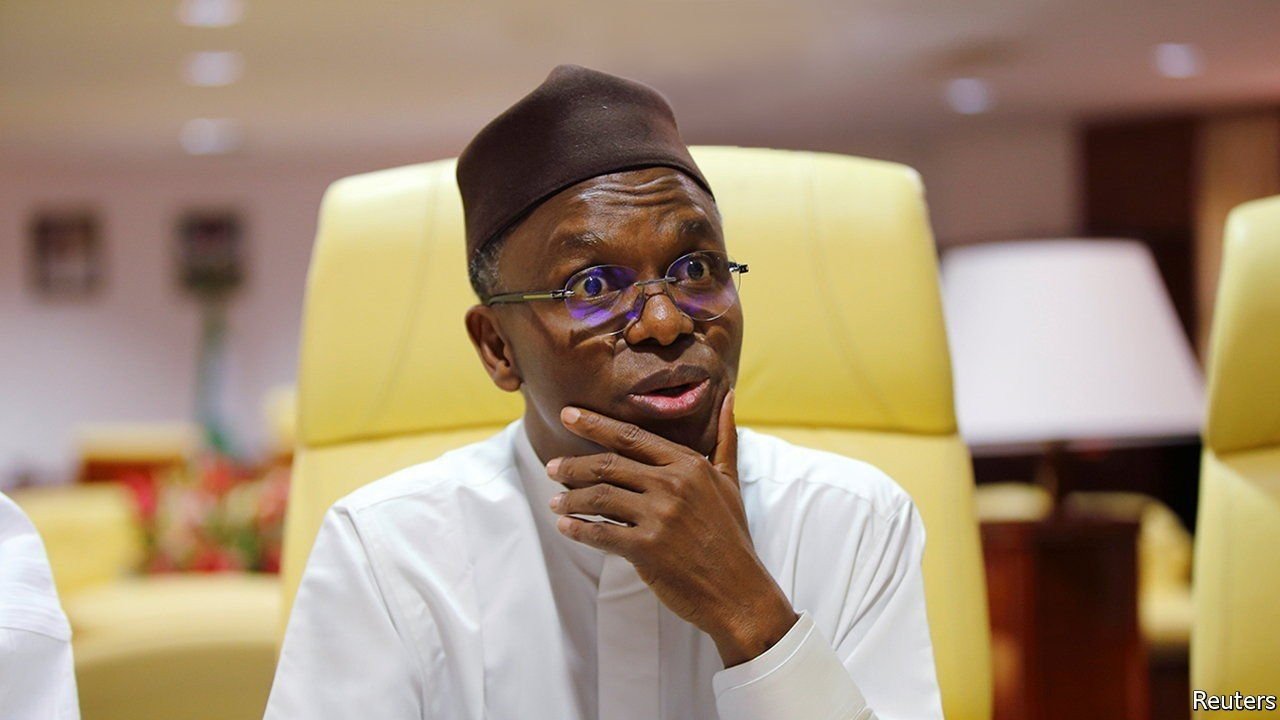
Mallam Nasir El-Rufai is one of the best performing governors in Nigeria. So far, he is the best Governor of Kaduna State in recent times. However, Mallam lost his polling unit and ward in the local government elections conducted by the Kaduna State Independent Electoral Commission on September 04, 2023.

Governor El-Rufai voted at Unguwan Sarkin polling unit 001 in Kaduna North LGA of the state. Mohammed Sani, the presiding officer, announced the final results: Unguwan Sarki Ward 007 Kaduna North Chairmanship, the People Democratic Party (PDP) scored 1,235 votes while the ruling All Progressive Congress (APC) scored 948 votes, while for the councillorship position, PDP garnered 1,405 votes while the APC was behind with only 804 votes.

Unfortunately, though, the election witnessed low voter turnout and challenges in some polling units as the wrong machines were deployed. El-Rufai himself expressed disappointment about the low turnout of voters in the council polls. He said: “What worries me is that I noticed that people didn’t turn out much,” This could be one of the reasons the APC did poorly at Governor El-Rufai’s unit, the party may say.

The big questions are: Why should a performing governor’s party be rejected by the people at the governor’s polling unit? Why should a performing governor lose at his polling unit and ward? Are the people angry with the governor, his party, including his government? Are the people not happy with the way the beautiful Kaduna Urban Renewal is being handled? Is the current insecurity the state is witnessing a significant factor? Is it the issue of the sack of workers? Is the Kaduna state government out in touch with the real ordinary people? So many questions require answers because the result is a big political statement from the people to the governor,  his government and his party.

Some political pundits believe that Mallam Nasir El-Rufai’s major error is that his government is not doing well in balancing policies, development, and politics. The pundits further said this is a reminder that development in a poor society must and should always consider the people’s survival first. An example was the former governor of Adamawa state, Muhammadu Umaru Bindow, who did very well in constructing roads, bridges and hospitals. Still, the people denied him and his party the APC a second term because Bindow failed in workers’ salaries and human development.

Nevertheless, El-Rufa’i is still the best governor Kaduna State has had so far. APC may go on to win the majority of the local government councils as the results come it. Still, some pockets of the results have given the opposition more strength to fight more and take advantage of areas the government is lagging. One simple example is how one of the governorship hopefuls, Honourable Ahmad Tijjani Umar, is smartly mobilising the youth and building bridges while taking advantage of the government’s weak areas. It seems it is working well for him and his party to win support from the ordinary people.

Governor  El-Rufa’i should be commended for conducting a free and fair election and using modern technology to advance democracy. Furthermore, the governor’s polling unit and ward results have given the governor some clues and the need for readjustments and adjustments for future politics.

Zayyad I. Muhammad writes from Abuja, zaymohd@yahoo.com.

Zamfara and telecom disconnection

By Mallam Musbahu Magayaki

The Federal Government of Nigeria has ordered Zamfara state’s communication lines to be disconnected, ostensibly to thwart bandits’ heinous crimes, following bandit attacks in Zamfara State that resulted in the abduction of school children in the state governor’s home town on Wednesday, September 1, 2021, and similarly in Niger and Kaduna states.

Simultaneously, the governments of Zamfara, Niger and Kaduna states have ordered the closure of all weekly markets in the state as part of measures to address the state’s deteriorating situation.

However, the federal and state governments should look into the possibility of providing palliatives for state citizens, as some, if not all of them, maybe unable to put food on their tables due to the closure of their occupational practices.

Furthermore, the government must make immediate efforts to re-energize intelligence gathering regarding terrorists’ plans and use all legal channels available to prevent and prosecute terrorist activities and private sources of support.

According to reports, one kidnap kingpin has threatened towns, stating that everyone who follows the government’s strategy of closing markets and prohibiting the sale of gasoline will be assaulted at any time. As a result, more troops should be deployed to these towns if the government wants the residents to follow official policy.

According to one expert, no one will disobey terrorists he knows will kill him without the government’s help.

Nevertheless, we expect that the measures taken will provide a lasting solution to the high rate of banditry and kidnapping in these states. And the government should be cautious about its choice because these hoodlums could go on to other lanes and cause further havoc in the impacted neighbourhood.

Moreover, to overcome the country’s dreadful condition, inhabitants should completely cooperate with security. If we work together, we can eliminate the country’s threat of instability. Thus, everyone has a part to play in the situation.

In conclusion, traditional rulers in all the affected states should work closely with security forces to combat the security situation in their states because these terrorists are branching out into some of their villages. Residents wouldn’t tell security organizations about them for fear of being attacked or killed by bandits.


Mallam Musbahu Magayaki writes from Sabon Fegi, Azare, Bauchi State.

1 person killed, 1 other injured as gunmen storm Bauchi community

By Muhammad Sabiu

The Bauchi State Police Command has confirmed an incident that led to the killing of one person and injuring of another by some unidentified gunmen on Saturday in Burshin Fulani, a community on the outskirts of Bauchi metropolis.

Confirming the incident, a police spokesperson in Bauchi, Ahmed Wakil, told journalists that the deceased was a senior staff at the Federal Polytechnic, Bauchi.

He was quoted as saying, “Gunmen attacked Burshin Fulani village and killed one, Abubakar Muhammad, a senior staff of the Federal Polytechnic, Bauchi.

“He was shot on the neck and died on the spot. Policemen who rushed to the scene evacuated the victim to the Abubakar Tafawa Balewa University Teaching Hospital (ATBUTH), Bauchi, where he was certified dead.

Mr Wakil added that policemen stationed close to the scene of the incident quickly responded on hearing gunshots of the gunmen.

He said, “Our patrol team stationed at the polytechnic gate on hearing gunshots from the direction at about 4:000 am quickly rushed to the area, on sighting the light of the patrol van the gunmen fled.

“The deceased came out to rescue his children who were struggling with some people at the gate, and immediately he emerged, they shot him.”

Another cinema for Kannywood is a welcome development

By Habibu Maaruf Abdu

Since its inception, the Hausa film industry, aka Kannywood, has not been cinema-oriented. This is primarily due to the filmmakers’ lack of technology to make cinema-compliant productions and the negative perceptions of the cinemas by the industry’s immediate/target audience (the Muslim Hausa populace). Therefore, video film media (i.e. cassettes and CDs) became the cinema equivalent in Kannywood and remained its sole market. However, the industry later crashed after the scourge of piracy and the emergence of online video-viewing platforms, like Youtube, forced those video film media out of business.

Subsequently, many reputable production companies had to close shop or remain practically inactive. In contrast, some low-class and Chamama (comedy) producers kept on as their films are mostly cheaply made and targeted the masses who are less conscious of modern viewing facilities. It was until the establishment of Filmhouse Cinema at the Kano Shoprite that the film business starts sprouting up again. Big budgeted Kannywood movies, made with state-of-the-art technology, began to overflow the only multiplex cinema.

Also, as people accept and patronise the cinema more, comes a realisation of the need to enhance film shows. Thus, the industry signed a deal with some cinema owners in Kano to show some selected films during the 2018 Eid festival. However, there is a more profound development recently. Platinum, another multiplex cinema for screening Kannywood movies, was opened in Kano.

The emergence of these multiplex cinemas is a welcome development for Kannywood. We all know that it’s on the cinemas that film industries stand. If the mighty Hollywood and Bollywood, for instance, still retain cinemas as the prime platforms for releasing their films, there is no other way for the embattled yet up-and-coming film industry. TV stations and online platforms (Netflix, Amazon Prime, iRokoTV, Northflix, etc.) should be more beneficial for the audience in Diaspora, as proposed by a Kannywood scholar, Muhsin Ibrahim.

In addition, it’s high time we disregarded our anachronistic views against cinemas. These newly opened cinemas are, after all, modern and standard for all and sundry. Nor is it for thugs and whores. There is no smoking and drugs. They are multiplex, with each room having stylishly arranged rows of comfortable padded seats. They are peaceful places to get entertained and have fun in a completely different way from the open-air, single-screens we had before.

Our religious clerics should stop denouncing these cinemas. They should, instead, promote Kannywood in general for more decent and educated people to join the industry. Their bashings, often based on unfounded rumours, will never help matters. Kannywood has come to stay, and it’s better to have them in Kano, a more Islamic state, for the government to regulate their activities than elsewhere.

Finally, I emphasise what Muhsin Ibrahim suggests to our big men: instead of building a state of the art filling stations all around Kano, why don’t they construct cinema(s)? The market is there. They should conduct some feasibility research and invest in this business.

Habibu Maaruf Abdu writes from Kano, Nigeria. He can be reached at habibumaaruf11@gmail.com.

We are herders, not terrorists

Ahmadu Shehu, PhD.

Once upon a time, the Fulani were the aristocrats of West Africa – the wealthiest, most intellectual hegemony in the West African sub-region. They were and still are the traditional rulers, Islamic scholars, leaders of the black civilisation, a melting point of the Arabian and Western cultures assimilated into the river of African traditions. These are the most physically appealing, Caucasian-like Africans; skinny, silky-haired, relatively light-skinned and tall. These were the kings of Africa, founders of the Sokoto, Futa Jalo and the Masina empires.

Back in history, the Fulani conquered kingdoms, took over cities and established polities across the region, for those were the days of war and conquests. But, they have also found cities that are capitals of states and nations, which have become business enclaves of all kinds, and for all Nigerians, nay Africans. From a barracks, they founded Sokoto; from a valley, they created Gombe, and from a hill, they established Yola. They went across mountains, and on the rocks, they found Jalingo. In the deserts, they founded many other cities, talk of Niamey, the capital of Niger, Maroua, Garoua, Ngaundere, etc., in the southern end of the Fombina empire. In these urban centres lie the fortress of fortunes for the Igbo, employment for the Yoruba and civilisation for the Hausa. From these cities comes the livelihood of all Africans, education for everyone and sustenance for all folks. The Fulani provided beef, the manure on which most of the Nigerian crop production relies. These are the employers of millions of people, teachers for many and mentors for others.

The triumvirates and their disciples, such as Nana Asma’u, bequeath West Africans the richest traditions of scholarship, the most valued native literature and a civilisation that has been resilient for centuries. This academic scholarship bequeaths northern Nigeria a space on the world map, drawing global scholarly attention, indigenous metalanguage, indelible history and a proud place in the comity of nations. At inception, the Fulani were the key and lock of the sub-Saharan economy, providing, subsidising, protecting and developing Nigeria with all that was needed. Like other ethnic groups, the Fulani gave their lives for Nigeria – Premier Ahmadu Bello, who inspired Prime Minister Sir Abubakar Tafawa Balewa, Murtala Muhammed, the Yar’adu’as and Shehu Shagari, to mention a few of the Fulɓe folks who served this country with distinction.

They served as the first line of defence for cities, the defenders of our religions and traditions. Even today, they are the leaders of most local security outfits that lay their lives to protect Nigerians against Boko Haram, kidnappers, armed bobbers and other terrorists bred by the failed Nigerian justice system. They are found at most gates of the elites, protecting the lives and property of Nigerians from Sokoto to Port Harcourt and from Maiduguri to Lagos. They are trusted with arms and ammunition to defend their Christian Igbo, Hausa or Yoruba bosses and are brave enough to lay their lives for the unknown passersby. 

But where are these people today? How did they become the villains in the lands, cultures, civilisations, nations and economies they helped build and sustain? The answers to these questions lie in the historical injustice, failure of leadership and sustained discrimination and demonisation of the most essential, most conservative section of the Fulani population. The travail of the herding Fulani began right at the peak of the Fulani empires. First, the hegemony created centuries ago recognised this category of its population for being good at military matters. Then, subsequent traditional administrations continued on the same lane, deploying the same people for warfare and nothing more. The results? They continued in the traditional ways of life and became even more sophisticated at combat.

The colonial rulers neglected this population, focusing only on the taxes, which they significantly contribute more than anyone else. Instead of the native authorities to reinvest these taxes in the integration, education and socioeconomic emancipation of this population, they squandered the resources. So, for our grandparents and parents, and indeed our brothers and sisters still on the cattle routes, nothing has changed in their lives since the 1900s. For us, no change has happened!

Then came the natural discord between herders and farmers, regardless of ethnicities. Then population explosion; sixty million people became two hundred million in sixty years, cohabiting the same 923768 Km2, sharing the same forests, water and other natural resources.

Again, climate change and environmental degradation took over most parts of the Sahel. Major grazing fields and waters, such as Lake Chad, have dried up, and herding folks have multiplied by dozens. Ethnoreligious crises have overtaken much of the Lake Chad region, pushing herding populations down south, searching for water and green pasture. Over there, farms have encroached all lands, including major highways, food insufficiency, joblessness, and economic degradation have forced families into the deeper forests in search of livelihood. Resource control sets in, and crises become inevitable.

Unfortunately, no one came to our rescue on time, as our sedentary brothers moved to modernity, leaving us at the mercy of the forests. Although we are one ethnic group, bound together by language and traditions, the socioeconomic and modern (dis)advantages have created a strong barrier; distinct kinship emerged, often leading to animosities and hostilities. They got the power, wealth, knowledge and resources. But, they have disassociated from us, laughed and called us Mbororo, “the unenlightened”, as stories of our perceived naiveté go viral in cities and communities.

Our closest friends – the farmers – with whom we enjoyed cordial relationships due to mutual economic interests have become enemies of necessity. Just as our lives depend on our herds, their own lives depend on their farms. Call it the clash of economic interests! With this, crises set in; lives lost, and livestock diminished. The large, vast country becomes a small spot, as we were chased away wherever we went. Our cattle were rustled both by our own impoverished, unemployed youth and neighbours. For any slight provocation or disagreement, our means of livelihood – the livestock – are targeted and killed, often leading to reprisals.

But, this situation has been stage-managed until governments in some northwestern states began ceding ancestral grazing lands to farmers and urban development. When herds diminish, herders settle down to crop farming. Thousands of people came out of this economic depression but woke up to landlessness without notice. Add this to the historical aspects, social deprivation and economic dislocation, you find that criminality is the natural turn of events. As usual, the Nigerian governments are ad-hoc, simplistic, never interested in long-lasting solutions and even scared of reality. Instead of addressing these issues head-on, criminals were made political thugs, monies and weapons provided, all for political greed.  

The natural promise land for such a criminally profitable business is more membership, innovations, and recruitments. Similarly, the natural candidates are those with similar backgrounds, social and cultural affiliations and mental dispositions. In this way, the Fulani folks are made the majority in the ongoing banditry and kidnapping. Therefore, the old circle is repeated.

Evidently, the fire-power in the hands of these bandits is far beyond their reach. The economic strength, resources and sophistication are not the kinds obtained by mere herders in the bush. That says a lot about their masters in cities, higher places and strong networks from other ethnic and social backgrounds. So, like they were deployed as foot soldiers for warfare centuries ago, and then as a conduit for taxations and money-making in cooperate Nigeria, they are today deployed as the bush soldiers, arm-bearing, front-raw men in the terrible enterprise that is kidnapping and banditry in northern Nigeria.

Look at it this way. If the billions made in this wicked trade were to be traced, they indeed wouldn’t be found in a ruga or a Fulani settlement. They might, instead, be found in dollar, pounds and naira accounts held by the very ethnic groups that are so quick to demonise millions of the herders’ kinsmen.

When it is elections circle, politicians would turn to the criminals, deploy them and win elections, and promise afterwards, to end them. When the security agencies arrest them, their bosses and other beneficiaries pay huge monies to get them released, damning the justice system and the nation’s well-being. Therefore, the truth is that just like Boko Haram are not Kanuri, Maitatsine not Hausa, IPOB and drug pushers not Igbo, Yahoo-Yahoo not Yoruba, these criminals are NOT Fulani. They are Nigerians and must be treated as such. Because we, the Fulani herders, are not terrorists. We are victims of socioeconomic circumstances. 

Dr Ahmadu Shehu is a nomad cum herdsman, an Assistant Professor at the American University of Nigeria, Yola, and is passionate about the Nigerian project. You can reach him at ahmadsheehu@yahoo.com.