Admin

Just in: Facebook just announces the change of its name to Meta

According to the Verge Media “the company announced the rebranding during Facebook Connect. Mark Zuckerberg announced that Facebook’s new name will be “Meta.”

Facebook CEO Mark Zuckerberg announced Thursday at his company’s Connect event that its new name will be Meta. “We are a company that builds technology to connect,” Zuckerberg said. “Together, we can finally put people at the center of our technology. And together, we can unlock a massively bigger creator economy.”

“To reflect who we are and what we hope to build,” he added. He said the name Facebook doesn’t fully encompass everything the company does now, and is still closely linked to one product. “But over time, I hope we are seen as a metaverse company.”

Zuckerberg owns the Twitter handle @meta (whose tweets are protected as of this writing) and meta.com, which now redirects to a welcome page on Facebook outlining the changes. The site previously redirected to meta.org, a biomedical research discovery tool that was a project of the Chan Zuckerberg Science Initiative. That’s part of the philanthropic arm Zuckerberg co-founded with his physician wife, Priscilla Chan, in 2015. In a Medium post on Thursday, the group says it’s sunsetting Meta.org on March 31st, 2022.

As The Verge first reported on October 19th, the rebrand is part of the company’s efforts to shift gears away from being known as just a social media company and focus on Zuckerberg’s plans for building the metaverse. In July, he told The Verge that over the next several years, Facebook would “effectively transition from people seeing us as primarily being a social media company to being a metaverse company.”

Zuckerberg wrote in a blog post Thursday that the company’s corporate structure would not be changing, but how it reports financial results will. “Starting with our results for the fourth quarter of 2021, we plan to report on two operating segments: Family of Apps and Reality Labs” he explained. “We also intend to start trading under the new stock ticker we have reserved, MVRS, on December 1. Today’s announcement does not affect how we use or share data.”


FG approves N30 billion for polytechnics and colleges of education

By Hussaina Sufyan Ahmed

The Federal Government of Nigeria has approved the for Polytechnics and Colleges of Education the sum of 30 billion naira through the Ministry of Education, from the head Mallam Adamu Adamu, at a round table organized by ASUP in Abuja this afternoon.

The Minister was ably represented by the Executive Secretary, National Board of Tertiary Education, NBTE, Mr Idris Bugaje. The round table theme is “Repositioning Nigeria’s Polytechnics for National Relevance and Global Competitiveness.”

Bugaje said the allocated fund is meant to alleviate the challenges facing Polytechnics and Colleges of Education in the country.

He read: “I am glad to report that as part of the realization of the pivotal role of Polytechnics to the advancement of Nigeria, Mr President has approved the sum of 30 billion Naira to ameliorate the challenges facing Polytechnics and Colleges of Education in Nigeria.

“The Ministry is working hard to ensure the release of this amount to the respective institutions.”

He told unions in tertiary institutions to focus more on capacity building through skill development, revered to be the core mandate than mere certification.

In his welcome address, President of ASUP, Comrade Anderson Ezeibe, advised the Federal Government to discontinue indiscriminate proliferation of Polytechnics and focus on funding and development of the existing ones.

The ASUP President noted with dismay that Polytechnics are fast becoming mere constituency projects established to satisfy political convenience rather than for educational development and the growth of the nation.

Ezeibe lamented the devaluation and discrimination of polytechnic graduates, which he blamed on ignorance and poor funding for the institutions that have resulted in an infrastructural gap, making Polytechnics less attractive to students.

He said: “We do not agree with the continued establishment of new Polytechnics on the largely unsubstantiated premise of providing greater access to tertiary education for young Nigerians as the existing ones remain unattractive to young Nigerians.

“Our Polytechnics are fast becoming mere constituency projects established to satisfy political convenience.

Our Polytechnics are currently facing an identity crisis as we are not convinced that sectorial mandates as envisioned in the National Policy on Education are being met.

“Our products are underappreciated, discriminated against and traumatized by the prospects of an uncertain future after their training.

“Our members (teaching staff in the sector) are not motivated as there is little of self-actualization in their chosen careers.

“This is adversely affecting productivity and leading to consistent migration of qualified manpower away from the sector.

The Polytechnics are nowhere close to preferred destinations for Nigerian students seeking tertiary education as the sector suffers from deep-seated discrimination in different facets mainly driven by class tendencies.

“The nation has equally been reaping bountifully from the tale of woes in the sector as shown by different economic indices which constitute an embarrassment to a nation with so much promise.

“Funding is abysmally poor, leaving widening infrastructural gaps; legal and policy frameworks are insufficient leading to weak levels of supervision and regulation.”

“Curriculum review is Irregular, therefore leaving the sector with obsolete curricula which are out of sync with the dynamic needs of industries and the society.”

“Indeed, the current unemployment figures in the country tell the entire story of a sector with diminishing impact to the nation’s economy.”

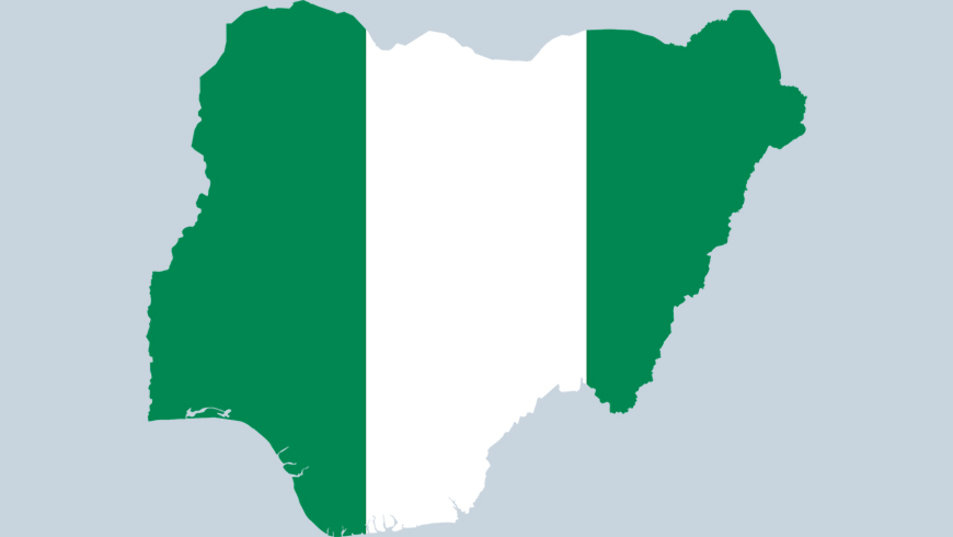
Nigeria’s Development: The Daunting Doom

By Lawi Auwal Yusuf

Leaders are preoccupied with self-centred political hustles, party meetings, extravagant banquets and flying their private or chartered jets over the country attending various lavish occasions. On the contrary, Nigerians turned wistful and sad about the terrible fate of the country and the gloomy future. As they get more concerned, their hope becomes less.

The country is endowed with efficacious potentials for its development to become a global power. It has a strategic location, sizable landmass, enormous young population, highly educated elites and abundant natural resources. In addition, favourable climate, fertile farmlands, and the shores that give it access to the Atlantic Ocean in the South are all added advantages.

In the last sixty-one years, Nigeria has reaped hundreds of billions of petrodollars in total revenues as one of the major producers and exporters of oil to the global market. It is the 12th largest producer of oil in the global ranking, 8th largest exporter and the 10th largest proven reserves. According to the Department of Petroleum Resources, it has about 159 oil fields and 1481 wells in production.

Apart from petroleum resources, Nigeria has multiple precious mineral resources in massive deposits. Moreover, cocoa is the largest foreign exchange earner to Nigeria besides oil and rubber, the second largest.

Similarly, as the most populous state in Africa and the 7th in the world with over 211 million people, Nigeria is a vast market. Its mixed economy is the largest on the continent. It is the 27th largest economy in the world by nominal GDP as of 2021 estimate. By GDP per capita, it is the 137th in the global ranking and the 25th largest by PPP.

However, these unique and extraordinary endowments are rare for a country to possess. These are the best opportunities and possibilities for its advancement. Unfortunately, poor leadership, endemic corruption and mismanagement have been the greatest obstacles in realising the potential. These precious endowments were not genuinely and diligently used. Hence, it has not made appreciable progress in those years. Had they been utilised at the best and maximum capacity, the sky would have been the limit.

More than 40% of Nigerians are living below the poverty benchmark in May 2020 estimates. They are destitute and cannot afford the three daily meals. Today, pervasive poverty depicts the lives of most Nigerians. The life expectancy is as low as 54.7 years on average. Infant mortality reached 74.2 deaths per 1,000 live births in 2019, and maternal mortality was 814 per 100,000 live births in 2015.

Moreover, the stagnant economy, inflation and the perpetual falling value of the naira have aggravated the plight of the masses, making life worse, more challenging and more miserable for ordinary Nigerians. There has been a swift rise in the cost of living and a concurrent decline in the living standard. Therefore, poverty, inequality, mass idleness, underemployment and wretchedness are at the highest pinnacle. This made Nigeria always emerge winner of the global rankings of the poorest nations.

It is appalling that the masses are becoming poorer while the nobles are getting more affluent. There has been a persistent widening inequality between the rich and the poor. Transparency International ranked Nigeria 136th out of 182 in the 2014 Corruption Perceptions Index. It was estimated that more than $400 billion were embezzled by corrupt leaders from independence to 1999. Nonetheless, President Muhammadu Buhari in 2015 said that corrupt officials had squandered more than $150 billion in the last decade. As a result, the country is synonymous with corruption. And the most astonishing is that it is among the wealthiest countries and also the poorest simultaneously. This is because the state wealth is enjoyed only by the aristocrats while the commoners are destitute.

Rule by theft known as ‘kleptocracy’ has deteriorated into kleptomania. They are strongly obsessed with stealing to the level that they don’t even have a material need for it. It degenerated into highly competitive accumulation syndrome. The monies that are ideal for the development of Nigeria are stashed at its detriment in Western countries and therefore become beneficial to their contented economies.

On the other hand, in the early 1960s, Nigeria was self-sufficient in food. But after the Civil War in 1970, the government failed to reinvigorate agriculture, resulting in failure to meet the acute population growth. It had to depend primarily on importation to fill up the supply gap. Sadly, in the 21st-century world, farmers are still tilling the ground with simple implements like hoes and cutlasses to feed a population of over 200 million. As of 2010, almost 30% of Nigerians are employed in agriculture and still have not met up the national demand.

The leaders had failed to provide the basic necessities of life to the citizens. As a result, after more than six decades of self-governance, there is no stable electricity supply, safe drinking water, standard healthcare, adequate and affordable food, qualitative education, social housing estates, infrastructures and social amenities. Nonetheless, the problems of the country in the1960s are yet to be resolved. Poverty, corruption, rule by theft, secessionism, tribal and religious antagonisms are lingering today. Regrettably, terrorism, kidnappings, cattle rustling, banditry and other current collective problems have deepened the crises.

Not being able to diversify the monocultural economy that largely depends on oil plays a significant role in the economy, accounting for 40% of GDP and 80% of the government earnings. Moreover, Nigeria does not adequately exploit the vast array of mineral resources in colossal deposits while the mining industry is still in its early stage of development. Moreover, other sectors of the economy that will help tremendously grow the economy and raise revenues are also underdeveloped. Contrarily, it has remained a perennial borrower of funds in the global capital market. Recently it emerged as the 5th most debt-ridden country in the world. The World Bank in August 2021 said that it had accumulated $11.7 billion in debt.

There has been deficient human development, especially the youths folk. In 2019, it ranked 161st in the world in the Human Development Index with a 0.539 score, which was very low. Millions of school-age children are out of school while some wander the streets freely with torn-out clothes and scavenging through rubbish looking for food. These miserable children are left on their own to live their entire unwholesome lives on the streets in search of a living. They have no qualifications or skills to make them employable in the labour market. Similarly, graduates searching for employment happened also to be idle many years after they had left school. Therefore, almost half of Nigerians are unemployed.

Furthermore, the emigration by professional Nigerian doctors to the diaspora known as the “brain drain” due to adverse working conditions in the country led to shortages of doctors in the healthcare system. It was estimated in 1995 that roughly 21,000 indigenous doctors were working in America alone, which was almost equal to those in the public health service then.

When you make a comparative analysis between Nigeria and its peers to assess its performance, you will realise that it had performed poorly. For example, look at the High Performing East Asian Economies (HPEAEs) that include Malaysia, Taiwan, Thailand, Singapore, Indonesia, South Korea and Japan. They are the fastest-growing economies in the world after the first world countries. Some had launched rockets into space. They manufacture aircraft, ships, automobiles, computers and smartphones while Nigeria still imports razor blades, pencils, toothpicks, including its most abundant petroleum products. Singapore and Japan developed from the less developed countries and joined the first world nations.

Look at other countries like UAE, India, Brazil and South Africa that recently established a consociational democracy in 1994. Nigeria played a significant role in fighting the apartheid regime and helped in establishing the multiracial democracy in the country. South Africa is now regarded as a highly developed state and has become a better haven for Nigerian youths who emigrated there in search of greener pasture.

Finally, Nigeria still has the chance to do better and start developing once more to realise its long-lost potential.

Lawi Auwal Yusuf wrote from Kano. He can be reached via laymaikanawa@gmail.com.

Nigerian police apprehend own officers for extorting traveller

By Muhammad Sabiu

Police in Imo State in southeast Nigeria have apprehended some of its own personnel over alleged extortion.

The News Agency of Nigeria (NAN) reports that the arrested officers were said to have extorted about N60, 000 from a traveller identified as Victor Agunwah.

In protest of the extortion, Mr Victor forwarded a complaint to the Imo State Commissioner of Police, Rabiu Hussaini.

Mr Hussaini, in a statement, said that the officers involved had been arrested, and they would face the wrath of the law.

He was quoted as saying: “The Imo Police command has commenced investigations into a report making the rounds online where police personnel were alleged to have extorted N60,000 from one Victor Aguwah travelling from Sam Mbakwe Airport to his home town in Mbaise.

“The CP, while condemning the incident, confirmed that the police officers have been identified, arrested and detained at the State Criminal Investigations and Intelligence Department (SCIID), where they will be made to face disciplinary action.

“The command has established contact with the victim through his cell phone and he is currently cooperating with the command in seeing that he gets justice.

“The CP, while commending the good people of Imo, assured them of the command’s commitment, under his watch, to ensuring that no police officer found in corrupt practices is spared.

“He assured all and sundry of making the outcome of the investigation and trial public.”

MISCONDUCT: Kano shuts private hospital as two deaths recorded

By Uzair Adam Imam

Following the death of two patients at Green-Olives Hospital, which the Private Health Institutions Management Agency (PHIMA) has described as misconduct in terms of management and service, the Kano State government has decided to shut down the hospital.

Green-Olives Hospital is situated at Sabon Titi, Tal’udu Gadon Kaya in Gwale Local Government Area.

Concerning the development of the issue, the Executive Secretary of PHIMA, Dr Usman Tijjani Aliyu, announced the closure of the facility in a statement.

However, the institution (PHIMA) was said to have been informed by the committee of citizens over the death of two patients at the facility.

Speaking, Aliyu stated that the two cases were thoroughly looked into and had discovered lots of misconduct and mismanagement in terms of services rendered to patients.

According to the statement, “The surgeon serves as the anaesthetic nurse, perioperative nurse and assistant surgeon as well, hence he alone does the four jobs during surgery, and this is grossly unethical by all standards.

“Consent forms were not signed before surgery, patients were not adequately prepared before surgery and no intraoperative monitoring of patients during surgery,” the statement added.

He also added that the accused would be dealt with in accordance with the agency’s guidelines, urging Kano state people to report such cases immediately as found wherever in the state.

Sayyadi Ruma, former Agriculture Minister, is dead

By Sumayyah Auwal Ishaq

Abba Sayyadi Ruma, a former minister of agriculture and rural development, is dead. Mr. Ruma served as minister during the late President Ummaru Musa Yar’adua’s administration.

Sources have confirmed that Ruma died in London after a brief illness. The deceased was believed to be among the most influential cabinet members during the Yar’adua era.

Of Professors in the Ivory Tower: Inner Rumblings

By A. A. Bukar

Let me preface this with the caveat and confession that part of the reason I recently slow down hobnobbing with professors is my increasing abhorrence of this culture of excessive bootlicking and kowtowing that is creeping into academia and eroding the ideals of independent thought, spirit of free inquiry and detachment that hitherto characterise intellectual discourse. The radical critique of issues and events for the betterment of humanity and irradiating the society is slowly taking a wing, supplanted with overt politicisation of minor issues (and even non-issues). Today, young academics, like myself, are becoming increasingly afraid to express even simple admiration of who they consider as the IDEAL TYPE among their teachers and mentors in academia because of “interpretations”. For this, you can even be reported to the enemy of such a scholar to possibly victimise you “sabida ai yaron wane ne! Ku kyale shi, ai zai zo defence, ai za’ a kawo papers dinsa for assessment”. And on and on. Such pettiness and vendetta. Hence, many – out there – see  Nigerian academics as the worst enemies of themselves and are happy with how FG is dealing with them.

Little wonder whether this culture is obtainable in other parts of the world. Departments are compartmentalised into cliques and camps a la political parties in the larger society. Professors are becoming like emirs fortified by sycophants, making them unnecessarily snobbish and covetous of flattery. PhDs are deliberately delayed or tactically killed because a candidate does not BELONG. A blind eye is turned to obvious wrongs, mediocrity, and crass injustice because “our oga” is INVOLVED. Entitlements and privileges (especially of the younger ones) are stampeded to settle SCORES.

A friend sent me a Jumaat goodwill message, a quotation from Rumi which reads: “Listen to silence; it has so much to say”. How many PhD/MSc candidates do you know writhing in silent pain of frustration? Prof sirs and mas: listen to our silences and that shy smile that says “ba komai sir”. When I was an undergrad, I once overheard my teacher, Dr Gausu, talking about one of his colleagues in Economics, Business or Accounting (I can’t remember exactly) who’d become agoraphobic and almost schizophrenic because of PhD manhandling from a senior colleague. Of course, then I was too inexperienced to understand the heck that was about. They sarcastically even refer to the initials as “Pull Him Down”.

Whether this augurs well for generation, production and dissemination of ideas and knowledge typical of the Ivory Tower, I leave it to your imagination.

For these and more, many ideal intellectuals are on the lookout for escape windows from the suffocating atmosphere of poverty and frustrations taking over academia like a thick cloud on the horizon. Many are “diversifying”, hence diverting their attention from the absolute commitment ideal scholarship demands. Others are increasingly becoming nonchalant – that I-don’t-care attitude of: “if the department or unit fuels the generator set, fine, otherwise I teach the SPSS or Word Processing on the whiteboard”. Elsewhere blackboard. So Nigerian hospitals are not alone; medical practitioners are just a cohort.

Despite all odds, I love being at the University. It is a place where I feel I naturally belong. And our campuses are still dotted with the IDEAL TYPE (just as there are IDLE TYPES who do not “profess” any knowledge) that constantly bring back to one’s memory my favourite: Edward Said. Critically engaging. Highly unassuming – like Mazrui. Passionate about nourishing the mind; concerned with the public good and Humanity as a whole. People who will unconsciously make you feel you are far from arriving without making you feel embarrassed. I have recently met and enormously admire one such intellectual is Professor Abubakar Mu’azu of the Mass Communication department, UNIMAID.

Interpret this one too the way you like. Report me anywhere. Land me into trouble. I no longer care. But Allah knows whether this is coming from the bottom of my heart or elsewhere. Such as an attempt to curry favour.

After all, what use is admiring people if you cannot tell them or others you do? Or should we hold on till they are no more? Wouldn’t that serve as a token of encouragement to maintain the course and tempo against all odds?

I have earmarked a few other similar intellectuals I will write about in due course on this space. I will unburden my heart about people I feel positively towards. Yes, I will specify those who fit my definition of the ideal intellectual. Part of this is, of course, honesty. Wallahi, no matter how engaging you are, you are out of the equation once it comes to the light you are dubious and too self-centred. If you’re extorting money or sex from your vulnerable students, you cannot be my model. But again, I am not looking out for an angel.

Back to the subject, I have met with Prof Muazu only a few times. One was when he came as an external examiner to my thesis in April 2018 and some months earlier as an accreditation team member for the college I taught in Yobe state. The last, some weeks back. Each, he left me with nothing but admiration and deep respect.

When I phoned my referee and supervisor at undergrad, late Prof Maikaba, to congratulate him on his last promotion, he typically enquired about the progress of my thesis. I told him then, “I was done with viva yesterday and effecting corrections now”. Curiously, he returned with a finder about the examiner. When I replied that it was Mu’azu, he said: “kace an sha aiki”. Toh Bukar. PhD beckons. You can’t wait, especially for one in this business. He admonished me as usual; I giggled, thanked and said my goodbye.

I don’t know whether it’s appropriate to reveal this too. Some hours before the viva voce, my supervisor, Dr Binta Kasim Mohammed, called alerting me “to prepare very well. Because the external examiner brought is extremely thorough and critical”. Sir, you are appreciated and held in high esteem not only by nonentities like us but also by your colleagues. But my assessment of you from afar is that: these things matter little to you (if at all) – out of humility.

From both you and the late Maikaba, I graduated with distinction. But each time we met, you left me feeling inadequate, making me wonder ‘when will I arrive?’. Parts of this are the books you recommend, which I never read, or know not exist. But somewhere in WHERE I STAND, Sheikh Gumi has opined along this line that knowledge is such enigmatic that the more you learn, the more you realise that you know very little. I wonder whether you feel something similar sometimes. Yes, despite the accomplishments. In just your last visit, you recommended, as the situation warranted, many texts. Among these are Peter Winch’s THE IDEA OF A SOCIAL SCIENCE AND ITS RELATION WITH PHILOSOPHY. Then the POSITIVIST DISPUTE IN GERMAN SOCIOLOGY. The latter is such a rare collection – in fact, my first time to meet Adorno, Habermas and Karl Popper in one place. Both books remind me of similar stuff I read from the staple of Claude Ake and Yusuf Bala Usman of blessed memory.

In this vein of characteristic modesty, you specifically asked me to read Ben Bagdikian’s MEDIA MONOPOLY after the viva voce in order to steel my argument on the influence of profit drive in media content production. A copy of my thesis still carries your adorable handwriting suggesting the title and other points. But little wonder you never drew my attention to the fact that you have written extensively on media in peacebuilding until my curiosity took me to the internet and a bookshop where I stumbled CONFLICT MANAGEMENT AND THE MEDIA IN NIGERIA  – a book coedited by you and Gani Yoroms. This was despite your awareness that my thesis is squarely about this matter of controversy. Quite recessive indeed.

With the crisis engulfing Nigerian Universities (the worst I have ever seen) and academics running helter-skelter for greener pasture, I equally wonder what becomes of the academia after the few of you that remain out of passion pass on to something else or the inevitable great beyond. And especially if this maddening ill-treatment continues from the federal government. Allah Ya kiyaye, amin.


Bukar teaches Mass Communication & Journalism at Ahmadu Bello University, Zaria.

Kano State Government reiterates its commitment to health sector 

By Hussaina Sufyan Ahmed


Kano State government has approved the establishment of the School of Post Basic Ophthalmic Nursing this afternoon at the opening declaration of the 34th annual National Scientific Delegate Conference and Free Eye Care Services organised by the Nigeria Ophthalmic Nurses Association (NONA) held at the Coronation Hall, Government House, Kano State.

The Governor of the stage, Dr Abdullahi Umar Ganduje emphasized his administration’s commitment towards revamping the health sector.

In his statement ”our administration has been according priority attention to the health care delivery because the growth and development of any nation is tied to sound health. In order to make this effort actualized, we allocated 15% of the 2021 budget to the health sector of kano State, this is in line with the Abuja declaration; and are envisaging higher in the next fiscal year”.

Dr Ganduje, ably represented by his Deputy Dr Nasiru Yusuf Gawuna, said that in recognition of the significance of eye care services for human development, the state government has approved the establishment of the School of Post Basic Ophthalmic Nursing at Murtala Muhammad Specialist Hospital, Kano.

The theme of the conference is “Exploring Global Advancement And Innovation In Ophthalmic Nursing”. The Governor, while describing it as apt, said he feels the theme emanated from the desire to review the performance of the noble profession of ophthalmic nursing in order to enhance maximum efficiency and productivity.

In their separate remarks, the National President of the Nigeria Ophthalmic Nurses Association and his Kano State counterparts, Stephen Lamiya and Saleh Iliyasu Dan Hassan, respectively, said the occasion serves as the culmination of an enormous collective effort of various stakeholders from local, state and national level of ophthalmic Nurses and ophthalmologist which began in November 2020.

They further said considering the fact that the eye is a fragile and very sensitive organ of the body which requires very cautious attention, there is an alignment with the chosen theme of 2021 World Dight Day “Love Your Eyes”, hence called on all ophthalmic Nurses to rededicate their services to the profession and the country.

Others who spoke during the occasion included the Commissioner Of Health Dr Aminu Ibrahim Tsanyawa, the Chief Medical Director of the Aminu Kano Teaching Hospital Prof. Abdurrahman Sheshe and Dr Ado Shehu Ringim from Maryam Abacha American University.

FCE Yola shuts as students protest over water, electricity

By Adamu Ibraheem Jimeta

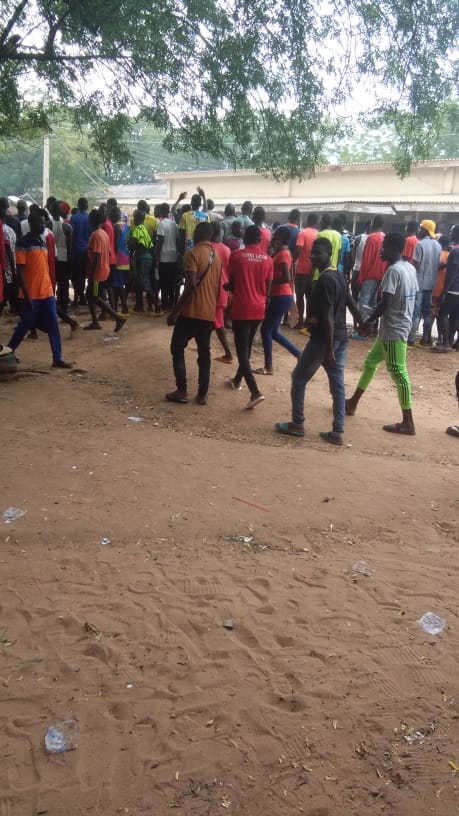
There was pandemonium at the main entrance of the Federal College of Education, Yola, on Tuesday,  October 26, 2021, when students blocked the college entrance protesting a two-week total blackout of electricity and water supplies in the college.

The protest, which started as early as 7 am, grounded academic activities as students and lecturers were denied access to the college.

According to the protesters, they have opted for the protest as their last resort as all pleas to the management to intervene in the incessant problems of water and electricity supplies fall on deaf ears.

Speaking to our correspondent, a level 300 Education/English student who prefers anonymity told The Daily Reality that for over a week, there was no water nor electricity in the college. He said, “Living in the hostel with no water and light, lecture theatre with no electricity supplies for over weeks have been excruciating.”

He said the Students’ Union Government (SUG) has not lived to the expectations and welfare of the students. He called on the management to take drastic measures that would bring these problems to an end.

Responding to the accusation by the students, the SUG President, Comrade Sulaiman Abdullahi, told our reporter that his administration has been running around over the problem. “We have had a meeting with the Acting Provost, and he has assured us that the management will fix the problem. Even yesterday, I spoke with the provost on phone, and he said he has arranged a tanker that will start supplying the college effective from today, Tuesday. Therefore is not true that we have not done anything about it,” said the SUG president.

All efforts to speak with the Registrar of the college, Malam Gidado Ahmed, proved abortive during filing this report. He earlier told The Daily Reality he was in a meeting and promised to get back to us but, he didn’t reply to the messages and calls put to him by the reporter before going to press.

It took the intervention of a joint task force of soldiers, mobile police and men of NSCDC when the protest escalated to burning tires within the school premises. The JTF fired gunshots in the air and dispersed the protesters.

In a related development, the management of the Federal College of Education, Yola, has announced the closure of the college. In a circular signed by the Registrar, Ahmed, it was stated that after its emergency meeting on October 26, 2021, the management has reviewed the situation on the ground and resolved to close the college immediately.

Students are given up to 10 am to vacate the campus, the circular added.

Nigerian banks and the imposition of foreign Corona protocols

Have you tried entering any Nigerian bank these days? You will have an experience you will never want to go near bank again. The reason is that the banks have taken their Covid-19 protocols to a primitive, cruel and self-destructive level. It is time they throw away their Covid-19 protocols. I have long said if Corona had been what we were made to believe, probably by now we would have all been dead. But fortunately Africa, for unexplained reasons, has been spared the disasters predicted about the pandemic.

Bankers are like all of us when they leave banking halls. They go to markets, schools, airports, motorparks, shopping malls and places of worship where Covid-19 protocols are thrown to the dogs. What they don’t get from the bank they will still get it from outside the banks. If the rest of Nigerians don’t care about Covid-19 protocols, why should bankers be more Catholic than the Pope?

Schools resumed also with their mad frenzy for observing all Covid-19 protocols. But within a week they have gone back to basics. Students don’t have the discipline, patience and above all, the resources to keep faith with Covid-19 protocols. No one can be religious with hand sanitizer, facemask and hand washing. My children tried it and my Chief gets his facemask soaked in soup daily. He loses bottles of sanitizers daily. At his age there is no way he can understand Covid-19 protocols and will not be made to understand the dangers of Covid-19.

But all in all Covid-19 is past behind us. Social distancing and protocols should be part of individual responsibility. Covid-19 or no Covid-19 we are supposed to exercise distancing and hand washing hygiene. But that does not mean we should promote Covid-19 protocols to religious level.

Our African, and to some extent Nigerian Covid-19 is entirely different from the deadly foreign one. This is the best time to acknowledge the local thing over the deadly foreign one. Ours is more friendly and merciful. The banks should know these and stop their stupid and deceptive lies.

Aliyu Nuhu writes from Abuja, Nigeria.