Admin

Why the north needs a news channel

By Dr Ibrahim Siraj Adhama

News is often assumed to be a factual and objective account of happenings at global or local stages. Yet, news has always been a function of gatekeeping and, therefore, selective. Much is included or omitted through a selection process that is not entirely devoid of subjectivity and intrusion of personal judgement. Stories are framed to convey certain interpretations or promote certain ideologies. Facts are skewed to confer advantages on some individuals or groups who happen to be the news media owners and put the “others” at a disadvantage or cast them in a bad light. Globally, the media are being used, albeit cleverly, to promote their funders’ political ideology and protect their economic and other personal interests in a manner that is beyond what a layperson can see and understand. As the saying goes, no news is value-free.


Since its inception in Nigeria, one crucial feature of the media has been its religious, ethnic and regional configuration. Since independence, the Nigerian media have not only been highly politicized but were also found to be regional and ethnic in orientation and patronage. They seem to have fallen into and accepted the sad characterization of being ethnically and regionally oriented to the extent that issues of regional or ethnic significance are hardly treated objectively and professionally.


Northern Nigeria has always been a victim of media misrepresentation. Often, the media amplify the region’s challenges and, grossly, underreport its potentials. Of course, the North is battling serious developmental challenges, yet its vast mineral, agricultural and human resource potentials are entirely overlooked. The impression one gets is that of a region that is gradually turning into an epicentre of everything terrible or backward about Nigeria, bereft of any meaningful contribution to the country’s socio-economic development. It took the recent protests by food and animal suppliers to remind Nigerians that the key to the country’s food security lies in the hands of the North, a region portrayed by some as worthless.


True, the North has its more than fair share of challenges. It has a higher number of poor people. It also leads in other negative indices such as illiteracy, diseases, child mortality, hunger, and out-of-school children, especially if the available local and international statistics are anything to go by. This is not to mention the high level of insecurity that has continued to bedevil the region and is threatening to turn it into the largest killing field in the world.

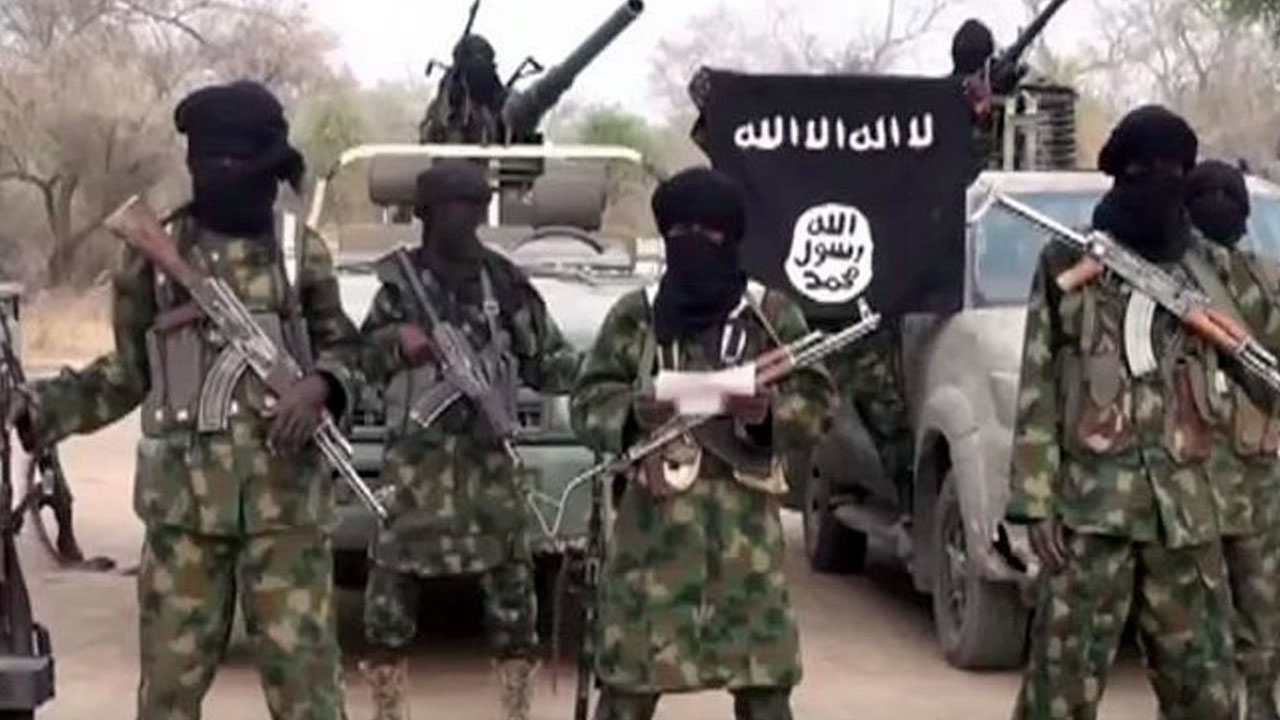
The Boko Haram insurgency in the Northeast is more than a decade old. Unfortunately, it does not show any sign of ending anytime soon. Bandits and kidnappers are on the prowl in the Northwest and the North-Central, killing and maiming at will. The kidnapping of school children is assuming a worryingly disturbing rate. The region similarly witnesses social and political upheavals with secessionist agitations re-emerging from East to West ostensibly to counter phantom Northern domination, domination about which an average Northerner knows close to nothing. Essentially looked upon through a parasitic lens, the North has disappointingly continued to be projected as the “sick man of Nigeria”.


To make things worse, the North appears not to have a voice of its own. Unlike what obtained in the past, the North has given up on the race to establish media outlets (especially news channels) to cater to the region’s information needs and ward off negative media campaigns from other regions. It was the late Ahmadu Bello Sardauna (of blessed memory) who said at the opening of New Nigerian in 1966 (shortly before his assassination) that “if you don’t blow your trumpet, nobody will blow it for you for the simple reason that they are too busy blowing theirs”.

Owing to good leadership, the North in those days was able to compete favourably against other regions in the media arena – from newspaper to radio and television. However, this is no longer the case, especially with regards to private news channels.


Since the deregulation of broadcasting in 1992 to allow for private ownership of radio and television in Nigeria, all the North can boast of are private FM radio stations and a handful of entertainment TV channels. In Kano, for instance, there are over twenty such radion stations and counting.


What the North actually needs at the moment are news channels in the form of TVC and Channels Television that will broadcast news and analysis of significant events to the world from a perspective that represents the average thinking of Northern people or at least does not misrepresent them. Enough of these avenues for “talking to ourselves” that these FM stations represent. There is the need to channel concerted efforts and resources towards achieving this in the nearest future if we are interested in changing the narrative about our region and what it stands for.


To better appreciate the need for this, one has to watch AIT, TVC or Channels Television coverage of such issues like restructuring, resource control, farmers-herders conflict or any of those issues that are so dear to the South but about which the North feels differently. The North is effectively turned into a punching bag of some sort by annoyingly ignorant noisemakers posing as analysts or barely informed ethnic bigots parading themselves as advocates for justice. Neither the right of self-defence nor the ethical prerequisite of fairness and balance could guarantee hearing from the other side. This has to be countered!

Dr Ibrahim wrote from the Department of Mass Communication, Bayero University, Kano.

Top 10 Kannywood films of 2020

By Muhsin Ibrahim

The year 2020 is unlike any other in recent history. The COVID-19 pandemic has changed the world. We now have lockdown in countries; we have to keep social distancing, wear a facemask, among other protocols. The virus batters the entertainment industries from Los Angeles to Lagos, Mumbai to Mombasa, Cairo to Kano, forcing several cinemas to shut down. Thus, shooting and showing film had to stop. Nevertheless, that boosts TV and video on demand (VoD) contents and opens a gate for new ‘genres’ of YouTube series and serials. In northern Nigeria, these include Kwana Casa’in, Gidan Badamasi, Labarina, Izzar So, A Duniya, Na Ladidi, among many others.

Kannywood began the year auspiciously with a box-office hit, Mati A Zazzau. Therefore, the audience expected to see many more similar or better films. Although producers made only a few (movies) eventually, these include the excellent, the good, the bad and the ugly. Evidently, the pandemic disrupted or ruined several plans in Kannywood, too. Anyway, the following are some I consider above their peers. Please note that the numbering is, in no way, hierarchical.

  1. Wutar Kara
    The film, shown briefly in cinemas in 2019 and released in 2020, deals with a thorny yet unexplored topic of inheritance in Hausa land. Alhaji (Ibrahim Mandawari) is a wealthy family man with multiple wives and several children. As is often the case in such a house, there is disunity among the family members, some of whom are wayward. He unexpectedly dies in a car crash. Serious rancour ensues over the wealth he left behind. Finally, everyone gets their share. Unfortunately, most of them embezzle the inheritance, worth several millions of naira in cash and property, so quickly. Yaseen Auwal directed the movie while Bashir Maishadda is the producer. The performance of Ali Nuhu, Sadiq Sani Sadiq, Aminu Sharif Momoh, Maryam Yahaya, among others, is notable and praiseworthy. Dare I say the film is one of the best to have ever been made in Kannywood.
  2. Mati a Zazzau
    As a sequel to Mati da Lado, the film starts from where Mati (Sadiq Sani Sadiq) wanders in an unknown village following his escape from Rimau. He and his brother-accomplice, Lado (Tahir I. Tahir) duped Rimau village people for years by pretending to be Islamic scholars. The townspeople chased them away when they discovered their identity. Mati finds himself in Zazzau, where, coincidentally, his late, rich father had lived and left a substantial treasure in the hands of a confidant. The rest of the story mainly revolves around Mati’s effort, if not trickery, to get the wealth. Yaseen Auwal directed it while Rahama Sadau & Sadiq Sani Sadiq take the credit for its production. The film is doubtlessly successful as per Kannywood’s box-office record. Thanks to well-calibrated publicity and promotion by Rahama Sadau and her team, it reportedly pulled out a record audience. Fans of the Mati franchise love the film.
  3. Matar Mutum
    The film, also shown in cinemas in late 2019 and released to the broader public in 2020, exposes indiscriminate marriages among Hausa people. Malam Idi (Rabi’u Rikadawa) is a guardsman who marries and divorces women at will. As a result, he has lost count of his children, whose mothers are mostly no longer living with them. Two of his oldest children are thieves and drug addicts; another is married to a stingy husband while the other wed her heartthrob, who, quite weirdly, maltreats her after the marriage. Despite all this, Idi uses his daughter’s bride price to marry a widower, Ladidi (Halima Atete). He eventually gets sick, thanks to his countless marriages, after which everyone abandons him. Yaseen Auwal directed and produced this movie. The topic and the action stand out. Daddy Hikima’s role is outstanding. Besides, Idi’s daughters deserve better treatment from their husbands, for, after all, their father’s fault is not theirs.
  4. Dafin So
    Bashir (Adam A. Zango) is raised by an overprotective mother who spoils him, leading him to drug addiction. He runs away from home and, eventually, becomes somewhat insane. One day, a posh Nabila (Aisha Tsamiya) brings her car for repair close to the refuse site Bashir and his friends live on the heap to smoke and consume drugs. He comes to the garage to beg the mechanics for food, as he usually does. When they chase him away to protect their customer, she feels sorry – or more – for him. Against the odds, she follows him until she finally gets him fully rehabilitated. Typical of such a film, she falls in love with him and asks him to marry her, a choice her father furiously rejects. Her betrothed dumps her after an accident left her wheelchair-bound. Then, the father realises that only a true lover can marry his daughter, and Bashir is one. Though the story is not very novel, its execution is laudable. It’s directed by Sadiq N. Mafia and produced by Abdul Amart. The Zango vs Tsamiya chemistry is indisputable; likewise, their acting flair.
  1. Kazamin Shiri
    Alhaji Sammani (Rabi’u Rikadawa) is a wealthy man with a beautiful, happy family. He weirdly falls in love with a married woman, Karima (Bilkisu Shema), who is contented with her low- income husband, Badamasi (Ali Nuhu). She rejects Sammani’s absurd love overture. After a series of pressure coming from her bosom friend, mother and eventually her husband, she recapitulates. The film is full of intrigue and is also well directed and acted. Nonetheless, the ending may encourage such behaviour in a society known for its cherished socio-moral and religious values. It’s directed and produced by Sunusi Oscar 442 and Alhaji Sheshe, respectively. Aminu Sharif and Fati Washa did very well. Mr Rikadawa displays his exceptional talent in this drama.
  2. Fati
    This film, supposedly, comes with a difference in storytelling in Kannywood. It tells the story of a bipolar Umar (Umar M. Sharif) on a psychiatric medical trial. The film’s first frame shows him in a relationship with Fati (Fatima Kinal), who eventually dies. Heartbroken, he struggles to forget her and forge ahead with his life. He continues schooling until he graduates. As an NYSC corps member in Jigawa, he sees the same Fati who, however, like everyone there, have no earthly clue of his identity. He does all he could to remind her of their past life, and so on. Many audiences criticise the plot concept; showing two separate, yet connected, stories from Umar’s psychotic state is, at best, ambiguous and, at worst, incredible. Part of the story also resembles another film, Hafeez, which is also by the same producer and similar casts. Kamal S. Alkali is the director, while Bashir Maishadda is the producer.
  3. Voiceless
    Voiceless is one of the emergent Boko Haram-inspired movies set on the dreadful insurgents’ abduction of Chibok schoolgirls. The romantic thriller tells the story of Goni (Adam Garba) and Salma (Asabe Madaki) – two victims kidnapped by “Sojojin Aljanna” [The Army of Paradise]. Although that moves the plot, their love life is not the main focus. It’s, instead, the insurgency and its attendant consequences. The movie receives critical acclaim from Muslim and Christian viewers for its ‘fair’ treatment of the sensitive topic. Even though the title is in English, the film’s dialogue track is in the Hausa language. Moreover, while the actors are primarily ethnic Hausa, the filmmakers are not. Robert O. Peters directed it while Rogers Ofime is the producer. Overall, the film is a big challenge to the mainstream Kannywood folks who rely mostly on Bollywood-esque themes at the expense of abundant others in their immediate surroundings.
  4. The Milkmaid
    The Milkmaid was also inspired by Boko Haram and the iconic photo of Fulani milkmaids on the back of Nigeria’s 10 naira note. Nigeria submitted it as its entry for the 2021 Oscars in the Best International Feature Film category. The film is the second to have reached that height after Genevieve Nnaji’s Lionheart, which was, quite sadly, rejected in 2019. As the title suggests, set in Taraba state, the movie tells the story of a milkmaid (Maryam Booth) whose sister is abducted by Boko Haram terrorists. Though I have yet to watch it, that nomination is a testimony that it more than qualifies to be here. Although non-Hausa filmmakers made it, its dialogue track is in the language (Hausa). From the trailer, the film’s cinematography is impeccable. It is yet another, perhaps more significant, challenge to the mainstream Kannywood film practitioners.
    It’s written, directed and produced by Desmond Ovbiagele.
  5. Jalil
    The eponymous movie tells the story of a couple, Yusuf (Yakubu Mohammed) and Zahra (Maryam Booth), whose only child, Jalil, gets sick, and the hospital demands 33 million nairas for his operation. The couple does not have that much money even after an online fundraising campaign. Yusuf also refuses to procure the funds via any illegal means, a decision that angers his mother. Zahra is a TV host and has a friend, Jazzy (Sadi Sawaba), who is desperately looking for money to pay a debt. Therefore, Jazzy, his friend and Zahra’s mother-in-law, fake abduction of the latter to extort money from the couple and Yusuf’s wealthy brother, who earlier refused to assist them due to a family feud. The film has some issues, such as an implausible friendship between Zahra and Jazzy, an unexplained motive for Jazzy’s desperation for money, and a lack of continuity in some scenes. It’s, nonetheless, a good film. It’s yet another movie made by non-Hausa producers in the Hausa language, which also features the majority of Hausa actors. It’s directed by Leslie Dapwatda and produced by Kelly D. Lenka
  1. Gidan Kashe Ahu
    Yaseen Auwal and Umar S. K/Mazugal as director and producer, came with another very topical social drama titled Gidan Kashe Ahu. It exposes the consequences of poor parenting through the stories of Hafsat (Maryam Yahaya) and Indo (Amal Umar). Both belong to low-income families where the former suffers at the hands of a cruel stepmother while the latter faces a forced marriage to an elderly, harsh man who divorces women at will. They eventually flee and end up in a brothel. The movie is one of the best in the history of Kannywood for several reasons, such as the subject matter, the almost-accurate depiction of its 1980s setting, directorial work, performance, among others. It also contains many lessons for parents, girls, prostitutes and the rest. I highly recommend it.

The reality of massive failure in Kano qualifying exam

By Muhammad Sulaiman Abdullahi, PhD.

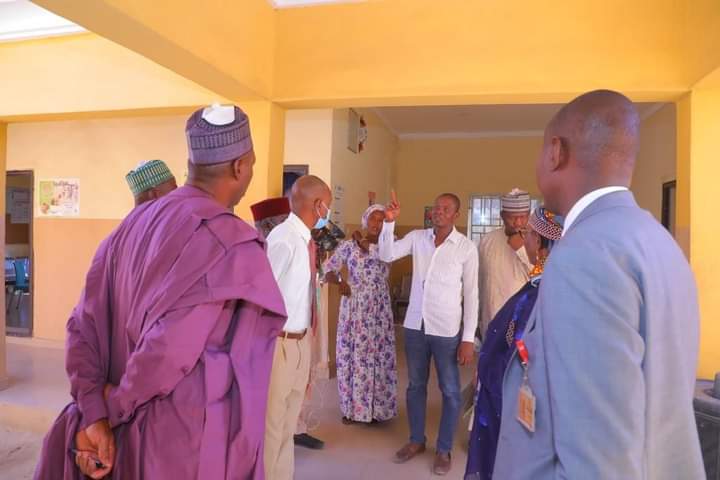
This morning, I entered the pictured classroom in one of the most prominent and most prestigious government-owned secondary schools in Kano state. The classroom wasn’t ordinarily empty. It supposed to start at precisely 8 a.m. However, no single student was present. I stayed inside the classroom for nearly thirty minutes, but still, no one came. Then the first student came around 8:23 a.m.; the second at 8:28 a.m. The trend continued with a five-minute average gap, while most of the students did not come at all. These students have massively failed their qualifying examinations and are waiting for the mighty WACE and NECO final exams. I think they are staying at home to prepare for the real battle. Who knows?
 
The above is their routine. Most of the teachers complained that the students don’t usually come to attend the early morning classes. This is the new breeds’ culture towards education, or rather to say, how millennials are turned to be by their custodians – the parents, teachers, and government.
 
It isn’t only today; even yesterday, I entered another class around 8:05 a.m. I felt that I was late of five minutes, but to my dismay, I found only one student in the class. That miraculously present student was not there for his study, but only God-knows reason. Because, when I entered, I met him at the door, coming out of the class. I asked him, “where are you heading to?” he replied that he would soon return, as he wanted to take his books to another student. Unfortunately, his “coming back to the class” is still not witnessed by me, he vanished, and I didn’t see him until now.
 
I was shocked when I heard the percentage of students who pass WAEC and NECO. A government official explained the dilemma we are in during a radio programme. In response to the public outcry on the massive failure of the students, he said that only 17% passed and deserved the government’s sponsorship. The remaining 83% failed. If you look at the percentage in WAEC and NECO, the rate of failure is alarming. Going by the everyday happening, you can say that it is all failure.
 
These students are among the most privileged ones, having found themselves in that school. Of course, it is government-owned, but, compared to other schools, the school has better infrastructure. For instance, they have functional ceiling fans in some classrooms. They also have whiteboards, desks, etc. Even the class has tiles, and the place seems neatly arranged. I am not a faultfinder. I don’t know who is to blame for the students’ absenteeism while they are about to write their NECO or WAEC or both exams. They failed their previous exams, and they are about to write a more complex one. These are not ordinary students from a lower-level school; they are from a school that was said to be attended by one of the most respected emirs in Nigeria, ever.
 
There are four primary schools of thought that are vehemently fighting each other to take complete control and responsibility of this decay. The first and famous one is that of those who believe that these students are the real source of the mess. They don’t come to the school on time. They ignore their teachers. Some of them hate their schools, teachers and education. Most of them are, to some extent, irreparably lazy. They don’t help in any manner to help in boosting and uplifting the standard of their welfare and education. My earlier submission can substantiate this that the students don’t come to school regularly.
 
Some of my students (those who later attended the class) told me that, in a class of 109 students, less than 20 students frequently come to the school on time. Equally, they testified that only three to four remain in the class before the final whistle out of the school. More than 15 out of the 20 abscond by climbing over the fence or directly go through the gate and run away. Some of them hide somewhere within the school premises and do what they like.
 
The students cannot speak English. The reading, writing and listening skills are not there even in their books because they don’t have the books. Although during our time, we used to mock some of our unserious classmates as “no reading, no writing, the idea comes from the sky”, this time the sarcasm should be “no reading, no writing, no books, no pencils, no attendance and no nothing, and the idea does not come at all”.
 
If you come out early, most of those whom you will see waiting for vehicles to schools are the students of private schools. The public schools’ students are probably sleeping by then. While if you come out late, you see thousands of students coming out from every nook and cranny of the state. Some trek to their schools after nine o’clock; only God knows when they would reach. While some others wait on the pavements, waiting for vehicles to take them to their schools.
 
However, another school of thought maintains that the problem is from the teachers. I witness this; the teachers don’t enter their classes regularly or teach properly. Some of them don’t even have lesson plans. Worse still, many don’t know what they are doing. They are where they are, only to get a livelihood. They get their daily bread at the detriment and destruction of society.
 
Another tragedy related to the teachers’ issue is that many can only teach in the local language. I am a promoter of the use of local languages in education. However, what is the mode of instruction in the schools? Is it a choice to teach in English or a must? Why do the teachers use the local languages, leaving the students with nothing to write home about concerning the much-needed English language skills? Some of the teachers cannot speak English themselves. If we
find out that the language is our problem, why not do away with the foreign languages and promote the indigenous languages? We kill our local languages and don’t correctly learn or teach the foreign ones.
 
The third hypothesis says that the examiners, most especially from the leading examination bodies, don’t have an iota of the fear of Allah in the execution of their duties. The negative and shameful antecedents of these people are known even by those ordinary lazy students. This is evident in the way exams are marked and scored. There are many instances where brilliant students failed not because of their inability to answer the questions correctly but due to the
the reckless, selfish and destructive manner in which an examiner arbitrarily awards marks.


Can you imagine! A student who never sits for an examination but miraculously pass the paper? Don’t you have an instance of this magical episode? Ask the students; they know and have clear examples better. This practically shows that some examiners are killers! They subdue and reduce the power of this beautiful career into ashes. Unfortunately, this is also a reality!

 
The fourth and the last school of thought argues that the government and the parents are blameworthy. Things are falling apart in the educational sector and the government more or less, folds its arms and watch education decaying and dying. The government doesn’t do enough to curtail the mess if it even does anything at all. The government is the chief inspector general of education. It must work hard. It must pass information to the principals of these schools that the appropriate and accepted time for the commencement of school activities is 8 o’clock, for example. And the principal must unfailingly be in his office an hour before so that he can supervise the coming of the remaining teachers, who must be there 30 minutes earlier. Students must be in their classes 15 minutes before the time. By so doing, educational activities must start on time.
 
The parents, especially those who resort to public schools, don’t care at all. They don’t visit the schools to see and know the situation on the ground. They don’t help in any form and manner to better education for their children. Some parents don’t know anything about the scholarship of their wards. Given this carefree attitude, they directly cripple the system.
 
The problems with WAEC and NECO are very apparent. The rotten eggs among them kill our system, and nobody bothers to punish the culprits. In return, most of them are paid for killing the system as there is no check and balance. We must commend some, especially looking at how they coordinate their activities in writing and producing standard exam question papers. However, there is a bias in the assessment and grading.
 
I blame the government for all this! Government, as I said earlier, is the inspector general of education. It issues orders and penalizes the defaulters. If late coming is the order of the day, why does the government allow it to continue? Why was our past better than our present? Why things deteriorate this way? Can’t we have a change of scene!
 
Government should issue orders to the principals about the working hours of the schools, the starting time and the closing period. The medium of instruction has to be correctly defined. All teachers should know this and abide by it. Qualified teachers deserve adequately support. The government should organize a special monitoring committee that will make sure all the rules and regulations are properly and strictly followed, obeyed, and respected. The sooner we realize that our education is in trouble, the better for us; we should start looking for direct remedies to the nagging and harassing ailment.
 
Muhammad Sulaiman Abdullahi, PhD.
Department of Nigerian Languages
Bayero University Kano
+234 80 65846225

Need for Arewa narrative abroad

By Mohammad Qaddam Sidq Isa

While hosting his Nigerian counterpart, Muhammadu Buhari, in Washington, DC, former US President Donald Trump decried the “murder of Christians” in Nigeria. He went ahead in his typical arrogant demeanour to effectively warn his guest that “We are going to work on that problem very, very hard because we cannot allow that to happen.” I straightaway blamed his blatant ignorance of the dynamics of the security crisis in Arewa on the sheer misrepresentation that some interest groups in Nigeria and their foreign accomplices always present to various US institutions, think tanks, public figures and NGOs. This, in turn, influences the US foreign policy
accordingly.

Interestingly, it’s a common practice among foreign governments, interest groups and organisations. They engage powerful public relations (PR) firms in countries with influence in global politics to manipulate public opinion in their favour by controlling the mainstream media in those countries, thereby influencing the international media in favour of the interest groups’ respective agendas, despite their moral or legal validity.

Foreign interest groups also engage influential domestic lobby groups in such countries to advocate for favourable government policies that advance their foreign clients’ economic, political, or diplomatic interests. The corridors of power and PR circles in Washington, DC, Paris and London are particularly attractive to these foreign clients.  Of course, Washington, where lobbying is a multi-billion-dollar industry, is particularly notorious in this regard.

Nigeria’s apparent lack of interest in such expensive services is quite understandable. The country has been involved in a few struggles for politico-economic influence significant enough to warrant a strategic investment in a sustained international PR campaign and/or international lobbying. It has also never faced any strategic threat of politico-economic domination.

However, Arewa, which is the largest region of the country, has long been a victim of unfair demonisation by some ethno-regional and religious interest groups engaged in systematic peddling of a misleading narrative around the world over the dynamics of the persistent security crises. According to their plan, the aim is to influence global public opinion, which includes presenting Nigerian Christians as victims of targeted and systematic persecution at the hands of Arewa Muslims. These interest groups spare no effort in promoting this narrative to gain broader traction globally. For instance, General TY Danjuma (Rtd), a former Minister of Defence, and Taraba

The Governor of the State, Darius Ishaku, attended an event in the United States. It was convened by the International Committee on Nigeria (ICON) in partnership with 21 Wilberforce and Heritage Foundation. There were delegates from the US government, leading NGOs, Frank Wolf, and a former Congressman. They discussed the “killings of Christians in Nigeria”, albeit in a relatively diplomatic way that time around, which couldn’t conceal their actual prejudice.

Besides, in 2016, an international organisation, OpenDoors, which describes itself as “the world’s largest outreach for persecuted Christians in the most high-risk places”, released a report claiming that Nigeria was the most dangerous place in the world to be a Christian. Also, a year later, the United States House of Representatives Subcommittee Chairman on Africa, Global Health, Human Rights and International Organisations, Christopher Smith, equally claimed that Nigeria was the most dangerous place for Christians in the world. 

Now, in the absence of an alternative narrative, this ridiculously simplistic and blatantly biased narrative continues to gain ground in social and official circles in various European countries, the United States and other countries, which gives it unearned credence it. In contrast, in reality, there is nothing like the targeted persecution of Christians in Nigeria. After all, Arewa Muslims are the most affected people in the ethno-religious conflicts in the region, including the Boko Haram terror campaign that’s indiscriminate and primarily targets Muslim communities. Likewise, the victims of the armed bandits massacring people in the area are mostly Muslims.

On a lighter note, while millions of Boko Haram terror survivors who have managed to escape from their villages and towns languish in poorly equipped internally displaced camps across Arewa, many non-Arewans and indeed non-Muslim Nigerian illegal immigrants in Europe. Other Europe-bound would-be Nigerian illegal immigrants stranded in Libya and other North African countries masquerade as Boko Haram terror survivors. Thus, they claim asylum in

Europe and several secure it with all the privileges attached, even though they have never been anywhere close to the crisis areas or perhaps even the region.

It’s indeed a pity that there is practically no single Arewa interest group with the potential to tackle this challenge. Arewa intellectuals appear to prefer setting up largely bogus NGOs to access trap-ridden foreign funding. Therefore, until such an interest group is established, it’s high time foreign-based Arewa associations like the US-based Zumunta Association began to engage equally with think tanks, NGOs, and government institutions in their respective bases. They need to offer an alternative narrative to enable the global audience to compare and see the truth in light of reality.