Admin

APC jubilates accepting Matawalle in bloodbath baptism

By Mubarak Ibrahim Lawan

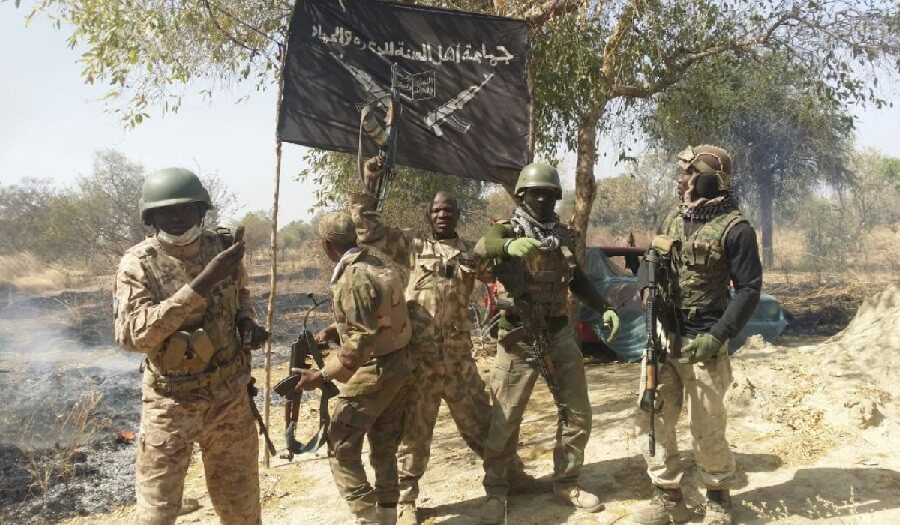
“At least 1,126 villagers killed by bandits from January to June 2020”, reported Amnesty International on 24th August 2020. And only God knows how many people so far killed from that time to date. JUST LAST MONTH as reported by different papers, remember that many are not reported, they killed 48 people in Danko/Wasagu Local Government area of Kebbi State; 93 people in Kadawa village of Zurmi, Zamfara State; 20 people at Zungeru, Niger State; 4 and 11 people in Southern Kaduna; 7 persons including police inspector in Zandam Village, Jibia Local Government of Katsina State; 12 people at Maikujera in Rabah Local Government of Sokoto state, etc. And, how many kidnappings and Boko Haram killings? Still, only God Knows!

So as every sensible Northerner grieves over these killings, banditry and kidnappings in Zamfara, Katsina, Kaduna, Sokoto, Kebbi Niger and Borno, our leaders celebrate Governor Matawalle’s defection from PDP to APC and throw parties in Zamfara against the background of bloodbath in the State. Comparatively, great leaders mourn fewer deaths in their country, resign their position for such tragedies that outsmart them or show doubtless commitment to resolving the mystery behind the deaths, but ours turn a blind eye. I worry that their inhumane unconcernedness is diffusively affecting us as we become less and less shocked by the deaths and savagery of the human beasts around us.

Notwithstanding attacks on traditional rulers and the politicians themselves, like the attack on Ganduje’s convoy on their way back home from the Zamfara party, that particular nonchalant behaviour of the leaders is making us believe that there’s no way out of the “new normal” because of two possible reasons: (1) the ungovernability of those criminals, or, in other words, they are more powerful than the nation and, (2) the nation has decided to relinquish control of their places silently. When the army or police complain, indirectly, of being ill-equipped to win the wars with the criminals; that they are overstretched, and their number is insignificant to address the herculean task, I agree that the second hypothesis above is true, because the nation can do better.

On the inadequacy of the Nigerian army, Samuel Ogundipe of Premium Times wrote, on August 4, 2016, that “Nigeria has one of the lowest military-to-civilian ratio of nine personnel to every 10,000 people, a situation it said was alarming for the country’s security framework.” Still, as of then, Ogundipe asserted that “Nigerian military personnel can be found on active deployment in no fewer than 30 states of the federation, tackling internal security threats that ordinarily should have been left to the police and paramilitary agencies to contain.”

Then there is no need for us to know exactly how many military personnel we have today in the country. But it is good to know that from about 10,000 strong in 1966, General Yakubu Gowon then expanded Nigeria Armed Forces to about 256,000 strong before he was overthrown in 1975. So more than 40 years after, we still have a similar or less number of Armed forces strength.

After continuous retirements, deaths and below-par recruitments in years after Gowon, Buhari, in 2015, met about 205,000 strong and now expanded them to about 220,000. But, unfortunately, military politics and these years of democracy have politically bastardised the military through favouritism, nepotism, corruption, poor salary and allowances, inferior weaponry and morale.  So with the spate of incessant violence from 2010 to date, the Nigeria Army has been made the scapegoat for leaders’ failures.

Nigeria police face similar or worse political bastardisation. We have 371,800 strong in a country of about 200 million people. Still, the governments waste resources on recruiting Hizba, KAROTA, KASTELIA, Amotekun, Civil Defense and the like. If these youths were to be absorbed into the police force, no bandit and kidnapper could wander freely. But, I see the accurate picture of our chaotic country these days when, on lockdown days, I encounter people on roadblocks with different uniforms working for unnecessary organisations. I pity us!

We really need thoughtfully progressive leaders who could reduce nomenclatures, harmonise, expand and sanitise ministries, commissions, boards, services and what have you! We, “the leaders of tomorrow”, should make this a measure for picking a political candidate if he presents us with sound plans, especially on security services. Most police and military personnel are left without seminars, courses, workshops and training that would bring out their best. So we need leaders who will make that possible.

Mubarak Ibrahim writes from the Department of English, Al-Qalam University Katsina.

Why we need to empower women

By Salisu Yusuf

There’s an established cultural practice of female social exclusion in the Muslim North that’s partly patriarchal and partly a cultural construct fuelled by religious misinterpretation, especially on business transaction issues. 

Many people wrongly and unfairly assume that women must not participate in business dealings because men cater for their needs. However, instances from Islamic history and established ahadith corroborate women’s active role in market-oriented activities, especially during the caliphate of Sayyid Umar bn Khattab (RA). I have a story to tell which will convince you that our women should, or even must, be allowed to transact.

A close, affluent friend of mine died two years ago. He left behind four wives, children and millions of naira. Fortunately or not, the deceased’s male relatives could not handle the proceeds of the orphans properly. And even if they could handle the wealth well, most people nowadays are morally lax in handling trusts, especially inheritance. Only a few handle it sincerely, while many others betray the trust given to them. So, the widows became carers and guardians; in other words, the bulk of wealth is handed over to them.

Those who had never transacted (only two out of the four) became businesswomen in their life. They are both fathering and mothering the young orphans. Although single parenting is a difficult task, the women brace up, take care of the children efficiently, conduct business aspects, get profits, provide daily bread, support the children’s education, and other basics such as clothing. I am deeply impressed by the women’s resolve to forget their differences, shun their rivalries, burry their wounds, pick up the pieces and continue to survive in the absence of the best husband and father. 

Two years after their husband’s death, the entire house fares very well, managing to survive despite the harsh realities of the Nigerian socio-economic milieu. When last I visited the family, they told me of the difficulty in combining business dealings with parenting and guidance. One widow told me how lucky they were to learn to trade even before their husband’s death because he had numerously given them startups to learn to earn a living. She said if they had not been this fortunate – under a caring husband who had so much empathy and understanding, they would have been left in the cold, would have devoured the money and would have been left at the mercy of a hostile public as beggars.

Two years since their breadwinner’s death, the women turned men survive because they can hold their heads, transact, guard and guide the young orphans.

Salisu can be reached via salisuyusuf111@gmail.com.

A case for technical colleges in Nigeria

By Adamu Tilde, PhD.

For a while now, Nigeria has been witnessing exponential growth in the rise of certificate-awarding institutions and massive production of holders of certificates of all kinds: diplomas, NCEs, degrees, masters, PGDs, etc. Ordinarily, this should be a welcome development. But, unfortunately, this phenomenon comes at the expense of acquiring quality skills, thus resulting in the production of certificate holders with no skills at all or with some skills that are not in demand and/or have no economic value whatsoever.

One comes to realise the effects of this phenomenon when one does a simple close-proximity analysis—for example, over sixty registered and unregistered colleges of education award NCE certificates in Bauchi state alone. Most of the courses offered in these colleges are combinations of English/Hausa, Social Studies/English, Arabic/Fulfulde, etc. The questions to ask are: what are the specific skills that an average NCE holder acquires in the three years they spend in college? Do these skills, if any, have any economic value? If yes, how many NCE holders, for example, does Bauchi state need at any given time?

Again, in Toro, one out of the twenty local government areas of Bauchi state, there are six colleges of health technology and counting. Most of the courses offered in these colleges are diplomas in Medical Records, Environmental Health, Community Health, Laboratory Technology, etc. I may sound so dismissive of these courses, but don’t get me wrong. These are significant courses and, perhaps, with valuable skills to offer, but we already have enough to go around. And, trust economics, its laws are no respecters of irrational decisions: the higher the supply, the lower the demand and invariably the price. So the need to rethink why we do certain things instead of other things could not be more urgent.

Way Forward

To be very clear, I am not presenting anything novel. Our pioneer leaders had envisaged the inevitable need for technical skills for economic growth and development, and that’s why they established monotechnics, polytechnics, and technical colleges across the country. No thanks to unimaginative leadership and penchant for mass production of certificates-wielding graduates that had led to having polytechnics with more students studying mass communication, theatre arts than engineering, computer science, statistics, etc. Nothing can be more ironic.

In the following subheadings, I will argue on why we should pay more attention to technical skills and invest more in establishing technical colleges:

Guaranteed employment

Rest assured that employers lined up waiting for you once you possess skills like plumbing, welding, woodwork, carpentry, masonry, tiling, electric wiring, programming, website and apps development, etc. With an increase in population comes corresponding demands for housing, food, and services. So these skills will forever be in need, so long as we breathe. And in the event you don’t want to be on the payroll of anybody, you can monetise the skills by employing yourself. For example, a diploma holder in animal health and production can engage in the private practice of visiting farms and local markets to provide first aid treatment. There are too many farms to go around. We can say the same about a plumber, tiler, painter, etc.

Less time than conventional schooling

Most technical skills can be acquired in a record time, probably in a year or two, and then you are good to go. The most interesting thing about a given skill is that the more you practice it, the more you master it. Moreover, it is more difficult for a person to forget a set of skills than the paper-based theories learned in school. Very unlike typical schooling (a diploma or a degree), where you would spend 2 or 4 years with no specific skills to show and then sooner you would forget the little theoretical knowledge you have acquired since you are not practising.

High return on investment

Compared to the money spent to acquire NCE certificates, diplomas in health-related courses, and some instances, degree courses, you are better off having any of the aforementioned technical skills. NCE holders and, in some cases, degree holders hardly make up to ₦30,000 per month in many private schools. In fact, even in public service, NCE holders fetch ₦36,000 per month in Bauchi state. When you analyse the time, money and energy expended to acquire the certificate and the monetary reward after that, you will struggle to make economic sense of the decision. So many Keke Napep guys make more than that amount in a month. So much for a heap of certificates!

Again, as a private investor, you are better off establishing a technical college, especially if you would engage in vertical integration by employing your products (graduates). For example, you can set a company that specialises in finishing and look for contracts. Trust me; we have a paucity of skilled workforce in the building industry. We do import tilers, plumbers, welders from outside. That’s how bad things are, and that’s how vast the opportunities are.

And for those who want to ‘japa‘ (to go abroad), your chance of securing a visa and employment abroad is greatly enhanced if you have any technical skills. This is for non-medical professionals and exceptionally brilliant computer wizards.

Note

The argument here is not whether an NCE certificate or health technology diploma or even degree certificate, for that matter, is good or not. No! The idea here is that we should go to colleges and universities to acquire skills that we can use to improve our financial situation. If the so-called certificate(s) you have obtained cannot fetch you a job or equip you with skills that people can pay for, you need to rethink why you were in school in the first place. We have tonnes of graduates and varying certificate-holders roaming the street for jobs that are not there and crying for lack of employment; meanwhile, they have no skills worth employing. We are massively producing what we do not need and under-producing what we urgently need. Something is wrong.

We have to appreciate the dynamics of time. Long ago, all it takes to climb the mythical social ladder and join the much-vaunted middle-class is a certificate of any kind. Whatever or not you studied in the university is immaterial; public jobs were waiting for you. But that was then. Those years of yore have passed for good. There are no more public jobs for everyone. Internalise this and know peace. As for private companies, well, first of all, they are not charity organisations. Secondly, they are profit-driven, so they don’t employ people to fill any underrepresented state’s quota. Thirdly, they reward value— what you have to offer is what counts. You need much more than a certificate to survive. You need skills, not just any skills, but skills that have economic value.

You need to wake up and smell the coffee. Hello!

Dr Tilde can be reached via adamtilde@gmail.com.

The onset of 2021 rainy season in Kano

Nazifi Umar Alaramma,

This year, 2021, had experienced a late onset of rainfall in Kano and surrounding. Therefore, the onset of rain in Kano and surrounding was computed to be five days with 83 millimetres of rain fall.

83mm is equivalent to 9.2% of the mean annual rainfall of Kano state. However, the duration of the rainy season in Kano is between mid-May to early October. Nevertheless, the rain may delay until June. This means the rainy season could not begin before mid-May in Kano and surrounding. Likewise, it will not extend to November.

As per the climate of Kano, the region falls within 100 rainy days in West Africa. Therefore, rain may fall earliest in mid-May, never before. However, it could delay up to July.

In 2021 the rain had delayed to very late June due to natural and anthropogenic factors. The natural characteristics are the routine of delay rainy seasons that happen to entire Sudano-Sahelian environments, some every five years, like parts of Mali and Ethiopia and some for many years like Kano in Nigeria.

This year could have followed the suit of those who predate it to bring rainy season late. However, it is significant to note that delaying the rainy season and frequency of drought in Kano and surrounding had reduced following the construction of Tiga, Challawa and other more than 30 dams in the state. These dams increased the recharging of clouds. Hence, no frequent drought in Kano and surrounding since the 1970s. However, a delay of the rainy season has not been totally hampered yet. 

The human factor in delaying the rainy season this year may be human-induced climate change. We believe it originates from outside Nigeria. It is linked to the general circulation of the atmosphere, which alters Africa’s condition even if the major polluters are from Europe, America, and Asia.

Nazifi Alaramma is a lecturer at the Department of Geography Yusuf Maitama Sule University, Kano. He can be reached via alaramma12@gmail.com or nazifiumar@nwu.edu.ng.

Unhygienic politics begets unhygienic societies

By Mubarak Ibrahim Lawan

With the trendy disrespectful behaviour of the youth; with public pre-wedding pictures of grooms almost kissing their brides passionately and their hands resting on each other’s bosom and hip; with the loud silence of some religious leaders about the trend; with some liberals jeering the righteous people publicly when they criticise such issues, morality is mortally blown to pieces. Similarly, the surprising official claim that the children voters seen on the viral videos of the Kano local government election were Kenyans; that the good performance of APC is the reason why Zamfara State governor and others are defecting to APC, these and hundreds more nationally official lies authorise public lying and teach the behaviour to the already morally dented youths.

Today we have few elders among the aged, political elites. They are only seen as the aged with grey hair, hoarse voices and gowns but commanding no respect. They traded their respect. They hide their kleptomania in robes only to be revealed when elected. The same aged elites bring public shames mounting to international ones on us. These include the rats’ daring of the president’s office, snake’s incredible swallow of 36 million nairas in the JAMB office, the president’s U-turn on fuel subsidy, his medical trips overseas, his sagas with the lawmakers, his silence on rampant killings and kidnappings in the country. These, among others, vie with one another to damage our image more and hatch more shameless leaders. And with this trend, the future could not be bleaker.

We are politically lost, socially derailed, and hence lost bearing as a nation and as northerners significantly for reasons like that. But those who ruled before were highly principled, morally sound and well-meaning. They were worthy of emulation. They did their best to build the nation and the image that our present leaders ruin recklessly. If this trend of lying and misgovernance goes on, how would our future look like? My fear intensifies more whenever I interact with the youths. Whatever idiot-proof explanation of the country you give to them they barely understand as they are only concerned with football, music, fashion, sex and other stuff of the 21st century. Although my hopes are dashed day in day out, I think we should prepare our youths for they are indeed the leaders of tomorrow.

On the insolent behaviour of the youth, a colleague sees no wrong about that. He says that we could not crawl out of this abyss of retrogression unless we let go of our anti-social culture. But I think we do not even have such a uniform culture to go out of today. Instead, we have a confused phantasm of a life born out of our frantic effort to “glocalise” the global so that we fit in the modern world. Yet, we end up in social chaos, identity crisis and moral bankruptcy because of a change in our worldview or ideological foundation orchestrated by flamboyantly thieving politicians and morally bankrupt artists.

Our worldview is warped. Hence this man sees no wrong in being at daggers drawn with his next-door neighbour, who reprimands his child for wrongdoing. He sees no wrong in allowing his daughter to dress scantily for a friend’s wedding ceremony or being taken for a “visitation” by a boyfriend. If a family friend or brother frowns on that, the mother would be the first to attack him for attempting to sabotage her daughter’s chance of getting a husband.

Our worldview is also being warped by the abject poverty we are living in. This man confessed to having allowed his daughters to prostitute themselves to bring bread for the family. He admitted that at a community gathering organised to warn him of his daughters’ illicit business in the neighbourhood. People cried as he narrated his tragedy. The man’s ideological foundation or worldview fails to make him see the rights from wrongs. The knowledge available to him, the political, social and economic awareness are only what the masters want him to have so that the masters exploit our resources to the fullest.

We often find it difficult, for poverty reasons, to control our boys who, subsequently, lead a carefree life. They become truant; they watch uncensored movies, access the Internet, wander off our radar, take drugs; and in ghettos, smoke all smokeable things, thieve and snatch people’s valuables, especially their phones. In comparison, my father once told me that they birthed more children than us. Yet, they were able to control their movement, educate them and feed them. I told him that that was when “to eat was not a problem”.

Similarly, our worldview is warped by the government’s nonchalant attitude towards our lives. We no more look up to the government schools, hospitals, electricity and all other basic life necessities. So we live a beggarly life. Frustration kills one when they or a member of their family is sick—no hospital in Nigeria. Even the president goes abroad for medical treatment. We buy everything here. He who has nothing dies untimely.

Still, “the government can not take all the blame”, they say! Instead, their body language blames the poor for producing “too many children that the government cannot cater for”. So they leave us to fend for ourselves while they serve themselves from the nation’s treasury. Unless we speak against injustice, fight for good governance and virtues, our future and that of our children is lost.

Mubarak is a lecturer at the Department of English, Al-Qalam University Katsina. He can be reached via abusfyy@gmail.com.

Privacy Policy

This is the main privacy policy for the The Daily Reality LTD and applies to any of our products or services which you use on any of our Platforms, including our websites, mobile sites, mobile applications, emails or any other technology or service you use to access our products and services. “We”, “us” or “our” in this privacy policy refers to The Daily Reality LTD Proprietary Limited and its subsidiaries. The terms “personal information”, “special personal information” and “process/ing” when used in this document shall bear the meanings as set out in the Protection of Personal Information Act 4 of 2013.

It is important that you read this privacy policy together with other terms and conditions, privacy notices or policies we may provide on specific occasions when we collect or use your personal information. This privacy policy supplements these notices and policies, and is not intended to override them.

We respect your privacy and take the protection of personal information very seriously. This privacy policy describes how we handle the personal information we collect about you and/or receive from you. By using our Platforms you agree to our collection and use of your information as set out in this privacy policy.

If you are below the age of 18 years, you must always get permission from your parent or guardian before you use our Platforms or give us your information. Please note, we may check that your parent or guardian has given you permission to use our Platforms and/or give us your personal information, and may ask you for their contact details so we can contact them. We may also check that the contact details you have given us are correct, and are the details of a person who is actually your parent or guardian.

INFORMATION WE COLLECT AND RECEIVE
We collect personal information that is necessary for us to provide you with our services as advertised. We only collect and use the minimum personal information we need in order to provide and improve our services.

Examples of personal information which we may collect and process include your name; email and/or physical address; fixed or mobile phone number; location information and in some circumstances (provided you have explicitly consented to us collecting and processing this personal information) your race or ethnic origin; gender; age; religious or philosophical beliefs; financial, health or biometric information; culture; language; education or employment history.

We collect and receive information about you in the following ways:

Information you give us

We collect your personal information through direct interactions with you and when you:

Complete forms, sign up for an account, or subscribe or register to access or use our services.
Enter promotional competitions or complete surveys.
Post comments or content on our Platforms.
Buy one of our products or services.
Contact us.
Information we automatically collect or receive when you use our Platforms, products or services

We may automatically collect information about the equipment you use to access or use our Platforms, your browsing actions and patterns. We do this through the use of cookies, web beacons and other technologies.

A cookie is a small text file that our server sends to your hard drive when you visit our Platforms. These cookies hold modest amounts of data specific to you and our Platforms. They allow our system to recognise you when you visit our Platforms again. If you prefer that we not use cookies when you use our Platforms, you can change your browser settings to disable the use of cookies. Please note however that if you disable the use of cookies, you may not be able to enjoy all the features and functionalities of our Platforms.

A web beacon is a small image file that we place on our Platforms or in an email. We use it to track how many times a web page is accessed, the time it was accessed and the location of users who accessed it.

Depending on how you access and use our Platforms, we may receive:

Log information, including information on how, when and for how long you use our Platforms and other services, the content you view and search queries you submit.
Information about the equipment you use to access or use our Platforms, including the type of device you are using, how you access our Platforms, your browser or operating system and your Internet Protocol (IP) address.
The geographic location from which you accessed our Platforms, including your device’s GPS signal and information about nearby wifi networks and cell towers. We get this information when you use location-enabled services.
Click here to read our group policy on cookie consent.

Information from third-party sources

We may receive other information about you from third parties (where you have consented to such third party sharing your information with us) and combine it with the information we have collected about or received from you in other ways. We may also receive information about you when you log into our Platforms using your social networking log-in details.

DISCLOSING YOUR PERSONAL INFORMATION
We do not sell your personal information to third parties for their marketing or any other purposes.

We may provide or make your personal information available to:

Other companies in the Naspers group of companies, details of which are available here, to learn more about our customers and create a more relevant, engaging customer experience.
Companies that provide services to us or on our behalf, or enable us to provide services to you or operate the Platforms, including contractors, debt collectors, lawyers and auditors.
Other parties where we are required to provide your personal information to comply with the law or protect our Platforms.
Prospective and actual buyers, in the event that we sell, transfer or merge any part of our businesses or assets, or prospective or actual sellers, in the event that we choose to buy or merge with any other business.
Third parties if you have agreed to us sharing your personal information with them, such as where you enter into a competition sponsored by a third party and where the provision of your information is a condition for entry to the competition, or where you express your interest in a product or service about which you would like more information.
Other parties that provide content, advertising services or functionality on our Platforms. These third parties include i) advertising service providers which help us and our advertising customers provide advertisements that are tailored to users’ interests, ii) audience-measurement companies which help us measure the overall usage of our Platforms and compare that usage with other online services, and iii) social networking services such as Facebook, Twitter, LinkedIn and Instagram that you may select to use to register for and log into some of our services and share things you find on our Platforms with your social network. We do not control the privacy practices of these or any other third party services and recommend you read the privacy policies of these services before connecting to them. These third parties may collect or receive information about your use of our Platforms, including through the use of cookies, web beacons and other technologies, and this information may be collected over time and combined with information collected on various websites and online services.
We also share our research and statistical information with various third parties. However, this information does not include your personal information, cannot be linked to you and you cannot be identified from these statistics.

Please note, some of the people or companies who have access to your personal information are located outside Nigeria. We will not share your personal information with these parties unless they are bound by privacy laws and corporate rules or agreements with us that protect the privacy of your personal information and limit their ability to share your personal information with other parties. We will get your permission before we share your information with any third party.

YOUR RIGHTS
You have the right to ask us not to contact you for marketing purposes, and you can do this at any time by using any of the various “opt out” options that we always provide you with when we send you marketing communications.

We manage several separate marketing distribution lists across the various The Daily Reality LTD business units, and opting out of one distribution list does not automatically remove you from all the other lists.

You also have the right to request access to the information we have collected about you and request that we correct or update any incorrect or incomplete information. Such request can be submitted by using the data subject access request form found here.

You may at any time lodge an objection with us regarding our collection and use of your personal information at the email address listed below.

INTERNATIONAL USERS
The Daily Reality LTD is based in Nigeria and, regardless of where you use or access our Platforms, products or services, your information may be transferred to and maintained on servers located in Nigeria or elsewhere in the world.

Any of the information that we collect about you or receive from you is stored in line with Nigerian privacy laws, regulations and standards, which may not be equivalent to the laws in your country of residence.

CHANGES TO THIS PRIVACY POLICY
This version of the privacy policy was last updated on 30 June 2021 and replaces any preceding privacy policies.

We may occasionally update this privacy policy. Any changes we make will be posted on this page and we will notify you of the update in the appropriate manner. When you use our Platforms the version of the privacy policy posted on this page applies to you. We encourage you to review this privacy policy whenever you access our Platforms.

DSS confirms raiding Sunday Igboho’s house, declares him wanted

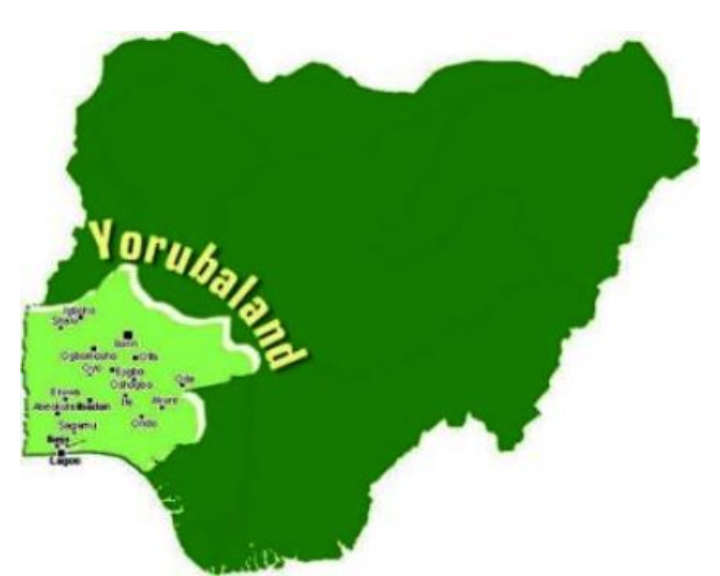
Department of State Services has declared Yoruba activist Sunday Adeyemo alias Sunday Igboho wanted. The declaration followed rumours that men in uniform carried out a midnight raid on his residence in Ibadan, Oyo State, which led to the death of two people.

The DSS Public Relations Officer, Peter Afunnaya, disclosed this Thursday night during a press briefing and parading of suspect arrested during the raid at the national headquarters of the secret police. He further advised Igboho to turn himself in to the nearest security.

“Those cheering and eulogizing him may appeal to or advise him to do the needful,” Afunnaya said. “He should surrender himself to the appropriate authorities. He or anyone can never be above the law.”

Afunnaya added that the raid on Igboho’s residence was a response to an intelligence report that he had stockpiled arms in the place, some of which were now recovered.

“On approach to the residence, the team came under heavy gun attack by nine men, suspected to be Igboho’s guards. Six of them were armed with AK-47 guns and three others, with pump-action rifles,” the DSS spokesman added.

After a gun duel that lasted for an hour, during which Igboho escaped, “The [DSS] team procedurally searched the house and subsequently recovered the following seven 7 AK-47 assault rifles, three pump action guns, 30 fully charged AK-47 magazines, 5,000 rounds of 7.62mm ammunition, five cutlasses, one jack knife and one penknife”, among other items.

In June, Igboho declared that Yoruba would break away from Nigeria latest by December 2021 to form the Oduduwa Republic. He was also alleged to have led attacks on Fulani herders and Hausa traders in the southwestern states of the country.

The Nigerian government have stepped up action against separatist recently. Igboho’s attempted arrest came a few days after the leader of proscribed Indigenous People of Biafra (IPOB), Nnamdi Kanu, was arrested and extradited to Nigeria. He has been charged for treasonable felony, evading arrest and inciting violence at the Abuja Federal High Court.

After ban in Nigeria, Twitter faces another in India

Reuters reports that police in India have registered three new cases against Twitter Inc. for allegedly hurting sentiments and promoting child pornography, marking an escalation in the row between the U.S. firm and Indian authorities.

The chages include ‘treason’ after showing what the Indian government calls an ‘incorrect’ map that excludes the disputed region of Jammu and Kashmir and the Buddhist enclave of Ladakh from the country. Twitter did not comment on cases related to India’s map, while the microblogging site generally allows pornographic content on its platform.

The current cases come up in addition to a public relations nightmare and a backlash from Prime Minister Narendra Modi’s government that has in recent weeks repeatedly criticized it for not complying with a new set of I.T. rules. Twitter allegedly refuses to abide by the rules.

Unlike Nigeria, India has yet to ban Twitter. However, observers fear that that will happen and would be a massive blow to the U.S. company. The two countries have some of the largest and most vibrant Twitter users in the world. Thus, banning it would have a far-reaching impact on its market value.

JUST IN: Fugitive Nnamdi Kanu re-arrested

The fugitive leader of the proscribed Indigenous People of Biafra (IPOB), Nnamdi Kanu, has been re-arrested and returned to Nigeria for trial, Nigeria’s Attorney General and Minister of Justice, Abubakar Malami, announced on Tuesday in Abuja.

According to the minister and the State Security Service (SSS), collaborations with international agencies led to the arrest of Mr Kanu. He and his co-defendant face treasonable felony charges at the Federal High Court in Abuja. He is also charged for evading arrest and inciting violence.

Mr Kanu was on bail when he fled the country in 2017. However, he resurfaced in Israel about a year later. He had also been very active on social media and the outlawed pirate radio station – Radio Biafra – where he gave directives to his lieutenants in the restive south-eastern states and beyond.

Are candidates to blame for mass failure in the UTME exam?

By Bashir Shu’aibu Jammaje

In 2016, Mr Shodunke Oludotun alleged that many candidates failed because the Joint Admission and Matriculation Board (JAMB) used the wrong software to mark the exam. From insiders’ finding in JAMB, they realized the 2015/2016 software interfered with 2016/2017 results, which led to the massive failure of the students. Fortunately, JAMB did nothing about it. What can you say about that?

Take the case of using the CBT, for instance, I’m not against using the Computer Based Test (CBT), but it’s full of irregularities that led to candidates’ mass failure. I sat for my JAMB in 2015, just after finishing my diploma – because I wouldn’t want to wait for a year to further my study. My computer was so bad; it would shut itself down and then come back on. That, I couldn’t finish answering the whole questions. Allah is the Greatest; I got 260.

Ever since the inception of JAMB in 1978, it has been many people’s Achilles hill as they can’t dance to the tune of the exams, thereby leading to mass examination failure. To worsen the whole case, then boom, the CBT came in.

To a certain extent, you are correct; no one can deny that more than 70% of the students don’t study in line with the syllabus. But, there are numberless students, who read like mad, amongst them, those who sat for it more than thrice.

It’s high time you stopped placing the blame only on the students and turning a blind eye to the system’s failure. The government should bring about another body, as a JAMB competitor, so they act their ages when they realize they don’t have a monopoly over the test.

It is appalling that many candidates still cannot operate the computer system during the exam, thereby failing. I can hear you saying why can’t they join some extramural centres? How about the abject failure of the government to provide a way to help them with the training? Do you think of the parents who can’t afford that? The critics of these candidates should get themselves some more time to think this issue over. Please, do not worsen their misery.

Bashir Shu’aibu Jammaje can be reached via bashjam90@gmail.com