Admin

Positive and negative influences of cyberspace amongst today’s generation

By Mai-Nasara Muawiya Uzairu

It’s crystal clear that everything that exists on the Earth has a reason(s) for its existence. This is the reason behind our being here. We are now in an age where everything is computerised. Without social media, people would have to continue to live like in the Stone Age without knowing how the world rolls and how things change interchangeably. In my opinion, social media has a vast number of both the positive impacts it creates and the negativity it causes. Although it depends on how one holds and utilises it, the choice solely depends on the social media person.

Many people have recorded successes and achieved their dreams via social media, while others’ remain unfulfilled and stagnant. Social media affects and changes people’s minds about destructive behaviours or otherwise. On the other hand, it sends countless lives to their graves unprepared. Congratulations to those folks for whom social media becomes the reason for their smiles and achievements. May they continue to benefit from the dividends of social media. Best wishes in advance to the future ones who may stir social media with goodness. May they, too, achieve more than today’s beneficiaries achieved, amin. Hard luck to those for whom the reverse is the case.

You are not too late to change the dice rolling with solid hope and unflinching determinations. Many people believe in social media and take it as a means of chatting only with family and friends (FAF) and a means of becoming a nuisance to other people. It is fascinating that whichever group one chooses to belong to will definitely meet people of his ilk or even those who are pretty better than them in that regard. It consists of and explores everything depending on which one decides to choose. I advise you not to be among those who take social media for granted.

Learn, relearn from those great minds, and share your knowledge, experience, and skills with your friends. I call your attention not to share fake news on social platforms. It would be best to share only genuine and beneficial info with your friends, as fake news spreads faster than today’s dreaded virus of todayCOVID-19. Ride your tongue with care; it has a potent venom far better than that of a snake. Mind yourself what you write, share, like, react and comment. Steer clear of unnecessary arguments. Above all, never be addicted to social media impulsively. Manage your time judiciously.

Social media plays a significant role in sharing the development and advancement of today’s generation. Through it, many people make investments and become business tycoons and academic experts, particularly smartly witty ones. Moreover, it helps many connect with their customers and clients from far and distant environments. Without social media, many amongst our business tycoons would not have become what they are today, let alone be known around the world. These include Bill Gates, Otedola Warren Buffet, and Aliko Dangote. All and sundry know these great minds in business circles through cyberspace and their products exclusively. In this regard, we can unanimously say that social media plays a vital role in marketing and economic buoyancy for many of our successful business moguls.

Social media eases and simplifies most things that seem complex. Many people from far distant places have become as familiar and intimate as those with blood consanguinities. We, the generation of social media users, need to use it wisely to avoid hatching rotten eggs among the future generation. We need guidance and parameters to set our activities straight by our great minds who scaled through in life. Our manners need to be replicated for better growth and attainment of better opportunities in this twenty-first, digital century loaded with brouhaha and challenges. Had social media been fully sanitised and sensitised, I am sure the future would have been productive. But, alas! All around us, one can see how the havoc wreaked by people is floating and sinking in a massive wave.

To say a naked and plain truth, children who are yet to reach puberty should be banned from using social media. It is usually the causative factor of their rudeness and moral decadence in society. It is better not to have a child at all than to give a community a notorious child that could threaten the good habits observed by people. Many under-aged children learn to watch pornographic pictures and videos via these platforms.

Fornication, homosexuality and lesbianism could only be eradicated or diminished among our youths by enforcing laws and orders on how social media shall be used. Most parents are lackadaisical in peeping the ins and outs of their children on social media; some are only good at giving birth but very poor in giving moral standards to their children. Children’s phones need to be checked up frequently and unceremoniously. Parents should check to know the children’s friends because bad companies produce harmful products. Friends are the central processors in changing the behaviours of today’s generation, particularly females whose lives are at a zenith than that of males. By so doing, most social vices could reduce to the barest minimum or even be completely wiped away. 

Mai-Nasara Muawiya Uzairu wrote via newmainasara016@gmail.com.
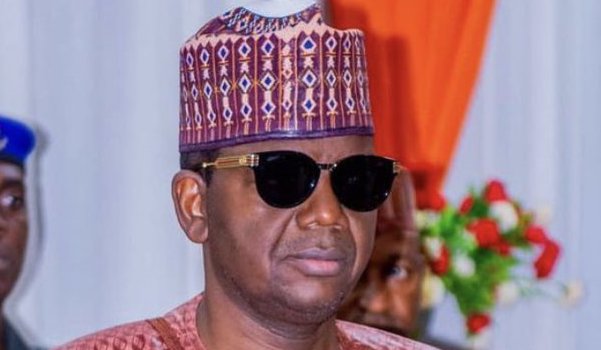
Insecurity: Reengaging ‘Yan Sa-Kai and the need for caution in Zamfara

By Suleman Ahmad Tudu

One of the immediate decisions of Gov Bello Matawalle’s administration was disbanding the vigilante group popularly known as Yan Sa Kai as one of the conditions for dialogue with bandits in his efforts to bring a solution to the decade of bloodshed in Zamfara state. The dialogue has recorded some early successes in almost a year of its initiation.

Unfortunately, despite being given this ample opportunity for the bandits to completely lay down their arms and embrace a lasting peace, some of them refused to subscribe to the dialogue. They continue launching and intensifying their deadly attacks on communities—killing, kidnapping and rapping women unabated, taking advantage of the vacuum created by disbanding their sworn enemies, the Yan Sa Kai.

Some negative implications of disbanding the Yan Sa Kai are that many communities that gallantly resisted bandits before the disbandment have now submitted to them. Palaces that were no-go-areas to bandits before have now become accessible to them. As a result, the morale of many vigilante members has been killed. The bandits have also taken advantage of the dialogue to deceive the government and get many resources. They kidnap many people, including school children, for ransom to procure more arms.

But we can honestly understand the justifications behind the disbandment of Yan Sa Kai in the first place as a sine qua non for dialogue to thrive. The activities of this group have fuelled the crisis for their jungle justices—extrajudicial killings and ethnic profiling of criminals. All Fulanis are bandits to the Yan Sa Kai, which is wrong!

Now that Gov Matawalle has reversed his decision to reactivate the Yan Sa Kai in the fight against terrorism (banditry), which is very good, there is a need for a caution in the recruitment, administration, and operations of the about to be born-again group. We need Yan Sa Kai guided by rules of engagements, monitored by security forces and coordinated by established authority. We need Yan Sa Kai with some basic military training and improved weaponry, not the locally fabricated, non-cartridge guns, bow and arrows that cannot match the arsenal of the terrorists.

Achieving this requires efficiency right from the recruitment process. Government should not simply dust off the list of the previous members without scrutiny to fish out those whose morale has been killed or no longer believe in the course of the group. Liaising with traditional institutions will be an effective way only if those who have cases to answer are side-lined in the process. Government should also not mistake recruiting members of the born-again vigilante group from the communities that were adjudged to have wholly submitted to bandits before or during the dialogue initiative. These measures could help avoid enlisting bad eggs who would compromise or sabotage the group’s activities.

Training of the carefully selected and thoroughly profiled members of the group will go a long way in shaping their mindsets and inculcating in them the rules of engagements, discipline, command, control and coordination. It will also mend their relationship with the security forces with which they should work together as a team. This can be possible within at least a month of rigorous training.

Granted that Yan Sa Kai knows the bandits, their collaborators and hideouts better than the security forces, yet storming weekly markets in the name of hunting bandits or their collaborators is a flawed strategy that has to be changed. They used to carry extrajudicial killings during such operations that sometimes affect innocent people. This time around, the group’s approach should be offensive by jointly reaching out to the bandits’ enclaves together with security forces now and then. And if the group has to defend and hunt, the defence should be restricted to every member’s immediate community while the hunt should be on the checkpoints to be placed in strategic places. 

While NO suspect deserves to be (extrajudicially) killed but arrested and prosecuted accordingly, I can command that any civilian seen wielding an AK-47 rifle should be “shot at sight” as ordered by President Muhammadu Buhari!

May Allah grant us everlasting peace in Zamfara and Nigeria at large. Amin.

Suleman Ahmad Tudu wrote from Nasarawa Mailayi of Birnin Magaji local government, Zamfara state. He could be reached via suleatudu@gmail.com.

Terrorist bandits kill 2 soldiers, one police officer, 13 civilians in Kebbi

By Muhammad Sabiu

At least 16 individuals were reported dead in a suspected bandits’ attack in Kebbi State’s Danko Wasagu Local Government Area on Friday.


Two soldiers, a police officer, and 13 people were murdered in the attack at Dankade village, according to the state’s police spokesperson, Nafi’u Abubakar.


The police spokeswoman further refuted reports on various news outlets that the incident resulted in 50 deaths.


Mr Abubakar, who confirmed the amount to the News Agency of Nigeria (NAN), said the incident happened on Friday at 3.00 p.m.


He claimed that suspected bandits from Zamfara infiltrated the community and terrorized civilians and security officers.


When the police patrol squads learned of the incursion, they mobilized to the village and engaged them in a gunfight, killing one of our officers and two army officers.


According to Mr Abubakar, the bandits also set fire to some homes.

Five absurdities at the FIFA Best Awards 2021 ceremony

By Aliyu Yakubu Yusuf

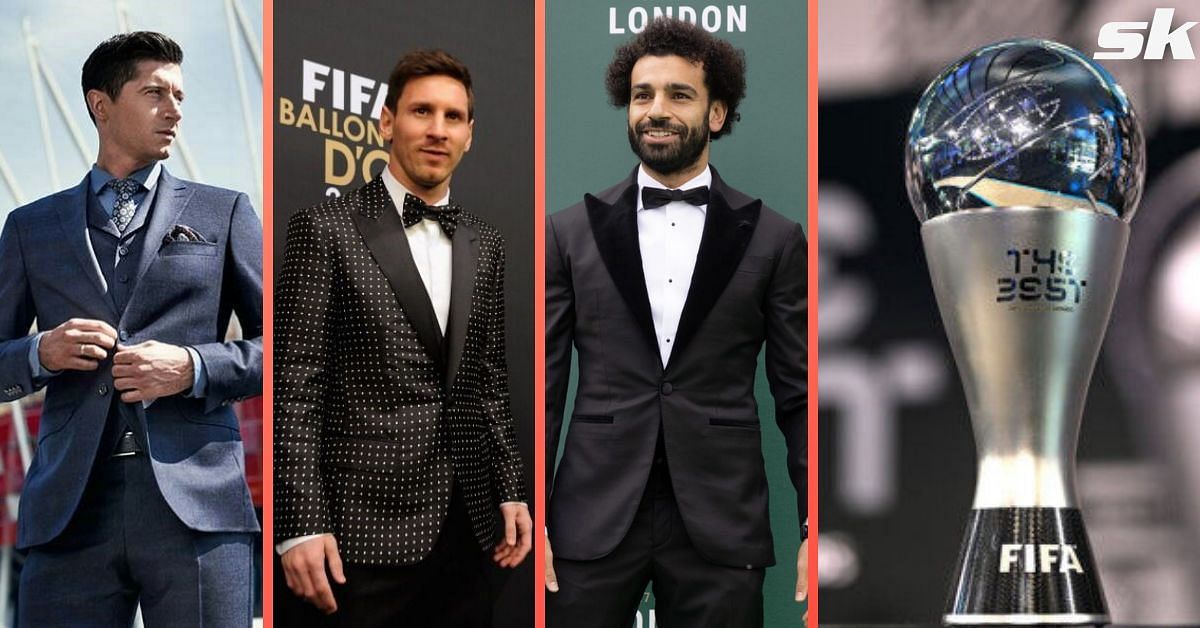
The annual FIFA Best Awards 2021 ceremony took place yesterday, January 17, 2022, in Zurich, Switzerland, amidst glitz and glamour. Many awards were contested and won by deserving players. Bayern Munich Polish marksman, Robert Lewandowski, was the biggest winner, as he scooped the prize of the FIFA the Best Men’s Player for the second year running. However, a few controversies left fans watching the event on TV and social media scratching their heads in disbelief. I will highlight just five of them.

  • Robert Lewandowski, Lionel Messi, and Mohamed Salah were selected as the three best players in this order. However, in the annual FIFPro World XI, there was no place for Mohamed Salah. In other words, the Egyptian who was deemed good enough to be the third-best player for the year was considered not good enough to be in the team of the same year. If this is not utterly dumbfounding, I don’t know what is. And somehow, FIFA managed to include Cristiano Ronaldo and Erling Braut Haaland, who were ranked lower than Salah, in that team. Ridiculous!
  • A similar scenario played itself out again in the goalkeeping category. Chelsea Senegalese custodian, Edouard Mendy, was chosen as the Best Men’s goalkeeper. But somehow, he was overlooked for the same FIFPro World XI. Instead, the PSG Italian shot stopper, Gianluigi Donnarumma, was selected. Fans all over the world were left fuming with this absurdity. How can you choose a player as the best in his position and then fail to select him in your best team of the year? Inexplicable!
  • Barcelona Spanish player Alexia Putellas won FIFA the Best Women’s Player in the women’s category but was omitted from the FIFPro Women’s World XI. In other words, the best player of the year was deemed not good enough to have a place in the best team of the year. In case you don’t know, Alexia Putellas won the Ballon d’Or just two months ago. But still, FIFA decided that there were better players to be in the World XI than the double award-winning Spaniard. Baffling!
  • Barcelona Women’s team won a treble last year. They won the women’s equivalent of La Liga, Copa Del Rey and the Champions League. Yet, none of their players was chosen in the FIFPro World XI, not even the aforesaid Best Women’s player, Alexia Putellas. Controversial!
  • Barcelona Women’s treble-winning coach Lluis Cortes was somehow not chosen as the women’s coach of the year. Instead, the award went to Chelsea Women’s coach, Emma Hayes. By the way, Lluis Cortes and his Barcelona destroyed Emma Hayes and his Chelsea team 4-0 in the Women’s Champions League final late last year. Absurd!

Surprisingly, despite these apparent inconsistencies, there were no cries of robbery, no rubbishing of the awards, no nothing. SMH!

Aliyu is a lecturer at the Department of English and Literary Studies, Bayero University, Kano. He can be reached via aliyuyy@gmail.com.

JOKE: When mother tongue betrays…

By Aisha Abdullahi Bello

As the principal of a renowned private school here in Kano, I am saddled with many responsibilities, from managing the school’s activities to attending to visitors, sometimes from the ministry, other times parents of our students. This goes on and on and on throughout the term till the end.

On one of such tiring occasions, after the day’s work, I was trekking home as usual (I don’t have a car) when I saw some middle-aged men, most probably in their late 30’s conversing. At first, what they were discussing was incoherent. But as I walked closer to where they were seated, I began to get a grasp of what they were arguing about.

The conversation goes thus: you ‘Ausa’ (Hausa) men don’t know ‘au’ to pronounce English words, says one of the two men who looks just like a Yoruba man. This word ear (here) is ‘ferry’ and not ‘berry’, he adds with all seriousness.

The other guy, who is undoubtedly a Hausa man, then replies by saying,’ you are the ones who do not know how to fronounce (pronounce) English words correctly. Look, says the Hausa man, the word is pronounced ‘berry’ and not ‘ferry’.

As curious as I am, maybe due to my position as a teacher, I went close to them demanding to see the word which is the bone of contention that resulted in the heated debate. Lo! And Behold! The actual word they were all referring to is ‘Very’🤣🤣🤣

Aisha Abdullahi Bello teaches English at Kuntau Science Academy, Kano. She could be reached via: aishaabdullahibello@gmail.com.

EFCC arraigns lawyer for fraud

By Ahmad Deedat Zakari


The Economic and Financial Crimes Commission, EFCC, arraigns a female lawyer for money laundering.


The lawyer, identified as Anumati Stella Ojojevwe, was arraigned before Hon. Justice Okon Abang of the Federal High Court, Warri on Monday.
The EFCC disclosed this on their verified Facebook account.


According to the EFCC, ” Ojevwe was arraigned on a 14-count charge of money laundering. The defendant is alleged to have received the sum of 105, 000, 000 ( One Hundred and Five Million) from SA-FX Global Investment.”

Bauchi 2023: Does a lamp have no relevance unless it’s at night?

By Mallam Musbahu Magayaki

As the 2023 general elections knock on the fence, the Bauchi State political atmosphere is in high conditions where many political aspirants have begun revealing their interests in contesting for different elective posts.

For the governorship, several aspirants have emerged, some of whom have been in the political hubbub of Bauchi State for some time. In contrast, others have not attempted to aspire for any post before. However, most contestants have been in the state’s political arena and have brought developmental projects before demonstrating their interest in the seat.

Contrarily, one aspirant is a novice in politics, a newcomer who does not have any history of touching the lives of the masses throughout his career in civil service, despite reaching an elevated position that offers many opportunities! However, now that he is in desperate need of power, he comes with various empowerment programs fashioned to win the hearts of the gullible electorate.

Given the preceding testimony, one might ask, “Do the electorates have no relevance except on the eve of the election?” This, without a doubt, describes the selfishness of politicians who cannot mingle and improve the living standards of the masses until they have something personal to acquire.

Furthermore, the party to which this politician aspires may not win the election. The masses have already discovered the cunning movements of such politicians and are also plotting to deal with them at the polls. Therefore, the APC should be mindful of where to throw the dice come 2023.

Mallam Musbahu Magayaki writes from Sabon Fegi, Azare, Bauchi State. He can be reached via musbahumuhammad258@gmail.com.

Designing a New Nigeria: On governance and cultural considerations

By A.F. Sesay

When we talk of politicians, we speak about them like aliens or spirits from the evil forest. People came with their own beliefs, attitudes, approaches to life, and different perspectives on divine justice and the torture in Hell. We talk of them like we do of cold, callous people whose race is bent on inflicting the greatest damage possible on the human race. But wait…who are these politicians?

Let’s keep the answer in the brain and move on to something urgent: the design of governance experience. Do we see this as something we all could do better? Should leaders and followers look at governance from the lens of user experience design? I think they should!

If every product, starting from the Constitution to the Curriculum, was designed with the people they will affect in mind. I am sure the outcomes would be different. Hardly anybody is going to look at the current Constitution and Curriculum and say: Yes, these were designed with empathy, love and responsiveness to the needs of the citizens.

If the guy who presses the button at the Electricity House has the empathy to think that somebody is going out of business with every touch of the red button, a baby is dying in the hospital, an investor is packing his bag to leave Nigeria for good, a boy is missing vital lessons because he can no longer cope with doing his assignment in the dark, a family is exposing their lives to carbon monoxide generated by generators and so on.  If he had ever approached his work like a user experience designer, many problems could have been solved by now.

If the northerner or southerner stealing from the public treasury realizes that with every kobo stolen, a citizen dies and that this corruption-induced death is agnostic of region, religion or tribe, we wouldn’t need an Economic and Financial Crimes Commission (EFCC). Likewise, if every contractor realized that every badly-designed road is a graveyard for his fellow citizens, then potholes will become history.

If every Nigerian who had the opportunity to lead ten people or more or even less realized that these micro leadership tasks are a microcosm of the overall leadership output of the nation, then the nation’s leaders will be as upright as we want them. Suppose every employer knew that every right violated is the beginning of bad governance. In that case, the next commander-in-chief will make it a personal duty to provide the enabling ground for every citizen to thrive.


When every day becomes a reminder of the responsibility we all have as leaders in our various capacities, we will witness the birth of the ‘beautyful ones’ (apologies to Armah). There will be thoughtful and resourceful leaders in every cranny on the road to building a great nation.  


If every young person on Twitter and Facebook knew that every tweet or post could potentially destroy a life, fake news would be reduced to the barest minimum, even if it looks like a “catching cruise”. If every journalist knew that every fake report opens bigger wounds and increases the pain point of his readers, then nobody would invest millions in fact-checking. As a result, we all would have had less cause to verify the news and have fewer regrets for sharing harmful and divisive content.

We will be mentally ready to ask the right questions when we start seeing this all as a design problem and not just some issues caused by aliens or foreign species. And let’s know that INEC cannot give us what culture has deprived us of.

While scratching the surface for the past 60 years has given some temporary relief, the question of how far have we come and how many more years can we afford this mediocrity in governance here and across the continent?


We have ousted leaders we hate too much. We have brought in our tribesmen and “starmen” to power and opened doors to stupendous wealth for kinsmen. But in truth, the problems have compounded. So, it’s not an election problem; it’s culture, design and system that we have to work on.

Talking alone won’t win us good leaders. In the same vein, we can’t insult the elected into good governance. They have to want to. And the only way that happens is vision and a culture that makes it difficult for people to be bad at the top.

At the mention of Nigeria, everybody becomes an expert. But most of these experts only hit the surface, compounding the problem with false claims, unverified and alternative truths, faulty assumptions, stereotypes, bigotry, and received “wisdom”.

We have got to wake up and smell the coffee. There is a design problem out here. Until we are heavy on researching root causes and being genuinely interested in knowing all the whys of the problem, until we see ourselves beyond the just-a-citizen mindsets to the mindset of restless inventors, these problems are only growing bigger and more complex regardless of who is at the top.

We have to build a research culture and replace that with false assumptions and stereotypes. Until we see the governance products of today as collective input of everybody who played a role, no matter how little, until the people in power (from Local Government to Federal Government)  create a mechanism to capture feedback and continual improvement regularly, we will still have to come to these basics many years later.

Go to the archives and read headlines of the 70s and 80s and compare them to today’s headlines. You will observe a pattern that will shock you. In short, the design process is faulty, but we are finding it difficult to rethink the process because thinking itself will require an effort that we are not yet ready for.

A.F. Sesay sent this article via amarasesay.amir@gmail.com.

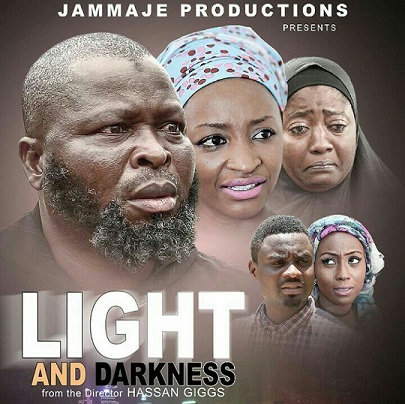
Kannywood movie review: ‘Light and Darkness’

By Saddam Ungogo

Light and Darkness (2018) is one of Kabiru Musa Jammaje’s Kannywood films in English. He is a fantastic filmmaker with ideas, but I always feel it isn’t a good idea to make such films. If it is something worth doing, Ali Nuhu would have made a few, Karan Johar would have made a Bollywood film in English. Instead, however, we saw indigenous films winning prestigious global awards.

At the Oscars, we even have an award category called ‘The Academy Award for Best International Feature Film’ (known as Best Foreign Language Film before 2020). It is given to feature films produced outside the United States with a predominantly non-English dialogue.

Directed by Hassan Giggs, written by Ilyasu Umar Maikudi and co-produced by Kabiru Musa Jammaje and Abubakar Bashir Maishadda, Light and Darkness is a story that revolves around Alhaji Balarabe Maikadara (Rabi’u Rikadawa), who is allergic to western education. The movie was set in an urban Hausa society of the 2000s, and it turned out to be a domestic drama with ‘education’ as its central theme.

Alhaji Maikadara was a well-endowed businessman. He married his second wife, Raliya (Rahma Sadau), with a promise to let her further her education, but after having her under his watch, he transgressed his end of the bargain. He had two grown-up children, Abba (Nuhu Abdullahi) and Basma (Maryam Booth), with his late wife. He chased Basma out of the house when she protested his intention to give her hand out in an arranged marriage. Instead, Basma preferred to go to school.

The film tries to identify the significance of education, paint it as light, parade the remonstrance of ignorance, and sketch it as darkness.

The film has good intentions, but it lacks preparation. Something tells me that the film cast was selected based on who they are or because they could speak English. Stories are supposed to call for actors.

Viewers were rushed through the storytelling, the story was stitched with anxiety, and the dialogues were incompatible with the character profiling.

Jammaje decided to be the line’s director, which I think was a blunder. He assigned uneducated characters to speak big grammar and talk with idiomatic expressions. Perhaps he was trying “to use the opportunity to teach English to viewers”, as he bragged in a Daily Trust interview on January 7, 2017.

Throughout the movie, I asked myself what audience the filmmakers had in mind while putting it together. Staged in an urban setting, written in English and with education (girl-child education included) as its cardinal message, this story was huge. Its target audience should be rural Hausa communities where there is a high level of out-of-school young people and children, where western education is still not condescended. If that is the case, the language used in transmitting this message must have spooked away from the suitable audience of the movie.

This is 2022. The movie was made in 2018. Maybe nobody would even care about this review, even the filmmakers themselves. Jammaje made many movies after this one, including The Right Choice, which his co-producer Maishadda called the “biggest Kannywood project ever in terms of finance”,…costing N35m.

The Right Choice (2020) was worth N35m. It featured top Nigerian stars from both Kannywood and Nollywood industries, such as Sani Mu’azu, Segun Arinze, Sola Sobowale, Nancy E.Isime, Enyinna Nwigwe and Ali Nuhu.

With The Right Choice, Jammaje Production must have learnt that they needed to be more pragmatic and made a complete Nollywood movie. Or, maybe, a Nigerianized film so that Jammaje could teach his beloved English language through his role as he would get educated cinema-goers lining up for his work anywhere around the world.

As for Hausa consumers like me, do not dare bring something like Light and Darkness ever again.

You might be promoting my culture with Light and Darkness, but honestly, you were killing my language!

Saddam Ungogo is a Kanp-based broadcaster and singer. He can be reached via candidsaddam@gmail.com.

I’ve confidence about my 2023 presidency ambition—Tinubu

By Muhammad Sabiu

Former Lagos State governor and leader of Nigeria’s ruling All Progressives Congress, Bola Ahmed Tinubu, has expressed his confidence that he would win the 2023 presidential election, noting that stakeholders’ reactions are behind his optimism of becoming the president.

Mr Tinubu stated this when he paid a visit yesterday to Rashidi Ladoja, a former governor of Oyo State.

Mr Tinubu was quoted as saying, “Life is a challenge, and you must be ready to confront challenges and overcome. I have the confidence that I will overcome any form of challenge.

“The reactions of critical stakeholders to my presidential ambition have been very positive, encouraging and overwhelming, and these have spurred me on with the strong conviction that we would succeed and emerge victorious after the election.

“We are forging ahead, and with the strong support of the masses of Nigerians, we are going to achieve a resounding victory.”

Recall that the APC leader had told President Muhammadu Buhari that he was interested in contesting for the office of the president come 2023.