Admin

Civil Society Organizations need central regulatory body – Ibrahim A. Wayya

By Aisar Fagge and Uzair Adam Imam

Comrade Ibrahim A. Waiya, President, Kano Civil Society Forum (KCSF), made the observation while presenting a paper at a one-day review workshop organized by Mambayya House, Kano, for Civil Society Organizations (CSOs) in Northwest Zone with support from MacArthur Foundation.

The workshop held at Mambayya House, Kano, on Wednesday, November 10, 2021, was themed “Towards Improving Internal Accountability for sustainable Anti-Corruption Efforts.”

Comrade Waiya said, “With the proliferation of many political civil society organizations masquerading as activists, there is the need for a national regulatory body that will be monitoring the activities of CSOs. The only thing most CSOs are doing now is self-regulatory, while Corporate Affairs Commission (CAC) has the record of board of trustees.”

Waiya added that another factor slowing down CSOs’ efforts to mitigate corruption in the country is the lack of proper knowledge.

He said, “It is a known fact that some civil society organizations have the zeal and commitment to fight corruption in the system, however many of such organizations lack the basic knowledge to appreciate the provisions of certain protocols, which need to be applied under certain circumstances to effectively, achieve the desired results.”

He further added that “Some of these protocols may include the use of the FOI [Freedom of Information] Act.

It is basically significant for CSOs to have basic information required to be used as a tool in the fight against corrupt practices. And the absence of such vital information may lead a person into committing a certain crime such as deformation of character and the rest, and may as well jeopardize one’s mission,” he stated.

“It is high time for CSOs to start looking for local donors such as Dangote, BUA and A. A Rano to fund their activities,” Waiya concluded.

The event had in attendance Prof. Ismaila M. Zango, the Director, Aminu Kano Centre for Democratic Studies, Bayero University, Kano, Mabayya House; Aqibu Hamisu Garko, CEO, African Center for Transparency and Advocacy; Dr Bello Ibrahim, Deputy Director, Training, Mambayya House; Abdullahi Usman K/Na’isa, M & E Officer, MacArthur Project, Mambayya House; Dr Samaila Suleiman, Program Officer, MacArthur Project, Mambayya House and many more important personalities within the country.

Pantami: The Return of Professorship Debate

By Zayyad I. Muhammad

The Federal University of Technology, Owerri chapter of the Academic Staff Union of Universities (ASUU) inaugurated a five-person probe panel on September 22, 2021, to assess the procedures used to appoint the Minister of Communication and Digital Economy, Dr Isa Ali Pantami, as a Professor of Cybersecurity. The panel said due process was followed by the governing council and the management of the university in the appointment. The report by the panel is an interesting one considering the heated public debates generated by the appointment.

Most of the people who criticized the appointment were academics. As expected, the majority of those who supported the critics were Pantami’s political adversaries. Pantami’s appointment supporters were either some academics, his political supporters, and those who sat on the fence.

The verdict by the five-person probe panel certainly gives Pantami and FUTO some respite. His political supporters will be delighted, while opponents of the appointment will fire more because the majority of them are academics. Tenacious criticism on issues that concern knowledge is an attitude of academics.

During the first debate, Pantami’s ‘friend’ Professor  Farooq Kperogi said: “There are basically three legitimate ways to become a professor: by climbing the professional ladder in a university; by being appointed to the position from outside academia in recognition of vast and varied industry experience or artistic wizardly in a field; and through a courtesy appointment. Isa Ali Ibrahim Pantami’s record does not qualify him for any”.

However, Prof. Tukur Sa’ad, a former Vice-Chancellor, said, countering Kperogi, “A University can decide to appoint an individual to a position either through promotion or straight appointment based on the criteria they set up independent of the National University Commission (NUC).”

Pantami’s political allies and supporters are delighted with the report of the ASUU panel because they see Pantami as a potential vice presidential candidate with many advantages.  To all Pantami’s supporters, his professorship is a big addition to his credentials which his potential rivals don’t have. They believe that Patnami is young, highly educated with a PhD. from the United Kingdom (UK) at Robert Gordon University, Aberdeen.

These supporters add that politically, Pantami is a good ‘material’ to balance a presidential ticket. He is from North-East Nigeria; he fits into the agitation for the northeast to present the vice-presidential candidate in 2023. Moreover, he is a household name in the North-west. They will feel at home with him – he is their cousin.

Additionally, he is an Islamic scholar with vast cult-like followership nationwide. Pantami is Buhari’s strong confidant and ally. The general belief among Pantami’s promoters is; Pantami from the northeast as vice-presidential candidate with any presidential candidate from the south, especially the southwest, will balance a presidential ticket and serve as a strategy for the APC to retain the presidency in 2023.

Nevertheless, academics and oppositions against Pantami’s professorship will continue to hit hard while his political rivals will clap for them. So Pantami and his supporters should be well-prepared for the game.

Zayyad I. Muhammad writes from Abuja. He can be contacted via zaymohd@yahoo.com.

Again, Nigerian military engages ISWAP terrorists in Borno, kill 4

By Muhammad Sabiu

Nigerian soldiers combating the insurgents terrorising the northeastern part of Nigeria have again succeeded in eliminating some members of the Islamic State of West African Province (ISWAP) in Ngwom community under Mafa Local Government Area of Borno State on Tuesday.

A source whose identity has not been revealed disclosed that the military acted swiftly by mobilising troops of 195 Battalion Operation Hadin Kai in Jere to engage the insurgents.

The source was quoted as saying, “We have counted four corpses of the invaders and still pursuing others using the track of blood in the bush.

“After our clearance operation on their escape routes, detailed updates can be provided.”

This is not the first time Nigerian soldiers engaged insurgents, who usually in recent times suffer a heavy casualty.

2023 Presidency: North-East youth declare support for Yahaya Bello

By Sumayyah Auwal Usman
As  group of north-east youth has urged the Governor of Kogi state, Yahaya Bello, to contest in the 2023 presidential election, assuring him of their support and loyalty.
The group under the auspices of GYB Awareness Project disclosed this at the end of the its Zonal Meeting in Gombe that was attended by representatives from Gombe, Borno, Adamawa, Yobe, Taraba and Bauchi States. The group said: “Governor Yahaya Bello has all it takes to lead Nigeria, and we are ready to give him overwhelming and necessary support in 2023″
In his remarks, the national coordinator, GYB Awareness Project, Saifu Bawa Kajuru also noted that Governor Bello has shown himself as a man of integrity and a loyal APC party member to the core, whose efforts and contribution to the party has produced good results over time.

Gunmen murder AVM Maisaka in his house

By Hussaina Sufyan Ahmad

The Kaduna State Police Command has confirmed the killing of Air Vice Marshal Muhammad Maisaka (retd.) by unknown gunmen at his residence in Ragasi, Igabi Local Government Area of Kaduna, in the early hours of Tuesday, November 9, 2021.

Police spokesperson for Kaduna State Command, ASP Muhammad Jalige, confirmed the murder.

Jalige said: “The corpse has been evacuated to the hospital, and the gateman has since been rushed to the hospital for treatment.’

“The Commissioner of Police, Mr Mudassiru Abdullah, has since directed the Divisional Police Officer and the Area Commander to immediately proceed to the scene.”

National Conference on Reading: Bayero University offers Advanced Diploma in Reading

By Muhammad Sulaiman Abdullahi

It has been widely confirmed and unanimously agreed by academics and other educational stakeholders that the culture of reading is fast dying across the globe, especially in Nigeria. This may be the reason why Bayero University, Kano, in collaboration and support of Florida State University, USA, established “The Nigeria Centre for Reading Research and Development” at Bayero University, Kano.

The Centre’s main aim is to encourage, support and upgrade the nature of reading and revive the reading culture, which, according to experts, is the only way and key to development of any nation.

The Director of the Centre, Professor Talatu Musa Garba, disclosed this development today during the opening ceremony of the 3rd National Conference on Children’s Book and the Teaching of Early Grade Reading in Nigeria.

Garba added that “It is my pleasure to announce that the Centre is now focused to develop various courses, in collaboration with the Department of Education, Bayero University, Kano, following the expiration of its collaboration with Florida State University earlier this year.

The Postgraduate Diploma in the Teaching of Reading approved by the university and advertised on the BUK official website has already commenced this academic year, which opened last week, on 1st November, 2021. The Centre has also concluded arrangements to offer the Certificate in the Teaching of Reading beginning in July 2022″.

BUK Vice-Chancellor, Professor Sagir Adamu Abbas, revealed that the Nigeria Centre for Reading, Research and Development is now entirely under Bayero University, Kano. He further added that “We in the management pledge to support its operation fully. In this regard, I  am pleased to inform the conference that the construction of the permanent building for the Centre has reached an advanced stage, as the physical structure is currently being furnished and equipped, accordingly. What remains is the landscaping, and the university is making provision for that before the end of the year.

The conference is still ongoing, and it will dwell and deliberate on “Children’s books as tools for the effective teaching of reading skills in the early grade in Nigeria”.

Al-Azhar University to make Al-Istiqama center for Arabic sign language – Prof. Salisu Shehu

By Aisar Fagge

On 3rd November, 2021, a delegation from the Al-Azhar University, Egypt visited Al-Istiqama University Sumaila (AUSU) for partnership, staff training and establishing a centre for Arabic sign language that no any Nigerian university has. Explaining to the Daily Reality about this development, The VC of Al-Istiqama University, Prof. Salisu Shehu said:

“You know universities in the world thrive on partnership and collaborations. You need to come to abreast with international best practices in university education. And it is only through collaboration and partnership you get that. You need to mutually interdependent on one another. And it is on this basis we get some form of partnership with Al-Azhar University. As it were, Al-Azhar University is over one thousand years old. It is our big mother.”

“We are moving towards a memorandum of understanding with Al-Azhar University, and they are going to help us in a number of ways: one of which, for example, is that we want them to give us training, to train some of our staff on Arabic sign language.”

There is a problem with Muslim deaf people when it comes to Arabic language and reciting Qur’an especially in their prayers. Lamenting about this lingering issue, the VC affirmed that:

“Muslim deaf people in Nigeria don’t read Arabic, they don’t read the Qur’an, they pray in English. Because what is taught in our school is only English sign language. So even when you write Hausa to them they don’t understand, let alone the Arabic language.”

“So we need to get Arabic sign language and, we want to make Al-Istiqama University, insha Allah, a center for the production of deaf people that are literate in Arabic sign language so that they will be able to read Arabic and Qur’an. Not the usual English they are taught.”

“So we have requested Al-Azhar University to support us in terms of training so that can establish a center for Arabic sign language in order to promote braille literacy,” he concluded.

Al-Istiqama is the cheapest private university in Nigeria – Prof. Salisu Shehu

By Aisar Fagge

In its second segment of the students’ orientation lecture series held between 6th and 7th November 2021, the Vice-Chancellor of Al-Istiqama University Sumaila (AUSU), Prof. Salisu Shehu, stated that AUSU is the cheapest private institution where students can memorize the Holy Qur’an before their graduation.

Speaking about the name of the university, Prof. Salisu Shehu said: “Well, the message sent to parents and guardians from the name of the university is that, this is the university that stands for uprightness in all sense of the word; uprightness in character, behaviour and learning. What we aspire to achieve is that effective teaching and learning take place in our university.

We want to be sure that whoever comes to Al-Istiqama would be seriously groomed with the sound knowledge that is possibly only obtainable in our institution. Not only that, through our counselling and mentorship, serious students can memorize the Holy Qur’an before their graduation.”

From the name “Al-Istiqama”, some people think that the institution is all about Islamic studies and Arabic courses. Reacting to this, the VC has clarified that:

“Yes! This is a faith-based university, and that’s why it’s given the name “Al-Istiqama”. But that does not mean that learning is only going to be restricted to the religious sciences. All disciplines are going to be offered in this university. And, for now, we have about 15 different degree programmes. Islamic Studies is just one of the 15. In addition, there are social sciences, basic sciences and medical sciences. And we are going to open additional faculties as we keep moving, in sha Allah.”

There are complaints about students of private universities that they do not respect their teachers because they are proud of the huge money their parents spend on their school fees, and that has affected the quality of their learning process.

In his reaction to the above, Prof. Shehu explained that Al-Istiqama was different. He added:

“Al-Istiqama, being a faith-based institution, will not tolerate indiscipline, pomposity and any immoral character. We will not tolerate that situation where students are extorted. Although we need to get funds and resources that will sustain the university, parents and students should not be that source.

Our school fees are very, very affordable. Almost the lowest you can find around because it is not a profit-making venture. The proprietor did not intend to make a profit out of it. Rather, he intended to render service to humanity. So that kind of notion and that kind of mentality would not have a place here.”

Nigerian military repel ISWAP’s attack, eliminate 5 insurgents

By Muhammad Sabiu

Reports coming from northeastern Nigeria have indicated that Nigerian soldiers have successfully repelled an attack on their convoy by combatants of the Islamic State of West African Province (ISWAP) along Maiduguri-Damaturu road.

The soldiers were said to have acted based on an intelligence report they received after the “terrorists’ communication was intercepted.”

The terrorists also attempted to abduct travellers who were plying the Maiduguri-Damaturu road.

A source in the know of the incident, who pleaded anonymity, confirmed to journalists that “the armed terrorists had stormed Tamsukawu community in Kaga local government with the intention to attack a military convoy on a special mission/movement.”

He added: “Unfortunately for them, a signal was received on the movements of terrorists from various directions for the attack.

“The troops’ movement was well fortified with adequate security and air cover from the air task force.

“The movement was very successful even though with some confrontation which we tackled.

“Meanwhile, the troops were also mobilised to deal with another remnant of ISWAP fighters who attempted to attack and abduct travellers at Tamsukawu community.”

Confirming the number of casualties on the side of the insurgents, the source said, “The troops and the terrorists engaged in a heavy gun battle before they were subdued, killing five of them after the arrival of the Air Task Force and Rapid Response Squad Team from a Super Camp at Ngamdu.”

This is not the first time the Nigerian military has engaged terrorists in a gun duel, which has made a number of the insurgents meet their Waterloo.

Ensuring security through private sectors’ initiatives

By Mukhtar Ya’u Madobi

Subject to its wider ramifications, the burden of maintaining security is too cumbersome to be single-handedly by a solitary institution in a heterogeneous country like Nigeria.

Thus, the multi-stakeholders’ approach is often more necessary where there is a rise in security challenges. Therefore, security should be a collective effort of the government plus other state and non-state actors, including the private sectors.

The word ‘security’ simply implies the protection of the lives and properties of people from various forms of threat. It occupies the highest level of priority in the hierarchy of responsibility by the government as one of the core values that the state cherishes as non-negotiable and that does not admit compromise.

The contribution of private sectors in ensuring security can be rendered through various channels, including the construction of security facilities, donations of logistics to security services and providing equipment at their disposal during emergency response situations such as fire outbreaks, accidents, building collapse and natural disasters such as flooding, earthquake, etc.

Other alternatives include community participation in securing their locality in collaboration with police, i.e. the neighbourhood watch or vigilante group, involvement of religious and traditional leaders in disputes resolution among their followers and services provided by the business enterprises to their host communities through corporate social responsibility (CSR) initiatives.

To that effect, the role being played by the famous Civilian Joint Task Forces (Civilian JTF), through collaboration with the security agencies in countering the violent extremism of Boko Haram terrorists in the North-East (Borno), is very commendable. Such volunteer groups provided invaluable intelligence that led to the uncovering of many deadly terrorist cells and their subsequent elimination.

Now that the terrorists are surrendering, community leaders, civil society groups and NGOs have a greater job to embark on sensitizing the mindsets of the public in de-radicalization, rehabilitation and reintegration of the repentant terrorists into society. This will go a long way in maintaining the security of lives and properties of people.

It is noteworthy that the CSR initiatives of the Aliko Dangote Foundation donated 150 operational vehicles to the Nigeria Police Force in 2018, which was described as the single most significant gift ever by a private sector operator to the police.

In the Niger Delta region, where the problem of insecurity is mainly attributed to the feeling of anger and frustration by host communities due to negligence of CSR initiatives, the oil companies have turned a good leaf by changing the narratives.

Multinational corporations are now actively involved in providing infrastructural facilities such as schools, hospitals, roads, and water supply to their host communities. In the long run, they also designed a special scholarship scheme for the indigenes. They are provided with tuition fees and reading and learning materials to further enhance their educational careers. This initiative has undoubtedly contributed immensely to reducing the militants’ activities and other security tensions in the oil-rich Niger Delta region.

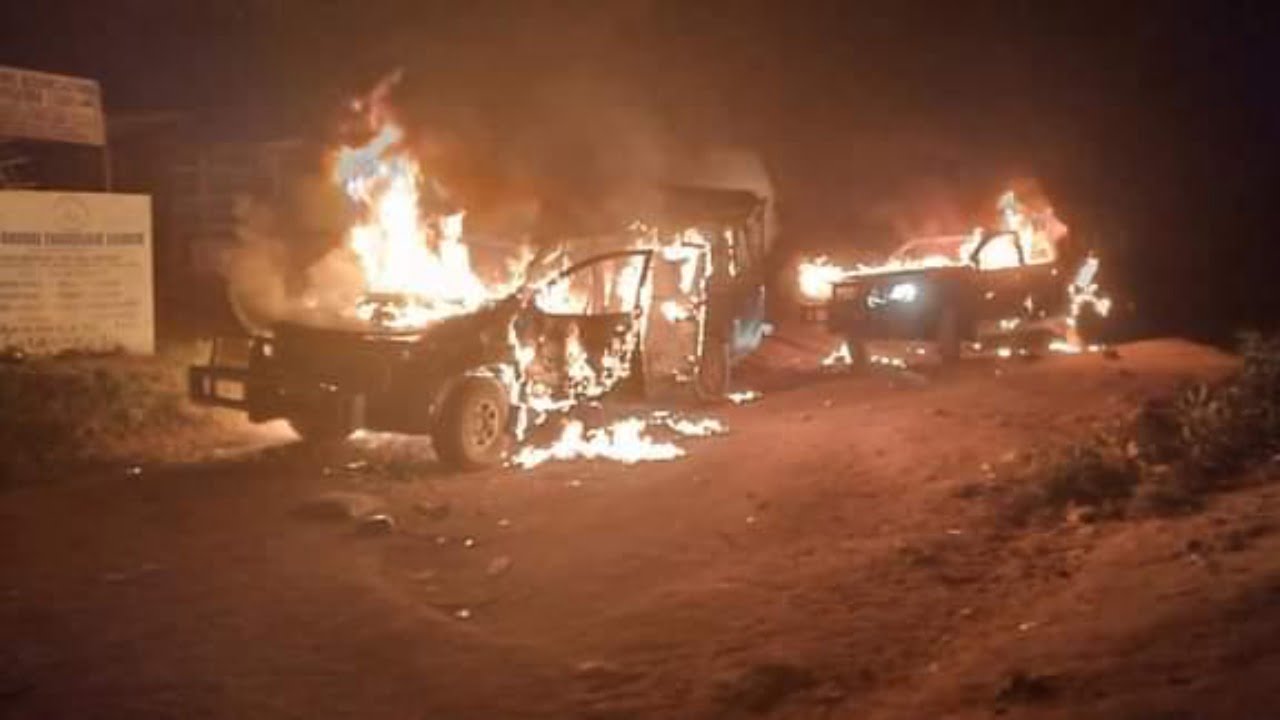
Moreover, several societal figures and organizations were known for their efforts in constructing and rehabilitating security outfits across the country. Recall that, immediately after the #EndSARS protests in which several lives of both civilians and security personnel were lost, many properties were destroyed, police stations looted, their firearms carted away and subsequently destroyed.

The giant private sector-led Coalition Against COVID-19 (CACOVID) procured new equipment for police officers and pledged to rebuild the burnt police stations destroyed during the civil unrest to restore security to the affected locations across the country.

Even the traditional institutions were not left out as Oba (Alhaji) Dauda Ajolola Adebimpe Akinfolabi of Ayedade Local Government Area of Osun State built a divisional police headquarters and the office for the Nigeria Security and Civil Defence Corps (NSCDC) office. The monarch noted that the gesture was necessary to protect his people and ensure safety in his community, considering the rising insecurity in the country.

In addition, private security companies are also part and parcel of the security architecture of every country. The responsibility of a private security guard is ‘securing the lives and properties of the client’. The client may be an individual, organization, private institution, government, etc. However, experience has shown that guards can perform additional functions other than just protecting the lives and properties of the client.

Their large number and widespread presence make them a critical part of the security system of the nation. The NSCDC is the ultimate regulator of all private guard companies in Nigeria and has so far licensed over 1000 companies. Almost all residences, offices, schools, shopping malls, parks etc., especially in the city, are staffed by private guards securing their location. To that effect, their number has even exceeded that of the entire Police Force in the country.

Therefore, the government and the security agencies can take advantage of this opportunity to collaborate with private guard companies, especially in areas of intelligence gathering and sharing, training and joint task operations towards securing the country from the activities of criminal forces.

Sequel to that, Nigeria’s Policy Framework and National Action Plan for Prevention and Countering Violent Extremism, produced by the Office of the National Security Adviser (ONSA), retired Major General Babagana Monguno have succinctly acknowledged the role of the prominent private sector in national security.

As they say, Emergency Management is everyone’s business.

Mukhtar sent this piece from Kano. He can be contacted via ymukhtar944@gmail.com.