Admin

Narrating our story from the inside

By Abdul Muttalib Muktar

Growing up in a community like our own does not avail one’s face with the chance to glow with smiles. On the contrary, due to a series of nightmares, one often thinks we live in an entirely different world. 

It is not our personal choice to become drug addicts at a tender age. Despite knowing that we are a nuisance, we feel sad when referred to using derogatory terms. But what people sadly fail to understand is that we are a creation of our community. Should we be conceived and be given birth again in an entirely different society with an established family institution, where the quality of children is prioritised, we would not grow up to be a nuisance as we are today. 

Some of us have already gone mad because of excessive drug abuse; many of us are in prisons awaiting trials for many offences, a lot of us are scattered across different markets and parks. We pickpocket, steal and cause trouble; some of these troubles even escalate into ethnic and religious crises. The number of us caught in the act are wounded, others lynched. We terrorise our community today by the commission of robbery, burglary, housebreaking, thuggery and phone-snatching while stabbing our victims with sharp objects.

We grew up under no umbrella of a family. Right from our toddling days, the family becomes broken. Our fathers get married again and again to new wives–these wives are scattered into different rented places. Our mothers also get married, move to new houses where they begin a new life, give birth to a new generation of children, and abandon the old generation.

We begin to fend for ourselves from the age of nine or ten. One could see us inside, smelling gutters, dirty rivers, dusty dumping grounds and abandoned buildings, scavenging for iron, copper, aluminium, brass, etc. In the course of our search for these materials, we steal properties.

Fundamentally, we do all this to buy food and clothes for ourselves. Our younger ones are seen today in the streets following suit. It is not like we have no conscience, but the substance we have been taking and the realities that define our growth,  harden our psychology. So don’t be surprised that we behave with no shred of humanity today.

We could not go to school. Some of us that started have eventually dropped out and returned to the streets because our parents prefer multiplying us rather than moulding us into responsible men. 

We learn to take hard substance from the collective decision of our community – an unfortunate decision of bringing us to the world in multitude and throwing us out even before our legs could firmly hold us. We commit all the horrible acts today because our community’s tradition is that you must go and fend for yourself once you have learned how to walk. We are what we are today because some of us are forced to become Almajiris outside their towns, where they end up peering at other versions of ourselves.

Sadly, the central and local authorities and a vast majority of the people derive pleasure in cursing and punishing us for our deviance. They never bother to ask questions, much less search for answers. No wonder my peers are multiplying, reaching a point of outnumbering the responsible ones in the community.

Abdul Muttalib Muktar can be reached via abdulmutallib.muktar@gmail.com.

Waqf would have saved the situation!  

By Abdullahi Abubakar Lamido

Alhaji Abdullahi (not a real name) is a rich man from Northern Nigeria, famous for his multidimensional philanthropy. He was, at a time, among the three richest men in his town. He came from a polygamous family and was the 14th child of his dad. He was the only rich man. Being polygamous himself, he has close to 20 children from three wives. As the only well-to-do in his extended family, his house is like a local government secretariat, always jam-packed with visitors from among family members. This is in addition to dozens of his “sons and daughters” born by his brothers and sisters, who reside in his house, under his total care. But Alhaji takes care of them all; feeding, clothing, education, healthcare, Sallah clothes, etc. He does that with all pleasure. After all, he has the means, and of course, the heart, as a wealthy businessman.

Here is a religious, wealthy man and an influential politician cum Islamic scholar. He has built several schools and mosques, sponsored the education of many orphans, given capital to many people, sponsored the marriages of many poor girls, and sponsored dozens of people to hajj. He is one of the best philanthropists you can think of. After all, that is what is expected of an affluent Islamic scholar. His school was once among the best two primary and secondary schools in the town. When he singlehandedly built it about two decades ago (he had built others much earlier), he would pay teachers’ salaries, buy uniforms for the students, and give them other learning materials. He loves the Qur’an, being also a hafidh himself. And he would provide copies of the Qur’an to all the hundreds of his pupils. This is in addition to dozens of people who rely on him for their livelihood.  

As time went by, the “law of diminishing returns” began to affect his fortunes. Gradually, he began to withdraw the subsidies from the school due to continually decreasing income and ever-expanding family financial pressure. But he wanted to maintain the good deeds. Now the school needed expansion while his pocket had experienced contraction. He gave his big land close to the school for the purpose. But no funds to build it. So, he sold another land and built it. Note that the school fees could, at best, pay salaries and take care of the running cost. Every student pays. But it is a middle-class school, so the charges cannot be high. So, he went and sold another asset, built the classes. He sold another one again and again until virtually all the sellable assets became exhausted.

One day, while sitting at home, he saw his children returning before the school closing hours. “What is going on”? He asked them. They were sent home because they did not pay school fees. This happened when he was battling with how to feed his family and settle many other bills. Alhaji never envisaged a day when his fortune would dwindle to that level. Therefore, he did not save nor invest for that rainy day. He thought he would continue to secure contracts and earn considerable resources to fund his schools and even establish more. He, in short, did not benefit from the advice of a waqf expert who could have shown him the simple way of establishing an investment waqf, using a portion of his assets, that would perpetually generate a flow of revenues. The revenues could sustainably fund his schools and other charitable interventions. 

Waqf offers a variety of ways for planning the future of your family and supporting other charitable projects sustainably. For instance, the idea of an investment/productive waqf would have perfectly saved Alhaji Abdullahi from selling and reselling his properties to expand his school. As it is, there are two forms of waqf; direct and invest waqfs.

A direct waqf is one created to provide direct welfare and societal development services. Examples are mosques, boreholes, and tuition-free schools that offer direct benefits to designated beneficiaries. An investment waqf is a money generating waqf whose revenues are dedicated to financing defined welfare and socio-economic development projects. An investment waqf can be made to fund and maintain a direct waqf.

For instance, a well-managed orchard can be dedicated as waqf such that the revenues generated from the sale of its fruits will be used to finance a tuition-free school. So, when Alhaji Abdullahi built his school, which he wanted to be a subsidized one, he could have established an investment waqf that would mature and, within some time, continue to finance the school from its proceeds. His other assets would have been saved for other equally important purposes. He could as well have saved himself from the embarrassment of the failure to pay children’s school fees later in his life when the recession hit him.

For instance, nothing stops this rich man from building rentable shops or apartments and dedicating them as waqf, such that what they generate would be divided into two; half reinvented and the other half injected into supplementing what is generated as school fees. He could as well have purchased shares of a halal company and dedicated the investment as a waqf for funding the school waqf. This way, the waqf corpus would continue to expand, and its revenues would grow sustainably. What started as a small waqf can grow into a megaproject that benefits society on a larger scale. Not only subsidies, the investment, if properly managed by trustworthy investment experts, would have funded the construction of more and more schools and the provision of scholarships, among others.

 So, if he provided subsidies at the beginning of the school, part of such funds would have been invested, and gradually he could withdraw the subsidies as the returns from investment take over the funding of the school. This way, his children could have become permanent beneficiaries of the scholarship provided by the waqf of their formerly wealthy father. Better still, he could have simply established a family waqf (a topic for another day) specifically for his children. Waqf, in short, could have saved the situation

Abdullahi Abubakar Lamido is the Chairman, Zakah and Waqf Foundation, Gombe. He can be reached via lamidomabudi@gmail.com.

Train Attack: Unite against terrorism – MURIC

News Desk

The Abuja-Kaduna train was attacked by bandits on the evening of Monday, 28th March 2022. The attack led to the killing and abduction of some passengers. Meanwhile, the Muslim Rights Concern (MURIC) has called on Nigerians to unite against terrorists, bandits and saboteurs.

MURIC’s input was contained in a press statement issued on Wednesday 30th March 2022 by its director and founder, Professor Ishaq Akintola.

The statement reads:

“Bandits attacked the Abuja-Kaduna train yesterday Monday, 28th March 2022. The attack led to the killing and abduction of some passengers. We strongly condemn this attack. It was mindless, vicious, brutal and barbaric. This is also major evidence of the extent to which unscrupulous elements can go to sabotage the good efforts of the government to provide comfort for the citizens.

“With hindsight, the latest attack may not have been too surprising, particularly with the ominous signs presented by previous activities of bandits in the zone. It is obvious that Kaduna Airport was attacked last week because the bandits had become desperate since they could not find enough victims on the roads.

“Our security agencies should be more proactive. Intelligence Transport Systems (ITS) should be used in all our transportation networks starting with the modern railway line and critical national routes of our roads. They should all be linked with control rooms of the security agencies. We also need tactical surveillance teams at critical locations along the modern railway lines. Not only that, unmanned aircraft and drones can be used to collect information during the trains’ working hours. This will prevent criminal elements from springing surprise attacks on innocent passengers.

“The citizenry must also be security conscious. They need to complement [the] government’s efforts. Nobody should tell us that the present government did the wrong thing by introducing a modern rail system but the people benefiting from it must be prepared to pass information about suspicious moves at sabotage.

“We call on Nigerians to look beyond this mindless attack. It is the work of saboteurs, rebellious subjects and enemies of peace. Nigerians must not allow the tragic incident to test their will. Rather, we must unite against those who seek to destroy our fragile civilisation and our nascent democracy. We must speak with one voice targeted at the inhumanity of man to man. The criminals are not happy with the progress being made. They want to drag us back to the Stone Age. We must resist them.

“No single government, no matter how popular, or how powerful, can be competent enough to repel terrorists and saboteurs. The people must become partners with [the] government. They must become [the] eyes and ears of the security agencies. The modern trains on Abuja-Kaduna, Lagos-Ibadan and Itakpe-Warri should be enough to inspire patriotism.

“Patriots all over the world stand with their governments. That was what Americans did when the country was attacked by terrorists in 2001. That is what the Ukrainians are doing now against the invading ultra-Red communist war criminals. We must unite against those who are making it difficult for innocent citizens to enjoy the dividends of democracy.

“The media has a special role to play at this critical point. There is no professionalism in celebrating terror. Nobody is immune from terrorists’ attacks, not even journalists. That is why all hands must be on deck in the fight against insecurity. Terrorists are cowards who pick on soft targets to embarrass [the] government and traumatise the citizenry, including journalists. That is why all media fora must mobilise themselves against marauding bandits and terrorists.

“The modern trains introduced by this administration are superb and they are reducing the sufferings of travellers but it is now time to leverage on the infotech facilities at our disposal to make the trips hitch-free. Nonetheless, the challenge of insecurity should not be seen as a mark of [the] failure of the project. We must put saboteurs and enemies of the people to shame by forging ahead. We must not surrender to terrorists. Nigeria is on course.”

Outrage trails brutal flogging of Almajiri in Kano 

By Uzair Adam Imam 

Many people reacted with shock over a viral video showing an eight-year-old Almajiri beaten mercilessly by his ‘Tsangaya’ Quranic teacher.

The Daily Reality gathered that punishment was due to the kid’s failure to bring food to the teacher, which is an age-old practice in many Tsangaya schools.

A source told our correspondent that the kid was found roaming the street after running away from the school.

The source added that a relative brought the victim to Kano from Magamar Gumau Local Government Area of Bauchi State for Qur’anic studies after his mother’s demise.

“I don’t want to go back to the school. The teacher will kill me. I want to return to my father,” said the kid.

Begging outlawed in Kano

Kano State is becoming a haven for beggars, despite the state government’s ban on street begging and subsequent measures the government to enforce the order.

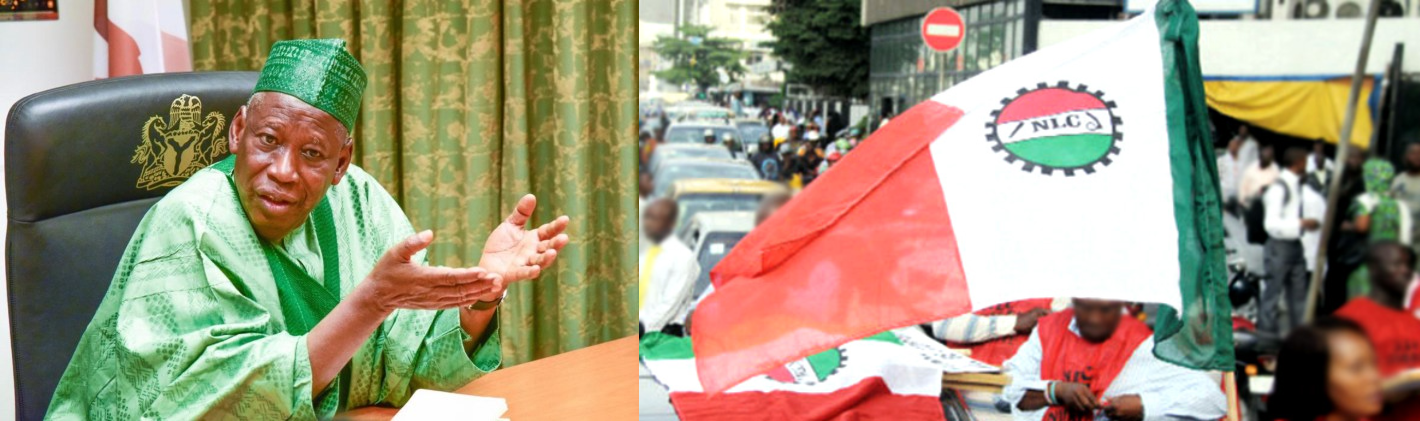
In 2019, the Ganduje administration banned street begging, introducing new approaches to improving the education of the almajiri system.

In a statement, the Chief Press Secretary to Governor Abdullahi Umar Ganduje, Malam Abba Anwar, said the effort was to consolidate the free and compulsory primary and secondary education fully.

“If an Almijiri teacher thinks he cannot accept the new policy, he has to leave the state. 

“When Almajiri are caught begging, it is not only that beggar is caught but also his parents or guardians. Such parents or guardians would be taken to court to face the wrath of the law,” the governor threatened,” the statement said.

But despite the ban, street begging has held to its position in the state, as beggars are still on the state’s streets. 

Citizens blame government 

Some people blame the government for not consolidating its position of improving the  Almajiri education system to mitigate the menace of bagging in the state.

A former president of Foundation Against Child Abuse, Abdulmalik Shu’aibu Sani, blamed the government for playing politics with the menace. 

Abdulmalik Shu’aibu said, “Government decides to play politics in handling this issue. If the government had actually banned or changed the Almajiri education system in the state, this boy wouldn’t have been beaten like a slave.”

“I believe this will surely be a joyous and celebratory idea if the government could implement the new system or at least tax parents to pay for school fees. With that money, their children will be fed.”

Amina Shu’aibu said, “I know the government will not do this. Anything about it is political.”

Some concerned citizens described the punishment as disheartening, stating that the system is not what it used to be.

Abdulmalik Shu’aibu Sani said such heartless people should be brought before the law to reap what they sow while calling on the government to take action.

He lamented that the kid was too small for that brutal beating, saying he could not take responsibility for himself and his teacher. 

Adam Zahraddeen, one of the active members of the Almajiri Foundation in the state, said that in the past, Almajiri parents paid a certain amount of money and “that money will be used to feed his child by the Malam.

“It is heart-touching to see such forsaken small kids wandering on streets searching for what to eat. 

“The government should by now end the Almajiri system of education and rethink how to reform the system. 

Amina Adamu, who said she almost cried on watching the video, stated that she felt sorry for the boy.

She said, “Seeing the picture of this boy in this situation, I feel bad, sad, and sorry for the kid. He looks so pathetic. I feel like no matter what this boy has done, he doesn’t deserve to be beaten mercilessly like this.”

We are not heartless 

Auwal Ilyas, one of the senior students at an Almajiri school in the state, said what happened was entirely contrary to what is obtainable in the system. 

He stated, “The person who did this beating was very wrong. I believe a true teacher who answers his name will not do the same. So it must be a gardi (a senior Almajiri) that committed such a pathetic and regretful thing. I know gardi used to ask for food but not Malam.

“How will a teacher ask this very small kid to bring him food? In our school, our teacher, my father, take responsibility for any Almajiri. Malam provides two square meals for them, breakfast and lunch,” Auwalu added.

On the Abuja-Kaduna train attack

By Tajuddeen Ahmad Tijjani

It would be an understatement to imply that the Nigerian government has failed in its primary responsibility of protecting the lives of its citizens. Under any form, this catastrophe is cruel, inhumane, insensitive, and repugnant.

The only solution is to take decisive action by tracking these terrorists attacking and kidnapping travellers to their hideouts. It’s inexcusable to wait for them to attack before confronting them. They only deserve death by any means necessary.

The terrorists have declared total war on the country and undoubtedly put our territorial integrity and sovereignty to the test. Thus, allowing them to experience the freedom of fresh air is unacceptable.

Sadly, you only see government action promptly when their party is in crisis, or some forces are threatening their power. Surveillance can only work when these unrepentant bandits are followed to their hideout and eliminated.

Our gallant security operatives should sustain an offensive and kill the terrorists without wasting time on our weak judicial system. Perhaps, special courts to try terrorists and send them to God for them to answer for the crimes against humanity is simply the way to go. Then, the national assembly can come in to achieve a better bargain to make our country save.

My thoughts and prayers are with the victims who are being attacked innocuously daily, while the government’s apparent incompetence keeps reassuring citizens just on paper, with no hope in sight. But, of course, it is neither them nor their children who are the victims. That’s what makes them not act promptly. 

I, therefore, call on the government to rise to its responsibility. 

Tajuddeen Ahmad Tijjani wrote from Galadima Mahmoud Street, Kasuwar Kaji Azare, Bauchi State.

Kogi State shouldn’t just be a salaried state

By Fatima Usman

Kogi State is one of the abundantly blessed states in Nigeria regarding natural and human resources and other things. Carved out of the old Kwara and Benue states, Kogi was created on 27th August 1991 by the then former president, Ibrahim Badamasi, alongside eight other states, including Delta, Edo, Abia Osun, Taraba states, etc. The state capital, Lokoja, is an ancient historical town that once served as Nigeria’s colonial administrative headquarters.

The birth of the new state was a reunion of a people who had shared history and had co-existed as one polity for over seven decades before being severed by the 1976 states creation exercise.

Kogi, among other states, has the most extensive mineral resources in Nigeria. These minerals resources, including coal, iron ore, dolomite, feldspar, tar, bauxite, and limestone, can serve as a source of income to the state and Nigeria as a whole only if utilised well. These alone can bring foreigners to the country for investment and serve as a tour state. It can also help eradicate poverty and create job opportunities for the people of the state and Nigeria.

Ajaokuta Steel Company alone can create millions of job opportunities for the youths, yet the government is not paying attention to it. Instead, they keep investing in another man’s land while ours dies.

Let’s not even talk about the rivers Niger and Benue, the two largest rivers in West Africa; their meeting point is in Lokoja, Kogi State.

The main aim is to make it a pleasurable delight to visitors, both foreign and local, thus boosting the tourism industry, economy, and social interaction in the state. But what have we done to it? Nothing. The government abandons it and never pays attention to it.

Sadly, Kogi politicians do not see that we have things that can make the state a better place, where people can talk about, and where people will come to search for greener pastures yet abandon them.

Those folks instead prefer to invest in other states and countries. All they know is to build hotels and filling stations all over the state, while most of them die after two to five years of operation. That happens because Kogi people depend only on salary and sometimes on percentage. Nobody is coming from other states or countries for any business meeting.

A state can be developed and have people coming after it only if it has good infrastructure, good roads, a standard manufacturing company, and other business activities. Without all these things, nobody will be interested in coming here.

Kogi state happened to be a state where people only depends on a salary after every 30 days of the month, which is not supposed to be.

We have other states who don’t have what we have, yet they are doing well. Their states have good roads, production companies that provide jobs for their citizens and even those who go there for greener pastures.

For Kogi state to be a better place, we have to appreciate what we have and utilise it well so that people don’t have to wait for white-collar jobs or wait for a stipend every month end before they can feed or live a better life.

Fatima Usman is a 300 level student of mass communication at IBB University, Lapai. She can be reached via usmanfatima499@gmail.com.

Kwankwaso and his over-ambitious movement

By Sagir Ibrahim

Recently, we witnessed a new direction in our modern politics, whereby former Governor of Kano State, Engr. Rabi’u Musa Kwankwaso and other former political heavyweights formed a new movement with an ambition to upset the status quo ante of our politics.

No doubt, Kwankwaso is a political juggernaut with a track record of achievements within his state. I don’t think it will be an exaggeration to say, none among his peers can match him in terms of positive impact on the lives of the poor. From that, he successfully built a team of educated youth that penetrated the nook and crannies of Northern Nigeria. On a visit to any tertiary institution in the North-West, it is rare to register the absence of a lecturer who happened to be a benefactor of the Kwankwaso government or under his present Kwankwasiyya Foundation.

And on the other hand, looking at his peers, for instance, Sokoto, under Governor Aminu Waziri Tambuwal, is not yet free from the shackles of illiteracy despite being a former speaker a second-term governor. Moreover, Sokoto is ravaged by persistent banditry insecurity. So then, how can he save the nation from the current insecurity challenges if he can’t secure his state? But in terms of party acceptance and the 2019 PDP presidential primary election’s result, his political strength is more extensive than Kwankwaso’s.

Although, that will not be unconnected with his ability to forge a good relationship with his party leadership, unlike Kwankwaso, who is known to have mad love for dominating relationships and space without considering others. For instance, when he left PDP for APC in 2014, he dominated the APC in his state by anointing his preferred candidates on the party tickets leaving no room for those he met in the party. The same happened when he defected to PDP from APC. He cornered all the party structure and candidates to his faction without regard for others that were there before him. That forced people like Sen. Ibrahim Shekarau to leave the party.

Kwankwaso’s New Movement

Recently, Kwankwaso launched a new movement that aimed to bring a positive change to the country’s political atmosphere. Known political figures that attended the launching are ex-governors, ministers, political actors and some technocrats. But, there is a possibility that the movement would join an existing political party outside the two major parties to serve as a third force in the upcoming election. Assuming that it joins another party, is he the only person in the movement with a presidential ambition? How ready are his colleagues to assist him financially and politically? Are they influential enough to sway people to vote for him? These and many more questions are begging for an answer.

Currently, forming and marketing a new political party in Nigeria less than a year before the election is almost impossible unless it is a merger of existing political parties. But, unlike this new movement, the influence of its convener is the most potent force that can be marketed. And if he can be sold in his Kano quickly, could that be done in Northeast, which has VP Atiku Abubakar, Ahmed Mu’azu, and Gov. Bala Muhammad that are eyeing the same seat?

Even in the North-West, how well prepared is the movement to confront the likes of Tambuwal that outshined him during the 2019 primary election?

What about Southerners who believe this is their perfect time to clinch the seat? Therefore, Kwankwaso has a lot to face in this new direction.

If not for wishes being horses, he would’ve exercised enough patience to join either of the two bigger parties, especially the APC. Because if the likes of Prof. Yemi Osinbajo emerge as the party flag bearer, they will be left with no perfect match to serve as his running mate than him. But his desperation is for leadership is second to none.

But looking at the constitutional provision, one needs a political party to contest any political seat since there is no constitutional provision for independent candidacy. With this, we can understand the political calculation of Kwankwaso. Going by the obstacle(s) mentioned, there is no possibility of Kwankwaso being the flag bearer of any of the two major parties. At best, joining NNPP could serve as an avenue for him to test his relevance in the national political space since his new party has no candidate of his calibre. Therefore, there’s every possibility for him to clinch the party presidential ticket.

Can He Win?

This is something that only time could tell. But, indeed, if any of the political parties give their ticket to a Northerner, Kwankwaso will now turn into a major spoiler to the Northern votes and a distraction. Thus, this could pave the way for a Southern candidate to victory. And in the end, if God lend us long life to 2027, maybe then he’ll contest again and luckily emerge as a winner since most of the contestants are either in old age or have given up their ambition

Sagir Ibrahim is a graduate of Economics from the Department of Economics, Bauchi State University Gadau. He can be reached via ibrahimsagir1227@gmail.com.

World Cup Qualifier: Federal civil servants close from work at 1 pm ahead of Nigeria vs Ghana clash

By MMuhammad Sabiu

Office of the Head of Service of the Federation has announced to civil servants that work would Tuesday be closed at 1:00 am so as “to mobilise support for the Nigerian Team [Super Eagles]” ahead of its World Cup Qualifier against Ghana.

This is contained in a circular signed by Dr. Ngozi Onwudiwe, Permanent Secretary (Service Welfare Office), on behalf of the Head of the Civil Service of the Federation.

The circular reads, “As you are aware, the Super Eagles of Nigeria will be meeting the Black Stars of Ghana in continuation of the 2022 FIFA World-Cup Qualifier, Playoff, (Return Leg).

“Consequently, I am directed to inform you that all offices will be closed at 1:00 pm on Tuesday, 29th March 2022.”

Dr. Ngozi also urged Permanent Secretaries to disseminate the information contained in the circular more widely.

Terrorist bandits bomb Abuja–Kaduna train conveying over 900 people

By Muhammad Sabiu

Reports coming from the northwestern part of Nigeria have indicated that suspected terrorist bandits detonated bombs on the rail track of an Abuja-Kaduna train, thus immobilizing it.

The attack was said to have taken place between Katari and Rijana.

According to sources who spoke to journalists, the attackers were said to have surrounded the train, shooting intermittently.

As of the time of filing this report, there are still no details of the number of casualties in the attack.

Special Report: Kano witnesses more divorce than wedding

By Uzair Adam Imam

Marriage break-up is perceived as one of the major challenges bedevilling relationships in Kano State, a development that leaves a severe psychological impact on the windows. A report by the BBC Network African Programme in collaboration with the Kano State disclosed that there were over one million divorcées in the state.

The research disclosed that 32% of marriages in Kano State survives only a period of three to six months; and that many young people between the age of 20-25 years are said to have gone through three marriages at least.

The Executive Director National Association of Divorcees/Widows and Orphans, Hajiya Altine Abdullahi, decried the rate of divorce in the state. She had once threatened to protest the menace. This menacing issue of marriage break-up has continued to witness a steep increment in Kano State more recently, making it a serious problem needing mitigation.

The Daily Reality had reported materialism as one of the contributing factors militating against marriages these days.

Divorce, how abrupt it occurs

As though a competition, many husbands partake in the race for divorce. The issue has now graduated to a national problem in dire need of mitigation.

A photographer, Aminu A. Gambo, recounted the harrowing tale of how a one-week-old marriage crashed.

He said, “I once covered a wedding. The wedding took us almost a week, as they started the events from Tuesday throughout Thursday the following week and had a break on Friday.

“The events continued on Saturday and Sunday was wedding Fatiha, which concluded with conveyance of bride late evening that day.

“In the subsequent week, on a fateful Wednesday, the groom called me as early as 6 am and told me to calculate my balance and send my account number. As I did, he then transferred the amount to my account and told me that their marriage was no more,” he stated.

Also, Abubakar Umar confided in our reporter that he was rather perplexed on hearing that the marriage he attended just a week ago had broken up.

Umar said the marriage had broken up even before some relatives who attended the wedding from far places returned to their various destinations.

He added, “it came to me as a surprise that a week-old marriage had broken up just abruptly like this despite the bond between the couple.”

Understanding the root cause

Many concerned citizens argued that there are no tangible reasons behind the increased marriage dissolution.

Hashim Ibrahim described the menacing issue as a problematic phenomenon that defies every explanation.

He said, “The problem is that what triggers Mr A to divorce his wife might not be the same reason for Mr B to end his marriage.”

Muhammad Tasi’u stated that: “There are only two things that lead to the marriage breaking up; the exaltation of men and the ignorance of women.”

Aisha Mujitaba looked at the issue from a different angle, saying guys pretend to be rich in order to woo girls.

“Nowadays, both loves and marriages are based on materialism; that is how equivocation and deception have chipped in in the process of getting married.

“Guys pretend to be wealthy in order to win girls’ hearts. Consequently, when they are joined in matrimony, the true nature of what the person is will be revealed. This leads to the breakdown of relationships,” Aisha said.

Fatima Sha’aibu also believed that lying was one of the contributing factors leading to the marriage break up.

She said, “Mostly guys lie to win affections. Then after the marriage, when the truth was revealed, the girl might feel she can’t resist living with a life-faking husband.”