Admin

Boko Haram attacks Maiduguri as Buhari visits

By Uzair Adam Imam

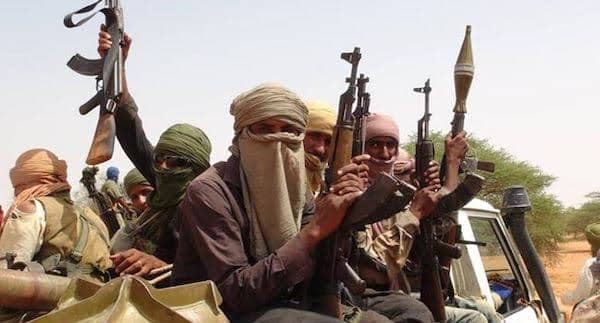
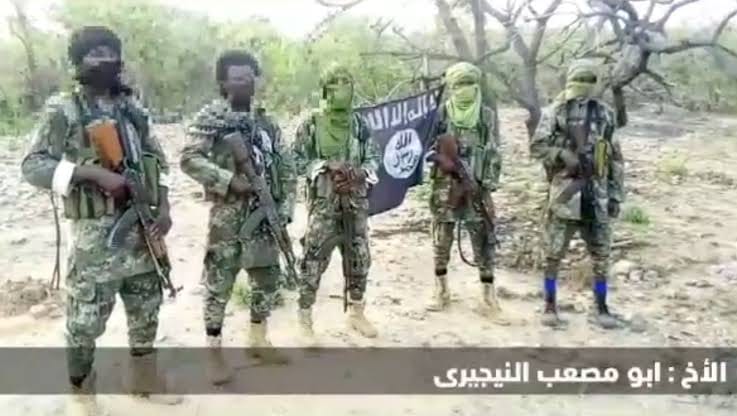
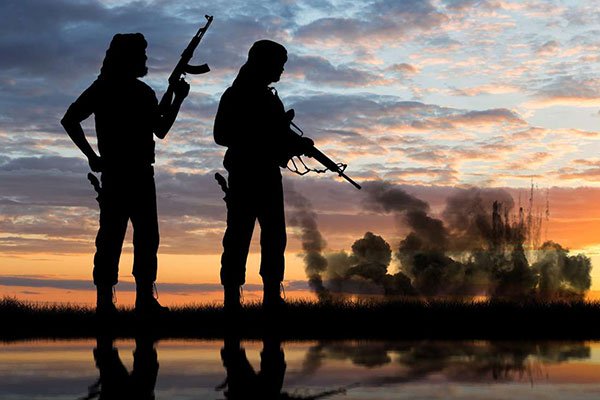
Reports from Maiduguri, the capital of Borno State, have disclosed how Boko Haram fighters hit Maiduguri ahead of the visit of President Muhammadu Buhari.

Three communities at Ngomari airport general area in Maiduguri were reported to have been attacked.

The militant group was believed to have targetted the airport a few minutes before the president’s arrival.

According to a source, the communities were attacked with rocket launchers.

He added that the attack has killed a few people and destroyed residential areas and properties.

One of the residents confirmed the happening, saying: “One of the rockets landed close to an office, and two landed in the Ngomari Ayashe community, killing four children, one in Moranti.”

“I can confirm that a 16-year-old child, Walida, was affected in the attack. She died instantly; she was cooking when her head got destroyed by the rocket,” he added.

Although the authorities have not commented, at least 25 people reportedly sustained injuries from the attack.

President Buhari, are you really a former military leader?

By Mallam Musbahu Magayaki

The insurmountable insecurity dilemma claiming the lives and worldly belongings of innocent Nigerians almost every day for decades is frighteningly very distressing. To the extent that Nigerians have begun to lose complete trust in you before being voted into power, you have assuredly stated that you might put a stop to the long and horrendous event.

Alas! The situation has remained unchanged, rather than erupting suddenly like a wildfire. While Nigerians believed that by the time you were sworn in as the President of Nigeria, all the tough catastrophes would be gone because of the promises you unquestionably made during your campaign. But annoyingly, it has now been revealed that you are not well prepared for the mantle of leadership or that you have lost your administrative blueprint and decades of experience as a former military general.

Sir, no single individual would, in his right senses, expect and even foresee the emergence of the current annoying unfolding scenario in your regime. Why so? If I can vividly remember, on Thursday, February 26, 2015, you pledged to defeat Boko Haram insurgents and other criminal sect activities. You charged the former President Goodluck Ebele Jonathan that “If the government of President Goodluck Jonathan had deployed the same resources to fighting Boko Haram as it had for political ends, the army would have rescued the more than 270 schoolgirls abducted by the extremist movement in Chibok local government area of Borno State” at Chatham House in London on that very Thursday.

Sir, I am sure you are fully aware of the killing and kidnapping of Nigerians almost daily. These ruthless fellows (bandits) have now turned patriotic Nigerians into sleeping with one eye open for fear of being gruesomely killed and attacked by these unpatriotic and salacious humans. No rational father would senselessly have peace of mind while his children were atrociously killed without due course.

Notwithstanding, it’s now clear that these bloodthirsty bandits don’t understand any other language than that of fire-for-fire. However, considering their day-to-day unlawful operations, they don’t want to give up until they are awfully and massively defeated. Therefore, in collaboration with other sub-security units from various states within the federation, the government should take decisive action against those who are traumatizing the peaceful condition of the people as their primary priority.

In conclusion, there is no pathetic excuse Nigerians can subsequently offer you for failing to protect their lives and property. As you swore to protect Nigerians in all possible terms, so too (both the people and their possessions) are the country’s product. If peoples’ lives and personal possessions are not well secured, no existing government would claim to cater to its people.

Mallam Musbahu Magayaki wrote from Sabon Fegi, Azare, Bauchi. He can be reached via musbahumuhammad258@gmail.com.

Miss Nigeria: Kano Hisbah debunks reports on plans to invite Shatu Garko, parents

By Muhammad Sabiu

The Kano State Hisbah Commission has debunked media reports making the rounds that it had invited the 44th Miss Nigeria, Shatu Garko, for questioning alongside her parents.

Hisbah Director, Dr. Aliyu Musa Aliyu Kibiya, confirmed the development to Freedom Radio, Kano.

He added that the commission, through its Commandant-General, Sheikh Harun Ibn Sinah, has never made such an invitation; it only tried to show the implications of such an event and contest in Islam to both Garko and her parents.

The 18-year-old Shatu Garko became the first Kano-born lady to be crowned Miss Nigeria at an event in Lagos on Friday, December 17, 2022.

However, Garko’s victory has sparked controversies, especially on social media. Many people, mainly among northern Muslims, describe the event as indecent, adding that it’s against the teaching of Islam and Hausa culture.

Why Geography Matters: The need of Geospatial Technique in Addressing Nigeria’s Security Challenge (I)

By: Murtala Uba Mohammed (PhD)

Recently, Nigerian government took an audacious step by throwing a baby and its bath water not only into a river, but to a deep and distant ocean. It was in 2013 that the country in its attempt to reform its educational system particularly at secondary school level, relegated some important subjects to the background; bringing up some newer ones. Subject such as geography and history suffered from this restructuring of making these corner stone subjects- in terms of what they offered in the understanding of man and his physical environment as well as the historical explanation of the past to build the future. Making these subjects optional at the crucial level of building an imprint of human-environment relationships in the minds of our younger is synonymous to drawing the country in terms of a better well-informed society. While one may not completely agree with the argument advanced by the authorities that the reform was made to introduce subjects that aimed at fostering self-reliance and entrepreneurship with a view to curving the rate of unemployment in the country. It is important to note that the reasons given were quite inadequate to justify the need for the replacement. It is imperative to note that a lot were written to convince the government on the need to revert back the curriculum to the status quo, especial considering the importance of the subjects in creating national consciousness and self-awareness in the case of history and on learning about the country and of being foundation to most environmental related discipline in the case of geography. This writing decides to differ a bit, approaching the issue from the perspective of national security challenges.

Nigeria is currently witnessing the most difficult challenge it ever faced in its history and territory; no part of the country is presently spared from one or more security threats. From its relatively wetter southernmost part to its most-drier north, the country is at war with itself, facing threats such as banditry, armed robbery, ethno-religious bigotry, tribal clashes and political thuggery. The threats of Boko-haram, IPOB and to a lesser extend Afenifere are sufficient enough to sink the already overloaded and about to crash ship called Nigeria. Most worrisome, is the daily reportage of killing of its citizenry by both known and ‘unknown devils’ that terrorize almost all part of the country. This is most especially in Northwestern Geopolitical Zone where daily killing and abduction for ransom has become a norm, more especially in Katsina, Zamfara and Sokoto States. In the mid of crisis at the periphery, one hopes the center to be secured; but in the case of Nigeria the ailment has afflicted all her body. Niger state is now so powerless that ‘bandits’ are now having their field days in many parts of it. Just like Niger, Kaduna to Abuja Road is so unsecured that travelers to and from Abuja were compelled to go for rail. Even in the nation’s state, the suburb is unsecured as most part of the country. While most people end up in nostalgic mood, recollecting mainly the past peaceful experiences the country witnessed and some such as general TY Danjuma had long time condemned the country as ‘failed state’, this article hopes the issue will be addressed by deploying the knowledge of this important subject. It is (without any doubt) through geography that colonialism was achieved in the past and it is through it that societies were both dissemble and assemble, creating new states and modifying many ones. The subject can equally be used as discussed below, to arrest the security situation of Nigerian State.

While the values of the geography are so much, this piece highlights some of security related areas in which geography would be of critical support:

  1. Regional Planning

As a discipline geography focuses on space which includes location and its attributes. In order to achieve the aim of place description, geography pays attention to details of location and tries to distinguish one location from another. Doing this helps in identifying uniqueness of an area which forms the basis for regional planning. Because each region is unique, its planning is based on its distinct characteristics which are used to harness its economic potentials. A vast country like Nigeria that traverses many climatic, geological, edaphic and demographic regions, is blessed in some way and have a particular advantage that can be tapped. The inhabitant of the region might have idea about this opportunity(ies), but it is government initiatives that can foster the best use and utilization of them. Regional planning especially at moderate to large scale is a domain of geography, and candidates with sound knowledge of geography particularly its regional sub-field will help a lot in regional planning which is conspicuously missing in the country. The way we are today is that the various entities that make up of the country are lacking in unique contribution each can offer to the country’s development. While governments are doing a lot, they hardly consider regional specialization in their programmes. They are rather imitating one another, and in many instances compete in urban based project. Recently, states in Northwestern Nigeria were suspected on competing in building bridges and underpasses in urban areas rather rural and agricultural development projects. This urban based development may only worsen the situations of the already poverty striking states by encouraging rural-urban migration which put more pressure on urban infrastructure and deprived hinterland its able builders. A combination of edaphic, eco-climatic and relief factor alone can be used in zoning the country for agricultural production which will not only cushion the current poverty level in the country, but foster regional complementarity and economic diversification. The country is also rich considering the various mineral resources gift of its diverse geology which can also the basis for planning. Also its cultural landscape and physiography can form the base for regional planning.

  1. Identifying and Modelling the Crime Hotspot

One of the recent and most used geographic tools is the geographic information system (GIS). As an information system GIS is unique in that it gives emphasis to location in all its analyses; it is the capability of GIS to analyze display and model location-based events and situations that makes it appealing to all other fields and disciplines. Crime and conflicts have both temporal and locational attributes and can therefore be addressed through GIS. With GIS pattern(s) of conflicts and criminal activities can be established in more robust way, and can be arrest in a better way. GIS can tell the areas of high crime probability often known as hotspots with high level of precision. Modelling and prediction can be done for various crime types. This is essential for security and safety of the territory. With good data recording, digital based maps can be produced to inform users on security situation as they travel via road or train. GIS integrates various layer of information which can be used to explain and describe why crime happened in a location or time trajectory. When GIS is employed with it multi-layer combination capability, it has higher tendency to explain three key security questions of when, where and why. With answers to this question management of crime become becomes better. Doing all these require manpower with good background in geography.

Dr. Murtala teaches geography at Bayero University, Kano and can be reached via email: murtalamuhammadu@gmail.com

FG declares public holidays for Christmas, Boxing Day, New Year

By Uzair Adam Imam

In celebration of Christmas, Boxing Day and New Year, The Federal Government of Nigeria has declared Monday 27th, Tuesday 28th December 2021 and Monday, 3rd January 2022 as public holidays.

The declaration made by Rauf Aregbesola, Minister of Interior, was contained in a release signed Wednesday, 22nd December 2021, by Dr Shuaib Belgore, Permanent Secretary of the ministry.

Aregbesola also stated that peace and security were two critical conditions for economic development and prosperity.

He urged Christians and Nigerians to “make the best use of this festive period” and pray for the total eradication of the lingering issue of insecurity that is bedevilling the country

Speaking about Corona virus pandemic, the minister urged Christians to “moderately celebrate the festival without large groupings and observe all the protocols stipulated by medical authorities.

“Take it as a point of personal responsibility to prevent the spread of the virus,” he added.

El-Rufa’i names new Governing Council for KASU, other state institutions

By Sumayyah Auwal Ishaq

The Governor of Kaduna State, Mallam Nasiru El-Rufa’i, has approved the appointment of new governing councils for the Kaduna State University (KASU), Nuhu Bamalli Polytechnic, College of Education, Gidan Waya, College of Nursing and Midwifery, and a board for the Barau Dikko Teaching Hospital.

The Special Adviser to the Governor on Media and Communication, Muyiwa Adekeye, said on Tuesday in a statement that “Hussaini Adamu Dikko is appointed chairman of the Governing Council of KASU, with Ismail Sanusi Afieza representing the organized private sector, and Dr Tanimu Muazu Meyere, Habiba Sani and Charity Shekari.”

“Other members of the KASU Governing Council include the Vice-Chancellor, the Deputy Vice-Chancellor, Executive Secretary of the National Universities Commission, two representatives of the KASU Senate, one person appointed by the Congregation, one person appointed by Convocation, the Permanent Secretary of the Ministry of Health, the Permanent Secretary of the Ministry of Finance, and the Registrar as secretary of the Council” the statement added.

He further stated that “Dr. Ishaya Dare Akawu will chair the Governing Council of Nuhu Bamali Polytechnic, Professor Binta Abdulrahman was named the chairman of the council of the College of Education, Gidan Waya, and the council of the College of Nursing and Midwifery has Prof. Andrew Suku as chairman.”

You may recall that The Daily Reality had exclusively reported how the absence of Governing Council in KASU was creating ripples in the selection of the new Vice Chancellor for the university. However, the latest development is believed to ease the tension at the university.

Learn to listen more, talk less

By Amara Sesay

History is replete with cases of people who listened and excelled as well as those who rebelled. In any case, there was always an exchange of content, and there was a reaction, too.

If anything has mattered over the last 15 or 20 years, it is the shortage of listeners. We have an economy that encourages speed more than anything, and in such cases, the first thing that is suspect is the patience to be calm, which is essential to listening.

And because it’s a lot of hard work to listen, people can only pretend and get away with it. So instead of the total body, which includes listening with the ears, heart and limbs, most people only listen with the tongue. And truth be told, the worst form of ignorance in the world stems from the inability to listen.

To listen with the tongue is to assume you don’t need to hear what others have to say and that you are only quiet out of a false sense of courtesy. It means you already have a lot to contribute, and no new information will be crucial to you. It means you are “loaded.”The problem with such an assumption is that it leaves you with something more dangerous than ignorance; it’s the delusion of knowledge.

Many individuals and civilizations would have made it to the promised land if only they had listened and obeyed. But, unfortunately, most people found delight in their ability to rebel.

While questioning the status quo is neither intrinsically wrong nor evil, the act of listening, even when an enemy is involved, is critical to success.

My advice to the younger generation is: listen more and talk less. That’s the best way to celebrate the gift of two ears and one mouth.

Amara Sesay wrote from Lagos. He can be reached via amarasesay.amir@gmail.com.

Fulani: The endangered species of Nigeria (II)

Ahmadu Shehu, PhD.

The first part of this essay published here highlights the necessary ingredients for genocide which are vividly in the advanced stage in Nigeria against the Fulani, one of the largest ethnic groups in the country. The socioeconomic and sociopolitical conditions that preluded genocide in various countries worldwide have been well documented in history books. Therefore, the worst anyone could do is to fail to see the looming disaster in Nigeria.

Decades ago, some political leaders had set the ball running when Bola Ige, a prominent Yoruba leader, called Fulani the “Tutsis” of Nigeria. Threatened by Fulani leaders’ socioeconomic and political clouds, politicians across the country who saw the Fulani not just as rivals but as a threat to their desired political hegemony borrowed a leaf from Ige’s playbook.

Those were the framers and promoters of diabolic stories against the North and northerners, especially the region’s political leadership. The narratives of “owners of Nigeria”, “northern oligarchy”, “Kaduna Mafia”, and such epithets as the cabal, northern domination, Islamization agenda and the completion of Danfodio jihad were given persistent, often aggressive, currency in the Nigerian public domain.

Another set of narratives to debase the intellectual competence and meritocracy of the North is put behind the federal character, with any northerner attaining success being assumed to be a beneficiary of some affirmative action, sheer luck or even the corrupt Nigerian system, regardless of their proven intellectual and mental capabilities.

This constant and persistent brainwashing has blindfolded a large chunk of southerners to the extent that many of those I meet believe that being Hausa-Fulani, even the richest black man on earth – Alh. Aliko Dangote – did not actually earn his wealth. So some of them would ask if I got some favours to be able to obtain a PhD from Europe, or question my academic job in Nigeria even when I teach them in Hamburg, Cologne or Vienna.

An average southerner has been made to believe that a northerner is an empty shell, a dullard, an illiterate who is incapable of any mental or physical success. Of course, these deliberate, false narratives are geared towards maligning and disorienting the North. But, the North is one large, diverse, but culturally interwoven community that cannot be beaten as a whole. There is, therefore, the need for a scapegoat.

Indeed, the orchestrators of this scheme got a few points wrong, but one thing they got right was the point of attack, i.e. the Fulani. Yes, Fulani, because they are the traditional rulers. They are the religious leaders. They are the political leaders. They have become Hausa-Fulani, and therefore the focal point of unity. The cultural war of the ’70s has failed to disunite the North simply because the Fulani historical and cultural orientation was left intact.

However, an opportunity presented itself when the media stereotyped the Fulani as herdsmen in all the reportage around herder-farmer conflicts – a stone-aged human resource conflict that has existed for ages – but only to be used as a tool for demonization and stereotyping of the Fulani people.

Populist politicians ala Ortom, Darius and their cronies in the North and South of the Niger seized the moment to first and foremost cover up their asses against the glaring failures of their administrations and to complete the agenda for the social, if not geographical, disintegration of the North. It was yet another tool for fighting a perceived Fulani president.

Throughout 2015 – 2019, the electronic, print and social media was flooded with the “Fulani herdsmen” stories. Headlines, editorials, columns, opinions, misinformation, disinformation, fake news – the word “Fulani” became the vogue in the media.

Today, this stereotyping has taken us a step closer to the looming genocide. Displaced Fulani herders in the northwest have become easy targets for recruitment into banditry and kidnapping. While arms dealers, informants, financial collaborators from other ethnic groups have established a business cartel in robbery, banditry and kidnapping, young, impoverished Fulani herders have become the foot soldiers that carry out these physical acts of crime.

Their knowledge of the forests and ecological terrain, their military-like lifestyle, bravery, coupled with the excruciating economic conditions, have made these unsuspecting lads easy prey of the city-based cartels. These are nomads who knew nothing, had nothing, and depended on nothing other than livestock, which is no longer a dependable source of livelihood, as indicated in the first part of this essay.

Millions of nomadic and sedentary herders’ continued destitution provided a vast army for crimes and criminalities we see today. This fact has been confirmed by research and is attested to by the governments. For example, in a recent in-depth study of banditry in northern Nigeria, Dr Murtala Rufa’i of Usman Danfodio University shows that bandits are victims of circumstances and tycoons from all other ethnic groups in the country.

Although this has been a known fact, have we ever heard of Igbo arms dealer, Hausa kidnap kingpin, Bagobiri kidnapper, Kanuri Boko Haram, Nupe informant, etc.? Do we know of Hausa yan-sa-kai, Bagobiri yan banga, etc.? How many people know that bandit Turji is actually ethnically Bagobiri and not Fulani? Why do we hear of “Fulani kidnappers” or “Fulani herdsmen”?

The implications for this sweeping criminalization of a whole community are as dangerous as they are numerous. Firstly, it has set the most united, cohesive ethnic groups, Hausa and Fulani, on each other’s throats. This is the arrow that might break the camel’s back in the scheme of setting the North on fire.

Secondly, it has criminalized the most important northern ethnic group in the sociopolitical front, making political cohesion impossible. Thirdly, it legitimizes crime and criminals by ascribing them to ethnicity or other human value systems. Fourthly, and sadly, that is the last bus stop on the road to Kigali.

When a whole community, ethnic group or society is viewed as criminal, worthless and or dangerous, the natural reaction is a sweeping, conscious and deliberate elimination of the community. Their elimination becomes a duty as the larger society feels unsafe in their presence. And yes, these feelings are illusions but have been entrenched in people’s minds to the extent that restraint becomes impossible.

Today, people (including Fulanis) consciously or subconsciously talk of killing the “Fulani” in Zamfara, Sokoto or Katsina. But then, in reality, when you kill Turji or his lieutenants, you do not kill Fulani. Because when you killed Shekau, you did not kill a Kanuri, neither did you kill Igbo by killing Evans. You have, in reality, killed a blood-thirsty criminal.

Now, why is the Fulani case different? Why are the media and various sections of this country bent on demonizing millions of Nigerians in the bad light of a few rugged criminals? At the risk of sounding conspiratorial, I will give my take in the next part of this essay.

Book Presentation: Audu Bako the best Kano State governor ever – Dantata

By Ibrahim Siraj Adhama

A prominent Kano elder statesman, business mogul and philanthropist, Alhaji Aminu Dantata, has described late Audu Bako as the best governor ever in the country. Dantata was speaking at a book presentation as one of the only two surviving members of Audu Bako’s cabinet, the other being Alhaji Tanko Yakasai, who was absent due to health challenges.
The book titled “Kano State Under the Administration of Audu Bako, 1967 – 1975” was written by Dr A’isha Ni’ima Shehu of the Department of History, Bayero University, Kano.
Alhaji Dantata, who served as Audu Bako’s Commissioner of Economic Planning, said Kano owed its development to the purposeful and visionary leadership of late Audu Bako, whom he described as honest, foresighted, God-fearing and prudent in the application of resources. He said if all leaders were like Audu Bako, Nigeria would have long passed its current level of economic development.
Blaming external influence for Nigeria’s slow development, the elder statesman stated that the country would have been better if it were to be allowed to develop at its natural pace. He added that Northern Nigeria is much more endowed with natural and mineral resources than the Southern part of the country. However, he bemoaned how those resources remained largely untapped.
The book reviewer, Dr Tijjani Naniya, commended the author for writing the book. He said it contains an assessment of Audu Bako’s laudable achievements in education, infrastructure, administration and economic development.
Extolling the man he dubbed as a lover of education and agriculture, Dr Naniya said Audu Bako’s projects are too numerous to mention. He identified Tiga and Bagauda dams, Gidan Murtala, Audu Bako Secretariat, Kano Zoological Garden, Bagauda Lake Hotel, Murtala Mohammed Way, Falgore Game Reserve, Daula Hotel as some of the projects done by Audu Bako.
He mentioned others include Kundila and Gwammaja Housing Estates, WRECA, and hundreds of primary and post-primary schools. He said when late Audu Bako established the College of Arts, Sciences and Remedial Sciences, alias CAS; many governors emulated him by establishing similar colleges in their states.
Earlier in his welcome address, the Vice-Chancellor, Bayero University, Kano, Professor Sagir Abbas, who hosted the event, said the University was always willing to be part of similar scholarly efforts aimed at preserving history for upcoming leaders.
Chairman of the occasion, Alhaji Isyaku Umar Tofa, who was also one of the youngest staff of Audu Bako, said the first military governor approached leadership with great determination and that no honour can compensate for what late Audu Bako did for Kano.
On his part, Kano state governor Dr Abdullahi Umar Ganduje announced a donation of ₦10m and pledged to support the reproduction of more book copies for use by schools and libraries in the state. He lauded the visionary leadership of the first-ever Kano state governor. He commended him for the numerous projects he undertook, many of which are not only still in use but have continued to serve as the foundation for many developmental projects up to this moment.
Other donors include Alhaji Aminu Dantata with ₦5m and another ₦15m to the family to do a project in Audu Bako’s memory.
The event attracted participants from among members of the academia, politicians, traditional rulers, business community, media, as well as members of late Audu Bako’s family.

We will review our intended industrial action—ASUU

By Muhammadu Sabiu

The National Executive Council (NEC) of the Academic Staff Union of Universities (ASUU) said although the federal government refused to honour the two parties’ 2009 agreement, it would have to review the next possible action to take.

The union made the disclosure in a statement titled “ENOUGH OF THE BLACKMAIL” after it held an emergency meeting at its Festus Iyayi National Secretariat University of Abuja, on Saturday, 18 December, 2021.

Recall that ASUU had vowed to embark upon industrial action to strongly protest and air its grievances due to government’s failure to honour the many agreements they made years ago.

The Nigerian academics’ body acknowledged “that government has failed to satisfactorily address all the issues raised in the 2009 FGN-ASUU Agreement and subsequent MoUs and Mos”, adding that it has “resolved to review the situation at a later date with a view to deciding on the next line of action.”

It also lamented how some agents of the government were mischievously reducing the demands of the union.

“NEC was worried by the spirited efforts of government agents to reduce the demands of ASUU to a regime of intermittent payment of watered-down revitalisation fund and release of distorted and grossly devalued Earned Academic Allowances (EAA),” the body says in the statement.