Admin

Kannywood movie review: ‘Light and Darkness’

By Saddam Ungogo

Light and Darkness (2018) is one of Kabiru Musa Jammaje’s Kannywood films in English. He is a fantastic filmmaker with ideas, but I always feel it isn’t a good idea to make such films. If it is something worth doing, Ali Nuhu would have made a few, Karan Johar would have made a Bollywood film in English. Instead, however, we saw indigenous films winning prestigious global awards.

At the Oscars, we even have an award category called ‘The Academy Award for Best International Feature Film’ (known as Best Foreign Language Film before 2020). It is given to feature films produced outside the United States with a predominantly non-English dialogue.

Directed by Hassan Giggs, written by Ilyasu Umar Maikudi and co-produced by Kabiru Musa Jammaje and Abubakar Bashir Maishadda, Light and Darkness is a story that revolves around Alhaji Balarabe Maikadara (Rabi’u Rikadawa), who is allergic to western education. The movie was set in an urban Hausa society of the 2000s, and it turned out to be a domestic drama with ‘education’ as its central theme.

Alhaji Maikadara was a well-endowed businessman. He married his second wife, Raliya (Rahma Sadau), with a promise to let her further her education, but after having her under his watch, he transgressed his end of the bargain. He had two grown-up children, Abba (Nuhu Abdullahi) and Basma (Maryam Booth), with his late wife. He chased Basma out of the house when she protested his intention to give her hand out in an arranged marriage. Instead, Basma preferred to go to school.

The film tries to identify the significance of education, paint it as light, parade the remonstrance of ignorance, and sketch it as darkness.

The film has good intentions, but it lacks preparation. Something tells me that the film cast was selected based on who they are or because they could speak English. Stories are supposed to call for actors.

Viewers were rushed through the storytelling, the story was stitched with anxiety, and the dialogues were incompatible with the character profiling.

Jammaje decided to be the line’s director, which I think was a blunder. He assigned uneducated characters to speak big grammar and talk with idiomatic expressions. Perhaps he was trying “to use the opportunity to teach English to viewers”, as he bragged in a Daily Trust interview on January 7, 2017.

Throughout the movie, I asked myself what audience the filmmakers had in mind while putting it together. Staged in an urban setting, written in English and with education (girl-child education included) as its cardinal message, this story was huge. Its target audience should be rural Hausa communities where there is a high level of out-of-school young people and children, where western education is still not condescended. If that is the case, the language used in transmitting this message must have spooked away from the suitable audience of the movie.

This is 2022. The movie was made in 2018. Maybe nobody would even care about this review, even the filmmakers themselves. Jammaje made many movies after this one, including The Right Choice, which his co-producer Maishadda called the “biggest Kannywood project ever in terms of finance”,…costing N35m.

The Right Choice (2020) was worth N35m. It featured top Nigerian stars from both Kannywood and Nollywood industries, such as Sani Mu’azu, Segun Arinze, Sola Sobowale, Nancy E.Isime, Enyinna Nwigwe and Ali Nuhu.

With The Right Choice, Jammaje Production must have learnt that they needed to be more pragmatic and made a complete Nollywood movie. Or, maybe, a Nigerianized film so that Jammaje could teach his beloved English language through his role as he would get educated cinema-goers lining up for his work anywhere around the world.

As for Hausa consumers like me, do not dare bring something like Light and Darkness ever again.

You might be promoting my culture with Light and Darkness, but honestly, you were killing my language!

Saddam Ungogo is a Kanp-based broadcaster and singer. He can be reached via candidsaddam@gmail.com.

I’ve confidence about my 2023 presidency ambition—Tinubu

By Muhammad Sabiu

Former Lagos State governor and leader of Nigeria’s ruling All Progressives Congress, Bola Ahmed Tinubu, has expressed his confidence that he would win the 2023 presidential election, noting that stakeholders’ reactions are behind his optimism of becoming the president.

Mr Tinubu stated this when he paid a visit yesterday to Rashidi Ladoja, a former governor of Oyo State.

Mr Tinubu was quoted as saying, “Life is a challenge, and you must be ready to confront challenges and overcome. I have the confidence that I will overcome any form of challenge.

“The reactions of critical stakeholders to my presidential ambition have been very positive, encouraging and overwhelming, and these have spurred me on with the strong conviction that we would succeed and emerge victorious after the election.

“We are forging ahead, and with the strong support of the masses of Nigerians, we are going to achieve a resounding victory.”

Recall that the APC leader had told President Muhammadu Buhari that he was interested in contesting for the office of the president come 2023.

Kogi Governor hosts Liberia’s Vice President to dinner in Abuja

By Ahmad Deedat Zakari


The Governor of Kogi State, Alhaji Yahya Bello, hosts the Vice President of Liberia, Dr Jewel Cianeh Taylor at his Abuja residence on Sunday. 


The Chief Press Secretary to the Governor, Onogwu Muhammad, disclosed this in a Facebook post. 

According to him, the governor is in Abuja to attend the Progressive Governor’s forum meeting, which is to hold this evening.


He also noted that the governor attended a dinner organized by the female members of his administration in honour of Liberia’s Vice President.

On the need for mass transit in Kano

By Kabir Shariff

Kano city is the largest city for inter and intra-state migration in Nigeria. Yet, a city with over 6 million inhabitants is still scrambling for an efficient mode of transport in 2022. It is time for Kano to respond to the delinquent call for urban city mass transit. The commercial hub for Sub-Saharan states should be in a better position in terms of a good transportation network.

A significant milestone was accomplishment back in 2013 when the state government banned the operation of the reckless motorcycle taxis alias Dan Achaba. It’s time the government build upon that by making an informed decision to set the city in the right direction to improve mobility.

An efficient public transportation system is an essential social infrastructure that fast-growing cities like Kano should have to contribute to blossom economic and social activities in the state. But, unfortunately, although Kano city has become a champion in constructing flyovers, overhead and underpass tunnels in Nigeria since 2013, the city is flooded with thousands of tricycles that make life miserable for road commuters.

A prerequisite to having a good transportation system is to have a decent road network in the city. The decent road network in Kano since 1999 is the work done mainly by the state administration of 2007-2011. Although the administration did not construct any fancy flyovers, the Kanawas enjoy the roads built more than the flyovers. The central boulevard in Kano will be in good condition for some years to come, but Kano’s streets and minor roads are in poor condition.

The thousands of tricycles plying the busy roads of Kano need to be checked and regulated. Without proper transport regulation, Abuja will have been in a similar condition as Kano at the moment.

A few ideas that might assist in easing transportation difficulties is by mass transit buses. Developed cities worldwide, including London, Paris, and New York, are still using the basic mass transit buses despite several more developed alternatives like subways, trams, and cable car transport. Developing cities like Mumbai, Cairo, Pretoria and Djibouti are well known to have efficient mass transit buses. It’s time for Kano to lead the way in providing a safe and practical mobility network for the millions of Kanawas.

Firstly, the government should prioritise the rehabilitation and construction of intracity roads to ease mobility and reduce unwanted traffic in the city, especially at peak hours.  The government should also invite private investors to supply and monitor mass transit buses with operations limited to the major boulevard in Kano.

The buses should have an affordable flat rate per trip, say N50. The registered tricycles should be limited to ply only small streets and avenues. This will put Kano in a better position in commerce and transportation. A coordinated transport system will reduce the high level of criminal activities carried out on tricycles daily.  This approach can only be practical if the government can make strict laws to regulate to assure investors confidence and minimise the risk of reverting after the administration leaves office.

Kabir Shariff writes from Cherbourg, France. He can be reached via kbshariff@gmail.com.

Improving Nigeria’s economy through agriculture

By Abdullahi Adamu

Nigeria’s economy has not been in good shape for the past five years and first went into recession in 2016. Then, in 2020, in the wake of the COVID-19 pandemic, it plunged into another recession – its worst in four decades. As a result, it recorded a gross domestic product contraction of 3.62 per cent in the third quarter of 2020.

There’s been a lot of uncertainty about where people should invest, mainly due to policy inconsistencies. This cut across various economic sectors. The poor performance of different sectors of the economy, especially the agricultural sector, has created uncertainty and unemployment. In addition, the recurring farmer-herder crisis has hurt agriculture in the country.

However, can agriculture be used to reduce the high rate of poverty and unemployment in Nigeria? Absolutely! Agriculture has the potential to reduce the high rate of poverty and unemployment in the country by employing millions of Nigerians across the agriculture value chain.

Take cassava processing as an example. Nigeria is the largest cassava producer in the world. There is much to gain from knowing the value chain of cassava, starting from production to processing and then marketing. Cassava, just like yam, is a root and tuber crop.

However, unlike yam, it can grow in relatively poor soil and low rainfall areas. Cassava and its by-products have various uses. It can be processed into starch: the cassava starch used for making paper and textiles. It can be processed into flour to make cakes, bread and biscuits. It can be processed into chips usable for animal feed. It can be processed into ethanol, which is used as bio-fuel when combined with additives. Cassava is also processed into fructose, used in the industry for sweetening fizzy drinks.

In Nigeria, we produce over 50 million tons of cassava every year, and over 26 states out of the 36 states in Nigeria produce the crop. Therefore, if we embrace good agricultural practices, the production, processing, and marketing of cassava can serve as a good tool to reduce the country’s high rate of poverty and unemployment.

It is also important to note that the most considerable portion of the population of Nigeria is the youth. The percentage of youth (age 15 – 35) among the unemployed population is 55.4 per cent. So, with increased youth involvement in agriculture, the sector can reduce youth unemployment.

Agriculture is the easiest and fastest route to empower the most vulnerable, especially the youth. However, it also needs improvement in the micro and macroeconomics of the country.

It is imperative to turn around the economic fortunes of Nigeria through the agricultural revolution, especially in the face of dwindling revenue to the governments due to the global financial crisis aggravated by the COVID-19 pandemic.

The country needs to sustain the present agricultural revolution tempo and bring about social engineering that will inspire more young people and women to engage in mechanised farming.

Abdullahi Adamu wrote via nasabooyoyo@gmail.com.

English Tenses I

By Nuru Aliyu Bauchi

Permit me a little space in your new but rapidly growing and widely read newspaper to contribute from my little knowledge of English on English Tenses. Tenses are among the most important but often neglected and poorly mastered topics, even among graduates of the English language. Two incidents involving two graduates of the English language from different universities recently made me dumbfounded.

The first incident was a Corp member posted to serve at one of the secondary schools in my home state. I asked her to list the twelve English tenses but could only provide five (not accordingly). She confessed that the last time she had a lesson on tenses was in secondary school. The second was another graduate of English seeking a teaching job. I was one of the interviewers. Again, I asked her to list and exemplify the twelve English tenses. Likewise, she could only supply four randomly. I always wonder what is so tricky in mastering English tenses, considering that one must use them whenever one writes or speaks. 

We have three (3) main tenses. These are 1. Present tense 2. Past tense 3. Future tense. Each of the three tenses has four (4) aspects, as can be seen below:

PRESENT TENSE

1. simple present tense

2. Present continuous tense

3. Present perfect tense

4. Present perfect continuous tense

SIMPLE PRESENT TENSE

This tense expresses habitual/repeated actions, general truth, sports commentary, or news heading. Infinite or ‘s form of a  verb is used alongside the subject (noun or pronoun). If the subject is either first person (I, we) or second person (you) or third person plural (they), use an infinitive form (go, wash, brush, fly, teach). But, if the subject is third person singular (he, she, it, Nuru, the boy, the teacher) or any singular indefinite pronoun (each, one of the…, everybody, someone etc.), use and ‘s form ( goes, washes, brushes, flies, teaches).

In other words, if the subject is singular, use a singular verb, while if the subject is plural, use a plural verb. REMEMBER that singular nouns do not have an ‘s (bag, boy, car, house), but singular verbs have an ‘s or ‘es( teaches, goes, cooks, sweeps, etc.). E.g., Subject + verb(s).

Example

1. Nuru goes to school every day.

2. The children play football every day.

3. Dogs bark.

4. I like ice cream.

5. Mr president presents the 2022 budget.

6. Everybody knows the answer.

COMMON MISTAKES

1. I goes to school (wrong)

2. He brush his teeth every day (wrong)

3. Musa teach English language (wrong)

PRESENT CONTINUOUS TENSE

This tense is a bit simple because it has only subject+auxiliary verb (is or are ) + verb in -ing form. This tense is used for ongoing activities.

Example

1. The boy is reading.

2. The girl is cooking.

3. The students are writing.

4. We are jumping

5. He is sleeping

COMMON MISTAKES

One should be careful to avoid using nouns and pronouns together as follows

1. Adamu he is reading. (wrong)

2. Zainab she is cooking. (wrong)

To be continued

Nuru Aliyu Bauchi teaches at Abubakar Tatari Ali Polu (ATAP), Bauchi State. He can be reached via nurubh2015@gmail.com.

Buhari, Osinbajo, others honour soldiers on Armed Forces Remembrance Day

By Ahmed Deedat Zakaria


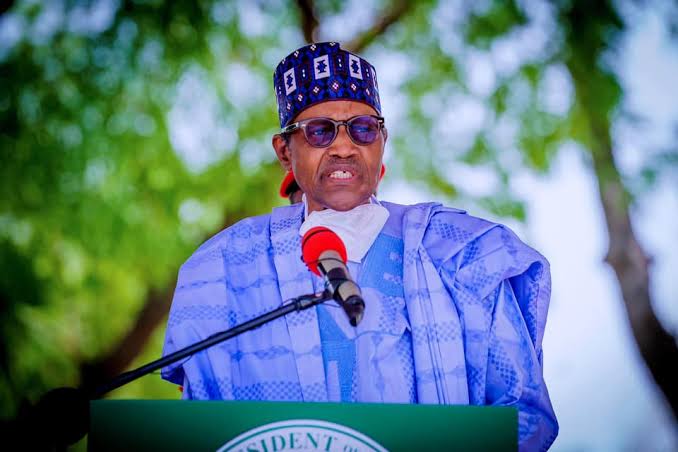
President Muhammadu Buhari led the nation alongside the Vice President, Professor Yemi Osinbajo, the President of the Senate and others in marking the Armed Forces Remembrance Day Celebration in Abuja.


The ceremony held in Abuja on Saturday is an annual event to honour and appreciate Nigeria’s living and fallen heroes.


The event involved the laying of wreaths at the National Arcade in Abuja. First to lay the wreath is usually the President, followed by the Vice President, the Senate President, Speaker, House of Representatives, Chief Justice of Nigeria and others. 


This tradition was duly observed by the President and the Vice president, and others in the usual manner.

Kano student emerges overall best, wins Gold Medal award in India

By Haidar Hasheem Kano

Kano State continues to mark its name in gold as its indigenes emerged best in different academic fields in national and foreign universities.

Engr. Yahaya Hassan Labaran, an indigene of Kano state from Kura local government, emerged as the overall best student for the 2020/2021 academic session with a CGPA of 9.9 out of 10, at prestigious Sharda University, India.

Engr. Yahaya graduated with first-class in Civil Engineering graduate of Kano University of Science and Technology (KUST), Wudil, in 2017. He won a fully-funded scholarship to study Master of Technology in Civil Engineering with a specialization in Construction Management in India in 2019.

In addition to being the university’s overall best student, He also won a Vice-Chancellor’s Gold Medal award for securing the 1st position in the Master of Technology course at the School of Engineering.

Engr. Yahaya stands out to be the best among hundreds of students from different countries across the globe.

According to his sighted CV online, Yahaya has numerous publications to his name and membership in professional organizations such as the American Society of Engineers, the Nigerian Society of Engineers, and 11 others. In addition, he attended over 40 conferences, seminars, and workshops.

Apart from that, he has completed numerous professional courses at various universities worldwide, including the University of California, Irvine, Georgia Institute of Technology, IE Business School, and the University of Geneva, to name a few.

US man who faked death to evade rape charges found alive in UK

By Khadija Muhammad

So many atrocities and crimes against humanity continue to grow everyday in the so called  developed nations, however, their justice system is powerfully functional, as it never allows a criminal to go unpunished no matter who he is, how smart he seems to be or how highly placed someone is. This is a report of Nicholas who evaded justice but a functional judicial systems trails him to his hiding place.

According to Aljazeerah, “Nicholas Alahverdian, 34, who fled the US to evade prosecution, has been arrested in Glasgow after being hospitalised with COVID.

The fugitive, who lived under an assumed name of Nicholas Alahverdian, was arrested by police in Glasgow.

Nicholas is a Rhode Island man who is believed to have faked his death and fled the US to evade prosecution in Utah and other states. He has been apprehended in Scotland after being hospitalised with COVID-19, authorities have said.

TDR’s source disclosed that “Nicholas Alahverdian was discovered after developing a serious case of the coronavirus and being placed on a ventilator at a hospital in Glasgow, Rhode Island State Police Major Robert Creamer told The Providence Journal on Wednesday.

Alahverdian 34, who was wanted by Interpol, now faces extradition to the US to face a charge of first-degree rape in Utah in 2008.

Court documents unsealed on Thursday show Alahverdian met a 21-year-old woman on MySpace in 2008, when he was living in Orem, Utah, and going by the name Nicholas Rossi, WPRI-TV reported.

The woman said that she ended the relationship, but that Alahverdian owed her money, promised to pay her back and instead sexually assaulted her in his apartment.

Utah County Attorney David Leavitt’s office said on Wednesday that DNA evidence collected at the time was not tested until 2017 as part of a state effort to test backlogged rape kits. The Utah evidence ultimately came back as a match to a sexual assault case in Ohio.

“Investigators also learned that Nicholas Rossi had fled the country to avoid prosecution in Ohio and attempted to lead investigators and state legislators in other states to believe that he was deceased,” Leavitt’s office said in a statement. “Mr. Rossi was discovered to be living under an assumed name in Scotland.”

Rhode Island State Police have also said he is wanted in that state for failing to register as a sex offender, while the FBI has said he is also wanted in his home state of Ohio on charges he took out credit cards in his foster father’s name and amassed more than $200,000 in debts.

January 15: The North will never forget

By Musa Kalim Gambo

January 15 marks 56 years since the gruesome murder of Prime Minister Sir Abubakar Tafawa Balewa and Sir Ahmadu Bello, the Sardauna of Sokoto and Premier of Northern Nigeria. To borrow a few words from Shakespeare, both were like Colossus under whose giant feet the North strode.

The description of that Saturday’s night events still haunts many of us here in the North. Though we sincerely believe that Allah must have predestined that these servants of His were not going to exceed that day on earth, and they would die from the bullets of Igbo-led soldiers. It is still a tragedy we will never forget.

On Tuesday, January 11, Daily Trust published an opinion piece written by my excellent friend Sa’adatu Aliyu titled “Igbos too deserve Nigeria’s presidency”. When I saw the title, at first, I thought it must have been written by an Igbo ethnic nationalist from South-Eastern Nigeria, for she is expressing an opinion that is utterly alien to Northern Nigeria’s political thought and discourse. One should expect this line of thinking to come from the Igbo because the Igbo elite has popularized this illusory notion of exclusion from Nigeria’s corridors of power, especially Aso Rock, as one of the major precursors for secessionist agitation in today’s Nigeria.

By the way, this is the ethnic group that produced Nigeria’s first civilian president, Nnamdi Azikiwe, in the 1960s. Then, again on the return of democracy in 1979, Chief Alex Ekwueme emerged as Nigeria’s Vice-President.

In 2019, Atiku Abubakar had Peter Obi, a former governor of an Igbo state, as a running-mate. Unfortunately, it was a wrong calculation, and we saw how it ended. One of Obi’s major sins that stained Atiku’s ticket is that as a governor in Anambra state, he reportedly came up with policies that frustrated Northern traders and artisans in his state. This sin is an expression of the general attitude towards the Northerner in the South-East region – where the Northerner is perceived with disdain and attacked in the event of any slight provocation.

Again we cannot forget Sardauna’s warning about the Igbo tendencies and quest for dominance in every little sphere of endeavour. This warning and the pain of Sardauna’s murder is still with many of us.

But it is important to understand that even without this fear of domination, the Igbo vote on its own is inconsequential in the making of a president in a democratic Nigeria. So even without January 15, which now resembles the Roman Ides of March, when power mongers assassinated Julius Caesar, the Igbo will not make it to the president.

However, suppose we have an Igbo man in the line of succession within the political equation. In that case, a natural tragedy as it happened to Umaru Musa Yar’adua may undeservedly promote an Igbo man to occupy the exalted seat of the president. And that will be a pure work of Providence that the North will pray for God to forbid.

Some people suspect that an average Northerner hates the Igbo man; that is a wrong assumption. No, the Northerner is comfortable doing business with the Igbo man, as can be seen by the presence of Igbo businesses in every village, town, and city in the North. However, in the political scene, the average Northerner is apprehensive about the Igbo man at the apex of political power. The Northerner does not want January 15 to repeat itself in terms of the elimination of our most revered political leaders.

In the end, I like to re-emphasize, as has been emphasized by many Northern political elites, we are in a democracy. An Igbo man is free to purchase a ticket on any political party’s platform to run for any political office, including the president. If he can generate the requisite number of votes to win the election, who will stand in his way?

Let it be known very well that the presidency of this country is not a baton in a relay race that would just be handed over to the next athlete standing. No, it is a tug of war with competing parties pulling against each other on opposing sides. So, no one should come here again with that sense of entitlement declaring that the Igbos deserve Nigeria’s presidency too. Instead, they should be advised to jump into the arena and fight for the seat with the full knowledge that the North’s deciding population will not clap for them. We study and honour history, its figures, and defining events in the North.

Now, on January 15, and every other day, let’s not forget to pray for Allah’s mercy and blessing upon the souls of Sirs Abubakar Tafawa Balewa and Ahmadu Bello, and all other departed heroes of ours who had the progress and development of our region and people at the centre of their hearts.

Gambo writes from Zaria, Kaduna State, via kalimatics@gmail.com