Admin

Dangote, Dantata, others named members of Zakkat Commission in Kano

By Muhammad Sabiu

Governor Abdullahi Ganduje of Kano State has named Aliko Dangote, his uncle Aminu Dantata, and Abdulsamad Rabi’u to the state Zakkat and Hubsi Commission on Wednesday.

Zakkat means a Muslim’s obligation to donate a particular percentage of their wealth to charitable causes each year.

According to the News Agency of Nigeria (NAN), the Commissioner for Information, Malam Muhammad Garba, made a declaration on the subject.
Dr AbdulMutallab Ahmed, commissioner I, and Dr Lawi Sheikh Atiq, commissioner II, are the Commission’s other members.

Following the approval of the Kano State Executive Council, the Board of Kano Zakkat and Hubsi Commission was reorganized, with Dr Ibrahim Mu’azzam Maibushira as Executive Chairman.

Representatives from the state’s five Emirate Councils, the Ministry of Information, the Ministry of Religious Affairs, as well as the Kurmi, Rimi, Kwari, and Singer markets, are among the other members.

The council also approved the formation of the Committee for Screening of International Islamic Organizations.

Job for sale: Jobseekers recount travails in Nigeria

By Uzair Adam Imam

Jobseekers in Nigeria have narrated harrowing tales of how job offer sale decimates their chances of securing jobs in a country where the national economy has remained increasingly stagnant.

According to a recent report by Bloomberg, unemployment in Nigeria has surged to the second-highest on the global list, jumping to 33.3%.

Graduates, who took to social media to condemn the menace, decried how bribery, corruption and politics militate against the growth of institutions in the country.

They argued that buying and selling of job offers are affecting almost all the institutions in the country, as it will be at the expanse of merit and skills

Fraud in employment is believed to be the reason the standard of education in the country continues to witness a fatal decline, and unemployment rises at child’s Christmas wishes.

Graduates narrate harrowing experiences

Every year Nigerian institutions produce thousands of graduates who come out to compete for the few available job opportunities.

A graduate, Usman Bello Balarabe, said that he was once asked to pay N1.2 million for a lecturing job offer.

Immediately he returned to Nigeria from India after bagging his Master’s degree. He was greeted with an outrageous N1.2 million job offer to teach at a Federal University in northern Nigeria.

Balarabe, who was initially over-excited, said his hope was dashed upon learning that it was a give-and-take offer, as he had to break the bank if he indeed wanted to land the job. 


He said, “I was all smiling when I was told, until when I heard him saying that I have to pay N1.2 million to get that offer. The amount shocked me to the marrow”.

Auwal Mukhtar Usman, a university lecturer, said recently someone shopped her job offer for N3.5 million.

He said, “A lady recently confided in me that she bought her offer for about N3.5 million to teach in one federal government agency. It’s equally disheartening how these politicians connive with the university administrators by allocating slots for them. In the end, it is the University that suffers.”

A.S Mohammed also shared his experience, saying that a lecturing offer was advertised to him for N1.5 million in June last year.

He added, “I was asked to bring a potential buyer for a lecturing job offer at the Federal University, Dutsen-Ma, for N1.5 million; no discount whatsoever.

“And it didn’t matter what course the buyer studied or what class of degree he graduated with. That incident stroke me dumb with surprises and left me paralyzed. It took me almost a month to recover from that shock.”

Pay, get promoted

From job offer sale things are worsening to ‘promotion’ for sale, as workers at various institutions in the country pay to get promoted. 

Sa’idu Mustapha Buhari argued that it is not only job offer that is sold, but also promotions are purchased.

He said, “It is not only job offers that are sold.  Promotion, advancement, transfer, release for training, among others, have their prices in some sectors.

“Though fixing Nigeria must be a collective effort, people as individuals must change.

“The bitter part of the story is that: everyone works for himself, not for the people. The sense of nationalism is totally absent among us. That’s why I support the mantra: CHANGE BEGINS WITH ME…If any Nigerian applies this, Nigeria will be fixed,” he added.

Also commenting, a media consultant, Yahya Abdurrahman, stated that the fraud is not only rocking not only the education sector.

He said, “The deeper you dig, the more worrisome information you would come across. Unfortunately, the rot is also prevalent in the Nigerian Police, Customs Service and other Security affiliated Agencies.”

Nigeria’s abuse of creativity and intellectuality

By Sabo Ibrahim Hassan

The seemingly endless abuse of creativity and intellectuality in Nigeria is exponentially becoming pervasive. Perhaps this is one of the primary reasons we are yet to be promoted from the developing class to developed countries. Aside from other countless resources Nigeria is blessed with, humans’ can never be overemphasized. I am not more concerned about the figure; I am rather concerned about the productive aspect of the figure, capable of portraying our competing capacity as a nation.

An endowed nation like Nigeria should not have been where it is if things were managed appropriately. We are so blessed that an average Nigerian can do the unbelievable in terms of intellectual display. Still, because of our disregard for this special gift and lack of governmental support, we ended up losing our best brains to other countries.

Creativity means the use of imagination or original ideas to create something. On the other hand, intellectuality refers to the state or quality of being intellectual, whereas, according to Wikipedia, an intellectual is a person who engages in critical thinking, research, and reflection about the reality of society, and who proposes solutions for the normative problems of society. Only a head with no brain will argue how endowed my country is in this regard. In fact, it is not hyperbolic that an average Nigerian comparatively performs excellently.

Apart from the regrettable failure of the country to identify and tap from the potentials of its citizens, the way our leaders abandon several talented Nigerians is quite irksome. Take, for instance, the report of a boy by Channels TV, who built Nigeria’s first locally-made drone. Another young Nigerian made an electric transformer, another young man from Delta invented a mini flying aircraft without a school degree. Another report is of another young Nigerian by CCT, who built an electric-powered car.

Additionally, a 16-year-old Nigerian who converted his bicycle to a motorcycle as reported by the BBC, will not be left untold. These and many other examples will prove how blessed this nation is with brains. But, does the government empower and support these talents? I will leave this as an open question. Where are these innovative young guys? Don’t be surprised to hear that they are in their various communities wrapped by idleness since the government has no spirit of willingness, let alone be ready to support and promote them.

Another perspective on how the country abuses creativity and intellectuality is how countless dreams have been shattered by our unfavorable, challenging, and careless education system. Many graduates are not the very products of what they aspired to be. On the contrary, the system forced most Nigerians to study what they had never dreamt of or desired. This, in turn, has drastically affected our productivity, where many passionless and zestless graduates are continually added to the already super-saturated labour market.

For instance, ask many graduates about their initial dreams and listen to the wonders that will flow out of their hearts. The issue of requirements regarding a course of choice is an imperative factor contributing to this effect. But, notwithstanding, since our country is not the only nation with a requirements policy. Think about the creativity and enthusiasm of a person whose dream has been shattered.

Elsewhere around the world, custodians are working relentlessly to identify where the talent of its individuals lies, provide them with everything necessary and force their spirit to go along the most appropriate direction. The story is sadly different in my country. If we had utilized our manpower judiciously by doing all necessary to keep them, Nigeria would not have been the giant of Africa nominally, nor would it have been a superpower without power.

More lamentably is how Nigerian medical doctors keep increasing the workforce of countries such as the UK, USA, Canada and many more. Moreover, they are found to be among the best brains over there. The ‘Women and Men report 2021’ by the National Bureau of Statistics revealed that 39,912 doctors were available in Nigeria as of 2017. The number of doctors increased to 44,021 in 2018. But this number reduced drastically to 24,640 in 2019. Again, the president of the Nigerian medical association, Dr Francis Faduyile, also noted that the high rate of insecurity, unemployment, low remuneration, bad roads, and poor healthcare system are some of the reasons doctors are leaving the country in search of greener pastures. He noted that 75,000 Nigerian doctors were registered with the Nigerian Medical Association (NMA), but over 33,000 have left the country.  

It is needless to dwell on the causes of the emigration of these intellectuals. I will instead concentrate on the effects of this negligence and unwillingness by the government to support these brains through providing a healthy environment empowered with cutting-edge technology have on our development as a nation. For instance, a research report by the World Bank revealed that in the Human Capital Index, Nigeria ranks 150 out of 157 countries in the year 2020. Moreover, income inequality and disparity in economic opportunities remain high and have consequently affected the government’s efforts on poverty reduction.

Where on earth will a country that is blessed like mine will remain where my country is? Therefore, we need to stop this dragging attitude. It’s even mandatory if the country is seriously serious about its development. Until our government and other authorities do their work well, we will keep going irreversibly directionless.

Sabo Ibrahim Hassan sent this article via Ibrahimsabohaassan60@gmail.com.

Tribute to my uncle, Sheikh Hamza Muazu (1982–2022)

By Omar Muaz

In the name of Allah, the Beneficent, the Merciful. All praise is due to Allah, the Lord of the world, the Creator of death and life, the Everliving, the Self-subsisting by whom all subsist; slumber doesn’t overtake Him nor sleep; whatever in the heavens and world is His. “Every soul will taste death, and you will only be given your [full] compensation on the day of resurrection. So he who is drawn away from the fire and admitted to Paradise has attained [his desire]. And what is the life of this world except the enjoyment of delusion” —Qur’an

My uncle, Hamza Muaz, is the best definition of detachment as far as the world around me is concerned. “Had it not been our culture to wear babban riga and to put on caps, I would spend my life wearing jalabiya—a white ankle-length shirt, with long sleeves, that buttoned up to the neck.” he once said that to us while advising us to renounce luxuries and worldly pleasure for the one in the afterlife.

I have seen humble people on this earth and have read biographies of thousands of humble people, but what kind of my uncle’s humbleness? That? I have never seen nor have I ever read of its ditto. I have lost words to highlight his positive features. But I know, and yes, they’re confirmed by many people who know who he was, that he was religious, trustworthy, loyal, devotional and very determined.

Hamza Muaz was born in 1982 in a small village of Hawul Local Government Area of Borno state. He attended The Islamic University of al-Madinah al-Munawarah, where he held a Bachelor’s degree in Hadith and Islamic Studies. It’s still fresh in my mind the reading moment we had together. Around 2019, when I visited him in Abuja, I remember he taught me Hadith throughout the days. So, I can say without a number that his hobby was “teaching.”

While battling the throes of his illness, “Only in this world,” he paused, and I realized he needed water “…learn, learn because it’s only through that, you could earn light for the hereafter.” So he told me after taking the water. He barely talked in his sickbed, but whenever he got to, he injected into us “knowledge.”

There was a night when everyone was sleeping except him and me. He smiled and reminded me of two prophetic traditions on sickness. “No fatigue, nor disease, nor sorrow, nor sadness, nor hurt, nor distress befalls a Muslim, even if it were the prick he receives from a thorn, but that Allah expiates some of his sins for that,” I said indeed. He said, “I am nothing compared to our beloved prophet, Muhammad (PBUH)…” while shedding tears, “Aisha (R) reported that she had never seen anybody suffering so much from sickness as Allah’s Messenger (PBUH).”

“This is true!” I interrupted. “Therefore, If Allah wants to do good to somebody, He afflicts him with trials.” He concluded with this Hadith and dozed off. May his soul rest in peace. All he did in the hospital besides taking his medication was reciting Qur’an and teaching people.

Rest in peace, Abban Hammad. He was married with a son, Muaz, named after our grandfather and nicknamed “HAMMAD”, which has overtones of being praiseful. Treasure? I know he left behind over 1000 books (may the books be beneficial to the world). That was him. O Allah, forgive my uncle, Hamza Muazu, and elevate his station among those who are guided. Send him along the path of those who came before, and forgive him and us, O Lord of the worlds. Enlarge for him his grave and shed light upon him in it.

Omar Muaz sent this article via muazuumar45@gmail.com.

Bauchi’s unforgettable Mu’azu

By Tahir Ibrahim Tahir Talban Bauchi. 

I am an active member of The Habu Mamman Foundation group. So when I came across a message shared by Uncle Habu Mamman himself, it got my rapt attention. Uncle Habu is an Engineer turned politician, along with another Uncle, Nuhu Gidado, former Deputy Governor of Bauchi state and commissioner of education. When I got the audio file, I could feel Uncle Habu’s roaring and infectious laughter, but realising that it was a 45-minute long recording, I knew he meant business. I steadied and listened to it.

It was Dr Tilde’s voice, the Commissioner for Education in Bauchi state. I could feel his pain in his voice, and as he spoke, his breath delivered his anger, yet, in a soft-spoken manner. Dr Tilde was the pioneer Chairman of the Bauchi Special School’s Management Board during the Ahmed Adamu Mu’azu administration of 1999-2007. He was sought after by the administration of M. A. Abubakar Esq. (2015-2019), to which he was unavoidably absent. Present-day Bala Mohammed’s government got his services as the Education Commissioner. 

Dr Tilde’s sterling achievements during the Ahmed Mu’azu Administration have brought us to the current efforts to revamp and revitalise the state of education in Bauchi. He spoke at length of the rot in the system, the poor quality of teachers in the sector, and the corruption that is eating away the resources that would have otherwise helped in uplifting the standard of education in Bauchi. He is battling an entrenched system of corruption that doesn’t care about the children’s future—a system where people get paid for doing no work at all.

It’s a system where school children could not write a sentence, neither could they read one, and if they write a word or sentence, you could not read what they’ve written. During his 45 minute delivery, he reflected on the work done during Ahmed Adamu Mua’zu’s administration. He was always pontificating at what they achieved during that time, how they did it, and the quality of the products they hatched at the time. Finally, he declared that today, if you go to the Abubakar Tafawa Balewa Teaching Hospital in Bauchi, you will meet doctors, lab scientists, pharmacists and many other professionals who are products of the special schools of the Ahmed Mu’azu era. 

During Ahmed Mu’azu’s tenure as governor, primary school students’ enrollment rose from 438,350 to 1.3 million within six years. Before he became governor in 1999, only 279 students passed their WAEC exams with five credits or more. That figure rose to 9000 students under his watch in 2005. His achievements in the education sector in the history of Bauchi state are second to none. The quality of education was simply outstanding. 

The Abubakar Tafawa Balewa Teaching Hospital, Bauchi itself, houses a lot of the infrastructural projects of the Ahmed Mua’zu administration when it was the Bauchi Specialist Hospital. The quality of the wards, laboratories and equipment installed are second to none and are still being utilised today. The Amenity ward stands as a perfect example of the standard of works executed at that time. There is no difference between the National Hospital Abuja and the Amenity division of the Specialist Hospital Bauchi.

Ahmed Mu’azu built over 1000km of intra-state roads and over 230km of urban township roads. His rural development strides saw the electrification of 800 towns and villages, where they were connected to the national grid. The Federal Ministry of Information ranked him as the best governor in rural development, and the second overall best in all areas, in the country. 

Ahmed Mu’azu’s first degree is in Quantity Surveying, and his master’s is in Construction Management. I believe this accounts for his quest for excellence when he delivers his projects. He was recently honoured by the Federal University Wukari with an honorary Doctorate, as Doctor of Science, in recognition of his selfless service and visionary leadership. Additionally, he has five other honorary doctorates from notable institutions: the Federal University of Technology Akure, University of Uyo, Abubakar Tafawa Balewa University Bauchi, Igbinedion University Benin, and University of Maiduguri.

Ahmed Mu’azu is widely travelled and well-known across the country, with friends and associates in every nook and cranny. So many groups and movements have sprung up, urging him to run for the Presidency. Even though he hasn’t made any declaration yet. He is undoubtedly an administrator with a most enviable track record of excellence in service delivery, filled with legacies from his tenure as Bauchi governor. Dr Tilde got me nostalgic over our unforgettable Mu’azu of Bauchi state.

Tahir is Talban Bauchi and sent this article via talbanbauchi@yahoo.com.

Are you wasting time or wasting data – or both?

By Engr. Mustapha Habu Ringim

There is a significant thing for university students doing nothing at home, in their neighbourhoods, or going from one town to another town. Still, some of these students just waste their precious time on social media, which can be described as a “waste of data.” Thanks to the students’ lack of the mindset to learn a skill or handwork.

Learning skills will benefit them even after graduating from university. Therefore, the fruitful result is that they will become employed or employers, instead of moving up and down looking for an even non-existent job, just like everyone following events in Nigeria knows today.

Engausa Global Tech. Hub hereby welcomes all enlightened students who have realised that we are now in the age of “Digital Technology”. Thus, because we know of such challenges and joblessness, we established EngausaHub.com, whose main aim is “Breaking Barriers and Bridging Gaps.”

Before suspending the ongoing ASUU strike, students can gain a lot. And even afterwards, what they must have learnt will benefit them, in and outside the university. In fact, it’s ridiculously unwise for a young person not to have where he acquires a modern skill or handwork. Otherwise, he would just be going to the university with an empty pocket, with nothing to buy anything they desire.

The universities themselves should have skills acquisition centres because it has become pervasive for graduates—sometimes, including master’s and PhD holders—to finish school and never get a job. They would just “enmesh” themselves in the so-called “Labour Market” without any fruitful result in the end.

Hence, I advise the ASUU, federal and state governments to establish vocational training centres in our universities and other tertiary institutions. Most of these sustainably developed countries also adopted this same method of getting exceptionally good young people. The Vice-chancellor of Skyline University, an Indian, confirmed this assertion to me when he recently paid us a familiarisation visit at ENGAUSA HUB. 

We seek Allah’s guidance.

Engr. Mustapha Habu Ringim is the Founder/CEO Engausa Global Tech. Hub, Kano. He can be reached via ringims@gmail.com or 070383224643. Their websites are www.engausahub.com and www.chosenglobalech.com.

ASUU Strike: Students protest in Kano, other cities

By Uzair Adam Imam

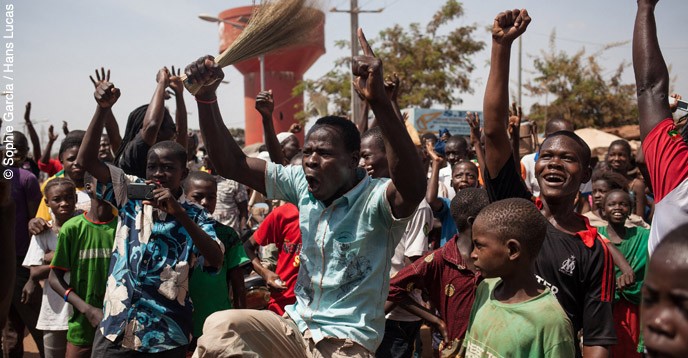
The National Association of Nigerian Students (NANS) has stormed Kano State roads to protest against the ongoing nationwide strike by the Academic Staff Union of Universities (ASUU).

The association that has frowned upon the incessant strike in the country is protesting to tell the world the situation they are facing in the country regarding their education.

The students who converged on the Kofar Nassarawa bridge in Kano City decried over delays in academics.

Singing solidarity songs against ASUU’s action with their hands clinking placards, the students said the menacing issue of the strike should by now be put to an end.

They also called on the federal government to intervene and call off the strike.

Recall that the Vice President of the Union, Comrade Yazid Tanko Muhammad, disclosed their intention to protest on Monday.

Comrade Yazid added, “So, it is a protest which, if we start, will not stop until the issues are resolved, and the lecturers resume work.

Kano Emir calls on Katsina counterpart for closed-door meeting

By Uzair Adam Imam 

The Emir of Kano, Alhaji Aminu Ado Bayero, has called on his Katsina counterpart, Alh. Abdulmumini Kabir Usman, this afternoon for a closed-door meeting.

Reports disclosed that the meeting, which started at 12:30 pm at the palace of the Katsina Emir, lasted for more than one and half hours.

Although the details of the meeting were not made public at the time of filing this report, there were speculations that it was about the resignation of Wazirin Katsina,  Prof. Sani Abubakar Lugga.

Recall that Prof Lugga signed his resignation after responding to the query by the Katsina State Emirate Council over statements he made about the menacing security challenge in the North.

Lugga, in a statement to the Katsina State Emirate Council, argued that he did not speak on the matter on behalf of the emirate council but as a citizen of the country.

2023: Kano South Forum endorses Alhassan Rurum for governor

By Uzair Adam Imam

With the 2023 general election approaching, the Kano South Concern Citizens Forum (KSCCF) has called on Alhassan Rurum to succeed Governor Abdullahi Umar Ganduje in the state.

A communiqué issued to journalists on Sunday by the forum immediately after its sitting in Kano disclosed the endorsement.

The chairpersons of the forum, Sen Masud Eljibrin Doguwa, former Senator Kano South and Alhaji Musa Salihu, said Kano South deserves a fair share of the exalted political post.

They also stated that the Kano South has a vital role to play in building Kano State, saying the zone is ready to give its best for the purpose.

Rurum is a former speaker of the Kano State House of Assembly during Ganduje’s first tenure and is currently a member representing Rano, Kibiya and Bunkure Federal constituency and the Chairman House Committee on pension.

The forum had also endorsed Hon. Kawu Sumaila for Senator Kano South and Hon. Alhassan Ado Doguwa to be re-elected as the Member Tudun Wada/Doguwa so that he will have a chance to become the Speaker of the house.

Also lamenting, the from stated that Kano South has not had a chance to produce a governor for the state since 1992, saying, “Kano South has largest local government councils among others in Kano with 16.”

Alh. Musa Salihu said, “Kano north and Kano Central produced governors. In 2023 the governorship position should be zoned to Kano South for it to have a fair share of the exalted political post.

“We, therefore, endorse Alhassan Rurum for governor in 2023 to succeed Governor Abdullahi Umar Ganduje.

“And since we are basing our argument on competency, Hon. Kawu Sumaila should be elected Senator Kano South and Hon. Alhassan Ado Doguwa be re-elected as the Member Tudunwada Doguwa so that he will have a chance to become the Speaker of the house,” he added.

However, the sitting that hosted many important personalities said the forum would soon convene a meeting with the endorsees to tell them their position.

Character and strategy: The nutritive requirements for Nigerian leadership

By Mubarak Shu’aibu Hardawa

Nigeria is on borrowed time at the moment and not just because of an awful leadership it is experiencing, but for having that ‘onerous’ task of finding the marquee leader that would be her saviour. This arduous mission has become inevitable after many years of failed attempts that defied belief, much less explanation.

The leadership problems in Nigeria are structural and systematic, while the crisis at hand is long-lasting and accelerating. The system has become so overwhelmed by anger and frustrations that even the most basic task of any government, which is securing the lives of its citizens, is becoming increasingly impossible.

While good leadership is essential – especially in a country the size of Nigeria- the anticipation, grit, and determination to inspire the citizens to be there, unfortunately, that looks like a distant hope. Despite the arrays of potentials and the abundance of resources, which, if properly harnessed, would transform Nigeria into an unmatchable place, this runs contrary to reality. The result obtained is a satiric giggle. The reason may not be unconnected to the fact that our leadership group lack the requisite qualities to take Nigeria to a greater level of ceaseless progress and prosperity.

To put it simply, Nigeria has the capacity and nous to be as rich as the United Arab Emirates. Still, due to its poor choice of leaders, it is now as filthy as pigsty moving on India in the pecking order of countries with the highest number of citizens living in extreme poverty. This situation is avoidable. How? By not allowing ethnicity, religion, region and party affiliation to cloud our judgment when choosing the right leader.  

Thus, by eschewing leaders of a good character, grand ideas and strategy, we are restricted only to a bunch of clowns whose leadership style cannot inspire even a cheap hope in anyone. And what is obtainable from such leaders is a failure that we are now seeing as it has metamorphosed to a greater extent that most Nigerians no longer have faith in the government. 

As it is now, it will only take the starriest eyed optimist to make a case for believing in Nigeria at the moment. The dailiness of wanton killings, kidnapping, stealing of public funds, the meteoric rise in poverty index, corruption, and so on say everything about the kind of leaders Nigeria has. With what is obtained today, Nostradamus himself will hesitate to bet that wrecked Nigeria will be great in the near future. (I’m optimistic, though! As optimism oils the wheels of everyday living.) But such a level of demoralisation and crestfallen require a strong antidote whose composition is character and strategy combined to turn things around.

Since the return of democracy in 1999 to date, those touted with the leadership of this country come with asterisks—either of corruption, poor economic management, health challenges, ethnicity, ageing, nepotism, etcetera. Although there were numerous pros with President Yar’adua’s short shelf-life, the hopes were soon taken away by the inevitable finality which laid him and his famous anthem of “7 Points Agenda” to rest. The rest doesn’t have much to write home about.

The point where Nigeria looked set to hit the proper course was in 2015 when President Buhari came with his ‘Change’ mantra, but that ultimately goes to show that he is not the finished article based on his sheer lack of strategy. This imbalance left Nigeria without a vertebra in her spine for a couple of years. Although we had the chance to change the narratives in the 2019 election, with character (Buhari) coming up against strategy (Atiku Abubakar), Nigerians failed to the wisdom in the saying “A leopard never changes its spot” thus persisted with Buhari thinking that things will change in the second term. The majority of Nigerians at that material time held the view that his character, which fetched him the public appraisal of “Mai Gaskiya”, would wave wands and make things magically better. A dogma that is fruitless at best and hazardous at worst.

Some Nigerians even went vigorously beyond delimitation and common sense, arguing that Atiku was plotting to sell Nigeria (NNPC). While some purported that President of the Senate Bukola Saraki, Speaker House of Reps Yakubu Dogara, Senator Dino Melaye and co are the saboteurs of Buhari’s government in the NASS and must therefore be cleared off the deck to allow Buhari an enabling environment. These are publicly sold opinions and thus became very hard to change even when most of the evidence suggests that they should.

This premature decision under predicated conditions of illusionary belief backfired heavily as his weakness for lack of strategy has been laid bare even in the second term, with Nigerians paying the premium price to date.

Today’s Nigeria is unrecognisable from halcyon days, and her golden generation passes. However, some ethos is sacrosanct, such as having the leadership group to look up to, such as Tafawa Balewa, Dr Nmandi Azikiwe and Ahmadu Bello (the Sardauna of Sokoto). Even without the crude oil, they left Nigerians every reason to be optimists. That was a sheer display of character and strategy.

While you would hope to see a similar Nigeria sooner rather than later, the choice to be made should be factored into character and strategy. Nigeria is in a store for hectic decisions to make. However, the cold, hard reality is that Nigeria, like never before, needs a leader whose character will help unify the country through healing, dialogues and not by polarising the recent past. 

A strategic leader will find a way to midwife the return of peace to Nigeria, grow and maintain our economy, asphyxiate corruption, fix our education to be able to stand on our own, and cut down the unnecessary government expenditure all the recklessness we are known for. Meanwhile, a character will help that leader follow the right path in seeing through the above tasks.  All these sound plausible, right? Theoretically, it does. However, in reality, given the constraints of apparent options, debates were ignited on whether we could find such a man in our political arena (that’s a pulsating debate!). 

Nigerians must challenge and X-ray anyone who throws his hat in the ring to avoid falling foul of past mistakes. 

Finally, I insist on a person who embodies these invaluable assets (character & strategy). We hope our leaders and Nigeria itself are going to be alright! And reeling out the rationale for pitching tent behind such a person, Prof Zulum of Borno will suffice.

Mubarak Shu’aibu Hardawa wrote from Bauchi State via naisabur83@gmail.com.