Admin

A moment with the late Abubakar Gimba

By Umar Nasale Ibrahim

Whoever wants live in the world with others after his body leaves the open space should write. A reader, they say, lives a thousand lives before he dies. A writer, as he is also a reader, lives many other lives after he dies. Thus, a writer benefits more than a reader.

Abubakar Gimba died some years back, leaving a handful of books of great might to the posterity to enjoy. Although I haven’t met him to learn of his living policies yet, he had sent them to me before he departed, reaching me late the previous year. He published many books, out of which only three came to me to read for the time being.

“Witnesses to Tears” is the first I encountered, and out of pleasure and amusement of how I enjoyed it, I looked for “Sacred Apples”. Not long after finishing it, a friend came with “Footprints”, and I snatched it to read. These are the books, out of almost twelve publications he had/has, I could lay my hands on. Reading them has been like a conversation of the admonition of how to live with others. In fact, this is my takeaway from the books.

“Footprints”, for example, is permeated with political inequities of the civilian and military governments of a fictional state I presume to be Nigeria. The political paradox discussed in the book, in the end, turned out not to be what I learned from it. The social relationship of the characters in the narration that develops its plot still fascinates me. Though in this regard, one may say that the writer is conscious of it, not all the readers may apparently take care of it.

The central home in the book is composed of two living parents with three children. Two males and a female, though the other male is much of a minor character. The female child, Farah, is a university graduate teaching at a secondary school her younger brother joins later in the book. This is one of the fascinating things the book has left me with. The male parent, Jibran, was a teacher, so his child became one. She engages in a relationship with her co-teachers, and Jibran has never been aversed in the relationship. The open-arm welcome to the teaching profession, the loving arms with which it is embraced and the burning desire to turn the lives of others in the book through the good profession is an emulable action.

That’s one. And to be precise, not to say much, the most important other issue is the interfaith relationship of the characters. Haytham and Basil are the intimate co-working mates of our female character, Farah. Haytham is a Christian and has been the boyfriend of Farah for a long time before Basil turned to show interest in her and thus married her later. The duo has become constant visitors of the house, first as friends, for courtesy and later, for a date. No matter the nature of the visit, Jibran would warmly engage them in conversation about the leadership of the country and the way out. Farah, with her father, would be supporting the country’s civilian activists to be given power, while others would intellectually be opposing her views. Usually, the conversations last long and no way in it one would dare include religion in it. The actual outlook of one’s humanity is the concern.

This was ringing in my ears while I was reading the book. Just telling me of how Gimba lived in the community he lived. And for sure, he was a religious man of dignity. But, to say he was a reader is just an insult to his reading avidity.

May Jannatul Firdaus be his current comforting home, amin

Umar Nasale Ibrahim can be reached via: umarnasaleibrahim@gmail.com.

Nigeria, NNPC and the oil windfall

By Kabir Fagge Ali
 
Presently, it is obvious that the time is ripe for the oil producing countries to smile due to the unprecedented increase in the oil price which eventually signalled an opportunity for a windfall. However, the situation is not the same for Nigeria as the country has plunged into deep fuel crises that has remained persistent for over a month. These crises border mostly on adulteration of the Premium Motor Spirits, PMS, also known as petrol, as well as its corresponding scarcity across the nation.

It can be recalled that, in the last three weeks, Russia has authorized a special military operation by invading the neighbouring Ukraine which caused the usually volatile crude oil prices to skyrocket beyond bookmakers. As a result, many countries are counting their fortunes in the windfall but unfortunately, Nigeria is counting its losses due to mismanagement of resources by the Nigerian National Petroleum Corporation (NNPC).

From the opening crude oil price of $76.03 per barrel at the beginning of 2022, prices have jumped to about $130 per barrel which is the highest price of the commodity for the last decade.

Just as noted in the Daily Trust Editorial of March 14, 2022, the gloom for Nigeria in the era of increased commodity prices was first forecasted by the world bank country director for Nigerian, Shubham Chaudhuri who said in January that Nigeria is at a point where rising oil prices might not be a good thing because although oil production might go up and crude oil revenue may increase, which in some point is a good thing.

The fiscal cost of petrol subsidy will also rise and while other countries may rejoice from the windfall, Nigeria will on the other hand be at the receiving end by reaping what it sows, courtesy of mismanagement of the oil sector over the past years by the NNPC. 

Truth be told, the consequences of the mismanagement of Nigeria’s four refineries is that the 440,000 barrels of crude oil supplied to NNPC daily for local refining is exported and never transparently accounted for. 

Meanwhile, the Group Managing Director, GMD, NNPC Mele Kyari claimed that N100 billion was sunk into the maintenance of the four refineries in Nigeria which is quite different from the N26bn already spent on supposed Turn Around Maintenance (TAM) on the maintenance of the refineries over the years which is an amount that will be sufficiently enough to build three new refineries as argued by many experts.

In addition, it is disheartening to learn that apart from being fleeced by NNPC and its collaborators in the name of oil subsidy or the strange term ‘under-recovery,’ Nigeria has failed to meet its oil production quota allocated by the Organisation of Petroleum Exporting Countries (OPEC). From an average of 2.1 million crude oil production quota per day, when the Buhari administration was voted into power in 2015, Nigeria is at present allocated 1.7 million per day, out of which it produces between 1.3 million and 1.4 million per day. This shortfall is a result of the lack of investment, as International Oil Companies (IOCs) have continued to exit Nigeria’s oil sector.

Despite the above scenario, the Ministry of Petroleum Resources, NNPC and its subsidiaries cannot convince Nigerians that there will be no gains from the current oil windfall. Such gains must not be frittered away under any guise.

The real question that is still begging for an answer is, can the NNPC convince Nigerians on how the country’s economy is not going to gain from this kind of oil windfall or how are Nigerian leaders being able to resolve this issue and what is NNPC’s decision on the lack of accountability to the people? 

Therefore, it is in the good interest of Nigerians that the National Assembly should investigate this issue thoroughly and ensures that money meant for the country indeed comes into the nation’s treasury unfailingly. The managers of Nigeria’s oil and gas sector must account for the gains that accrue to Nigeria from the current windfall.

Moreover, the NNPC in collaboration with the federal government and other stakeholders in the oil sector must as a matter of urgency expedite their efforts in fixing the moribund refineries in order to be functional enough to refine our petroleum products so as to meet the nation’s daily average consumption capacity of 62.5million litres of petrol. The time is long overdue to save the country’s ailing oil sector!

Fagge, is a student of Mass Communication Department, Skyline University Nigeria. He writes from Abuja, Nigerian and can be reached via faggekabir29@gmail.com

Minister Abubakar, epileptic power supply: the solution

By Zayyad I. Muhammad 

When ordinary Nigerians are faced with epileptic power supply, their first grumble is on Discos and the Minister of Power. They don’t bother where the problem is coming from because Discos and the Minister of Power are the two ‘entities’ who the common-man rely on electricity matters. Discos charge them for electricity bills, while they view the Minister as the overall head of the power sector in Nigeria, which is true. This is the dilemma every Nigerian minister of power and Disco faces.

Discos often blame poor supply from the transmission end. The Transmission Company of Nigeria (TCN) says the insufficient power supply experienced nationwide is due to low power generation by the generation companies (GenCos).- some of the problems are- Technical hitch in Egbin plant and poor gas supply etc

We must admit that the transmission sector has witnessed tremendous progress – Nigeria witnessed only four grid collapses in 2020 as against the 42 in 2010.

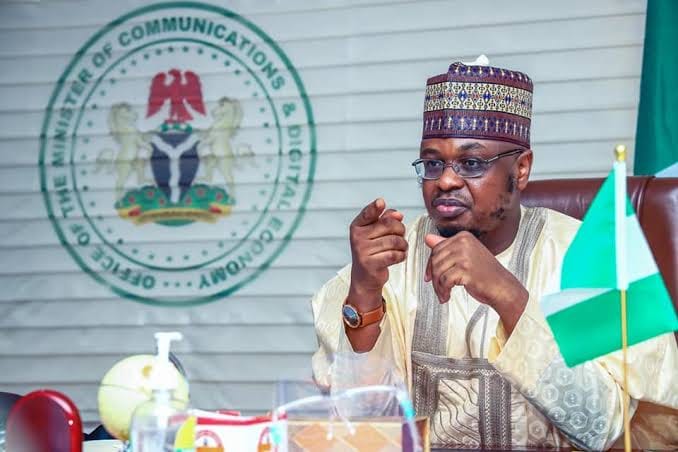
A total system collapse means a total blackout throughout the country, and this is one of the biggest challenges Minister for Power, Engr. Abubakar D. Aliyu has to get an alternative to- because once the country witnesses a total grid collapse, Nigerians will quickly forget the progress made in many years- thus, for example, a 24-hour failure will erase a one-year success.

What should the Minister and his team do to bring a shorter-term solution once the country witnesses a total system collapse? The answer – we need a reductionist approach. Our electricity sector operates on a holistic system  – for example, once the Egbin Thermal Power Station in Ijede / Egbin, in Ikorodu, Lagos witnessed a technical problem, a consumer in Jimeta, Adamawa state will feel the impact, thus blaming his Disco and the Minister of power

The best solution to tackle this issue is Neighborhood Solar Power and Wind-power model. Each neighbourhood in Nigeria that is connected to the national grid has an electricity-transformer site. Technicians and experts in the Ministry of Power, the Rural Electrification Agency (REA), and Discos, in collaboration with other private firms, should look into a model to build solar panel farms and mini wind turbines at these transformers sites or near it at each community. This will help connect the neighbourhoods with alternative power –this will allow members of a community to share the benefits of solar energy when the national grid collapses, even if they lack solar panels on their properties. This system is being operated globally; Nigeria should benchmark it.

Lightweight, flexible wind turbines and small solar panel farms within the neighbourhood can be used to power communities when the national grid collapse without the people feeling any impact- thus, the Minister of Power and Disco will be free from public criticisms. At the same time, Gencos will have ample time to rectify any technical glitch. 

Though Community solar panel farms and Community wind turbines are basically for the population in rural areas without access to the national grid, Nigeria’s electricity system should be a combination of a  ‘hybrid power system’- national grid, mini solar, and mini wind turbine at communities. A  decentralized electricity supply system that alternates between the national grid and renewable energy can be one of the best technical options available for Nigeria. 

We must admit that these two alternatives- neighbourhood solar and wind turbine are not new to the government – some reports say there are ten large-scale Solar Power Plants in Mega Watt in some locations in Nigeria. Nigeria has not put much interest in such a project because of the country’s capacity to generate enough power from its plants. However, transmission and distribution bottlenecks should be a big reason for the government to seriously look into utility-scale solar and mini wind turbine power generation in neighbourhoods to serve as an option when the country is faced it total or partial national grid failure, as the country is witnessing now 

Zayyad I. Muhammad writes from Abuja via zaymohd@yahoo.com.

Why Dattijo should succeed el-Rufai

By Abu Hibbah Ibrahim

Typical of a penultimate election year, pictures and billboards of aspiring politicians have littered major and minor roads in Kaduna State. People who share in the leadership ideologies or principles of the Governor of Kaduna State, Nasir Ahmad El-Rufai, have all started indicating interest to succeed him. Also, people who are at variance with all he stands for have likewise thrown their hats in the ring.

In his quiet moments and as he drives out of Sir Kashim Ibrahim House through the state metropolis, billboards of different politicians erected in strategic locations staring at him, only God knows what runs in El-Rufai’s mind regarding his successor in 2023. It seems William Shakespeare had El-Rufai in mind when he captured in Macbeth that: “There’s no art to find the mind’s construction in the face.”

As El-Rufa’is second tenure nears its end, and after exhibiting a tremendous performance, the next most audacious and bold decision left for him is to anoint a successor, rally his supporters around him and subsequently aid him in attaining victory at the polls. Verily, this singular act will make or mar the sustainability of his hard-earned and stellar achievements. More reasons why el-Rufai should be meticulous.

To understand the importance of having a credible and competent successor, let’s cast back our minds to the second tenure of former president Olusegun Obasanjo. After failing to extend his tenure, the infamous third term, Obasanjo, imposed a sick president on the country. Unfortunately, this singular act almost erased the decent achievements he recorded in his second term.

Interestingly, during his interview with Seun of the Channels Tv last Wednesday, Governor el-Rufai made sketchy explanations on who will likely succeed him. He highlighted that he would want someone from his team with whom they have developed and implemented policies to take on the baton of leadership from him.

Being a youth myself, I have a bias for Muhammad Sani Abdullahi, popularly known as Dattijo, considering his age. Of course, age in itself isn’t a recipe for good governance or positive results, but young age coupled with competence, experience, the ability to form a capacitated team and then lead them to drive reforms and produce results would do magic. And Dattijo exudes these sterling qualities in addition to the advantage conferred on him by age.

Plus, he has exhibited these qualities and delivered outstanding results as the Commissioner of Planning and Budget Commission of Kaduna state and Chief of Staff to the Governor. Under the governor’s tutelage and with his experience as a commissioner, he has been armed with the ability to allocate resources amidst competing demands or interests for the betterment of the state. In addition, he chaired the Infrastructure Council, one of the policy councils initiated by el-Rufai to fast track soft and hard infrastructural developments.

Dattijo is a development practitioner trained in the University of Manchester and a graduate of Economics from the prestigious Ahmadu Bello University. With dwindling federal allocations, effects of COVID-19, the possibility of subsidy removal on petrol, and security challenges, economic difficulties will be harder for the state governments. However, I believe his deep knowledge of economics will help him navigate the state through tough financial times. Consequently, he has the mettle to sustain the growth in revenue mobilisation that has characterised el-Rufai’s tenure.

El-Rufai has done remarkably well in revenue mobilisation. This terrific effort has pushed Kaduna above the commercial nerve of Northern Nigeria, Kano State, in terms of internally generated revenue (IGR). Moreover, he has consistently invested in education and health as these two sectors gallop the highest percentage of the state’s budget. And as one Indian writer posited, “nobody bothers about education because results take a long time to come.” But el-Rufai cares. This fantastic idea of investing in critical sectors, especially education and health, needs to be continued.

Temperament and intellect. Ever since Dattijo’s body language signifies an intent to be the governor of Kaduna State, he has been under scrutiny and verbal attacks by some political opponents or sycophants. This is expected in electioneering, though. However, he has demonstrated thoughtful calmness and grace under pressure. He is even-tempered and not given to volatile gestures. These virtues are pertinent in a governor who would want to continue leading the Kaduna state towards greatness by reducing or eliminating ethnic tensions and building bridges.

On a final note, the saying that power corrupts people is a tag sincere seekers of the truth, or any discerning person cannot place on Dattijo’s neck. In all the leadership positions he has been appointed into by his boss, el-Rufai, he has served the people of Kaduna with humility, loyalty and hard work.

I believe Dattijo has the moral compass to build on el-Rufai’s legacies. He is blessed with intellectual rigour and has the courage to make sound, careful and bold decisions that hold generational transformation. Dattijo has officially declared his intention to succeed his boss. Therefore, I beseech Governor el-Rufai to rally other APC aspirants to support him. He is prepared and ready.

Abu Hibbah Ibrahim writes from Kaduna and can be reached via hibbahabubakar1505@gmail.com

Ukraine war: US President Biden to attend physical meeting with NATO allies in Brussels

By Muhammad Sabiu

President of the United States, Joe Biden, is set to travel to Brussels, Belgium’s capital, amidst the invasion of Ukraine by Putin’s Russia.

President Biden is expected to hold a physical meeting with the North Atlantic Treaty Organisation (NATO) leaders in a show of support for Ukraine.

Press secretary of The White House, Jen Psaki, has confirmed to reporters on Tuesday that the meeting would be held on March 24.

Ms Psaki was quoted as saying, “The President will travel to Brussels, Belgium, later this month, where he will join the extraordinary NATO Summit on March 24 to discuss ongoing deterrence and defense efforts in response to Russia’s unprovoked and unjustified attack on Ukraine, as well as to refer reaffirm our ironclad commitment to our NATO allies.”

“He will also join a scheduled European Council summit to discuss our shared concerns about Ukraine, including transatlantic efforts to impose economic costs on Russia, provide humanitarian support to those affected by the violence and address other challenges related to the conflict.”

This is coming amidst condemnations and concern expressed by NATO allies as Russia continues to advance its invasion in parts of Ukraine.

Kwankwaso earns doctorate in water engineering from Indian varsity 

By Uzair Adam Imam 

The former governor of Kano State, Engineer Rabi’u Musa Kwankwaso, has bagged a PhD in Water Engineering from Sharda University, India.

Kwankwaso was said to have defended his PhD dissertation on Tuesday, March 14, 2022.

This was in a Facebook post from his page and has later sparked to the walls and pages of other ardent Kwankwasiyya followers.

Of what has come as jubilation, many people have taken to their various social media platforms to celebrate the two-time former Kano State governor and senator representing Kano Central. 

The post read: “Congratulations to His Excellency Engr. Dr Rabi’u Musa Kwankwaso, for your successful viva presentation in PhD Water Engineering today (14th March 2022) at Sharda University, India. 

“From his right is Prof. Gaurav Saini (his supervisor), from his left, Prof. Rameshwar Adhikar (Tribhuwan University), Kathmandu Nepal (his External Examiner) and other Distinguished professors during his successful Final viva presentation.”

Angel Di Maria vacates PSG this season

By Muhammad Sabiu

Angel Di Maria, a winger for Paris-Saint-Germain, is scheduled to depart the French Ligue 1 club at the end of the season.

PSG will not give Di Maria a new contract in the summer, according to L’Equipe (as relayed by AS), allowing the Argentine to depart for free.

PSG’s current contract with Di Maria will expire at the end of the season.

PSG is yet to offer the former Manchester United player a new deal.

The 34-year-old moved to PSG from Manchester United in 2015 for a reported £56.7 million.

Di Maria’s playing time has been severely curtailed as his current manager, Mauricio Pochettino, continues to favour players like Neymar.

Stepmother, who allegedly burnt stepson’s butts with pressing iron, arrested

By Ahmad Deedat Zakari

A stepmother identified as Elizabeth Abu, who allegedly burnt the butts of her stepson with pressing iron, was arrested on Monday, March 14, 2022. 

According to reports, the little stepson used his shirt to make a duster he was asked to bring to school. This angered the stepmother, who punished him this severely. The stepmother reportedly burnt his butts with pressing iron and rubbed pepper in his eyes and the burnt butts.

Mrs Abu has reportedly been on the run since the news of the dastard act broke on March 10, 2022, before her arrest today.

The Facebook user, Safiya Stephanie Musa, who shared the details of her arrest and others who reacted condemned the act in strong terms. Stephanie Musa posted, thus:

“And the wicked stepmother, Elizabeth Abu, who burnt her stepson’s butts with a hot iron, and rubbed pepper in his eyes, has been taken into Police Custody in Lokoja. How one can do this to a child because he used his cloth to make duster they were asked to bring to school beats me silly.Big thanks to the Governor and the Kogi Women Affairs Commissioner for taking action. The boy is currently in the hospital. May the Lord grant him full recovery without complications, Ameen.”

The Lokoja police command has yet to make any official statement on the issue while filing this report.

A word of courage for Senator Oloriegbe and the 9th Senate

By Ibraheem Abdullateef

Praises may not come often. But the impact will always be felt – wherever it is being made. 

On the heels of the above, I write to the leadership of the Nigerian senate to commend them for conducting investigations into the N400 billion National Primary Health Centre projects awarded during the tenure of President Olusegun Obasanjo 2006 but were abandoned for strange reasons by the contractors. 

The administration initiated the National Primary Health Centre to deepen access to quality and affordable healthcare facilities for the less privileged at the local levels. It was originally conceived to build in each of the 774 LGAs in Nigeria a sixty (60) bed-capacity primary health centres; complemented with a three-bed flat; doctors quarters, ambulance, drugs; and other basic hospital equipment. 

To prosecute the projects, the federal government deducted monies from the excess crude account of all the 774 LGAs every month until the budgeted funds required for the project was realised. Despite that, little or no notable jobs have been done 15 years after. The majority of the projects have not been started, while many are simply abandoned to waste across the country. I wail at this culture of abandonment, sleaze, corruption, and wickedness to humankind. 

The consequences of this suspected case of breach of contract, diversion, and misappropriation of public funds are far-reaching on national health. According to the World Health Organisation (WHO), cited by the Journal of Global Health Report, the Maternal Mortality Ratio in Nigeria is 814 per 100,000 live births in 2020. It accounted for about 20 % of the global maternal deaths. The malaria figures are as grim, if not worse. The World Malaria report 2021 revealed over 50 million cases and 207,000 deaths annually. It means that the giant of Africa accounts for at least 27% of malaria deaths worldwide. 

Findings from global health reports linked the high mortality rates and malaria cases to delay in seeking maternal healthcare, delay in locating medical facilities, and low-quality healthcare services for the patients. It is safe to conclude that the full implementation and execution of the National Primary Health Centre project would have improved accessibility, availability, and affordability of quality care services in all the 774 LGAs in the country. As they were not handled well, it might have cost the nation over 7 million lives, mainly women, infants, and young adults. 

It is good this has not been made to pass yet. Upon the motion by Senator Yahaya Oloriegbe of Kwara central and the adoption of the resolution of an investigation by the senate a fortnight ago, some of the unscrupulous contractors have started works on the abandoned projects. In Ilorin South Local Government Area, one of the LGAs making up Kwara Central, work has resumed at the site, and some of the equipment are being returned. But will that be enough to compensate for the delay in the last 15 years? Who are these people? What would be the price of justice? 

I urge the media, the civil society groups, and the security agencies to aid the outstanding Senator Oloriegbe and the 9th senate’s bid for justice and probity. 

Kwara Central Senator Yahaya Oloriegbe’s alarm shows uncommon bravery, patriotism, and excellent knowledge of the industry as chairman of the Senate Committee on Health. This should propel investigations into the case deep and thorough. The conclusion of this issue is weighty. One, it would stimulate healthcare services across the country. Two, it may grant due punishment or sanctions to wrongdoers, setting a template for future conduct. The third point is that it may lead to a review, introduction or implementation of stricter laws and processes, including the roles of the ministries and agencies, in bidding and drawing funds for projects. 

Looking at the history of Nigerian politics, I am aware that this is hard to pull off. But it is not impossible. Leaders are elected to make hard, cracking decisions in the interest of the people and nation. The nation, especially the Nigerian youths, is happy with this step and are proud of the 9th senate. We urge them to go all out for justice in the larger interest of the nation. Here is our word of courage. 

Ibraheem Abdullateef is the Kwara Central Representative in the Nigerian Youth Parliament 5th Assembly. He tweets via @_ibraheemlateef

Gombe: Zakah and Waqf Foundation empowers women

By Nabeela Usman El-Nafaty

The 5th set of the beneficiaries of the Women Empowerment Program under the Zakah and Waqf Foundation, Gombe, have undergone a semi-final graduation ceremony on Sunday, March 13, 2022. The main graduation ceremony and inauguration of the new empowered (6th Set) is expected to hold after Ramadan.  

The beneficiaries who were inaugurated on February 14, 2021, numbering 88, were each given N10000 start-up capital. Those who reached the finish line were about 40. The ceremony had the attendance of the Chairman of the Foundation, the Heads of Women Empowerment, Education and Training, and the Chairperson of Wadata Multipurpose Cooperative Society (WAMCOS), among others. 

Malama Maryam Yaya, the Head of Women Empowerment, gave the welcome speech. She thanked the beneficiaries for their doggedness in completing a full year of biweekly meetings, savings and enlightenment, as they saved close to N1,200,000 since February 28, 2021.

The Chairman of the occasion, Vice-Chairperson of the Foundation, QS Ahmad M. Kabir, prayed for the Foundation and thanked its head for her tireless efforts to keep the program alive and functioning.

The VC’s speech was followed by the keynote address by the Chairman of the Foundation, Ameer Abdullahi Abubakar Lamido. He gave a detailed speech about the next level of their empowerment, including joining the WADATA Women Cooperative Society.

The Chairperson of WAMCOS, Malama Hanne Abdullahi, was the next on the podium where she welcomed the successful beneficiaries into WAMCOS. She emphasized the need to come to monthly meetings and make monthly savings regularly. She also introduced to them the idea for ‘special savings’, which is usually for long-term plans like the wedding of a daughter, registration fee of kids, hajj savings etc. 

The event’s highlights were feedback from the beneficiaries about how the Empowerment Program benefitted them in ways beyond measure. One of the beneficiaries, Kulu Muhammad, from Tudun Wada of Gombe, said that the programme was “like a person on a standstill in total darkness, and then someone comes with torchlight and shows him the way out of the darkness.

Another highlight of the event was the presentation of gifts to the most outstanding beneficiaries in performance, determination, frequent attendance to meetings, and savings. 

The beneficiaries were allowed to come and pick from items of their choice, including food flasks, clothes, kids’ wear, Hijabs, and shoes donated by some officials and volunteers of the Foundation. No one among the attendants of the graduation went home empty-handed. There were smiles everywhere and prayers to the Foundation for more success and greater heights.