Admin

‘RRR’ Review: A visually stunning, exhilarating epic

To borrow from Aditya Chopra in his short review of Hum Aapke Hain Koun (1994), “It’s a mind-blowing film, a complete entertainer [which] deserves all the success it gets”. This description is apt for the latest Indian Tollywood epic titled RRR.

Directed by S.S Rajamouli, the film is a large scale period action drama that outshines even his record-breaking Baahubali. Its seemingly strange title, RRR, originates from the director’s initials (Rajamouli) and the two protagonists (RamCharan and RamaRao). The three-letter title also stands for Roudram Ranam Rudhiram (Rage war Blood) and Rise Roar Revolt in the film’s Telugu and Hindi versions, respectively.

Firmly placed in Rajamouli’s style of high fantasy, elaborate set design and spectacular CGI, the film is visually stunning and exhilarating. The story is a historical fiction set in the 1920s British India, with Alluri Sitarama Raju (Played by Ram Charan) and Komaram Bheem (Played by N.T Rama Rao Jr.) as the leading characters. Two Indian revolutionary leaders who fought against the British colonial rule at the time inspired these characters.

Plot:

Sitarama Raju (Ram Charan) is an anti-British rebel leader disguised as a loyal police officer of the Crown. Komaram Bheem (N.T. Rama Rao Jr.), on another side, is a freedom fighter from the Gond tribe on a mission to attack the British colonial rulers and rescue a girl, Malli, who they enslave. Unfortunately, the British authorities get information about his mission, and their fearless cop, Raju, takes up the challenge to search and arrest him to get a promotion. However, Raju and Bheem become friends as they are unaware of each other’s true identities.

Later on, Bheem reveals his mission to Raju and goes on to attack the British. Raju chases him and succeeds in arresting him after a fierce face-off. Therefore, the British government promotes him to a senior officer, not knowing that he, too, is plotting against them. The story continues…

The film is indeed an exciting movie full of breathtaking adventures. It proves enthralling right from the beginning when it introduces Ram Charan in a crowd scene, where he bravely manhandles thousands of protesters to catch one of them. It then continues with the equally rousing NTR’s introduction scene showing his encounter with wild beasts. It keeps the magic with another thrilling sequence in which the two heroes team up to save a boy from a ghastly train accident. All these, even before the climax! Indeed, director S.S Rajamouli has shown his unrivalled directorial talent in this movie.

The efficient, exciting performance of the two musclebound leading actors (Ram Charan and Rama Rao) makes this film a huge success. They effortlessly excel in the skillfully choreographed action sequences throughout the action-packed movie.

Without mincing words, RRR is a fascinating, thoroughly entertaining movie that keeps the viewer hooked throughout. You will immensely enjoy it. Don’t miss out! Rating 4/5.

Reviewed by:

Habibu Maaruf Abdu

(Kano, Nigeria)

habibumaaruf11@gmail.com

Photo grid

By Ismaila Academician

One could succumb to knowing why Europeans and Americans are so obsessed with photo-keeping culture. Every fragment of their life, whether small or insignificant, is captured in a photo collection that will be made available on display or neatly hidden in a safe for future use.

Although that is not part of my culture, I can reason that they keep a photo collection, contrary to what we think. The Europeans do that to keep memory down history lanes – pedigree, simply because, at times, that is one heck of a thing one can grow up to know about their family. For example, parents die leaving behind their children at much younger ages; the lost ones, the adopted ones, and those who find themselves in the orphanage may get to know and connect with their past from photos made available to them.

That’s their pop culture right before the present day when digital tools made photos even easy to capture and share with FAF, even on the go. But, unlike photo cards, digital images travel far away and faster than we can ever imagine. It also keeps memories longer than photo cards, free from any physical damage, such as loss, overuse, fire and water consumption, etc.

Despite the importance of keeping photos, I feel that we overdo it. Nowadays, we take unnecessary images that we could not even keep, and recently, it’s becoming like an addiction. We just found ourselves taking photos that are not only insignificant but smartly improper that sometimes pose threats to our peace of mind.

On many occasions, photos land us in big troubles: many people lost their jobs, some were convicted and tried; it broke marriages, shattered dreams, and made rich people poor. However, sometimes the photos we take belie our sense of humanity. For example, sharing pictures of victims of a ghastly accident is more horrible than sharing nudes.

Although photos motivate and make things extremely simple, sometimes they appear to be fallacious and discouraging, and when that happens, it does more harm than the purpose it was captured for. Thus I advocate for photos for a good cause.

Ismaila Academician wrote from Kano via ismailaacademician@gmail.com.

How ASUU strike cripple businesses in BUK and Yusuf Maitama Sule varsities (II)

By Aminu Adamu Naganye

In this second part of the special report, The Daily Reality reporter narrated how other business activities continue to suffer due to the strike in Nigeria’s public ivory towers. And it is now getting worse as other unions in the universities, such as SSANU, NASU, and NAAT, have since declared strikes following the government’s failure to honour agreements with the workers’ unions.

Okada, tri-cyclists and yellow bus

Commercial motorcycles, tricycles popularly known as Adai-daita and commercial shuttle buses, alias yellow buses (or taxis), are the major means of transportation in and around the universities for students’ daily movements.

With the suspension of academic activities in the universities, the commercial transporters discontinued their operations, rendering hundreds of them without their normal means of earning a living.

Although Okada/Acaɓa (commercial motorcycle ride) riders are still doing skeletal work with very few passengers, as they explained in their interaction with this reporter, tri-cycles and yellow buses have since moved elsewhere in search of respite.

Young Abdurrahman Usman, whose means of eking out a living is okada/acaɓa in BUK. He used to convey students to, in and outside of the university, cater for his family’s needs. He now faces challenges as a result of the strike. He said:

“It is quite saddening. The strike stifles our means of livelihood. There are no passengers now to carry. Students have vacated the campus, and the remaining ones have been served notice to leave since. We are pleading with the government to resolve the problem. Acaɓa riders, students and other business people suffer. Government should meet up with ASUU’s demands for activities to resume on campus.”

“It was unnerving when I first heard there will be a strike”, recalling when his friend told him about the strike as he had bitter experience in the past, adding that “before the strike, I used to make N1500 – N2000 a day but now hardly I make 200 -300 a day. I am in a very tense situation,” Usman concluded.

“Honestly, we can only say Inna lillahi wa inna ilaihi rajiun! Because this isn’t a new thing to us. Whenever there is rumour of embarking on a strike, we will be praying that the issue gets resolved before the strike commences. But if the strike is declared… it is really usually terrible for us”, said Ado Umar, who serves as the Secretary of the BUK Riders (Acaɓa) Association.

Ado said with the current economic realities of Nigeria, “Federal Government and ASUU, for God’s sake and the plight of the hungry people around and students, should resolve their differences”, adding that “I don’t think any of them can get what he or she desires completely…they should have sympathy for us… businesses in Kano, not just BUK, suffer the consequences of the strike.”

Photographers, barbers decry

Abdulmuiz Ibrahim, with his largest photo studio at BUK, said he had already lost most of his customers, primarily students, due to the industrial disharmony between the government and teachers.

While students vacated the environment, he noted that he had been surviving from a few people who come from outside the university and wedding bookings from outside campus, “we’ve been surviving from one or few people who are coming from outside. And as you know, weddings happen, we get wedding bookings from outside campus. That is what we’ve been using to maintain …the strike hasn’t been fair at all.”

Resilient photographer, Abdulmuiz, who described the strike as less devastating ditto Corona lockdown, said he is determined to survive the strike as he “brushed through previous strikes and Corona lockdown”, adding that “That is part of what I did then because there weren’t outdoor events. There was no event to cover, and school wasn’t in session. So you live on savings from savings to taking money from family and friends.”

He acknowledged that ASUU is fighting a worthy cause but advised them to engage in alternative means of resolving the problem, saying, “The victims are the students, the business owners, the workers, neighbouring communities that sell to students, the markets …this affects everybody.”

He further advised the Federal Government to resolve the problem amicably to avoid forcing youths to be on the streets. “We have seen what happened during the EndSARS protest. If schools weren’t closed, EndSARS wouldn’t have been that successful. If students were in school doing one thing or the other, EndSARS wouldn’t have had that solidarity. I hope they learn any lesson”, he cautioned.

“The Federal Government often talk about self-reliance and entrepreneurship, but they are now destroying our self-reliant businesses …there are over 200 business people in BUK New Site alone, and each has at least ten people under him. So thousands of people are in trouble with this strike. Government should help those who create jobs, not to destroy them” emotionally laden Abdulkadir Suleiman chronicled the chain of employment their businesses provide to people, including students on the campus.

Approaching his photography shop, Abdulkadir was already parking some items, ready to move out of the BUK to find some work to cater for the needs of his wife and six children.

Due to his business’ nature, he shuttles between town and campus, arguing, “With the current economic situation in the country, even the outside is very difficult. Campus remains the best but strike…” stressing further that “we are now thinking of alternative if not one day we will turn to beggars!”

He reminded the Federal Government that people brought them to power, and God will hold them accountable. “They should resolve this conundrum. God give them trust, and He will question them on it.”

A barber, Aliyu Badamasi, noted that the least he could work on before the strike were 15 – 20 people daily, while currently, the average is 2.

Aliyu noted, “It is very, very horrible, that is what I would say… Life hasn’t been easy. If the school is on break, it isn’t funny, not to talk of a strike. It is not easy.”

With his barber’s shop as the only means of making ends meet, Aliyu urged the Government and ASUU to remember that “So many people rely on students’ presence to survive”, appealing to the government “to put education first. They should make it a priority.”

Some businesses are moving off Campus

Abdurrahman Shafiu, who doubles as a student and a POS operator, concluded his plan to move to the town pending the resumption of academic activities at the university.

Abdurrahman said his only option now is to move out of the university to survive the strike, “The strike is really affecting my study and my business concurrently. When students were around, I realised like 6k a day, but now I hardly make 1k. So I’m just coping by the grace of God. I’m moving out of the campus because I’m a family man. I need to feed my family!”

For Khamisu Alhassan Abubakar, the only phone repairer currently available in BUK, said only one-fifth of his customers patronise him presently as most of them have travelled.

With nonteaching staff also embarking on strike, as their unions recently announced, he noted that it is no longer possible to remain on campus.

NASU, SSANU embark on strike

Meanwhile, as ASUU’s strike entered its third month and with no visibly committed resolution efforts from the Federal Government, other unions of nonteaching staff in universities have mobilised their members to embark on an extended two-week warning strike after they exhausted earlier two weeks of warning.

Joint Action Committee of Non-academic Staff Union (NASU) and Senior Staff Association of Nigerian Universities (SSANU) conveyed the message of the strike to their branches in a letter/memo signed by the SSANU President and NASU Secretary-General.

The letter, in part, reads: “In view of the nonchalant attitude of the Government to our demands, this is to direct our members in all Universities and Inter-University Centres throughout the country to commence a two-week warning strike by midnight of Sunday, 27th March, 2022 in the first instance as earlier conveyed in the Federal Government in our letter.”

The unions said the strike would be comprehensive with no concession.

With this latest strike pronouncement, the public universities in Nigeria will be completely grounded as teaching and administrative activities, as well as any other activities by the members of the trio of ASUU, NASU and SSANU, will be brought to a complete halt.

Incessant strikes may hamper the 2030 agenda

As one of the signatories that ratified and adopted Sustainable Development Goals (SDGs), Nigeria is committed to implementing the goals, especially in the current decade of action.

However, with incessant strikes in universities, attainment of the global set targets may elude Nigeria. This is in view of the fact that abrupt termination or suspension of academic activities in institutions is likely to have a direct and indirect negative impact on the attainment of the Sustainable Development Goals.

Controversial Easter Flyer: CAN demands dismissal of Sterling Bank CEO

By Muhammadu Sabiu

The Christian Association of Nigeria (CAN) has demanded the firing of the Chief Executive officer (CEO) of Sterling Bank, Mr Abubakar Sulaiman, after the financial institution made a debatable Easter flyer.

The Christian body accused the bank of likening the Resurrection of Jesus to Agege bread, in response to which the CEO apologised.

A statement released by the CAN has described the comparison as “ungodly, wicked, insensitive and deliberately provocative.”

“The attention of the leadership of the Christian Association of Nigeria has been drawn to an ungodly, wicked, insensitive and deliberately provocative advertisement of Sterling Bank, comparing the Resurrection of our Lord and Saviour, Jesus Christ to ‘Agege bread’ amidst the Easter celebration.

“In case the management of Sterling Bank is not aware, the Resurrection of Jesus witnesses to the immense power of God Himself. To believe in the Resurrection is to believe in God. If God exists, and if He created the universe and has power over it, then He has power to raise the dead. If He does not have such power, He is not worthy of our faith and worship.

“Only He who created life can resurrect it after death; only He can reverse the mystery that is death itself, and only He can remove the sting and gain the victory over the grave (1 Corinthians 15:54–55). In resurrecting Jesus from the grave, God reminds us of His absolute sovereignty over life and death,” the statement read partly.

Osinbajo: The face of national unity

By Ahmad Abdullahi

About eight years ago, the All Progressives Congress (APC) appeared to be in a huge dilemma over the selection of a Presidential Running Mate who will fly the flag of the party alongside its candidate General Muhammadu Buhari who just won the party’s primary election. APC’s dilemma was justifiable as they were trying to bring on someone credible that will balance the ticket and make it acceptable enough to stand a strong chance against the mighty PDP.

After so much intrigue within some intense and eventful 48 hours, Professor Yemi Osinbajo got the Vice-presidential ticket to the surprise of many Nigerians. Many expressed fears about whether he carries the political capital strong enough to help the ticket deliver. Little did many know of the Professors’ charming simplicity and intelligent technicality alongside his mass appeal that saw the ticket going all the way. The rest is now history.

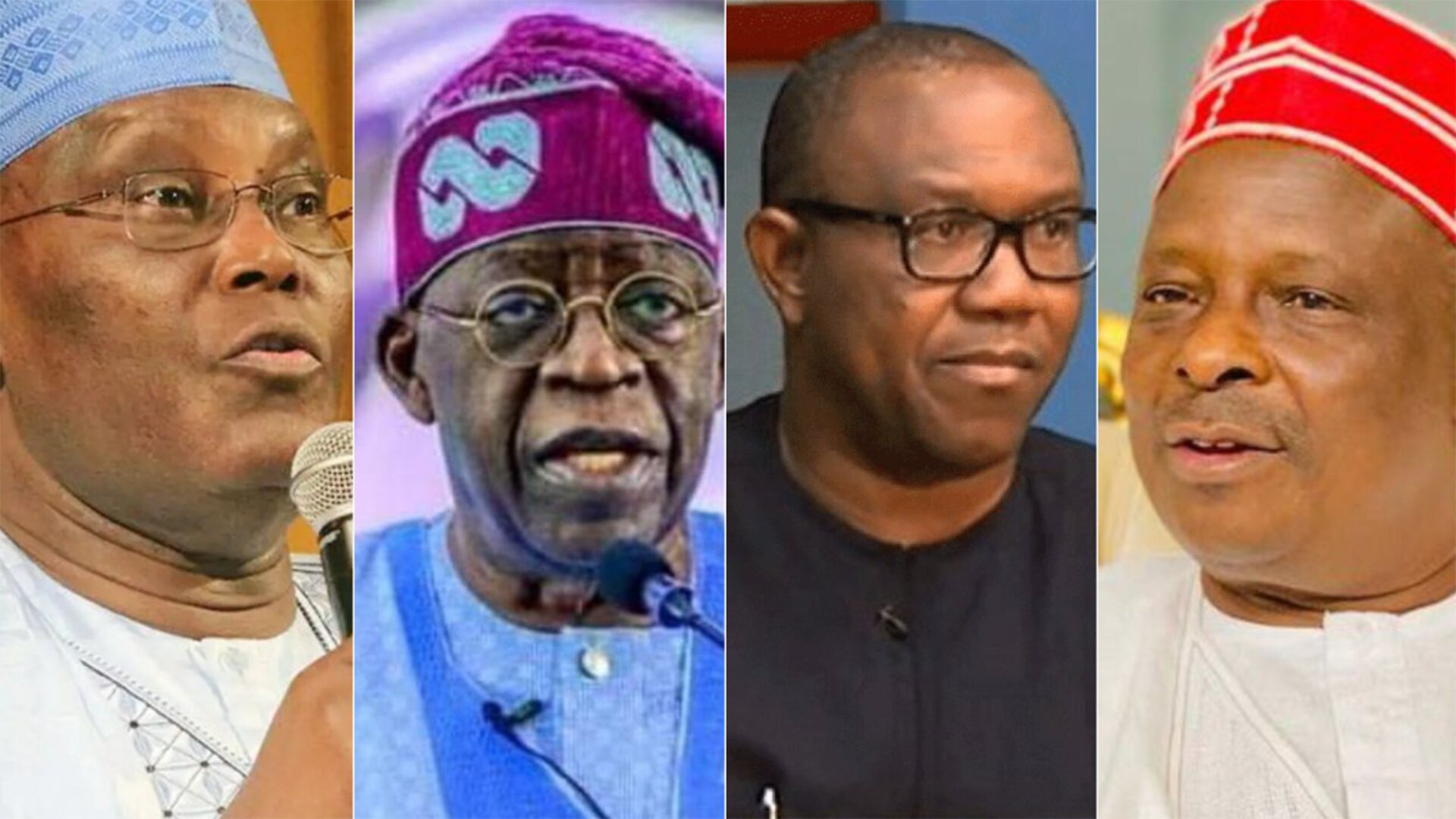
Like in 2015, today, we are again witnessing a period when Presidential candidates are being profiled based on their ethnic affiliations instead of their pedigrees. We are having candidates getting attacked desperately on sentiments and arguments that bring nothing to the table except confusion and division. Being a front-runner for Nigeria’s number one job, the Vice President is one of the most prominent victims of these ethnoreligious motivated attacks

As expected, the build-up to Osinbajo’s presidential declaration has been greeted by so many criticisms, many of whom are targeted towards tarnishing his image and rubbishing his candidacy through lies, character assassination and carefully tailored misinformation. Osinbajo’s attackers are hell-bent on bringing down his candidacy even before it gets started. This goes to tell how significant he is in the political equation of 2023 despite many trying hard to dismiss his impacts over the last seven years.

The Vice President has been accused of being a religious and ethnic bigot. Some have gone as far back as his pre-political life to try to convince people of what many facts have proven him not to be. If we are to be fair to Osinbajo, the man is solely building his presidential campaign on the strength of his adventures of the last seven years in which opportunity has entrusted him with a national assignment that requires him to be fair to all Nigerians. As such you cannot use any other criteria to judge him.

In his first five years in office, he has supervised and presided over the initiation and implementation of the largest Social Investment Programme in the history of Contemporary Africa. A program that has been transparent, just and detribalized. Nobody can prove that he has used his position to skew the benefits of the social investment programme towards favouring any religion or region. It is one of the rarest programmes that tricked down to the doorsteps of the poor and downtrodden across all states of the federation.

In mid-2017, Nigeria almost plunged into a national ethno-religious crisis when the Biafran agitators were at the peak of their renewed call for separation. The Federal Government under the wisdom and initiative of the then Acting President Professor Yemi Osinbajo conducted a series of consultative meetings with various groups of leaders and people of societal influence across the country to make sure that the situation is tamed and controlled. Osinbajo tirelessly interacted separately with leaders of thought from the North and the South East, traditional and religious leaders from the same regions as well as all 36 state governors. This was no doubt a big positive step that even the opposition Peoples Democratic Party commended.

In their first tenure, Osinbajo’s same Christian constituency which some believe he is favouring accused him of working with President Buhari to Islamize Nigeria. The outcries became so worrisome that Osinbajo made a public clarification. He said that one day, he woke up around 6:00 am in the morning and saw a text message on his phone sent by a renowned Christian leader who said to him that one day he will account for his actions of allowing Muslims to dominate and take over the government of Nigeria. The Vice President has passed through all this only now to be labelled a Christian bigot.

He further said that he wondered what informed that sort of message while statistics show that there are two more Christians than Muslims in Buhari’s cabinet as of then. He cited an example of a time when a Northern Senator visited President Buhari in his presence and complained bitterly about the marginalization of his people. He however left with the embarrassing information that North West, his zone was leading in the number of heads of government parastatals with 47, followed by South West, South-South, South East, North East and then North Central. Why didn’t this senator do his homework before complaining? Misinformation.

I remember in one of our interactions with him in the last two years, he said if Nigeria disintegrates into smaller countries that can be run over at will by powerful ones, every region will be disadvantaged in different proportions. He, therefore, said our strengths lie in our diversities, number and size. He gave the example of Lagos State’s economy being six times bigger than that of Rwanda despite all the so-called giant strides recorded by Paul Kagame over the years. He emphasized that the country needs not to disintegrate into smaller parts for people to have the opportunity of holding public office and if it is his face or that of President Buhari you dislike that you want secession, then know that, their days in office are numbered but Nigeria can live forever.

As Acting President, he made one of the most diplomatic and yet authoritative efforts to save Nigeria from untimely disintegration in 2017. He brought together all political, traditional and professional stakeholders in Aso Rock to further boost their confidence in the Nigerian Project. Therefore, no one can question his resolve for national unity and integration.

I think the Vice President can be accused of anything but not religious, regional or ethnic bigotry. If anything, he is perhaps the most qualified Nigerian among those seeking the Presidency. He is the first and only Professor to become President or Vice President in Nigeria and has so far adequately demonstrated why the most educated among us need to be allowed to serve at the highest level. He is the most adequately educated and professionally inclined Presidential hopeful among the very top living Nigerians today.

The Vice President has delivered within the limit of authority, opportunity and responsibility at his disposal. He has spent seven solid years serving Nigerians and the President with uncommon patience, dedication and humility. He has never been disappointed in any task assigned to him. Unlike many Presidential hopefuls who are planning to run from regional, religious, political and selfish motivations, the VP plans to become a true Nigerian candidate and a president for all Nigerians.

That he has been to almost every Local Government in Nigeria is not and cannot be an exaggeration. His long-life push for justice reform in Nigeria has taken him to so many nooks and crannies in the country, The trader and market Moni social investment programmes have seen him monitor and visit rural and remote areas that even ward councillors may not fancy going. The same people who accused him of show-off and pretence when he was making such visits are now the ones denying he ever embarked on such visits.

That he has declared to continue from where the President Buhari has stopped is a diplomatic way of saying that he is the man who understands all the successes of this administration and is in a better position to build on them, and also the man who understands all its shortcomings and is in a better position to make up for them. However, some are hell-bent on twisting the narrative.

Those accusing him of political betrayal are tactically telling Nigerians that the Presidency is the birthright of some mighty individuals and it is, therefore, a crime for ordinary people like Osinbajo to make an attempt on it. What some people are having very difficulty swallowing is why will an ordinary teacher and lawyer who is not even a former governor or ex-minister and has become Vice president just become President? Who is he? But they forget, that power belongs to God.

The 2023 presidential election would have been won and lost by this time next year. It may be Osinbajo or anyone else. However, it is clear even to his worst enemies that the Vice President has all the required credentials to make a good President. Deploying arsenals of calumny campaigns to stop him will not work, only divine destiny can do that.

The writer is the Team Lead of the Osinbajo-Face of Hope Project. He can be contacted via info@ofaceofhope.com.

EXCLUSIVE: How bandits terrorise Dusten Reme, Funtua communities

By Uzair Adam Imam

Community members of Dutsen Reme, Funtuwa in Katsina State were thrown into mourning as bandits launched a fresh attack leading to the death of two citizens, Buhari Ahmadu and 11-year-old Usman, last night.

A source who exclusively spoke to the Daily Reality disclosed that the bandits roamed the community last night where they arbitrarily gunned down many people.

He said Ahmadu, a member of the Bakori local government council staff, passed on instantly as he was shot in the head, while Usman also died in the wee small hours of today.

The bandits, about 100, were said to have trooped to Dutsen Reme Tuesday around 10:30 pm, where they operated for almost 2 hours without any security intervention.

Our reporter gathered that this was the third time in ten days and during this holy month of Ramadan that these heartless bandits attacked this community, the development that strangled peace in the area.

The residents who spoke to the Daily Reality confirmed the incident wailing on the government to come to their rescue and end the incessant bloodshed in the community.

A resident, Lawal Hamisu, confided in our reporter that insecurity had strangled the peace in their community these days.

He said, “This is just not the first time. The bandits attacked this community three times in ten days. In the first place, they abducted a lactating mother. Until now, no one knows her whereabouts.

“On their second attack, they abducted two women and robbed people of their money, phones and whatnot. And sadly enough, the bandits on a fresh attack last night gunned down two innocent people in our community,” Lawan said.

Another resident, Mujahid Aliyu Maigora, recounted the harrowing tale of the incident saying, “it happened last night around 10:00 pm when I was coming back home from a cinema alongside my cousin. It surprised all of us to have heard gunshots in the air. We could not help but run away to save our dear cheap lives.

“The bandits walked, passed my house and made for one stall. So I think their intention might be to take away the cows there,” he said.

A resident, Amb Funtuwa, lamented that this is the time the government should mitigate banditry in Nigeria. He said, “government should just warrant order so that our security forces will confront these bandits.”

The residents pleaded with the government to do whatever possible to put banditry to an end in Nigeria, let alone the Dutsen Reme community.

All attempts to reach the Katsina State Police Spokesperson for comments proved abortive.

Suspected bandits kill councilor, abduct wives

By Uzair Adam Imam

A newly-elected councillor in Katsina State was gunned down as bandits rampaged through Gozaki town of Kafur local government area of the state.

The late councillor, Alhaji Nasiru Magaji, was killed in his residence in the wee hours of Wednesday.

Multiple sources confirmed the incident, saying the bandits had also abducted the two wives of the slain councillor.

A resident, Abdullahi Gozaki, said the bandits, who were about ten stormed the community, killed Magaji and abducted his wives.

However, the wives have reportedly regained freedom without any ransom.

“They attacked in the early hours of today (Wednesday) around 12:30 am, killed the councillor and abducted his two wives but later sent them back home,” he said.

Reforming the Almajiri system: More action, less talking

By Khairat Suleiman Jaruma

It took too long for us to realize that one of our biggest problems in northern Nigeria is the Almajiri system, even though we still have a few slowpokes that believe there isn’t anything wrong with the archaic and inhumane system.

We have criticized and blamed the system enough. It’s high time we started doing more action and less talking. But how do we go about it? Can we stop the influx of children into the system? Completely? No, but to a very reasonable extent, yes. But, how do we deal with those in the system already? You might say they should be taken back to their parents, and you are not wrong, but some can’t even remember their parents or where they come from. We also have those who have lost their families and villages due to banditry and terrorism. So, how do you go about it?

Baffah (2022) explained, “The best way to check the Almajiri system is to empower local governments. When you create wealth at the local level, rural to urban migration becomes unattractive, economic equality is everything”. But there is more to do than just this.

It is almost impossible to abolish the Almajiri system, and previous – and even ongoing – efforts to ban it failed woefully. What the Almajiri system needs are sustainable reforms, as opposed to the white elephant reforms that have been made in the past.

NexTier SPD suggests government must adopt the Child Right Act, which is an effort by UNICEF to protect children and ease the prosecution of violators of child rights. It is equally vital that the government criminalizes the movement of Almajiris from one place to another. In addition, begging and child labour should be banned entirely.

Also, the government must work with informal structures such as religious and traditional institutions to support and promote reforms by emphasizing the gain of a reformed Almajiri system to individuals, parents, and the society at large while discouraging incessant childbirths and implementing childbirth control policies.

The importance of religious leaders and traditional stakeholders in sustainable Almajiri reforms can’t be overemphasized. But, it’s also essential that, as individuals, we stop using Almajiris as henchmen for committing heinous crimes or as a source of cheap labour.

Khairat Suleiman Jaruma wrote from Kaduna via khairatsuleh@gmail.com.

Towards fighting drug and substance abuse

By Kabir Fagge Ali

The rate of drug and illicit substances abuse among Nigerian youths is alarming. It is heading towards a national emergency, which should be considered and treated appropriately with the kind of attention it deserves in our today’s modern society.

According to the United Nations Office on Drugs and Crime (UNODC), in the last 24 years, cannabis potency has increased by as much as four times in parts of the world, even as the percentage of adolescents who perceived the drug as harmful fell by as much as 40 per cent.

This is despite the evidence that cannabis use is associated with various health issues and other harms, especially among regular long-term users.

Meanwhile, a worrisome development that should not be treated with levity is that there are 11 million cannabis users in Nigeria, a third of whom seem to be regular users needing drug counselling.

Similarly, the world drug report further noted that “Between 2010 and 2019, the number of people using drugs increased by 22 per cent, owing to global population growth. Based on demographic changes alone, current projections suggest an 11 per cent rise in the number of people who use drugs globally by 2030 – and a marked increase of 40 per cent in Africa due to its rapidly growing and young population. In Nigeria, this would signify that the country will have to grapple with approximately 20 million drug users by 2030, further deepening the public health and public security challenge”.

Recall that the Chairman of the National Drug and Law Enforcement Agency (NDLEA), Buba Marwa, a retired major general, while reeling out some statistics, said Nigeria was not only the highest user of cannabis worldwide but that revelations from kidnapped victims had corroborated the facts that illicit substances were enablers of insecurity currently plaguing the country.

He noted, “it is not difficult to conclude that drugs have been catalysts of terrorism, kidnapping, banditry, armed robbery and various violent conflicts currently troubling the country.

The consequences of drug abuse can never be overemphasized, as it has birthed a lot of problems not only in the family but in the nation and the international community. Medical issues associated with drug abuse include mental disorders, liver cirrhosis, lethargy, irritability, and heart disorders. Studies also reveal that drug addiction contributes largely to social consequences such as internet fraud, gang formation, disruption of normal educational activities, cultism, violence, armed robbery, kidnapping, rape, sexual abuse, and reduced productivity.

Experts asserted that so many factors are responsible for indulging youths in drug and substances abuse worldwide. These include but are not limited to reasons such as; Parental abuse, depression, peer pressure, peer group influence, the proliferation of quacks in the drug trade, early childhood and adult trauma, and environmental circumstances.

Drug and alcohol abuse in Nigeria are serious problems and has mainly contributed to the sorry state of our dear nation. Therefore, we can no longer continue to ignore the implication of such action as it poses a threat to our lives and that of the upcoming generations.

Talking about the way out – the government alone cannot eradicate this social menace. It is a joint task involving every individual, community, family, school, civil society, religious organization, the media, business entities, and traditional leaders to halt the ugly trend.

Most of these drug abusers are jobless individuals roaming about the streets. Thus, the government should step up an effort to provide them with jobs, while others could be empowered with the necessary skills and tools to start their own business to carter for themselves and their family.

Again, the government should remember that stemming the tide of drug abuse is akin to solving the security challenges currently bedevilling the country. The time to take action is long overdue.

Fagge is a Student of Mass Communication at Skyline University Nigeria. He sent this article via faggekabir29@gmail.com.

Bauchi auto crash claims 6 passengers 

By Muhammadu Sabiu

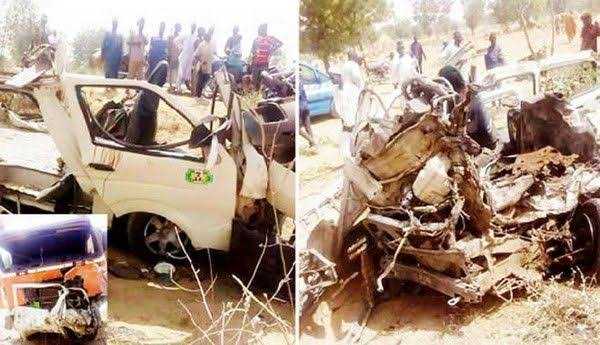
Six passengers in two commercial trucks were killed in an auto accident on the Bauchi–Kano expressway in Bauchi State on Tuesday.

According to an eyewitness, the collision occurred about 12:15 p.m., involving a Sharon Ford and a Volkswagen Golf transporting groceries.

The passengers in both vehicles, according to the witness, were burned beyond recognition after a head-on collision.

When contacted, Rilwan Adamu, spokesman for the Federal Road Safety Corps (FRSC) Bauchi State Sector Command, said he would make details of the accident accessible to the press following the rescue operation.

However, details in respect of the accident have so far not emerged.