By Abdulrazak Muktar
Dreaming big gives one a sense of accomplishment even if the dream didn’t come true. Interestingly, when people dream, they set their sights on something bigger than their imagination, even when it may seem practically impossible. This gives them the motivation and willpower to make changes and take action towards actualizing their dreams. The Nigeria of my dream should be a poverty-free, or poverty-reduced Nigeria, educated Nigeria, peaceful Nigeria, rich infrastructural Nigeria, and should be Nigeria with massive opportunities for its teeming population. A highlight of these in no particular order is given;
1. Poverty-free or reduced poverty state: Several countries at various levels of development have shown in the last few decades that it is possible to successfully reduce the level of poverty in a country. However, with the pace of reduction slowing in recent years, poverty is becoming increasingly concentrated in tough-to-reach places. This comes amidst uncertainties that the entire world is facing. From high inequality to slow growth, from macroeconomic imbalances to trade tensions, challenges loom on the horizon that can not only make it difficult to reduce extreme poverty but threaten to reverse the gains. While we have a set of policies that can help to effectively reduce poverty, each policy intervention should be tailored to the needs of Nigerians. I want a Nigeria that is not associated with a host of health risks, including high rates of heart diseases, diabetes, hypertension, cancer, infant mortality, mental illness, malnutrition, lead poisoning, asthma, and dental problems. Obviously, poverty exerts heavy tolls upon those who fall within its traps. For example, one of the most consistent findings in epidemiology is that the quality of an individual’s health is negatively affected by lower socioeconomic status, particularly impoverishment.
There have been several attempts to quantify the cost of poverty in terms of monetary amount. However, the ability to estimate the magnitude of the costs surrounding an issue like that of poverty is exceedingly complex. Poverty affects every Nigerian, whether rich or poor. Again, issues such as crime, access to and affordability of health care, religious fanaticism, ethnic bigotry and job productivity, to name but a few, are the major concerns of all Nigerians. All these as a result of the monster – poverty. The general public winds up paying a heavy price for allowing poverty to walk naked in the streets of Nigeria.
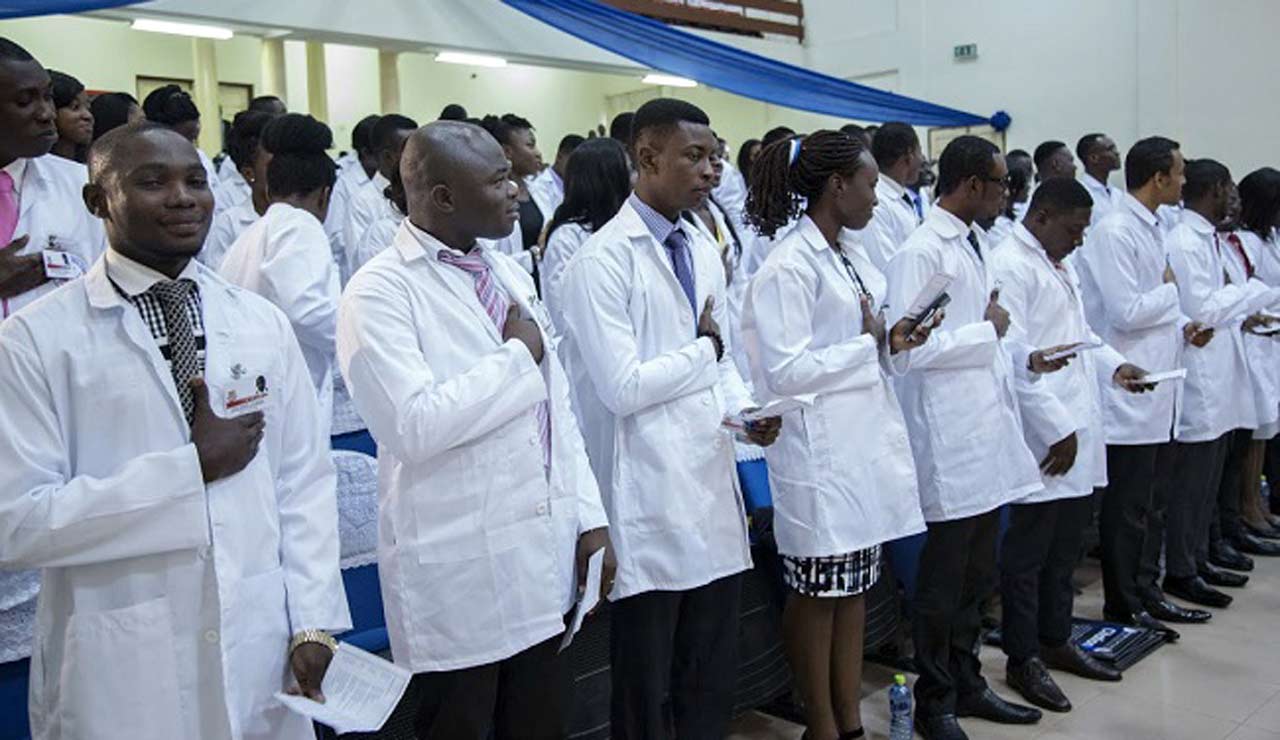
2. Educated Nigeria: A Nigeria without lingering ASUU strike will be truly interesting. If this is achieved, there will be a greater chance of producing more capable graduates. There is also a greater chance that degree holders will have full-time jobs that will ultimately provide health insurance and retirement benefits. With an educated Nigeria, there is going to be more employment opportunities for our teeming population, especially the youth. At present, you often need to compete with hundreds of other equally qualified candidates for a single job position.
In addition to this, the lower the education level, the greater the number of people applying for the same low-paying entry-level post. However, with the right qualifications and educational background, you are likely going to increase your chances of landing a fulfilling job. Would you like to stand out from a pool of applicants? Educate yourself, graduate, get as many qualifications, and learn valuable skills as much as possible.
Also, an educated Nigeria will help in securing a higher income; people with higher education and varied experience are more likely to get high-paying jobs. Dedicate your time and effort to acquire contemporary knowledge and high-level competencies if you would like to lead a comfortable lifestyle. Your credentials are what will motivate a potential employer to choose you instead of others. Studying hard throughout your schooling shows you can handle workloads and you are able to fulfil your goals. Employers see this as a huge advantage as they prefer a responsible and knowledgeable workforce. Once you graduate, you can start searching for jobs that will give you the opportunity to practice what you have learned and, at the same time, secure sufficient pay for your needs.
An Educated Nigeria will provide problem-solving skills. One of the benefits of education is that the educational system teaches us how to develop critical thinking skills so we can be able to make independent decisions. When children become adults, they are faced with lots of challenging issues – paying off their student loans, getting a job, buying a car and a house, catering for their family, etc.
However, if one has spent years educating himself. They should be able to make sound decisions on these various quandaries. Not only are people able to form their own opinions, but also good at finding solid and reliable arguments and evidence to back up and confirm their decisions.
Literate Nigeria will help in improving the economy. People with good academic and educational backgrounds tend to get well-paid jobs. The higher their education and accomplishments, the better employment chances they get. People who grew up poor but educated themselves have a high chance to transform their lives, thus decreasing society’s poverty rates. Education helps countries grow economically since it is about getting knowledge and being able to apply it wisely in our lives and, at the same time, improving other peoples lives.
Truly, education helps in providing a prosperous and happy life. Education has always secured respect from society. In order to ensure a comfortable lifestyle, people should educate themselves to be successful and satisfied. It helps gain a better reputation and increases the chances of climbing the career ladder more easily and faster. It provides financial resources for stable lives people can afford to buy their own house or apartment, thus securing their children’s happiness and success. Furthermore, being able to own a house provides stability and increases self-confidence. It also leads to creating a positive environment for families and communities. Children of homeowners are 116% more likely to graduate from college than children of renters of the same age, race, and income. According to research at the University of Tennessee, they are also 25% more likely to graduate from high school and have higher math and reading scores, with fewer behavioural problems.
Education contributes immensely to society. How does education benefits society? Educated people understand how valuable living in a stable and secure community is. They are more prone to taking part in projects that help improve not only their neighbourhood but also their society. In addition, when people are able to afford their own house, they are more likely to take part not only in improving their homes but in solving local problems, as well. After all, it is quite important to get involved and give a hand to the less fortunate ones in order to build a better place for all of us to live.
Education is the key to modern Nigeria. Education is the key essence of modern society. One needs to learn about culture, history and other important aspects so that they would be able to contribute to modern society. Education moulds people into leaders not only with knowledge about (college) subjects, but it also shows them how to lead with emotions and true values. Educated people can easily differentiate between right and wrong. Thus, education helps reduce the crime rate. Bad events are happening around the world only competent leaders can help guide us on the good and right path.
Digital Nigeria is possible if we become a literate society. Digital education helps connect with people and organizations around the world. Borders are no longer there. Communicating and sharing opinions with people from other countries and cultures widens horizons and helps us understand and appreciate each other.
Education creates equal opportunities. The importance of education in society has always been great as it is irrespective of caste, race, gender, or religion. Educated people are treated as equals on the basis of their knowledge and competence. In addition to this, educated people are open-minded and are able to listen and accept other peoples views regardless of the fact of how different they are. Education offers the possibility to live independently and thus be free. It is our shelter against financial storms and wrong decisions.
Education helps in initiating empowerment projects; in introducing empowerment, education is the key to turning a weakness into a strength. It offers different tools and ways to understand problems that lay ahead of us and help resolve them. More importantly, education provides us with the considerable mental agility to make the right decisions and spring into action when needed. Many types of research show that educated women can more easily stand up against gender bias and marital violence as they have improved their decision-making capabilities. Whether it is about respect, a higher position in society and a professional environment, financial security, family stability, education provides all of these and much more. Home stability provided by owning a home helps children who grew up in their own houses or apartments become more successful. They are more likely to graduate high school (25%) and finish college (116%). As Nelson Mandela said, education is the most powerful weapon you can use to change the world. Education helps people become better citizens, get better-paid jobs, and shows the difference between good and bad. Education shows us the importance of hard work and, at the same time, helps us grow and develop. Thus, we are able to shape a better society to live in by knowing and respecting rights, laws, and regulations. Learning languages through educational processes helps interact with different people in order to exchange ideas, knowledge, and good practices. It teaches us to live in harmony.
4. A peaceful Nigeria: I want a united working Nigeria where I can relate with my friends and brothers from six geopolitical zones, the North Central (NC), North East (NE), North West (NW), South West (SW), South East (SE) and South-South (SS) freely as One.
A banditry-free Nigeria
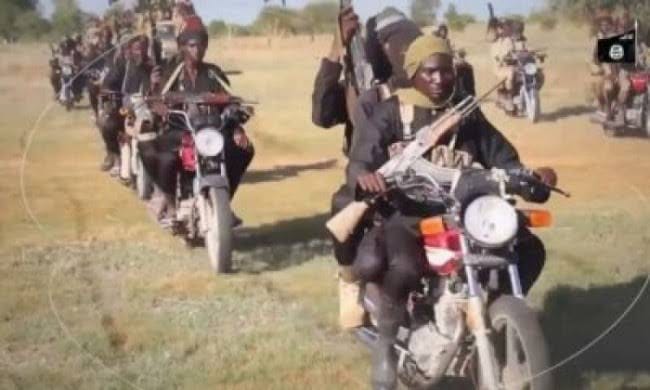
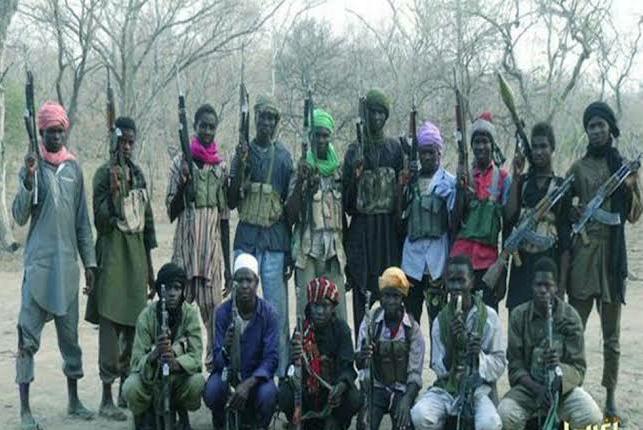
A Nigeria free from ISIS, Boko Haram, kidnapping, sara-suka, phone snatchers, IPOB and any terror group that is threatening peaceful coexistence.
A Nigeria that guarantees the safety of travelling by road and by rail as well, a Nigeria where one can hold an iPhone by the street making calls or chatting without fear of losing it to phone snatchers.
I want a Nigeria that’s free from sexual abuse, a Nigeria that’s free from domestic violence and disturbances.
5. Rich infrastructural Nigeria: I pray one day I’ll wake up to a Nigeria that has become like China economically, as it’s now the wealthiest nation in the world according to McKinsey & Co report.
I want Nigeria to be as beautiful as Italy because Italy is truly the most beautiful country. It flaunts the most inspiring cultural treasures and magnificent scenery, which you cannot find anywhere in the world, e.g., Venice, Florence and Rome; with their diverse Architecture, Tuscany, with its rolling hills, will surely mesmerize its visitors.
I have a dream that one day Nigeria will possess technological expertise like that of Japan, not even South Korea or China, the United States, or Germany, talk less of Russia, the United Kingdom (UK) or Singapore; it was ranked eighth in the list of world countries with amazing technological expertise.
6. A Nigeria with many opportunities for the youth without connection: Nigeria’s popular saying says, “it’s not what you know, its who you know. On several accounts, many people were denied job opportunities not because they were not qualified but because they knew nobody. Even the lecturing job was denied to many finest brains and given to those with connections; it got to the extent that grades can be manipulated for some reasons; a friend of mine was almost denied first class if not because of the connection he has with school management. Such a problem is all over the country and is beyond any denial. Many people are buying offers of appointment in several ministries, and those who sell the offers do not care whether you can deliver or not, so far as the price is good.
I also hope Nigeria will one day be one of those countries that look for expertise, not only connections, as is the case today.
Finally, the Nigeria of my dreams is possible when we deliberately choose not to repeat the mistakes we made in choosing leaders for our country.
Abdurrazak Muktar wrote via prof4true1@gmail.com.