Admin

JUST IN: President Tinubu sacks FCCPC, BPE CEOs

By Sabiu Abdullahi

President Bola Tinubu has dismissed Mr Babatunde Irukera, Chief Executive Officer of the Federal Competition and Consumer Protection Commission (FCCPC), and Mr Alexander Ayoola Okoh, Director-General/CEO of the Bureau of Public Enterprises (BPE).

The move is part of a broader plan to restructure and revitalise critical agencies of the federal government. 

In a statement released on Monday by Ajuri Ngelale, the Special Adviser on Media and Publicity to the President, it was announced that the dismissed CEOs are instructed to hand over their duties to the next most senior officers in their respective agencies.

This transitional measure is in effect pending the appointment of new chief executive officers. 

The presidency affirmed that the removal of the chief executives takes immediate effect, signifying the swift implementation of President Tinubu’s directive.

The decision aligns with the government’s commitment to restructuring and repositioning key agencies, with a focus on safeguarding the rights of Nigerian consumers and fortifying the foundation for increased contributions to the nation’s economy by pivotal growth-enabling institutions. 

As the nation anticipates the appointment of new leadership for these agencies, the restructuring efforts shows some signs of the administration’s dedication to fostering efficiency.

The impact of poverty on health, education, social structure, and crime

By Umar Sani Adamu

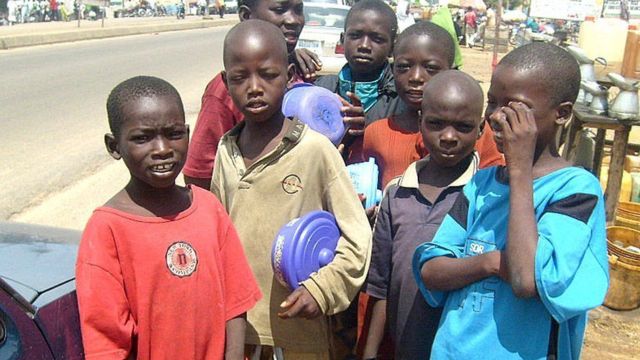
Poverty has far-reaching consequences on various aspects of society, including health, education, and social structure. Understanding these repercussions is crucial for addressing the root causes and developing effective strategies to alleviate poverty and its associated issues.

1. Health

Poverty significantly impacts health outcomes. Limited access to nutritious food, clean water, and adequate healthcare services contributes to a higher prevalence of malnutrition, infectious diseases, and chronic conditions among the impoverished. Lack of resources often results in substandard living conditions, exposing individuals to environmental hazards. Additionally, stressors associated with financial insecurity can lead to mental health issues, further exacerbating the overall health burden.

2. Education

Poverty creates barriers to educational attainment. Families struggling with economic hardships may prioritise immediate needs over investing in education. Children from impoverished backgrounds often face challenges such as inadequate access to quality schools, resources, and educational support. Limited access to books, technology, and extracurricular activities hinders their development. As a result, the cycle of poverty continues, as these individuals may find it challenging to break free from their circumstances through education.

3. Social Structure

The social fabric of a community is intricately linked to economic well-being. Poverty can contribute to the fragmentation of social ties as individuals grapple with the stress and uncertainty of their circumstances. Communities with high poverty rates may experience increased social inequality and a lack of social cohesion. This can manifest as reduced community engagement, weakened support networks, and a diminished sense of belonging.

4. Crime

Poverty is often identified as a significant factor contributing to crime. Several mechanisms explain this relationship. Firstly, individuals in poverty may resort to criminal activities as a means of economic survival. Limited opportunities for legitimate employment can lead some to engage in illegal activities to meet basic needs. Additionally, impoverished communities may experience higher rates of substance abuse, which can further contribute to criminal behaviour.

Furthermore, the lack of access to quality education and limited social support in impoverished areas can result in a higher prevalence of delinquency. The frustration and hopelessness stemming from persistent poverty may lead individuals, particularly young people, towards criminal behaviour as an alternative to breaking free from their challenging circumstances.

Addressing the Link Between Poverty and Crime

A multi-faceted approach is necessary to mitigate poverty’s impact on crime. Policies to reduce poverty through economic empowerment, education, and healthcare access are crucial. Investments in education, vocational training, and job creation can provide individuals with opportunities to escape the cycle of poverty and reduce the likelihood of resorting to criminal activities.

Social support programs that strengthen community bonds, mental health services, and addiction rehabilitation can address some of the root causes of criminal behaviour associated with poverty. Additionally, targeted efforts to improve law enforcement-community relations and reduce systemic inequalities can contribute to crime prevention.

In conclusion, poverty has profound consequences on health, education, and social structure, with a direct link to increased crime rates. Breaking this cycle requires comprehensive strategies that address the systemic issues contributing to poverty and simultaneously provide individuals and communities with the tools and resources needed for positive transformation.

Umar Sani Adamu (Kawun Baba) wrote via umarhashidu1994@gmail.com.

JUST IN: Minister Edu suspended amidst allegations of financial irregularities

By Sabiu Abdullahi

President Bola Tinubu has suspended Dr. Betta Edu, the Minister of Humanitarian Affairs and Poverty Alleviation, in response to an ongoing investigation into allegations of financial irregularities. 

Previously announced by the Presidency, the investigation revolves around the transfer of N585.189 million by Minister Edu.

Bayo Onanuga, the President’s Special Adviser on Information and Strategy, assured the public that appropriate action would be taken pending the conclusion of the inquiry. 

The controversy unfolded as reports surfaced indicating that funds designated for vulnerable groups in Akwa Ibom, Cross River, Ogun, and Lagos states were diverted into a private account.

This revelation sparked widespread public outrage and fueled demands for Edu’s dismissal and subsequent prosecution. 

A leaked document bearing Edu’s signature detailed the direct disbursement of N585.189 million into the private account of Bridget Mojisola Oniyelu.

The veracity of this leaked document confirmed that the funds indeed found their way into Oniyelu’s account. 

Addressing the escalating situation, Edu, through her Special Assistant on Media and Publicity, Rasheed Zubair, stood firm, asserting that the payment strictly adhered to due process.

The suspension adds a new layer to the unfolding saga, raising further questions about the financial transactions under scrutiny.

The conscious reawakening of Northern storytelling: HIBAF and its long way to liberation

By Sa’id Sa’ad

In 2021, I sat at Arewa House. I listened to Late Ummaru Danjuma (Kasagi) thunder – in his old throaty yet commanding voice – bitterly about how Hausa culture and stories have diluted over the years. His face, though saddened, lit by fluorescence – old, yet much alive – spread goosebumps throughout the room, reawakening all the murdered tales back to life. No one would think that that command births the reawakening of not just Hausa culture, stories, and language but northern Nigeria’s stories.

That was the maiden edition of the Hausa International Book and Arts Festival (HIBAF)—a time when literary festivals have suffered lashes of COVID-19. Literary enthusiasts, writers and journalists were once again full of life to reconnect. While some see it as a promising beginning for a new Jaipur Literature Festival of Northern Nigeria, a lot thought it was just a naming ceremony of yet another Nigerian literary festival that will soon wither due to shrinking funds.

Hausa or northern Nigeria literature – before now – couldn’t afford itself a “consistent” arts festival that solely promotes and celebrates its artistry, culture, and stories until the advent of HIBAF. However, there were several one-off attempts previously, but mostly political. One might argue that festivals like Kaduna Book and Arts Festival (KABAFEST) have blanketed the same purpose. Still, I would differ because KABAFEST is an international festival bringing international guests with national stories to a northern city. KABAFEST is – or now probably was – an arts festival “in” northern Nigeria, while HIBAF is an arts festival “for” northern Nigeria. This is not a dismissal of the influence KABAFEST had on northern Nigeria. It would be stupid to dismiss that.

However, as the region continues to suffer stereotypes about its literary prowess, HIBAF could stand on the edge of liberating northern Nigeria from such an ugly view. Perhaps the birth of what can be predicted today is the conscious reawakening of northern stories.

For a young festival with such an ambitious name, the question is: Is HIBAF only representative of the Hausa people or northern Nigeria?

It is easy to assume that HIBAF solely represents Hausas and their stories, especially for those who view them from the outside. This is mainly because, unlike other art festivals in Nigeria and around the world founded to represent a geographical entity, such as Lagos Book and Arts Festival, HIBAF is one of few whose nomenclature represents a tribe. In previous seasons, the festival granted conversations in the English Language; therefore, that says a lot about HIBAF going beyond Hausa “alone” in its programming, which I find healthy.

It would be great if HIBAF were only for Nigerian Hausas. It is okay if it is for Hausas globally. But it will be graciously honourary if HIBAF is for northern Nigeria in general. The value of this ambitious festival is in its capacity to reconnect Hausas and Hausa cultures with cultures around it through diversifying into introducing tribes that have existed with Hausas, such as Fulani, Nupe, Tiv, Igala and other northern tribes to its programming. This will mean Hausas and communities of non-Hausas in Hausa communities could re-share a space in arts and shape a positive narrative of the region in terms of collective literary and artistic prowess. This will create a unified northern story(ies).

Another issue that can’t be dismissed is the problem of northern consciousness – this time, refusal – to appreciate northern initiatives. It is a similar case for HIBAF. It is seldom difficult to see a representation of famous northern personalities – especially from Kannywood and music sub-sectors, aside from a few interested in literature such as Aminu Ala or Ado Gidan Dabino. Most hardly care. This does not mean that such personalities – who don’t care – will decline invitations from similar festivals in other parts of Nigeria. They certainly will accept. Now, the question of the “potentiality” of the festival in creating “value” and “shaping northern stories” has everything to do with bringing people of value, not just in literature but from other art sub-sectors such as Kannywood and Hausa music space into its fold.

Knowingly or unknowingly, the Kannywood industry needs more fora this time than ever. Imagine Ali Nuhu, Rahama Sadau, Fauziya D. Sulaiman and Salisu Balarabe on a panel to discuss how northern creative writers could get their – more well-written stories – to Kannywood screens. This panel can pave the way for collaboration that could place both the creative writing and Kannywood film industries decades ahead—a potential both industries share.

With its ambiguous programming nature of inculcating cultural programmes, the festival could give life to northern cultural heritages on the verge of fading with the recent digital revolution. It will be fascinating to see HIBAF Durba, HIBAF Tashe, HIBAF Dambe, Dandalin HIBAF, HIBAF Mawakan Gargajiya and other numerous HIBAF’s all-year-round that could bring back the northern cultural heritages while also Including non-Hausa cultural programme. Again, this creates unified northern cultural narratives.

This year’s HIBAF, in its third year of awesomeness and vibrancy – though still wounded by honest negative feedback from the second season – is bringing diasporic faces back home. Simply put, ‘going international with locals, and for locals.’ Such a breed can give life to a new dimension of cross-geographical collaboration between northern storytellers in the diaspora and Nigeria—a remarkable feat to a tremendous progressive bond.

While the festival, through its host organization, is becoming a spot for learning and sharpening creative and artistic mastery through workshops and seminars, it depicts how it can create a birthplace of yet new sets of Abubakar Imams and Zaynab Alkalis who would live to tell the stories. But this can also be limited if the focus is Hausa and literature alone as, thus, expansion both in language and sub-sector is where the growing inclusive value lies.

From pages of novelists to the rhymes of poets, from scenes of playwrights to screens of filmmakers, from the vocals of singers to the lyrics of songwriters, from the colours of culture to the lens of photographers, from northeast to northwest and northcentral, HIBAF could cook a recipe of blended stories – of all that have been around Hausa – to a valuable northern unified story.

Though all these are a long walk to a new revolution for northern Nigeria’s stories, it can place HIBAF at a point of liberating the region and demolishing its stereotypes.

Sa’id Sa’ad is a Nigerian writer, playwright and journalist from Maiduguri. He won the Peace Panel Short Story Prize 2018 and the NFC Essay Prize 2018. He writes from Bonn, Germany. He can be reached directly at saidsaadabubakar@gmail.com

Nigerians call for the sack of Betta Edu

By Ahmad Deedat Zakari

Following the allegations of corruption in the Ministry of Humanitarian Affairs and Poverty Alleviation, Nigerians on the micro blogging platform, X, are calling for the removal of its minister, Dr Betta Edu.

In a document which has now gone viral and purportedly signed by the minister, she wrote to the Office of the Accountant-General of the Federation and directed the disbursement of N585.189 million into one Bridget Mojisola Oniyelu’s private account.

The minister had made clarifications on the allegations, she explained in a statement released on Friday that the controversial payment followed due process.

However, many Nigerians are not convinced by her explanations and are demanding that President Tinubu should relieved her of her job.

According to Farooq Kperogi, the allegation presents an opportunity for the Tinubu government to do the right thing and not tolerate corruption like the previous administration.

“This is a momentous moment for Tinubu. If he does not fire Edu forthwith and bring her to justice, he has already lost the moral high ground to try Buhari’s corrupt honchos.”

A human right lawyer, Inibehe Effiong, said she ought to have resigned immediately.

“Has Betta Edu been interrogated by the EFCC yet? When is she tendering her resignation letter?” He wrote.

“If Betta Edu still has a job by tomorrow morning, then we will know that Bola Ahmed Tinubu is not ready to lead this country. You cannot be swift in suspending Halima Shehu while Edu Betta, who has suspicious academic records and serious allegations against her, still has a job. Suspend her now and allow @officialEFCC to invite her for interrogation” an X user, simply identified as Sarki, posted.

Thousands of Nigerians and civil rights organizations are calling for thorough investigation and her removal.

Struggles of students: A cry for justice

Usman Muhammad Salihu

In the hustle of everyday life, many people find themselves navigating through challenges, and for some, the journey includes the demanding world of academia. A recent encounter with a university student sheds light on the harsh reality students face on the path to education, especially in Nigeria today.

As a graduate waiting for our results to be released, I engaged in a rickshaw business. As I was moving through the city of Jos, Plateau State, I picked up a young woman who, by all appearances, seemed to be a dedicated university student. Little did I know that the shadows of academic hardships marred her journey.

Her phone conversation with a fellow coursemate delved into the frustrating realm of carryovers and spillovers. According to her, some lecturers seemed to wield their power recklessly, subjecting students to the ordeal of repeating courses, even after graduation. What struck me was the claim that these burdens were inflicted upon students who resisted inappropriate advances.

With a frustrated tone, the young lady spoke of the financial strain that accompanies repeating courses. Despite the current economic challenges faced by many Nigerians, students find themselves compelled to pay registration fees to rectify the consequences of what appears to be an unjust system.

If the allegations are indeed true, and this is a manifestation of the notorious “sex for grades” issue, it raises serious concerns about the ethical conduct within our educational institutions. It is a cry for justice that cannot be ignored.

In response to these distressing revelations, a collective responsibility falls upon the government, the Students Union, and the wider public. The government must ensure a thorough investigation into these claims, holding accountable any lecturer found guilty of such misconduct. The Students Union has a vital role in advocating for the rights of its members, providing support, and pushing for systemic changes that protect students from exploitation.

Moreover, the public must not disregard the struggles faced by these students. Awareness is the first step towards change. By shedding light on these issues, we collectively contribute to fostering an environment where students can pursue education without fear of victimisation. Only through collective action and a commitment to transparency can we hope to eradicate these hardships and create a safe space for education to flourish.

Usman Muhammad Salihu writes from Jos, Nigeria, via muhammadu5363@gmail.com

From wishful Tweet to millionaire marvel: Lady’s unbelievable transformation captivates social media

By Uzair Adam Imam

In the span of 48 hours, Mrs. Deborah Olaki, also known as Mummy Zee, has become a social media sensation and a millionaire, thanks to the overwhelming support of Nigerians on the platform X.

This transformation was sparked by a post in which she shared her daily routine of waking up at 4.30 am to prepare her husband’s lunch.

Olaki, a graduate of Geophysics based in Lagos State, had initially requested a small bedside fridge from Santa Claus in a tweet on December 29, 2023.

Despite garnering attention with 230 likes, 70 retweets, and 16 comments, her wish remained unfulfilled.

Expressing concern for his wife’s well-being, Olaki’s husband, Mr. Abiola Adebisi, a classroom science teacher, noted on Twitter that she deserved a better life.

Subsequently, Mrs. Olaki shared her account number, and within a short time, she received over N2 million from generous Nigerians.

Astounded by the support, she shared a screenshot of her account balance, exclaiming, “She’fe pami ni? (Do you want to kill me?)”.

Besides the monetary gifts, an angel recommended her for a remote Virtual Assistant role with a monthly pay of N50,000.

As of the latest update, Mrs. Olaki has received over N5 million in her account, and her husband has also benefited from cash donations.

Her initial tweet generated over 21 million impressions, with a surge in followers from around 2,300 to over 78,000.

In addition to the financial support from well-wishers, Mrs. Olaki has received various donations, including a generator set worth N250,000 from the Nigerian National Petroleum Company Limited (NNPCL).

Other contributions include two laptops and a one-year Internet subscription from the National Information Development Agency (NITDA), an Infinix 40, an iPhone, a Smart TV, a cabinet, a mattress, a freezer, a blender, a microwave oven, one year’s health insurance, one year’s worth of insecticide, N200,000 worth of deliveries from Kiakia Delivery App, and furniture from @OTUNBA_TIZ.Mrs.

Deborah Olaki’s heartwarming story has captured the attention of individuals and organizations alike, reflecting the power of social media in positively impacting lives.

How Kannywood can change the northern narrative

By Aminu Mohammed

This article was inspired by a Facebook post by Dr Maryam T. Hamza, who urged northerners to stop casting aspersions on actors and practitioners of the Hausa language film industry, popularly known as Kannywood. The post got me thinking about my recent trip to Nigeria last year. I still recall how enthusiastic people at home were about the movie series Dadin Kowa shown on Arewa 24. I wondered what kept them glued to the TV while watching the Dadin Kowa drama.

It is a well-known fact that many families spend ample time at home watching movies from India, Korea, Turkey, the Philippines, and other countries. While in secondary school in the 1990s, I discovered that most of my friends were conversant with the names of famous Indian actors such as Amitabh Bachchan, Dharmendra, Jeetendra, Rajesh Khan, etc. We also became conversant with Indian culture, food and cities through the movies.

This reminds me of Funke Akindele’s recent movie A Tribe Called Judah, which has become the first Nollywood movie to hit one billion Naira from the cinemas in just three weeks of its release, marking a historic moment in the Nigerian movie industry. The film portrays the challenges bedevilling low-income families in their struggle for livelihood and survival. President Bola Tinubu congratulated Funke for the feat, and eulogies from former Vice President Atiku Abubakar and Peter Obi also followed this.

We Need to Tell Our Story

I have watched the movie Amina, which tells the story of Queen Amina of Zazzau, a 16th-century Hausa kingdom in what is now known as Zaria. Although the film was interesting and well-made, I was surprised to learn that the producers, Okechukwu Ogunjiofor and Izu Ojukwu, were not from Kannywood, despite casting Ali Nuhu, among other mainstream Hausa actors, in the film. I wondered why this was the case.

While I enjoyed the movie and praised the producers for their work, I couldn’t help but feel that something was missing. I felt uneasy that outsiders were telling the story of our traditional system while our people had overlooked or neglected to do so. It bothered me that we tend to criticise and demonise artists and icons in our society rather than promote them. Are we comfortable with outsiders telling stories about our culture and traditions? Are we okay with letting outsiders define who we are?

It’s concerning that people who watch American, Chinese, Korean, Indian, and Turkish movies are quick to condemn Kannywood actors and actresses, accusing them of spreading immorality. Why do we celebrate foreign celebrities and movie stars while looking down on our own simply because they speak the same Hausa language as us? How can we expect to progress as a society when we tear down our talents and icons?

During my undergraduate days at the Ahmadu Bello University, Zaria, American pop music and gangster rap were popular among students. However, things have changed over time, and many Nigerians now listen to our local music. Nigerian artists like Burna Boy, Davido, Wizkid, Tiwa Savage, Kizz Daniel, and others are now popular across the globe. Even former U.S. President Barack Obama listens to Nigerian music. Afrobeats singers like Burna Boy and Ayra Starr were on his 2023 summer playlist.

Kannywood Has Great Potential

Nollywood has become one of Nigeria’s biggest exports in the last decade, highlighting the immense talent of Nigerians. The creative and entertainment industry has seen tremendous growth over the years, improving the livelihoods of many practitioners. Similarly, Kannywood has created numerous job opportunities for people in the North, such as actors, producers, directors, costumiers, makeup artists, fashion designers, singers, dancers, scriptwriters, and bloggers.

We must support Kannywood and promote our own talents rather than criticise them. We must stop seeing the movie industry as a place for fostering immorality and social vices. Instead, we should harness Kannywood’s potential to generate foreign exchange and enhance economic growth and development in Kano state and the entire Northern region.

Film as Instrument of Positive Change

The movie industry has the potential to inspire diligence, hard work, honesty, and productivity among our youth. It can serve as a valuable tool to promote girl-child education, literacy, and women empowerment, generate employment opportunities for talented youths, as well as change the negative perception of the North as a place plagued by religious intolerance, banditry, and insurgency.

I enjoy watching Dadin Kowa and Kwana Casa’in on Arewa24 occasionally. I also listen to Hausa songs, especially those by Naziru Sarkin Waka, to stay connected to my culture and traditions as I live outside Nigeria. It is worth noting that Kannywood movies do not depict scenes of sex, kissing, hugging, or any other inappropriate content that could tarnish the industry’s reputation.

Promoting our culture and language through movies and home-grown creative efforts is essential. We can use movies to tell heroic stories about our forefathers and instil good values, family ethics, productivity, and religious morals in our youth. I firmly believe that harnessing Kannywood’s potential can bring about the desired change in our society and encourage us to hold our political leaders accountable for their stewardship. 

Aminu Mohammed wrote this article from Ingolstadt, Germany. He can be reached at gravity23n@gmail.com.

Pastor arrested for allegedly defiling 16-year-old girl

 By Sabiu Abdullahi 

The Ogun Police Command has apprehended a 43-year-old pastor, Clinton John, for the alleged defilement of a 16-year-old girl whose identity is being withheld. 

The arrest was made following a report filed by the family at Giwa Agbado, who suspected their daughter’s involvement in sexual intercourse due to recurring infections and unsettling behavior. 

The Command’s spokesperson, SP Omolola Odutola, revealed in a statement that the family reported the case to the Agbado Divisional Police Station. 

The victim eventually confessed that Pastor Clinton John of Mega Healing Ministry had been engaging in unlawful carnal knowledge of her since November 2022. 

Disturbingly, she claimed that the pastor had threatened her life if she ever disclosed the illicit affair. 

Upon interrogation, the suspect, Clinton John, admitted to the crime, acknowledging multiple instances of unlawful carnal knowledge of the young girl. 

The police have issued medical forms to the survivor for necessary treatment and examination. 

SP Omolola Odutola further informed the public that Pastor Clinton John would be transferred to the State Criminal Investigation Department, Eleweran, Abeokuta, for a discreet investigation into the matter.

Beyond the essentials; leveraging personal growth for success

By Muhammad Muzzammil Bashir

While mastering essential skills and knowledge is crucial, true success today often hinges on going beyond the baseline and actively cultivating personal growth. It’s about unlocking your full potential and becoming the best version of yourself.

It’s common that in order to do your job effectively, you need to have the technical know-how, or more so, you need to earn a certificate and license in order to practice for professional careers. These are the essentials. The prerequisite for skill practice. They provided the foundation – the sturdy scaffolding upon which we built our lives. They equipped us with the knowledge and skills to navigate the complexities of the world and secure a foothold in the ever-churning tide of life.

In this constantly ever-changing world, with different definitions of success always emerging, from being prowess with hard work to earning academic accolades, or both, now to low-profile, nuanced skills that are embedded in our personal character, termed soft skills, personal growth skills, or more so abilities beyond the technical, that propel us toward success. The skills, degrees, and certificates we earn alone may not, by themselves, help us build the career path we aim to reach. We found ourselves in an era where the application of artificial intelligence is rampantly proliferating, where distance and space are no longer barriers, and where employers are looking for employees that have skills that show the warmth of empathy, active listening, imagination, time management, efficiency, and the spark of passion to ignite
self-discovery.

In his famous book, Skills Rather Than Just Degrees, Professor Isa Ali Pantami cited that the major unemployment challenges Nigeria faces are not, in part, the unavailability of jobs but rather, unemployability, where “positions cannot be filled because there are graduates and candidates without the requisite skills to take up such positions.” This is where personal growth steps in: having the dexterity to handle complex projects under pressure, to think critically outside the box, to prioritize tasks at hand, and to problem-solve effectively and efficiently. It’s about communication skills—the ability to organize your thoughts and communicate them in a clear, precise, and simple way without ambiguity while putting empathy and compassion into consideration. It’s about your interpersonal skills, how you relate to your peers, and your emotional intelligence—how you react to things that happen around you. Personal growth isn’t a linear path; it’s a winding journey punctuated by triumphs and stumbles, laughter and tears. It’s about embracing the detours—the unexpected turns that lead us to hidden treasures within ourselves. It’s about learning from our mistakes, not as failures but as stepping stones to a higher vantage point. Personal growth is about recognizing that the pursuit of knowledge is not confined to textbooks but blooms in the fertile ground of lived experiences. It’s the volunteer project that pulls us outside our comfort zones, revealing hidden depths of empathy and strength. It’s the heartbreak that cracks open our hearts, teaching us the profound dance of vulnerability and resilience.

In this era, what employers look for in candidates now is, mostly in part, what benefit you can bring to the table, how critical and quick you are in thinking and spotting opportunities, how open-minded you are in adapting to new ideas and environments, how broad-minded you are in project management, and how good you are in thinking about how those projects can be executed in a cheap and better way. So also, how analytical are you at predicting the future? Personal growth is about cultivating the habit of lifelong learning. A lifelong learning habit will give you an edge among your peers, make you important and relevant in your workplace, or give you a competitive edge in your business domain.

Great leaders, either in business or public organizations, tend to excel in their respective domains because they read books, update themselves regularly with the current trends in their domain, and choose to go out of their comfort zone to seek new knowledge and experience. You are better off succeeding at your job or business if you use your time to read books for personal and career growth that will change your thinking and broaden your imagination. You are better off succeeding if you use your time to learn soft skills from online learning platforms like Coursera, Udacity, Udemy, and LinkedIn online courses, among many others, to leverage the gap for the skills you lack that will give you a competitive advantage in your
domain or help you land a job in top-notch corporations. You are better off succeeding if you use your data subscription to watch Youtube videos, TedTalks, documentaries, and listen to postcards that will hone your skills, broaden your knowledge, and open your eyes to global trends in your career. You are better off succeeding if you can give yourself to volunteering and/or internships, especially at the beginning of your career, where you will have ample opportunity to gain lots of experience and mentorship and, at the same time, clinch a job whenever there is a vacancy in the organization or from a different organization through a referral from someone in the organization you are volunteering for.

You are better off succeeding if you seek out mentors that can offer valuable insights, shortcuts, and advice on navigating challenges you might face and share their expertise in your field, helping you develop new skills or refine existing ones and provide unbiased feedback on your work, performance and ideas. This can help you identify areas for improvement and make more informed decisions. Personal growth is a lifelong journey, not a destination. Embrace the process, enjoy the learning and witness how it transforms you into a more successful and fulfilled individual.

Muhammad Muzzammil Bashir can be reached via; mbashir199@yahoo.com