Admin

Qatar: The veiled bride of emigrants

By Abubakar Aminu Ibrahim

Qatar is a peninsular Arab country whose terrain comprises an arid desert, and a long Persian (Arab) submerse shoreline of tantalising sceneries. It is also an industrial country with ultramodern architecture, dawning from its ancient Islamic infrastructure.

Doha, Qatar’s capital city, is well known for its elfin skyscrapers and alluring shores. It is a world-class capital city, home to the limestone Museum of Islamic Art. Thanks to the World Cup tournament, the oil-producing country is ready to spread its dominance by hosting the global spectacle this year.

However, this write-up is not purposely to eulogise Qatar or its capital city, nor attempt to lay statistical predictions of the World Cup tournament. No! But if you are an intending immigrant, if you have started giving a deposit to an agent that will take you to Qatar as a worker, if your dream is to get to Qatar and share all the pictures on WhatsApp, Facebook and Instagram, then fasten your seat belt. The ride is yours.

First of all, let me clarify one thing for you, my friend. Having a dream is not wrong at all; it is, in fact, something inherent in all of us. On the contrary, having the vision of migrating to any country is not wrong. So, chase your dream and work for it. However, you must be careful enough not to be fooled, enslaved and handcuffed by projections and assumptions. If you go anywhere, ensure you hold yourself tied to your honour and integrity. Make sure that your personality as a human is assured.

I write this piece to enlighten some of my people who intend to migrate, especially to Qatar. Qatar is a veiled bride if you are a third-class groom! This write-up shall unveil the bride.

This is an output of research that dip into the plight of migrants in Qatar. Perhaps, emigrants suffer in different places worldwide for specific reasons, but Qatar is uniquely infamous for its treatment of migrants.

 I watched a series of documentaries that taped agonising stories of how blacks and Asians are maltreated in Qatar. Usually, our people cooperate with agents and pay a lot of money to process their migration to countries like Qatar. Contracts are signed with promises, such as shelter, food and a monthly salary. Such deals are always mouth-watering to suffering Nigerians and others across developing countries. But they always come with unbearable prices.

 If you refer to how this write-up described Qatar in the opening lines, the least you should expect from such a country is having almost zero judicial systems that will handle civil charges in courts. But not until 2018 did the city of Doha get a labour court parlour with only six judges to address complaints of its migrant workers. It is even more baffling to hear that the labour court in Doha admitted that out of over two thousand complaints, only sixty-nine were processed (wow!).

These complaints are, in most cases, against host companies of these migrant workers whose salaries are withheld for months. Ibrahim (a Kenyan migrant in Qatar) laments in a France 24 documentary that he and his co-workers received no pay for over three months, and this practice is regular. He added that they were promised good living conditions, food and timely salaries in the contract they signed, but none of these was ever honoured. Worse still, their passports were seized, meaning they could not return home at will.

In another interview with some Philippinos working under a Qatari lady, they said that day was their first day off in their three years of work. Another one cried that he would not want his people to see his condition, and he sometimes goes out at night to snap some happy pictures, even though the police sometimes chase him!

It is disheartening that even in airports, Qatari security agents embarrass travellers and deny them basic provisions, especially if their visitor holds passports from an African country, especially a Nigerian one.

An undersecretary for the Minister of Labour admitted that despite having a tribunal now, some business leaders are opposed to them. Therefore some of the policies are purely and only theoretical. Some migrants taped in court waiting rooms appear visibly hopeless and helpless.

All these are only some of the realities in Qatar, only the victims of this ancient way of thinking can tell you how it feels to be denied your fundamental rights as a human just because of your skin colour or social status. The Doha News proclaimed how migrants build almost all the infrastructures in the country. Yet, when workers die at construction sites, the only tribute they get is having their pictures pasted on a wall. Thanks to the mobile stadium constructed for the World Cup, hundreds of people sacrificed their lives to win bread for their families.

In the final analysis, I aim to make you pause and pose a question for yourself: in what capacity are you migrating? Who are you going to work for? What type of job are you looking for? How are you planning to return home if things do not work out? But, on the other hand, what is your reward at the end if things are working?

Think twice. It is said in Hausa, “tsalle daya a ke a fada rijiya, amma sai an yi dubu ba a fito ba“, which means it takes a single jump into a well, but one will jump a thousand times without getting out.

Abubakar Aminu Ibrahim wrote from Katsina via matazu247@gmail.com.

2023 elections: NGOs hold interactive sessions with Kano guber candidates

By Habibu Maaruf Abdu

21 Kano-based Non-Governmental Organisations have organised interactive sessions with the aspirants for Kano state gubernatorial position ahead of the forthcoming 2023 elections. The two-day event took place on the 9th and 10th of November 2022 at the Babale Suite conference hall in Kano.

Convened by Dr Aminu Magashi Garba, the interactive sessions allowed the candidates to share their campaign blueprint with the NGO community and have a dialogue with them on critical thematic areas such as; Health, Education, Environment, Commerce and Industry, Agriculture, Technology, Women and Youth Development, among others.

Sessions with PRP candidate Salihu Tanko Yakasai and Bala Muhammad Gwagwarwa of SDP were held on the first day.

The second day saw sessions with ADC’s Mal. Ibrahim Khalil, LP’s Engr. Bashir I. Bashir, and ADP’s Sha’aban Sharada.

It was said that plans are on the ground to organise sessions with other major contenders, such as the NNPP, APC and PDP candidates, in the coming days.

Recall that the Kano Civil Society Organizations and Nigeria Medical Association (NMA) held similar sessions with the candidates a few weeks ago.

Flooding: Nigeria receives humanitarian aid from UAE

By Muhammadu Sabiu and Auwal Umar

Nigeria has received 31 tonnes of humanitarian help from the United Arab Emirates (UAE), including food and other necessities of life.

According to the UAE’s news agency, the assistance has been delivered to help Nigerians, primarily women and children, who were harmed by the recent floods that ravaged 34 of the country’s 36 states.

Dr Fahad Obaid Al Taffaq, UAE’s ambassador to Nigeria, said, “This is part of the UAE’s solidarity with Nigeria and its people in facing the impact of the floods and the casualties and material damages they caused.

“It reflects the close relations between the two countries and the leading role of the UAE in extending a helping hand to countries affected by natural disasters and the effects of climate change worldwide, including throughout Africa.”

This year, Nigeria saw the worst floods in ten years, which have been attributed to excessive rain and the discharge of the Lagdo dam in neighbouring Cameroon.

Over 600 people were killed, and 1,546 were injured by floods that occurred last month.

Court orders closure of 4 brothels in Port Harcourt

By Muhammadu Sabiu

Four brothels along Azikiwe Street, Mile 2 Diobu in Port Harcourt Local Government Area of Rivers State have been ordered to be sealed down by a Federal High Court in Port Harcourt.

After the federal government sued Cool Breeze Hotel and Royale Hotel, who were named as defendants, the court issued the order.

In order to execute the court order, the National Agency for the Prohibition of Trafficking in Persons was in Azikiwe Street on Friday with assistance from the Nigeria Security and Civil Defense Corps and court representatives.

Before the brothels were sealed off, their residents were evicted.

While granting an ex parte application from NAPTIP, the court also ordered that the brothels stay closed for 30 days while NAPTIP’s investigation is still ongoing.

The case was postponed until December 5, 2022, to allow for the investigative report.

On October 29, 2022, a team from the Nigerian Navy, NSCDC, and NAPTIP raided the Cool Breeze and Royale brothels. During the raid, some girls were rescued, including young girls who had been “forced” into prostitution. Suspected traffickers were also detained.

Nwamaka Ikediashi, the NAPTIP Commander in Rivers State, promised that after the investigation was finished, the accused would be brought before a judge.

Open Letter to His Excellency Gov. Dr Abdullahi Umar Ganduje, OFR, (Khadimul Islam)

With all sense of honour, respect and humility, your Excellency, I humbly write this letter to convey a fundamental message (worth noting) to you and members of your executive council as well as other relevant stakeholders.

Your Excellency, as you know, Kano State is among the most consequential and venerated African lands. The state hosts international and influential clerics of high repute that promote Islam and the sunnah of our beloved Prophet Muhammad (SAW) to all domains in the north and beyond. Moreover, Kano has been the African commercial hub since the nineteenth century and the centre of learning and administration. For that cause, Kano is always at the front line of religious development and other aspects of human life. In addition, after the re-introduction of Shari’ah in early 2000, Kano embraced it in haste. Muslims have welcomed the development in good faith and unwavering conviction that if Shari’ah is appropriately implemented, life will become good and better in this world and have good fortune in the future existence.

Alhamdulillah! For the said development, the Kano state government established agencies to oversee Shari’ah affairs and ensure its implementation. Shari’ah commission was inaugurated as the apex body for Shari’ah matters and related business. Shari’ah courts were instituted and equipped. Well-trained experts were employed as Shari’ah judges. Zakah and Endowment (Hubusi) was founded and systemized to regulate the collection and distribution of Zakah wealth as stipulated by Allah and manage the waqf properties in the best interest of beneficiaries. The social reorientation directorate (Adaidaita Sahu) came into existence to ensure moral compliance by Muslims. The mighty Hisba Board was incorporated to complement the task of the Shari’ah Commission. The Office of Special Adviser on Religious Matters was created to support the Governor in dealing with Shari’ah functions. Above all, Shari’ah penetrates all government agencies and parastatals to the extent that it’s considered in all decision-making.

At districts and wards levels, the good people of Kano have cooperated. Groups of concerned Muslims constituted robust committees to compliment the government’s effort, namely Zauren Sulhu and its likes. They have significantly impacted the lives of ordinary people. Many such initiatives are in existence to this moment for their monumental works.

People believe that if such strategies are correctly implemented, they will bring sustainable socio-religious and economic development. It will curtail the ongoing bribery and corruption in civil service, robbery, burglary and phone snatching, immorality and other social vices. It will improve productive economic activities and reduce the high rate of poverty. It will promote Zakah awareness and boost the collection of Zakah wealth that, if used efficiently, will cater to the needs and demands of vulnerable widows and orphans as it did in history. This gesture will please Allah the Almighty; in return, He will bless Kano abundantly and ease the affairs of the state.

Your Excellency, the considerable success and giant achievements that Hisba is recording from its inception to date are commendable. Hisba is meeting its objective, mission and vision despite the factors hindering national progress. The support you are giving to the agency is laudable.

Your Excellency, what motivates and triggers me to write this letter is that the high poverty level, with over 55 per cent of the citizens being poor, is a matter of concern, according to the National Bureau of Statistics. Thus, it may not be a surprise that beggars are trooping and roaming the streets today, begging and occupying masjids and other public gatherings, pleading for assistance in various forms. In addition, radio and Television stations are becoming typical to hear the voices of people echoing for help due to poverty and other reasons for the financial predicament.

Besides, I am aware that the state government created a body responsible for looking after the vulnerable and impoverished per the saying of Allahu (SWT) in the Qur’an suratul Tauba verse number 103. The matter of contention is that; is the state government aware of this situation and giving all the necessary support and attention to Kano State Zakah and Hubusi Commission to execute its responsibilities, or is the commission just becoming worthless?

Your Excellency, it’s a known fact that in early 2022 your administration engaged about 600 people in civil service as tax collectors. It’s indeed a wise decision, for it reduces youth unemployment. However, one may wonder how many zakah workers were recruited to support the activities of zakah and consolidate it to achieve its overall objective.

Your Excellency, sincerely, Kano is lagging regarding zakah collection and distribution in modern times while its neighbouring states and emirates are thriving in this noble course. For instance, in Jigawa state, Dutse Emirate alone is mobilizing zakah wealth that eclipsed that of Kano in multitude. The narration is still correspondingly in Kazaure Emirate and Hadejia Emirate, among others. By extension, Sokoto State Zakah and Endowment Commission (SOZECOM) under Malam Lawal Maidoki, Sadaukin Sakkwato, is providing leadership in the country. In other countries, poverty and unemployment are reduced to the barest minimum. These exciting stories signify that Kano state could also join the race and achieve a lot, as it has immense potential.

Your Excellency, this is a gentle reminder hoping to reach you and praying to Allah to grant you the ability to use it and make it among your legacies. Undoubtedly, instrumental Islamic economic policy will help you lay a solid foundation for uplifting the well-being of the good people of Kano state. Zakah will be a panacea to poverty, unemployment, corruption and all forms of vulnerability in Kano state. I, therefore, wish to submit that our emirates have vital roles to play in the reformation. Moreover, collaboration with key stakeholders is necessary at this stage.

Last but not least, I applaud your efforts to improve security affairs in Kano State despite worsening scenes in the country and other neighbouring countries. May Allah guard and preserve our dear Kano State and Muslim communities in Nigeria and beyond. May Allah support you and grant you maximum success in your reign and beyond. Ameen.

Yours

Aliyu Ɗahiru Muhammad

Department of Economics

Bayero University, Kano

alitahir797@gmail

4/11/2022

Advice to the outgoing NYSC members

By Abba Abdulwahab Danmaraya

Congratulations to all my colleagues and friends who have recently finished their National Youth Service Corps (NYSC) scheme. I wish you success in your career, and may Allah bless the certificates you have acquired. Your number is too enormous for me to follow each of you and extend my wish but when you come across this piece, bear in mind that it’s for you.

As you achieve another record/milestone in your life journey, I want to advise you to embrace skills and apprenticeship and engage in any small business that comes your way. When you do that faithfully with God’s blessings, the big and lucrative ones you so desire may come to you.

You don’t need to be told about the hardship people experience in Nigeria. The saturated labour market and the job racketeering that’s going on in the country are under the watch of those who can make things right, but since it favours most of them and their loved ones, they allow it to continue the bad way.

You shouldn’t be carried away by the mentality of some graduates and refuse to work hard. Instead, get as much connection as possible, learn new things and improve the quality of your thought by thinking outside the box.

Today life has proven to us it is not only about how hard you work but also how brilliant you think/work. The certificates you possess don’t matter in getting you a job in most places in Nigeria if you have connections but also you can also be welcome to so many places if you can offer many things, create and work smarter.

Even on this social media, when used correctly and with caution, you will meet with many things, people, and items that will help shape and mould you to be a better version of yourselves. With your smartphones, you will learn a lot, and you can also generate more money and maximise your income when you manage your time and thought.

Abba Abdulwahab Danmaraya wrote via saniabdulwahabdanmaraya@gmail.com.

Exercise: A panacea for mental health?

By Aishat M. Abisola

As everyone knows, maintaining a proper grasp of your mental health can be difficult, especially in stressful environments. Stressful situations make it hard for people to have good mental health, making the mind vulnerable to mental illnesses like depression or anxiety disorder.

As someone who has dealt with anxiety, I can say with complete honesty that it is a terrible thing to deal with and the feeling of it lingers for a while until you feel better.

The best way to describe the anxiety, or how it made me feel, is that it made me feel cold and numb. It was hard for me to breathe as if I was drowning and many hands were pulling me down.

I didn’t know anyone around me who felt the same way I did, so it was a struggle for me. Luckily, I found a way around it, which was through exercise.

I’ll be honest and say that I don’t exercise as much as I used to, but when I did, I felt as if I had no worries. So I understand if you might be confused about why and how I started feeling better with exercise.

What you should know about exercise is that it keeps people in peak physical form and improves their overall well-being by creating changes in the brain.

Let me clarify that any form of exercise is better than none: yoga, walking, swimming, martial arts, stretching, and housework (despite what some may think, things like sweeping and mopping can put your muscles to work).

People who often exercise generally sleep better, feel more energetic during the day, have better memories, and feel more positive about themselves.

This is not conjecture, but facts, as studies have shown that exercise can treat mild or moderate depression the same way antidepressant medication can – minus the side effects. For example, walking 15 minutes a day or walking for an hour reduces the risk of depression by 26%.

Inactivity damages your mental health in the same way that exercise can bring many benefits to your mental health. As a natural anti-anxiety treatment, exercise relieves stress and improves physical and psychological energy. In addition, exercise releases what I refer to as the body’s “Happy” chemicals (Serotonin, Endorphins).

These chemicals are known for improving one’s mood, and exercise releases a particular amount depending on the type of exercise.


Exercise also improves physical in more ways than one:

• Improves cardiovascular health by lowering blood pressure, improving cholesterol levels, and reducing the risk of strokes, heart attacks, and heart disease.

• Helps with diabetes by improving blood glucose control, reducing cardiovascular risk factors, helping with weight loss, and delaying/preventing the development of type 2 diabetes.

• Reduces the risk of cancers: stomach cancer, breast cancer, bladder cancer, kidney cancer, uterine (endometrial) cancer, etc.

• Improves bone health by strengthening the muscles and bones because ageing causes bone density loss and prevents osteoporosis.

• Increase the chances of living longer.

• Helps you to maintain an appropriate weight level.

• Improves brain functions and reduces the risk of dementia.

When it comes down to exercise, at most, you should perform 2.5 – 5 hours of exercise a week.

It isn’t recommended that you do your exercise all at once. Instead, reducing it into time intervals would be best to make it easier. If you don’t have much spare time, here are ways that you can exercise without it taking up too much time:

• You can try walking or cycling if you have a bicycle.

• Incorporate exercise into your daily lifestyle by maybe taking the stairs when you would probably take the elevator or parking your car (if you have one) far from your destination.

• You can practice yoga by searching on YouTube and following the videos through the motions.

• You can exercise in the morning before you prepare for work.

• Dancing is a fun method of exercising without putting much effort. Just play music and move your body.

If you have a chronic condition like arthritis, a disability, weight issues, or an injury that prevents you from moving too much, talk to your doctor about ways for you to exercise safely. You can worsen your condition by exercising without consulting a doctor on the proper steps.

Another thing to note is that if you are feeling pain while exercising, stop and rest. Drink some water and lie down. If the pain continues, don’t ignore it. Go and see a doctor for help.

If you’ve heard the saying “Health is Wealth” before, then you know that you should prioritize your body. Harming yourself to improve your mental health will only make it worse.

Exercise may be helpful to the body and mind, but make sure to listen when your body clearly says, “NO!”.

Aishat M. Abisola is a member of the Society for Health Communication, Wuye District, Abuja. She sent this article via aishatmohd02@gmail.com.

Social Control: The Nigerian police and the criminal justice system

By Hassan Idris 

As students of sociology and criminal justice, we can’t debunk the fact that social control is a compelling discussion subject in the criminal justice system.  There has not been any society that exists without a social control mechanism to oversee the behaviours of its members. The Nigerian police, my discussion subject, is regarded as the ‘gatekeeper’ of the criminal justice system because it’s the nearest social control mechanism to the people. However, social control is unarguably the most preponderant static aspect of every human society. It’s the prerequisite for maintaining decorum, orderliness, and stability, which becomes a vital thing for every human society to develop a social control mechanism, be it formal or informal, to oversee the behaviour of the members of the society and bring about development and stability.

Marshall, in 1996 defined Social control as “the process of keeping individuals in check, moderating their behaviours, and maintaining social order”. Social controls tend to encompass the strategies and mechanisms put in place to oversee the behaviours of the members of human society. Social control is the birth of human social relationships which may be informal (comprising written norms, values, or customs) or formal (typically practised by the personnel of constitutionally acknowledged agencies. But we cannot discredit that formal and informal social control mechanisms are derived from the habituation and rationalization that arises from repeated interaction. 

Okoye, in 2011 posited that the word” Police” comes from the Latin word politic, which means” civil administration”.  However, the first Professor of Criminology in Nigeria from the Prestigious Ahmadu Bello University, Zaria-Nigeria, Professor Odekunle, in 2010,  defined the police as “the government officials most proximate to crime, temporally and procedurally, and the leading figures in crime prevention, control and law enforcement processes”. The fundamental objectives of policing in society are to provide security, or at least a social and psychological feeling of security, for a majority of citizens, in a majority of places, and for most of the time. The police, the “gatekeeper” of the criminal justice system in all contemporary societies, is the most apparent agent of formal social control. This is why Bittner, in 1990, asserted that “social control and reactions to deviance are intimately bound up with the functions of the police because they all address the central problem posed by events or behaviour which ought not to be happening”. 

However, the fact remains that the police assist other social control agencies through many of their actions. The paramount role the police play in ensuring societal laws, norms and values are kept and regulated made it one of the cogent institutions of the criminal justice system. Most Nigerians would not refute that the police institution is the nearest institution with regular contact with the people, making it distinctive amongst other criminal justice institutions. The uniqueness of the police clenches the evidence that its decision and action on the street or in society is vital to the existence of the criminal justice system. The police are the “gatekeeper” of the criminal justice system, and it decides who moves into the system and who comes out. Therefore, every action or activity carried out by the police have myriad and huge implications for the criminal justice system and other institutions.

Furthermore, to understand the contemporary Nigerian police and the anti-people administration they portend, it’s paramount to trace back to the history of policing and the colonial policies that influenced the current bureaucratic policing we have today. The history of policing predates the modification of the police as a permanent occupational group within bureaucratic institutions providing the primary state response to crime and disorder.  In the past, before the emergence of the contemporary police we have today, it was traditionally the duty of all adults in the community, especially male adults, to prevent, control, and guide people from internal and external inversion and aversion. However, the emergence of the state with its wide bureaucracies brought about centralization, hierarchical authority, power structure and professionalism and the traditional strategies of policing were transformed from everyone’s business to the state business.

The historical emergence of the conventional police over the globe occurred independently; nevertheless, the historical emergence of policing in Nigeria is categorized into three. The first category is the pre-colonial category which policing then includes the use of cults, messengers, secret societies and palace guards. Crime surveillance and curtailing then in Nigeria were executed by indigenous institutions which are regionally based.  The Northern and Southern Districts of the country’s system of policing were established on centralization and formalization. In the Northern parts of Nigeria, monopolized by the Hausa-speaking ethnic group, the Dogarai was employed as the bodyguards of the Sark( Emir or King). They refine full-time policing in the community. Under the leadership of the Dogarai, the Sarkin Dogarai was charged with capturing and disciplining offenders and protecting the town from internal and external invasions. Similarly, in the Yoruba-speaking ethnic group of Western Nigeria, the Ilari, Emese, or even the Aguven was responsible for apprehending or arresting criminals.

In the secondary category, which is the colonial period, the system and principles of policing changed and became anti-people. The vitality of establishing the formal police by the colonial masters was essentially to serve and protect their commercial interests and not the people. It’s a reason we have brutal and anti-people policing in Nigeria today. I’ll justify that in the next paragraph when I’m discussing the post-colonial category of policing. The third category, which is the post-colonial category, the leftover system in the pre-colonial category, which is anti-people policing, was still carried to this period, even when the colonial masters left, and this is evidence of why the style of law enforcement used by the Nigerian police today is not for the masses. 

The Nigerian police, without a doubt, have lost confidence in the hearts of the people, and there have been accused of unnecessary arrest and even breach of law. But we can’t deny that the Nigerian police from inception was built upon the wrong foundation because the British established a predatory police administration for Nigeria for the fundamental purpose and strategy of sustaining, promoting, and ensuring the socio-economic and political orientations and occupations of the colonial masters. 

In conclusion, the current pervasive feelings of insecurity and the near-total breakdown of law and order as a result of the upsurge in different criminal activities, like terrorism, kidnapping, armed robbery, political assassinations, and ritual killings, in Nigeria is an indictment of the failure of the Nigeria police force as the most visible agent of formal social control and the gatekeeper of the criminal justice system in the country. However, despite these shortcomings, the Nigerian police force remains a vital pillar through which conformity and maintenance of order are installed.

Hassan Idris is a sociologist and poet and sent this article via idrishassan035@gmail.com.

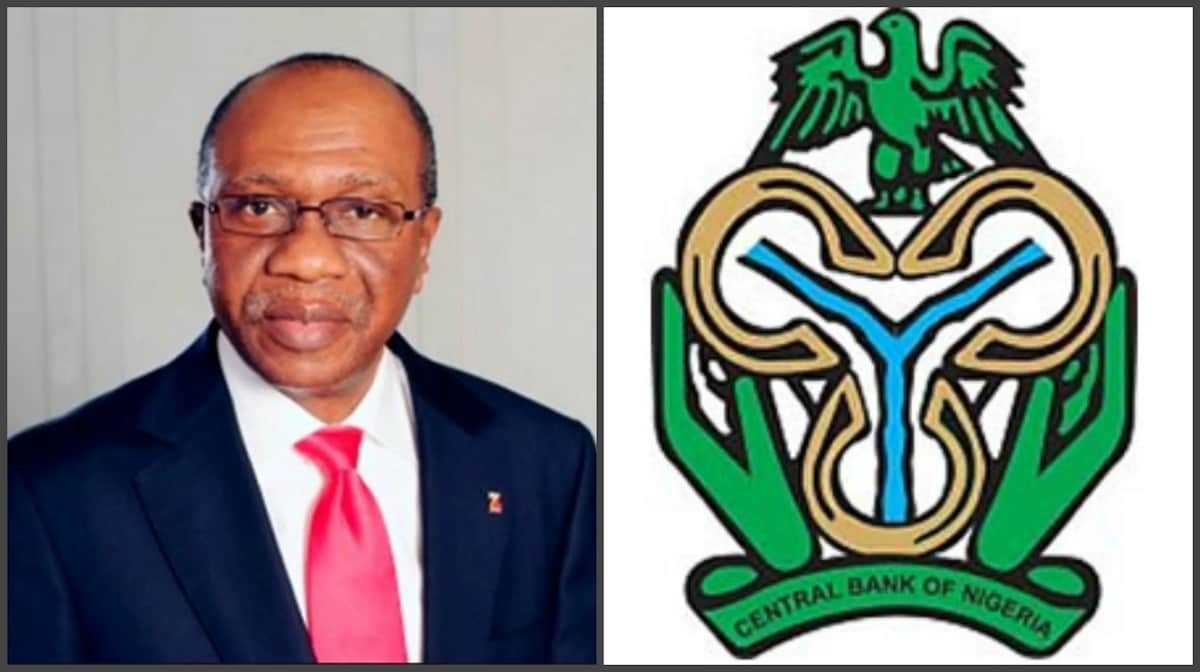
Questions on Naira redesign

By Abdulhalim Ishaq Ringim

Yes, there’s about N2.73 trillion outside bank vaults. This figure represents 85% of the N3.23 trillion in circulation. However, it only represents 6.5% of more than N49 trillion that is in circulation.

Now, let’s consider Nigeria’s unbanked population which stands at 64 million according to World Bank’s “The Global Findex Database 2021: Financial Inclusion, Digital Payments, and Resilience in the Age of COVID-19” report.

What financial intelligence, as a matter of specificity, does the CBN have regarding the magnitude of the money circulating within this highly populous unbanked system. If we were to assume all the N2.73 trillion is in the hands of these unbanked population, then the amount of money on a per capita basis would be about N42,000. Is that too much?

But we all know this assumption is far from reality because the banked population also hold cash for transactionary and precautionary purposes(as in the case of emergencies). So let’s extend our assumption by adding 50% of the banked population to the unbanked population and let the final figure be the number of people who hold cash either because they are unbanked or because of other purposes as transactions and precautions. The per capita cash amount would reduce to N28,000. Is that also too much?

For the hoarding claims, economically speaking, what is the incentive of hoarding cash in Naira considering the continuous devaluation and inflationary trend that has been wiping the value of the Naira against the dollar when there are various hedging options available? Does the CBN have any tentative intelligence that suggest massive hoarding or is this just another trial and error policy?

But let’s also assume there’s indeed hoarding and some people are holding suspicious money. Have the CBN thought of the possibility that the hoarders might now be forced to consider hedging options by flooding the market with money in exchange for hedging-compatible commodities? Have they considered the inflationary tendencies of such an eventuality? Check Dr. Adamu Tilde’s most recent post to appreciate the happening in real world markets. Is the recent sharp rise of the dollar value also a consequence of such tendencies?

The risk of counterfeiting has always been present. The CBN confiscated N64.7 million and N56.8 million in 2019 and 2022 respectively. Compared to the money in circulation, are these figures significant enough to evoke the need for a currency redesign?

If it is for the purpose of managing inflation and ensuring the CBN contractionary monetary policies become more effective, then let’s assume they succeed in mopping up most of the cash outside banking vaults. Is it increased money circulation that actually causes inflation or increased money supply? Isn’t the CBN culpable in the expansion of money supply through their unhealthy tendencies of printing money for government spending via ways and means? What are they doing about the money supply? What is the government also doing about deficit spending and the projected budgetary deficit for the coming year?

Is our inflation strictly a consequence of the Demand-pull Effect(caused by an increase in money supply or credit with commensurate increase in demand for goods and services and resultant price increases) or is it a consequence of a combination with the Cost-push Effect as a result of increase in Oil prices and other commodities(mostly as a result of global events plus local events e.g insecurity, oil theft, floods etc) that is gradually rippling and causing increase in the prices of production process inputs? Does the CBN also not think that the hike in the prices of commodities as a result of the consequence of hedging(possibility of which has been painted by Adamu Tilde in his recent post) would also contribute in aggravating the Cost-push as a result of hikes in production process inputs?

What is the CBN tackling exactly?

Abdulhaleem Ishaq Ringim writes from Zaria.

Thousands of PVCs still unclaimed by owners—Zamfara INEC

By Muhammadu Sabiu

The Independent National Electoral Commission (INEC) in Zamfara State has lamented that thousands of permanent voter cards (PVCs) are yet to be picked up by their owners in the state.

The State Residence Commissioner, Professor Saidu Babura Ahmed, said the 2023 elections would be different from others because plans have been made for a free and fair process.

He made an appeal to traditional leaders, Civil Society Organizations (CSOs), and other stakeholders to give necessary support to the Commission.

He said that the commission had made sufficient preparations in response to the inflow of internally displaced people to ensure that they would exercise their civic duties, noting that polling places will be built in locations where they would feel safer exercising their right to vote.