Admin

2023 elections: CDD trains journalists, media influencers on combating fake news

By Aisar Fagge

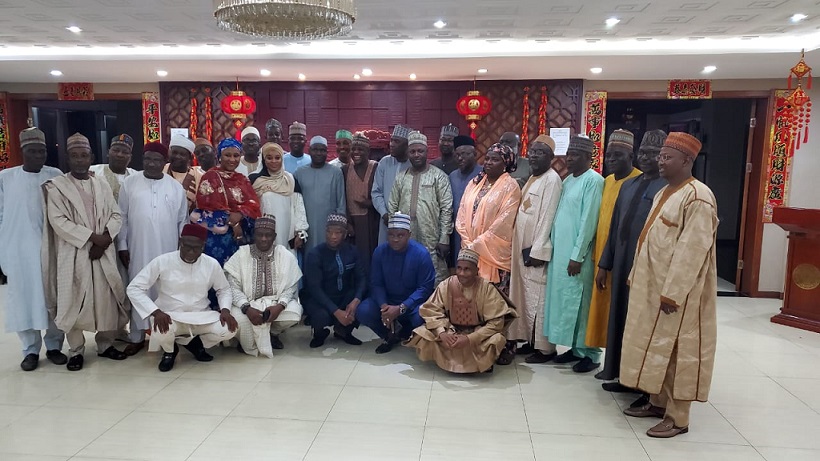
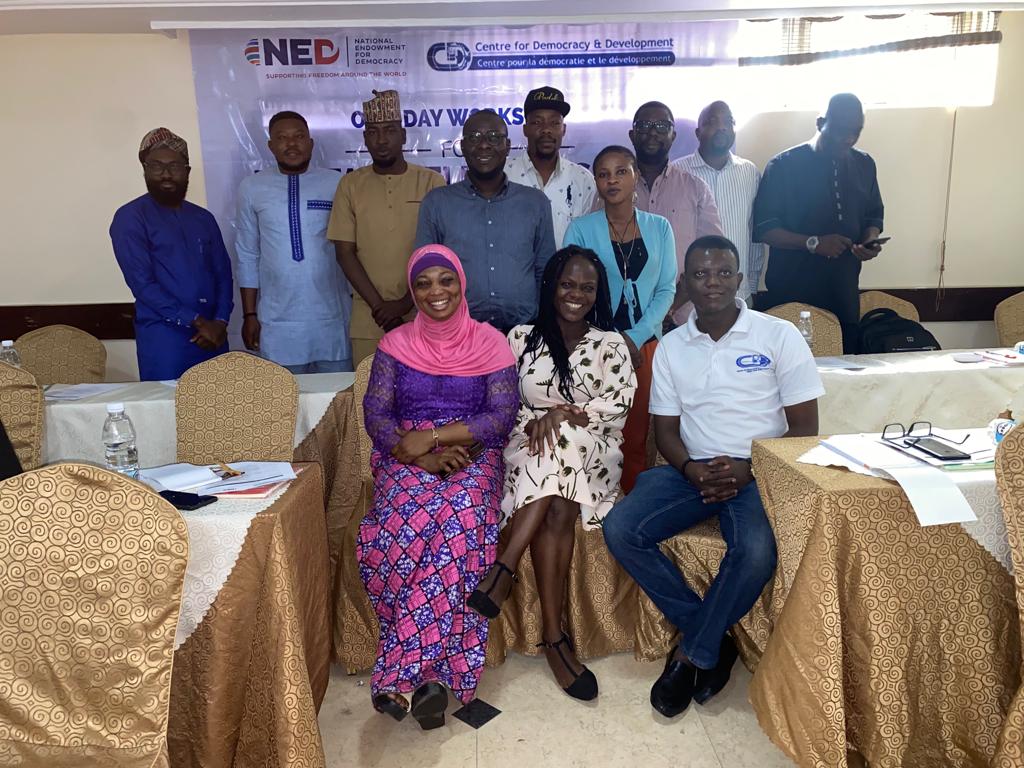
As part of the preventive measures, the Center for Democratic and Development (CDD) trained journalists and social media influencers on how to combat fake news ahead of the 2023 general elections.

The training Wednesday in Lagos was in collaboration with the National Endowment for Democracy (NED), a nonprofit organisation based in the United States of America.

Participants of the workshop, who are mostly journalists, influencers, media experts and members of Civil Society Organizations (CSOs), were drawn from different parts of the country in order to have a wider impact on the objective of the event.

The CDD Director, Idayat Hassan, stated that the participants were trained with vital skills on how to identify and prevent the propagation of fake, misleading and incendiary reports sent to them to share on their channels, handles and timelines.

The participants were also cautioned on the dangers of fake news and the implications of misinformation, and how the duo can terrorise the peace in Nigeria.

It was gathered that the training was given on how to use tools forensically, such as Geolocate, Google image search and Tineye, to detect fake videos, tweets, pictures and news.

Politicians use social media to spread fake news

The director also decried the way some politicians avoid media gatekeeping and use social media to spread fake narratives to the public, thus necessitating measures to address the issue.

She further said, “While the phenomenon of political players intentionally disseminating false information is well-known and discussed, the role of digital media influencers who are meant to be the bearers of truth and factual accuracy and in combating misinformation and disinformation has not received as much attention.”

There are many crises online

The CDD Communications Lead, Armsfree Ajanaku, said there are many crises online as people commit violence without consequence.

He stated, “Online gender-based violence exists within a context similar to what happens in real life, which is just as destructive as offline violence.

“We now live in a virtual society, where offline violence has extended to online, which makes it easier for people to commit violence without consequences.

“Women are the main targets of online violence, especially the ones with voices, like female politicians, service personnel, women’s rights activists, journalists, women leaders, etc. As it is globally, Nigeria faces a worse case due to our culturally sensitive environment,” he added.

In his presentation, Introduction to Fake News Ecosystems and Techniques of Spotting and Countering Fake News, CDD Project Manager, Abiodun Banjoko, noted that the 21st Century had seen the weaponisation of information on an unprecedented scale. According to him, disinformation, misinformation and malinformation are the greatest threats to the Information age, especially in a multi-ethnic and religious country like Nigeria. He, therefore, urged the participants to use the skills and knowledge they acquired in combating fake news in their endeavours.

Tinubu and blueprint for the North

 By Zayyad I. Muhammad

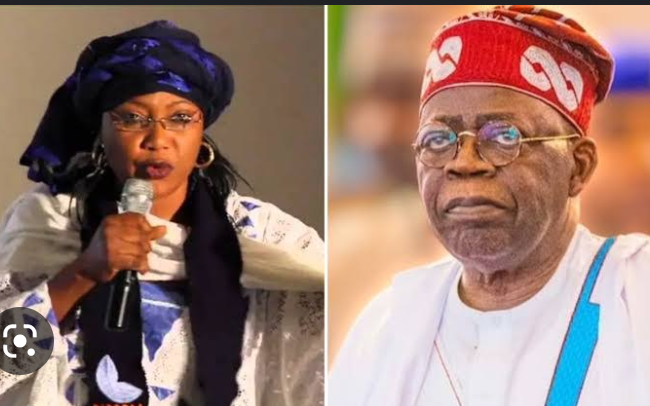
Outspoken northern politician and a former Presidential Campaign Council Director for the Civil Society Organization of the All Progressives Congress (APC), Naja’atu Bala Muhammad, has said that the APC presidential candidate, Asiwaju Bola Ahmed Tinubu does not have a blueprint for the North’s development.

Naja’atu was quoted to have said, “I met with Tinubu in London, and he told me he doesn’t have a blueprint for the North”. In short, Naja’atu implied that Tinubu didn’t know what to offer to the north.

In its response to Naja’atu, APC Presidential Campaign Council, through a statement by Mahmud Jega, its adviser in public affairs, said, Naja’atu was sacked for incompetence, quarrelsomeness, and after being uncovered to be a mole planted in APC’s winning campaign.

To many people in the north, Naja’atu’s accusations were ‘heavy’ and ‘Tinubu does have any agenda for the North’s progress’. However, Naja’atu’s accusation became ‘weightless because, less than 48 hours after, she resigned from the APC and quit partisan politics, and accused Tinubu of having no blueprint for the north, she was seen at Atiku Abubakar’s residence and joined the Atiku’s campaign train.

Political pundits are of the view that no serious presidential candidate, whose candidature was 75%-made possible by the Northern APC Governors Forumwill carelessly open his mouth and say he doesn’t have a blueprint for a particular region, especially the north with its massive attractive votes.

Naja’atu Mohammed was just playing politics. Nevertheless. Let’s ‘keep’ Naja’atu aside; the big questions are: does Tinubu have any blueprint for the north?  If yes, is it what the north needs after 8 years of being in power at the centre?

The basic issue facing the north is insecurity- banditry, farmers-herders conflict, and poverty. To be fair to President Buhari and the APC, they did some well-done jobs in the agricultural sector, restoration of security in communities in the northeast, provision of new infrastructure, and the rehabilitation of the old ones, including the successes in the social intervention programs; especially petty cash distribution to the masses.

On October 17, 2022, Tinubu, at Arewa House, told the north his blueprint for the region. He said he would fight bandits and terrorists with technology which Buhari just started in 2022. Tinubu said he would turn the North’s fertile land into grain fields, and the North would become the hub of agriculture. The dairy economy and agro-allied industries will be promoted.  He said he would accelerate the Mambila Project and rejuvenate the existing power Stations. He assured to exploit of the gold in Zamfara and iron ore in Kogi State.

Tinubu also promised to bring back to school the millions of North’s out-of-school children through incentives. He further promised to create a special commission for Almajiri education, including employing Almajiri’s teachers.

Are Tinubu’s promises to the north enough and in line with the region’s needs and wants? Some political pundits believe that the promises are good, but development experts say the north needs more and a new approach, thoughts that resonate with this writer. Apart from these promises, the north extremely needs some strong-willed approach to the current monster of banditry in the northwest – a calculated crime that is as complex as Nigeria. A deployment of massive force and technology against the bandits in the villages where they operate is compulsory.

The North also needs a special economic recovery program in the area of youth empowerment, poverty reduction, and the uplift of business people.

President Buhari, in his own intuition, tried to tackle these issues by appointing many seasoned northerners into various positions of authority. But this has not worked. in fact, this political patronage strategy has failed. Most of the president’s appointees from the north have not served as a link between the president and his support base nor effectively reached the poor, who formed Buhari’s 12 million supporters, which APC is still banking-on.

As part of the agenda for the North, Tinubu, in his campaign, promises the region should also promise the north that- he will identify 50-100 business people and business enthusiasts in the north and assist them directly in their area of competence or choice. Imagine the impact new billionaires would have in the business sector, like new industries in the manufacturing and agricultural value chain, ICT, media, trading, etc.

Tinubu’s promise to North’s youth is still hazy. Since the North’s young people have lost in their quest to clinch the APC Vice Presidential candidate ticket, though, few young people have benefited from the APC Youth Wing appointments,  but most of the positions were not influential and direct, like the appointment of Abdulrasheed Bawa as EFCC Chairman, which got massive commendation throughout the country, with young northerners feeling well-recognized. Tinubu should directly ‘talk’ to the North’s youth via important and strategic appointments in his campaign council; bringing on more youngsters from the north would be a joker card in the north.

Most people support Tinubu in the north on the belief that he is a ‘builder’ of people. So the north expects from Tinubu three more things on his blueprint for the north- a promise to  ‘build’ some people who can as well build thousands of others and new businesses, to have direct contact with the youth – meaning using his today for their tomorrow; lastly, to confront head-on the senseless insecurity in the northwest, which is not just mere banditry.

Zayyad I. Muhammad writes from Abuja via zaymohd@yahoo.com.

Naja’atu Muhammad declares support for Kano’s Abba Gida-Gida 

By Ahmad Deedat Zakari

A former Director in the Presidential Campaign Council (PCC) of the All Progressives Congress (APC), Hajiya Naja’atu Muhammad, has declared her support for the Kano gubernatorial candidate of the New Nigeria Peoples Party, Abba Kabir Yusuf, alias Abba Gida-Gida. 

On Arise Television’s Morning Show programme, Naja’atu disclosed her reasons for resigning from the PCC-APC and other reasons for supporting other candidates in the forthcoming election. 

She said while she would not be a card-carrying member of any political party, she would support the Kano NNPP’s gubernatorial candidate, Abba Gida-Gida.

She also disclosed that she would support former Vice President Atiku Abubakar of the Peoples Democratic Party, PDP, for President and Aisha Binani of the APC for governor of Adamawa state. 

Explaining her reason for choosing Atiku over Tinubu, she said Tinubu is the devil and Atiku is the deep sea. 

She also alleged that the APC’s Presidential Candidate, Bola Ahmad Tinubu, is physically and mentally unfit to lead Nigerians.

BUK class 1991 honours new Jaiz Bank MD

By Sumayyah Auwal Ishaq

The Bayero University Kano (BUK) set of 1991 has honoured the newly appointed Managing Director and Chief Executive of Jaiz Bank Plc, Dr. Surajo Salisu.  

The graduates, who left BUK over 30 years ago, were excited to celebrate Dr. Salisu being a member of the 1991 set. The leadership of the set commended the board of the bank for choosing Dr. Salisu meritoriously.  

While appreciating the new MD, they equally prayed to Allah Almighty to guide and protect him in the new role. 

Prominent among the 1991 set include Brig. General Sani Usman Kukasheka, Amb. Bello Husseini Kazaure, Prof. Abdullahi Musa Ashafa, Zainab Akanbi, Alh Sanusi Garba Abdullahi, Hajia Hadiza Hamis, Mr. Chukwuyere Amaechi, Mr. Dorathy Sako, Alhaja Jumoke Dunmoye among others.

Tinubu told me he has nothing to offer to North, says Naja’atu Muhammad

By Ahmad Deedat Zakari

A former Director in the Presidential Campaign Council (PCC) of the ruling All Progressives Congress (APC), Hajia Naja’atu Muhammad has disclosed that Tinubu told her he has nothing to offer the North if elected Nigerian President.

Mrs Muhammad said that Tinubu told her he had no blueprint for tackling insecurity in the North during a meeting in London.

She disclosed this while giving reasons for her resignation from the APC and partisan politics.

On Arise Television’s programme, Morning Show, Naja’atu said: “I met with Tinubu in London and he told me “I don’t have a blueprint for tackling insecurity in the North; if I have I might be killed.”

“Having a blueprint for tackling insecurity in the North would mean I will be stepping on so many toes “

“He has been urging me to take the appointment and I refused.”

The Daily Reality had reported the resignation of Mrs Muhammad from the APC and Tinubu’s campaign team. She had resigned after claims that the APC lacks political ideology and is not any different from other political parties

However, Tinubu’s campaign team said she is incompetent and was fired for being a spy.

Don’t extend deadline – Opposition parties tell CBN governor

By Uzair Adam Imam

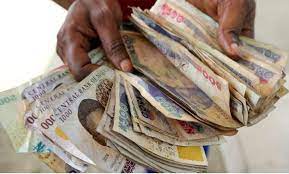
The opposition political parties have urged the Central Bank of Nigeria (CBN) not to bow to pressure on the extension of the deadline for phasing out old naira notes in the country.

The CBN Governor, Godwin Emeifele, has identified the 31st of January as the deadline, the decision many people continue to criticize due to the unavailability of the new naira notes.

As the deadline is approaching, the banks in Kano and other states across the country are congested with people who go there to cash out the new naira notes and deposit the old ones.

Several authority figures in the National Hause of Assembly, including the state governors, the likes of Dr Abdullahi Umar Ganduje, have asked the CBN governor to shift the deadline.

However, the opposition political parties urged the CBN governor not to extend the date, adding that the decision would seriously affect the Presidential Candidate of the ruling All Progressive Congress (APC), Asiwaju Bola Ahmed Tinubu.

The Peoples Democratic Party (PDP), the Labour Party (LP) and the Zenith Labour Party (ZLP) said these views Friday in separate interviews in Abuja.

Tinubu is frustrated – PDP

Mr Phrank Shaibu, the spokesperson for the Presidential Candidate of the Peoples Democratic Party (PDP), Atiku Abubakar, said Tinubu is frustrated with the decision.

He stated, “Tinubu is obviously frustrated by his inability to stop the cashless policy and currency redesign of the Central Bank of Nigeria (CBN) that will curb vote buying and enhance the credibility of next month’s election, he has begun crying over his imminent defeat.

“Even though the CBN policy affects all 18 political parties, APC is the only one frustrated because their plan to deploy bullion vans and bribe poor voters and security agents on the day of election has failed woefully.”

Naira redesign is a patriotic decision – ZLP

Speaking in a similar vein, the Presidential Candidate of the Zenith Labour Party (ZLP), Chief Dan Nwanyanwu, described the CBN Naira redesign policy as a patriotic decision which should be supported by all.

He said, “I want to use this opportunity to call on Godwin Emefiele, governor of the central bank, not to succumb or listen to anybody from anywhere suggesting that there should be an extension for the return of the old note back to the bank.

“His name will be written in gold if he gets this thing done. And on the part of the President, his mantra failed Nigerians, and he has come up to tell Nigerians that he will ensure free and fair elections.

“I want to say that the decision taken by the central bank of Nigeria and with the approval by President Buhari is the best for this nation.

“It is a patriotic decision taken by CBN as it relates to the new banknote and the time stipulated for the removal of the old note.”

He further said, “We have been in this country and people given the responsibility to serve to go there to help themselves.

“They steal the money and put it to personal use. They don’t use it to even develop their environment.

“They stack the money at home, in septic tanks, in the farm, and some of these funds have been there for more than ten, fifteen years, idling away. So why do you steal what you do not need?

“So, the CBN had to put on its thinking cap. Those categories of naira notes, if not returned before the date stipulated by CBN, would become toilet paper.

“That is, will be of no use. Now people are afraid to take these notes to the banks for fear of being identified.

“Billions and millions of naira notes are still in the homes of some people. It is either they take the courage to bring it to the banks, or by the end of next week, they become toilet paper. 

“This is one way to ensure free and fair elections by making we politicians not have access to money to buy votes.

“So, whether they are National Assembly members or anybody whatsoever who is opposed to this is very unpatriotic.

“Must you carry cash in all your transaction? Go and do the transfer? Let us not cry, we have been enduring for seven and half years.

“This money will get back into circulation immediately after the election, and I suspect CBN will release a little so that Nigeria will have some money in their hands. Those crying are crying because they want money to go and buy votes.

“Emefiele, don’t succumb, you have the support of most Nigerians. Over 95 per cent of Nigerians are behind you in this regard.”

APC plays cash and carry politics – LP

Also, the National Publicity Secretary of the Labour Party, Dr Yunusa Tanko, said, “We are not surprised that those at the forefront of cash and carry politics, who are used to deploying bullion vans for election purposes, are the ones complaining about this laudable government policy targeted at curbing inflation.

“Look at the inflation figures today, inflation numbers are coming down. The CBN must not back down, the bank should insist on the January 31st date to prevent a situation where those who have stashed billions in their closet with the aim of buying votes will be denied that opportunity. “

Old naira notes exchange: Atiku begs CBN to extend deadline 

By Muhammadu Sabiu

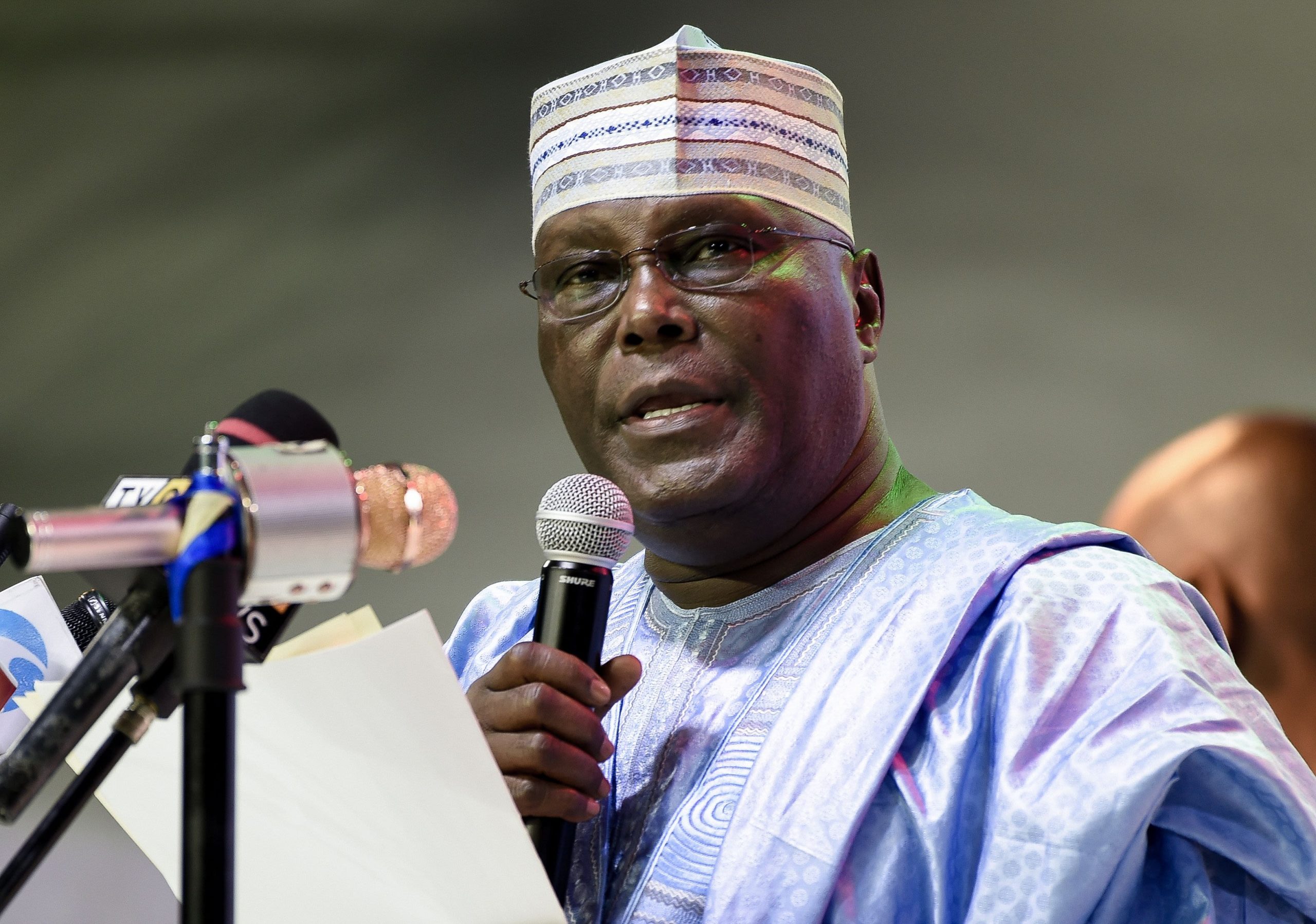
The presidential candidate in the 2023 election under the platform of the Peoples Democratic Party, Alhaji Atiku Abubakar, has called on the Central Bank of Nigeria to extend the deadline for the exchange of old naira notes.

This was contained in an address posted on his verified Facebook Hausa page.

Recall that a CBN policy says that the old naira notes in circulation will cease to be legal tender on January 31, 2023.

Commenting about the deadline, Atiku Abubakar noted that such a policy is practised worldwide due to its impact on the economy, adding that Nigerians, at this critical moment, need an extension of the deadline.

He was quoted as saying, “There is no doubt that the CBN policy has generated heated debates within and outside Nigeria.

“It should be noted that the change of currency is a normal practice from time to time—it is not something new.

“Looking at the fact that the January 31st deadline is drawing nearer, patriotic Nigerians are expressing their fear of the policy worsening the situation of Nigerians.

“It would be difficult for many people who do not transact online to have their old notes changed before the deadline.

“While we will continue to educate people on the policy, it’s important for the CBN to consider extending the deadline.”

Assent to Mental Health Bill, better late than never

By Lawal Dahiru Mamman

Ann Soberekon, a retired laboratory scientist, was almost lynched by a mob in Port Harcourt following an accusation of witchcraft. Ann was actually suffering from dementia – a condition of the brain characterised by impairment of brain functions such as memory and judgment that interferes with doing everyday activities. 

The incident led a rights group, Advocacy for Alleged Witches, to decry the ill-treatment meted out to those with mental health challenges. According to the group, the attribution of dementia and other mental disorders is rooted in irrational fear, misinterpretation and ignorance of the cause of disease. 

Living in fear of being called names and other forms of stigmatisation is the way people with mental health issues live in Nigeria and even other African countries. Mental disorders are viewed as spiritual attacks, and patients are mirrored as those under the influence of evil spirits, bewitched or hexed. The only way to cure the world of such back in the dark days and put victims out of their mystery is to send them 6 feet down, while in more recent times, stigmatisation and other forms of inhumane treatment are dished out to mental health patients forcing them to instead of seek for solution drown in their unfortunate circumstances. 

With the proliferation of knowledge of mental health, some African nations started signing Bills to protect the right of people suffering from mental health issues. Foremost among are countries like South Africa which signed the Mental Health Care Act 17 of 2002 on October 28, 2002, which then took effect on December 15, 2004, to cater for treatment and rehabilitation of persons with mental health illness. In 2012 Ghanaian government signed Mental Health Act 2012 into law. Zambia signed its Mental Health Act in 2019, and then in June 2022, Kenya’s President Uhuru Kenyatta signed the Mental Health Bill into law.

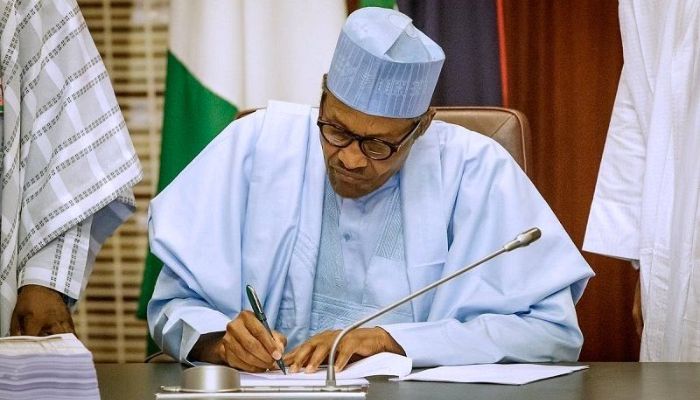
Nigeria followed suit when President Muhammadu Buhari, as a parting gift, bequeathed Nigeria on the 5th day of January 2023 the long-awaited Mental Health Bill by signing it into law, repealing heretofore extant law, which was known as the Lunacy Act CAP 542, of the laws of Nigeria 1964. 

This is coming after the Bill has failed two attempts. Firstly, it was after the presentation in the National Assembly in 2003 before its withdrawal in April 2009 and secondly, in 2013 when the National Policy for Mental Health Services Delivery set out the principles for the delivery of care to people with mental, neurological, and substance abuse problems, but it was not signed into law.

The Mental Health Bill is a piece of legislation that covers the assessment, treatment, care and rights of people with mental health disorders while also discouraging stigmatisation and discrimination by setting standards for psychiatric practice in Nigeria, among other provisions. 

The assent of the law generated a positive response, with physicians saying the law will afford those in the field the power to work unhindered and also enlighten Nigerians of the dangerous lifestyles that may lead to a breakdown in one’s mental health. 

Doctor Olakunle Omoteemi, a physician in Osun State, said, “Due to the negative perception attached to mental health issues in Nigeria, the society still sees any case related to it as that of lunacy, and as a result of this negative perception, individuals shy away from making known, discussing or approaching professionals to discuss or reveal their mental health status.

“People also often cannot go for counselling based on the prejudice from the society. There is also the issue of stigma attached to it, as people are afraid to be called certain names. With this law, it is hoped that the prejudices and stigma attached to mental health issues will be laid to rest.”  

The World Health Organisation (WHO) said at the 2022 World Mental Health Day on the 10th of October that One Hundred and Sixteen million (116,000,000) Africans suffer from one mental health disorder or another, and according to the President of the Association of Psychiatrists in Nigeria (APN), Taiwo Obindo, over sixty million (60,000,000) Nigerians agonise from mental illnesses. 

Since the Bill this time around was not allowed to fade in oblivion, it will be safe to say ‘it is better late than never’ considering the statistics of the WHO and that of the president of APN. What is left is for those responsible for the bill to take charge in ensuring that the purpose for which the bill was signed is not defeated.  

Lawal Dahiru Mamman, a corps member, writes from Abuja and can be reached via dahirulawal90@gmail.com.

The currency change in Nigeria: Balancing progress and people’s interests

By Yakubu Sani Wudil, PhD

The Central Bank of Nigeria’s announcement that some of the country’s old notes will cease to be legal tender by the end of January 2023 has caused significant concerns among citizens and businesses. While the move towards a cashless economy has its merits, such as increased security and transparency of monetary transactions, it is crucial to consider the potential negative consequences and ensure that proper measures are implemented to mitigate them.

One of the most pressing concerns is the availability of the new Naira notes. Many citizens have reported difficulties in exchanging their old notes for the new currency, and banks have been dispensing the old notes until only a few days ago. This has led to confusion and frustration among citizens, particularly those in rural areas who may not be as familiar with bank procedures. Therefore, the government should mandate banks to release the new notes in abundance to prevent any shortage or hoarding of the new currency.

Another primary concern is the impact on small businesses. Many small businesses have already shut down because they can no longer accept the old Naira note while the new Naira is scarcely inadequate. This has resulted in job loss and financial hardship for small business owners and created artificial inflation. To mitigate this, the apex bank should consider extending the deadline for the old notes to cease being legal tender to give citizens and businesses more time to adjust and exchange their old notes.

Policymakers need to consider the well-being of the citizens when implementing such a critical change to the country’s monetary system. The decision to cease the old notes as legal tender could disproportionately affect low-income and rural citizens who may not have access to the necessary technology or banking services to conduct electronic transactions.

To address this, the government must provide support and education on the benefits of a cashless economy, especially in rural areas. Such sensitisations should involve traditional and religious leaders because they are respected and trusted figures in their communities. They can help explain the system’s benefits and dispel any misconceptions or fears that people may have about the change. It is also important to note that the success of this transition will depend on the cooperation and participation of the public. Therefore, the government must provide adequate education and support to ensure that everyone can easily navigate the new system.

Undoubtedly, the cashless economic system constitutes the model of transactions embraced by all technologically advanced nations. With most transactions being conducted electronically, it becomes easier for the government to monitor and detect illicit activities such as money laundering or tax evasion. Additionally, a cashless economy can help reduce the risk of kidnapping for ransom, as there would be limited cash in circulation. It would also help curb buying political votes in the forthcoming general elections.

However, the sudden transition to a cashless regime also has its drawbacks. One of the most notable concerns is the potential decline in the value of the currency. The Naira has been facing significant inflationary pressures in recent years, and the cessation of the old notes could exacerbate this problem. Furthermore, the change in the currency and the scarcity of new notes may halt economic activities, which will hurt the economy and the well-being of the people.

It is important for the apex bank to consider the challenges people face and adjust accordingly. The deadline for the transition to a cashless economy should be reconsidered, and more time should be given for proper planning and implementation. The banks should also be mandated to release the new notes in abundance and ensure they are readily available to the public. The policymakers should also consider the impact of this change on small businesses so that the economy and livelihoods of the people are not negatively affected. The purpose of government is to develop policies that would improve the well-being of its citizens and not burden them with unnecessary hardships.

Dr Yakubu Wudil writes from King Fahd University of Petroleum and Minerals, Saudi Arabia, and can be reached via yswudil@yahoo.com.

Just in: Tribunal removes Adeleke as governor

By Ahmad Deedat Zakari

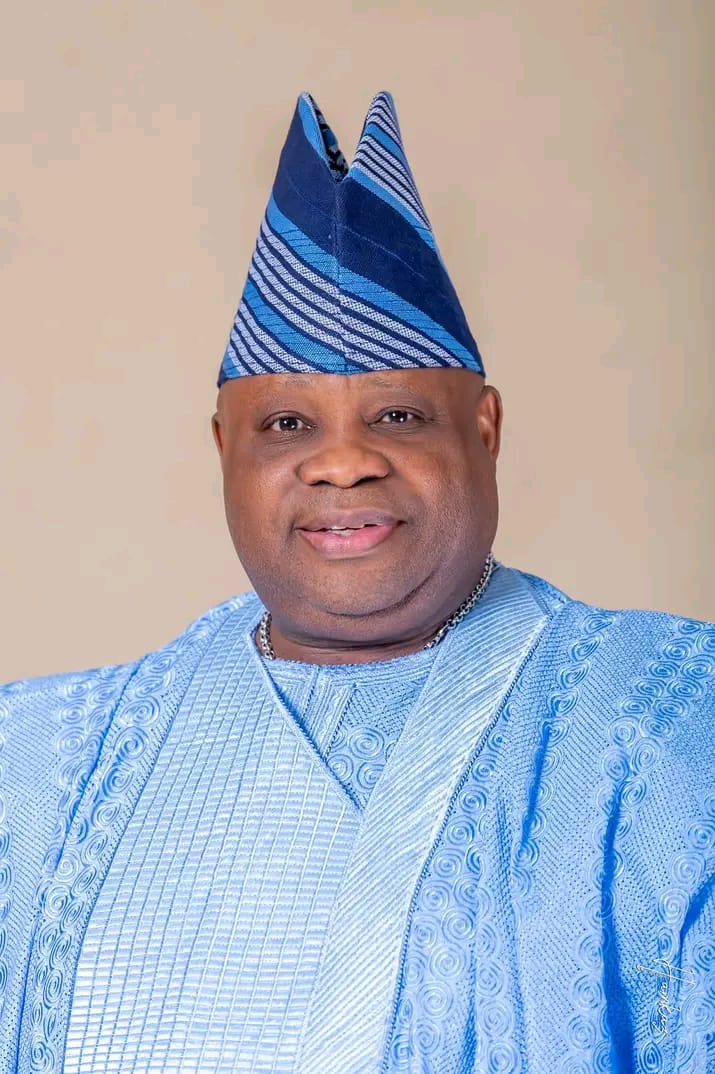
The Osun Election Petition Tribunal sitting in Osogbo, Osun State capital has in a judgement delivered in the early hours of Friday ordered that Osun State Governor, Ademola Adeleke be removed from office and the certificate of returns given to him be withdrawn with immediate effect.

The Presiding Judge of the panel, Justice Tertsea Kume, while reading the judgement of the tribunal said that the conduct of the election flagrantly violates the electoral act.

Justice Kume explained that the election was rigged in six polling units to the detriment of the candidate of the All Progressives Congress (APC).

He further stated that, after the deduction of valid votes vast from the over-voting at these polling units, Adegboyega Oyetola of the All Progressives Congress (APC) polled 314,941 and therefore the rightful winner of the election while the Peoples Democratic Party (PDP) Ademola Adeleke polled 290, 266.