Admin

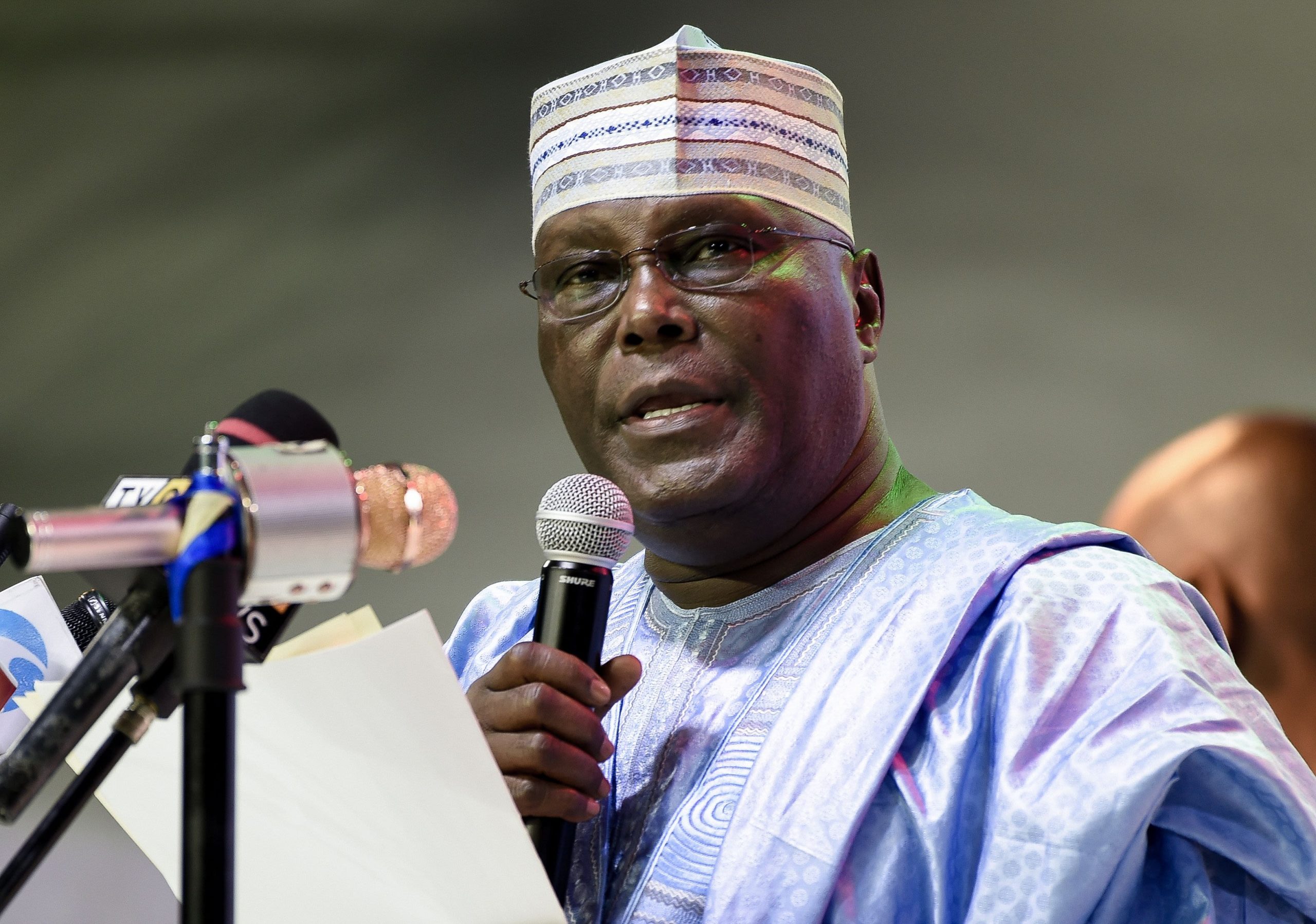
Atiku Abubakar and the myths against his personality

By Yusuf Murtala

Many people have been brainwashed to believe some myths or lies againts their fellow humans without throughly investigating by themselves about what they have been told about someone for them to either believe or discard it.

Majority of people have been victims of such unfounded stories and accusations — one of which is a prominent politician in Nigeria’s political space, Atiku Abubakar. This man has suffered a lot from many allegations against his personality.

Two days ago, I was in Keke Napep (popularly known as Adaidaita Sahu) when this kind of discussion broke between two passengers and the driver. The three of them were bitterly complaining and narrating how Atiku Abubakar is funding terror acts in some places which according to them is what has backfired to cost him his presidential election.

Most of the things they were discussing and alleging were products of hatred, dogmatism, sectionalism and tribalism.

I’m neither an Atiku supporter nor his loyalist but, I never for once believe that Atiku has a hand in disrupting the peace and security of my country: Nigeria. I regard him as an established politician who is ready to take the mantle of leadership in Nigeria in order to change the narratives and lead us to the promise land.

Lastly, I urge my fellow Nigerians to personally investigate and think critically before believing or debunking stories on people, especially prominent personalities: politicians, business people, technocrats and renowned clerics so as not to fall into the trap of rumour mongers, disinformation and misinformation. Furthermore, we should also develop the habit of investing our time and energy in reporting and sharing positive stories about our fellow Nigerians, not hatred, propaganda and false stories.

Yusuf Murtala can be reached via his Facebook handle at Youngstar II.

Sheikh Sudais marks 40 years as the Imam of Masjid Al Haram

By Ahmad Deedat Zakari

Sheikh Abdulrahman Sudais, the renowned Islamic cleric and revered Imam of the grand mosque in Makkah, has completed forty years as Imam of the mosque. 

According to reports by the Haramain Sharifain on Tuesday, Sheikh Sudais was appointed as Imam of Masjid Al Haram, Makkah, by Royal Decree issued by the Late Custodian of the Two Holy Mosques, King Fahad bin Abdulaziz in 1984/1404 at the young age of 22.

Sheikh Sudais led his first Salah on 22 Sha’ban 1404, corresponding to May 1984. His First Salah in the Haram was the Asr Prayer.

Below is the brief biography of Sheikh Sudais:

Sheikh Sudais was born in the Islamic year 1381 in the City of Qassim, Saudi Arabia. He got his early education in Riyadh, and by the age of 12, he had memorized the whole Quran under the supervision of Sheikh Abdul Rehman Al Firyan.

Sheikh Sudais graduated from the Faculty of Sharia in the year 1402, Completed his final years of Studies at Umm Al Qura University in Makkah and earned a PhD Degree in Sharia in 1416.

He was appointed Imam of Masjid Al Haram in 1404 at the very young age of 22. Since then, Sheikh Sudais has been leading Taraweeh every year, and in 1441, he completed his 40th time of completing the Quran and reading the Khatam ul Quran Dua.

In 1433, he was appointed as the President of General Presidency for the Affairs of the Haramain in a decree ordered by the Late King Abdullah of Saudi Arabia just before the Grand Expansion started in Masjid Al Haram

Sheikh Abdul Rahman As Sudais was appointed by King Salman to deliver the Hajj Khutbah in the year 2016/1437. Later, by Royal Decree issued by the Custodian of the Two Holy Mosques, Sheikh Sudais was reappointed as President of the General Presidency for a period of 4 years in 1441.

In 1444, Sheikh Sudais completed 40 years of his appointment as Imam and Khateeb of Masjid Al Haram, Makkah.

KASU gets new Registrar

By Sumayyah Auwal Ishaq

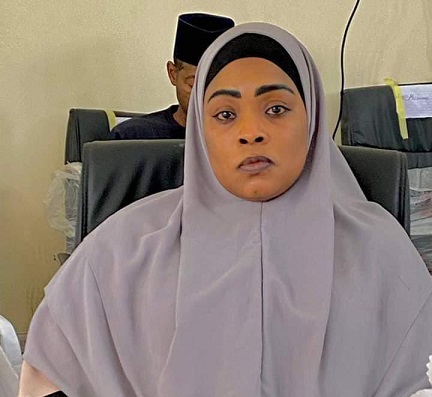
The Governing Council of Kaduna State University has approved the appointment of Barrister Samira Balarabe as the new Registrar of the institution.

In a statement by the university’s management on Tuesday afternoon, the new Registrar will be the 4th of the institution. She succeeds Mr Samuel Manshop, whose tenure expires this month.

Barr. Samira joined the services of Kaduna State University in 2006 as an Administrative Officer I in the Registry Department (Legal Unit). She rose through the ranks to the position of Deputy Registrar. 

She holds Multidisciplinary Academic Qualifications, which include: LL B. Hons (2002) and LL M (2022) with a specialization in property law, both from ABU, Zaria. She also has a Master’s degree in Conflict Peace and Strategic Studies (MCPSS) (2016), specialising in Conflict Resolution from KASU, Kaduna. 

Barr. Samira also obtained her B.L. from the Nigerian Law School, Bwari, Abuja (2004).

Police declare Bauchi federal lawmaker ‘wanted’

By Muhammadu Sabiu 

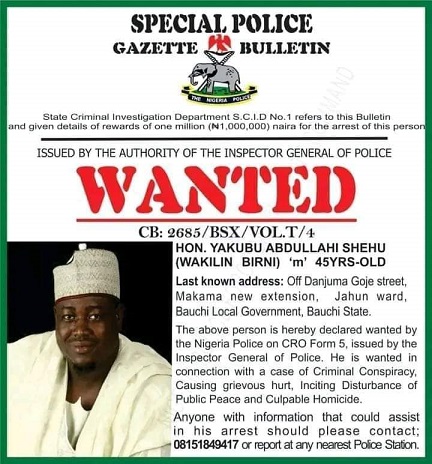
Yakubu Shehu, a Member of the House of Representatives from Bauchi, has been labelled wanted by the Nigeria Police Force.

Anyone with information that could result in his arrest is eligible for a ₦1 million bounty, according to the police.

The 45-year-old politician is allegedly wanted by the police for committing criminal conspiracy, causing great bodily harm, disturbing the peace, and culpable homicide.

This is contained in a bulletin, which has the picture and address of the lawmaker on it and is from the State Criminal Investigation Department of the Bauchi State Police Command.

The bulletin reads, “Hon. Yakubu Abdullahi Shehu (Wakilin Birni), ‘m’ 45 years old. Last known address: Off Danjuma Goje street, Makama new extension, Jahun ward, Bauchi Local Government, Bauchi State.

“The above person is hereby declared wanted by the Nigeria Police on CRO Form 5, issued by the Inspector General of Police.

“He is wanted in connection with a case of Criminal Conspiracy, Causing grievous hurt, Inciting Disturbance of Public Peace and Culpable Homicide.

“State Criminal Investigation Department S.C.I.D No.1 refers to this Bulletin and gives details of rewards of one million (1,000,000) naira for the arrest of this person. Issued by the Authority of the Inspector General of Police.

“Anyone with information that could assist in his arrest should please contact; 08151849417 or report at any nearest Police Station.”

How woman kills landlord over dispute on electricity bill in Ogun

By Uzair Adam Imam

A dispute over an electricity bill in Ogun State has led to the murder of a 50-year-old landlord, Monday Surulere, by a female tenant, Ifeoma Ossai, on Monday.

It was reported that the woman had a fight with Surulere over the electricity bill, which led to his death after she grabbed his manhood and dragged him with it.

However, The Daily Reality gathered that the woman was arrested by the Operatives of the Ogun Police Command on Monday.

Her arrest followed a report lodged at Sango Ota divisional headquarters by one Olaleye Taiwo, the landlord’s brother.

According to the Police Spokesman, Abimbola Oyeyemi, following the report, the DPO Ota division, Saleh Dahiru, led his detectives to the scene, where the suspect was arrested and taken into custody for investigation.

He stated, “On interrogation, the suspect claimed that the deceased asked her to pay for the electricity bill, but she insisted that until water is directly connected to her apartment as promised by the landlord before she packed in, she will not pay the electricity or any other utility bill.

“This led to a scuffle between them consequence upon which the suspect grabbed the manhood of the deceased and dragged him with it.

“The deceased subsequently slumped, and he was rushed to the hospital but was pronounced dead by a doctor on duty,” Oyeyemi said.

Meanwhile, the corpse of the deceased has been deposited at the hospital mortuary for a postmortem, and the suspect has been transferred to the Homicide section of the State Criminal Investigation Department for further investigation.

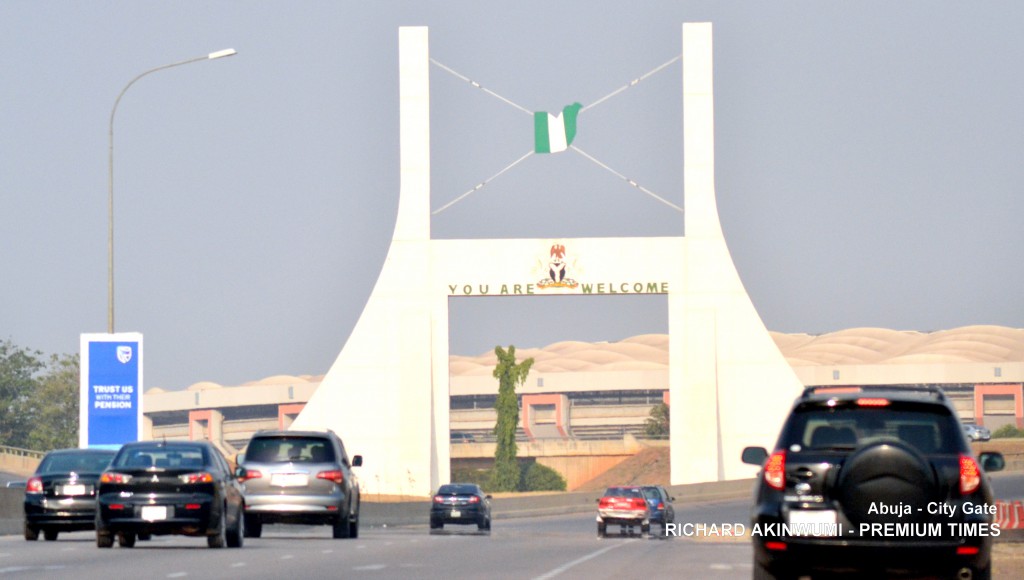
FCT Abuja: Please, appoint a native as minister

By Abdullahi Adamu

As the Nigerians await a ministerial list from the executive, we urge president-elect Asiwaju Ahmad Tinubu to balance Nigeria’s political diversity by appointing a minister among natives of the Federal Capital Territory, Abuja.

“We  are appealing to Mr President to appoint somebody from FCT as a Minister in the federal cabinet because we believe that doing so will give Abuja natives a sense of belonging within the Nigerian federation.”

FCT natives have contributed immensely to the nation’s socioeconomic and political development. Accordingly, their exclusion is a gross injustice and a negation of constitutional provisions, including the federal character principle.

The contributions of FCT indigenes in maintaining the country’s unity, none of its kinsmen was occupying leadership positions within the nation’s political, judiciary or military circles.

The exclusion of Abuja natives in the last administrations and appointing any credible person within the FCT indigenous population as Minister would right the perceived wrongs and injustices.

“We are appealing to President-elect Asiwaju Ahmad Tinubu to use his exclusive powers to appoint an FCT man as a Minister in the Federal Executive Council.

In making appointments in any portfolio, please consider FCT natives. As stated in the Constitution of the Federal Republic of Nigeria, every citizen shall be treated equally. Likewise, where the nation’s capital is located, the FCT natives should be included in the executive council of the presidential cabinet. To balance Nigeria’s political diversity, everyone should be carried along.

Since the inception of Democratic governance in 1999, it has been crystal clear that FCT natives shall be appointed as the territory minister.

Your excellency, sir, it might interest you to know that with the huge amount of populated FCT natives in Nigeria, they only have one senator and two members of the House of Representatives only at the national assembly. It is an injustice.

We need a state status to increase our franchise beyond local government elections to enable us to have an executive governance structure and independent governing body and to expand our representation at the National Assembly.

Abdullahi Adamu wrote via nasabooyoyo@gmail.com.

An open letter to Barrister Abba Hikima

By Yakubu Nasiru Khalid

Should a real social fighter be partisan? Does this mean the side he has taken has no weakness at all, or does it mean Abba Hikima is no longer a freedom fighter as people regard him but a politician? 

Bar. Abba Hikima is a well-known social fighter, and he is one of the four most influential persons in Kano State who day and night fight to liberate have-nots peoples from the slavery of crooked individuals. 

He is a loving person within Kano State metropolitan area. His lovers are from various political parties such as NNPP, APC, PDP, etc. Many of his supporters use his picture as a slogan for their businesses, like tricyclic drivers (Keke-Napep), just because he fights to liberate them from evil hands. Many love you because they do not know you are partisan.

It is good for a social fighter to build relationships with politicians and policymakers to create positive change. You should try to connect with politicians who share similar values and goals. Building trust and respect with politicians is essential to maintain their dignity while dealing with politics.

But should Abba Hikima be partisan as politics is concerned? Your benefit is more meaningful and beneficial as a freedom fighter than to be a politician. You can only maintain your dignity in politics by staying true, which is costly in Nigerian democracy. “If you want to understand a person, give him power.”

Being partisan means you are willing to swallow all sweetness and bitterness of the side without scrutinising. Still, social fighters always struggle to ensure that the public meets their needs effectively and efficiently. 

Yakubu Nasiru Khalid can be contacted via yakubunasirukhalid@gmail.com.

2023 Ramadan: Qatar reduces prices of 900 consumer goods

By Ahmad Deedat Zakari

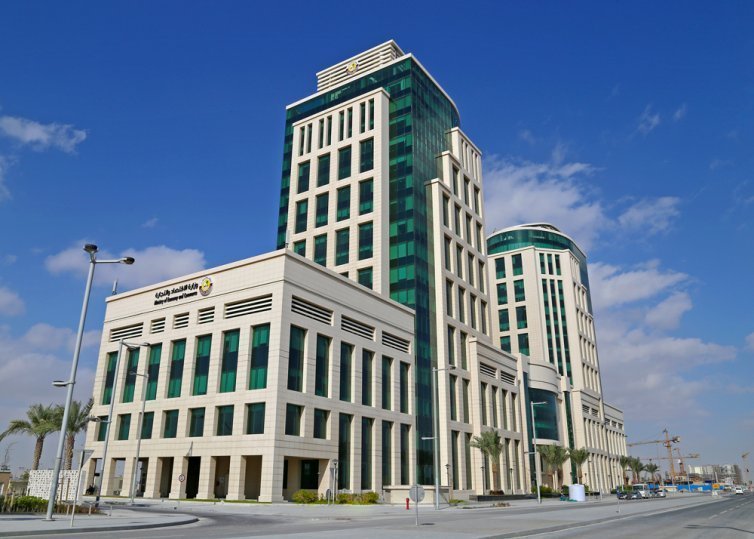
As Muslims all over the world prepare for fasting in the holy month of Ramadan, Qatar has announced a reduction of prices of 900 consumer goods for citizens of the country.

On Monday, the Qatar Ministry of Commerce and Industry (MoCI) made the announcement of the reduction of prices for hundreds of goods during Ramadan.

“Prices of more than 800 commodities have been reduced in coordination with major outlets in Qatar, starting from Wednesday, March 23, until the holy month of Ramadan,” MoCI said.

The Ministry added that the types of discounted goods include the most important food and consumer goods required by a family during Ramadan like:

Honey, flour and its products, cereals and corn flakes, yoghurt and dairy products, powdered and condensed milk, cheeses, juices, sugar, coffee and its products, dates, mineral and bottled water, tin foil (aluminium), paper napkins, washing powder, trash bags, pastries and pasta, legumes, rice, frozen vegetables, poultry and its products, eggs, meat products, tomato paste, tea, ghee, yeast, salt, personal hygiene items and household cleaning detergents and edible and cooking oils.

Just In: CBN reacts to Supreme Court’s judgement, says old naira notes remain legal tender

By Muhammadu Sabiu 
 
The Central Bank of Nigeria (CBN) states that the old N200, N500, and N1000 notes are still valid until December 31, 2023.
 
The CBN spokesperson Isa Abdulmumin made the announcement in a statement on Monday.
 
The statement reads, “In compliance with the established tradition of obedience to court orders and sustenance of the Rule of Law Principle that characterized the government of President Muhammadu Buhari, and by extension, the operations of the Central Bank of Nigeria (CBN), as a regulator, Deposit Money Banks operating in Nigeria have been directed to comply with the Supreme Court ruling of March 3, 2023,” the statement reads.
 
“Accordingly, the CBN met with the Bankers’ Committee and has directed that the old N200, N500 and N1000 banknotes remain legal tender alongside the redesigned banknotes till December 31, 2023.
 
“Consequently, all concerned are directed to conform accordingly.”

Nigeria’s failure is a combination of the individual and collective disgrace of the system

By Nura Jibo

Nigerians living within and staying in the diaspora should start a self-cleansing effort to seek Allah’s forgiveness. Already, the people of the country have wronged God. Unfortunately, the current leadership does not want to agree with this position. However, let me start with the individual failures before I descend to the collective disgrace and abuse of the system.

1. The recent presidential election overtly exposed the INEC chairman’s unpreparedness. He was highly unprofessional and produced a very abysmal and disappointing outcome. In the history of Nigeria’s electoral commission, there has never been a time that a lump sum of money amounting to N335 billion was spent on a presidential election under the pretext of the Bimodal Voter Accreditation System (BVAS) or IReV (portal) or whatever parlance Prof. Mamud Yakubu wants to call it. This guy ended up giving Nigerians the most controversial and expensive presidential election in the entire history of the world. As a professor of history, he went to Chatham House and bragged to Prof. Alex Vines and co. that in his office, “There is one of his engineers that even promised him to design a voting machine that could sense voters’ body odour.” He was telling this open and brazen “invention” to global audiences at Chatham House even when he ended up giving Nigerians the most terrible BVAS and IReV technologies that, up until now, he is struggling to fix by postponing the Guber elections by a week!

2. The N335 billion that Henry Omoru of Vanguard reported that Prof. Mamud asked from the Federal Government to conduct this kind of election was an upshot of the initial INEC budget of N305 billion plus an additional N10 billion. This stupendous amount is enough to build eight state universities in each of the 36 states of the federation, including Abuja, with a take-up grant of N1 billion each!

3. According to Dennis Amata’s analysis of the INEC 2023 election budget that appeared in Dataphyte, “The Federal Government spent N444.5 billion to conduct the country’s last three general elections, and a total of N255 billion was wasted due to the low voter turnout recorded in each of the elections.”

4. And if it is true that Mamud is a first-class historian from Usman Danfodio University, Sokoto, Nigeria, and he used his historical antecedents to brag at Chatham House and, in the end, give Nigerians this BVAS melodrama, then his first-class degree is now subjected to the vagaries of his incompetence and lack of ICT knowledge. And this is why! His poor BVAS and IReV performances had already reduced him to a local champion or, better put, a local history professor overrated in Nigeria.

5. A cursory look at the INEC’s nine (9) key items that it budgeted for the conduct of the 2023 election shows that there was a very depressing procurement of hi-tech/advanced ICT facilities such as BVAS and a hi-tech result storage database that could safeguard the security of online and offline result submittals and transmittals, as Mamud wants us to believe. Indeed, Mamud is not aware of or lacks knowledge about the disadvantages of using BVAS as a voter accreditation system. On the contrary, he was probably carried away by it because INEC was told that it could eliminate electoral malpractices and prevent multiple registrations.

6. But Mamud, as a “first-class” academic and Professor of Political History, ought to have known that using such a biometric voter identification and transmitting apparatus for instant results collation is always problematic for developing countries such as Nigeria because there is no adequate network in African countries that could effectively allow the use of BVAS and IREV portals (transmission). In fact, the incessant network failures in Nigeria and, by extension, Africa are enough to get Mamud informed of the disadvantages of using this failure-prone network facility. Moreover, as a learned history professor, this ought to have informed him how this kind of network failure gave President Yoweri Museveni an advantage to impose an internet blackout that cut off access to news, social media, and messaging services ahead of the Ugandan presidential election.

Seriously, Mamud, as a professor, needs to know better than anybody the calamity in the erratic supply of electricity that could ravage his entire BVAS and IREV efforts. In 2019, I had an international conversation with Volkswagen’s Head of Sustainability in Madrid. I tried to persuade him to patronize African countries by supplying electric cars to Nigeria and other African countries. The Volkswagen giant quickly checked my ideas by saying thus: “There is no constant supply of electricity in Africa that could charge the batteries that will drive the cars”. Therefore, Prof. Mahmud and co. ought to have known this simple arithmetic. They could have visualized that no ample network or electricity in Africa could make BVAS and IReV function well!

Fellow Nigerians, friends, and colleagues of Nigeria, that was Mamud Yakubu’s disgrace to Nigerians!

And one wonders what the likes of Mohammed Haruna are doing at INEC as Resident Commissioners by allowing Mahmud to use Nigeria’s ample resources and, in the end, put the entire country into global shame! Whenever I see Mohammed Haruna sitting beside Prof. Mahmud with his hand akimbo, I know that Nigeria does not have a future. Because if a combination of Mohammed Haruna, who spent a significant part of his life writing long essays about Nigeria’s underdevelopment and democratic misgovernance, and Yakubu could disgrace Nigeria this far in the name of INEC staff, then we need to call it off for Nigeria. Indeed, there are so many Mamud Yakubus and Mohammed Harunas in the land that time and space will not allow us to exemplify most of them in this analysis. Therefore, we can only mention a couple of Mahmud’s similar disgraceful elements that constitute the Nigerian system’s individual failure before narrowing down to the specific scenarios that have thrown the country into a global failure and a pariah state.

7. Therefore, the next individual’s disgrace worth mentioning here is that of Adamu Adamu, the current Nigerian Minister of Education. Adamu took ample time to write his folklore about ASUU and how to make it better. But in the end, he goofs up Nigeria’s education by forcing the entire system to suffer universities’ strike action for over seven months! Courtesy of Adamu’s Taqiyya Amana, which he displayed amidst growing educational tensions that distract Nigeria by throwing it backwards by two-semester backlogs.

We can go on and on! But to cut the story short, the colossal loss to Nigeria on this INEC’s BVAS and IReV drama has successfully reduced its chairman to a local champion who made his country not reap the benefit(s) of the huge monies that he spent on this so-called BVAS without giving Nigerians value for their money. It is a shame that for all the money he asked for, he could not provide Nigerians with an enabling environment to come out en masse and cast their votes. Mamud and co. sincerely deceive themselves by hiding under the pretext that Nigeria’s democracy is the biggest in Africa. He also brags about this point anytime he is given a chance to speak. He doesn’t know that several African countries are fairing better than Nigeria. Unfortunately, Prof. Mamud doesn’t know that his country is lagging behind certain African countries regarding voter turnout and conducting fair elections without BVAS! Here I will conclude by quoting extensively Ray Ekpu’s take on the need for INEC to wake up from its slumber and engage in a serious campaign on voter turnout.

According to Ray Ekpu, “Many African countries have done far better than Nigeria in combating voter apathy. Their voting figures are close to 100%. Look at these: Rwanda’s 2017 presidential election produced a 98.2% voting record; Equatorial Guinea (2016): 92.7%; Angola (2017): 90.4%; Seychelles (2016): 90.1%; Guinea-Bissau (2019): 89.3%; Zimbabwe (2018): 84.2%. For Nigeria to deepen its democracy, the voting figures have to go up drastically. That means that all concerned must work on improving voter education.

Voter education can also help in checking election rigging. Election rigging can only happen when there is collusion among the triumvirate, namely, politicians, INEC officials, and security personnel. Where there is no collusion, no rigging of fundamental significance can take place. There is no perfect election anywhere in the world, but rigging can be substantially reduced once people are interested in ensuring that their votes count. But in Nigeria, poverty is an issue. Many of the people who sell their permanent voters’ cards are poor. For them, those cards mean little or nothing, but a few thousand naira can mean a lot to them. It can mean the difference between a full stomach and an empty one”.

Nura Jibo is a Lifetime Member of the West African Research Association (WARA), African Studies Centre, Boston University, United States. He can be reached via jibonura@yahoo.com.