Admin

YOSPIS seeks state of emergency on phone-snatching in Kano

By Uzair Adam Imam

The Youths Society for the Prevention of Infectious Deseases and Social Vices (YOSPIS) has urged the relevant stakeholders in Kano state to declare a state of emergency over a lingering issue of phone-snatching that has been taking the lives of people in Kano on a daily basis.

Zainab Nasir Ahamd, The YOSPIS Executive Director, stated this passionate plea on behalf of the Kano state people in a press conference by the organization on Tuesday.

Phone snatching has become a major security threat in the state. The armed thugs involved in the practice have murdered several innocent people and left hundred others with minor or major injuries.

An increase in the number of the cases recorded has continued to strike terror in the mind of the residents as the intoxicated thugs spare no one during their “phone or soul” operation.

Ahmad lamented that, “Phone snatching has become a major security concern among Kano residents of the state as nobody escapes it, over the past few months, the issue has become increasingly prevalent, causing a serious insecurity situation in the state.

“The problem has reached an alarming stage, with reports of armed thugs mostly on Keke Napep especially attacking innocent individuals and snatching their phones daily.

“The phone snatchers are now alleging turning to armed robbers and vampires using dangerous weapons to attack innocent souls inform of robbing and stealing their phones and other valuable items.

“However, countless people were stabbed to death by the phone snatchers. The situation has recently grown to the level that the snatchers operate in the daytime invading houses in various communities. This is said to be alarming and pathetic to the history of the Kano state.

“The youth of Kano State recognizes the critical roles security plays in ensuring peace and stability within our communities. We acknowledge the importance of youth engagement in security matters and commit ourselves to promote security and peaceful coexistence within communities,” she stated.

According to her, an effective communication and coordination between the police, traffic police, and other security agencies are crucial in combating phone snatching in Kano State.

Buhari presides over his final FEC Meeting

By Ahmad Deedat Zakari

As the presidency of Nigeria outgoing President, Muhammadu Buhari is gradually coming to an end, the president is seemingly busy with constitutional functions he would be performing for the last time.

The President, who was elected for the first time in 2015 was re-elected for a second term in 2019. Due to the two terms limit set by the Nigerian constitution, the president will hand over to his successor on May 29, 2023.

On Wednesday, he presided over the Valedictory Federal Executive Council Meeting. It is the last one he would be presiding over as president of the world’s most populous black nation.

His media aide, Buhari Sallau, made this known on his Facebook page as he shared photos from the meeting.

During the FEC meeting, Buhari also swore in the Revenue Mobilisation Allocation and Fiscal Commission Board and Vice President Yemi Osinbajo presented the Health Care Reform Committee Report to Buhari and the FEC at the Statehouse, Abuja.

Of football, racism and hypocrisy

By Aliyu Yakubu Yusuf 

Racism in football has been a problem that refuses to go away. Football is often rightly described as the beautiful game. However, the persistent problem of racism has been a blight on this enduring beauty. Despite the fact that numerous campaigns (such as “Say No To Racism” and “Black Lives Matter” etc.) sponsored by FIFA and other regional football associations, racism has seemingly been kryptonite for the footballing establishments. 

I firmly believe that FIFA, UEFA, the media and most fans in Europe and America are not sincere about fighting racism. All these campaigns against racism are merely lip service that will never bring an end to this menace. Vinicius Junior is just the latest case that opens a fresh can of worms in a long list of racism storms that rocked the football world. 

When the trio of Saka, Sancho and Rashford missed crucial penalties in England’s Euro 2020 final defeat to Italy, they were racially abused online by their own fans. Even Real Madrid fans are also guilty of racism towards black players from other clubs and their players. When FIFA released the votes for the last Ballon d’Or, and it appeared that Real Madrid’s Austria captain, David Alaba, had voted for Lionel Messi as his first pick ahead of his teammate Karim Benzema, Real Madrid fans racially abused him online. And he was forced to apologise. And these are the same people that are up in arms “protecting” Vinicius. If this is not hypocrisy, I don’t know what is. 

Heck! Even fans at various French clubs were reported to have racially abused black players. And this is a country whose national team is simply an amalgam of players from their former African colonies. Imagine! 

Racism is here to stay as long as the powers that be are not serious about tackling it. FIFA has a three-step process for dealing with racism during matches. First, the referee should stop the game and announces that racist chants are going on and should stop. Then, if the chants continue, the referee should apply the second stage, which is to instruct the players to go back to the dressing room and wait. After a while, the referee should ask the players to resume on the pitch and restart the game. Finally, if the chants continue, the referee should apply the third process, which is to stop the game entirely and award the three points to the opponents. 

However, instead of making it mandatory for all regional football unions to adopt this process, FIFA only “recommend” it. Everyone knows that the only way to stop racism once and for all is to enforce this law. When clubs realise that some unscrupulous elements within their fanbase are making them lose points unnecessarily, they will fish out these “fans” and give them lifetime bans from stadiums. 

The question is, ‘Do black lives really matter’?

Aliyu Yakubu Yusuf wrote from Bayero University, Kano. He can be reached via aliyuyy@gmail.com.

UK rolls out plans to deny entry for students’ dependents

By Muhammadu Sabiu 

The United Kingdom is planning to ban foreign postgraduate students from coming to the country with their relatives except under certain circumstances. 

This is part of the government’s effort to reduce the number of immigrants entering the country. Last year, 135,788 visas were issued under the sponsorship of foreign students, almost nine times the number issued in 2019. 

Prime Minister Rishi Sunak told UK ministers that the move would help reduce the number of migrants trooping into the country. He told the ministers that the policy, which will come into effect in January 2024, will help reduce the number of people entering the country.

In the past, the Conservative Party promised to reduce the number of people migrating to the UK to less than 100,000 in total. However, this plan was abandoned before the 2019 election.

Please, hide my identity

By Abubakar Suleiman

If you are conversant with the Arewa cyberspace, it will be surprising if you are unaware of the cliché, “Please, hide my identity.” It has gained so much currency (or notoriety) on Instagram, Facebook and Twitter. And it is mainly followed up with bad news, especially related to relationships and marriages – cases of incest, infidelity, marriage battery, heartbreaks and others.

People usually send their relationship or marital problems to popular social media pages or handles managed by self-styled marriage counsellors. These counsellors or opinion shapers then subject the problems to the public for solutions while hiding the identity of the sender of these problems.

Surprisingly, these people who found themselves in a toxic relationship or abusive marriage have parents or guardians who married them off to their spouses. Still, they many times seem to bypass them for advice or counselling.

They also rarely approach certified marriage counsellors or therapists for solutions. Therefore, the problem is thrown to the public, and with too many disjointed ideas or solutions, sieving the best solution to the peculiar problem becomes complicated.

Not so fast; how are we even sure these stories or problems are true? What if someone sits in the comfort of their room or basement and concocts these unfounded narratives to make the stories trend? Many people don’t check the logical validity or fallacy of these stories.

Social media gave everyone a platform to air or voice out their views. The problem with the advent of these platforms is not the access to information but rather the processing of information. Many people find it uneasy to check the authenticity of stories or the validity of statistics.

The blowback or unintended consequence of this ‘hide my identity’ trend is that it has made many young people consume many negative stories, thereby fuelling suspicion between both genders. Moreover, stories of successful and happy marriages have been in short supply. Therefore, some young people no longer see marriage as a worthwhile endeavour wherein you invest your patience, energy and prayers.

On the one hand, love movies from Nollywood, Bollywood or Kannywood made young people see marriage or relationship as a perfect bed of roses or land of Eldorado instead of the cocktail of happiness, sadness, compromises and sacrifices that it is.

On the other hand, ‘hide my identity’ stories have increasingly made partners or lovers dine with each other with a very long spoon. Each sees the other as a veiled threat or a potentially dangerous person. These trends have created overnight feminists and misogynists.

The above backdrop does not downplay the effects of abusive or toxic marriages or relationships that appropriate authorities could reasonably address – parents, guardians, certified counsellors or the court. However, young people must be guided on what marriage entails, its prospects and its challenges. They need a direction or triangulation amidst a plethora of negative information and scary marital or relationship stories.

They should also be fed with successful marital examples or stories and the possibility of a happy marriage. And this makes parenting a more difficult task in our contemporary world.

The last time I checked around, we still had more good homes than broken ones. But, unfortunately, the familiar stories of abusive marriages or relationships are just the case of bad news flying more than the good ones.

Check out families around you, your pairs, neighbours, colleagues at the workplace or married classmates. You’ll understand that except for the usual day-to-day challenges in marriage, they are relatively not bad as it is being portrayed. However, we can canvass for improvements, coping mechanisms or detailed exit plans for worst scenarios. Therefore, ‘hide my identity’ stories are many times fabricated stories or isolated cases than the whole.

Abubakar Suleiman wrote from Kaduna and can be contacted via abusuleiman06@gmail.com.

Embracing Perseverance: A journey of triumph in English

By Abdurrazak Mukhtar

Introduction:

In the face of adversity, some individuals find the strength to rise above their challenges and achieve greatness. Such is the remarkable story of one individual who refused to let failure define them. Despite enduring twelve failed attempts at obtaining credit in English for their SSCE, they persevered, eventually mastering the language and becoming a mentor for HND and degree students. This story is a powerful reminder of the transformative power of perseverance and the unyielding spirit that can lead to incredible accomplishments.

The Will to Succeed:

Life has a way of testing our determination; for this individual, the English language became their ultimate hurdle. Year after year, they faced disappointment as the elusive credit seemed just out of reach. But instead of succumbing to despair, they summoned the courage to keep trying. Their unyielding will to succeed became a driving force that fuelled their journey towards mastery.

The Turning Point:

After numerous setbacks, the individual refused to let failure define them. Instead, they embraced the challenge head-on, recognising that actual growth often arises from struggle. So, rather than giving up, they embarked on a relentless pursuit of knowledge and skill, dedicating countless hours to studying and honing their command of the English language.

The Power of Education:

With each setback came a valuable lesson. The individual began to understand that learning is a lifelong journey and that education extends far beyond the walls of a classroom. They sought guidance from mentors, devoured books and resources, and immersed themselves in the intricacies of the English language. Slowly but steadily, their proficiency began to improve.

From Struggle to Mentorship:

The incredible twist in this story lies in the individual’s transformation from a struggling learner to a mentor for others. First, through their perseverance and hard work, they developed a unique insight into the challenges faced by students grappling with English. Then, armed with their own experiences, they became an inspiring guide, supporting and motivating HND and degree students in their pursuit of linguistic excellence.

Inspiring Others:

As this individual continued to impact the lives of others, their story became a beacon of hope for those who had lost faith in their abilities. They showed that failure does not define one’s potential but serves as a catalyst for growth. Furthermore, their remarkable journey instilled in others the belief that success is attainable with unwavering dedication and an unrelenting spirit.

Conclusion:

The story of this extraordinary individual serves as a testament to the power of perseverance. Despite repeated failures, their unwavering determination to conquer the English language transformed their lives and inspired countless others. Furthermore, it teaches us that setbacks are not roadblocks but stepping stones to success. With the right mindset and an unyielding spirit, anyone can triumph over adversity and achieve their goals.

So, let this story remind you never to give up, no matter how challenging the journey may seem. Instead, embrace each failure as an opportunity for growth and keep moving forward. Your struggles today may become the source of inspiration for others tomorrow. Remember, the key to success lies within you.

Danmodi’s shelterbelt plan will tackle desertification in Jigawa

By Hamisu Gumel

The environment is an essential component of human life and sustenance. It provides the necessary resources and ecosystems to support our daily activities. However, with the increasing human population and industrialisation, the environment has become severely threatened, leading to environmental degradation and climate change.

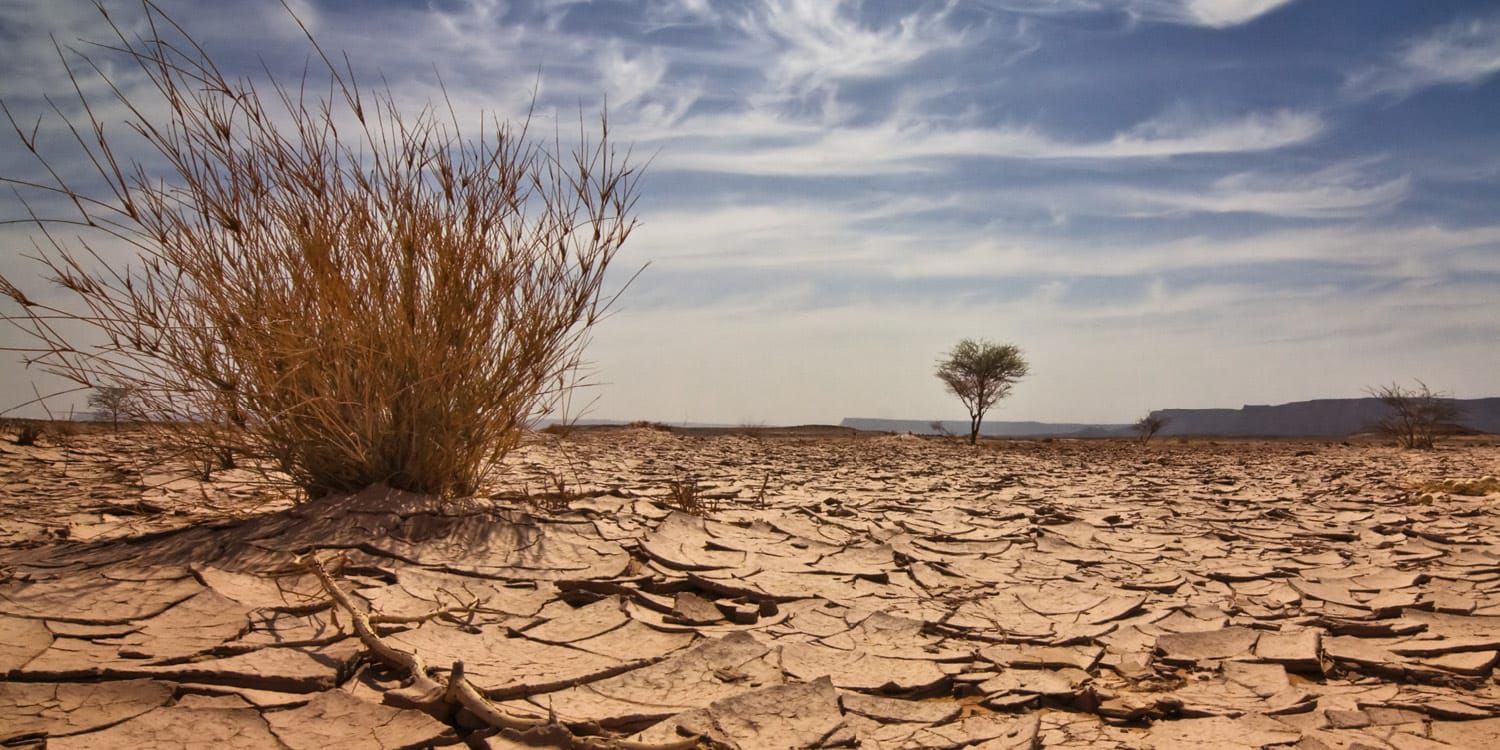
As I write this, increasing areas in the northernmost part of Nigeria, including parts of Jigawa State, are turning into deserts due to climate change, which brings about high temperatures and soil degradation, among its adverse effects. Climate change is a significant environmental issue affecting the world for decades, and its impacts have become more apparent in recent years. Climate change is a long-term change in global weather patterns, resulting in more extreme weather events such as droughts, floods, heat waves, and heavy rainfall.

Jigawa State, located in the northwestern part of Nigeria, is among the frontier states facing the adverse effects of climate change as it has suffered from the symptoms of desertification: erosion, rain shortages, and drought. In response to this challenge, Umar Namadi’s blueprint for environmental protection in Jigawa State is a significant step towards protecting and conserving the environment.

No doubt, for any serious government to come on board in the state, the issue of land conservation must take centre stage. With agriculture as the economic mainstay of the state, over 80% of households rely on farming for food and income. And Jigawa’s wetland (fadama) areas represent about 14% of the state’s total landmass of 24,742 square kilometres. But desertification, exacerbated by our unsustainable felling of trees, is threatening this natural endowment.

One of the significant highlights of Umar Namadi’s blueprint is the continued support of relevant afforestation and reforestation programs and projects under the Environmental Protection Agenda. Afforestation and reforestation are crucial measures for mitigating the effects of deforestation and climate change. Deforestation adversely affects the environment, leading to soil erosion, loss of biodiversity, and reduced water quality. Afforestation and reforestation help mitigate these effects by restoring lost forests and planting new ones.

The Great Green Wall Initiative is another critical project that Mallam Umar Namadi’s blueprint supports and aims to implement in the letter. The Great Green Wall is a pan-African initiative to combat desertification and land degradation in Africa’s Sahel and Sahara regions. The initiative involves planting a wall of trees that spans over 8,000 kilometres from Dakar in Senegal to Djibouti in the Horn of Africa. The incoming Jigawa State Government’s intention to invest in this project indicates Danmodi’s resolve towards combating desert encroachment and restoring degraded land in the affected parts of the state.

Yet, a crucial aspect of this blueprint that catches my fancy most is the item on the establishment of 250 km of shelterbelts and woodlot plantations in the state. A shelterbelt is a strip of trees or shrubs in a straight line to protect farmland, homes, and other structures from wind erosion and soil degradation. This can be said to encompass all the factors of environmental protection. The 250 km-long shelterbelts, according to the blueprint, would cut across the north-western part of the state, starting from Guri Local Government Area and passing through Birniwa (both in the northeast) along the border with the Niger Republic up to Maigatari, Babura, Yankwashi, Gwiwa, and Roni Local Government Areas.

Establishing shelterbelts and woodlots along the northwestern part of Jigawa State is particularly significant and desirable as the area is prone to soil erosion and desertification. In addition, the site also serves as a buffer zone between the Sahara Desert and other parts of Nigeria. So, this shelterbelt protection program, if implemented, will go a long way in helping to reduce the effects of desertification and land degradation and serve as a model for other regions facing similar challenges.

Among the benefits of the proposed shelterbelt program is that the shelterbelt will protect farmland and communities from wind erosion and soil degradation. Wind erosion is a significant problem in this part of the country, resulting in the loss of topsoil and nutrients, making it challenging to grow crops. A shelterbelt will reduce wind velocity and protect the soil from erosion, improving soil fertility.

Also, Jigawa State is prone to desertification and land degradation resulting from deforestation, overgrazing, and poor land use practices. A shelter belt will help mitigate these problems by reducing the effects of wind and water erosion, promoting soil conservation, and improving soil fertility.

Likewise, establishing a shelterbelt will promote agroforestry, which involves growing trees alongside crops or livestock. Across the world today, agroforestry has been proven to be a practical approach to sustainable agriculture as it improves soil fertility, conserves water, and promotes biodiversity. Establishing a shelterbelt in Jigawa State will promote agroforestry and create opportunities for communities, especially those in the drought-affected areas of the northwestern part of the state, to generate income from tree products such as fruits, nuts, and timber.

Lastly, establishing a shelterbelt in Jigawa State is a significant step towards environmental sustainability, as it will help reduce greenhouse gas emissions, improve soil quality, and promote biodiversity.

Now, as the May 29th inauguration day is fast approaching and all eyes are on the incoming government of Mallam Umar Namadi to translate into action its campaign promises, I have no iota of doubt that the man is equal to the task. We believe that by applying these greener development strategies, the state government could create employment opportunities, increase agricultural yields, and protect the environment for the good of our people. We know that many tree planting (or shelterbelt) programs were initiated and failed in the past, but if this particular project comes to fruition, it will be the first of its kind in the country.

Hamisu Gumel wrote from Limawa Quarters, Gumel, Jigawa State. He can be reached via hamisugumel@yahoo.com.

Buhari launches Dangote Refinery in Lagos

By Ahmad Deedat Zakari

Barely seven days before the expiration of his final tenure, President Muhammadu Buhari launched the long-awaited Dangote Refinery in Lagos. The newly commissioned refinery is the first private-owned oil refinery in Nigeria. 

The President was flanked by many dignitaries from within and outside Nigeria during the unveiling. He described the refinery as a ‘game changer’ for the country’s economy. 

“This clearly makes this event a notable milestone for our economy and a game changer for the downstream petroleum product market not only in Nigeria but the entire African continent,” He said.

The accomplished businessman and owner of the refinery, Alhaji Aliko Dangote, gave the welcome remark at the unveiling ceremony.

He thanked President Muhammadu Buhari for his support and said he was his source of inspiration at times he felt like giving up. 

He also appreciated the Governor of the Central Bank of Nigeria, Godwin Emefiele, for ‘moving mountains’ in the course of the project. 

The billionaire also revealed that the first product of the $12 billion facility “will be in the market before the end of July, beginning of August this year”.

“Beyond today’s ceremony, our first goal is to ramp up production of the various products to ensure that within this year, we’re able to fully satisfy our nation’s demand for higher quality products,” he said.

The Dangote Petroleum Refinery and Petrochemical is the largest single-train refinery in the world and has a capacity of 650,0000 capacity a day.

El-Rufai deposes two chiefs in Kaduna 

By Sumayyah Auwal Ishaq 

With just about one week left to the end of his second and final term in office, Governor Nasir Ahmad El-Rufai has approved the deposition of His Highness Jonathan Paragua Zamuna, the Chief of Piriga, and His Highness General Aliyu Iliyah Yammah, the Chief of Arak, with effect from Monday, 22nd May 2023. 

The Kaduna State Ministry of Local Government Affairs made the announcement. 

Details later…..

Presidential tribunal declines request for live coverage of proceedings

By Muhammadu Sabiu
 
The Labour Party (LP), the Peoples Democratic Party, and their presidential candidates’ requests for a live broadcast of the election petition proceedings in court have been declined by the Presidential Election Petition Tribunal in Abuja.
 
On Monday, Justice Haruna Tsammani, the Tribunal’s head, denied the request for live coverage of the court proceedings, adding that the request lacked merit.
 
The All Progressives Congress candidate, Bola Tinubu, won the presidential election on February 25.
 
Atiku Abubakar, the PDP’s candidate for president, submitted a request on May 8 for live coverage of the court proceedings in his case.
 
Peter Obi, who was also running for president in the election, had also submitted a request for a live broadcast of the court hearings related to the election petition.