Admin

Student Loans: Good or bad?

By Kasim Isa Muhammad

In 2016, Femi Gbajabiamila, the immediate former Speaker of the 9th House of Representatives, took a bold step by introducing a bill to address the financial challenges faced by students in higher education institutions nationwide. The proposed legislation, known as the Student Loan Act, sought to provide students with access to loans from the federal government to alleviate the burden of educational expenses. After its initial introduction, the bill was later reintroduced in 2019. However, when it resurfaced in 2022, it sparked a heated debate within the National Assembly, with members expressing divergent views.

The revival of the Act triggered intense discussions and disagreements among the members of the National Assembly. On one side, some legislators strongly supported the motion, citing the potential benefits of student loans for expanding access to education and reducing financial barriers. Proponents of the bill argued that it would provide equal opportunities for students from various socio-economic backgrounds, enabling them to pursue higher education without financial constraints.

Lo and behold! On June 12, 2023, President Bola Ahmed Tinubu signed the Student Loan Bill into law, demonstrating his administration’s commitment to strengthening the country’s educational sector.

Although concerns have been raised regarding the extent of student access to these loans, considering the persistently high rate of unemployment afflicting the country, One of the key considerations surrounding the implementation of the Student Loan Act is the number of students who will benefit from the financial assistance, as it remains unclear how many students will qualify for and receive loans.

However, some suggested that providing massive job opportunities for graduates would be a more practical approach than granting them loans. This sentiment is echoed by those who believe most graduates possess the skills but lack the capital to enhance their businesses. For instance, providing them N500,000 to start a business could be a viable alternative.

Whoa! The current provision stating that loan repayment begins two years after the completion of participation in the NYSC programme is being questioned. The government should reassess this strategy with graduates struggling to secure employment for up to eight years or longer. Given the prevailing circumstances, it is doubtful that the debt collectors will be able to repay their loans within such a short timeframe.

I was also taken aback when I discovered a particular element of the loan procedure: defaulters risk being fined N500,000 or even being incarcerated for up to two years. This revelation left me astounded and raised an essential question in my mind. Is it, not a grave injustice to punish our helpless teeming youths who are already battling to secure jobs with imprisonment simply because they cannot repay their loans?

The fundamental component of the loan process that exceedingly caught my attention is the requirement for students to provide at least two guarantors who must meet specific criteria, such as being a civil servant of at least level 12, a lawyer with at least ten years of post-call experience, a judicial officer, or a justice of the peace. This provision raises concerns, particularly for individuals residing in rural areas or those without any relatives in government positions who could serve as guarantors.

Since the loan programme intends to support the financially disadvantaged, the requirement of guarantors with specific professional backgrounds seems to create a barrier for those who lack connections with people in high positions in the government. 

Another facet of the Act that appears contradictory is the provision that a student’s family must have an income of less than N500,000 to qualify for the loan. This condition seems to limit the accessibility of the loan to only a select few people, raising questions about the effectiveness and inclusivity of the loan act.

Setting an income threshold may have been intended to target students with financial constraints, ensuring that those with the greatest financial need receive the necessary support. But the specific income limit of N500,000 may inadvertently exclude many students who could benefit from the loan.

Considering the drawbacks of the Loan Act, it becomes evident that the federal government should augment its efforts to fund tertiary institutions across the country. By so doing, education can become more affordable and accessible to a broader range of students.

Likewise, the recent increase in school fees at several institutions, including UNIMAID and BUK in the northern part of the country, highlights the pressing need for government intervention. While providing student loans is one possible solution, addressing the underlying issue of inadequate budgets for public universities is essential. By allocating sufficient funds to 109 public universities—50 federal and 59 state institutions—education can become more affordable for students.

The United Nations Educational, Scientific, and Cultural Organisation (UNESCO) recommended that developing nations give up to 15–20 per cent of their annual budget to public education. Nigeria’s allocation to the Education sector has not been meeting the UNESCO standard.

Dataphyte, a media research and data analytics organisation aiming to deploy data tools and technology for Nigeria’s socio-economic development, stated that the education budget analysis between 2016 and 2022 shows that the education sector has not received the recommended 15%.

This has indicated that the government at all levels should prioritise funding for education as a necessary step before implementing student loans. By addressing infrastructure deficiencies, making education affordable for underprivileged students, and providing needed resources, the government can create an environment where all students have equal opportunities to succeed. Investing in education will yield long-term benefits for people and society, fostering development and ensuring a brighter future for future generations.

Kasim Isa Muhammad is an investigative journalist who contributes as a full-time journalist at both Kanempress and The Citizen Reports newspapers.

Should we donate blood for free if recipients have to pay for it?

By Bello Hussein Adoto

One, two, three. Every three seconds, someone somewhere is receiving blood, and they don’t know where it comes from. The person could be an accident victim with a broken leg, a woman bleeding after birth, a sickle cell patient hanging on to life, a man with haemophilia whose blood just won’t clot, or a snakebite victim whose cells are lysing away.

Three seconds. Someone is on the bed, being saved with another person’s blood. That blood could be yours—one pint drained from your body in ten minutes every three months (men can donate up to four times a year). Sometimes, it doesn’t take more than that to save a life.

Unfortunately, many people don’t donate blood because they frown at the idea that hospitals “sell” the blood they donate for free, so it is better that they don’t feed what they see as an unwholesome trade. Why should we donate blood for free if recipients have to pay for it? Let’s unpack the answer.

Blood is free. Hospitals—public ones, at least—don’t sell blood.

They collect service charges ranging from five to eight thousand naira in public hospitals to cover the cost of screening, collecting, bagging, storing, matching, and transfusing blood. The service charge is like revolving funds that keep the blood flowing from the donor to the patient.

Is it criminal? Not quite. Hospitals get blood from unpaid voluntary donors and relatives of transfusion recipients who donate to replace the blood their loved ones received. A third source is those who get paid for donating blood. However, getting blood from paid donors is discouraged for ethical and safety reasons. Whatever the source, blood recipients are required to pay processing fees to cover the cost of getting blood and transfusing it safely.

Let’s face it. Healthcare is subsidised, but it’s not free. The government can only pay for so much. Hospitals need facilities to receive donors and collect their blood. They need equipment, test kits, and reagents to screen the blood; bags and anticoagulants to keep the blood fluid and aseptic; storage units to keep the blood stable enough to be useful to the patient. These cost money and that’s the service charge that patients and their relatives pay.

The need for blood for voluntary blood donation is high in Nigeria. According to a recent National Blood Services Commission (NBSC) report, only 25% of blood transfusion demand is met in Nigeria. Unpaid voluntary donation closes the demand gap for blood donation. It makes blood available to patients, especially those with rare blood types and those needing many pints of blood.

While you are welcome to share your concerns about patients having to pay for blood, please don’t let that discourage you from donating. People need blood, and that need is critical. Malnourished children, pregnant women, people with severe malaria, and those with sickle cell disease are among the top groups in this category.

Your blood could be the difference between someone staying alive or dead. Imagine your younger sister or a parent desperately needs blood, but blood banks and reserves are depleted due to a lack of willing donors. What do we do then? Even if you worry that recipients will eventually have to pay for it, your blood gives them something to pay for.

Besides, your donation makes blood available so that desperate patients and their relatives don’t have to get it from the so-called black market, which is more expensive.

Beyond donating, you can raise awareness for other people to donate. As of 2022, only 8% of transfused blood in the country was voluntarily donated. We need more unpaid voluntary donations to make blood more accessible to those in need.

Transfusible blood is obtained only from humans. We can’t manufacture blood like normal saline or get it from animals like insulin. So, people need to donate blood.

We must also make the case for better investment in our health system. Many public hospitals across the country cannot collect or store blood. They often ask patients’ relatives to look for donors or collect and keep blood that may not be useful for transfusion. Better hospital facilities and more laboratory supplies will buffer these limitations and improve the quality of blood transfusion in Nigeria.

While I don’t deny that unscrupulous elements could profit from the blood trade, we need to see the bigger picture. Blood donors serve a great need. Your donation makes blood readily available and accessible to everyone. So, please, go out there and donate. You are saving a life.

Adoto, a researcher, writer, and journalist, writes via bellohussein210@gmail.com.

Open letter to Governor Mai Mala Buni on sickle cell patients in Yobe State

Dear Governor Mai Mala,

I write to you with the utmost respect, acknowledging the positive impact you have made in the healthcare sector of Yobe State. I would like to commend you for your notable efforts in providing health insurance slots to sickle cell patients through YSCHMA, as well as the provision of free drugs and food items to these individuals via YOSEMA.

However, despite these commendable initiatives, it is crucial to address the issue of sickle cell disease, which continues to affect numerous children in Yobe State, making it one of the states with the highest prevalence.

Your Excellency, in certain Local Government Areas (LGAs), such as Potiskum, the specialist hospital lacks an emergency ward that caters to the needs of sickle cell patients and others requiring immediate medical attention. The existing emergency ward at the specialist hospital in Potiskum is operating at a limited capacity.

Hence, I kindly request that you prioritise the establishment of an emergency ward dedicated explicitly to sickle cell patients or consider expanding the current ward at the specialist hospital in Potiskum and other LGAs that lack such facilities.

Furthermore, I urge you to continue the excellent work you have initiated by enrolling sickle cell patients into the health insurance program. This ongoing support will significantly improve their access to necessary medical services.

Lastly, while I am aware that employment opportunities are open to all state indigenes, I would like to draw your attention to the plight of sickle cell patients. Considering the challenges they face and the presence of many educated individuals among them, I humbly request your favour in providing job opportunities for some of these deserving sickle cell patients.

Thank you for your attention to these matters, Your Excellency. I hope your continued efforts will bring about positive changes in the lives of sickle cell patients in Yobe State.

Yours sincerely,

Mohammed Madu Bukar

madubukarmohammed@gmail.com

Asibitin Mal, Potiskum, Yobe State.

The criminogenic environment

By Lawi Auwal Yusuf

The nexus between our social environment and human behaviour is relevant in explaining Nigeria’s formidable crime rates. First, it is essential to understand the significance of socialisation in behaviour development.

Human interactions on both micro and macro levels provide a flawless context for learning behaviour from others. This learning occurs through these interactions that directly shape the socialisation process through observation of one’s environment, imitation, role modelling and expectation development.

So, human behaviour reflects what is learned in daily interactions with others. This socialisation process is influenced by individuals’ intimate groups and role models who similarly clout those close to them and serve as others’ source of learning.

Thus, deviation from society’s consensual values is not considered an innate human character predetermined by biological, psychological and or other natural factors, as argued by most social learning theories. Instead, it is a product of socialisation that determines the development of human behaviour through our perpetual interactions.

Given the foregoing, criminousness is like all other human behaviour spawned by social interaction. To wit, criminalness isn’t spontaneous. Untainted persons acquire their “knowledge” from external sources as they observe the tainted ones carrying out criminal behaviours. They learn and, subsequently, effectuate them.

Parents keep an eye on those your wards reach out to and teach them to avoid the toxic ones. Perhaps more importantly, don’t let those you are cynical of be their buddies. Be their pal yourself.

Lawi Auwal Yusuf wrote from Kano and is contactable via laymaikanawa@gmail.com.

How I bade ‘welcome’ to the labour market

By Ibrahim Suleiman Ibrahim

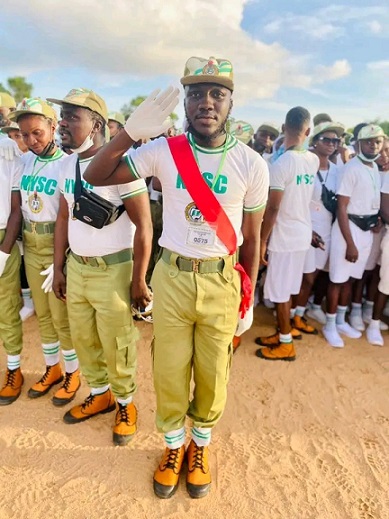
The 7th of July marked exactly one year since I completed my NYSC, and so far, it has been an educative and worthwhile experience – Alhamdulillaah!

Let me tell you a story about my first experience in the labour market. The story goes thus;

A few days after the formal completion of my NYSC, I thought I should start job-hunting immediately. I said to myself then, “It’s better to strike while the iron is still hot”, what the Hausa people call “Da zafi zafi ake dukan ƙarfe“. I thought it was a prompt decision I made, forgetting that some of my colleagues with whom I completed NYSC had already secured lucrative jobs long before we completed NYSC. 

I didn’t let that discourage me anyway. “They are children of the elites, after all”—I said to myself. 

Another thing that motivated me to an immediate and unrelenting job-hunting was the fact that the Certificate of National Service, which used to be a barrier to so many opportunities I missed during my service year, had become handy at that time, and would no longer affect subsequent opportunities that might come.

So, to commence the job-hunting. I started following popular job sites and physical employers for job opportunities and ensured I did not let any job advert or link pass me by without applying. All these, I did with much confidence and hope to get a good job in no distant time.

One fateful evening, not up to a fortnight after the commencement of my job-hunting journey, while I was reclining on the sofa, I got a text message that reads thus;

“Congrats u have been shortlisted for our company Orientation on Monday 18/07/22 at 2nd floor, XX building Beside XXX Bank by XXXXX way Opposite XXXXX Road Kaduna, by 8:30 am.”(some information about the venue deserves confidentiality, hence the XXXX).

It was a text message from a random 11-digit phone number informing me that I had been shortlisted for a job and inviting me to an orientation exercise to mark the commencement of the job.

I was hellbent on getting a ‘better job’ that I didn’t even pay attention to the sheer informality and unprofessionalism in the text message I got. 

It is noteworthy that I already had a job I was managing then, but I was eager to get better opportunities since I was done with NYSC and expectations were very high.

So, I dressed my best on the scheduled morning for the orientation exercise and prepared for a possible interview that might come up during the orientation.

It will baffle you to know that I wasn’t even sure which of the jobs I got, but I was confident it would be better than the job I was managing then.

On reaching the venue, I saw a crowd of young people queuing in front of a desk officer for documentation and trooping into a large hall afterwards.

Long story short, I got into the hall after the tedious documentation process and later discovered that I was cheaply lured into attending a ‘Neolife’ lecture—Neolife is one of those tricky investment schemes claimed to be a foreign investment company, filled with a bunch of jobless people, where your income solely depends on the number of people you successfully convince into investing in the scheme. 

They indoctrinate the belief that you could become a multi-millionaire in a few months of investment if you successfully convince people to join the scheme. They tell you about how useless it is to seek salary jobs and how important it is to invest your whole savings into Neolife. They’ll tell you stories of one of their colleagues living in Europe, making millions of dollars due to investing in Neolife.

I felt disappointed and heartbroken to discover that I finally got lured into attending their lecture because of my naivety as a fresh graduate. I have spent my whole life avoiding the agents and promoters of such schemes.

That day I bade an official “Welcome” to the labour Market.

I have more stories about my labour market experience, but I’m indisposed to write about them now; perhaps, I’ll do that leisurely as time passes.

Ibrahim Suleiman Ibrahim wrote via suleimibrahim00@gmail.com.

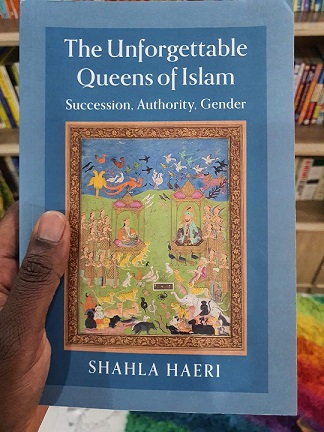
Book Review: The Unforgettable Queens of Islam

By Dr Shamsuddeen Sani

It’s very easy to ignore this book. Underrate it even. I found myself rereading it for many days, given the enormous importance of the topic, especially in the contemporary discourse in Muslim-majority countries about woman’s leadership. Being a recent publication in 2020, and although the author didn’t explicitly state it, it appears to be building to improve upon earlier work by the late Moroccan feminist writer and sociologist Fatima Mernessi with her book, The Forgotten Queens of Islam.

Shahla Haeri embarks on a journey of gendering the historical narrative of sovereignty and political authority in the Muslim world, shedding light on the lives of Muslim women leaders who defied the norms of dynastic and political power to rise as sovereigns in their deeply patriarchal societies.

The author’s usage of the term “queen” is not meant to be taken literally for all six prominent figures discussed in the book but rather to signify their immensely influential leadership roles during their respective eras. While recognising the significant impact of numerous women in Islamic history who exerted influence behind the scenes, Haeri emphasises those women who stood at the forefront of the political machinery, actively engaging with the structures of authority and power.

She doesn’t just relay the historical milestones of these great women in historical Islam but brings in a fresh perspective on how we look at the concept of women’s leadership in the Islamic tradition. The author situates women rulers’ rise to power within three interrelated domains: kinship and marriage, patriarchal rules of succession, and individual women’s charisma and popular appeal.

This book prompts deep contemplation on patriarchy within the pre-modern normative Islamic tradition. But one needs to be careful because the author appears to be overly problematising patriarchy in some instances significantly beyond what we consider as would have been normal in pre-modern Islam. She did allude, however, to the critical role of men in women ascending to positions of political authority. 

Structurally, this book has a Preface and Introduction and is broken into three main parts with two body chapters. Part I, Sacred Sources of Authority: The Qurʾan and the Hadith, lays the background for her accounts, with a deep examination of the primary sources of the Qurʾan and hadith, through the Qurʾanic story of the Queen of Sheba and the biography of the Sayyida Aisha (RA). Haeri relays the Quranic account of the dramatic encounter between King Solomon and the Queen of Sheba, popularly known as Bilqis. Drawing primarily from Tha’alabi and al-Tabari, the book cross-examines the sovereignty of Bilqis and connects the Quranic revelations with what she believes was the exegetes’ medieval patriarchal reconstructions.

Part II of the book is about Medieval Queens: Dynasty and Descent. In Chapter 3, the book explores the leadership life of the long reign of the Ismaili Shiite Yemeni queen. It examines Queen Arwa’s fascinating political acumen and how she survived the political and power succession tussle dealing with the 3 Fatimid caliphs of Cairo. Chapter 4 examines the short sovereign rule of the only female sultan of the 13th century Delhi Sultanate, Razia Sultan: ‘Queen of the World Bilqis-i Jihan. 

The 3rd part of the book, which explores the contemporary Queens and examines the institutionalisation of succession, provides an in-depth look at Benazir Bhutto and Megawati Sukarnoputri but will not spoil more here for the interesting details in the book.

Haeri concludes this work of ethnohistory which is deeply personal as she peppers in the concept of the “paradox of patriarchy,” which refers to the historical tradition of power succession among men, particularly fathers and sons, or even brothers, whose family ties legitimise the customary transfer of power. She quickly alludes that the relationship between fathers and sons can be a source of tension and rivalry, where they may fear, resent, or even seek to eliminate each other. In contrast, father-daughter relationships tend to be more personally fulfilling and have fewer political consequences for the father. The preference of patriarchs for their daughters is not only driven by self-preservation but also by their recognition of their daughters’ talents and political astuteness.

Dr Shamsuddeen Sani wrote from Kano. He can be reached via deensani@yahoo.com.

Demons called phone-snatchers

By Sulaiman Maijama’a

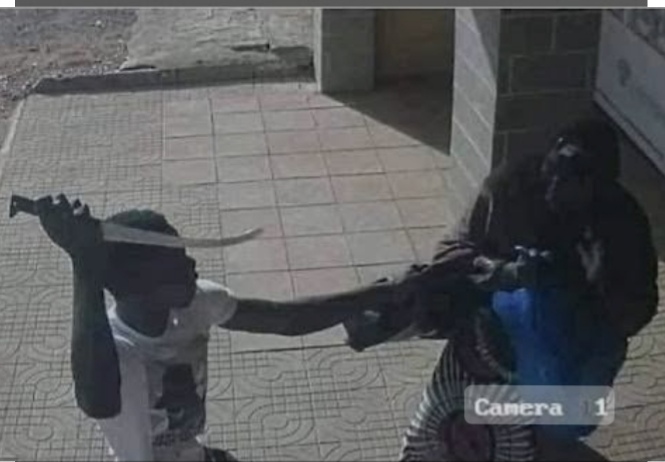
In recent times, the most vicious of all vices in our society is phone snatching. This dastardly act is perpetrated by gangs of youth of 15 to 25 years who carry weapons and terrorise people. Sometimes, these youth injure their victims or even stab them to death.

This evil act usually is plotted and carried out at night, but sometimes, in broad daylight, the youth disguise themselves as tricycle operators and unleash their cruelty against people. There is hardly a week that would pass on without a report of a victim of phone snatching.

This activity becomes a nightmare for people and poses a great threat to the freedom of movement of innocent citizens, making it difficult for them to go about their everyday business, especially at night, without the fear of being attacked by phone snatchers.

It is common knowledge that phone snatching continues to be pervasive in different states of the North. It assumes a higher degree in states like Kano, Bauchi, Plateau, and Gombe.

The nefarious activity can be directly or indirectly attributed to a lack of proper parental care and broken homes. The youth who lack good parental care or come from broken homes usually move with the wrong people, and their movements are not queried or followed up, thus having the freedom to do anything without being probed.

Peer pressure is another cause of youth involvement in social vices. The youth who spend more time with their friends easily get influenced due to their weak nature and tender age.

Youth have a high level of curiosity to learn, have fun and practice new things, thus making them deviate. And as the saying goes, “Show me your friends, and I will tell you who you are” The significance of friends and how they influence lives is so enormous that many youths were conscripted into phone snatching.

Parents’ negligence also makes the wards turn to their friends for love, emotions, care, and advice, who can lure them into deadly acts. An abandoned child can look up to their friends for love and affection. Some maids, house helpers, and family members who are always around children without parents can introduce these vices to them.

Not only that, but unemployment has also added intensity to immorality that graduates to this monster called phone snatching that threatens the social well-being of the people. 

According to the report by a Global consulting firm KPMG, titled “Global Economic Outlook”, Nigeria’s unemployment rate was projected to rise further to 40.6 per cent this year. This revelation is alarming and must be uppermost in the mind of every responsible citizen. “An idle mind”, as an adage says, “is a devil’s workshop”.

Drug abuse is another social determinant. Despite the pronouncements of the efforts by the National Drug Law Enforcement Agency to curb the menace, the percentage of drug abusers is on the rise, and they quickly and freely access the hard drugs of their choice. This allows the youth to be intoxicated before they carry out their devilish act of phone snatching.

It is pertinent that all stakeholders should rise against social vices. Youth that engage in these dangerous acts need help, advice and rehabilitation for the addicted ones.

Parents need to know their children’s friends, status, and other people the children associate with. This is majorly the role parents should play in their children’s lives. Mothers should, in particular, be close to their children. Close monitoring and time should be given to children by parents. Children should be taught the moral values that might help shape their cognitive abilities.

The media ought to be playing their roles of education and information by organising forums to enlighten people about the dangers associated with social vices. Similarly, they should be playing surveillance by warning early on of any potential danger.

Security operatives, government and all stakeholders must be active and alert to caution, rehabilitate or punish (where necessary) any person seen as a threat to others.

All hands must be on deck to combat the menace of phone snatching in our societies.

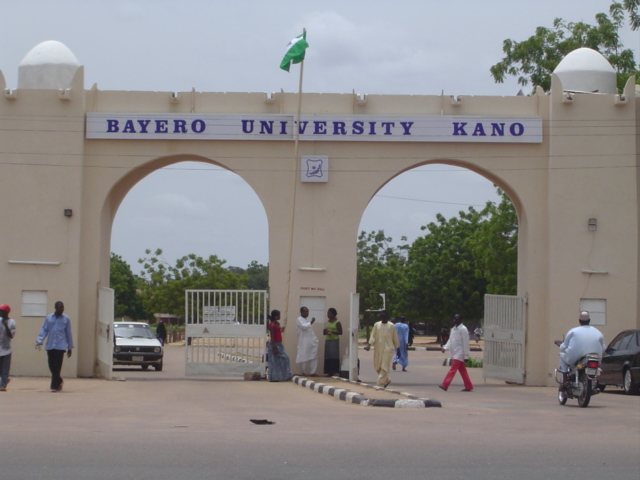
Maijama’a wrote from the Faculty of Communication, Bayero University, Kano. He can be contacted via sulaimanmaija@gmail.com.

Abdulaziz Abdulaziz appointed as a media aide to President Tinubu

By Muhammad Sabiu

Abdulaziz Abdulaziz, a renowned journalist from Northern Nigeria, has been appointed as the Senior Special Assistant to President Bola Tinubu on Print Media. 

This is contained in a widely shared list of special assistants and advisers the president appointed recently. This esteemed position reflects the recognition of Abdulaziz’s exceptional talent and dedication as a journalist, leaving behind a trail of remarkable achievements throughout his career. 

Abdulaziz’s appointment is a testament to his unwavering commitment to journalism and his remarkable track record.

The Daily Reality offers scholarship for BUK students

The Daily Reality (TDR) online newspaper management is pleased to announce the opening of its Endowment Fund Program and invites eligible and interested applicants to apply.

In light of the recent rise in registration fees at Bayero University, Kano (BUK), TDR plans to offer a grant to students who have had their articles published on the platform as a way of support.

Thus, if you are a BUK student and have your article published by TDR, please, contact us via contact@dailyrealityng.com or thedailyrealitynews@gmail.com. Please, submit proof of your student status at BUK, such as a copy of your ID or admission letter, along with the title of your article. The application closes on July 16, 2023, at 11:59 pm.

Please, join us in supporting young people’s education. Every contribution counts.

Sincerely yours,

TDR Editorial Team

Nigerian Muslims condemn burning of Qur’an in Sweden

By Muhammad Sabiu

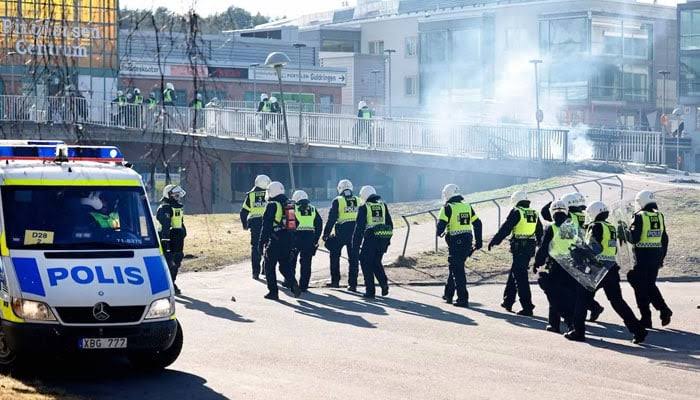
The Nigerian Supreme Council for Islamic Affairs (NSCIA) has issued a press release strongly condemning the recent burning of the Glorious Qur’an in front of the main Mosque in Stockholm, Sweden. 
 
The NSCIA, led by President-General and Sultan of Sokoto, His Eminence Alh. Muhammad Sa’ad Abubakar, CFR, mni, speaks on behalf of the entire Nigerian Muslim Ummah in expressing their outrage and denunciation of this act.
 
The statement partly reads, “This abominable and heinous act is a clear affirmation of the growing high level of Islamophobia while evidencing the impunity of Islamophobes whose hatred for Islam and Muslims knows no bound. Actions and utterances credited to these Islamophobes smack of gross insensitivity, and disrespect for the feelings and sensibilities of nearly two billion Muslims in the World. This is one too many attacks on Mosques in Sweden, especially recalling that of 2015 and another in December 2022, following which a damaged copy of the Qur’an was left chained up and hanging outside the entrance of the Mosque.”
 
The NSCIA, along with global leaders and individuals, condemns this provocative and blasphemous act in the strongest possible terms. The burning of the Qur’an stands as a testament to the growing levels of Islamophobia and the audacity of individuals driven by hatred for Islam and Muslims.
 
Such actions and rhetoric displayed by Islamophobes demonstrate a profound insensitivity and lack of respect for the feelings and beliefs of the nearly two billion Muslims worldwide.
 
This incident is not the first of such incidents in Sweden, with previous instances occurring in 2015 and December 2022, where a damaged copy of the Qur’an was left hanging outside a mosque’s entrance.