Admin

Unexploded missile fragment found in Niger State

By Abdullahi Mukhtar Algasgaini

A suspected missile warhead has been discovered in a bush in the Zugurma area of Mashegu Local Government, Niger State.

The device was found by local residents on Monday afternoon, who immediately alerted security forces. Authorities have cordoned off the area.

Confirming the incident, Niger State Police Public Relations Officer, SP Wasiu Abiodun, stated that the Explosive Ordnance Disposal (EOD) unit has been deployed to the scene for investigation and safe recovery.

“The item is under investigation and further development will be made public,” Abiodun said.

While unconfirmed local sources speculated the object could be a Tomahawk missile warhead linked to U.S. military operations, official identification is pending the EOD unit’s assessment.

Security forces are currently securing the area.

BBC bans use of “kidnapped” in Maduro arrest coverage, contradicts Trump

By Abdullahi Mukhtar Algasgaini

A directive from BBC News editors instructing journalists not to describe the arrest of Venezuelan President Nicolas Maduro as a “kidnapping” has sparked controversy, placing the broadcaster at odds with U.S. President Donald Trump’s own terminology.

Socialist commentator Owen Jones revealed an internal BBC memo on X, which stated that while journalists could use “captured” (if attributed to U.S. sources) or “seized,” they must “Avoid using ‘Kidnapped.’

“This editorial guidance clashes with comments from President Trump. When asked about Venezuelan Interim President Delcy Rodríguez’s use of the term “kidnapping” for Maduro’s detention, Trump told reporters aboard Air Force One, “It’s alright. It’s not a bad term.”

Maduro and his wife, Cilia Flores, pleaded not guilty in a New York court to narco-terrorism and cocaine importation conspiracy charges.

During the hearing, Maduro declared he was “kidnapped” and “a prisoner of war,” while Flores asserted her status as Venezuela’s first lady.

Following the operation, Delcy Rodríguez, Maduro’s former vice president, was sworn in as Venezuela’s new leader in Caracas. Trump asserted the U.S. was now “in charge” of Venezuela, warning its interim government to cooperate or pay a “very big price.”

World Council of Churches urges EU to sanction Israel over Gaza genocide

By Ibrahim Yunusa

The World Council of Churches (WCC) has called on the European Union to impose sanctions and an arms embargo on Israel, citing what it described as a “war of genocide” in Gaza and an ongoing pogrom against Palestinians in the West Bank.

Speaking on Tuesday, Iskandar Majlton, a local coordinator of the Ecumenical Accompaniment Programme in Palestine and Israel a WCC-affiliated initiative said the council was deeply shocked by the relentless violence and human suffering unfolding in the region.

Majlton emphasized that the WCC’s position is grounded in international law and human rights, condemning all attacks on civilians regardless of the source. He described the situation in Gaza as an “unprecedented humanitarian disaster,” with thousands killed mostly women and children and nearly the entire population displaced amid destruction, hunger, and disease.

He further stressed that the ongoing crisis did not begin in October 2023 but is rooted in decades of occupation, the blockade of Gaza, and structural inequality, urging global actors to address the deeper causes behind the cycle of violence.

Tinubu orders manhunt for Niger State attackers, demands rescue of abductees

By Abdullahi Mukhtar Algasgaini

President Bola Ahmed Tinubu has issued a direct order to the nation’s security chiefs to track down and bring to justice the terrorists responsible for the deadly attack on Kasuwan Daji community in Niger State.

He also mandated the urgent rescue of all abducted victims. The directive, given on Sunday, follows reports that terrorists, possibly fleeing from military pressure in Sokoto and Zamfara states, carried out the assault, killing villagers and kidnapping women and children.

President Tinubu strongly condemned the attack, extending his heartfelt condolences to the victims’ families and the people of Niger State.”These terrorists have tested the resolve of our country and its people.

They must, therefore, face the full consequences of their criminal actions,” the President declared. “No matter who they are or what their intent is, they must be hunted down.”

He warned that not only the perpetrators, but also their accomplices, would be caught.

The President assured Niger State residents that security operations would be intensified around vulnerable communities, especially those near forest areas used as criminal hideouts.

Calling for national unity, Tinubu urged citizens to remain resolute and avoid divisive rhetoric that could undermine security.

“These times demand our humanity. We must stand together as one people and confront these monsters in unison,” he said, emphasizing the goal to reclaim peace and security in the affected communities.

The orders were issued to the Minister of Defence, the Chief of Defence Staff, all Service Chiefs, the Inspector-General of Police, and the Director-General of the Department of State Services (DSS).

30 feared dead as canoe overturns with passengers on board in Jigawa

By Anwar Usman

No fewer than thirty people are feared dead as a canoe capsized in Guri Local Government Area of Jigawa State.

An eye witness revealed that the incident happened Saturday evening when the canoe conveying passengers from Garbi village, Nguru local government of Yobe state to Adiyani village of Guri Local Government of Jigawa State mishaped He said sixteen people died, fourteen still missing while people were able to rescue ten.

When contacted, SP. Lawan Shiisu Adam, the police public relations officer in the state confirmed the incident saying, “On Saturday evening around 7pm there was a report of a capsized Canoe at Adiyani village of Guri Local. The incident happened when the canoe carrying about forty passengers capsized.

“Sixteen people were reported dead, ten rescued, while fourteen are still missing after a canoe capsized in Adiyani village, Guri LGA.”

He said that personel on rescue mission are still going on to find the missing bodies while investigating is ongoing on the cause of the incident.

Abia: Governor Alex Otti signs Senior Citizens Law

By Hadiza Abdulkadir

Governor Alex Otti has signed the Senior Citizens Bill into law to improve the welfare of elderly residents in Abia State. The legislation forms part of a broader set of executive bills recently assented to by the governor.

The new law establishes a framework to support senior citizens aged 60 and above, granting them access to monthly stipends, free medical care, and other social welfare benefits. The initiative is designed to enhance the quality of life of older persons and provide sustained social protection.

The policy has been widely commended by stakeholders and civil society groups, who describe it as a progressive step toward inclusive governance and social responsibility. Government officials say implementation modalities are being developed to ensure the effective and transparent delivery of benefits.

Governor Otti’s action reflects his administration’s commitment to social reforms and the strengthening of welfare systems for vulnerable groups in the state.

NAF neutralises 23 bandits fleeing Kano after night attacks

By Uzair Adam

At least 23 suspected bandits were neutralised in a coordinated military operation after armed groups launched attacks on Shanono and Tsanyawa local government areas of Kano State between the night of January 1 and the early hours of January 2, 2026, according to the Nigerian Army.

The development was disclosed in a statement issued on Sunday by the Assistant Director, Army Public Relations, 3 Brigade, Nigerian Army, Major Babatunde Zubairu, who said the operation involved joint task force troops on the ground and the Air Component of Operation FANSAN YAMMA.

According to the statement, troops successfully contained the attacks in Kano. They inflicted heavy casualties on the assailants before tracking the fleeing bandits to Karaduwa village in Matazu Local Government Area of neighbouring Katsina State. 

Acting on credible intelligence, the Air Component pursued the group as they attempted to regroup after escaping Kano.

The Army said intelligence reports revealed that the bandits were in the process of burying some of their members killed during the initial clashes when they were located at Dan Marke in Matazu LGA. 

Air Component Sector 2 of Operation FANSAN YAMMA reportedly trailed their movement until several motorcycles converged after crossing a dry riverbed.

“A precision airstrike was immediately launched,” the statement said, noting that the operation was supported by aerial Intelligence, Surveillance and Reconnaissance missions. 

The strike, according to the Army, resulted in the neutralisation of at least 23 terrorists, while several others were believed to have sustained injuries. 

It also damaged the group’s weapons and other equipment.

Reacting to the operation’s outcome, the Commander of 3 Brigade, Nigerian Army, commended both the air and ground troops for their exceptional courage. 

“Their bravery and resilience in the face of adversity are commendable,” he said.

The Army added that the security situation in Kano State remains calm, with troops sustaining robust patrols and close monitoring of flashpoints. 

It stated that troop morale and operational efficiency remain “very satisfactory.”

The Nigerian Army also appealed to the public to continue supporting security agencies by providing timely and credible information.

Such cooperation, it said, would further aid efforts to disrupt banditry and other terrorist activities.

Major Zubairu stressed that troops, working alongside other security agencies, remain committed to safeguarding lives and property nationwide and will continue to take all necessary measures to ensure national security.

Nigeria must turn to modern technology to defeat insecurity

By Aminu Babayo Shehu

Nigeria is facing one of its toughest internal security battles in decades. From the kidnapping of schoolchildren in Kebbi and Niger states to the killing of senior military officers, including a Brigadier General, criminal groups continue to operate with increasing boldness. Bandits, kidnappers and terror cells now openly upload videos on platforms like TikTok and WhatsApp, displaying weapons, hostages and propaganda with little fear of consequences.

This is no longer an era where outdated tactics can secure the nation. Criminal groups are becoming more technologically aware, while the state still relies heavily on manual intelligence and slow-response systems. Countries facing similar threats have adopted advanced tools and strategies. Nigeria must follow the same path.

The United States and Israel use drones, satellite intelligence and geolocation trackers to disrupt hostile organisations long before they strike. Rwanda has established a modern drone command system to enhance surveillance and national security. India employs mobile tracing, SIM mapping and digital pattern analysis to dismantle kidnapping networks. These examples show that even in challenging environments, technology can expose criminal movements, reduce their operational freedom and strengthen national response.

Nigeria can apply the same approach effectively.

Real-time aerial surveillance remains one of the most critical gaps in Nigeria’s security architecture. High-altitude drones equipped with night-vision cameras and thermal sensors can monitor large forest areas where bandits hide. Such drones transmit live data to command centres, enabling tracking of movements and coordination of precision strikes. In many cases, soldiers need not be deployed on foot into ambush-prone areas; operations can be guided or executed remotely.

Mobile intelligence is another powerful asset. Every phone, even when switched off, leaves digital traces. With firm collaboration between telecom operators and security agencies, criminals can be located through cell-site analysis, call patterns and movement anomalies. India has successfully used these tools to reduce large-scale kidnapping syndicates.

Satellite imaging, when paired with artificial intelligence, can detect camps, vehicles, and human movement in remote areas. Modern software can analyse thousands of images within minutes and flag suspicious activity such as heat signatures, makeshift shelters, or recently cleared land. This drastically improves early detection and reduces operational delays.

State governments can also invest in early-warning technologies. Community CCTV networks, automated alarm systems and remote-sensor alerts can shorten response times. Local initiatives that once existed in a few states need consistent funding and national integration.

At the federal level, the Presidency should coordinate a national security technology blueprint. This would bring together drones, cyber-intelligence tools, biometric systems, satellite monitoring, and geospatial-analysis platforms into a single central command. Strategic partnerships with technologically advanced nations can reduce costs and strengthen capacity.

Nigeria’s security forces have courage and dedication, but courage alone cannot defeat modern criminals who rely on speed, shock and terrain mastery. Technology is the equaliser. It exposes hideouts, cuts communication lines and allows the state to strike before criminals mobilise.

The tools exist. They are affordable. They have worked in other nations. What Nigeria needs now is clear political will, long-term investment and an understanding that 21st-century threats demand 21st-century solutions.

If embraced, technology can save lives, disrupt kidnappers and terrorists, and restore the confidence of millions of Nigerians who deserve safety.

Aminu Babayo Shehu is a Software Engineer and Mobile Developer with experience building technology-driven solutions, including systems for logistics, telecommunications, e-commerce, and security-focused applications. He writes on technology, national development and digital transformation.

Large weapons cache seized in northeast security operation

By Abdullahi Mukhtar Algasgaini

Troops of the Nigerian Army in northeast Nigeria have recovered a major stockpile of heavy ammunition, security forces announced.

Acting on a tip, soldiers from Operation HADIN KAI, alongside police bomb disposal experts, responded to the Bulumkutu Railway area on Friday afternoon.

A search of a concealed drainage channel uncovered 1,270 rounds of 12.7mm ammunition warheads, including live rounds, and power banks.The discovery followed recent, sustained military activity and operations against suicide bombers in the region.

The military stated the find was a result of “actionable intelligence” aimed at restricting terrorist movements.

The site has been secured and efforts are underway to drain the channel for a further search. No casualties were reported during the operation, and the area remains calm under heightened security.

Authorities praised the public’s role in providing the initial tip, urging continued vigilance and reporting of suspicious activity to maintain security.

U.S. airstrikes in Venezuela kill civilians amid capture of Maduro

By Abdullahi Mukhtar Algasgaini

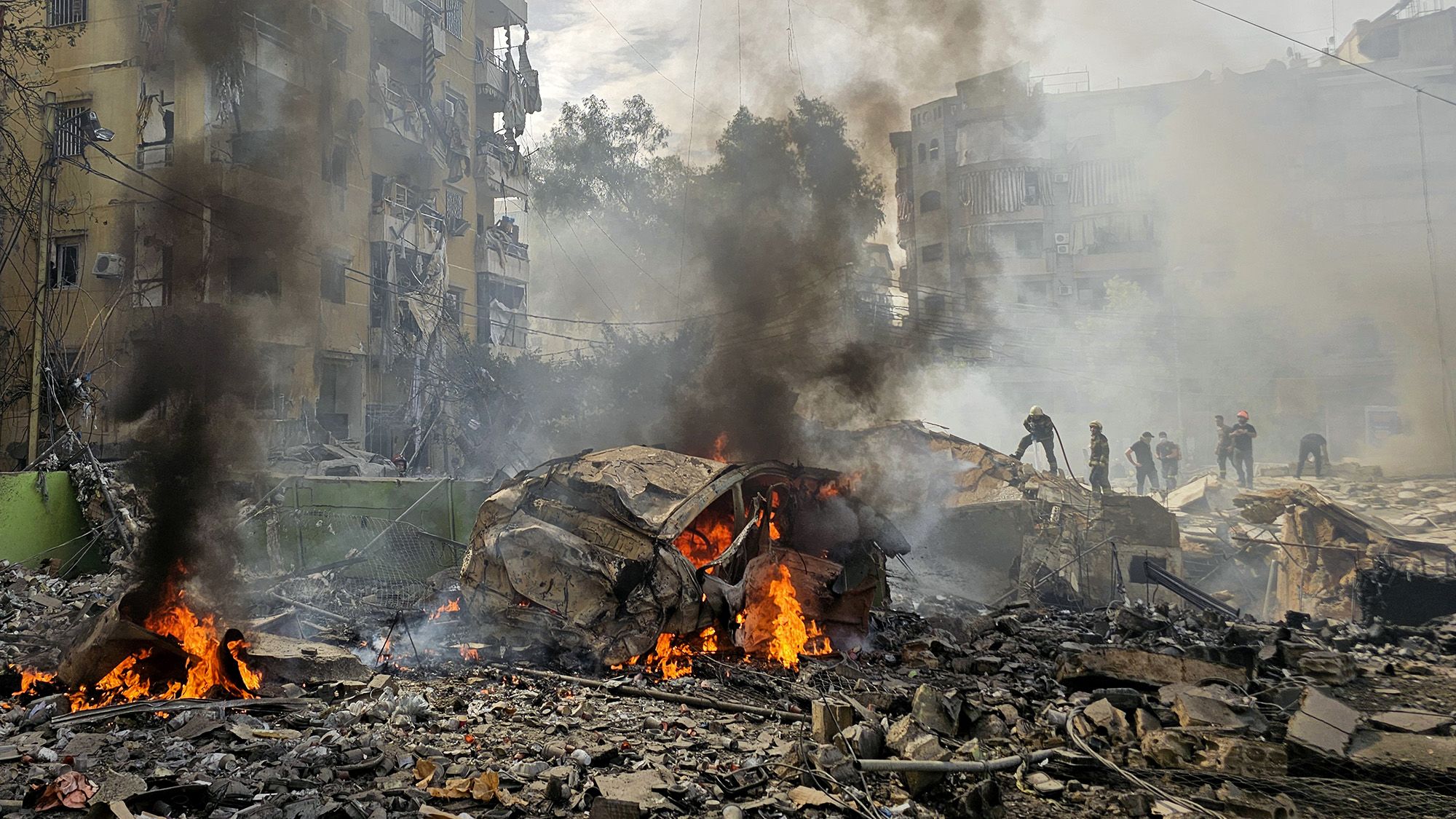
A U.S. military operation to apprehend Venezuelan President Nicolás Maduro resulted in airstrikes across the country on Saturday, killing and injuring an undetermined number of Venezuelan civilians and military personnel.

The attacks have drawn international condemnation and plunged the nation deeper into crisis.

The strikes, which targeted locations including the capital Caracas, successfully led to the capture of Maduro and his wife, Cilia Flores. They have been flown to New York to be held in a Manhattan prison. The mission has polarized U.S. politics, with Democrats roundly criticizing President Donald Trump’s decision.

Venezuela’s government declared a state of emergency, condemning the action as “imperialist aggression.” The European Union stated it is closely monitoring the volatile situation.

The airstrikes mark an escalation of prolonged U.S. pressure on Venezuela. In preceding months, U.S. operations against vessels allegedly linked to Venezuelan drug trafficking had already resulted in multiple deaths at sea.

The incident occurs against a backdrop of severe domestic violence in Venezuela, where state security forces have long been implicated in extrajudicial killings and crackdowns.