Admin

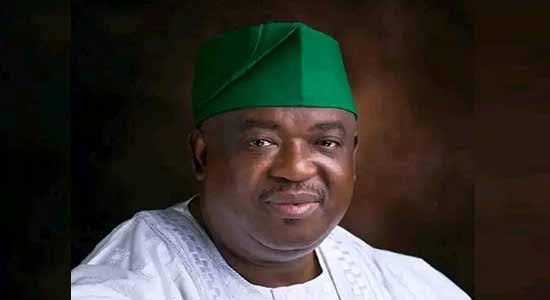
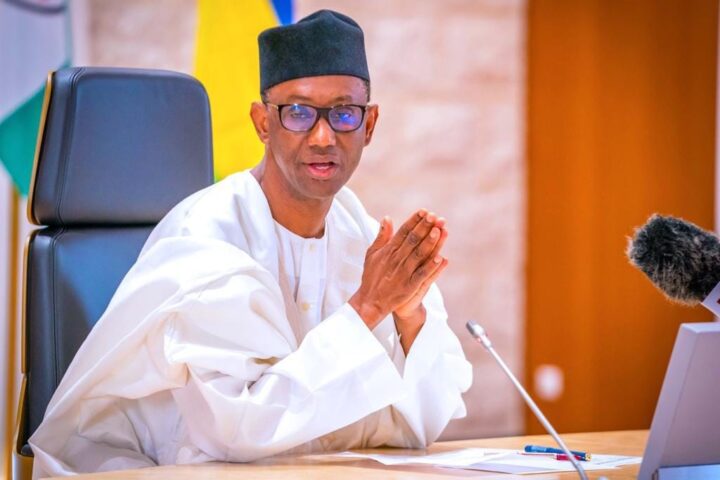
NSA Nuhu Ribadu style: A critique 

By Zayyad I. Muhammad 

For 24 years, most Nigerians were only familiar with one style of operation by their National Security Advisers (NSA)—a regimental style—because of the complete military background of the previous NSAs. Having NSAs with military experience is an excellent idea, but some critical situations require looking at things from different angles, including outside-the-book approaches.

The coming of Nuhu Ribadu as Nigeria’s National Security Adviser is a paradigm shift and a systemic and systematic approach by President Bola Ahmed Tinubu. Tinubu brought not only a person that he understood but also a person who understood his steps. It’s a kind of quality assurance.

Because for two decades, Nigerians have been used to one style, they need to be educated from a layman’s perspective. NSA Nuhu’s style will and must always be soft and hard, silent and loud, publicly and secretly, unique and ordinary because of his background, training, and experience—an excellent police officer and an anti-corruption czar who has gone through the mills of his fields.

Before his appointment and signs that he would be President Tinubu’s NSA, some people thought de-marketing and painting him black would deny him the position. They forgot that security matters; it goes beyond politics when dealing with goal-getters like Tinubu. It’s a matter of the quality of Nuhu Ribadu and Tinubu’s philosophy on exceptional human resources.

The National Security Adviser manages Nigeria’s security on behalf of the President, and he is the chief advisor on all matters vital to Nigeria’s very survival.

The big questions are: has Nuhu Ribadu brought on board something new, being a new face with different backgrounds from the previous NSAs in 24 years? Has Nuhu Ribadu been able to separate politics from policy? He has actively participated in politics before now. Has Nigerian security improved under Nuhu Ribadu?

Analysing security issues and their managers is often difficult, or rather futile because the gains achieved in a decade can be wiped away within a few minutes by one senseless act by terrorists, bandits, or common criminals. Nuhu has brought something unique: Nigerians are being informed of happenings in the fight against criminality, the NSA is now visible when required, confidence has been built, and resources are appropriately distributed while separating needs from wants. Under NSA Nuhu Ribadu, kinetic and non-kinetic approaches are being applied to tackle the security challenges in Nigeria. Inter-agency synergies are now a key in the security architecture.

Furthermore, all security agencies are being reformed and reinvigorated to play their role in internal security effectively. At the same time, the military is being freed from the burden of performing both its constitutional role and that of the police, thus allowing it to concentrate on external security fully.

Politics and man are like love and humankind—they co-exist. Human beings must always love something; the same is true of politics: once one knits tight with politics, they live together. Even his adversaries must admit that Mallam Nuhu was able to separate his office from politics, knowing fully the enormous responsibilities on his head, and Nigeria and the world are keenly watching him. Furthermore, Mallam Nuhu has been able to drive the ONSA back to its original status as a National Security Vehicle, not the sad belief that it is a kind of  ‘big pot ‘for politicians to scoop from.

Silently and interestingly, NSA Nuhu is building a strong interface among all the security agencies. Roles are being defined to allow seamless work to achieve one goal: the peace of the country and its people. Mallam Nuhu is piloting and overseeing security through the eyes of a well-trained security czar who understands both the hard and soft approaches.

Inter-agency collaboration has improved; ordinary Nigerians now view the NSA as just for security only; NSA words now not only matter but work. An example is the recent off-cycle governorship election in Bayelsa, Imo, and Kogi states. Mallam Nuhu assured Nigerians that the governorship elections would be conducted without interference. And it was. This is how NSAs work—their worlds translate into actions and results.

Zayyad I. Muhammad writes from Abuja via zaymohd@yahoo.com.
Unleashing boundless horizons through reading and learning

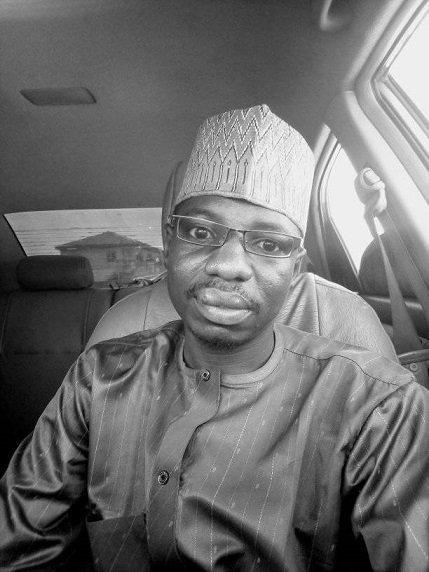
By Abdurrazak Mukhtar

In a world filled with opportunities and challenges, one guiding principle has always resonated with me: “The more that you read, the more things you will know. The more that you learn, the more places you’ll go.” These wise words from Dr. Seuss have been my constant companion throughout my journey of personal and intellectual growth.

Reading, for me, is not just an activity; it’s a passport to uncharted territories. The more I dive into books, articles, and various forms of literature, the more I am rewarded with knowledge. Each page I turn, each sentence I absorb, opens up a new world of information and insight. It’s like embarking on a new adventure with every book, where I can explore different cultures, understand complex concepts, and experience emotions I might not encounter daily.

However, reading is only half of the equation. Learning is the other key ingredient that fuels the engine of personal development. It’s not enough to absorb facts; we must actively engage with the material, question it, and apply it to our lives. Learning is about making connections, fostering critical thinking, and using the knowledge gained to solve problems and positively impact the world.

As I journeyed through life with the guidance of Dr. Seuss’s words, I realised that knowledge and learning are like a ladder. With each step, we climb closer to the summits of our ambitions. The wisdom we accumulate is a treasure for ourselves and a beacon for others. Sharing knowledge and experiences is a way to pay it forward, to light the way for those who follow in our footsteps.

The beauty of this philosophy is that it’s a never-ending voyage. There’s always something new, more to learn, and countless places to explore. It’s a reminder that the quest for knowledge doesn’t have a final destination. Instead, it’s a lifelong adventure, an expedition into the limitless realms of human understanding.

In conclusion, the words of Dr. Seuss have been a guiding star in my life, reminding me of the profound link between reading, learning, and personal growth. They inspire me to continue on this exciting journey and embrace the endless possibilities of expanding my horizons. The more we read, the more we know; the more we learn, the more places we’ll go. And in this journey, I’ve found a world filled with wonder, wisdom, and the potential to make a difference.

Court sacks Plateau Governor Caleb Muftwang

By Sabiu Abdullahi 

The Court of Appeal in Abuja on Sunday shook the political terrain by nullifying the election of Governor Caleb Muftwang in Plateau State.

The three-member panel delivered a unanimous decision, asserting that Muftwang’s candidacy under the Peoples Democratic Party (PDP) did not comply with Section 285(2) of the Nigerian Constitution. 

The court, in favor of Nentawe Goshwe from the All Progressives Congress (APC), deemed the issue of qualification a matter both preceding and succeeding the election, citing Section 177(c) of the Nigerian Constitution, 1999, and Sections 80 and 82 of the Electoral Act, 2022. 

In concurring with the appellant, Goshwe, the panel emphasized the PDP’s failure to adhere to court orders, specifically from the Plateau State High Court and the Court of Appeal. These directives mandated the PDP to conduct valid ward, local government, and state congresses before nominating candidates for elective posts. 

The panel rebuked the Governorship Election Petitions Tribunal’s judgment, labeling it “highly inconsistent and a breach of fair hearing” for relying on expunged witness statements to dismiss Goshwe’s appeal

The Daily Reality editor joins Beijing Foreign Language University to teach Hausa

By Sabiu Abdullahi 

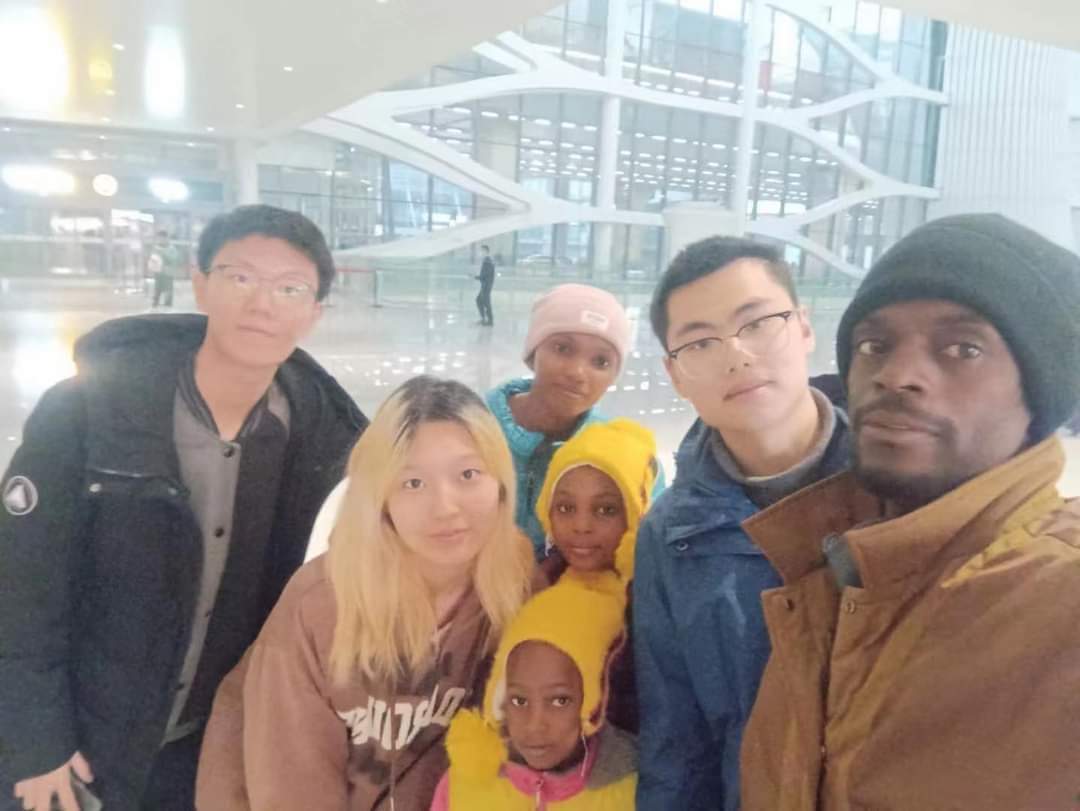
Dr. Muhammad Sulaiman Abdullahi, a lecturer in the Department of Nigerian Languages and Linguistics at Bayero University Kano, has arrived in Beijing with his family, his close associate, Dr. Muhsin Ibrahim, posted on his Facebook handle.

Dr. Abdullahi is set to contribute to the global academic landscape by teaching Hausa to Chinese students at Beijing Foreign Language University (BFSU). 

This collaboration marks a unique opportunity for cultural immersion and linguistic exchange between Nigeria and China. 

Dr. Abdullahi’s expertise in Nigerian languages, particularly Hausa, is expected to enrich the linguistic diversity at BFSU, one of China’s premier institutions for language studies. 

The initiative is part of BFSU’s ongoing efforts to broaden its language curriculum, offering students exposure to languages beyond the traditional offerings. 

Dr. Abdullahi’s presence is anticipated to foster a deeper understanding of Nigerian culture and language among Chinese students, promoting cross-cultural dialogue.

As the academic semester commences, Dr. Muhammad Sulaiman Abdullahi is poised to become a cultural ambassador, bridging the gap between Nigeria and China through the universal language of education.

Arewa24 and the globalisation train

By Zailani Bappa

The satellite television, Arewa24, with headquarters in Kano, will continue to be a pain for northerners who cherish their heritage. It is a necessary evil and a bad influence on the teeming youth in a predominantly conservative society. But, it is established to achieve a purpose and do that efficiently and quickly.

I learned the medium was established by the US government through one of its established NGOs some nine years ago. Amidst the devastating experience of Boko Haram in this part of the country, several studies have indicated to the West that the passion for Islamic values in the North and the teeming followership of a springing set of radical Salafists in the region is the major cause of such developing activism….or should I say…terrorism.

Hence, the decision to spend the hard-earned tax-payers money of the American people to build an entertainment television station in the heart of conservative Kano (after rejecting Kaduna and Abuja as a base for the new medium). I am sure you know that when these guys give you a dime worth of something with the right hand, they are sure enough to take back something worth a dollar from you with the left hand.

So, the Arewa 24 came into light with a bang…..good hands employed mostly popular actors from the entertainment industry as pioneer staff, with good pay for them to work optimally and to stay, very enticing and entertaining programmes with fresh breath of air and of course, all programmes beamed to us with the best of technology one can find around here. Significantly, most programmes target women and the young.

Free of charge, we were entertained until the station became a menu that came to every table in the house. Then came the next stage of the plan (as I see it). It was sold out to a very rich and powerful Nigerian who has the capacity and the passion to run it according to both the quality of content and the pursuit of the target.

Gradually, the programmes started becoming more daring in their approach to change. There is mild and uncoordinated resistance here and there, but the medium has a strong advisory consultant. They evade or outrightly neutralise every challenge from angry quarters at times. And they will continue to do so.

I firmly believe that the Arewa 24 debut, acceptability, prowess, and popularity (often challenged with visionless resistance) are only the tip of the iceberg. This is an era of globalisation. It is a moving train we cannot stop. It will reach its destination, ultimately. Our resistance to it will continue to be a massage to its global ego.

So, for those who understand this phenomenon, just pray, stay calm and do your own thing according to your conscience. Teach your young ones to value your values the way you can, very hard and consistently; then, leave the rest to God. This fight is just too big for us……..for every one of us.

Zailani Bappa wrote from Bauchi State via zailanbappa@gmail.com.

Go to Supreme Court, you’ll finally be sacked—Ganduje tells Abba 

By Sabiu Abdullahi

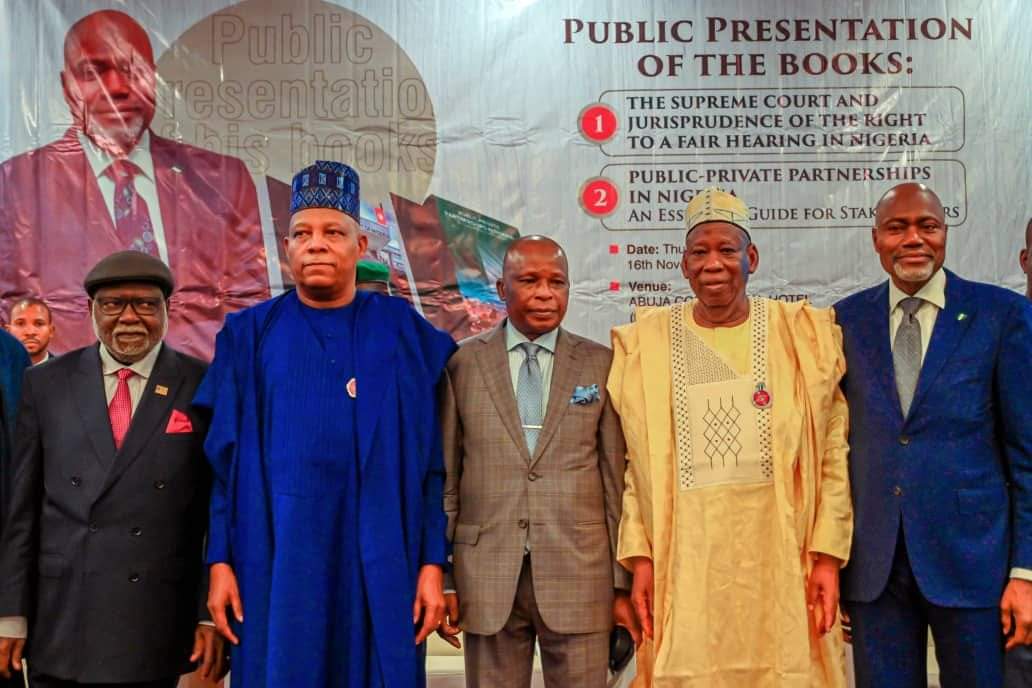
Following the Court of Appeal upholding the removal of Abba Yusuf as Kano state governor, the national chairman of the ruling All Progressives Congress (APC), Abdullahi Ganduje, expressed optimism about the party’s success at the Supreme Court.

Ganduje, applauding the appellate court for delivering justice, confidently stated that the APC is prepared to face the New Nigeria People’s Party (NNPP) again in the apex court. 

Addressing the media in Abuja on Friday, Ganduje acknowledged the democratic right of NNPP to pursue legal avenues, saying, “There is nothing wrong for them to go to the Supreme Court. We too, are ready to meet them in the Supreme Court. And Inshallah, we will win in the Supreme Court as well.”

The APC national chairman also commended the judiciary for its impartiality, praising the victories of the party’s gubernatorial candidates in Kano and Zamfara states.

In a statement, APC’s national publicity secretary, Felix Mokar, underscored the judiciary’s independence, emphasizing its role as the bastion of hope for justice in democracy.

Mokar urged the judiciary to remain resilient against any attempts at blackmail or intimidation by self-serving political interests.

Kano governorship saga continues as Abba takes battle to Supreme Court

By Sabiu Abdullahi

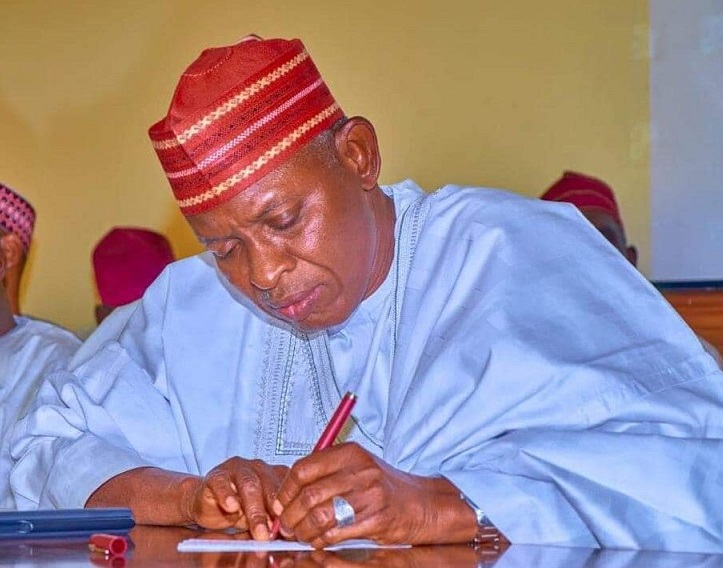
Kano governorship saga continues as Abba takes battle to Supreme Court Kano State Governor Abba Yusuf, ousted by the electoral tribunal and subsequently denied reprieve by the Court of Appeal, has pledged to contest the ruling at the Supreme Court.

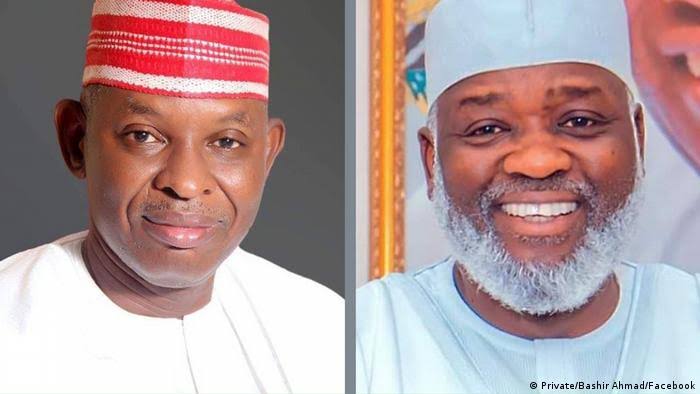
The appeal court, situated in Abuja, upheld the tribunal’s decision, unseating Yusuf and confirming Nasiru Gawuna of the All Progressives Congress (APC) as the legitimate winner of the March 18 election. 

Governor Yusuf, undeterred by the setback, conveyed his determination in a televised address on Friday night.

“Our lawyers will challenge the Appeal Court judgment at the Supreme Court. We trust that the Supreme Court will restore the mandate entrusted to us by the people of Kano,” he asserted, urging citizens to remain law-abiding amid the legal wrangling, with security measures in place to ensure public order. 

Conversely, the National Chairman of the APC, Abdullahi Ganduje, hailed the court’s decision as a triumph for democracy.

Expressing gratitude to the judiciary for maintaining a fair administration of justice, Ganduje acknowledged the challenges faced during the case.

“This victory is for all of us. We know what happened during the election, and by the grace of God, we got a fair judgement in favour of our great party, APC,” he remarked. 

Ganduje, anticipating further legal manoeuvres, remarked, “There is nothing wrong for them to go to the Supreme Court. We too, we are ready to meet them in the Supreme Court. Insha Allah, we will win at the Supreme Court as well.”

Stop harassing Kaduna KASTLEA marshals over Hijab – MURIC

By Abdurrahman Muhammad

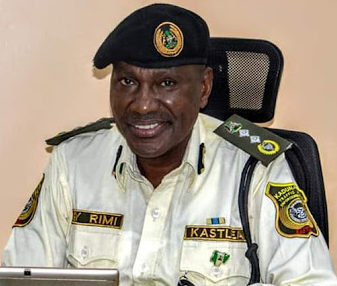
A call has gone to the Kaduna State House of Assembly to investigate the Kaduna State Traffic Law Enforcement Authority (KASTLEA). The appeal came from an Islamic human rights organisation, the Muslim Rights Concern (MURIC). The group accused the leadership of KASTLEA of harassing Muslim female marshals who wear hijab and their male counterparts who have beards.

This was contained in a press statement circulated on Friday, November 17, 2023, by the Executive Director of MURIC, Professor Ishaq Akintola. He said:

“We have credible information that the leadership of the Kaduna State Traffic Law Enforcement Authority (KASTLEA) has recently been casting aspersion on the use of hijab by female marshals and the growth of beards by their male counterparts. 

“The current head of KASTLEA, Carla Abdulmalik, a Christian lady, uses almost every opportunity to directly or indirectly caution marshals against the use of hijab. She reportedly issued a directive for the shaving of beards by the male Marshals. According to her, having beards makes the job unprofessional and disgusting.

“MURIC resents the anti-Muslim antics of Carla. She must be called to order before she plunges Kaduna into a huge crisis whose consequences no one can predict.

“Carla is exhibiting a common trait of Muslim-haters. She is most indiscreetly imposing Christian culture on Muslim marshals and manifesting hatred for all forms of Islamic appearance.

“We therefore call on the honourable members of the Kaduna State House of Assembly to investigate these allegations and make recommendations to Governor Uba Sani. 

“Carla must be called to order. Kaduna is the last place where one would expect to find the persecution of Muslim workers or students. This is an anomaly that should not be allowed to rear its ugly head anywhere in Northern Nigeria. We call on Islamic scholars to speak up on this matter and to put pressure on politicians in Kaduna on the need to protect Muslim marshals in KASTLEA.

“The Constitution is clearly on the side of religious freedom. Section 38 (i) & (ii) of the 1999 Constitution of the Federal Republic of Nigeria provides ‘every person shall be entitled to freedom of thought, conscience and religion, including freedom to change his religion or belief, and freedom (either alone or in community with others, and in public or in private) to manifest and propagate his religion or belief in worship, teaching, practice and observance’

“There have been no restrictions on religious freedom in KASTLEA since its establishment in 2014, and nothing in the 2017 act establishing the agency forbids hijab or beards. Muslim marshals in the agency have also never been intimidated by any of those who headed KASTLEA before Carla. Her persecution and stereotyping of Muslims under her must stop.”

The “Boko Haramisation” of University Education in Nigeria

By Kabiru Danladi Lawanti, Ph.D.

Since 2018, when Nigeria’s public universities started announcing hikes in school charges or what is popularly known as service charges, the survival of indigent students in these universities has become threatened. Public universities are the last hope for children from poor backgrounds. According to Emmanuel Onwubiko, the National Coordinator of the Human Rights Writers Association of Nigeria, over 70% of youths from poor backgrounds attend these universities. Therefore, denying these institutions funding is a direct declaration of war on Nigerian youths.

While it becomes necessary for public universities to increase the shortfall in government funding, the increase in school fees means millions of youths will be denied the opportunity to acquire a university education. To say that Nigerian public universities are underfunded is an understatement. That our public universities are in serious crisis is a fact. That universities are unable to achieve the goals of contributing to national development is sadly true.

Two schools of thought exist on this issue. On one hand is the Academic Staff Union of Universities (ASUU), which opposed increasing school fees. Their argument is quite simple: increased school fees automatically mean denying the children of the poor the opportunity to acquire a university education. They argue that there is a need for more citizens to have a university education. The logic is simple: more people with university education in the population automatically translate to positive economic growth, social development, and political cohesion.

To show their seriousness in what they believe in, ASUU had to go on strike several times for several years, starving their members to push forward with this idea. However, there are people who believe education should be removed from social services. They argue that since students are the direct beneficiaries, then the funding of universities should be shifted “from society to the students who are the beneficiaries of the higher incomes their degrees will provide.” These are the advocates of “commodification of university education.”

There are broadly three sources of funding for public universities in Nigeria, as identified by Professor Olanrewaju Fagbohun, the former Vice Chancellor of Lagos State University. These are government grants or subsidies, student/parent contributions (charges fees or allied non-instructional fees) and the income derived by the institution from commercial or quasi-commercial ventures or services, investments, donations, and endowments.

With overpopulation, teeming unemployed graduates, falling standard of university education, corruption in the management of university education and the shift from a mixed economy to a neoliberal economic system since 1986, Nigerian universities are left struggling to survive. Also, the attitude of the people’s government towards education since democracy’s return in 1999 has combined to suffocate the system already in the ICU.

However, in 2017, the universities came to grapple with a very hostile regime under President Buhari. The regime not only cut funding to public universities but imposed an embargo on the recruitment of academic staff in the universities. For over six years now, universities have not employed any fresh staff. Where they are employed, they are imposed on Vice Chancellors from Abuja. Departments no longer have the power to recommend to the VC to retain the best-graduating students in the departments. IPPIS was the last straw that broke the camel’s back. Departments are short-staffed, and IPPIS stopped universities from engaging contract staff, visiting and adjunct lectures and sabbatical staff.

These are the issues that Nigerians need to look at holistically. As it is now, most people have realised the mistake of not supporting ASUU to force the government to investigate the crises of the public universities. The reality clearly shows that indigent students or children from poor backgrounds cannot afford university education. While many analysts gave ASUU strikes the Boko Haram Logic interpretation, no one sees the onslaught on public universities by government agents as “bokoharamisation” of the university education. It is a disservice to Nigeria to remain silent about the current crises confronting the Nigerian public universities and find our voices when ASUU declares strike. This is succumbing to Boko Haram’s wishes. Already, our public primary and secondary schools are in ruins, and it will take the grace of God to resuscitate them. We are now confronted with the collapse of the public university system.

What is the way forward?

Addressing the current crises requires all stakeholders in the Nigerian Educational System. This is a matter of saving Nigeria from collapse. Already, parents have taken 60% of the burden of educating their children in the university. Parents now pay from N50,000 to 250,000 a year for service charges for their children. They provide for their upkeep – accommodation, feeding, laundry, clothing and, of course, purchase of textbooks. Added to that, they take the burden of transporting their children to and from the schools every now and then when the need arises, which can be weekly, monthly, or quarterly. Already, they are involved in funding their children’s education at the university.

The government is supporting universities with infrastructure payments of staff salaries (both academic and non-academic). The government also pays a fraction of the running cost to the universities. TETFUND will not be counted as government funding because it comes from 2% education tax contributions. People in government are leveraging on this and using funding as a weapon of control, as we saw in 2022 when ASUU members were starved for eight months for declaring an industrial dispute with their employer.

Industrial disputes should not be seen as confrontations or a narrow material interest of “greedy lecturers” or “Boko haram logic” of denying Nigerians the opportunity to acquire a university education. It should be seen as a patriotic intervention to salvage a collapsed system.

The commodification of university education in developing nations like ours is never a solution to the lingering crises in the public university system. Commodification destroys “the value of intellectual challenge and exploration by reducing knowledge to quantifiable, job-oriented results”. In fact, commodification is what derives the idea of a “skills rather than degree” gang promoted by a former minister.

I deliberately ignored the push by the present regime of education banks that will serve as lending institutions for university students because it is deceptive, unrealistic, and impracticable in a country like ours. What we need is an acceptable cost-sharing formula that is realistic and acceptable to all stakeholders. And this can come only through negotiation and mutual agreements between university unions, parents, and the government. We need to start this conversation to save our public universities.

Appeal court sacks Abba, upholds APC’s Nasiru Gawuna as Kano governor

By Sabiu Abdullahi 

The Court of Appeal in Abuja upheld the Kano Governorship Election Petition Tribunal’s decision, declaring Nasiru Gawuna of the APC as the rightful winner.

The appeal by NNPP candidate and current Kano State governor, Abba Yusuf, was dismissed.

The initial tribunal ruling on September 20 ousted Yusuf and declared Gawuna winner.

Despite Yusuf’s appeal through counsel Wole Olanipekun, the Court of Appeal affirmed Gawuna’s victory, concluding the legal battle over the March 18 governorship poll.