Admin

As Nigerians struggle, lawmakers push for new aircraft for VP Shettima

By Uzair Adam

While Nigerians grapple with economic hardship, Borno State House of Assembly Speaker, Rt. Hon. Abdulkarim Lawan, is urging the Federal Government to replace Vice President Kashim Shettima’s official aircraft, citing safety concerns.

Lawan’s call follows recent technical issues with the Vice President’s plane, including a damaged windscreen during a stopover in New York en route to the Commonwealth Summit.

Despite widespread financial strain affecting millions of Nigerians, Lawan highlighted the risks of Shettima’s continued reliance on the malfunction-prone aircraft, insisting that securing a replacement should be a priority.

His appeal, however, arrives at a time when citizens are facing inflation, fuel costs, and job cuts, sparking questions on the government’s spending priorities amidst nationwide hardship.

Ministry intervenes in N3bn misappropriation allegations against PASAN leadership

By Uzair Adam

The Federal Ministry of Labour and Employment has summoned leaders of the National Assembly chapter of the Parliamentary Staff Association of Nigeria (PASAN) along with aggrieved members following allegations of a N3 billion fund misappropriation.

In a letter signed by Amos Falonipe, Director/Registrar, Department of Trade Union Services and Industrial Relations, the ministry invited PASAN’s leadership and concerned members to address the grievances in a meeting scheduled for tomorrow.

The allegations surfaced earlier this month when PASAN member Yusuf Abiola accused the union’s leadership of misappropriating union funds and demanded audited financial statements from 2019 to date.

Abiola threatened to petition relevant authorities for accountability.

However, PASAN’s National Assembly chapter chairman, Sunday Sabiyyi, and Secretary, David Ann Ebizimoh, dismissed the allegations as defamatory, urging the public to disregard what they described as baseless accusations meant to divert the union from its objectives.

The labour ministry’s letter of invitation, dated October 25, 2024, was directed to the General Secretary of PASAN, signaling its commitment to address the dispute.

Global economy faces slow growth, high debt as families struggle with inflation — IMF

By Uzair Adam

Families worldwide are grappling with the effects of high prices, according to the Managing Director of the International Monetary Fund (IMF), Ms. Kristalina Georgieva.

Speaking at the IMF/World Bank Annual Meetings in Washington, D.C., Georgieva highlighted the ongoing challenges facing the global economy, which she described as being on a trajectory of slow growth and rising debt.

“The global economy has held up well, and inflation is gradually decreasing thanks to central banks’ coordinated efforts and easing supply chains,” Georgieva said during the Global Policy Agenda 2024 briefing.

“However, people’s optimism about their economic prospects remains low. Families are still hurting from high prices, and global growth remains sluggish.

“We project a 3.2 percent growth rate this year, slowing to an annual 3.1 percent over the next five years,” she added.

According to Georgieva, while trade has traditionally driven economic growth, it is no longer the powerful engine it once was.

The IMF report warned that the world economy risks being trapped in a cycle of lower growth, high debt, reduced government revenues, and constrained resources to support families and climate change initiatives.

The Global Policy Agenda 2024 report further indicated that the global economy is resilient, with a potential for a soft landing as inflation moderates.

However, significant uncertainty looms, with risks skewed to the downside. Public debt levels are at historic highs, projected to approach 100 percent of GDP by 2030, and geoeconomic fragmentation threatens to reverse decades of progress from cross-border economic integration.

The report also points to transformative shifts—such as the green transition, demographic changes, and digitalization, including AI—that present both challenges and opportunities for global economies.

As a response, Georgieva emphasized the importance of a policy shift aimed at escaping the cycle of low growth and high debt.

She called for monetary policies that ensure inflation stabilizes at target levels and fiscal policies that pivot toward consolidation to build resilience and maintain debt sustainability.

University unions embark on indefinite strike over withheld salaries

By Uzair Adam

The Joint Action Committee (JAC) representing the Non-Academic Staff Union of Educational and Associated Institutions (NASU) and the Senior Staff Association of Nigerian Universities (SSANU) has directed members to initiate an indefinite strike starting Monday, following the non-payment of four months’ withheld salaries.

The strike, initially scheduled for October 23, was postponed to Sunday night, October 27, 2024, to align with the NASU branches’ Trade Group Council meeting.

A circular signed by NASU General Secretary Prince Peters Adeyemi and SSANU President Comrade Mohammed Ibrahim detailed this timing adjustment for unified coordination among union members.

Despite President Bola Tinubu’s approval of 50% payment for the withheld salaries, JAC expressed frustration with the alleged inaction from the Minister of Finance, questioning the government’s commitment to resolving the issue.

The union stated that multiple requests for resolution have gone unanswered, prompting their decision to proceed with the strike.

JAC reiterated its appreciation for the members’ loyalty and assured them of continued efforts to achieve a satisfactory outcome.

KANSIEC issues certificate of return to the newly elected LG chairmen

By Anwar Usman

The Kano Independent Electoral Commission has issued certificates of return to the newly elected 44 Local Government Chairmen across the state.

The certificates were issued by the commission’s Chairman, Prof. Sani Malumfashi, on Sunday.

Malumfashi explains that the commission is the body responsible for issuing certificates and urged the newly elected LG chairmen and councillors to discharge their duties effectively.

Report has it stated that the state governor, Abba Yusuf, would soon swear in the chairmen at Government House in Kano.

The electoral commission had declared the New Nigeria People’s Party the winner of all 44 chairmanship positions and the 484 councillorship positions in Saturday’s LG election in the state.

“Six political parties participated in the election: AA, AAC, Accord, ADC, APM, and NNPP.

“The NNPP won all 44 local government chairmanships and 484 councillorship positions contested,” Malumfashi explained.

Court stops JAMB from restricting underage students

By Sabiu Abdullahi 

The Delta State High Court in Warri has issued an order restraining the Joint Admission and Matriculation Board (JAMB) from implementing its policy requiring a minimum age of 16 for university admissions. 

Justice Anthony Akpovi granted the relief, pending the hearing and determination of the motion on notice filed against JAMB. 

JAMB’s directive, announced on October 16, stated that only candidates aged 16 by August 2025 would be admitted to tertiary institutions.

However, this policy was challenged by John Aikpokpo-Martins, a former Nigerian Bar Association chairman. 

Aikpokpo-Martins sued JAMB and Edwin Clark University on behalf of candidates born between September 1 and December 31, 2009, who passed the 2024 JAMB exams.

The court granted an interim injunction, preserving the admission rights of these candidates. 

Justice Akpovi ruled, “Reliefs 1 and 2 are hereby granted. The status quo to be maintained is the admission list prior to this circular pending the hearing of the originating motion.” 

This development halts JAMB’s implementation of the minimum age requirement until further court proceedings.

NSCDC spokesperson survives armed robbery attack in Minna

By Sabiu Abdullahi

Muti, spokesperson for the Nigeria Security and Civil Defence Corps (NSCDC), narrowly escaped death after being stabbed twice in the stomach by armed robbers in Minna, Niger State.

The incident occurred on Friday evening around 8 p.m. near the Federal Housing Estate Gbeganu in Chanchaga Local Government Area. 

Muti recounted the ordeal when stated that about nine men attacked him while he rode in a tricycle.

The robbers emerged from a nearby bush after the tricycle operator stopped to pick up two passengers.

They stabbed him with a knife and stole his phone and other valuables. 

Fortunately, the robbers fled after noticing Muti’s uniform trousers, mistaking him for a soldier.

He received treatment and was discharged from the hospital on Friday. 

This incident shiwy the growing concern about crime and insecurity in Nigeria.

Arms proliferation and the Nigerian security forces

By Zayyad I. Muhammad

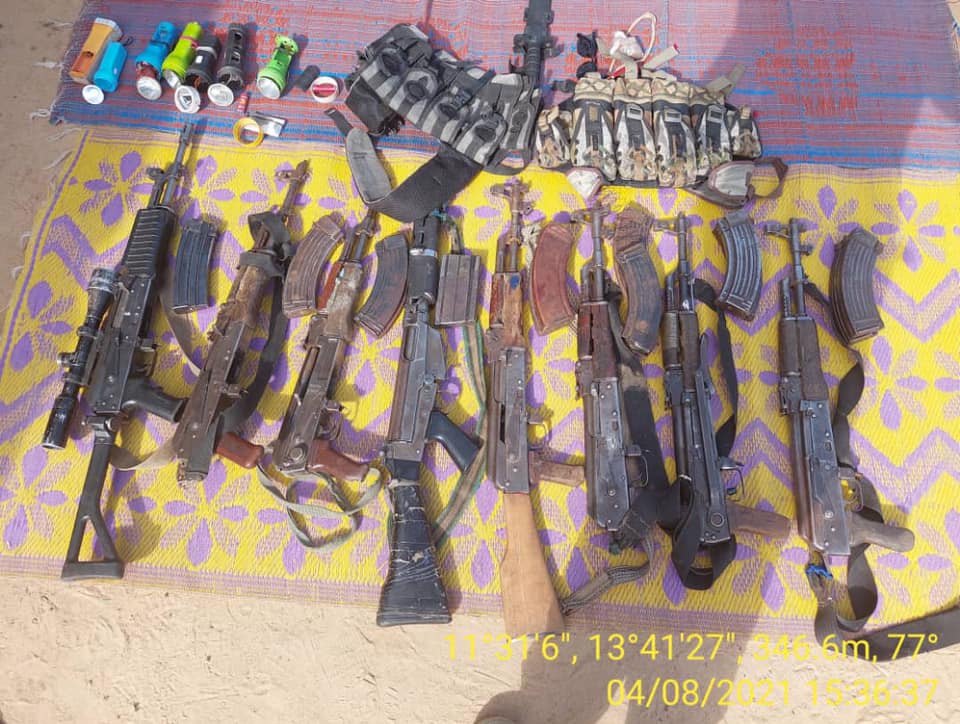
Mallam Nuhu Ribadu, the Nigerian National Security Adviser, stated during an arms destruction exercise organised by the National Centre for the Control of Small Arms and Light Weapons (NCCSALW) that many of the illicit weapons currently used by terrorists and bandits originally belonged to the Federal Government of Nigeria. 

Ribadu’s revelation may not surprise those familiar with the complexities of Nigeria’s security challenges, but it is both new and alarming to the average Nigerian.  

For many, the realisation that those entrusted with their protection are selling weapons to terrorists, insurgents, and bandits is deeply unsettling. This issue demands a coordinated and strategic response. However, Mallam Nuhu assured us that steps and measures have been taken to resolve this. 

But the big questions remain: Are these measures yielding sustainable results? What motivates or drives a security agent to sell weapons to terrorists and bandits, fully aware that they may become the first target of those very weapons? 

Nuhu Ribadu stated, “The worst human being is a policeman or soldier who takes weapons from his unit and sells them or hides them for criminals to use against his colleagues.” This is true; however, additional measures are needed beyond what the NSA has mentioned to address this issue. These should include improved welfare and salaries for security personnel, enhanced training, and stronger supervision. It’s important to consider that the actions of some security officers may not be solely motivated by money but by radicalisation or frustrations. 

Nigeria must prioritise the use of technology in its fight against insurgency, terrorism, and banditry, as the world has moved beyond relying solely on boots on the ground. It is crucial to employ technology to address these challenges, including implementing chips or inbuilt devices to track and attach every weapon assigned to the officer responsible for it. 

Despite the few rogue elements within the security forces who recklessly jeopardise their lives and those of their colleagues and families by exchanging their weapons for peanuts, we must commend the majority of Nigeria’s dedicated soldiers, police officers, and other personnel who are actively working to recover illicit arms and eliminate corrupt practices within the security forces. 

On the other hand, sabotage by rogue elements within security forces is not unique to Nigeria; many countries have faced situations where insurgency, terrorism, or banditry were exacerbated by these elements selling arms to militant groups.

In Yemen, amid its civil war, there have been instances of arms diversion by corrupt individuals within the security apparatus. Weapons intended for the national army have ended up in the hands of Houthi rebels and various militant groups. 

Similarly, during the conflict with ISIS in Iraq, reports emerged of Iraqi security forces losing control of arms depots or selling weapons to militant groups. Somalia has seen similar issues in its battle against al-Shabaab, where government and security officials were accused of selling or diverting weapons to the very militants they were fighting. 

Another notable example is Libya. Following the fall of Muammar Gaddafi in 2011, the country descended into chaos, with various factions and militias vying for control. Weapons from government stockpiles, as well as arms supplied by international actors, were sold or transferred to militias and insurgent groups, further escalating the violence. In the Democratic Republic of Congo (DRC), armed groups have long been involved in the conflict, with reports indicating that elements within the military and police forces have sold weapons to these groups.

For any country grappling with the involvement of its security forces in the sale of weapons to insurgents, terrorists, and bandits, factors such as selfishness, corruption, and complicity within these forces play a significant role. Additionally, weak institutions and inadequate oversight have further exacerbated the problem. 

 Zayyad I. Muhammad writes from Abuja via zaymohd@yahoo.com.

Crypto Airdrops, a distraction in disguise                  

By Thomas Akoji Amodu 

A crypto airdrop is typically performed by blockchain-based startups to help bootstrap a virtual currency project. Its primary aim is to create awareness about the cryptocurrency project and encourage more people to participate when it becomes available. 

Airdrops are generally communicated through the company’s official channels and cryptocurrency communities. Coins or tokens are sent only to specific wallets based on the blockchain network or coins held in existing wallets. Airdrop coins are generated by continuously tapping the phone screen.

Today, the trending event in Nigeria is crypto airdrops, which have attracted millions of Nigerian youths. This became popular following the successful listing of Notcoin in 2023, which paid miners significantly. Since then, Crypto has been introducing several airdrop projects such as MemeFi, X-Empire, Tapswap, Hamster, Tomarket, cats, Dogs and many more to engage miners. Many Nigerian youths spend more than half a day on these mining platforms daily. When it eventually lists on exchanges, they get nothing compared to the time, energy and subscriptions invested in the airdrop.

This engagement with crypto airdrops by Nigerian youths has caused great concern, as many solely rely on it as a full-time job, while some regard it as an escape route from poverty. Youths are becoming lazier than ever before because of these projects. Students tap their phone screens during lecture time, thereby dividing their attention. Even graduates have embraced airdrop mining over creative thinking and productive undertakings. 

This trend has further questioned the state of the country’s economic and political atmosphere because where there is a stable economy, good living conditions and basic provisions for healthy living, the citizens will shun any form of distraction and focus on more beneficial activities. It is pathetic that most Nigerian youths who resort to airdrop mining are graduates who could not secure a job because of bad governance and corruption in the country. 

On September 26th, 2024, one of the most anticipated airdrops, “Hamster,” was listed, and many Nigerian youths were disappointed by the poor payment. Before the listing of Hamster, some people had priced what to buy, such as vehicles, lands, gadgets, and so on. Unfortunately, Hamster paid below expectations, and many became depressed. The time, energy, and sleepless nights spent just to complete tasks were in vain. 

Despite the poor rewards of these crypto airdrops, Nigerian youths do not seem discouraged from engaging in the projects. This clearly indicates the government’s failure to fulfil social, economic, and political responsibilities. The government should establish more industries, provide loans for small business owners, encourage agriculture, and invest in tech education to refocus youths’ attention on a better future.

Thomas Akoji Amodu writes from the Mass Communication Department at Bayero University, Kano, via amoduthomas@gmail.com.

UNICEF launches ‘No More Zero Dose’ immunization song in Kano

By: Habibu Maaruf Abdu 

On Thursday, October 24, 2024, coinciding with World Polio Day, UNICEF launched the ‘No More Zero Dose’ immunisation song across Nigeria and other West and Central African countries. 

The Kano state launch took place at Tahir Guest Palace, attended by government officials, Kannywood members, social media influencers, and journalists from Jigawa and Katsina states.

According to Mr. Rahama R.M. Farah, chief of UNICEF’s Kano field office, the event aimed to raise awareness about the importance of immunisation, especially for children under five. 

“We have gathered this morning to raise awareness on the importance of Immunization, which remains the most cost-effective intervention to confront vaccine-preventable diseases, especially in children under 5 years of age…”

“Thank you for joining us this morning to launch the Immunization Song aptly entitled, No More Zero Dose!” He added 

The No More Zero Dose song highlights the urgent need to boost immunisation coverage in West and Central Africa, a region with the lowest vaccination rates in the world. This reality has led to multiple outbreaks of preventable diseases such as diphtheria, measles, polio, yellow fever, and cerebrospinal meningitis in the region.

The song features Spyro, Ali Nuhu, other top music stars, and UNICEF Champions from Mali, Chad, Cameroon, and Guinea. 

A media dialogue on immunisation followed the song’s launch. UNICEF Communication specialist Samuel Kaalu then mobilised caregivers for the upcoming immunisation campaign in November, encouraging them to amplify the message.