Admin

Rising food prices: A simple solution

By Zayyad I. Muhammad 

The rising prices of foodstuffs and the general high cost of living are global things. Nigeria is not immune to that; however, the case seems different because of our poor basic infrastructure in roads, education, healthcare, security, and communication. Moreover, traditional solutions from established sources appear ineffective, prompting consideration of alternative off-the-shelf solutions.

The masses are looking at the governments at the federal, state, and local levels. In particular, many Nigerians criticise the federal government due to the removal of petroleum subsidies and the decision to float the Naira.

Some short-term measures to tackle the current hardships are the following: the government should engage in healthy discussions with farms-produce marketers and large-scale farmers. 

These two groups have significant stocks of foodstuffs in their warehouses in many locations, especially in the north. The government should engage them in purchasing their farm produce mutually beneficially (without imposing prices on them). The Presidential Order to the National Security Adviser (NSA) Nuhu Ribadu, the Inspector General of Police (IGP) Kayode Egbetokun, and the Director General of the Department of State Service (DSS) Yusuf Bichi to work with governors and go after those hoarding foodstuffs is a right step, but it is not a silver bullet; in fact, it’s an intricate issue—how do you differentiate between foodstuff hoarders and large-scale farmers and legitimate farm-produce marketers who have large warehouses where they keep their commodities before distributing them to other parts of the country? Including supplies to humanitarian agencies 

A healthy engagement with legitimate farm-produce marketers and large-scale farmers is a simple and feasible solution to the soaring food prices. 

After purchasing the foodstuffs in large quantities, the government can package them into 2, 3, and 5 kg bags and resell them to the masses at affordable rates throughout all the local government areas (LGAs).

Bulk purchases by individuals or groups should be discouraged. Ward levels, markets, and schools can serve at the reselling centres. In addition, politicians should be off the resell team, and no one should purchase more than 10 kg since the target is the common man looking for daily meals. This is workable if the government truly wants to reach low-income people.

We should put it in our minds that, generally, the prices of foodstuffs shouldn’t have gone through the roof in the north, but what is currently happening in the north is that our farm-produce—rice, corn, millet, beans, etc.—is being exported to neighbouring African countries due to the weak value of the Naira. Naira is cheaper for buyers in nearby countries, while farm-produce marketers and large-scale farmers in Nigeria are making substantial profits. The high cost of logistics, illegal taxation, and checkpoint corruption are also major factors contributing to the high prices of foodstuffs. 

The above solution is a short-term measure; however, the real practising dry-season farmers should be directly supported to sustain it since this is dry-season farming time. They can be supported with solar-powered pumps, fertilisers, seeds, extension services, pesticides, etc. This will further increase food production. It also increases the popularity of the government, including reducing tensions and insecurity in the country. 

On the other hand, we must tell ourselves the truth: no programme or project can help the government sustain social order without factoring the youth into the equation. The Bola Tinubu government should devise a means to create some quick, productive jobs for the massive youth in the country. 

The federal government can launch job creation and empowerment programmes targeting young people and women in the following areas: agriculture, technology, entertainment, trading, and SME support and vocational training and support on welding, fashion, carpentry, home decoration, make-up, lucrative northern traditional cap making, etc. 

Agriculture: This should be divided into two segments: big and small. A group of graduates should be formed into “agribusiness entrepreneurs.” Then, the government should provide them with land, offer all the necessary extension services, and provide collateral or security for financial institutions to make the necessary funds available. This will promote the true generation of wealth through agriculture by young people. Secondly, women and young people rearing poultry, snailery, fish, etc., at home can be supported by providing highly subsidised feeds and more training on new techniques.

In technology, many young Nigerians are into coding, cryptocurrency, data processing, phone and computer sales, repairs, etc. The government can commission private sector firms to, on behalf of the government, train, equip, and provide capital to young people in this area. 

Another way to create productive jobs for young people is in the creative industries. For some talented young people, all they need is publicity through the correct medium. The government can employ advertising and marketing firms to promote selected talented individuals nationwide. Many young people are now involved in trading both online and offline. They can be trained, provided with additional capital, and promoted.

The government should avoid the usual government bureaucracy. A firm should be contracted to design the job creation programme. Then, the firm should also employ other responsible and resourceful firms to implement the programme across the country. Thus, the government will only deal with one firm, ensuring professional services are offered in implementing the programme.

The government can explore various avenues to secure quick funding for implementing this programme during these challenging times. Firstly, the Federal Government and its Ministries, Departments, and Agencies (MDAs) can leverage their underutilised assets, such as scrap assets, derelict buildings, abandoned structures, and damaged movable assets nationwide. Identifying, valuing, and disposing of these assets could generate substantial revenue for the programme implementation.

Additionally, the government could consider issuing special bonds and tapping into pension funds under the management of Pension Fund Administrators (PFA) and Pension Fund Custodians (PFC). Exploring partnerships with international donors and foundations, particularly in the Middle East and Asia, could provide valuable funding opportunities, especially with expert guidance.

Zayyad I. Muhammad writes from Abuja via zaymohd@yahoo.com.

Recitation of the glorious Qur’an

By Salihi Adamu Takai

The recitation of the Glorious Qur’an is beyond anything people can think of or guess how it is limited in terms of positivity. It is everything and beyond. Yes, it is indeed! In addition, the rewards for its recitation are granted based on letters. Each letter recited in a verse is worth 10 rewards, and the rewards multiply.

The recitation of the Glorious Quran is the food that satisfies people to the ultimate satisfaction. It gives satisfaction to those reciting it day and night. While reciting it, the reciter gets satisfaction from it for his/her satisfaction in the thing he/she comes across. Through it, a Muslim can understand the blessings of Allah for all of humanity on Earth. Allah’s creatures were explained. The lives of our ancestors were told; how they lived on Earth before us. This explains the Oneness of the Lord, Almighty Allah.

The recitation of the Glorious Quran makes Muslims live peacefully, and their hearts find peace and composure. The beautiful recitation of the Glorious Quran heals the heart of anger. It does away with agony and temper. The Quran has explained this in Chapter 13, Verse 28: “Indeed, with the remembrance of Allah, hearts find peace.”

When a person starts reciting it, their attention becomes focused on the Almighty Allah and His words. Listening to the words of Allah is the best thing people can do to gain composure, and its recitation gives you everything and draws your heart to Him. You become happy. The world remains peaceful and harmonious for you as you begin reciting it. Therefore, do not stop reciting the Quran. It is the best thing to help you achieve everything on Earth.

Have you been in a dilemma or limbo? If yes, have you recovered? If not, you can recover from any kind of limbo by reciting the Quran. Keep reciting the Quran. It will help you recover and make you happy all the days. If you can’t recite it, listen to it online. There are different recitations of the Quran available online. Go to your Play Store and download it, and keep listening to it offline or online. It is, of course, the best medicine undiscovered by physicians!

Salihi Adamu Takai wrote via salihiadamu8888@gmail.com.

Izalah first aid group member rewarded for returning lost bag containing over N100 million 

By Sabiu Abdullahi 

Salihu AbdulHadi Kankia, a member of the First Aid Group of Jama’atu Izalatil Bid’ah Wa Iqamatus Sunnah (JIBWIS), has been praised and rewarded for his noble act of returning a lost bag containing over N100 million.

The commendation came during the conclusion of a special preaching session in Bauchi, where Engr Mustapha Imam Sitti, the National Director of the First Aid Group, lauded Kankia for his exemplary conduct. 

The Bauchi State branch of JIBWIS took to Facebook to share the heartwarming story, detailing how Kankia discovered the bag and promptly reported it to the authorities.

Upon retrieval, the owner confirmed that nothing was missing from the bag. 

In recognition of his integrity, Kankia was honoured with an award by the Izala group and sponsored for the Hajj pilgrimage this year.

Additionally, he received two million naira from Hon. Abdulmalik Zannan Bangudu and a bus from Governor Bala Abdulkadir Mohammed to kickstart a business venture. 

Kankia’s actions serve as a beacon of honesty and righteousness, inspiring others to uphold similar values in their communities.

His selfless act not only restored faith in humanity but also garnered well-deserved recognition and rewards.

Nigeria Customs Service offers 90-day window to regularise vehicle import duties 

By Sabiu Abdullahi 

The Nigeria Customs Service (NCS) has announced a new initiative aimed at improving compliance and streamlining import processes for vehicles.

For a limited time, vehicle owners will have a 90-day window to regularise their import duties. 

This program applies to vehicles that have not been seized or condemned by customs officials.

Owners of such vehicles can apply to Zonal Coordinators to rectify their import duties. 

To participate in this initiative, vehicle owners will need to submit all necessary documents along with their application.

Additionally, a 25% penalty will be applied on top of the standard import duty. 

This move by the NCS is seen as a positive step towards improving compliance and generating revenue for the country.

It also provides an opportunity for vehicle owners to rectify their import status and avoid potential penalties in the future. 

The 90-day window provides a limited window for vehicle owners to take advantage of this program.

Those who wish to regularise their import duties are encouraged to contact their nearest NCS Zonal Coordinator for more information and to initiate the application process.

Dear men, without your support, we can not be the wives you need

By Aisha Musa Auyo

Men’s preferences for women change with age, exposure, and income. What a man wants in his 20s will differ from what he wants in his forties. The woman he can afford at his first marriage will be different from the woman he would love to have in his midlife, especially in abubuwa na shigo masa. This is why we advise our fellow women to evolve with their men. 

This post is about men. I’ve written a lot for women and about women. It’s your turn now, especially since no one takes time to tell men what is required of them to keep their marriage going. The expectation is that a woman should keep her marriage. The reality is that it takes a husband and wife’s combined efforts to keep the marriage going.

My brother, know your woman can not be what you want without your support. Here, support means emotional, financial, and social support. If you marry a woman with minimal educational qualifications and you go ahead and add degrees without carrying her along, you are naturally creating a gap in your relationship. 

If you are always travelling within and outside your country, without her, she will be left behind in experience and exposure. 

If you are getting a lot of money, changing your wardrobe and perfume collections, and not doing so for her, she will soon be too local for you.

Know that the fine, educated, and brilliant lady you are eyeing and admiring is like that because someone invested in her. Someone allowed her to grow. Someone trusted, invested, and supported her. Good soup, they say, ‘na money me kam.’

Building meaningful connections with women, akin to nurturing a plant, involves investing time, energy, and resources. Just as they blossom with care, women flourish when given attention and support. It’s important to recognize the value of financial care, pampering, and spoiling in fostering a strong and vibrant relationship.

Let me start with these two hadiths.

Our Prophet, Muhammad, peace be upon him, said, “When a Muslim spends something on his family intending to receive Allah’s reward, it is regarded as Sadaqa for him.”

Allah’s Apostle said, “Allah said, ‘O son of Adam! Spend, and I shall spend on you.”

I don’t want to start listing the basic things a woman needs from her man because not all fingers are equal, and what is basic to one family may be a luxury to another. 

But a lady generally needs peace and care to look good and be happy. Everyone can afford that, huh? 

To chat, tease, and play with her is hard for some men. To acknowledge her efforts, praise her, pray for her, and engage in a meaningful, deep conversation with a wife is a big deal to some men. Watching movies with one’s wife, taking her out, travelling with her, or spending quality time with her is impossible for some men.

On nutrition, a good and balanced diet is the number one responsibility of a husband. A husband should spend on his family depending on his pocket. Don’t give her garri and Garau-Garau, then order shawarma, basmati, and tiger nut drink for yourself from Auyo’s Cuisines. Buying grains only and leaving her to cater to the remaining ingredients is wrong. Sometimes, the ingredients for food preparation cost more than the grains. 

Body care essentials like soap, pads, deodorants, perfumes, hair products, and clothing are non-negotiable. If you have the resources, give her money for a good skincare routine, spa treatment, gyaran jiki, salon, manicure, pedicure, etc. 

Normalize buying clothes more than two times a year. Give her money for nighties, underwear, comfy wear, and pyjamas. A woman also needs hijabs, veils, laffayas, and abayas. Everything I listed here has prices that vary with one’s income, dan Allah a kamanta.

In education, a woman needs to update and upgrade her Islamic knowledge, Western education, and socialization. The world is changing and evolving in the blink of an eye. If she’s stagnant in these areas, she might not be well-equipped to raise your kids and be the wife that you need.

Aisha Musa Auyo is a doctoral researcher in educational psychology, a wife, a mother of three, a homemaker, a chef, and a parenting/relationship coach. She can be reached via aishamuauyo@live.co.uk.

Re: CBN’s revocation of 4,173 Bureau De Change (BDC) licenses

By Rabiu Aliyu Kiru

It has been announced by the Central Bank of Nigeria (CBN) that 4,173 Bureau De Change (BDC) licenses have been revoked, while 1,368 BDCs remain valid nationwide.

In the CBN publication signed by Sidi Ali Hakama (Mrs.), she did mention a series of offenses that prompted the CBN to revoke the BDC license. Such offenses never involved more than 3,000 BDCs.

I am a professional accountant and a BDC consultant. I have consulted for over 3,000 BDCs out of the total number of BDCs quoted above, and more than half of the total number of these BDCs only engage in buying from the CBN and selling to end-users.

I am beginning to wonder how the issues of money laundering and financing of terrorism will affect such a large number of these BDCs.

Going by the CBN regulations, which were visibly stated on the Approval of Principles (AIP), there is no place mentioned on the AIP where CBN has the right to cancel a BDC License at its own discretion.

The CBN should note that owners of these BDCs have been in business for almost 10 years now, but a BDC holder pays the sum of N250,000 to CBN each year as payment for the Annual Renewal License.

The CBN should also be informed that owners of these BDCs have been in recess for almost 10 years now, yet a BDC holder pays the sum of N250,000 to CBN annually as payment for the Annual Renewal License.

Despite following the CBN guidelines, the CBN abruptly cancels a BDC holder’s license.

The CBN should also note that these BDC holders contribute to the growth of the Nigerian economy, especially by creating job opportunities and eradicating poverty among the citizenry.

In fact, I believe that with the advent of this new government, which has adequate advisers, such an action should not be taken, particularly given the high level of increase in commodity prices and other wares.

The CBN should bear in mind that the BDC owners are learned enough to fight for their rights, particularly for those that they are operating within the ambit of the law.

In my previous advice that I gave to CBN, I never presumed that such advice could not be adhered to. This made me think that I was talking to the wrong person, not to the CBN, which consists of professionals.

It is pertinent to this that I am drawing your attention once again to revisit my observations and advice I gave you directly on your CBN portal.

Rabiu Aliyu Kiru wrote from Kano State. He is a BDCs Consultant, and can be reached via rd_aliyu@yahoo.com.

Nollywood veteran, Mr. Ibu, dies at 62

By Abdurrahman Muhammad

Nollywood actor, Mr. Ibu, has passed away at the age of 62. Mr. Ibu, whose real name is John Okafor, was a well-known and respected figure in the Nigerian film industry.

According to multiple reports from sources close to him, the veteran comedian passed away at Evercare Hospital. Many fans have shared condolences on X (formerly Twitter), reminiscing about movies the late actor has featured in.

Confirming his death, the President of the Actors Guild of Nigeria (AGN), Emeka Rollas, posted a message on his Facebook page.

According to Rollas, “Sad day for Actors Guild of Nigeria.

“Kate Henshaw lost her mother earlier today and Mr Ibu suffered cardiac arrest according to his manager for 24 years, Mr Don Single Nwuzor.

“I announce with (a) deep sense of grief that Mr Ibu didn’t make it.”

Details surrounding his death are still forthcoming. Also, Mr. Ibu’s family and representatives have yet to comment publicly.

The actor had been facing health challenges since October 2022 and had undergone several medical procedures, including the amputation of his leg.

Hisbah saga: governor’s public condemnation, misstep in leadership

By Umar Sani Adamu

The recent public criticism by Governor Abba of the Hisbah board in Kano State has sparked controversy and raised concerns about leadership decorum and responsible governance. While it is crucial for leaders to address concerns and seek improvement within government agencies, the manner in which Governor Abba chose to express his dissatisfaction raises questions about his leadership style and the potential consequences of his actions.

First and foremost, criticizing a government agency publicly, especially one tasked with religious and moral enforcement like the Hisbah board, can create unnecessary tension and undermine public trust in the institution. Governor Abba’s decision to air his grievances in a public forum instead of handling them internally or through diplomatic channels demonstrates a lack of discretion and undermines the credibility of the Hisbah board.

Furthermore, by openly criticizing the Hisbah board, Governor Abba risks exacerbating existing tensions within the community and fueling resentment towards the agency. This could potentially undermine the effectiveness of the Hisbah board in carrying out its duties and could lead to a breakdown of law and order in the state.

Additionally, Governor Abba’s public criticism of the Hisbah board without offering concrete solutions or constructive feedback demonstrates a lack of leadership maturity. Effective leaders understand the importance of providing constructive criticism in a constructive and respectful manner, focusing on solutions rather than simply pointing out problems.

Moreover, Governor Abba’s decision to publicly criticize the Hisbah board instead of engaging in private dialogue with relevant stakeholders, such as Sheikh Mallam Daurawa, further highlights his disregard for diplomatic protocols and his tendency to prioritize personal agendas over the well-being of the community.

Adding the context of Murja Kunya’s situation provides further insight into the potential implications of Governor Abba’s public criticism of the Hisbah board. Murja Kunya, a social media influencer, has been accused by the Hisbah board of encouraging indecency and immorality. In this context, Governor Abba’s public condemnation of the Hisbah board could be interpreted as a form of protection for Murja Kunya.

By publicly criticizing the Hisbah board’s handling of the situation, Governor Abba may be perceived as undermining their authority and potentially shielding individuals like Murja Kunya from accountability. This not only weakens the effectiveness of the Hisbah board in enforcing moral standards within the community but also sends a troubling message about the government’s commitment to upholding moral values and protecting societal norms.

In light of these circumstances, Governor Abba’s public condemnation of the Hisbah board takes on an even greater significance. It not only raises questions about his leadership style and approach to governance but also calls into question his commitment to upholding moral standards and protecting the well-being of the community.

Therefore, it is imperative for Governor Abba to reconsider his approach and prioritize responsible leadership that fosters constructive dialogue and collaboration, while also upholding the values and principles that are essential for the well-being of society as a whole.

Umar Sani Adamu (Kawun Baba) 

Nigeria Customs Service initiates 2-day ICT/modernization retreat for management team

By Sabiu Abdullahi 

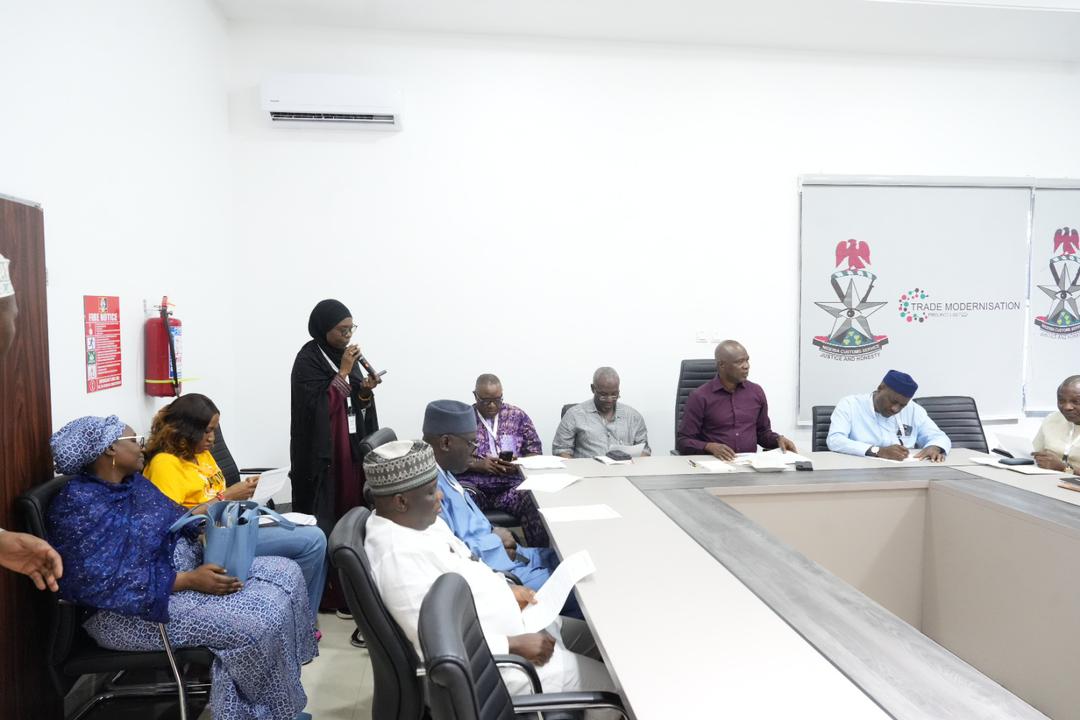
The Nigeria Customs Service (NCS) commenced a 2-day ICT—Modernization Management Retreat in Abuja, spearheaded by the Comptroller-General of Customs (CGC), Bashir Adewale Adeniyi. The event, which began on Friday, March 1, 2024, marks a significant milestone in the service’s journey towards digital transformation. 

In his address to attendees, CGC Bashir Adewale stated the imperative of embracing technology to enhance customs operations.

He stressed the need for collaboration with stakeholders to ensure the seamless execution of the modernization project, citing the demand for efficiency and transparency from stakeholders. CGC Adeniyi urged his Management Team, particularly in ICT, to lead the digitalization efforts and utilize internal resources to expedite the implementation of the electronic cargo tracking system.

He noted the importance of modernizing every aspect of the Customs Enforcement Ecosystem to fortify operations. Alhaji Saleh Ahmadu, Chairman of Trade Modernization Project Limited, commended the CGC’s commitment to modernization, recognising the pivotal role of trade in national development.

He expressed optimism that the initiative would revolutionise NCS operations, facilitating trade across Nigeria and the African continent. 

Assistant Comptroller-General of Customs in charge of ICT/Modernization, ACG Kikelomo Adeola, lauded the CGC’s dedication to the modernization project, emphasising its significance in reshaping and digitising NCS activities. She welcomed participants to the retreat.

Hisbah Arrest: Law and morality

By Aliyu Zangina

The people of Kano State woke up to the news of the resignation of the Commander-General of the Kano State Hisbah Board (Hisbah). This came after criticisms directed at some of the activities of the Hisbah Corps by His Excellency, AbbaKabirYusuf, the governor of the state.

The Hisbah Board is a creation of the Kano State Hisbah Law 2003. Its primary responsibility is to advise on and enforce religious morality within the state. Despite this mandate, the corps has been criticized for violating moral codes and secular laws of the land by making illegal arrests, which are a damning affront to human dignity. It is on this premise that I seek to explore law and morality vis-à-vis the arrest in controversy.

THE INTERSECTION BETWEEEN LAW AND MORALITY

Arguments on the relationship between law and morality in the jurisprudential sense have lasted for ages and still rage on. The controversy surrounding Hisbah brings it to the fore.

Laws are loosely defined as enactments by a state, with binding and coercive force on individuals and institutions throughout the state.

While morality can be loosely defined as a proper behaviour in differentiation of what is right and wrong.

The major difference between them is while a breach of law attracts sanction, A breach of morality can only attract moral reprehension. The long age principle of law is that law and morality are poles apart. However, in the celebrated case of R v. Dudley & Stephens (1884)14 QDB 273 DC it was states that

“Though law and morality are not the same, and many things may be immoral which are not necessarily illegal, yet absolute divorce of law from morality would be of fatal consequence.”

In practice, morality complements the law, as many enactments were propelled by the moral demands of the people. For example, laws prohibiting theft and murder are rooted in the moral consciousness of the fact that taking other people’s property or life is morally wrong. Many laws embody moral principles within them, protecting and guaranteeing fundamental moral values. At the same time, the fundamental force is given by its moral obligation.

ACTIVITIES OF HISBAH

The term Hisbah in Kano has always been associated with controversy from its inception to date. When it is not President Obasanjo accusing the institution of jihadist tendencies, then it is people from the southern part of the country attacking the institution for destroying trucks of alcoholic drinks. The body has always been (in)famous for enforcing morality despite its efforts in curbing social and moral vices.

In November of last year, the Hisbah corps came under attack after raiding several hotels. A video of their operation surfaced on the internet, evidencing male officers harassing and apprehending female suspects and grabbing them in a commando style. Indeed, it was an affront to Islamic moral values. The actions of the Hisbah corps could be qualified as degrading treatment and, hence, unconstitutional. Allusions made to the video by the governor of Kano state prompted the commander-general’s retirement on March 1, 2024.

ARE LAWS REGULATING ARRESTS IN NIGERIA AT CONVERGENCE WITH OUR MORAL VALUES?

Unlike laws regulating search where the search is to be conducted by “persons of the same sex with strict regard to decency” and “reasonable time to withdraw” which must be given to a woman in purdah before a search is conducted on a premise she occupies, the laws regulating arrests in Nigeria have less regards to our moral values and culture as they do not have similar provisions regarding arrests to be conducted by persons of same-sex.

Therefore, the arrest carried out by the Hisbah corps is illegal only to the extent that it was done without a warrant, and their conduct violates the dignity of the suspect. However, the confinement of the female suspects by the male officers with excessive restraint cannot be faulted legally if there was a reasonable apprehension of violence, as our law does not mandate that the arrest of a woman be carried out only by a woman. This is not to serve as a justification for the degrading treatment meted out to suspects by the Hisbah corps during the arrest. They are suspects, not convicts, and even convicts are only deprived of their liberty, not their dignity.

CONCLUSION

“It is tempting to speak of law and morality as if they constitute two completely normative system whose prescriptions sometimes coincide and sometimes conflict. Maybe it is much more exact to consider law and morality as complementary. The complementarity of law and morality belies their separateness even though the two are not parallel streams whose water never mixed at any time.” UZOUKWU V. IDIKA (2022)3NWLR, (PT1818) (P, 462, paras G-H)

Many laws overlap with moral codes in Nigeria. Some laws were enacted to uphold our morality, but where the law does not contemplate our morals, it is our duty to call upon our senses of right and wrong. The Hisbah male officers should not have carried out the arrest of women, even though that alone cannot make the arrest illegal. It is their moral duty to have sent in their female officers to handle the entire scenario with a modicum of professionalism.

It is therefore put forward to our legislators that our Administration of Criminal Justice laws be amended to accommodate the model of arrest that will reflect our morals, culture, and dignity, just like the provisions on search.

Aliyu Zangina is a lawyer, and can be contacted via zanginaaliyu96@gmail.com.