Admin

Yobe student awarded full scholarship after scoring 336 in JAMB exam

By Hadiza Abdulkadir

Fatima Alkali Saleh, a bright student from Yobe State, has been awarded a full scholarship by Dr. Sa’id Alkali Kori, Chairman of ThinkLab Group, after scoring an impressive 336 in the 2024 Joint Admissions and Matriculation Board (JAMB) exam.

The scholarship covers her tuition and essential academic tools, including a laptop and technical drawing instruments, supporting her ambition to study architecture.

Dr. Kori praised Fatima’s dedication, stating that her excellence aligns with ThinkLab Group’s vision of empowering future leaders.

Fatima expressed gratitude for the life-changing opportunity, vowing to give back to her community. Her achievement stands as an inspiration for students across Nigeria.

Court adjourns Nnamdi Kanu’s trial indefinitely

By Sabiu Abdullahi

A Federal High Court in Abuja has indefinitely adjourned the trial of Nnamdi Kanu, the leader of the Indigenous People of Biafra (IPOB).

Justice Binta Nyako made the ruling on Monday after Kanu insisted that she could not preside over his case, citing her previous decision to recuse herself.

The court’s decision effectively suspends proceedings until further notice.

More details to follow…

Izala’s crisis of leadership; Shiism polarising members

By Yakubu Nasiru Khalid

Formally, Izala sect was formed in 1978, it was created to eradicate innovation (bid’ah) within the Islamic doctrines. It has a modern structure and leadership both at the state and national levels. Therefore, the leadership of the Izala has come with well-structured and hierarchical bureau, and a feeling that they are different from who they see as “Conservative Islamic Groups”.

The structure comprises three arms; the Council of Ulama, the Administrative Council and The First Aid Group, each of the councils has its own head and followers for achieved designed goals, even with this structure, the sect experienced crisis at all levels which polarised its leadership.

The reason attached to the polarisation of Izala at the national level which later descended to many states were, among many others; the large followership, it may arguably be the largest formidable Islamic group in West Africa. Also, other reasons are multifaceted from jurisprudence, political, financial, external meddling and sundry, etc.

Initially, there was a problem regarding the leadership of the organization especially the question of who was the supreme leader of the organization between the administrative Council and the chairman of the Ulama Council. At the time the head of the Administrative Council was Alhaji Musa Muhammad Maigandu, from Kaduna and the Sheikh Ismail Idris, the Chairman of Ulama Council. The Jos Izala faction recognized Sheikh Ismail Idris.

Jos faction rejected Maigandu for not being a scholar but a businessman, they argued that an Islamic organization should be led by a scholar not a businessman, this added more fire to the crisis.

Furthermore, the Kaduna faction was very critical to some views and Fatwas of Sheikh Ismail Idris especially those that dealt with the issue of bid’a. According to Ismail Idris, the followers of Izalah should not pray behind an Imam who’s not a member of Izala, they should not also marry from the family of a person who is inclined to Sufism and should not eat the meat of an animal slaughtered by a follower of the Sufi groups. The Kaduna faction was vehemently against these views, and they opposed it.

Another vital factor that played a role in the split of Izala group was the accusations and counter-accusation of financial (mis)management. Ismail Idris was accused for dubiously representing the organization in the Arab countries, he was further accused of personalising vehicles donated to the Izala sect.

In addition, Ben Amara argued that the eruption of Gulf War in 1990s between USA and Iraq was another important factor in the polarisation of the Izala. Jos faction supported American invasion of Iraq because of the Saudi Arabian interest while the Kaduna faction supported Iraq. The Jos faction called the Kadunas “Saddamawa” meaning (supporters of Saddam) while the Kaduna called the Jos faction “Bushawa” meaning (supporters of American interest).

The leadership of the Jos faction blamed Shi’a for the internal crisis of Izala and accused some Ulamas of being secret agents of Shiism who were working toward dismantling the group.

There are so many wild accusations against each other and today, one of the greatest sad events are also unfolding which will serve as a litmus test over the major pathways which the Izala sect claims to have been following. There are series of arguments and counter arguments amongst its top ranking officials, some of whom are seeing by many onlookers as those who have completely drailed from the actual teachings of the Sunnah of the holy prophet (PBUH). Izalah leaders need retrospection and internal assessment to protect themselves and their creed from an obvious roadblock which may decide whether they move ahead successfully or crumble, devastatingly.

Yakubu can be reached via: yakubunasirukhalid@gmail.com

Fintiri’s transformative interventions in the livestock sector

By Zayyad I. Muhammad 

Governor Ahmadu Umaru Fintiri of Adamawa State has demonstrated an unwavering commitment to revitalizing the livestock sector. He recognizes its immense potential to drive economic growth, enhance food security, and improve the livelihoods of farmers and herders. Through strategic policies and targeted initiatives, his administration has made significant strides in modernizing livestock farming, addressing long-standing challenges, and fostering sustainable development.

Key Initiatives and Achievements: Implementation of the National Livestock Transformation Plan (NLTP)  

Under Governor Fintiri’s leadership, Adamawa State has emerged as a key player in implementing the National Livestock Transformation Plan (NLTP), a federal initiative designed to resolve farmer-herder conflicts and promote sustainable livestock practices. In December 2023, the governor inaugurated the Pilot Ranch Project at the Gongoshi Grazing Reserve. This flagship project aims to modernize livestock farming by providing a controlled breeding, grazing, and disease management environment, setting a benchmark for other states.

Rehabilitation and Development of Grazing Reserves: The administration has prioritized the rehabilitation and development of grazing reserves across the state. These reserves have critical infrastructure, including water sources, veterinary services, and access roads, creating a conducive environment for livestock farming. The Gongoshi Grazing Reserve stands as a model of these efforts, showcasing the benefits of integrated livestock development and sustainable resource management.

 Strengthening Market Access for Livestock Farmers: Governor Fintiri has strongly emphasised improving market access for livestock farmers. The Mubi livestock market, one of the largest in the region, plays a vital role in the state’s economy, supplying approximately 29 million animals annually to Lagos State and generating around N29 billion in revenue. By enhancing market linkages and upgrading infrastructure, the government has further stimulated economic activities in the sector, benefiting both farmers and traders.

Conflict Resolution and Community Engagement: A cornerstone of Governor Fintiri’s livestock policy has been resolving recurrent clashes between farmers and herders. His administration has fostered peaceful coexistence between these groups through dialogue, stakeholder engagement, and policy reforms. Establishing grazing reserves and ranching systems has significantly reduced pressure on farmlands and minimized resource conflicts, contributing to a more harmonious and productive agricultural landscape.

Empowering Youth and Women in the Livestock Sector: The administration’s interventions in the livestock sector have also focused on creating employment opportunities for youth and women. Training programs and access to credit facilities have been introduced to enable these groups to participate in modern livestock farming. These initiatives have reduced unemployment and poverty levels and empowered women and young people to become active contributors to the state’s economic development.

Impact and Future Prospects: Governor Fintiri’s interventions in the livestock sector have already begun to yield tangible results, including increased productivity, higher incomes for farmers, and improved food security. By promoting sustainable practices and fostering partnerships with federal and international organizations, the administration has laid a solid foundation for the long-term growth of the livestock industry in Adamawa State.  

A notable example of such collaboration is the partnership between the Adamawa State government and the Livestock Productivity and Resilience Support Project (LPRES). On Thursday, January 16, 2025, the government distributed inputs and machinery to 23,000 livestock farmers, further boosting productivity and resilience in the sector.

Governor Fintiri’s continued focus on innovation, community engagement, and infrastructure development is expected to transform the livestock sector further. These efforts will solidify Adamawa State’s position as a leader in livestock farming in Nigeria and ensure sustainable economic growth and improved livelihoods for its citizens.

Zayyad I. Muhammad writes from Abuja via zaymohd@yahoo.com.

Police officer takes own life in Niger State

By Abdullahi Mukhtar Algasgaini

Shafi’u Bawa, an Assistant Superintendent of Police (ASP) attached to the 61 Police Mobile Force in Kontagora, Niger State, has reportedly taken his own life.  

The incident occurred on Saturday afternoon, 8 February 2025, when the officer was found hanging from the ceiling of his room. His father, Mallam Usman Bawa, alerted the authorities after discovering the tragic scene.  

The Niger State Police Command spokesperson, SP Wasiu Abiodun, confirmed the incident, stating that the deceased’s body has been released to his family for burial.  

“The reason behind his action is yet to be determined, and the matter is under investigation,” Abiodun stated.  

Further details will be provided as the investigation progresses.

Student arrested for murder in Nasarawa

By Abdullahi Mukhtar Algasgaini

A Federal Polytechnic, Nasarawa student has been apprehended for allegedly murdering a fellow student in a violent confrontation. 

The Nasarawa State Police Command has confirmed the arrest of John Gambo, a second-year Banking and Finance student, in connection with the death of Ibrahim Matthew, a Computer Science student at the institution.

According to the Police Public Relations Officer (PPRO), SP Ramhan Nansel, the arrest followed a complaint from Madam Mercy-Bassey, a resident who witnessed the violent confrontation between the two students. 

When police arrived at the scene, they found Matthew lying in a pool of blood. He was immediately taken to the General Hospital in Nasarawa but was pronounced dead due to the extent of his injuries.

The suspect, Gambo, was arrested and reportedly confessed to using an axe and a knife to attack his victim. The Commissioner of Police, Shettima Jauro Mohammed, has instructed that the case be transferred to the State Criminal Investigation Department in Lafia for further investigation and prosecution.

Shehu Sani Support Group stands with Governor Uba Sani

By S. A Ishaq

A group known as Senator Shehu Sani Support Group (SSSG) has publicly declared its support for Governor Uba Sani and his administration in Kaduna State. 

Speaking during a press conference in Kaduna, the group expressed their support, stating that their endorsement was based on the governor’s demonstration of commitment to good governance and a prosperous Kaduna State. 

The group’s Chairman, Comrade Yusha Abdul, said, “Governor Uba Sani is genuinely committed to fostering unity, peace and prosperity in Kaduna State”. 

Comrade Yushau added, “Governor Uba Sani is reshaping Kaduna State through his people-oriented policies in security, economic growth, and social development.” 

This endorsement comes amidst escalating political tensions between Governor Uba Sani and his former political ally, ex-Governor Nasiru El-Rufai.

Ogun II Customs haiils officers as revenue surpasses ₦32 billion in 2024

By Sabiu Abdullahi

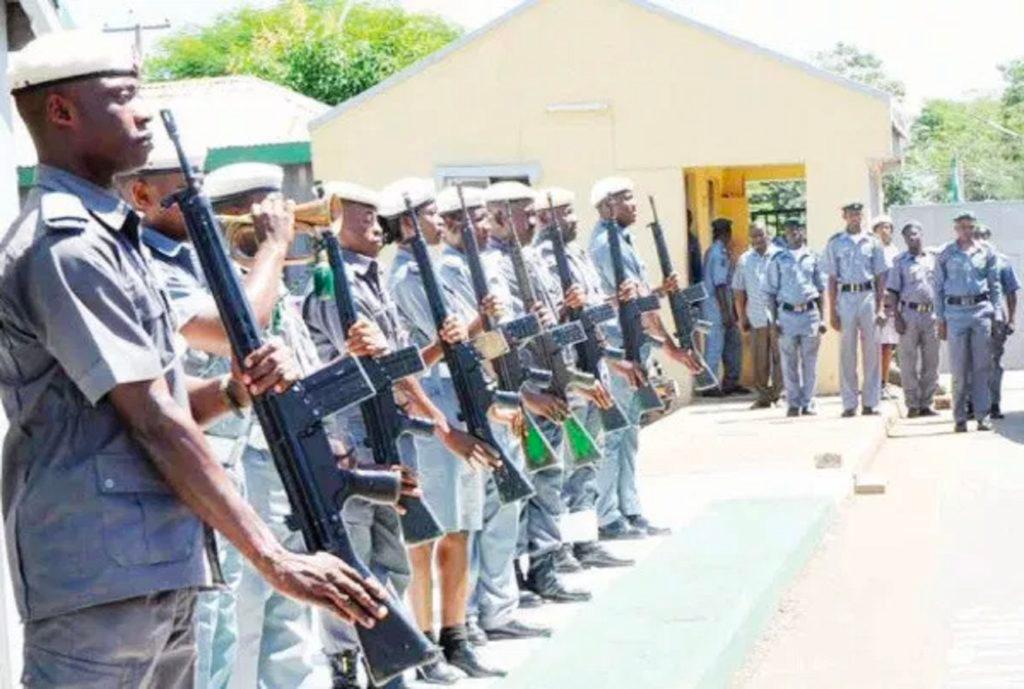
The Ogun II Area Command of the Nigeria Customs Service (NCS) has commended its officers for their dedication and professionalism after recording a total revenue of ₦32.46 billion in the 2024 fiscal year.

Speaking at a press briefing held at the command headquarters in Abeokuta on Thursday, February 6, 2025, the Customs Area Controller (CAC), Comptroller Olusola Alade, attributed the milestone to the hard work and efficiency of the command’s personnel.

“This remarkable growth is a testament to our officers’ commitment to duty and our unwavering dedication to strengthening the national economy,” he stated.

Alade also praised the Customs Intelligence Unit, Monitoring Unit, and Customs Police Unit for their contributions to compliance and enforcement, which played a significant role in boosting revenue.

In addition, he expressed appreciation to the Comptroller-General of Customs, Adewale Adeniyi MFR, for his leadership and policy direction, which he said had enhanced excise duty collection and industrial monitoring.

Acknowledging the role of businesses in compliance, Alade applauded traders and manufacturers who have adhered to customs regulations and encouraged more businesses to follow suit to support economic growth.

Providing further insights into the command’s achievements, he disclosed that revenue for January 2025 alone stood at ₦4.34 billion, representing a 104% increase compared to the ₦2.14 billion collected in the same period last year.

He also highlighted that improved monitoring of Free Trade Zones, particularly the Ogun Guangdong, Ceplast, and Flourmill Free Trade Zone, had significantly contributed to the revenue increase.

Additionally, the command identified four unlicensed factories—Evita Moore, Lekan Industries, Scarlet Eagle Ltd, and IBK Ventures—which were operating without proper authorisation.

These factories have now been placed under excise control and are undergoing registration.

Affirming the command’s commitment to enhancing revenue generation, facilitating trade, and enforcing national security, Alade assured that Ogun II Customs would continue striving for operational excellence to support Nigeria’s economic development.

ECOWAS alliance fracture: The Sahelian state exodus, regional stability and Nigeria’s leadership litmus test – can Abuja steer a new path?

By Iranloye Sofiu Taiye

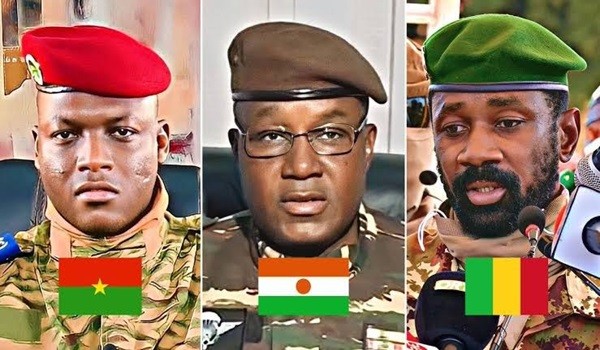
The recent decision by Mali, Burkina Faso, and Niger to withdraw from the Economic Community of West African States (ECOWAS) has triggered reactions of uncertainty across the geopolitical landscape of West Africa. This unprecedented move, announced in January 2024, marks a critical juncture for a bloc historically revered as a beacon of regional integration and collective security. The departure of these three Sahelian nations, all grappling with military rule, jihadist insurgencies, and socioeconomic fragility threatens to destabilize the delicate equilibrium of ECOWAS, undermining its credibility and operational efficacy.

ECOWAS was founded in 1975 via the Treaty of Lagos Nigeria, ECOWAS emerged as a post-colonial vision to foster economic integration, political solidarity, and collective self-reliance among West African states. Its architects envisioned a regional powerhouse capable of rivaling global economic blocs, anchored by principles of free movement, a common market, and monetary union. Over the decades, ECOWAS evolved beyond economics, establishing itself as a custodian of democratic norms through protocols such as the 2001 Supplementary Protocol on Democracy and Good Governance, which condemned any form of unconstitutional government changes.

The bloc’s peacekeeping ventures, notably the ECOWAS Monitoring Group (ECOMOG) interventions in Liberia (1990), and Sierra Leone (1997) demonstrated its capacity to mediate conflict. However, ECOWAS has also faced perennial challenges including coups d’état, governance failures, and the paradox between its lofty ideals and the grim realities of poverty and instability. The recent wave of military takeovers in Mali (2020, 2021), Burkina Faso (2022), and Niger (2023), each met with ECOWAS sanctions and suspensions exposed cracks in the bloc’s authority, heralding the current crisis.

The withdrawal of Mali, Burkina Faso, and Niger strikes at the heart of ECOWAS’s political legitimacy. These nations, representing 10% of the bloc’s population and vast territorial expanse, have denounced ECOWAS as a “tool of foreign powers” and accused it of imposing punitive measures that exacerbate their populations’ suffering. Their exit underscores a broader regional disillusionment with ECOWAS’s perceived alignment with Western interests, particularly France, amid rising anti-colonial sentiment.

For ECOWAS, the secession weakens its bargaining power on continental and global stages. The bloc’s ability to enforce democratic norms is now in jeopardy, emboldening other authoritarian regimes and eroding its moral authority. Moreover, the formation of the “Alliance of Sahel States” (AES) by the three nations — a mutual defense pact aligned with Russia — signals a shift toward alternative alliances, potentially fracturing West Africa into competing spheres of influence. This realignment risks destabilizing the region further, as rival powers like Russia, China, and Western nations vie for strategic footholds.

Economically, the departure of Mali, Burkina Faso, and Niger disrupts ECOWAS’s integration agenda. The bloc’s flagship projects — such as the ECOWAS Single Currency (Eco), slated for 2027—face existential threats. These nations collectively contribute critical mineral resources (gold, uranium) and agricultural output, and their absence could fragment supply chains, inflate intra-regional trade costs, and deter foreign investment.

The free movement protocol, a cornerstone of ECOWAS, may also unravel. Border closures and visa restrictions could follow, stifling cross-border commerce and cultural exchange. Nigeria, which accounts for over 60% of ECOWAS’s GDP, stands to lose significantly: its northern states rely on trade with Niger, while its industries depend on regional markets. The exodus may also derail infrastructure projects like the Kano – Maradi rail project hampering economic growth.

As ECOWAS’s traditional hegemon, Nigeria must spearhead the bloc’s response to this crisis. Historically, Nigeria has bankrolled ECOWAS initiatives and mediated conflicts, but its recent influence has waned amid domestic challenges—security crises, economic stagnation, and diplomatic inertia. To reclaim its leadership, Nigeria must adopt a multi-pronged strategy:

Diplomatic Re-engagement: Nigeria should initiate high-level dialogues with the AES states, addressing grievances while advocating a return to constitutional order. Leveraging its cultural and economic ties — particularly with Niger, with whom it shares a 1,600km border — Nigeria must balance firmness with empathy, avoiding the perception of bullying.
Institutional Reforms: ECOWAS requires structural revitalization. Nigeria should champion reforms to decentralize decision-making, reduce Francophone-Anglophone tensions, and prioritize grassroots economic integration. A revised governance framework, incorporating civil society and youth voices, could restore public trust.

Security Collaboration: The Sahel’s jihadist insurgencies, which have spilled into Nigeria’s northwest, demand a unified approach. Nigeria could propose a joint ECOWAS-AES security task force, blending counterterrorism efforts with development programs to undercut extremism.
Economic Incentives: To lure back the AES, Nigeria could advocate for sanctions relief tied to democratic transitions, coupled with debt forgiveness and infrastructure investments. A Marshall Plan-like initiative for the Sahel, funded by ECOWAS and international partners, might alleviate poverty fueling instability.
Conclusively, the exit of Mali, Burkina Faso, and Niger from ECOWAS is not merely a regional setback but a clarion call for introspection. The bloc’s survival hinges on its ability to reconcile idealism with pragmatism, balancing democratic principles with the urgent needs of fractured states. Nigeria, as the region’s linchpin, must rise to the occasion, blending visionary leadership with humility. In an era of shifting global alliances and resurgent authoritarianism, the stakes could not be higher: without decisive action, the dream of West African unity may dissolve into a mosaic of discord, leaving millions vulnerable to the storms of history.

Iranloye Sofiu Taiye can be reached via:
iranloye100@gmail.com

SERAP sues Tinubu over unexecuted N167bn projects fraud in MDAs

By Anwar Usman

The Socio-Economic Rights and Accountability Project (SERAP) has taken legal action against the President of Nigeria, Bola Tinubu, over his alleged failure to prosecute contractors who received over N167bn from 31 ministries, departments, and agencies for projects that were never executed.

The lawsuit, filed last Friday at the Federal High Court in Lagos (suit number FHC/L/MISC/121/2025), also listed the Attorney General of the Federation and Minister of Justice, Lateef Fagbemi, SAN, as a respondent.

This was contained in a press release on Sunday titled, “SERAP Sues Tinubu Over Failure to Prosecute Contractors in N167bn Project Fraud in MDAs.”

The release, signed by Deputy Director, SERAP Kolawole Oluwadare, urges the court to compel Tinubu to direct the Minister of Finance and Coordinating Minister of the Economy, Wale Edun, to publicly name the contractors involved and ensure their prosecution.

The organisation is also seeking a court order that’ll force Edun to publish details of the projects, together with their locations, the amounts received by each contractor, and the identities of the shareholders.

SERAP further argued that “The allegations of corruption involving these contractors have continued to impair, obstruct, and undermine the access of poor Nigerians to essential public goods and services”.

According to SERAP, the 2021 Audited Report by the Auditor-General of the Federation, published on November 13, 2024, revealed that 31 MDAs collectively paid over N167 billion for projects that were never carried out.

SERAP further reiterated that allowing companies and contractors to go away with public funds unpunished amounts to a grave violation of the Nigerian Constitution, anti-corruption laws, and international obligations under the United Nations Convention against Corruption.

“Holding these contractors accountable would help prevent waste, fraud, and abuse in public spending,” SERAP stated.