Breaking: Kano police ban durbar
By Uzair Adam
Abdullahi Haruna Kiyawa, the Kano State Police Public Relations Officer, disclosed this on Friday.
Details later…
By Uzair Adam
Abdullahi Haruna Kiyawa, the Kano State Police Public Relations Officer, disclosed this on Friday.
Details later…
By Sabiu Abdullahi
Prominent political analyst and former presidential aide, Reno Omokri, has condemned the brutal killing of 16 northerners who were reportedly burnt alive in Edo State while traveling for Sallah.
In a statement issued on March 28, 2025, Omokri described the attack as an act of “jungle justice” and called on the Edo State Government to take immediate action in ensuring that those responsible are brought to justice.”
This incident has saddened my day and blighted the outlook for a happy Sallah. Under no circumstances was what happened defensible or permissible,” he said.
Omokri stressed that the swift prosecution of the perpetrators would send a strong message that all Nigerian lives matter, regardless of region or ethnicity.
He urged northerners to remain calm while the Edo State Government takes necessary steps, expressing confidence that the Federal Government, under President Bola Ahmed Tinubu, would intervene if necessary.
“I urge Mutanen Arewa to please exercise restraint as we give room and time for the Edo State Government to do the needful,” he appealed.
He also challenged public figures who are vocal about attacks in northern Nigeria but remain silent when similar incidents occur elsewhere to speak up and demand justice.
“My condolences to the families of those affected by this injustice. And I especially commiserate with the government and people of whatever states they originated from,” Omokri stated.
The gruesome killings have sparked national outrage, with many calling for urgent measures to address rising tensions and ensure the safety of all citizens.
The Edo State Government is yet to issue an official statement on the matter.
By Muhammad Sulaiman
An Israeli soldier has told CBS News that he was ordered to use Palestinian civilians as human shields during military operations in Gaza.
The soldier, identified by CBS as “Tommy” (not his real name), detailed how his unit was instructed to force civilians into dangerous situations to protect Israeli troops.
“We’ve burned down buildings for no reasons, which is violating the international law, of course,” he told CBS News. “…And we used human shields as protection.”
Tommy said his commander ordered his unit to use Gazan civilians to search buildings for explosives instead of dogs.
“They were Palestinian,” he said. “We sent them in first to see if the building was clear and check for booby traps…They were trembling and shaking.”
The allegations add to growing concerns over Israel’s conduct in its ongoing military campaign in Gaza. Human rights organizations have long accused the Israeli military of violating international law, including the use of civilians in combat zones.
The Israeli Defense Forces (IDF) have denied such practices, insisting that they operate within legal and ethical guidelines. However, Tommy’s testimony raises serious questions about Israel’s adherence to international humanitarian law.
By Zayyad I. Muhammad
Whether you love him or dislike him, Seyi Tinubu is skillfully mastering the art of being close to power and leveraging his position as the son of Nigeria’s President. The President of Nigeria wields significant power and influence, and Seyi is gradually understanding both the intricacies of Nigerian politics and the delicate task of managing those around his father.
Now, he has taken on a significant and challenging task: restoring the APC’s once-unquestioned dominance in the North—a region that, while outwardly cordial, seems to be quietly drifting away from the party and the Tinubu/Kashim presidency. The North is revolting and smiling!
On this mission, Seyi could either succeed or fail, depending on his arithmetic skills, his father’s policies and programs, and, most crucially, President Tinubu’s willingness to hear uncomfortable truths, especially those his close associates might struggle to convey.
Seyi has identified a key battleground: the youth. His recent focus on distributing food items during Ramadan is a commendable step, so to speak. If executed strategically, it could yield positive results. However, food distribution alone remains a weak and short-lived strategy.
What more can Seyi do? A multi-pronged approach is needed- an economic and political strategy. Beyond handouts, Seyi, as a young man, should focus on real empowerment. He must identify and support enterprising young Northerners who are not part of the political elite but are making tangible impacts in their communities.
While he may have supported and empowered many individuals in the past, his new focus should be on fresh faces—ambitious, independent-minded young Northerners who, when given support, can drive real change. This could translate into both grassroots influence and renewed political goodwill for the APC in the region.
Expanding his political network thoughtfully will be impactful; Seyi needs to move beyond the usual circle of children from the political elite. The North is home to many educated and brilliant young minds who remain untapped. Bringing them into his circle could prove invaluable for rebuilding trust and influence.
Leveraging social media influencers will play a crucial role. This time, entertainment influencers will have little to no impact. Instead, Seyi should engage influencers whose voices carry weight—those known for insightful, educational, and impactful messaging that resonates with the region’s unique socio-political landscape.
Ultimately, Seyi Tinubu’s success in the North will depend on how well he moves beyond optics and embraces a more strategic, sustainable approach. The challenge is immense and thorny, but so are the opportunities.
Zayyad I. Muhammad writes from Abuja via zaymohd@yahoo.com.
By Anwar Usman
The House of Representatives on Thursday has reversed its plans on the second reading passage of an amendment bill seeking to strip vice president, governors and deputy governors of their immunity.
The House also revoked its decision on the second reading passage of a bill seeking to amend the constitution to review capital punishment in the constitution on Wednesday.
Reports has it that the leader of the House, Prof Julius Ihonvbere at plenary on Thursday moved a motion seeking to recoke the earlier second reading passage of the bill and to be relisted for further debate.
Earlier, the deputy Speaker Benjamin Okezie Kalu who presided over the plenary, said the decision to rescind the passage of the bills was to enable lawmakers to thoroughly debate the bills before passage, given their sensitive nature.
The House of Representatives had on Wednesday passed for second reading, a bill seeking to amend the constitution to strip vice president, governors and deputy governors of immunity.
The bill was among the 42 considered and passed through second reading during Wednesday’s plenary session, presided over by the Deputy Speaker, Benjamin Okezie KaluThe bill which was sponsored by Rep Solomon Bob (Rivers PDP), is seeking an amendment of Section 308 of the 1999 Constitution to guard against abuse of office and to ensure transparency in governance.
Also, a Bill for an Act to Alter the 1999 Constitution of the Federal Republic of Nigeria, to Review the Penalties for Certain Capital Offences in Alignment with Relevant International Best Practices and for Related Matters (HB. 2120) sponsored by Hon.
Benjamin Okezie Kalu and six others which was passed on Wednesday was also rescinded for further debate.
By Abdullahi Mukhtar Algasgaini
The Gombe State Police Command has arrested 28-year-old Hannatu Ibrahim for allegedly stealing $35,000 (approximately N53.5 million) from her Syrian employer, Mohammed Jurdi, before setting his house on fire in the New GRA area of Gombe.
According to police spokesperson DSP Buhari Abdullahi, two other suspects—Ahmed Adamu, 20, and Abubakar Ibrahim, 28—were also apprehended in connection with the crime.
Ibrahim, who worked as a cook for Jurdi, was caught in possession of $7,100 of the stolen money when a police patrol team responded to a distress call on March 22, 2025.
The investigation revealed that Ibrahim had stolen the money from her employer and set his house ablaze. During questioning, Ibrahim disclosed that Adamu was the first person she contacted, and he had taken two $100 bills.
Police later found one of the $100 bills in Adamu’s wallet. Abubakar Ibrahim, a security guard employed by Jurdi, was arrested as well in relation to the theft.
Exhibits recovered include $7,100 from Ibrahim and $100 from Adamu.
The case is under investigation and will be taken to court once completed.
By Lawal Dahiru Mamman
For 13 years, the Zambian national side had acted as a formidable barrier between Nigeria and footballing success, much like an inspirational goalkeeper. But on a fateful day, approximately 80,000 Nigerian supporters made the pilgrimage to the National Stadium, Surulere, in Lagos, to witness a potentially historic occasion.
That day provided the ultimate platform for the challenge, where Nigeria successfully broke the Zambian jinx for over a decade. This is a summary of a piece titled “The Match that Broke the Myth,” written by Uzor Maxim Uzoatu in the 1980s.
Nigeria has participated in international conferences and organized similar events at national and subnational levels. Specifically, national conferences often provide comprehensive reports for implementation after extensive deliberations from stakeholders nationwide.
But much like the imaginary soccer team above, which endured losses for 13 years, outputs from our symposia appear to be hexed. Reports are submitted, but implementation remains shelved due to forces akin to the Zambian inspirational goalkeeper.
For enlightenment, two precedents come to mind. Since 1999, President Muhammadu Buhari is notably the only president who has not convened a national conference. The late President Umaru Musa Yar’Adua is an exception, owing to his brief tenure and subsequent nine-month battle with ill health, which ultimately led to his passing.
In February 2005, President Olusegun Obasanjo convened the “National Political Reform Conference.” The gathering was an avenue to reassess, refocus, redefine, and redesign Nigeria’s political landscape to strengthen the bonds of unity.
Accordingly, it sought to enhance democratic consolidation processes, strengthen structures to solidify values that promote democracy and good governance, and open boundless opportunities for all Nigerians to be and feel part of the evolving political process and socio-economic development.
The committee was encouraged to conduct comparative studies, considering Nigeria’s unique realities, specificities, and historical context, to ensure a comprehensive understanding of the issues at hand during that era.
Four hundred and two delegates attended the conference, held between February and July 2005. Copies of the report from that conference were submitted, but nothing substantial happened afterward.
President Goodluck Jonathan convened another conference in 2014. The panel, chaired by retired Chief Justice Idris Kutigi, was assigned to advise the government on the framework for a national dialogue. To accomplish this, they consulted widely with Nigerians, ensuring that diverse perspectives were represented.
The conference, attended by approximately 500 delegates from across Nigeria, proposed substantial reforms. These included scrapping the current system of 774 local authorities to reduce corruption and save costs, creating 18 new states, revising revenue allocation, decreasing the federal government’s share of national income while increasing those of the states, and modifying the presidential system to include parliamentary elements.
Other key recommendations included power sharing and rotation, specifically advocating for the rotation of the presidency and the circulation of governorship among three senatorial districts in each state. These proposals aimed to promote greater representation, equity, and national unity. However, after passing over 600 resolutions and producing a 10,335-page report submitted to the presidency, the recommendations were never implemented.
On October 1, 2024, President Bola Tinubu, adhering to the tradition of past leaders, addressed the nation. At the time of his national broadcast, the country was uncertain whether the sequel to August’s #EndBadGovernance protest, Fearless in October, would take place.
Among numerous announcements, the president declared a National Youth Conference to assemble youths from across Nigeria for meaningful conversations that drive nation-building. Whether this particular aspect of his speech helped shelve the proposed protest remains uncertain.
What is the model for selecting delegates? What topics will be discussed during the proposed 30-day conference? While every youth awaits a response, it is important to note that numerous issues impact the youth, who constitute over 60% of the federation’s population.
In economic terms, recent statistics indicate that over 40% of Nigerian youths are unemployed, leaving millions of young people feeling disillusioned and despondent. This figure may actually be higher, given the ongoing challenges the nation faces in data collection and storage. Will this pressing issue be addressed at the conference?
According to the National Bureau of Statistics (NBS), an astounding 63% of the population—approximately 133 million individuals, nearly six out of ten Nigerians—live in multidimensional poverty, with the majority being youths. Will poverty be included on the conference’s agenda?
Limited access to quality education, caused by inadequate infrastructure, scarce resources, and a lack of strong support systems, leaves the dreams of many unfulfilled. According to the United Nations Educational, Scientific and Cultural Organization (UNESCO), the student loan scheme through the Nigerian Education Loan Fund (NELFUND) does not assist the 20.2 million uneducated young Nigerians. Will this become a subject of debate?
The National Drug Law Enforcement Agency (NDLEA) reported in 2023 that approximately 14.3 million Nigerians are involved in drug abuse, with young people predominantly affected. Regrettably, one in four women also participates in this harmful practice. Given its consequences, including widespread unproductivity and elevated crime rates, this critical issue merits discussion at the conference.
Despite youth affirmative action policies aimed at ensuring 30% representation in the public sector—including federal and state executive councils, boards of parastatals and agencies, and local government councils—and 35% representation in political party leadership positions, electoral bodies, and legislative assemblies for individuals between 18 and 35 years, there remains a significant issue of gross misrepresentation and inadequate youth participation in governance and decision-making.
Numerous other issues also impact Nigerian youth, such as migration for better opportunities, cultural constraints, child marriage and early pregnancy, cybercrime, youth radicalization, the role of young Nigerians in science, technology, engineering, and mathematics (STEM), and the erosion of cultural identity and values. These topics deserve thoughtful discussion.
As of the time the president promised to work toward modalities for this conference and the selection of delegates in “close consultation with our young people through their representatives,” skepticism looms large.
At the State House in Abuja earlier this month, the president inaugurated the planning committee of the National Youth Conference, tasking the youths—whom he described as the “heartbeat of the nation”—to seize the opportunity to redefine their future. Nigerians keenly await the modalities that the committee will set.
Our hopes lie in the words of Eric Teniola, a seasoned columnist, who said after the 2014 National Conference: “A conference will not solve all our problems, but it will give us a platform to exchange ideas and maybe iron out our differences. A conference may halt our present drift to anarchy.”
Therefore, we hope that this National Youth Conference, proposed by the president and his team, will be ‘The Conference that Breaks the Myth’ of unyielding conferences in Nigeria.
Lawal Dahiru Mamman writes from Abuja and can be contacted at dahirulawal90@gmail.com.
By Uzair Adam
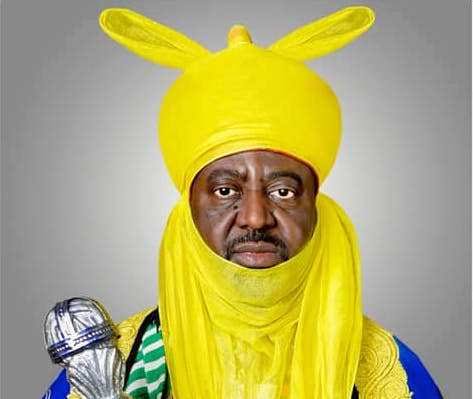
The 15th Emir of Kano, Alhaji Aminu Ado Bayero, has announced the cancellation of all arrangements for the annual durbar celebration during the Eid-el-Fitr festival, citing security concerns.
In a short video released late Wednesday night, Bayero stated that the decision was made after consultations with respected Islamic clerics, elders, and his councilors, who advised him to prioritize peace in the state.
Earlier, The Daily Reality reported that Emir Bayero had informed security agencies about his intention to hold the durbar.
However, Governor Abba Kabir Yusuf had directed the 16th Emir of Kano, Alhaji Muhammadu Sanusi II, along with other emirs, to proceed with preparations for the event.
The situation heightened tensions in Kano, prompting security assurances from the police to protect lives and property during the Sallah celebrations.
“We had to call off the arrangement to conduct the durbar after respected Islamic clerics and elders prevailed on us and after consultation with my councilors,” Emir Bayero said.
“Durbar celebration is not a do-or-die affair for us. The peaceful coexistence of our people is far more important.”
He urged residents to use the festive period to visit family and friends while praying for continued peace in Kano and across Nigeria.
By Uzair Adam
The Federal Government has declared Monday, March 31, and Tuesday, April 1, as public holidays to celebrate Eid-el-Fitr.
The Minister of Interior, Olubunmi Tunji-Ojo, announced this in a statement on Wednesday through the ministry’s Permanent Secretary, Magdalene Ajani.
He congratulated Muslims across the country on the successful completion of Ramadan and urged them to uphold the values of self-discipline, compassion, generosity, and peace.
He emphasized the importance of love, forgiveness, and solidarity in fostering a harmonious society.
Tunji-Ojo also called on Nigerians to use the occasion to pray for peace, stability, and national prosperity.
He expressed hope that the Eid celebration would strengthen unity and cooperation across religious and ethnic divides.
The minister further encouraged citizens to celebrate responsibly and extend kindness to the less privileged, reflecting the true essence of Ramadan and Eid.
“On behalf of the Federal Government, he extended heartfelt Eid Mubarak wishes to all Muslim faithful and prayed that the blessings of the season bring happiness, success, and fulfillment to everyone,” the statement read.
By Abdullahi Mukhtar Algasgaini
The Kaduna State Internal Revenue Service (KADIRS) has dismissed claims by former Governor Nasir El-Rufai that the state’s monthly internally generated revenue (IGR) has declined, while also refuting allegations of an illegal N100 million diversion from state funds.
Speaking at a press conference, KADIRS Executive Chairman Jerry Adams stated that under the current administration of Governor Uba Sani, the state has recorded significant revenue growth, surpassing figures achieved during El-Rufai’s tenure.
“It is necessary to clarify certain statements made by former Governor Nasir El-Rufai. Whether due to incomplete information or a deliberate attempt to mislead, it is important to set the record straight,” Adams said.
El-Rufai had claimed that Kaduna’s monthly revenue dropped from N7 billion to N2 billion under Governor Uba Sani. However, Adams refuted this, stating that the highest annual IGR recorded under El-Rufai was N59 billion in 2022, translating to a monthly average of N4.9 billion.
He further explained that a significant portion of the revenue between 2019 and 2022 came from one-off sources, including debt recoveries and government asset sales, which amounted to N45 billion.
“If these irregular revenues are excluded, the actual monthly IGR at that time was far lower than what is being claimed,” Adams noted.
Regarding the alleged illegal transfer of N100 million, Adams dismissed it as “completely false,” explaining that Kaduna’s revenue collection system operates entirely through PAYKADUNA, with all payments going directly into the state’s Treasury Single Account (TSA).
He emphasized that under Governor Uba Sani, Kaduna’s IGR has seen consistent improvement.
“In 2023 alone, Kaduna State generated N62.48 billion in IGR, which increased to N71 billion in 2024—averaging N5.2 billion and N6 billion monthly, respectively.”
“In just January and February 2025, the state has already collected N7.46 billion and N6.68 billion, totaling N14.16 billion in two months—without any debt recoveries or one-off revenues.”
“This demonstrates the commitment and diligence of this administration in driving economic growth and ensuring sustainable development,” Adams stated.